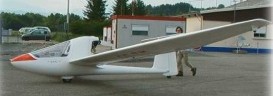
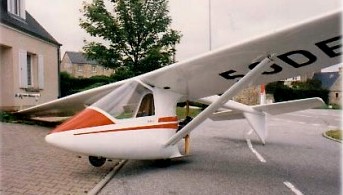
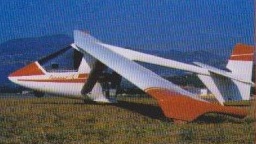
The Exel is a single-seater designed by Claude Noin to offer more performance than the Sirius. It is available as a fast-build kit or ready to fly, and uses composite materials only. Alpaero pre-manufacture Exel sub-assemblies in their facilities at Gap-Tallard. The most difficult parts, requiring the use of composite materials, large molds, special tools or skills, are all pre-manufactured. The wings can be built easily with traditional wood and fabric techniques, and all other fabrications can be accomplished by the average builder. The Exel is a very simple motorglider concept with no retractable engine or propeller but with enough soaring performance to fly long distances. The Exel is a light motorglider, and complies with the FAI international requirements for ultralight aircraft. It is marketed as a fast-build kit (around 300 hours), or ready to fly. The Exel is designed as a small single-place powered sailplane, and uses a “pod and boom” concept with a pusher engine installation, driving an automatic folding propeller. It uses a modern laminar airfoil and a light 2-stroke engine. The pilot enjoys a comfortable reclined position and a perfect visibility inside a roomy cockpit. This motorglider is focused on strength, economy, and performance in thermals, for true recreational soaring. The design is uncomplicated, but incorporates the modern design advantages, like automatic control connections, ballistic rescue parachute and low maintenance thanks to the composite materials. The landing gear is a fixed monowheel and the tailwheel is integrated into the rudder, making turns easy on the ground. The aircraft can be launched and landed on rough fields. The canopy is a simple and economical flat-wrapped screen. A rescue parachute can be easily installed inside the fuselage. After testing various powerplants the JPX D-330 two-cylinders engine is used. The JPX D-330 is a flat twin opposed construction, and delivers 20 hp with muffler, electric start and CDI and a TBO (Time Between Overhaul) of 500 hours. During Summer 2006 an Exel based on the single-cylinder Hirth F-33 was developed. This engine is more powerful (28 hp), and enables more performance in motorized flight (especially climb speed) as well as power-off, thanks to the lower drag of the engine cowling. The fuselage is molded in two halves of fibreglass/epoxy, with plywood bulkheads. Carbon spar caps and fibreglass wing skins. Lexan/polycarbonate canopy with carbon fibre frame. Fabric-covered rudder. Flying controls are: pitch control by a conventional elevator, actuated by teleflex. Combined flaps/ailerons (flaperons) for roll control and speed adjustment, with three positions as flaps : -5°, 0°, +5°. Conventional rudder actuated by cables. Airbrakes on upper surface wing. Standard control system (stick and pedals). The landing gear is monowheel type, fixed. Tail wheel integrated into the rudder for directional control on ground. Small wheels under each wing tip. Drum brake. A ballistic parachute recovery system (optional).
Engine :
One 14.91 kw (20 hp) JPX D-330 engine with 2.38:1 reduction gear driving a foldable carbon fibre 2-blade propeller at 6,500 rpm. Fuel capacity 19 litres (5.02 US gallons, 4.18 Imp gallons).
or One 20,90 kw (28 ch) Hirth F-33 BS engine driving a foldable carbon fibre 2-blade propeller. Fuel capacity 19 litres (5.02 US gallons, 4.18 Imp gallons). Wing span: 13.74 m (45.1 ft) Length overall: 5.90 m (19.3 ft) Propeller diameter: 1.28 m (4.2 ft) Wing area: 11.62 sq.m (125.1 sq ft) Aspect ratio: 16.2:1 Weight empty: 190 kg (432 lb) Max T-O weight: 310 kg (683 lb) Max wing loading: 26.67 kg/sq.m (5.46 lb/sq ft) Cruising speed at 75% power: 120 km/h ( 65 kt, 75 mph) Max speed: 180 km/h ( 97 kt, 112 mph) Stalling speed: 64 km/h ( 34 kt, 39 mph) Max rate of climb: 2.2 m/s (434 ft/mn) Endurance: 3 hours T-O run: 150 m (492 ft) Landing run: 140 m (459 ft) Best glide ratio: 30:1 Min rate of sink: 0.75 m/s (148 ft/mn) G limits (operational): + 4.4 / -2.2 G Seats: one pilot
Noin Aeronautiques Exel Engine: König 430, 24 hp Wing span: 12.45 m Wing area: 10.90 sq.m MAUW: 290 kg Empty weight: 165 kg Fuel capacity: 38 lt Max speed: 180 kph Cruise speed: 120 kph Minimum speed: 55 kph Climb rate: 3 m/s Seats: 2 Fuel consumption: 5 lt/hr Price (1998): 1 744 870 Fttc Kit price (1998): 55 000 Fttc
Claude Noin designed the Choucas, a side-by-side touring motorglider of tailless configuration, using the same materials as the Sirius. The Choucas (French for “jackdaw”) is a two-place side-by-side (may be flown from either seat) touring motorglider (ULM under French regulations) with front-mounted engine. Designed as a light, economical and safe touring motorglider, the Choucas is available for amateur construction. It is commercialized as a partial kit for homebuilders, including all the molded composite components. This motorglider has a fast-build fuselage kit. The Choucas design was initiated in 1994 and the prototype flew for the first time at the end of 1996. The Choucas accumulated over 500 hours of testing in a flight school environment. It has proven itself as an incredibly versatile and easy-to-fly aircraft. ALPAERO, pre-manufacture Choucas sub-assemblies the facilities at Gap-Tallard, the most difficult parts, requiring the use of composite materials, large molds, special tools or skills, are all pre-manufactured. The wings can be built easily with traditional wood and fabric techniques, and all other fabrications can be accomplished by average builders. Flying controls: flying wing formula, pitch control by elevators in inboard wing trailing-edge, ailerons outboard, large rudder. Trim tabs on elevators, DSF spoilers/airbrakes on upper surface wing. Structure: standard fuselage molded in half-shells of carbon fibre/epoxy (with glass fibre/epoxy fuselage available at lower cost with weight penalty), composites wing structure with wooden main spar and glass fibre/epoxy stiffened Styrofoam ribs. The wing uses a modified Abrial/St Cyr airfoil, with 17 % thickness, it can be detached in two parts weighing 55 kg each (on the prototype). Leading edge made of hot wire cut foam laminated with glass fibre and epoxy resin, as an alternative the leading edges can be built as a birch plywood D-section, or molded in carbon fibre. Wing covered with heat-shrink Dacron. Lexan/polycarbonate canopy with carbon fibre frame. Landing gear: The landing gear is a one-piece composite part, and can be used as a step to access the cockpit. tailwheel type, fixed. Streamlined fairings on main legs and wheels. Drum brakes.
Engine: One 37.3 kW (50 hp) Rotax 503 Reduction: 2.58:1 gear Propeller: two-blade carbon fibre, Folding forward optional Propeller diameter: 1.60 m (5.3 ft) Wing span: 14.35 m (47.1 ft), optional extension to 15 m Length overall: 5.35 m (17.6 ft) Height overall: 1.95 m (6.4 ft) Wing area: 21.30 sq.m (229.3 sq ft) Aspect ratio: 9.44:1 Airfoil: modified Abrial/St Cyr 17% airfoil Fuel capacity: 36 litres (9.5 US gallons, 7.9 Imp gallons) in fuselage tanks Usable fuel: 35 litres (9.25 US gallons, 7.7 Imp gallons) Optional fuel: wing tanks (2 x 35 litres) in the Carbon version Weight empty: FAI ultralight version : 265 kg (573 lb) experimental version : 290 kg (639 lb) Max T-O weight: FAI ultralight version : 450 kg (992 lb) experimental version : 510 kg (1124 lb) Max wing loading : FAI ultralight version : 21.12 kg/sq.m (4.33 lb/sq ft) experimental version : 23.94 kg/sq.m (4.90 lb/sq ft) Cruising speed at 75% power: 130 km/h (70 kt, 81 mph) Max speed: 180 km/h (97 kt, 112 mph) Stalling speed: 60 km/h (33 kt, 38 mph) VNE: 97 kt / 112 mph / 180 kmh Max rate of climb: 180 m/mn (590 ft/mn) T-O run: 100 m (328 ft) Take-off distance (50ft obstacle): 660 ft / 200 m Landing distance (50ft obstacle): 820 ft / 250 m Landing run: 150 m (492 ft) Best glide ratio: with a fixed propeller: 26:1 with a folding propeller: 24:1 (14.35 m version) 26:1 (15 m version + winglets) Min rate of sink: less than 1.00 m/s (3.28 ft/s) at 80 km/h with a fixed propeller G limits: + 8 / -4 G
Noin Aeronautiques Choucas Engine: Rotax 503, 50 hp Wing span: 14.35 m Wing area: 21.80 sq.m MAUW: 450 kg Empty weight: 260 kg Fuel capacity: 38 lt Max speed: 170 kph Cruise speed: 130 kph Minimum speed: 60 kph Climb rate: 4 m/s Seats: 2 Fuel consumption: 12 lt/hr Kit price (1998): 55 000 Fttc
In 1984, Claude Noin created a single-place motorglider powered by a light two-stroke engine : the Sirius. Twenty-two kits were delivered to customers, mainly in France. The Sirius used composite materials for the fuselage, and wood and fabric for the wing, and was powered by a light two-stroke engine, driving a two-blade propeller. The first prototype flew in August 1984. It used a tube, wood and fabric structure and an 11 m wing. The production types have a composite fuselage and a longer wing. The design focused on economy and performance at low speeds, features a high wing, a fixed engine and propeller and a fixed gear, with conventional control system with stick and pedals. Pitch control by elevator, including a trim tab, actuated by cables. Ailerons for roll control. DSF Spoilers / Airbrakes on upper surface wing. The fuselage is molded in two halves of fibreglass/epoxy, with plywood bulkheads and a Lexan/polycarbonate one-piece removable canopy. With a fabric-covered rudder, the composites wing structure has wooden main spar and glass fibre/epoxy stiffened Styrofoam ribs. The leading edge made of hot wire cut foam laminated with glass fibre and epoxy resin. Wings are covered with heat-shrink fabric. The landing gear is fixed with the main wheel at the C of G location, with drum brakes. Equipped with a nose wheel and small wheels under the tail and under each wing tip.
Noin Aeronautiques Sirius C
Sirius Engine: one Koenig 3-cylinders (24 hp)
Sirius C Engine: One JPX-D-320 (18 hp) Prop: fixed 2-blade Fuel capacity 19 litres Wing span: 13.4 m Length overall: 5.90 m Wing area: 14.30 sq.m Weight empty: 142 kg Max T-O weight: 270 kg Max speed: 130 km/h Stalling speed: 48 km/h Max rate of climb: 2 m/s (394 ft/mn) Best glide ratio: 23:1 Min rate of sink: 0.90 m/s G limits: + 4.4 / -2.2 G Seats: 1
Noin Aeronautiques Sirius C Engine: König 430, 24 hp Wing span: 13.48 m Wing area: 13.40 sq.m MAUW: 270 kg Empty weight: 150 kg Fuel capacity: 29 lt Max speed: 130 kph Cruise speed: 90 kph Minimum speed: 48 kph Climb rate: 2 m/s Seats: 1 Fuel consumption: 5 lt/hr Plan price (1998): 1929 Fttc Kit price (1998): 27 386 Fttc
Since 1973, the Noin brothers have been constructing free-flying wings (first sold under the Dahuplane brand). Much more interested in research than commercial, they have tackled free flight trying to achieve aerodynamically safe aircraft. They are at the origin of the rods for the maintenance of the twist at the end of the wing and of the return halyards to give reflex to the sail.
They designed and built DAHU-PLANE, FLEX-PLANE, STRATUS 1, III B, and IV, CUMULUS 1, II and III, NIMBUS 1 and D 122 (double internal transverse surface) EDELWEISS and the TORNADO.
ALPAERO is owned and operated by Claude Noin, a skilled expert in composite and wood structures with over 20 years of design/build experience. Claude Noin is the son of a famous glider pilot, Felicien Noin, who was the first pilot to cross the Alps in a glider. He is able to use the latest technologies as well as the more traditional ones. He founded his firm Noin aeronautique in 1976 and manufactured or repaired several airplanes, motorgliders, boats (single hull or multi-hulls), and hang-gliders. ALPAERO is the trademark used by Noin aeronautique to manufacture and market the Choucas and Exel motorgliders on the international scale. ALPAERO tightly cooperates with experts specialized in aerodynamics and structures, with the stringent JAR-22 as a guideline.
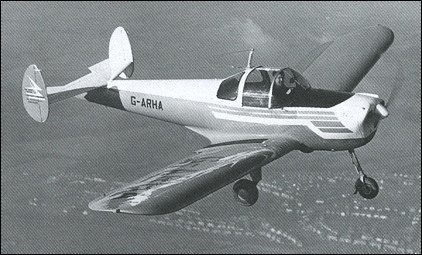
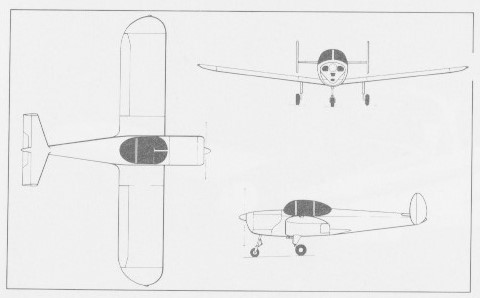
The Ercoupe originated from aeronautical engineer Fred Weick and industrialist Henry Berliner. Henry invited Fred to join his privately owned Engineering Research Corporation (ERCO) to build a commercial version of an earlier Weick design, the W-1A. The prototype first flew in 1937 as the model 310, and was constructed of metal, with the outer panels of the wings covered with doped fabric to lessen weight. The fuselage aft of the cockpit consisted of four sheets of aluminium that were riveted together on the flat, and wrapped around four bulkheads. The wing structure was equally simple with a single main spar located at 25 percent chord and a small false spar where the ailerons were attached. A sheet metal cover extended round the wing leading edge, back to the aft edge of the spar. This both increased the wings structural rigidity and ensured the crucial part of the aerofoil would maintain shape. Initial test flights revealed that the basic design was sound but the designers introduced numerous refinements to optimise the characteristics. Refinements were needed in the engine mounting, the up elevator limitation, the fin arrangement and the wing filleting. The production version was assigned ERCO job No 415C and had a 12 inch longer fuselage to increase longitudinal damping. The aeroplane went into production in 1940 and was available with rudder pedals or with a simplified control without rudder pedals. Equipment offered varied between models, ranging from no radio or gyro instruments to a reasonably complete fit on the later models. A series of flight tests to trial various fillets and other design features were carried out and in the end the outer portion of the wing did not stall at all, even at full aft elevator. This was due to three factors. Firstly, the wing root so definitely stalled that the spanwise lift distribution was broken down in the centre, and the outer wing panels acted somewhat in the manner of two separate low aspect-ratio airfoils and could go up to a higher angle of attack before stalling. Secondly, the pitching moment of the main wing changed as the centre portion stalled in such a way as to tend to decrease the wings total average angle of attack. Thirdly, the loss of lift in the centre of the wing reduced the downwash on the tail, thus reducing the effectiveness of the elevator. With all three factors at work, even full aft elevator was insufficient to cause the outer portions of the wing, which in this case comprised most of it, to stall. Lateral stability and control were therefore maintained throughout the entire range of speed and angle of attack, at least in power-off flight. With the 40hp engines these characteristics were maintained, however with the installation of the more powerful 65hp Continental engine modifications were required. The increased slipstream required a further limitation to the up elevator travel to obtain satisfactory power-on stalling characteristics, but then the tail could not be lowered as much as desired during take-off and landing. This problem was overcome by giving the leading edges of the wings a sharply pointed contour for a distance of a few inches adjacent to the fuselage. This caused the air passing over the wing root to break away earlier at high angles of attack even with full power on, thus returning the wings stall characteristics back to those of the earlier model. One of the more significant design changes during the flight testing stages was the replacement of the conventional single fin with twin fins and resulted from the two-control flight trials. The undercarriage is designed to allow the aeroplane to be landed crabbed, and the Ercoupe has no flaps. The US CAA (forerunner of the FAA) purchased the first four aircraft produced and gave them an exhaustive evaluation. A thorough comparison between two groups of trainees with no previous experience was carried out. One group trained in Ercoupes, the other in Piper Cubs. The results were striking, one of the Ercoupe students soloing after only two hours and fifteen minutes of dual instruction. The average time being four and a half hours. The CAA went on to reduce the time required to solo an Ercoupe from the usual eight to five.
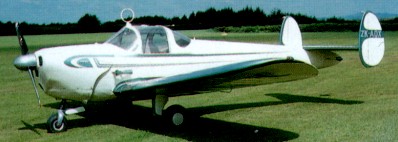
Although the first production model of the Ercoupe was ready in 1940, the war blocked further development of the project until the postwar boom, when it looked as though the little company were off and running as it turned out nearly 5,000 aircraft during the first year of production. Production resumed in 1945 with models 414 E, F and G appearing between 1947 and 1949. Finally, in 1951, production ceased when the bottom dropped out. Forney Manufacturing Company acquired production rights for Engineering and Research Corporation’s Ercoupe 415 two-seat light aircraft in April 1955. The first production Forney F-1 Aircoupe flew on September 1956 and it was later offered as the Fornaire Execta, Explorer, and Expediter.
Fornair F-1A Aircoupe
The rights were sold in 1960 to the city of Carlsbad, New Mexico. Air Products took over production between 1960 and 1962, and then it passed to Alon Aircraft in 1964.
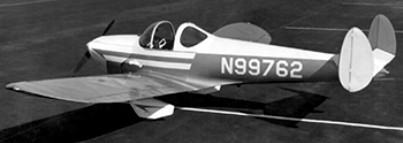
1946 Engineering & Research Ercoupe 415-C
Two ex-Beech employees formed Alon Inc and bought assets, jigs, tools and engineering of the Ercoupe and planned to deliver 30-50 planes in 1964 at $8000 each, with a 100 hp Continental engine.
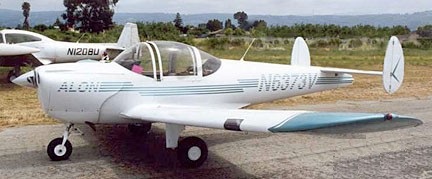
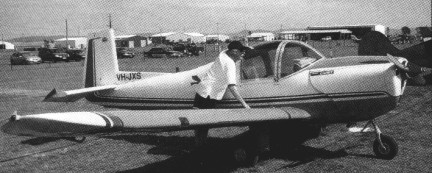
Alon called its airplane—still virtually unchanged from the original Ercoupe—the Aircoupe A-2. The Alon version did have rudder pedals and a modified landing gear, which on some models is a backward- bending, spring-steel gear leg rather than an oleo strut. The Alon A-2 also featured a blown sliding-bubble canopy instead of the lift-up type fitted on earlier models. Alon Aircoupes had attractive upholstery, and all flight gauges were shock-mounted on a floating subpanel in front of the pilot. Dual toe brakes were standard, operated by a bar running across and above the rudder pedals.
The 1964 A2 Aircoupe was a modernized continuance of Forney Aircoupe with conventional three-control system. 245 were built.
Alon A2 N6373V
Mooney Aircraft purchased the Aircoupe rights in 1968, changed the double tail to a single tail, and sold the airplane with as the Mooney Cadet. The A-2 Cadet and M.10 Cadet were produced until 1970, when Mooney sold out to Aerostar.
M.10 Cadet
In 1974 Univair Aircraft Corporation purchased the type certificates for the Ercoupe and all its successors from Mooney. They have since been manufacturing nearly all the airframe items necessary to keep any model ‘coupe’ airworthy. From a low point of round 2000 Ercoupes registered as airworthy in 1965, the number has recovered to round 2700 entering the nineties.
Alon was formed in December 1963 by two former Beech officials, John Allen Jr & Lee O Higdon. They acquired all assets, jigs, tools, and engineering of the Aircoupe two-seater from former owners (Carlsbad, New Mexico) promoting an improved version as Alon AirCoupe.
They expect to deliver the first of 30-50 Aircoupes to be built next year for about $8,000.
Alon, of McPherson, Kansas, merged with Mooney Aircraft Corporation in October 1967.
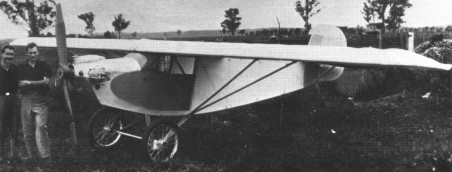
The Allison Airplane Company was established in 1920 to build a small single-seat high-wing monoplane known as the Alco Junior Coupe. Powerplant was a single 40 hp Szekely 3- cylinder radial air-cooled engine. The Alco Junior was a kitset aircraft circa 1929.
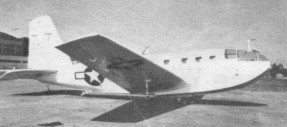
During 1942 the US Navy let contracts for the development of several amphibious transport gliders. Two of the contracts called for twelve-seaters manufactured primarily from non-strategic materials, these being the Allied XLRA 1 and the Bristol XLRQ 1.
The Allied XLRA 1 was a low wing cantilever monoplane constructed mainly of moulded plastic plywood and carrying two crew members seated in tandem, and ten troops. A jettisonable undercarriage was fitted this comprising a single twin wheel main member, a small tailwheel, and two small stabilising wheels attached at approximately quarter span, and it was intended that the glider would be towed by standard naval aircraft Two prototypes were built (BuAer Nos. 11647 and 11648), and one hundred production LRA Is (BuAer Nos. 31403 502) were ordered, but none of these had been completed when the U.S. Navy cancelled its glider programme. The LRA 2 was a proposed version with a conventional undercarriage.
Allied Aviation Corp was developing, in 1945, the prototype of the Allied Trimmer light twin-engined flying-boat amphibian. Manufacturing rights acquired by Commonwealth Aircraft Inc., Kansas City, Missouri. 3 seat
Organized in January 1941 to make molded-plywood aircraft structures and in 1943 built large amphibious glider for US Navy. Was developing, in 1945, the prototype of the Allied Trimmer light twin-engined flying-boat amphibian. Manufacturing rights acquired by Commonwealth Aircraft Inc., Kansas City, Missouri.