The Amoit 122 was three-seat single-engined bomber, of which about 20 built by 1934. The type served with the French Air Force and in Brazil. Widely used by French Air Force in 1930s, but attained less than 320km/h.
Aircraft
Amiot 101
Of the late 1920s, the Amoit 101 was a monoplane fighter.
Amiot – S.E.C.M
Félix Amiot started his firm Amiot – S.E.C.M in 1916, building Bréguet and Morane-Saulnier machines under licence.
Avions Amiot products were known formerly by SECM prefix, latterly as SECM-Amiot or generally, Amiot, after founder Felix Amiot.
In 1929 Amoit amalgamated with Avions Latham.
The firm concentrated on large all-metal multi-engined aircraft, using light-metal stampings, though well before 1940 introduced stressed-skin construction. In the 1930s works at Colombes and Caudebec were reconditioning several types of metal aircraft for French Government. Changes in structural techniques were matched by aerodynamic advances; thus, the Amiot 143.
AMF AMF-514 DIXW Miranda

A Canadian designed wood and fabric, four seat aircraft.
AMF S-14 Miranda
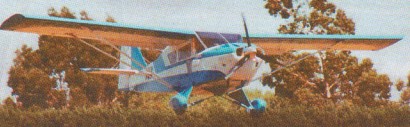
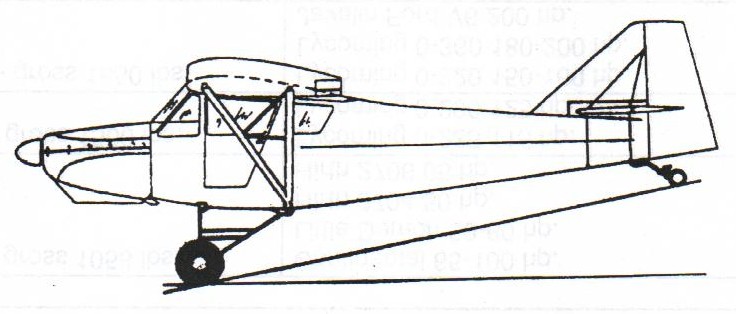
The AMF S-14 is a two-place taildragger modeled after the Adam RA-14. The S-14 was first flown in 1961. It is powered by 85- to 150 hp engines. Its fuselage is a conventional wooden box-girder structure, covered with plastic-coated fabric. The S-14’s wings are a braced high-wing design of all wood and fabric with STOL characteristics. Folding wings and Hoerner wingtips.
Lycoming and similar engines 100 to 200 hp are suitable.
The AMF-14H has a lighter structure for engines 50 to 115 hp to meet the Sport Aircraft category (LSA).
Options include flaps, floats, tricycle gear, extra wide cockpit, rodent proof tail, long range auxiliary tanks, extended wings, variety of engines including diesel.
On June 30, 2019, Falconar Avia Inc closed for business and assets dissolved. The Master Sets (Original Drawings, Plans, Info Kits, Documentation) were available for sale and full transfer of rights included the AMF – S14 “Maranda” S14 D and S14 H for $10,000 USD.
S-14
Engine: Lycoming O-320, 150 hp
HP range: 85-200
Wing span: 31.8 ft
Wing area: 158 sq.ft
Length: 22 ft
Height: 7.1 ft
Weight empty: 1100 lb
Gross: 1850 lb
Fuel cap: 18 USG
Speed max: 130 mph
Cruise: 115 mph
Range: 400 sm
Stall: 35 mph
ROC: 1300 fpm
Take-off dist: 100 ft
Landing dist: 150 ft
Service ceiling: 17,000 ft
Seats: 2-3
Landing gear: nose or tail wheel
Plans (2010): US$200
Super 14D
Engine: Lycoming O-320, 150 hp
HP range: 85-200
Wing span: 31.8 ft
Wing area: 158 sq.ft
Length: 22 ft
Height: 7.1 ft
Empty weight: 1100 lb
Gross weight: 1850 lb
Fuel capacity: 18 USG
Top speed: 150 mph
Cruise: 120 mph
Stall: 41 mph
Range: 480 sm
Rate of climb: 1000 fpm
Takeoff dist: 200 ft
Landing dist: 180 ft
Service ceiling: 17,000 ft
Seats: 2-3
Landing gear: nose or tail
AMF Super 14D Maranda
Cruise: 120 mph
Stall: 39 mph
Range: 340 sm
Rate of climb: 1000 fpm
Takeoff dist: 200 ft
Landing dist: 200 ft
Engine: Lycoming O-320, 150 hp
HP range: 85-200
Fuel capacity: 22 USG
Empty weight: 1100 lb
Gross weight: 1850 lb
Length: 22 ft
Wing span: 31.8 ft
Wing area: 158sq.ft
Cockpit width: 40-46 in
Landing gear: nose or tail
AMF-S14 DI Maranda
Vne: 150 mph
Cruise speed: 120 mph
Range: 480+ miles
Stall: 41 mph
Takeoff distance: 200 feet
Landing distance: 180 feet
Gross weight: 1850 lbs
Wing span: 31.8 feet
Wing area: 158 sq. feet
Plans (2010): US$170
Falconar Avia AMF-14H
Engine: Rotax 912S, 100 hp
HP range: 65-100
Wing span: 32 ft
Wing area: 158 sq.ft
Length: 22 ft
Gross weight: 1320 lb
Empty weight: 650 lb
Fuel capacity: 26 USG
Vne: 150 mph
Cruise: 92 mph
Stall: 36 mph
Range: 350 sm
Rate of climb: 700 fpm
Takeoff dist: 200 ft
Landing dist: 180 ft
Cockpit width: 46 in
Landing gear: nose or tail
Seats: 2
Plans 2010: US$200
Ameur Aviation Altania SC2 / Altajet
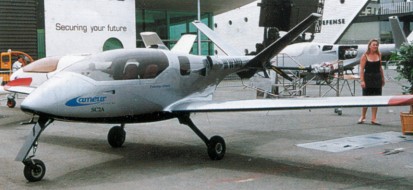
There was a range of four models based on the same body structure, the ultralight, the two- and four-seat versions, and the Altajet. The aircraft has a composite structure with retractable undercarriage and was built as a joint venture with Ameur and Slicom. The SC2A is a rear mounted turboprop.
Ameur Aviation Balbuzard
First flying in 1995, the Balbuzard is a two-seat composite-built cabin monoplane in kit form, featuring tail-mounted pusher propeller.
Amethyst [Australia] Falcon

Single seat homebuilt powered by a Jabiru 2.2 engine.
Ames M2-F2 / M2-F3AmesM2-F2.jpgAmes M2-F2 / M2-F3
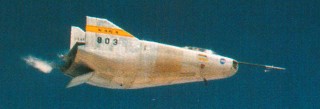
First of NASA’s lifting bodies, the Ames-designed M2 F2 had a convex undersurface with flat topside, twin fins for yaw control, fullspan ventral flap for pitch and split dorsal flaps for roll. First dropped from one of two specially modified B 52 mother ships in July 1966, the M2 F2 was rebuilt after a crash on its 16th flight in May 1967 which seriously injured test pilot Brace Peterson. As the M2 F3, it had a small dorsal fin acting as a flow fence for improved lateral control and completed a farther 27 flights before it was retired in December 1972 having reached a maximum speed of Mach 1.613.
Sadler Vampire / Sadler A-22 Piranha / Wedgetail Vampire
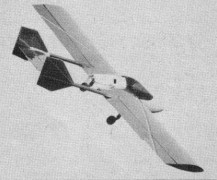
Single seat single engined mid wing mono¬plane with conventional three axis. Wing has unswept leading and trailing edges, and constant chord; two fin tail. Pitch control by elevator on tail; yaw control by fin mounted rudders; roll control by full span spoilers; control inputs through stick for pitch/roll, pedals for yaw. Cantilever wing; wing profile NACA 633 218A; double surface. Undercarriage has three wheels in tricycle formation; with tailskid; no suspension on any wheels. Push right go right nosewheel steering connected to yaw control. Brakes on main wheels. Aluminium steel tube framework, partially enclosed. Engine mounted at wing height driving pusher propeller. 6061 T6 aluminium tubes, 2024 alclad skin and glass flibre pod.
The prototype of the Sadler Vampire was unveiled at Oshkosh in August 1982, where it was announced as likely to be on sale during 1983.
The price with a 20 hp engine was $7950 in 1983.
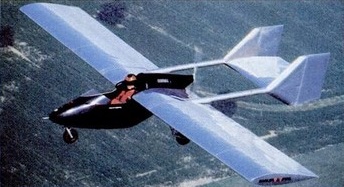
The quiet operation of the prototype was mainly due to the use of a reconnaissance and target drone engine of Israeli manufacture. The aircraft’s use of an aluminium riveted skin for the tail surfaces and the wing with ribs of pressed aluminium may not be unusual in general aviation but is very rare in the ultralight world. The profile of the wing is NACA 633 218A and is laminar. Beneath the spoilers, running the full span of the wings at the trailing edge, are four position hinged flaps.
American Microflight intend only to sell their Sadler Vampire ready to fly.
Option of KFM 107 engine.
In 1983 Ultra Light Aircraft Corporation (ULAC) was setting up a production facility for the American Microf¬light Sadler Vampire, for which ULAC has acquired the Europe/Africa licence.
Bill Sadler had his Sadler Vampire at the 2008 U.S. Sport Aviation Exposition. Sadler announced the introduction of the plane into the lightsport aircraft category at Airventure 2007, at that time it was planned that the craft would be powered by the 100 HP Rotax 912 S.
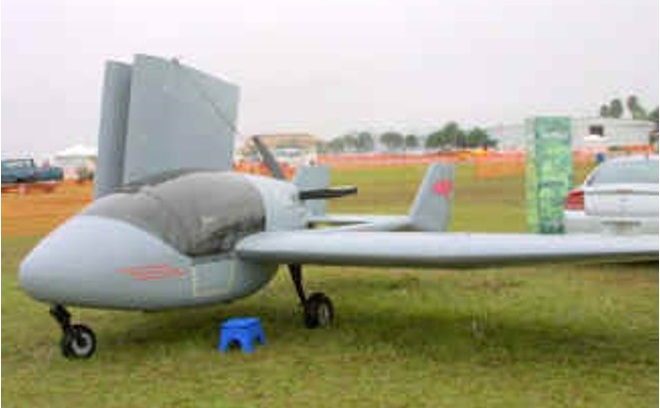
Sadler Aircraft Corp, previously known as American Microlight Inc, developed A-22 Piranha lightly armed surveillance version of its microlight, also being developed by TUSAS. Tusas Aerospace Industries Inc in Turkey developed the TG-X1 Bat very light single-seat attack / surveillance aircraft (first flown February 1997, based on U.S. Sadler A-22 Piranha).
The Vampire was available and fully built at Wedgetail Aircraft factory at Camden in NSW, Australia, circa 2019.
Engine: NGL WAE 34, 26 hp
Poly V belt reduction, ratio 2.0/1
Power per unit area 0.20 hp/sq.ft, 2.35 hp/sq.m
Fuel capac¬ity 5.0 US gal, 4.2 Imp gal, 18.9 litre in main tank
Length overall 18.1 ft, 5.51 m
Height overall 4.8ft, 1.42m
Wing span 30.1 ft, 9.40m
Constant chord 5.0ft, 1.52m
Sweepback 0 degs
Total wing area 128sq.ft, 11.9sq.m
Wing aspect ratio 7.4/1
Nosewheel diameter overall 10 inch, 256mm
Main wheels diameter overall 10 inch, 250mm
Empty weight 220 lb, 100kg
Max take off weight 450 lb, 204kg
Payload 230 lb, 104kg
Max wing loading 3.5 lb/sq.ft, 17.1 kg/sq.m
Max power loading 17.3 lb/hp, 7.8 kg/hp
Max level speed 85mph, 137kph
Max cruising speed 55 mph, 88 kph
Stalling speed 25 mph, 40kph
Take off distance 300 ft, 91 m
Landing distance 200 ft, 61 m
Engine: Solo 210 (210 cc) 20 hp
Static thrust: 130 lb
Empty wt: 250 lb
Wing span: 30 ft
Wing area: 125 sq.ft
Height: 4 ft 8 in
Length: 17 ft 6 in
Fuel cap; 4.5 USG
Construction: Aluminium, Fibreglass
Max wt: 500 lb
Stall: 25 mph
Max speed: 63 mph
Vne: 85 mph
Climb rate: 350 fpm @ 45 mph
Design limit: +6, -6g
Glide ratio: 12-1
Wing loading: 4 lbs/sq.ft
Power loading: 25 lbs/hp

