Beachey, Lincoln

Lincoln Beachey

Lincoln Beachey grew up racing bicycles down the hills of his hometown. At eighteen he learned to fly powered airships, and experienced his first taste of the aviation spotlight piloting a dirigible at the Lewis & Clark Centennial Exposition in Portland, Oregon in 1905. A year later he made an unauthorized but well-received landing on the White House lawn.

Beachey piloted one of six airships flown at the Dominguez Air Meet of 1910, the first public flying exhibition held in the United States. For Beachey, Dominguez provided a life-changing humiliation. Beachey raced a fellow airship pilot around a closed circuit course and won decisively, yet there was little opportunity to savor the triumph. During the race, French aviator Louis Paulhan took flight in a Farman monoplane. Paulhan had shown a penchant for showmanship throughout the meet, dazzling the crowds with maneuvers more daring than the conservative routines flown by other pilots. As the airship race drew to a close, Paulhan swooped down and circled merrily around the lumbering dirigibles.

Beachey scooped up handkerchiefs with the wingtips of his Curtiss biplane, flew under Niagara Falls bridge and beat the racing motorist Barney Oldfield in his aircraft vs car race at Los Angeles in February 1914.
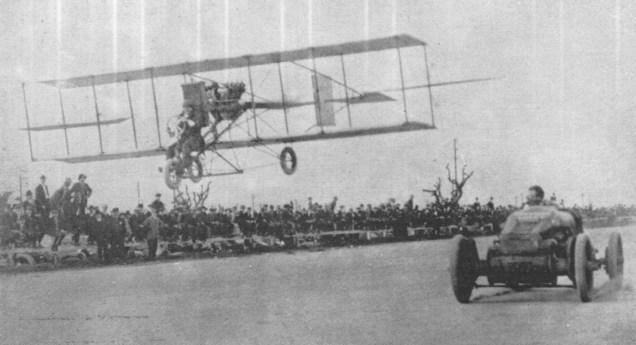
Aircraft vs car race at Los Angeles in February 1914

In early 1915 Beachey began flying his design team’s newest creation, a sleek monoplane dubbed the Taube, or dove. Beachey had been drawn to monoplanes since his humiliation at Dominguez in 1910, as they had less drag and greater speed than biplanes. The Taube proved significantly faster than the Little Looper, making for more spectacular maneuvers. It also featured a tractor propeller arrangement, considered safer than the traditional pusher configuration.

On March 14th, 1915, Beachey flew his Taube in a special routine offshore from San Francisco. In a rapid decent he pulled out too quickly, and the Taube’s wings collapsed from the load. Remarkably, corner reports indicate that Beachey survived the initial impact despite the terrific speed, but drowned before rescuers could reach him.
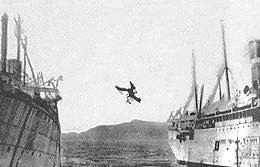
Beachey crashes to his death

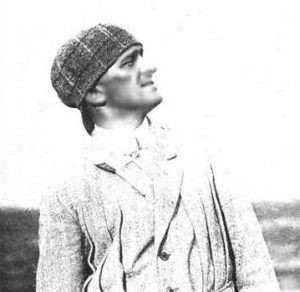
Lincoln Beachey, who by 1914 had been named by Orville Wright as the world’s most outstanding aviator of the age.
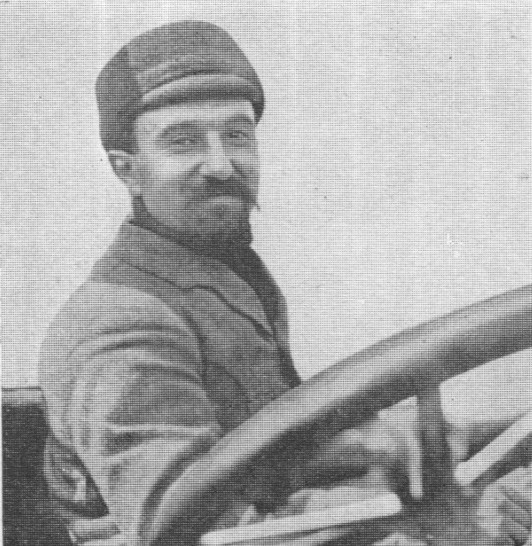
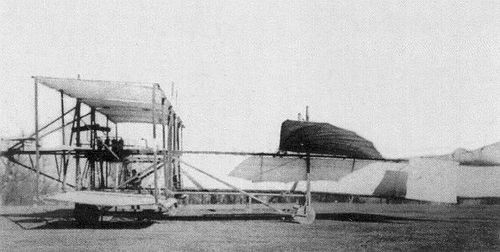
Lincoln Beachey

BD-Micro Technologies Smart-1 / Freedom Jet

The Freedom Jet, now known as SMART-1, was available only for military shows in conjunction with test and evaluation activities. These aircraft are experimental — research and development category, and were not available for sale to the general public.
Renamed as the Small Manned Aerial Radar Target, Model 1 (SMART-1), the tiny jet aircraft that have been performing air shows for the last quarter century have been “drafted” by the military. Its small size, maneuverability, and manned features, plus dependability and economy make the aircraft a threat representative and support system for new system research, design and development.
The aircraft is equipped with long range fuel tank, UHF data transmission antenna, TSPI data transmission and recording, and is transportable by road or air cargo.

Thrust – 300 lbs.
Wing Span – 17 feet
Length – 12 feet
Empty Weight – 465 lbs.
Gross Weight – 1,150 lbs.
Maximum Speed (Sea Level) – 250 knots T.A.S.
Minimum (Stall) Speed at Full Gross Weight – 72 knots
T.O. Distance – 2,500 feet (S.L.)
Maximum Range – 325 n.m. (160 knot economy cruise)
Dash Range – 240 n.m. (250 knots)
Maximum Operating Altitude – 24,000 feet

B & B Aircraft Sandpiper

Single seat single engined high wing monoplane with conventional three axis control. Inverted V tail. Pitch/yaw control by elevon; control inputs through stick for pitch/roll and pedals for yaw. Integrated flaps and ailerons. Wing braced from below by struts; wing profile; NASA high-lift airfoil double surface. Undercar¬riage has three wheels in tricycle formation: spring steel, inflatable tires. Aluminium tube framework, without pod. Engine mounted below wing driving pusher propeller.
Two struts either side of the pilot support the high wing, and there are no rigging wires, the absence of a kingpost making for a very clean design. Wings are foam blanks fitted to aluminum spars and heat-shrink covered with Dacron. The maker says that 3 inch (7.6 cm) square section tubing is used for the structure, which as a result can handle 9 g. It has a single large diameter vertical wing support between pilot and engine.

Engine: Rotax 38 hp
Prop: 52”
Wingspan: 30’.
Wing area: 150 sq.ft.
Empty weight: 243 lbs.
Gross weight: 625 lbs.
Fuel capacity: 5 USG.
Fuel consumption: 1.5 gph.
Load factors: +9, -6 G’s.
Takeoff roll: 100’.
Climb rate: 950 fpm.
Landing roll (full flaps): 60’.
Stall speed: 20 knots.
Max cruise: 63 mph.
Available as: plans and materials; plans and all parts kit or complete flight tested aircraft.

Bazin Aéroplane à ailes battantes

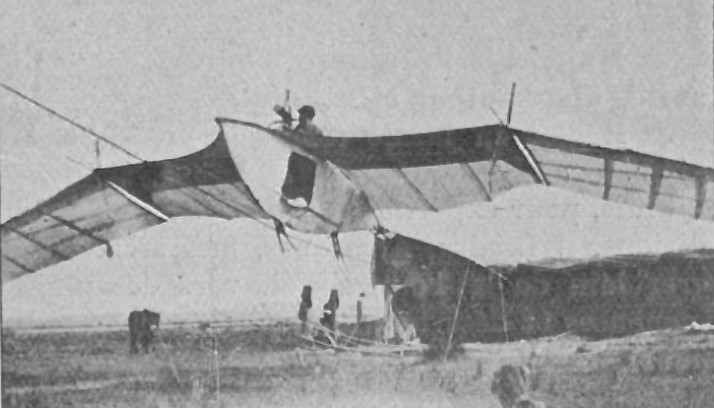
Albert Bazin built a series of gliders from 1904 up to 1907. In 1907 he built this ornithopter with a 12 hp three-cylinder engine. It had no rudder, since the machine “was built to fly straight forward, the shortest distance between one point and another being the straight line”. The area of the different wings could be extended and decreased, thereby achieving lateral control. It was apparently tested suspended from a wire.

Baynes Bat / Slingsby Sailplanes Baynes Bat

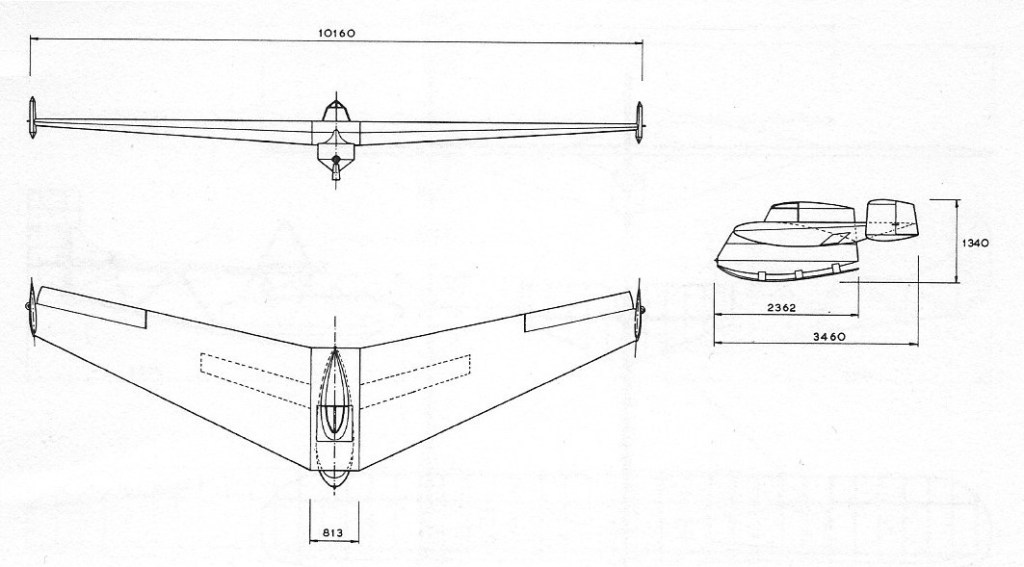
In the late 1930s, armies were looking for a way to airlift heavy military units. There were then no cargo aircraft big enough to lift a tank. A solution which was explored during the Second World War was to tow tanks as gliders, and for this wings had to be added. Most designs were based on straight wings with extended empennage and stabilizers. The design of L.E. Baynes in 1941 was for a 100 ft wing-span “Carrier Wing Glider” consisting chiefly of a swept wing with vertical stabilizers on the wing-tips.

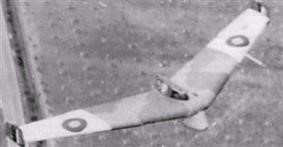
A one-third scale prototype was built entirely of wood in 1943 by Slingsby Sailplanes at Kirkbymoorside, and the Baynes Bat made its first flight in July 1943 at the Airborne Forces Experimental Establishment at RAF Sherburn-in-Elmet, Yorkshire. Most of the test flights were piloted by Flight Lieutenant Robert Kronfeld.

Tests were successful, but the project was abandoned because a suitable tank was not then available and a decision had been made to develop gliders which could carry heavy equipment within their fuselages.

The one Bat which had been built was the first tailless flapped monoplane to be available for research and it was flown extensively by the Royal Aircraft Establishment to test the stability and control of tailless aircraft. The Bat was last seen in 1958, lying behind a hangar at Croydon Airport.

Wingspan: 33 ft 4 in (10.16 m)
Length: 11 ft 4 in (3.46 m)
Wing area: 160.0 sq ft (14.86 m2)
Aspect ratio: 7
Height: 4 ft 4.8 in (1.340 m)
Empty weight: 763 lb (346.1 kg)
Gross weight: 963 lb (436.8 kg)
Maximum speed: 120 mph; 104 kn (193 km/h)
Cruising speed: 80 mph; 70 kn (129 km/h)
Stall speed: 40 mph; 35 kn (64 km/h)
Wing loading: 6.0 lb/sq ft (29.3 kg/m2)
Crew: 1

Baumer Aero GmbH

This company was founded by Herr Baumer, who was killed in July 1927 while flight-testing a high-performance monoplane. In addition to operating a flying school at Hamburg, the company designed and manufactured a number of lightweight aircraft. Best known was the Baumer Sausewind, a two-seat low-wing monoplane.