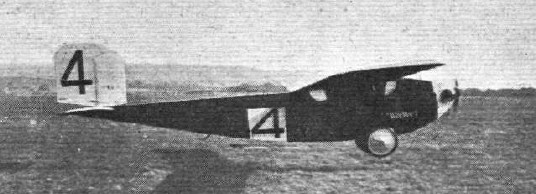
Beardmore W.B.XXIV / Wee Bee

The Beardmore W.B.XXIV Wee Bee I was the company’s winning entrant to the Lympne Aerodrome light aeroplane trials of 1924. The competition rules were framed to encourage more robust designs than those that had competed as “motor-gliders” at Lympne the previous year; they were to be single engined two seaters, with engine capacities up to 1,1000 cc allowed. The total prize money was £3,600; the first prize £2,000.
The Wee Bee was a high wing monoplane designed by W.S.Shackleton, its aerodynamically thick wing divided at the centre and braced, close to the fuselage, by pairs of parallel struts to the lower longerons. The wings were of two spar construction with plywood skinning between the two spars out as far as the bracing; outboard, only the leading edges were plywood covered, with fabric elsewhere. The outboard ailerons were mounted on false spars (stringers). In plan, the wings were almost rectangular, with an aspect ratio of about 5.5.
The fuselage was built up on six spruce longerons, with bulkheads (formers) of spruce and three-ply. The Wee Bee’s decking was concave as it reached the flat fuselage sides, making for a better view from the two tandem cockpits. These were positioned at the leading edge and just behind mid-chord, fitted with dual controls. Both cockpits were semi-enclosed and faired into the upper fuselage/ wing surface. The front one was entered by lifting up a small hinged part of the leading edge, which was locked down for flight; this gave excellent visibility with the help of the “hollow ground” decking. The aft cockpit had a roof hatch with a transparent celluloid window in the upper wings, with good views though openings in the sides below the wing. The 32 hp (24 kW) Bristol Cherub flat twin engine was hung from a duralumin sheet bracket fixed to the engine bulkhead and positioned below with a pair of duralumin tubes, themselves braced to the lower longerons with steel tubes. It was enclosed in a smooth, streamlined cowling, with the upper cylinder heads protruding for cooling.
The fin and tailplane were both integral with the fuselage and narrow in chord, carrying wider control surfaces. Both horizontal and vertical surfaces were rectangular, but the rudder had a noticeable horn balance. The main undercarriage was very simple, with two wheels mounted on a bent chrome-nickel alloy tube which passed through the fuselage bottom. This placed the wheels well clear of the fuselage horizontally (the track was 3 ft 9 in / 1.14 m) but left the Wee Bee sitting close to the ground. Landing loads were absorbed by elastic axle bending.
The only Wee Bee first flew in the late summer of 1924, ready for the Lympne competition. The preliminary trial for this were held at the weekend of 27-8 September, where only seven of the initial nineteen entrants did enough to go to the competition proper. As well as the Wee Bee, the other competitors were the Bristol Brownie, two Hawker Cygnets, the Parnall Pixie, the Cranwell CLA2 and the Westland Woodpigeon. The Wee Bee was flown by Maurice Pearcy.
The aircraft were given marks for four tasks: speed over two sets of five laps, slow speed flying and take off and landing distances. Only the Wee Bee and the Brownie, both Cherub engined, had the reliability to complete the speed tests, in which the Wee Bee achieved 70.1 mph (112.8 km/h), about 5 mph faster than the Bristol. It flew at just under 40 mph (64 km/h) and took off to clear a 6 ft (1.83 m) barrier with a run of 705 ft (215 m). Given the Wee Bee’s clean aerodynamics it was not surprising to find it took to greatest distance to pull up at landing; wheel brakes were not fitted. Despite the long landing, the Wee Bee ended the competition well ahead in marks of the Brownie, its nearest rival, winning the Air Ministry first prize of £2,000.
At Lympne in 1924 the Wee Bee flew as no.4, but at the Royal Aero Club meeting of August 1925, also held at Lympne, it appeared as G-EBJJ. At that meeting, with an aluminium front cockpit hatch in place of the earlier wooden one, it won the light two seater race and came fourth in the Grosvenor Cup, both times piloted by A.N Kingswill. In December 1933 it was sold to Percy Parker of Warrnambool, Victoria, Australia, where it was registered as VH-URJ. Mr. Parker sold it prior to 1939. It flew until 1939 and was then stored, but probably flew again a few years after the end of World War II, though exact dates are uncertain.

Engine: 1 × Bristol Cherub I air cooled flat twin, 32 hp (24 kW)
Length: 22 ft 2 in (6.76 m)
Wingspan: 38 ft 0 in (11.58 m)
Height: 7 ft 2 in (2.18 m)
Wing area: including ailerons 208.5 sq.ft (19.37 sq.m)
Empty weight: 465 lb (211 kg)
Gross weight: 840 lb (381 kg)
Maximum speed: 87 mph (140 km/h)
Crew: 2
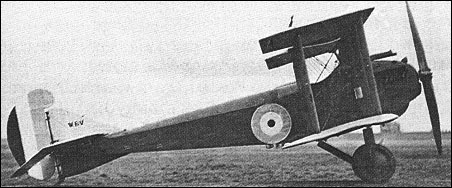
Beardmore WB.V

The W.B.V single-seat shipboard fighter was developed in parallel with the W.B.IV. It was intended to carry a 37mm Puteaux cannon between the cylinder blocks of its 200hp Hispano-Suiza eight-cylinder water-cooled engine and featured folding wings, a jettisonable undercarriage and inflatable flotation bags beneath the underside of the leading edge of the lower wing. Three prototypes of the W.B.V were ordered, the first flying on 3 December 1917, but the engine-mounted cannon was removed and a more conventional synchronised 7.7mm Vickers gun and a 7.7mm Lewis gun on a tripod ahead of the cockpit mounted. The second prototype W.B.V was completed and flown in 1918, but further development was abandoned before the end of World War I.

Engine: 200hp Hispano-Suiza
Take-off weight: 1134 kg / 2500 lb
Empty weight: 844 kg / 1861 lb
Wingspan: 10.92 m / 35 ft 10 in
Length: 8.10 m / 26 ft 7 in
Height: 3.61 m / 11 ft 10 in
Wing area: 36.60 sq.m / 393.96 sq ft
Max. speed: 180 km/h / 112 mph

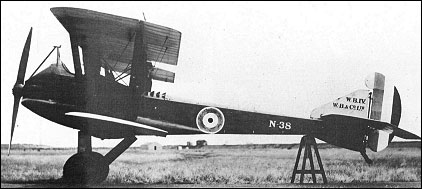
Beardmore WB.IV

The W.B.IV single-seat shipboard fighter was the first entirely original fighter to be developed by William Beardmore & Company. The 200hp Hispano-Suiza eight-cylinder water-cooled engine was mounted aft of the cockpit and drove the propeller via an extension shaft which passed between the pilot’s legs to provide the best possible view for the pilot, The cockpit was water-tight, a large flotation chamber was provided in the forward fuselage, wingtip floats were incorporated to stabilise the aircraft in the event of it alighting on the water in an emergency, and the undercarriage was jettisonable. The mainplanes could be folded, and The WB.IV was armed with a single synchronised 7.7mm Vickers gun and a 7.7mm Lewis gun mounted on a tripod ahead of the cockpit. Three prototypes of the W.B.IV were ordered, the first of these flying on 12 December 1917, but the other prototypes were not completed.

Engine: 200hp Hispano-Suiza
Take-off weight: 1177 kg / 2595 lb
Empty weight: 932 kg / 2055 lb
Wingspan: 10.92 m / 35 ft 10 in
Length: 8.08 m / 26 ft 6 in
Height: 3.00 m / 9 ft 10 in
Wing area: 32.52 sq.m / 350.04 sq ft
Max. speed: 177 km/h / 110 mph

Beardmore WB.III / SB.3

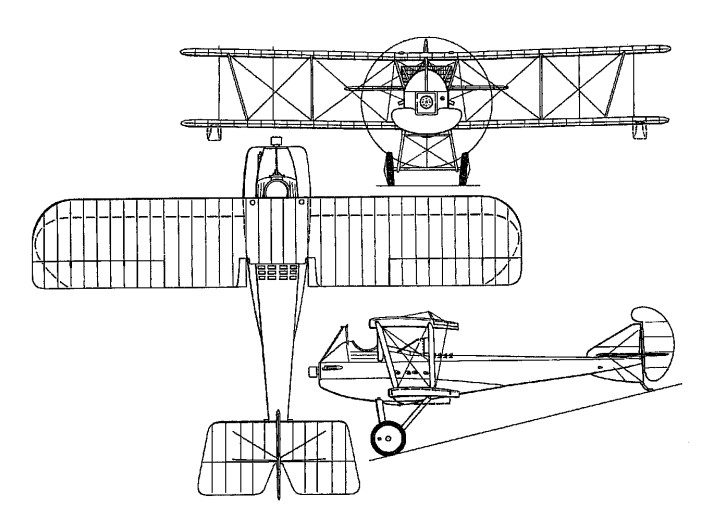
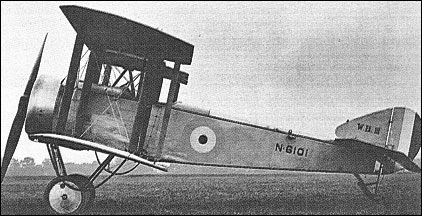
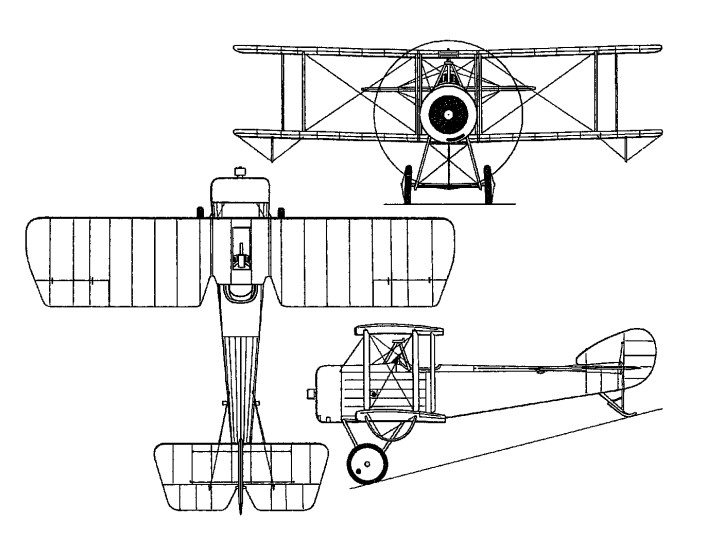
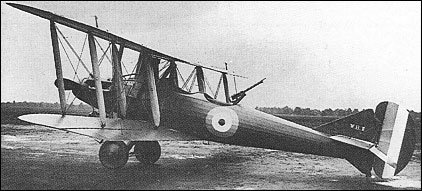
William Beardmore and Co developed their W.B.III as a carrier version of the Sopwith Pup fighter with manually-folding mainplanes and folding main undercarriage members. The William Beardmore and Company firm was already under contract to produce the land-based Sopwith Pup, this under legal license, and developed the WB III for shipboard use by the Royal Naval Air Service during World War 1.

Design of the WB III was conventional for biplane fighter aircraft of the time, keeping up with features as found on the Sopwith Pup. The engine was held in a forward compartment at the front of the slab-sided fuselage. A cylindrical engine cowling was fitted over the front engine facing for a more streamlined approach. The engine, a single nine-cylinder Le Rhone 9C series engine or a seven-cylinder Clerget (each delivering up to 80 horsepower), turned a two-bladed wooden propeller. The biplane wing arrangement featured straight parallel struts unlike the Sopwith Pup’s staggered formation, necessitated by the Navy requirement for manually folding wings (space on aircraft carriers was always at a premium). Additionally, the undercarriage – consisting of two fixed single-wheeled members – could be removed by the ground crew for improved stowage while the tail was supported by a simplistic tail skid. The fuselage tapered off to the empennage to which was affixed a rounded vertical tail fin and applicable horizontal planes.

Performance from the available powerplant allowed for a top speed of up to 103 miles per hour with a service ceiling of up to 12,400 feet and a rate-of-climb equal to 534 feet per minute. Endurance time (essentially the aircraft’s operational range) was listed at 2 hours and 45 minutes. The WB.III maintained a wingspan of 25 feet with a running length of 20 feet, 3 inches. She sat with an 8 foot, 1 inch height. On empty, she weighed in at 890lbs and could take off with a weight of up to 1,290 lbs. Armament was a single fixed, upward-firing .303 Lewis machine gun, firing through a cut-out section of the upper wing assembly.

The prototype WB III (a modified Pup) was accepted by the British military on February 7th, 1917. A contract for 100 production examples soon followed under the official British designation of SB 3.

Armament comprised a single 7.7mm Lewis gun which fired upwards through a cut-out in the upper wing centre section, and the W.B.III could be fitted with either the seven-cylinder Clerget or nine cylinder Le Rhone 9C rotary, both of 80hp. The first 13 production W.B.IIIs had folding undercarriages similar to the prototype and were known as S.B.3Fs, but subsequent W.B.Ills had jettisonable undercarriages (S.B.3D) and flotation equipment.

The initial production models fell under the designation of SB 3F and covered some thirteen examples until supplanted by the revised SB 3D. The SB 3D sported a jettisonable undercarriage as well as emergency flotation equipment in a slightly lengthened fuselage.

The WB III served on only three Royal aircraft carriers, these being the HMS Furious, HMS Nairana and the HMS Pegasus. One S.B.3D was used in an unsuccessful attempt to fly from the forecastle of the battle cruiser HMS Renown. Japan became the only other notable operator of the WB III/SB 3 series.

Beardmore SB 3F
Engine: 1 x Le Rhone 9C OR 1 x Clerget rotary, 80 hp
Length: 20 ft 3 in (6.16m)
Wingspan: 25.00ft (7.62m)
Height: 8 ft 1 in (2.47m)
Wing area: 22.57 sq.m / 242.94 sq ft
Maximum Speed: 103mph (166kmh; 90kts)
Maximum Range: 171miles (275km)
Rate-of-Climb: 534ft/min (163m/min)
Service Ceiling: 12,402ft (3,780m)
Armament: 1 x 7.7mm (0.303 caliber) Lewis machine gun
Accommodation: 1
Empty Weight: 891lbs (404kg)
Maximum Take-Off Weight: 1,290lbs (585kg)

Beardmore WB.II

Based on the design of the B.E.2c, the two-seat WB.II fighter was built as a private venture by G Tilghman-Richards of William Beardmore & Co. The W.B.II was powered by a 200hp Hispano-Suiza 8Bd eight-cylinder water-cooled engine and carried an armament of two fixed synchronised 7.7mm Vickers guns and a single 7.7mm Lewis gun on a swivelling Beardmore- Richards mounting. The W.B.II was first flown on 30 August 1917, and performance proved good, but the Hispano-Suiza engine was in short supply and was required for the S.E.5a single-seater. No production of the W.B.II was undertaken, although two civil examples were built in 1920 as the W.B.IIB.

Engine: 200hp Hispano-Suiza 8Bd
Take-off weight: 1202 kg / 2650 lb
Empty weight: 800 kg / 1764 lb
Wingspan: 10.62 m / 34 ft 10 in
Length: 8.18 m / 26 ft 10 in
Height: 3.05 m / 10 ft 0 in
Wing area: 32.88 sq.m / 353.92 sq ft
Max. speed: 193 km/h / 120 mph

William Beardmore & Co

In 1913, pre-empting The Great War, William Beardmore & Co ventured into aircraft production, building Sopwith Pup aircraft at Dalmuir under licence.
Later, a shipborne version of the Pup – the Beardmore W.B.III – was designed in-house. A hundred of these aircraft were produced and delivered to the Royal Naval Air Service (RNAS). The company built and ran the Inchinnan Airship Constructional Station at Inchinnan in Renfrewshire. It produced the airships R27, R32, R34 and R36.
Beardmore obtained a license to build German DFW biplanes to be powered by Beardmore-built Austro-Daimler engines, and built large numbers of aircraft under sub-contract during war.
In 1924, the company acquired a licence for stressed skin construction using the Rohrbach principles. An order for two flying boats using this construction idea was placed with Beardmore. It had the first aircraft built for it by the Rohrbach Metal Aeroplane Company in Copenhagen, building the second itself and they were delivered to the RAF as the Beardmore Inverness. In addition, a large, experimental, all-metal trimotor transport aircraft was designed and built at Dalmuir and delivered to the Royal Air Force as the Beardmore Inflexible. Beardmore produced a line of aircraft engines, including the Cyclone, Meteor, Simoon, Tornado (used in the R101 airship), Typhoon and Whirlwind.
Under the leadership of G. Tilghman Richards, produced original aircraft, including the W.B.III, a redesigned Sopwith Pup with folding wings and folding or jettisonable landing gear. Designed and built a small number of civil and military aircraft in the interwar years.

Beachey-Curtiss Looper

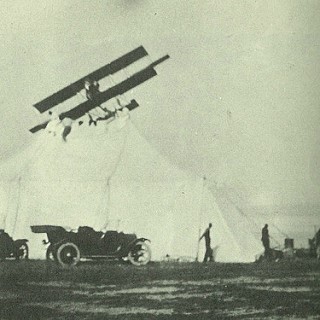
The Looper was built in 1912 and was a special headless version, built for Lincoln Beachey and stressed for aerobatics. On 7th October 1913, that Beachey’s machine fouled the ridgepole of a tent during a test flight and hit two couples who were sitting there. Ruth Hildreth, was killed outright, while her sister, Dorothea, suffered a laceration due to the propeller along with a fractured hip and arm. Their escorts, both US Navy Lieutenants, sustained fewer injuries. Ironically, Beachey was wearing a safety harness and survived the crash relatively unscathed, though he was mortified at what had happened.

Beachey-Curtiss Little Looper

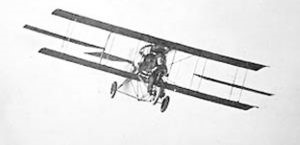
After a brief retirement in 1913, Beachey returned to the air to master the inside loop, a maneuver first mastered by a French aviator. Spurred on by national pride and the spirit of competition, Beachey directed Curtiss to design and build a reinforced airplane able to sustain the forces of a loop. Beachey completed his first loop in November 1913.

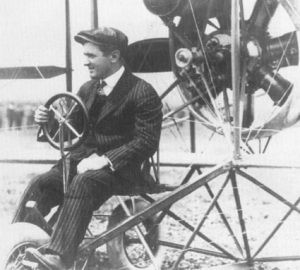
Beachey at the controls

Despite this, Beachey was not satisfied. His airplane was structurally reinforced to stand up to the forces of aerobatics, but its engine would stop running when inverted. In early 1914 technology advanced and Beachey travelled to France to acquire a pair of Gnome rotary engines. This innovative design was composed of seven cylinders arranged in a circle around the propeller shaft. When running, both the 80-hp engine and the propeller whirled around. The Gnome operated equally well upside down as right side up. Beachey directed his crew to install a Gnome engine in his newest airplane, giving rise to his “Little Looper”. On tour throughout the United States, Beachey conducted many flights over the rest of the year, expanding his repertoire and exposing millions of people to aviation.

Beachey’s reputation had swelled across North America as a result of his demonstration flight. Tens of millions of Americans saw Beachey fly the Little Looper through its aerobatic routine, captivating communities with the wonder and promise of aviation from coast to coast. As a “headless” Curtiss-type pusher with no forward-facing horizontal stabilizer, the Little Looper afforded Beachey an exceptional perch exposed at the front of the airplane, with unparalleled visibility and a strong feel for the airstream in any maneuver.

The Hiller Aviation Museum displays the original Little Looper.

Engine: LeRhône, 84-hp
Span: 25 ft 1 in
Length: 18 ft 4 in
Height: 8 ft 0 in
Weight, empty: 750 lbs
Weight, gross: 890 lbs
Max speed: 84 mph
Endurance: 45 minutes

Beachey 1910 monoplane

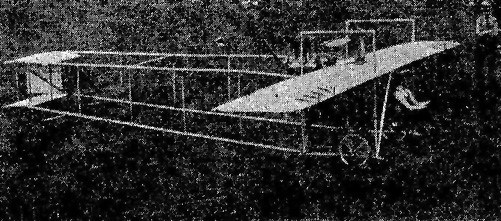
Lincoln Beachey and his brother Hillery started experimenting with monoplane aircraft construction after the January 1910 Los Angeles meeting. He was present at the Wright team’s inaugural meeting at the Indianapolis Motor Speedway in June 1910, but he didn’t make any flights in his monoplane. Two weeks later, perhaps hoping to learn by studying aeroplanes up close, Beachey secured a position as “chief assistant” to Charles Willard. In that capacity, he brought his monoplane to the Curtiss team’s meeting at Minneapolis in late June 1910. He made some short flights there, but the machine reportedly never got more than three feet off the ground. On June 24th he damaged the machine by crashing into a fence, and after that it seems to have lost interest in it.