The Berliner Aircraft Co. had produced one commercial airplane in addition to the two earlier experimental direct lift machines. The CM 4 Sportster, a high wing parasol aimed at the private pilot market, was powered by an OX 5. One large cockpit seating two was located directly under the large wing. The front end was much like that of the Travel Air 2000, complete with the same rectangular radiator. Landing gear was a split axle type, horizontal surfaces a pleasing elliptical shape and the vertical tail an almost complete circle, though this was later changed to a lozenge shape.
Aircraft
Berliner-Joyce Helicopter 1925
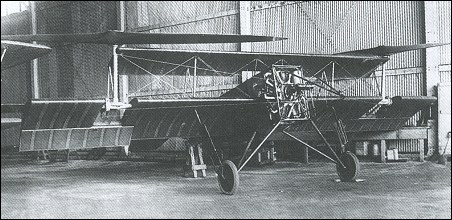
Henry and his father then decided to build a new, lighter helicopter to improve the thrust-to-weight ratio. Completed in 1925, the new design bore a superficial resemblance to the previous model, but it utilized a more efficient biplane configuration. The lower wing relied on a high angle of incidence and large camber to generate some lift from the rotor downwash. The Berliners also enlarged the rotors and added a novel differential collective pitch control system to replace the ineffective louvers.
However, even with the reduced weight and aerodynamic alterations, the 1925 model showed only a marginal increase in performance over the triplane version. Frustrated, Henry abandoned his helicopter experiments and became disillusioned with the potential of the helicopter. He went on to establish the Berliner Aircraft Company, and played an important role in the development of the innovative Erco Ercoupe.
Berliner-Joyce Helicopter 1924
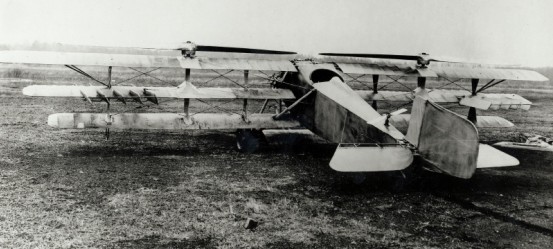
In 1922, Henry ordered a surplus Nieuport 23 fighter fuselage and mounted a Bentley 220 hp engine to the front. He attached a spar mid-way up the fuselage to form the bottom of a truss extending from the sides of the aircraft. The trusses each supported one of the two counter-rotating lifting rotors, which the engine powered through a series of geared shafts. The two rotors could tilt slightly in opposite directions to control yaw.
A variable-pitch tail rotor, 76 cm (30 in) in diameter, mounted horizontally in front of the vertical stabilizer, maintained pitch control while hovering. To initiate forward flight, the pilot pushed forward on the stick to increase the pitch of the horizontal tail rotor, which dropped the nose and inclined the lifting propellers slightly to initiate forward flight. The flight controls also connected to elevators and an enlarged rudder on the tail of the fuselage, which helped maintain control at higher forward speeds. Two sets of five 91 cm (36 in) x 20 cm (8 in) louvers, located below each rotor, opened and closed differentially to provide roll control by presenting a flat
surface, which reacted against the rotor downwash.
In the fall of 1923, Henry decided to mount a set of triplane wings onto the aircraft to allow for a safe glide in case of an engine failure. With the new design, he found he could marginally control the helicopter in a hover and in forward flight at speeds up to 64 kph (40 mph). However, Henry discovered that the helicopter did not have adequate thrust to climb out of ground effect. The roll-control louvers were the weak-point of the control system and lateral handling was poor.
On February 23, 1924, the helicopter recorded its best performance when it reached a height of 4.57 m (15 ft) during a one minute, thirty-five second flight. Many observers felt that the airframe was simply too heavy, including an Army engineer sent to observe the tests from McCook Field.
It was successfully demonstrated to the US Army in 1924, with several free flights at College Park, Md. Airport.
After Emile and Henry completed the testing of their triplane model, the younger Berliner offered it to the Smithsonian Institution.
This aircraft is the oldest intact helicopter in the world and was on loan to the College Park Aviation Museum since 1998, appropriately located on the site of the Berliner’s original testing ground.
Wingspan: 11.58 m (38 ft)
Rotor Diameter: 4.57 m (15 ft)
Length: 5.49 m (18 ft)
Height: 2.06 m (6 ft 9 in)
Weight: Empty, 748 kg (1,650 lb)
Gross, 870 kg (1,918 lb)
Engine: Bentley BR-2 Rotary, 220 hp
Bertèlli Aerostave
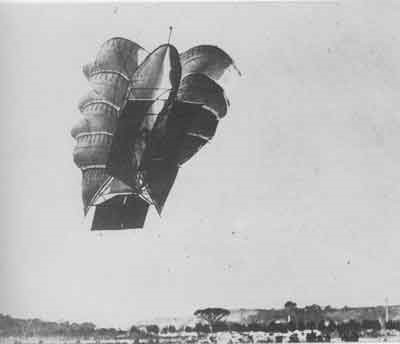
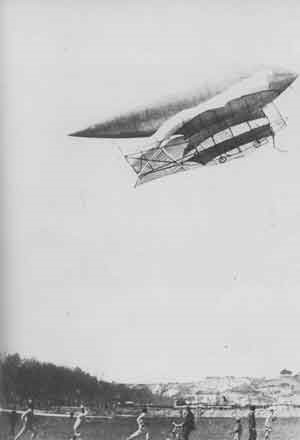
Shown in Rome in 1905, the “Aerostave” was financed by the Italian industrialist Achille Bertèlli (1855-1925). As a consequence the machine is commonly known as the Aerostave Bertèlli. The man who designed the machine was Vittorio Cordero di Montezemolo, who in 1903 published his ideas in a study of aerial navigation. The complex multi-wing structure was eventually built at the Surcouf factory in Paris. There, powered by a Levavasseur engine of 22 hp, trials were performed fitted with a gas bag, thus giving it additional lift in the manner done in 1906 by Santos-Dumont when testing his No. 14-bis.
Bert BF-4
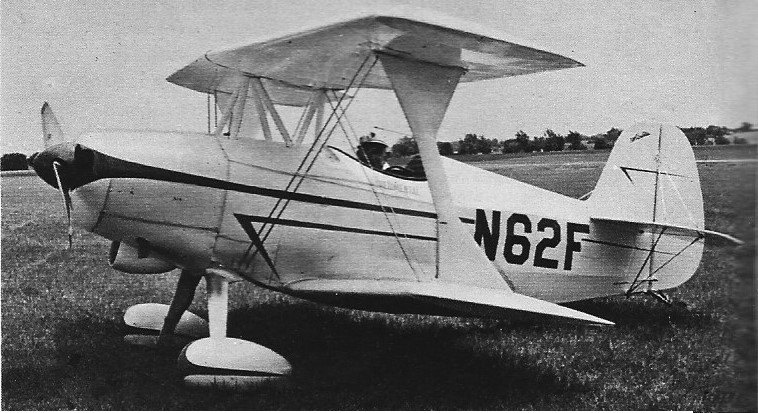
The Bert BF-4 N62F single-seat biplane was the fourth design of Floyd Bert. It took a year to construct at a cost of about $3500.
The wings are wood with Ceconite cover, and ailerons, on the lower wings only, are aluminium and fabric. The fuselage and tail are steel tube and fabric.
The engine is fitted with an inverted fuel system.
Engine: Lycoming O-320-A1A
Wingspan: 14 ft / 4.3 m
Length: 15 ft / 4.6 m
Empty weight: 660 lb / 299.4 kg
Gross weight: 1000 lb / 453.6 kg
Cruise: 140 mph / 225 kph
Landing speed: 60 mph / 96.6 kph
ROC: 3200 fpm / 16.26 m/sec
Endurance: 2 hr 30 min
Berkshire Concept C-70
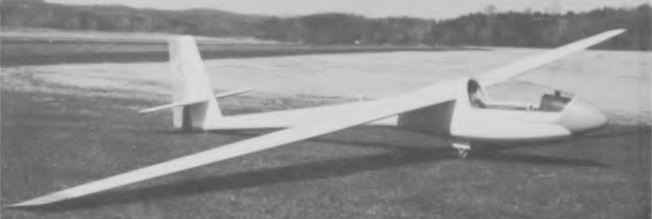
The Berkshire Concept 70, sometimes called simply the C-70, is an American, single seat, high-wing, 15 metre class competition glider that was designed by Arthur Zimmermann and produced by the Berkshire Manufacturing Corporation of Lake Swannanoa, New Jersey between 1971 and 1974.
The first US all-glassfibre sailplane, known as the Concept 70, did not make its first flight until 1970, some 13 years after the Akaflieg Stuttgart FS-24 Phonix had pioneered this material for sailplane structures. The single-seater Standard Class Concept 70 was the responsibility of Arthur Zimmerman and Wolfgang Schaer.
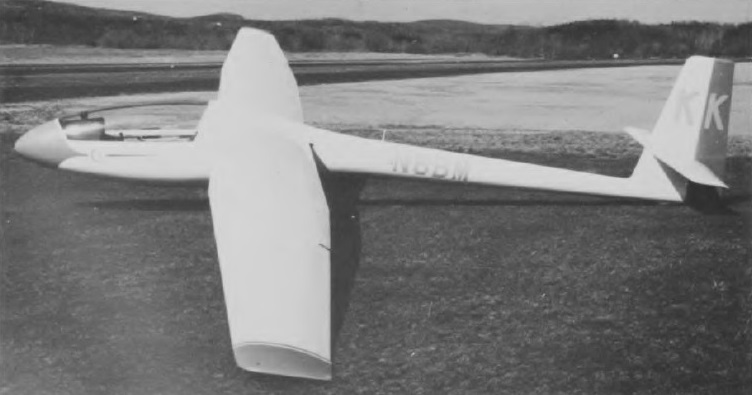
The Concept 70 was intended to be a domestic US fiberglass sailplane that would compete with the best European 15 metre aircraft being produced in the late 1960s.
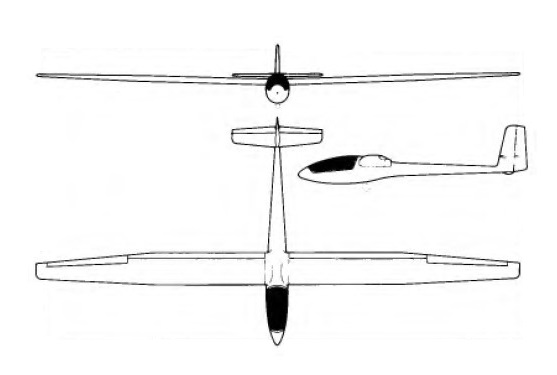
The cantilever shoulder wings have a constant chord centre section and tapered outer panels, and are of glassfibre/PVC foam sandwich construction, with aluminium flaps lowering to 90°; up to 200lb (91 kg) of water ballast can be carried with optional water ballast tanks. The prototype has an Eppler airfoil and an all-flying horizontal stabilator. Production aircraft featured a Wortmann airfoil, a more conventional tail, and full-span flaps that deploy to 90° for glidepath control.
The glassfibre monocoque fuselage has a steel tube reinforcing frame connecting the retractable monowheel and wing fittings and continuing into the cockpit for greater strength and rigidity. The pilot sits in a semi-reclining seat, recessed for an American type parachute, under a one-piece flush Plexiglas canopy which is hinged and jettisonable. The manually-retractable Tost monowheel has a drum brake.
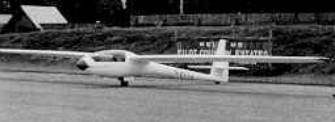
Differing in a number of respects from the prototype, the production version emerged with a Wortmann airfoil, full-span flaps, no brakes and a conventional horizontal tail.
Production by the Berkshire Manufacturing Corporation got under way in 1973, some 16 Concept 70s having been built by the spring of 1974. Production ceased, when Zimmermann died in 1974, after 21 were built.
The aircraft was never type certified and all aircraft were registered as experimental aircraft in the Racing/Exhibition category.
The Concept-70 molds and tooling were available for about US $35,000 including 40ft container.
ASC kits appear no longer to be in production.
Concept 70
Wingspan: 49 ft 3 in (15.0 m)
Wing area: 132 sq ft (12.3 sq.m)
Aspect ratio: 18.3
Airfoil: Wortmann
Empty weight: 550 lb (249 kg)
Gross weight: 875 lb (397 kg)
Maximum glide ratio: 39:1
Wing loading: 6.6 lb/sq ft (32 kg/sq.m)
Crew: one
Concept 70
Wing span: 15.0 m (49 ft 2.5 in)
Length: 7.31 m (24 ft 0 in)
Height: 1.83 m (6 ft 0 in)
Wing area: 11.52 sq.m (124 sq ft)
Wing section: Eppler/Wortmann
Aspect ratio: 20.0
Empty weight: 226 kg (500 lb)
Max weight: 396 kg (875 lb)
Water ballast: 91 kg (200 lb)
Max wing loading: 34.38 kg/sq.m (7.04 lb/sq.ft)
Max speed: 105 kt (195 km/h)
Stalling speed: 31 kt (58 km/h)
Min sinking speed at 43.5 kt (81 km/h): 0.62 m (2.03 ft)/sec
Max rough air speed: 105 kt (195 km/h)
Best glide ratio at 52 kt (96.5 km/h): 40
Beriev Be-200
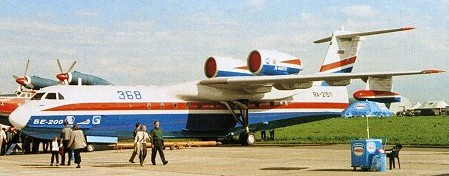
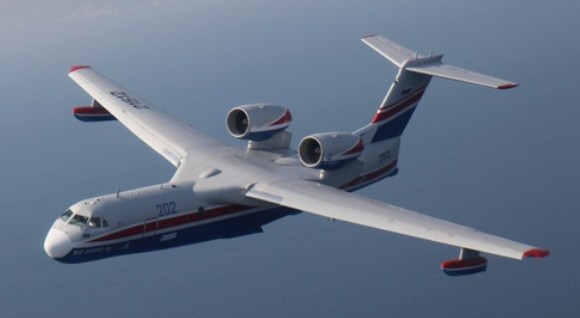
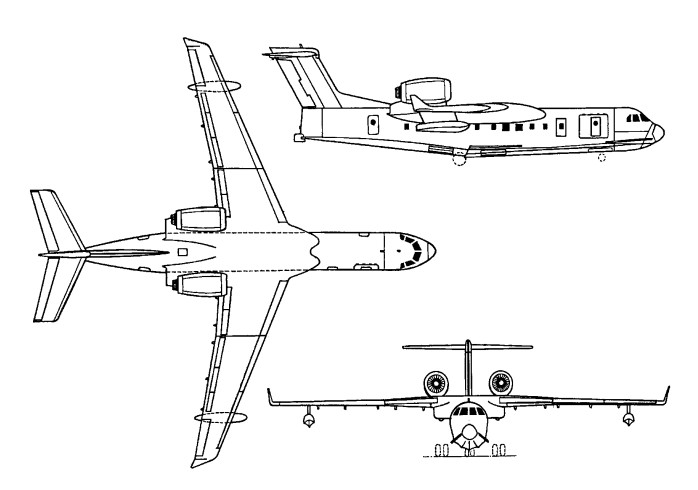
Beriev’s Be-200 multipurpose amhibious aircraft was designed as a further development of the A-40 antisubmarine aircraft. The Be-200 has a 66 passenger or 8000 kg cargo capacity. Six aircraft were launched into production at the Irkutsk Aviation Production Association. The first prototype flew on September 24, 1998.
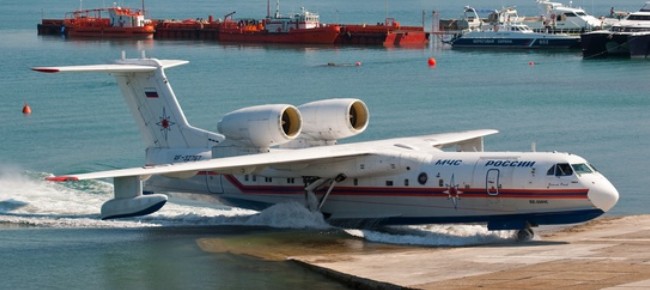
Engine: 2 x Progress D-436TP turbo-prop, 73.5kW
Wingspan: 31.8 m / 104 ft 4 in
Length: 31.2 m / 102 ft 4 in
Height: 8.7 m / 28 ft 7 in
Take-off weight: 37000-43000 kg / 81571 – 94799 lb
Max. speed: 710 km/h / 441 mph
Cruise speed: 600 km/h / 373 mph
Ceiling: 8000 m / 26250 ft
Range: 2100 km / 1305 miles
Range w/max.fuel: 3850 km / 2392 miles
Payload: 6.5 ton or 64 pax.
Crew: 2
Beriev Be-103
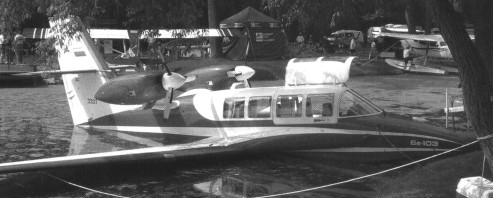
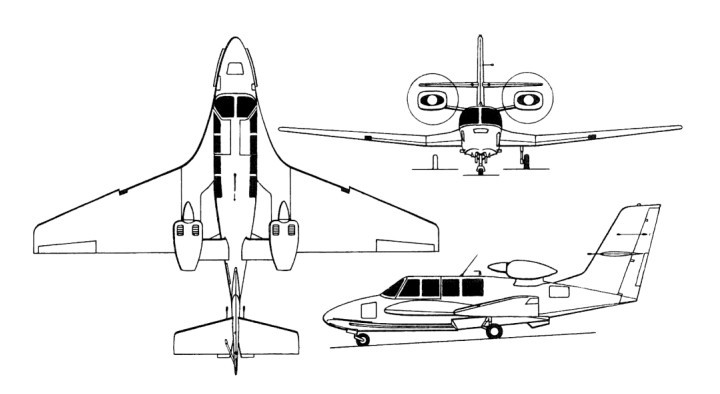
A 1986 designed amphibious twin engine aircraft. Licence built in the USA and certified by the FAA.
The first prototype flew on 19 July 1997.

Engine: 2 x Teledyne Continental Motors 10-360ES4, 210hp
Take-off weight: 2435 kg / 5368 lb
Wingspan: 12.7 m / 41 ft 8 in
Length: 10.6 m / 34 ft 9 in
Cruise: 165 mph.
Seats: 6.
Beriev Be-42
An improved search-and-rescue variant of the Be-40 became the Be-42 (sometimes referred to in the West as A-45).
Beriev A-40 / Be-40 Albatross
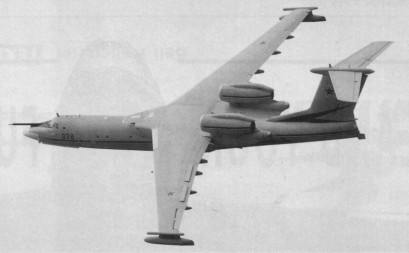
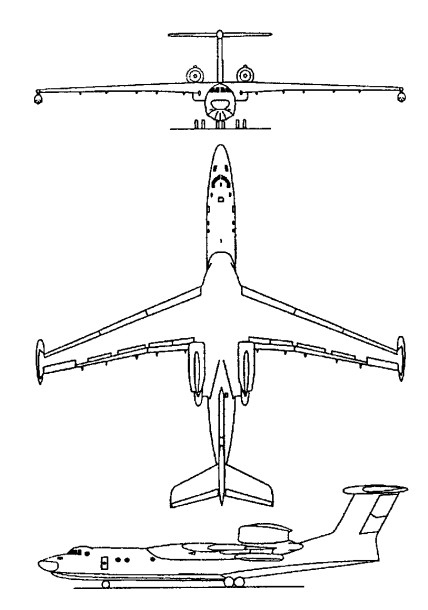
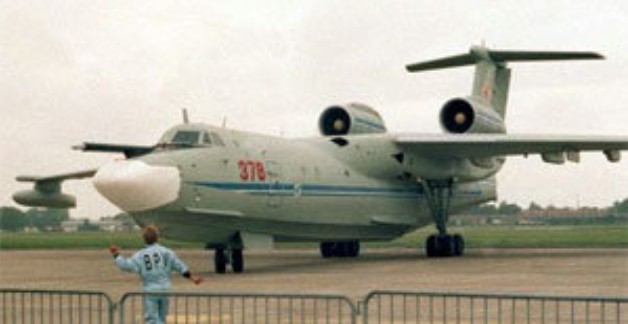
The A-40/Be-40 Albatross Mermaid turbofan-powered intermediate-range antisubmarine, search-and-rescue and patrol amphibian, first flown December 1986 and ordered for the Russian Navy in 1992 but not funded.
The A-40 amphibian aircraft is intended for antisubmarine warfare in the near coastal zone at any time of the day and year, in VFR and IFR weather conditions.
The aircraft is provided with an inflight refueling system.
Its onboard equipment provides for automatic solution of flight/navigation problems, search, detection, tracking and destruction of hostile submarines both in surface and submerged positions and on the sea bottom.
The equipment comprises a search/sighting system, a flight control and navigation complex, communications facilities, and other equipment. The search/sighting system consists of radar, sonar and magnetometric subsystems.
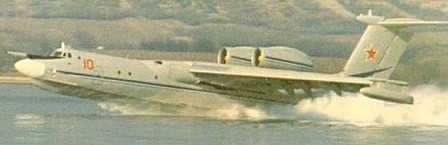
The engines are started by an auxiliary power unit and the cruise turbofans are equipped with a thrust reverser, thereby reducing the landing roll and the abortive takeoff distance.
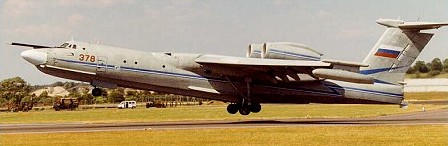
The type first showed up in US reconnaissance photographs during 1988 satellite passes over Taganrog but the first “closeups” came with the amphibian’s surprise debut at an air show in August 1989. NATO dubbed the aircraft, christened Albatross by the G M Beriev Taganrog Aviation Scientific Engineering Complex, “Mermaid”.
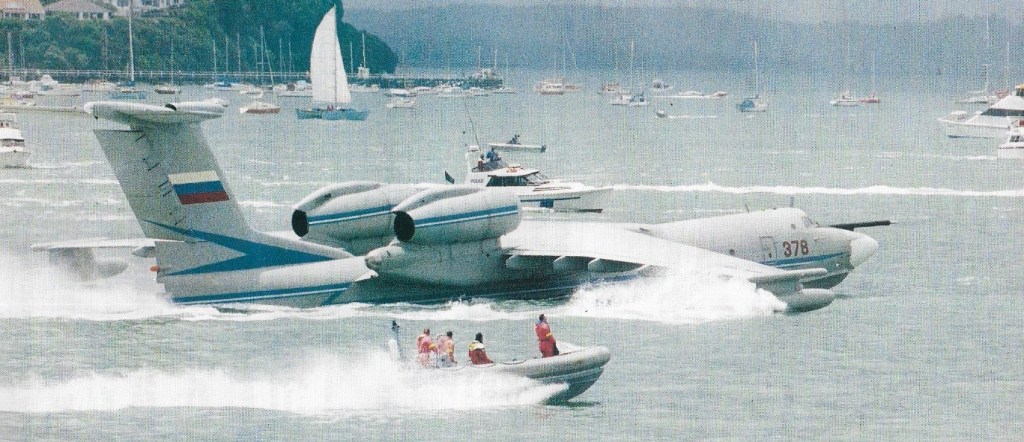
A requirement for the two large 26,455 lb static thrust PERM Soloviev D 30KPV engines to be placed away from ingesting water saw an over wing configuration incorporated in the design. The rear part of the pylon ac¬commodates RD 60 booster engines providing an increase in thrust by 6065 lbs st apiece. In the SAR role the A 40 can cover 1240 nm (2000km) from its base and take on board up to 54 survivors. The crew usually totals five plus a rescue team of around four to six.
An improved search-and-rescue variant became the Be-42 (sometimes referred to in the West as A-45).
Engines: 2 x PERM Soloviev D-30KPV turbofan, 117.7 kN (26,455 lb) and 2 x Klimov RD-36-35AFV, 24.5 kN
Take-off weight: 86000 kg / 189599 lb
Wingspan: 41.6 m / 136 ft 6 in
Length: 43.8 m / 143 ft 8 in
Height: 11.1 m / 36 ft 5 in
Wing area: 200.0 sqm / 2152.78 sq ft
Max. speed: 760 km/h / 472 mph
Cruise speed: 720 km/h / 447 mph
Ceiling: 9700 m / 31800 ft
Range w/max.fuel: 5500 km / 3418 miles
Range w/max.payload: 4100 km / 2548 miles
Armament: 6500kg
Crew: 8