Bernard V.4

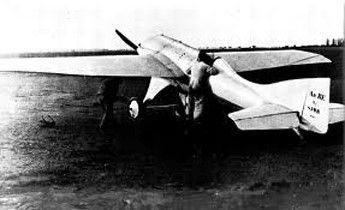
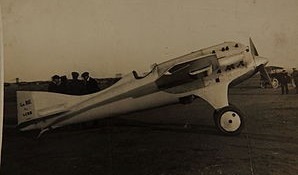
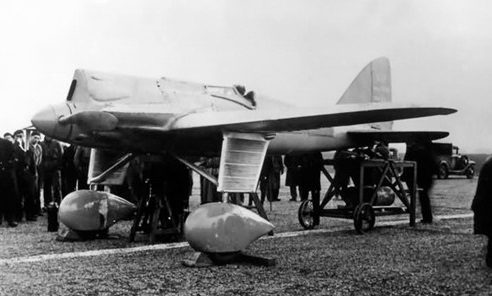
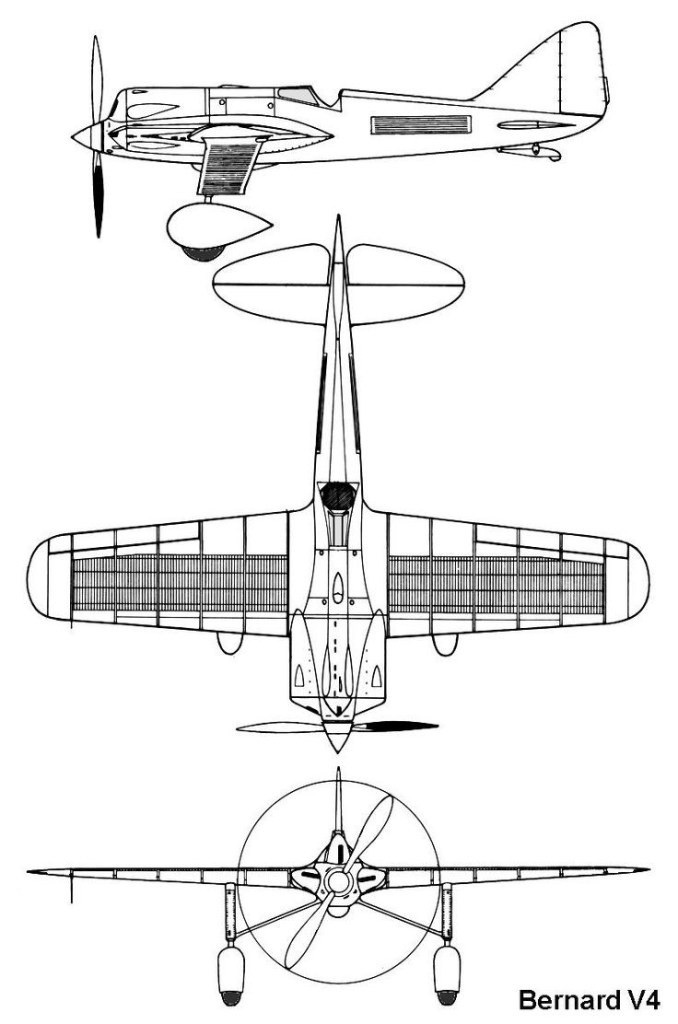
In 1933 the prototype H.S.120 seaplane racer (on pontoons) was converted into a racing landplane as the Bernard V.4 no.1 with a 1,125 hp (839 kW) Hispano-Suiza 18Sb engine and shorter span wings.

The V.4 had widely spaced main landing gear with streamlined wheel spats. It was moved to Istres in December 1933 to try and achieve a French Air Ministry prize for a French aircraft to beat the world speed record before January 1934. It was due to make an attempt to fly on 27 December 1933 but strong winds kept the aircraft grounded. Further attempts in February 1934 to fly were thwarted by engine problems and lack of government finance. The project was abandoned without the aircraft have flown.

Bernard V.1 / SIMB V.1

The Bernard SIMB V.1 (V = Vitesse) was a French single seat racing monoplane designed by Jean Hubert to compete for the 1924 Beaumont Cup requiring a 300 km (186 mi) flight round a 50 km (31 mi) circuit at Istres at an average speed of over 290 km/h (180 mph).

Alternatively known as the SIMB V.1: the Société Industrielle des Métaux et du Bois (SIMB), the V.1 had a cantilever shoulder wing of thin section, built around four spars with plywood and fabric covering. Straight edged beyond the centre section, it tapered only slightly to the oblique tips. The tailplane had curved, swept leading edges and carried split elevators with a cut-out for rudder movement. The fin was almost triangular, with a slightly convex leading edge; it carried a pointed rudder on a vertical hinge extending to the bottom of the fuselage.

The smooth, oval section fuselage was ply and fabric covered, tapering towards the tail. The pilot sat low down in a small open cockpit with narrow streamlined dorsal fairings in front and behind. His view forward was severely restricted by the central inline bank of four cylinders of the W-12 Lorraine-Dietrich 12E water-cooled piston engine. The engine was cooled by radiators in the wings, assisted for the first flight by a bank of radiators mounted between the undercarriage legs. These backward leaning legs were wide chord, faired cantilevers with large, unfaired wheels mounted on individual stub axles. The V.1’s conventional undercarriage was completed by a small tailskid.

The racer was completed in nine months and taken to Istres in May 1924 to prepare for the competition. Its first flight, piloted by Florentine Bonnet, ended in disaster. It was immediately apparent that the V.1 lacked longitudinal stability, oscillating uncontrollably in altitude; these oscillations persisted even as Bonnet reduced speed and attempted to land and the V.1 crashed at 200 km/h (125 mph), sliding on its back. Bonnet was fortunate to escape unhurt. The instability was ascribed to insufficient tailplane area combined with a far forward centre of gravity. With the race only a few days away, there was no time to repair the V.1 and development was abandoned.

Engine: 1 × Lorraine-Dietrich 12E W-12, 332 kW (445 hp)
Propeller: 2-bladed Levasseur (licence built Reed), metal, 2.45 m (8 ft 0 in) diameter
Wingspan: 10.50 m (34 ft 5 in)
Height: 2.50 m (8 ft 2 in)
Wing area: 15.50 sq.m (166.8 sq ft)
Empty weight: 900 kg (1,984 lb)
Gross weight: 1,050 kg (2,315 lb)
Maximum speed: 420 km/h (261 mph; 227 kn) estimated
Bernard / SIMB / Ferbois

Societe Industrielle des Metaux et du Bois
SIMB
Societe des Avions Bernard
Ferbois

Établissements Adolphe Bernard was established in 1917 and best known by name Bernard, Adolphe Bernard built SPADs from 1917, original designs materialising only after Armistice. By the end of the First World War the factory was produced under license 2486 airplanes SPAD XI, XIII and XVI.

Known originally as A. Bernard, company was founded in the latter years of the First World War. Its title was changed in 1919 to Societe Industrielle des Metaux et du Bois (SIMB). Société Industrielle des Métaux et du Bois (SIMB) was sometimes referred to as Ferbois. The latter company was wound up in 1926, but the Societe des Avions Bernard was established in late 1927 to manufacture the Bernard 190T, a ten-seat transport aircraft designed by SIMB.

From 1924 until 1927, the world absolute speed record had been held by Bonnett, a Frenchman, flying a Ferbois landplane at 278 mph.

A number of experimental aircraft were built before closure in 1935. The former Bernard design team was dispersed after 1935. Georges Bruner and Jean Galtier were briefly hired by Fouga, then Bruner worked for Gourdou and Galtier went to Arsenal. Roger Robert went to CAPRA, predecessor of Matra.

Berliner-Joyce XFJ-2

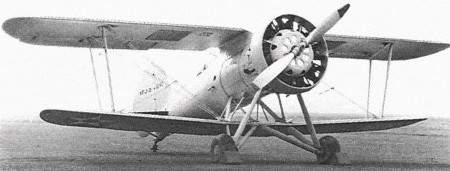
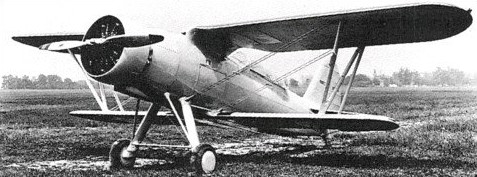
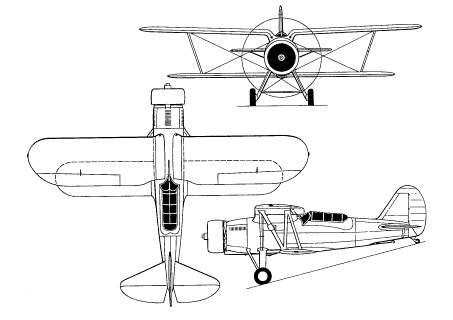
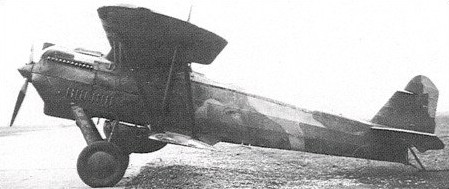
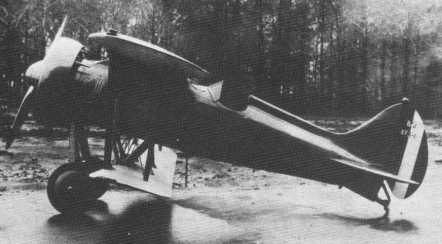
The XFJ-1 was returned to Berliner-Joyce for reconstruction in November 1930, during which the dihedral was eliminated from the upper wing, the vertical tail surfaces were enlarged and a 500hp R-1340D Wasp engine was installed, this being enclosed by a Townend ring and fitted with a spinner.
Redesignated XFJ-2, the fighter resumed its flight test programme at Anacosta on 22 May 1931. The XFJ-2 displayed no improvement in landing characteristics by comparison with the XFJ-1 and proved unstable, and after testing by the US Navy, was discarded as unsatisfactory.

Engine: 500hp R-1340D
Take-off weight: 1291 kg/2846 lb
Empty weight: 953 kg/2101 lb
Wingspan: 8.69 m/29 ft 6 in
Length: 6.28 m/21 ft 7 in
Height: 2.99 m/10 ft 10 in
Wing area: 16.59 sq.m/178.57 sq ft
Max. speed: 285 km/h/177 mph
Range: 837 km/520 miles

Berliner-Joyce XF2J-1

Berliner-Joyce XF2J-1

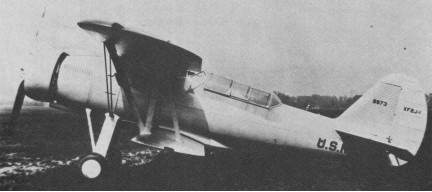
Essentially a navalised P-16, the XF2J-1 two-seat shipboard fighter prototype was ordered by the US Navy on 30 June 1931, but did not fly until 1933. Originally designed for a single-row Pratt & Whitney R-1690C Hornet radial, the XF2J-1 was completed with the experimental two-row 14-cylinder Wright R-1510-92 Whirlwind rated at 625hp at 1830m.
The XF2J-1 was a two-seater fighter with a smooth monocoque fuselage. Upper and lower wings were gulled in¬to the fuselage, as in the P 16.
As initially flown, the XF2J-1 had tandem open cockpits, but at an early stage in the test programme sliding canopies were fitted.
Inadequate visibility for deck landing and inability to compete with the Grumman XFF-1 ended further development of this type. The Navy chose the Grumman and the F2J never went into production.

Take-off weight: 2059 kg/4539 lb
Empty weight: 1456 kg/3210 lb
Wingspan: 10.97 m/36 ft 0 in
Length: 8.78 m/29 ft 10 in
Wing area: 28.19 sq.m/303.43 sq ft
Max. speed: 315 km/h/196 mph
Range: 840 km/522 miles

Berliner-Joyce P-16 / PB-1

XP-16

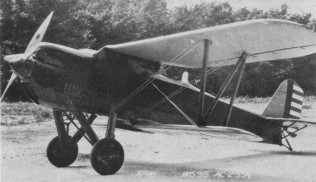
The United States Army Air Corps wrote specs for a two seat fighter, getting a competition held in April, 1929. As per Air Corps specification 1639A, the proposal of the new Berliner/Joyce Aircraft Corp. won out over its competitors, Boeing, Curtiss and Vought. The fighter, officially designated the XP-16, was one of three products of a young company that had come into being in 1928. Two seat fighter concept as envisioned by Air Corps planners required an aft facing gunner.Completed in October 1929, the one and only XP 16 was delivered in October 1930. A supercharged Curtiss V-1570A Conqueror gave it a top speed of 186mph at 5000 feet, and 183 mph at 10,000 ft. The prototype XP-16 was of fabric-covered metal construction with an upper wing of gull configuration. Armament comprised two fixed forward-firing 7.62mm machine guns and a third weapon of similar calibre on a flexible mounting in the rear cockpit. Five 11kg or two 55kg bombs could be carried.Two contracts were issued for a total of 25 service test aircraft as YlP-16s, these being essentially similar to the prototype apart from having the unsupercharged V-1570-25 Conqueror which was also rated at 600hp. The YlP-16s were delivered in 1932 and were later redesignated as PB-1s (pursuit-biplace). These proved to possess insufficient manoeuvrability to oppose single-seat fighters, offered extremely poor visibility for landing and displayed a tendency to nose over. They were withdrawn from USAAC service on 31 January 1934.

PB-1

Prototype XP-16
Engine: Curtiss V-1570A Conqueror 12-cylinder liquid-cooled supercharged, 600hp

P-16
Crew: 2
Engine: 1 x 600hp Ñurtiss V-1570-25 Conqueror
Take-off weight: 1813 kg / 3997 lb
Empty weight: 1271 kg / 2802 lb
Wingspan: 10.36 m / 34 ft 0 in
Length: 8.59 m / 28 ft 2 in
Height: 2.74 m / 9 ft 0 in
Wing area: 25.92 sq.m / 279.00 sq ft
Max. speed: 282 km/h / 175 mph
Cruise speed: 243 km/h / 151 mph
Ceiling: 6585 m / 21600 ft
Rate of climb: 654 m/min / 2150 ft/min
Range: 1046 km / 650 miles
Armament: 3 x 7.62mm

Berliner-Joyce XFJ-1

In 1929 the stock market collapsed. Berliner/Joyce set the 29 1 aside and concentrated on a more promising military contract for the XFJ-1, a Navy carrier fighter contract they had gotten in May of that year.
The first military design of the new Berliner/Joyce Aircraft Co. was the XFJ 1. Bristol Fighter influence was carried over into the single seater fighter by dropping the lower wing to reduce wing interaction.
The upper wing of the XFJ-1 was gulled into the fuselage and the lower wing was dropped sixteen inches below the fuselage. The XFJ 1 did not earn a production contact for Beliner/Joyce. The lower wing, so near the ground, created so much turbulence that it was difficult to keep the airplane from ground loop¬ing.
When the Navy lost interest in the XFJ 1, Temple Joyce attempted to interest the Air Corps in it. Fitted first with an anti drag ring and later with wheel pants, it had a top speed of 193mph.
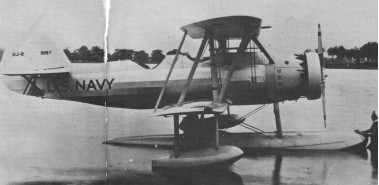
In the same year that the XFJ 1 was tested, 1930, Berliner/Joyce came out with the OJ 2.

Engine: P&W Wasp, 450 hp. Top speed: 193mph.

Berliner-Joyce 29-1

The first product of the new company was the 29 1, a tandem seat cabin monoplane with a high wing, large windows and a 100 hp Kinner engine. It looked a great deal like a Curtiss Robin; not surprising because Henry Berliner had hired some men away from Curtiss. Temple Joyce first flew the 29 1 in August of 1929. Sales prospects looked good. Two and a half months later, the stock market collapsed. Berliner/Joyce set the 29 1 aside and concentrated on a more promising military contract for the XFJ-¬1, a Navy carrier fighter, a contract they had gotten in May of that year.