The X-Wind was a one-of-a-kind homebuilt of Mr. Jack Bowling and it first flew in 1974. The aircraft had a 80hp Continental A80 engine and featured a corrugated aluminum fuselage and tail covering, not unlike that of early Junkers. The aircraft had wings taken from a Luscombe 8. The registration N6379 was cancelled in 2012.
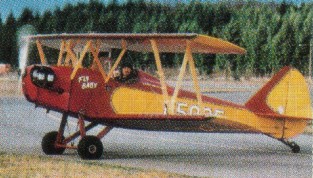
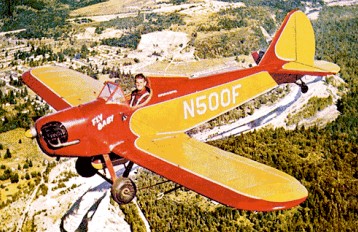
The prototype Fly Baby 1 B biplane, which first flew in 1969, could be converted from monoplane to biplane in around an hour. The two monoplane wing panels are replaced by four smaller ones, plus a center section for the top wing. The biplane wings take longer to build, since there are four panels and a center section, and they’re swept rather than straight. And there are some internal braces and external tangs that have to be added to the fuselage. This can be done after the fuselage is done (The prototype was converted after completion), but it is easier during construction. The biplane is slower, and the wings don’t fold.
In monoplane or biplane configuration, the Fly Baby does meet the US rules for Sport Pilot. In the United States, you do not need an FAA medical to fly a Fly Baby.
This plane is a structurally simple and easy-to-fly airplane designed to the requirements of the Experimental aircraft Association for home construction and storage in a space 7 x 8 x 20 feet, which is equivalent to the standard home garage. Great emphasis has been placed upon safe flight characteristics and good low speed performance for takeoff and landing at some sacrifice of high speed. The structure has been designed for standard airplane engines from 65 to 85 horsepower and the aerodynamic features are of sizes and proportions suited to obtaining the best all-around performance in this power range. Because of this, there is not enough advantage to be gained from using engines of significantly higher power to offset the cost and weight penalties. Increasing the power to increase the aerobatic capability is not recommended. Fly Baby will do simple recreational aerobatics very well but is not intended for rough air show or competition maneuvers.
Originally designed in 1960 by former Boeing engineer Peter Bowers to compete in the first EAA design competition, the Fly Baby is a single-seat, open cockpit, folding-wing monoplane powered by engines ranging from 65 to 100 hp. It is built primarily of wood, with fabric covering. It’s got a big cockpit as Peter Bowers is six feet two inches tall. First flown in 1960 the Fly Baby 1-A single place monoplane won the 1962 EAA competition for the best amateur plane with a C-85 engine. The Fly Baby has the distinction of being one of the most enduring designs in the homebuilt field. It has been tested with floats and in 1968 was fitted with biplane wings which were interchangeable with the single wings. The wings are a wooden structure covered with Dacron fabric, and the fuselage is a conventional plywood-covered wooden structure with a single open-cockpit seat. Plans were made available to amateur constructors.
Most are powered by Continental A-65, C-75, C-85, or O-200 engines. The 100 hp Continental is recommended over the 85 hp engine as it is only 13 pounds heavier, and gives a cruise speed of 92 knots with a two-blade fixed-pitch propeller. The fully aerobatic aircraft has a 22 foot wingspan and is 19 feet long. It will climb at 700 fpm and weighs 651 lbs empty with a MAUW of 972 lbs.
The prototype Fly Baby 1 B biplane, which first flew in 1969, could be converted from mono¬plane to biplane in around an hour. The two monoplane wing panels are replaced by four smaller ones, plus a center section for the top wing. The biplane wings take longer to build, since there are four panels and a center section, and they’re swept rather than straight. And there are some internal braces and external tangs that have to be added to the fuselage. This can be done after the fuselage is done (The prototype was converted after completion), but it is easier during construction. The biplane is slower, and the wings don’t fold.
In monoplane or biplane configuration, the Fly Baby does meet the US rules for Sport Pilot. In the United States, you do not need an FAA medical to fly a Fly Baby.
This plane is a structurally simple and easy-to-fly airplane designed to the requirements of the Experimental aircraft Association for home construction and storage in a space 7 x 8 x 20 feet, which is equivalent to the standard home garage. Great emphasis has been placed upon safe flight characteristics and good low speed performance for takeoff and landing at some sacrifice of high speed. The structure has been designed for standard airplane engines from 65 to 85 horsepower and the aerodynamic features are of sizes and proportions suited to obtaining the best all-around performance in this power range. Because of this, there is not enough advantage to be gained from using engines of significantly higher power to offset the cost and weight penalties. Increasing the power to increase the aerobatic capability is not recommended. Fly Baby will do simple recreational aerobatics very well but is not intended for rough air show or competition maneuvers.
Bowers recommends Continentals between 65 and 85 horsepower. The Fly Baby isn’t a fast airplane so bigger engines don’t really give much. A reported Fly Baby which replaced the A-65 with a C-85, increased the cruise from 80 to 95 mph and his rate of climb from 500 to 1000 fpm.
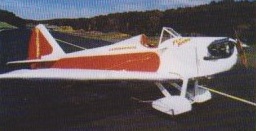
Peter Bowers designed and built the prototype of the Namu II two seat aircraft, which first flew on 2 July 1975. The Namu, named after the famous whale, first flew in 1975. The side-by-side two-seater features an enclosed canopy, dual controls and conventional tailwheel type gear. Its low-wing configuration is constructed from wood, with Dacron fabric covering the wings and tail section and plywood covering the fuselage except for the rear decking. Fuel is carried in one main tank just aft of the firewall, and baggage is carried under and behind the seats. The Namu II has a three piece single-spar with spruce flanges and plywood webs. The leading edge torsion box is a sandwich of two sheets of aluminium with glassfibre cloth between, epoxy-cemented together and formed over plywood nose ribs. With a fixed undercarriage and wooden tail unit, all fabric covered. Another Namu II, with a different canopy, has been completed by Richard Lower and Tom Godbey of Seattle.
Engine: Lycoming O-290G, 125 hp, 93 kW Wingspan: 33 ft / 10.06m Wing area: 150 sq.ft / 13.9 sq.m Length: 21 ft 6 in / 6.55m Max tak off weight: 1850 lb / 839 kg Empty weight: 1200 lb / 544 kg Fuel capacity 32 USG. Max level speed: 140 mph / 225 kph / 122 kt Cruise speed: 126 mph / 225 kph / 109 kt Stall: 50 mph. Climb rate 950 fpm Service ceiling: 15,000 ft / 4570m Range max fuel: 500 miles / 434 nm / 804 km Baggage capacity: 45 kg / 100 lb
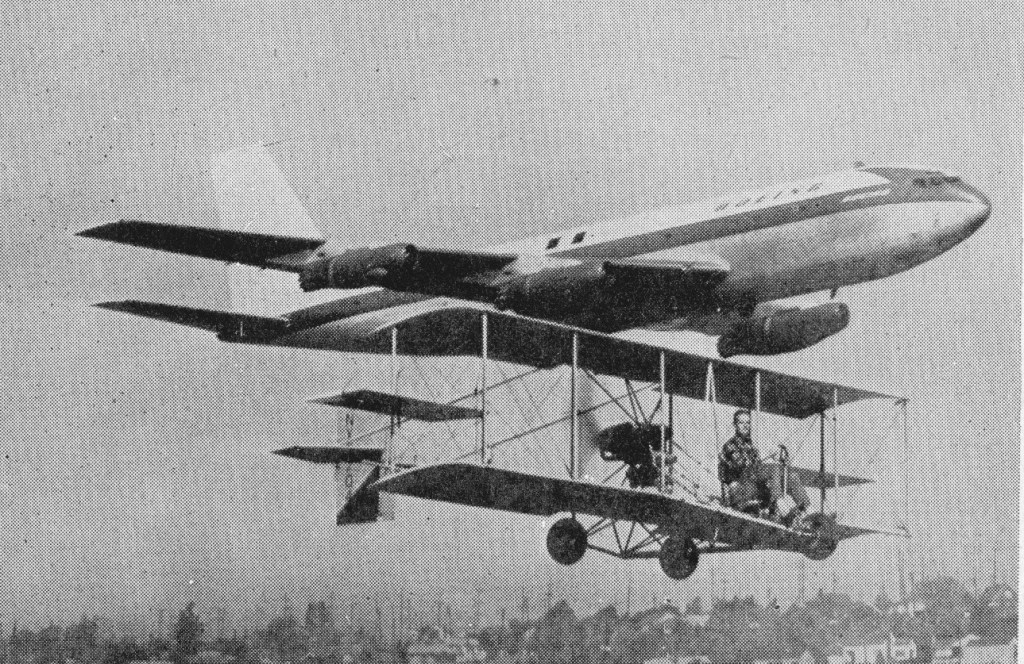
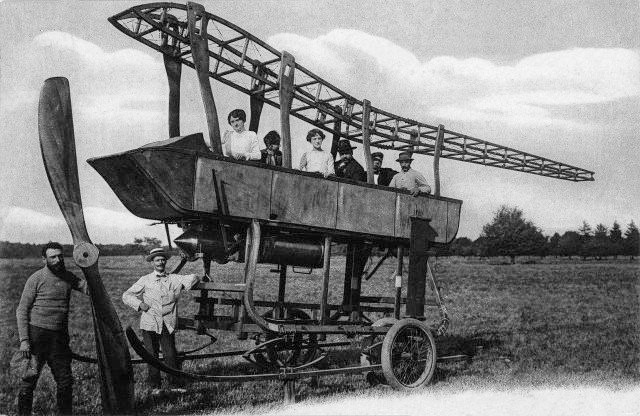
This big high-wing monoplane (span 14 m, length 12 m) was the design of René Bourgoin, who displayed it in 1912 at the cycle stadium Vélodrome d’Hiver in Paris. It was designed to carry no less than twelve passengers, driven by two giant tractor propellers of 3.5 m diameter, powered by an unidentified 200 hp engine, but it seems it was never finished.
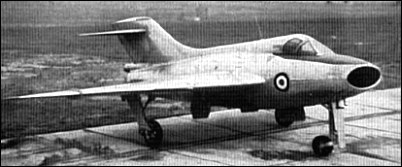
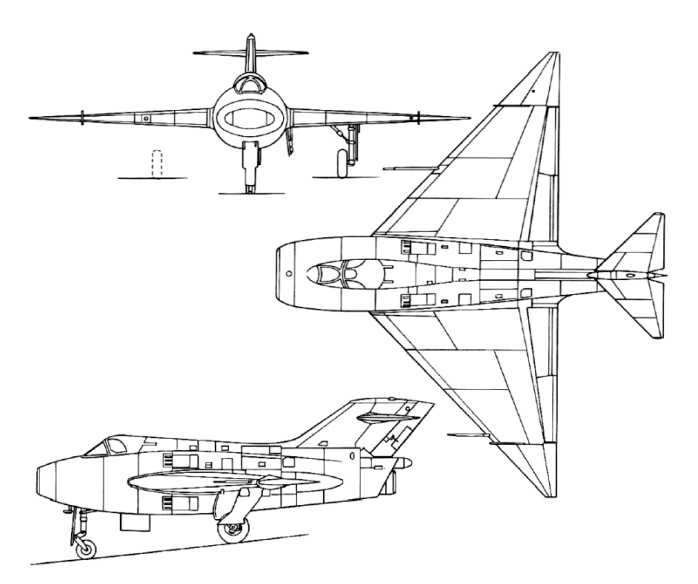
The Boulton Paul P.120 delta wing research aircraft, built to Air Ministry Specification E.27/49, was used to investigate high speed characteristics of the delta wing. The P.120, flown on 6 August 1952, was similar in general layout to the P.111 but had an all-moving tailplane mounted on a squat fin. The aircraft was lost on 29 August, in an accident thought to have been caused by tail flutter.
Engine: 1 x 2315kg Rolls-Royce RN.2 Nene Wingspan: 10.19 m / 33 ft 5 in Length: 9.02 m / 29 ft 7 in Height: 2.90 m / 9 ft 6 in Wing area: 26.95 sq.m / 290.09 sq ft Take-off weight: 5711 kg / 12591 lb Empty weight: 4838 kg / 10666 lb
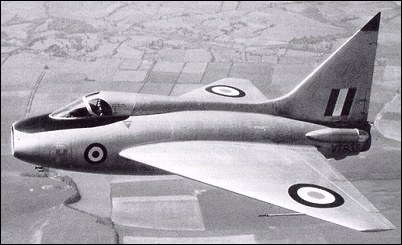
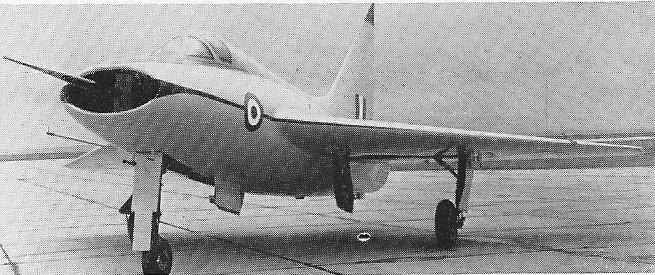
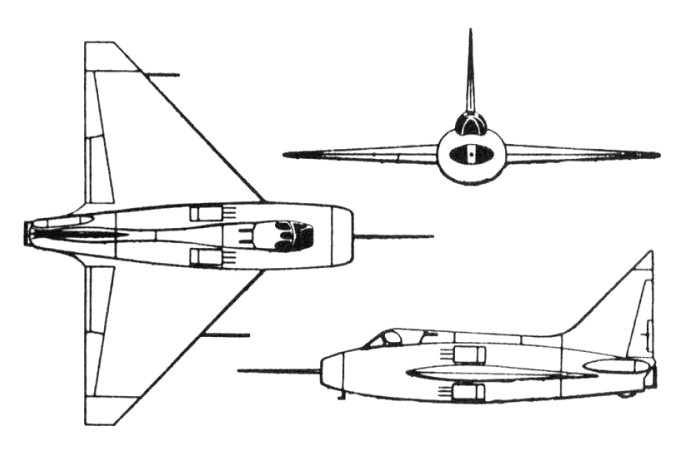
The Boulton and Paul P.111 research aircraft was built to specification E.27/46, to further investigation into delta wing characteristics at transonic speeds.
The only example, VT935, first flew on October 6, 1950, and was powered by a Rolls Royce Nene turbojet of 5,100 lb st. It featured a 45 degree delta wing with detachable tips to enable comparative tests of blunt and pointed wings to be made. The fin tip was also removeable. Data recording equipment, including a fin mounted camera, was fitted. It originally flew in natural metal finish and was supplemented from August 1952 by the P.120. A critical feature, that of total hydraulic, irreversible, powered flying controls allowed artificial feel for the pilot was by way of built in springs which could not be fully trimmed to take into account the very fine degree of control necessary, particularly with the minimal input demanded at high IAS. The design work was carried out at Farnborough, and all of the early flying was by Aero Flight pilots including Bob Smythe CO, Jim Harrison, and Jock Elliot. Jock carried out most of the flying with 52 flights totalling some 26 hours. He commented on the sensitivy of the controls at IAS, stating that, at 500 kts IAS, 1/4″ stick movement gave 1″g” of acceleration, and observed that the possibility of a strong reflex input was very real and would have catastrophic results. Following a belly landing by Jim Harrison the design was near to being shelved, when Jock came up with the idea for variable gearing between stick and surfaces; this facility would be available to the pilot in flight and would allow a choice ranging between 1:1 to 4:1. Jock pointed out that the idea was not new and that some of the Schneider Trophy aircraft had incorporated the idea. The idea was discussed at a meeting with Dennis Higton, aerodynamicist at RAE, JD North of BP, and Jock, and the outcome was that it was incorporated into the design, as the BP P111A. The point has been made that Jock’s concept of variable gearing was an crital break through for the aviation industry and virtually paved the way for Concorde and all high speed aircraft that followed. In 1953 the aircraft underwent internal modification, and also had four rectangular air brakes fitted around the fuselage behind the cockpit a nose probe. Redesignated P.111A, it made its first flight in this form on July 2, 1953. Ben Gunn flew the aircraft in it’s P111A form. Its research programme at RAE Bedford ended on June 20, 1958, by which time it had attained Mach. 0.93 in level flight.
P.111A
In April 1959 it was purchased from the Ministry of Aviation by the College of Aeronautics at Cranfield, Beds. It was then used in their Department of Aircraft Design to demonstrate variable gearing power flying control systems and general hydraulic services, and also for basic research on the ground resonance of a low aspect ratio wing. The P.111A survives in the Midland Air Museum at Coventry’s Baginton Airport.
P.111A Engine: 1 x Rolls Royce “Nene”, 2313kg Wingspan: 10.21 m / 33 ft 6 in Length: 7.95 m / 26 ft 1 in Height: 3.82 m / 12 ft 6 in Wing area: 18.58 sq.m / 199.99 sq ft Take-off weight: 4354 kg / 9599 lb Empty weight: 2948 kg / 6499 lb Climb rate: 9,400ft/min Max. speed: 0.98M, 650 m.p.h Crew: 1