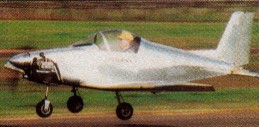
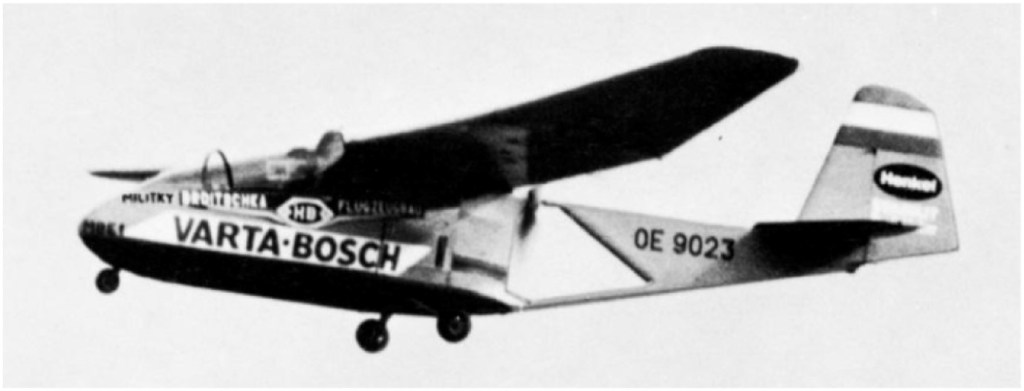
Brditschka-Militky MB-E1

In 1973 aircraft manufacturer Heinrich Brditschka and an engineer with the Graupner model-building company, Fred Militky, enlisted the collaboration of Bosch (propulsion motor) and Varta (nickel-cadmium battery technology) to study the feasibility of an all-electric aircraft.

They converted an HB-3A motor glider into the first electric manned airplane: the MB-E1 (Militky-Brditschka Elektroflieger No. 1).

On 21 October 1973, the MB-E1 took to the skies in Wels, Austria with Heinrich’s son, Heino Brditschka, at the controls. The maiden flight lasted for about 9 min and achieved an altitude of 300 m. However, further advancement in battery and motor technology would be required to achieve practical electric flight.

Brditschka HB-21

The HB-21, which first flew in 1973, is basically an enlarged version of the HB-3 with an increased wing span and a lengthened forward fuselage seating two people in tandem under a long three-piece cockpit canopy hinged to open sideways.

The HB-3’s basic configuration of high wings and a pusher propeller rotating in a cut-out portion of the fuselage is retained. Construction is very similar to the HB-3, the fabric-covered three-piece wooden wings being of birch ply with laminated beech spars; they now have Wortmann aerofoil sections and there are spoilers in the upper surfaces. The fuselage is a steel tube framework covered with glassfibre, and the wooden tail unit has a fixed-incidence tailplane and fabric covered control surfaces. The fixed nosewheel undercarriage has Tost mechanical brakes on the main wheels.

Four prototypes were built which included both the HB-21 R with a 41 hp Rotax 642 two-stroke engine like the HB-3, and the HB-21 L with a 65hp Volkswagen(VW)-Westermayer 1600G ‘flat four’ motor, the latter being the principal version; both powerplants drove a Hoffman HO 14-175 B 117 LD two-blade fixed-pitch propeller, and both versions have an 11.9 Imp gallon aluminium fuel tank in the wing.

Certification of the HB-21 was granted in February 1978, and a year later 15 had been built.

HB-21L
Span: 53 ft 3.5 in
Length: 25 ft 11 in
Height: 8 ft 6.25 in
Wing area: 204.3 sq ft
Aspect ratio: 13.89
Empty weight: 1,102 lb
Max weight: 1,565 lb
Max speed: 124 mph (in smooth air, power off)
Max cruising speed: 99 mph
Min sinking speed: 3.94 ft/sec at 52 mph
Best glide ratio: 24-26:1 at 65 mph
Max rate of climb: 650 ft/min at sea level
Take-off run: 330 ft
Range with max fuel: 497 miles

HB-21 R
Engine: Rotax 642, 30.6 kW / 41 hp
Wing span: 16.24 m / 53 ft 3.5 in
Length: 7.9 m / 25 ft 11 in
Height: 2.6 m / 8 ft 6.25 in
Wing area: 18.98 sq.m / 204.3 sq ft
Wing section: Wortmann FX-61-184/60-126
Aspect ratio: 13.9
Empty weight: 418 kg / 922 lb
Max weight: 640 kg / 1,411 lb
Water ballast: None
Max wing loading: 33.7 kg/sq.m / 6.9 lb/sq.ft
Max speed: 140 kt / 260 km/h
Stalling speed: 35.5 kt / 66 km/h
Min sinking speed: 0.8 m/sec / 2.6 ft/sec at 43 kt / 80 km/h
Best glide ratio: 28 at 54 kt / 100 km/h
T-O run: 170 m / 558 ft
Rate of climb: 132 m/min / 433 ft/min at S/L
Range: 650 km / 350 nm
Brditschka HB-3

Designed by Heinz W. Brditschka and built by his firm at Linz in Austria, the HB-3B is a single-seater cantilever high wing monoplane distinguished by a pusher propeller rotating in a triangular cut-out in the glassfibre-covered tubular steel framework carrying the tail. This consists of two steel tubes, the upper one running through the centre of the propeller and the lower one from the bottom of the fuselage just under the propeller disc; the forward fuselage containing the engine and cockpit is likewise a steel tube framework covered with glassfibre. The HB-3 uses the basic wing design of the Kra’he sailplane designed in Germany by Ing Fritz Raab; the wing is a conventional all-wood structure of red pine, spruce and birch ply, with spoilers in the upper surfaces; no flaps or trim tabs are fitted.

Design of the HB-3 started in 1968 and the first of three prototypes made its maiden flight on 23 June 1971, followed by the second on 5 June 1972 and the third on 28 July 1972. Nine production HB-3s had been completed by early 1976, but production ended that year.

The HB-3’s standard powerplant was a 41 hp Rotax 642 two-stroke ‘flat twin’ mounted aft of the cockpit and driving a Hoffman two-bladed fixed-pitch propeller via a belt; the fuel used is a 75/25% petrol and oil mixture, and there is a single fuel tank in the fuselage and an aluminium tank in the wing centre-section, which together provide a total capacity of 8.15 Imp gallons. The tail unit is of all-wood construction, with wire bracing from the fin to the centre section trailing edges; the fixed incidence tailplane has a trim tab in the starboard elevator. The fixed nosewheel undercarriage has glassfibre legs which provide all the necessary shock absorption without the need for separate shock absorbers. The main wheels have Tost mechanical brakes. The pilot sits under a large cockpit canopy that hinges to open sideways to starboard; there is a small baggage space behind his seat and a ram air intake in the nose is provided for cabin ventilation.

Heinz W. Brditschka also converted an HB-3 airframe in 1973 to have electric power, in which form it was known as the Militky MB-E1.

Variation:
Militky MB-E1

HB-3B
Span: 39 ft 4.5 in
Length: 22 ft 11.75 in
Height: 9 ft 8 in
Wing area: 153.1 sqft
Aspect ratio: 10.11
Empty weight: 573 lb
Max weight: 837 lb
Max speed: 108 mph (in smooth air, power off)
Max cruising speed: 99 mph
Min sinking speed: 3.77 ft/sec at 45.5 mph
Best glide ratio: 20:1 at 50 mph
Take-off run to 50ft: 755 ft
Range with max fuel: 341 miles

HB-3BR
Engine: Rotax 642, 30.6 kW / 41 hp
Wing span: 12.0 m / 39 ft 4.5 in
Length: 7.0 m / 22 ft 11.5 in
Height: 2.95 m / 9 ft 8 in
Wing area: 14.22 sq.m / 153.1 sq ft
Wing section: Gottingen 758/Clark Y
Aspect ratio: 11.1
Empty weight: 255 kg / 562 lb
Max weight: 372 kg / 820 lb
Water ballast: None
Max wing loading: 26.2 kg/sq.m / 5.36 lb/sq ft
Max speed: 95 kt / 175 km/h
Stalling speed: 32.5 kt / 60 km/h
Min sinking speed: 1.15 m/sec / 3.8 ft/sec
Best glide ratio: 21 at 43 kt / 80 km/h
T-O run: 100 m / 328 ft
Rate of climb at S/L: 180 m/min / 590 ft/min
Range: 700 km / 378 nm

Brauner and Smith Biplane             

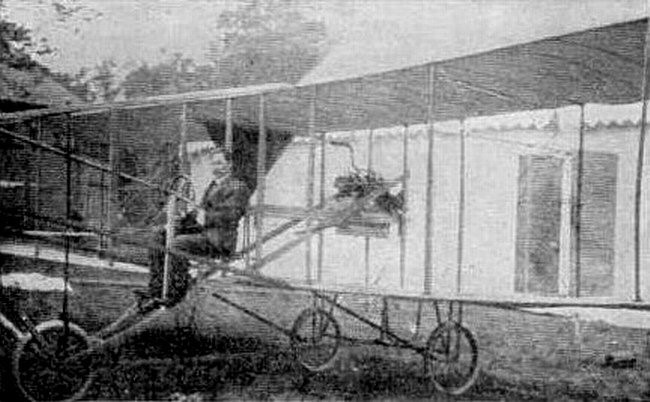
The 1909 Brauner and Smith biplane was designed and built by Pincus Brauner and A. J. Smith, who were members of Aeronautic Society of New York, Morris Park. Their biplane was the second aircraft of the Society to fly. Both Brauner and Smith made numerous flights in the machine proving its airworthiness. Later, the aircraft was exhibited at Madison Square Garden. Eventually Brauner, while attempting to reach a greater height, raised his front control too acutely, and fell backwards, almost totally destroying the machine, but he escaped unhurt.

Brandenburg 269 / C.1

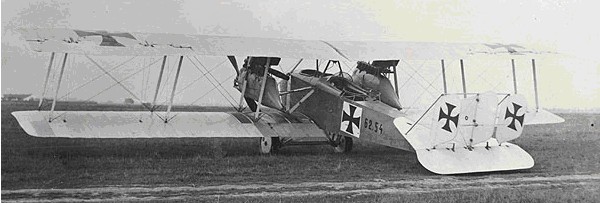
Since 1921, some 120 examples of the Austro¬Hungarian Brandenburg C.1 reconnaissance and light bomber aircraft, series 269, were manufactured at the first Romanian aircraft factory, Arsenalul Aeronauticii, in Bucharest. These airframes were equipped with 220hp (164kW) and 250hp (186kW) Daimler Benz, MARTA Benz and NAG engines, captured in 1919 from Hungary.

Bradshaw Star

A man who became well-known in the automobile and motorcycle field, Granville Bradshaw, was responsible for the design and construction of the Star mono-plane.

It was based on the Antoinette, and of similar dimesions, both machines having a span of 42 feet.

However the French machine had a much larger wing area of 538 square feet compared to 290 square feet for the Star, and the Antoinette was something like 5 feet longer at 37ft 7inches and 200lbs heavier than the British machine.

The Star power plant was a 4-cylinder water-cooled 30/40hp unit, very similar to their car engine

The Star was listed to sell at less than half the £1,000 asked for the Antoinette.

Bradley Aerospace Pitbull

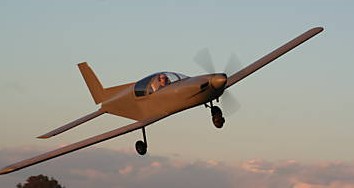
The Bradley Pitbull was designed as a first time builders project for assembly in 250 hrs. No jigs or alignment beams are needed, and no special tools required. Of all metal construction, there is no bending, forming or welding to do.
Only 2024 T3 Aircraft grade aluminum is used for skins, wing ribs and bulkheads. All skins, ribs and bulkheads are blind riveted. With spring undercarriage, the front gear is castering.
The kit also includes a carbon fiber canopy frame and windshield bow, and F-15 style canopy. Matco wheels and brakes and tires are included. Wing tips with inset lighting and strobes and all hardware are included in kit.
4130 steel tube pushrod controls and housed push pull cables are fitted and a 46 US gallon fuel capacity.
The Pitbull is available as a tricycle or tail wheel versions, and it accepts the Lycoming O-320 or )-360 or any 100 to 200 Hp engines.
The Pitbull qualifies in the Experimental (150-200HP) and Light Sport category (100hp).
The Speed wing has a 9+ 9- g rating (Aerobatic).

Bradley Aerospace Aerobat            

Designed by Brad Huggins, the Aerobat is stressed to + or -9g. A single seater, the Aerobat was available as the Aerobat 100 and Aerobat 150.

Engine: VW, 75 hp.
HP range: 75-95.
Height: 4 ft.
Length: 12.83 ft.
Wing span: 18 ft.
Wing area: 59 sq.ft.
Weight empty: 333 lbs.
Gross: 600 lbs.
Fuel cap: 8 USG.
Speed max: 180 mph.
Cruise: 170 mph.
Range: 450 sm. Stall: 48 mph.
ROC: 2300 fpm.
Take-off dist: 298 ft.
Landing dist: 500 ft.
Service ceiling: 15,500 ft.
Seats: 1.
Landing gear: nose wheel.

Engine: Bradley VW, 75 hp.
HP range: 75-100.
Height: 5 ft.
Length: 14.8 ft.
Wing span: 18.3 ft.
Wing area: 63 sq.ft.
Weight empty: 350 lbs.
Gross: 620 lbs.
Fuel cap: 10 USG
Speed max: 200 mph.
Cruise: 150 mph.
Range: 450 sm.
Stall: 48 mph.
ROC: 2000 fpm.
Take-off dist: 300 ft.
Landing dist: 400 ft.
Service ceiling: 20,000 ft.
Seats: 1.
Landing gear: nose wheel.