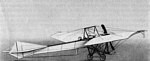
The 1910 Bylinkin monoplane was designed and built by F.I.Bylinkin, in Russia.
Span: 27’11”
Length: 21’4″
Weight loaded: 530 lb
The 1910 Bylinkin monoplane was designed and built by F.I.Bylinkin, in Russia.
Span: 27’11”
Length: 21’4″
Weight loaded: 530 lb
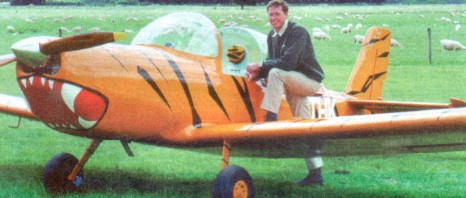
Of all-wood construction and covered with ceconite, the Tiger Hawk is finished with an Imron 700 paint system. All the design, fabricate and construction was carried out by Tim Bygate. This is no mean feat when you have to design each component before constructing it. The airframe contains a number of different timbers. Spruce was used for the spars, wing ribs, etc along with some Douglas Fir. The plywood covering found on the wings, turtle deck and seat was Birch and Hoop Pine. Tim found one of the trickier pieces to build was the Perspex canopy.
The Tiger Hawk was powered by an EA81 Subaru with a 2: 1 belt drive reduction system made by Cannings Engineering in Christchurch, New Zealand. The engine was stripped by Tim and measured for wear and tear and when reassembled it produced approx. 80 hp at 5400 rpm.
All construction was carried out in a small shed at the Hanmer Springs Forestry Camp in New Zealand by Tim Bygate, the designer. This shed kept expanding as the aircraft grew until finally on the completion the whole front of the shed had to be removed to enable the plane to be removed for its first flight on September 7, 2001.

Designed by Max Braendli, the BX-2 Cherry two-seat monoplane (first flown 1982) has detachable wings and elevator.

Thirty examples had been finished by 1998. The foldable wings allow it to be derigged for towing in 10 minutes.

Engine: Continental, Rotax
Wing span: 7 m
Wing area: 8.5 sq.m
MAUW: 550 kg
Empty weight: 325 kg
Fuel capacity: 78 lt
Max speed: 265 kph
Cruise speed: 200 kph
Minimum speed: 80 kph
Climb rate: 3 m/s
Seats: 2
Fuel consumption: 14 lt/hr
Plan price (1998): 880 FrS
Engine: Continental A-65, 65 hp.
HP range: 65-90.
Propeller: Brändli 1.60 m diameter
Wing span: 23 ft / 7 m
Wing area: 90 sq.ft. / 8.50 sq.m
Airfoil: NACA 747 A 415
C.G. range: 19% – 32% (MAC=1240mm)
Height: 6.6 ft / 2.02m
Length: 17.5 ft / 5.23m
Weight empty: 700 lb / 320 kg
Gross: 1222 lb / 550 kg
Fuel cap: 23 USG / 80 lt
G load limit: +3.8 / -1.9
Range: 600 sm.
Vno (max. struct. cruise): 219 km/h
Vfe (max. flaps): 142 km/h
Vne (never exceed): 275 km/h
Va (max. maneuvering): 170 km/h
Vh (horizontal): 200 km/h
Vs (stall, clean): 96 km/h
Vs0 (stall, flaps): 85 km/h
Vy (best rate of climb): 145 km/h
ROC: 680 fpm / 3m/s
Enduranace: 5:00 hr
Take-off dist: 1000 ft / 300 m
T/O 15m: 560 m
Landing dist: 500 ft.
Service ceiling: 14,000 ft.
Seats: 2.
Landing gear: retractable nose wheel.
Flaps: yes
Silencer: Brändli
Noise Chapt. 6: 62.3 dB
1995-8: Hoeheweg 1, CH-2553 Safnern, Switzerland.
Builder of the Cherry
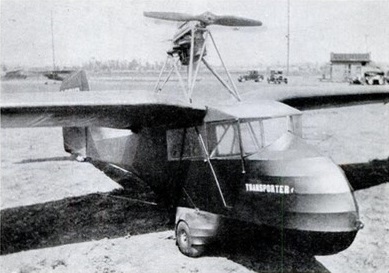
In 1935 Jay Buxton of Hawthorne, California, completed his Transporter powered glider. The engine is a 2 stroke inline, inverted type of unique design. It is a three cylinder, three port engine that weighs 115 lb and develops 35 hp at 2100 rpm.
The motor cabane is completely removed and replaced by a plain cabane when used for gliding.
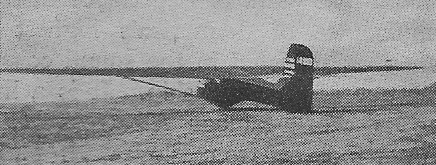
Wingspan: 52.3 ft
Wing area: 240/255 sq.ft
Aspect ratio: 11.4
Length: 26.6 ft
Empty weight: 435 lb
Gross weight: 725/965 lb
Fuel capacity: 12 USG
Min sink: 2.5 f/sec
Glide ratio: 20-1
Seats: 2
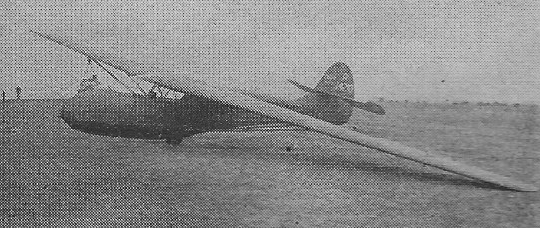
A single-seat sailplane designed by G.M. (Mungo) Buxton and built by Slingsby Sailplanes in 1935.
The sole example built was of conventional wooden construction, cantilever wing, with no air brakes or flaps. The undercarriage was main skid and tail skid.
With Slingsby c/n 215C and C of A No BGA242, the first flight was made at Sutton Bank, Yorkshire on 27 May 1935.
It was flown by Phillip Wills in the 1937 International Competitions at the Wasserkuppe, registered G-GAAA.
Later registered as BGA.301.
Sold to South Africa in 1938 where it was registered ZS-23.
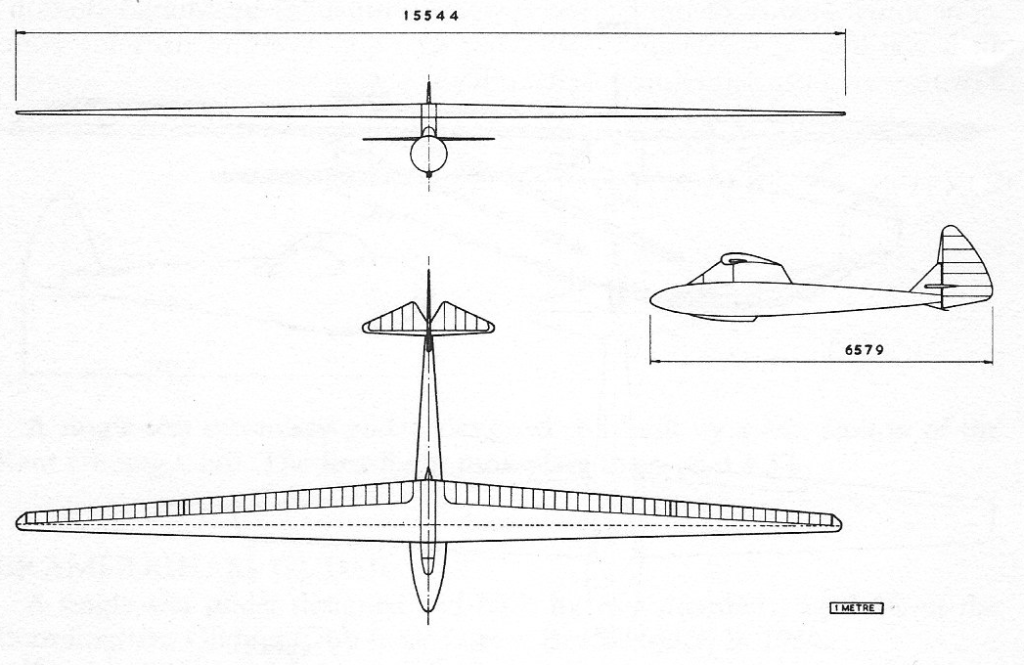
The initial layout of the Buxton Hjordis 2 were commenced by Mungo Buxton but it was built as the Slingsby T.9 King Kite. Many of the King Kite drawings were entitled Hjodris 2 (King Kite).
Wingspan: 15.54 m / 51 ft 0 in
Length: 6.58 m / 21 ft 7 in
Wing area: 11.52 sq.m / 124 sq.ft
Aspect ratio: 21
Wing section: Gottingen 652 root / RAF 32 tip
Empty weright: 143.79 kg / 317 lb
AUW: 217.72 kg / 480 lb
Wing loading: 18.94 kg/sq.m / 3.88 lb/sq.ft
Max L/D: 24
Min sink: 0.61 m/sec at 56 kph / 2 ft/sec at 35 mph
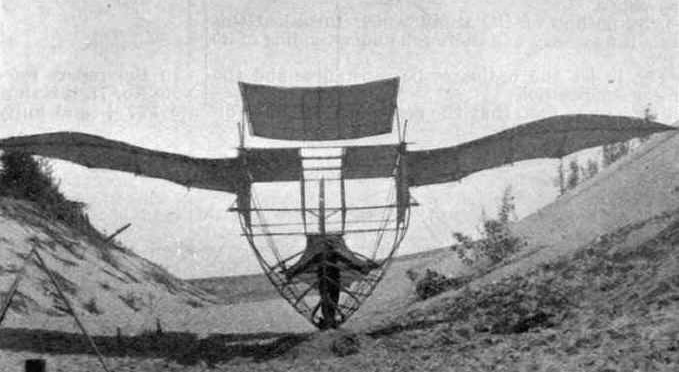
Chanute and his four assistants pitched their tents on a spot within the present city limits of Gary, Indiana, on June 22, 1896. Augustus Herring, the most experienced member of the group, had brought a glider based on the standard Lilienthal monoplane design. William Avery, a Chicago carpenter, had constructed a multi-wing glider designed by Chanute, while William Butusov would attempt to launch his own glider, the Albatross, down a wooden ramp. Dr. James Ricketts, a Chicago physician with “a slack practice and a taste for aeronautics,” would cook for the group and provide emergency medical service as required. Chanute’s dogs, Rags and Tatters, rounded out the party.
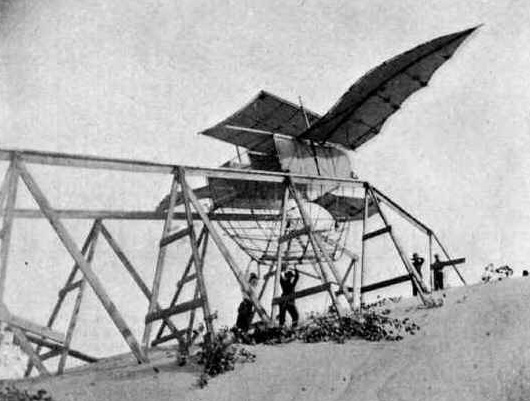
The Albatros was the invention of Butusov, who claimed that he had already attained success in soaring flight with it, and as this closely resembled the machine of Captain Le Bris, who was said to have sailed with such a machine in France, in 1867, it was determined to give the design a trial.
It was a complicated apparatus. Over the top was an aeroplane, below which two great wings extended, 40 feet across, and beneath which again there was a boat-like frame which could be transformed into a skiff by enclosing it with oiled canvas. The whole spread of supporting surface was 266 square feet and it weighed 190 pounds. As this could not, like the other machines, be carried about on a man’s shoulders, special appliances were required to launch it.
This appliance consisted of trestle work built down the slope of the hill. It involved the great disadvantage that it could only be used when the wind blew straight up the trestle, a rare occurrence. Nevertheless two launches were made, but in ballast, as there was no absolute certainty about the equilibrium. On the first occasion, with 130 pounds of ballast, it went off very well indeed, but did not sail very far. In alighting, some of the ribs of the boat-frame were cracked but were replaced in an hour. On the second trial, with 90 pounds of ballast, but in a quartering, unfavorable wind, the latter swung the machine around, after it left the ways, and upon one of the wings striking a tree, the apparatus fell and was broken. On neither occasion would the operator have been hurt had he been in the machine, but it was evidently much too heavy and too cumbrous to be successfully used in experiments designed solely to work out the problem of equilibrium.
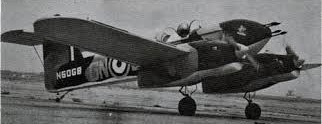
The Butterworth Westland Whirlwind was a 2/3 scale flying replica of the British Westland Whirlwind fighter aircraft of World War II that was built in the United States in the 1970s.
The aircraft was based on the wings and horizontal tail of a Grumman American AA-1A modified and mated to an all-new fuselage. Power was provided by two Volkswagen air-cooled horizontally opposed four-cylinder engines with the result bearing only a passing resemblance to the real Whirlwind.
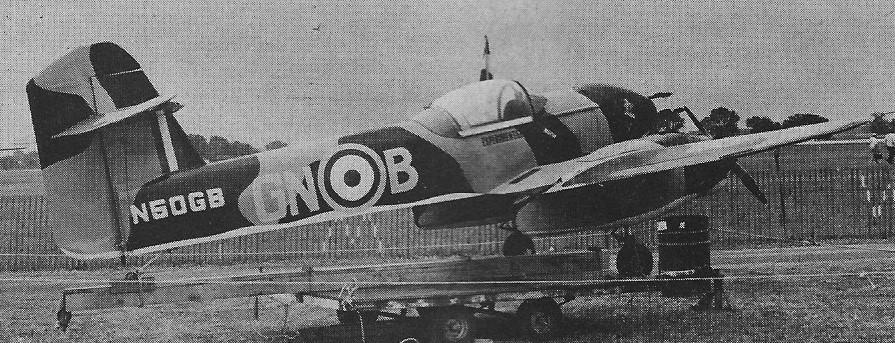
First flying in July 1977, Butterworth marketed plans in the late 1970s and early ’80s, with at least 15 sets selling and at least three aircraft reportedly under construction by 1985.
Butterworth Westland Whirlwind
Engines: 2 × Volkswagen, 65 hp (49 kW) each
Wingspan: 28 ft 0 in (8.53 m)
Length: 19 ft 6 in (5.94 m)
Height: 7 ft 1 in (2.16 m)
Empty weight: 1,042 lb (472 kg)
Gross weight: 1,400 lb (635 kg)
Maximum speed: 145 mph (233 km/h, 126 kn)
Range: 700 mi (1,126 km, 610 nmi)
Service ceiling: 8,000 ft (2,440 m)
Crew: One pilot

A folding wing, conventional wood and fabric design, with folding wings.
Engine: Rotax 277, 28 hp.
HP range: 20-36.
Wing span: 32 ft / 9.75 m
Wing area: 128 sq.ft / 11.90 sq.m
Height: 6 ft.
Length: 18.85 ft.
Weight empty: 237 lb / 107 kg
Gross: 500 lbs / 226 kg
Fuel consumption: 7.4 lt/hr
Speed max: 60 mph / 88 kph
Cruise: 50 mph / 80 kph
Range: 90 sm.
Stall: 27 mph / 40 kph
ROC: 400 fpm / 2.25 m/s
Take-off dist: 220 ft.
Landing dist: 200 ft.
Service ceiling: 9,000 ft.
Fuel cap: 5 USG / 19 lt
Seats: 1.
Landing gear: tail wheel.
Plan price (1998): US$25
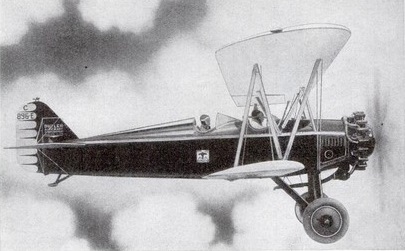
The Butler Blackhawk, designed by Waverly Stearman and engineered by M.C.Baumann, seats three with a Wright Whirlwind engine.
Top speed: 130 mph
Cruise speed: 110 mph
Endurance: 5 hr
Useful load: 1040 lb

