Canada
Clairco formed January 14,1964 at St Jean, Quebec, by David Saunders (an RCAF pilot 1957-1963). Built and flew, in 1962, an all-wood two-seat light aircraft named Cheetah. Founded company to build a four-seat all-metal improved version, the Super Cheetah; prototype built by Aircraft Industries of Canada. This flew September 1964, but no production took place.
Aircraft
Chedeville 1911 No.2 monoplane
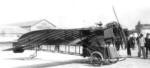
The 1911 Chedeville No. 2 was designed and built by George Chedeville in France.
Chedeville 1909 Monoplane
The 1909 Chedeville Monoplane was designed and built by George Chedeville in France.
Span: 39’4″
Length: 39’4″
Chechet ChUR-1

The 1911 ChUR-1t was built by Russian aviator Nikolaj Vasilievich Rebikov and inventor Grigory Gerasimovich Chechet with financial support of M.K.Ushkov of Moscow.
It was demonstrated on the Second Moscow Aviation Exposition (Mar 25 – April 8, 1912), later – flown on Comendant Airfield near St.Petersburg.
It was a ‘inverted’ biplane (upper wing was much smaller than the lower one) with biplane tail planes. Ailerons were only on the upper wing, during tests – added to the lower one too. Wings were equipped with anti-slide surfaces.
The first aircraft in Russia to have steel wielded frame in front fuselage. Additional control surface was added to the tail in order to compensate load on the control stick.
On July 5 1912 the aircraft (flown by N.V.Rebikov) was crashed and not restored.
Engine: 100hp Argus
Wingspan: 12.0m / 39’4″
Wing area: 36.0m2
Length: 11.0m / 36’1″
Empty weight: 600kg
Loaded weight: 700kg / 1540 lb
Wing Load: 19.5 kg/m2
Power load: 8.8 kg/hp
Crew: 1
Chazal 1911 monoplane
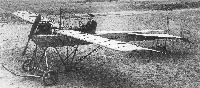
The 1911 Chazal monoplane was designed and built by Henry Chazal in France.
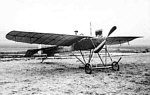
Chauviere 1909 No.2 Biplane
The 1909 No. 2 biplane was designed by De Penteado (Spaniard), and built by Chauviere (France).
Span: 21’4″
Length: 26’3″
Empty weight: 705 lb
Chauviere No.1 monoplane
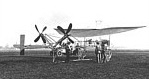
The 1909 Chauviere No. 1 monoplane was designed by Saulniers and built by Chauviere in France.
Span: 21’4″
Length: 26’3″
Empty weight: 947 lb
Chaussee 1909 biplane
A biplane designed and built by Chauseee in France.
Châtelain AC-5 Bijou

The AC-5 Bijou was one of several original homebuilt aircraft designed and built by Armand Châtelain in the 1950s and 1960s.
The sole AC-5 was initially powered by a 75 hp Minié 4DC-32 Horus engine, and was registered F-PHQO. It first flew on September 10, 1956. Later it was re-engined with one 65 hp Continental A65, the aircraft was still active in 2012.
Chassany Monoplane
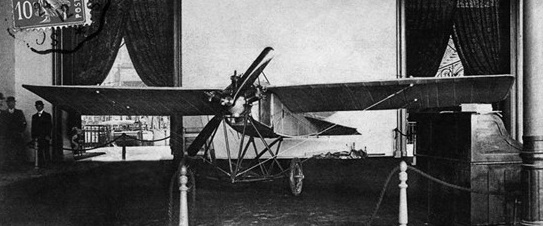
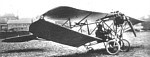
Chassany built his Monoplane in France in 1910.

This Nieuport-like monoplane was displayed at 1910 Paris “Exposition de la Locomotion Aérienne”. It’s recognisable by the three-cylinder Viale engine and the arrangement of landing gear struts.
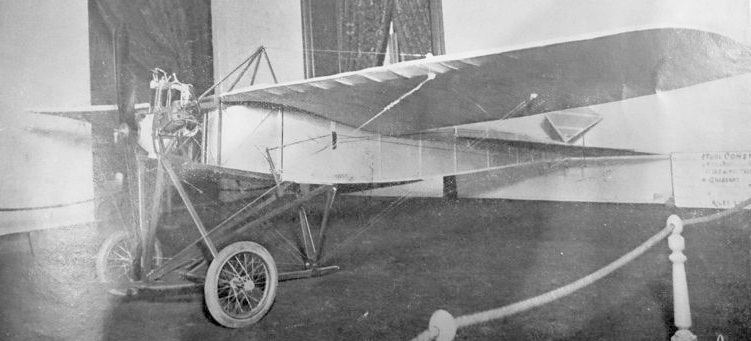
It was claimed to be the lightest plane at the show, having reached 90 km/h with only a 32 hp engine. It was also the cheapest, costing only 7,000 francs without engine.

