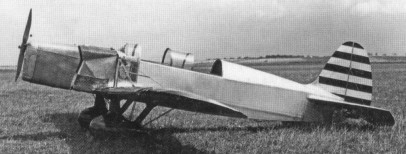
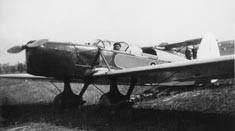
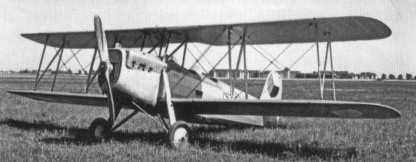
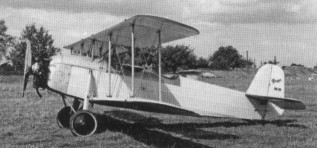
CKD-Praga E-114 Air Baby / E.115 / Hilton Praga

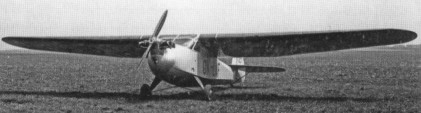
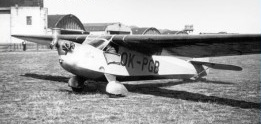
The 40 hp Praga B powered prototype, OK-PGA, first flew in Seqtember 1934 and was Praga’s first civil project.
Sixty-three were built.

Following a demonstration tour in the UK in 1935, F.Hills & Sons on Manchester, acquired a licence to build the E.114 as the Hillson Praga. The first Hills & Sons Ltd licence-built Praga E.114 was sold to Australia, and the second registered G-AEEU became the company’s demonstrator in April 1936. Total production by Hills amounted to twenty-eight aircraft, plus seven uncompleted during 1936 and 1937, selling for £385-435.

Praga E-114 Air Baby

In 1936 H.L.Brook set a new Lympne to Cape Town record of 16 days in one of the British built examples.
The E.114bis was fitted with a 65 hp Praga D engine. The prototype E.114bis, OK-PGF, was flown before the Second World War, as was the E.115, an improved version with a shorter wing.

After the war, the Air Baby was relaunched as the E.114D.

CKD-Praga E.114 Air Baby
Engine: Praga B, 29 hp
Length: 21.654 ft / 6.6 m
Wingspan: 36.089 ft / 11.0 m
Wing area: 163.613 sqft / 15.2 sqm
Max take off weight: 1080.5 lb / 490.0 kg
Weight empty: 639.5 lbs / 290.0 kg
Max. speed: 94 kts / 175 km/h
Cruising speed: 79 kts / 147 km/h
Service ceiling: 11483 ft / 3500 m
Wing load: 6.56 lb/sq.ft / 32.00 kg/sq.m
Range: 297 nm / 550 km
Crew: 2

CKD-Praga E.114 Air Baby
Engine: Praga D 1, 75 hp.

E.114bis
Engine: 65 hp Praga D

CKD-Praga E-111 / BH-111           

The E.111 (or BH.111) of 1932 was a two seat low wing monoplane tourer powered by a 110 hp de Havilland Gipsy III engine.

A two-seat lower-wing strutted type used by Flying Clubs. The BH-111 had wooden wing and tailpane covered by plywood, and tube framed control surfaces by fabric. The wood-framed fuselage was covered by plywood and fabric. Sheet metal plate cowling. Fixed undercarriage, wooden two-blade propeller.

One built in 1932 for Air Racing with rearwards folded wings.

Engine: de Havilland Gipsy III, 110 hp
Wingspan: 10.5 m
Length: 7. 4 m
Empty weight: 470 kg
Maximum speed: 230 kph
Climb 3000m: 15 min 45 sec

CKD-Praga E-39 / BH-39

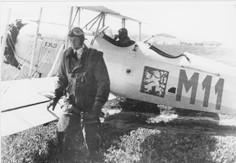
In several cases the code name of BH-39 after her designers Benes and Hajn is used for this type.

The prototype (designated BH.39NZ) first flew in 1931 with a 120 hp Walter NZ nine-cylinder radial engine. The 1936 next 8 built used 140 hp Walter Gemma radials (designated BH.39G). After this the 160 hp Armstrong Siddeley Genet Major was fitted (designated BH.39AG of 1937).

Praga E-39.21

Praga E-39.21, the 21st production one, was powered by a Walter Gamma engine.

A total of 149 aircraft appears to have been built with 125 used by the Luftwaffe as primary trainers during WW2. No mention of cross bracing while later models had ‘N’ shape interplane struts, cross-braced layout, while the rest on the paint guides had ‘N’ shaped struts.

BH.39NZ
Two seat primary trainer
Engine: 120 hp Walter NZ

BH.39G
Engine: 150 hp Walter Gemma

BH.39AG
Engine: 150 hp Armstrong Siddeley Genet Major 1A

BH.39RS
Span: 10.00m
Length: 7.00m
Height: 2.57m

CKD-Praga

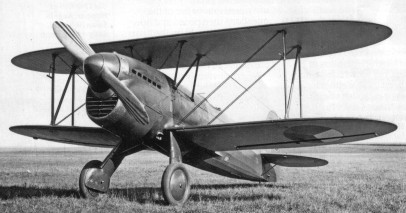
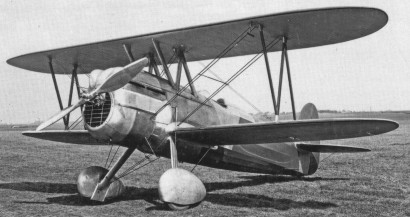
Ceskomoravska-Kolben-Danek, maker of aero engines from 1915, including several marketed under the name Praga. Began aircraft construction in 1931, subsequent products including the Praga E.40 two-seat training biplane and E.45 single-seat fighter biplane, and a family of two/four-seat light cabin monoplanes designated E.114 Air Baby, E.115, E.210, and E.214. Factory overrun by German invasion, but operated by Germany as Bb’hmisch- Muhrische Maschinenfabriken AG. (Bohemian-Moravian Engineering Works). Reestablished postwar under new title of Zavody Letecke Praga, producing, inter alia, updated models of the E.114 and E.210/211.

Civil Aviation Department of India TS-2 Ashvini / TS-3 Ashvini / TS-4 Ashvini II

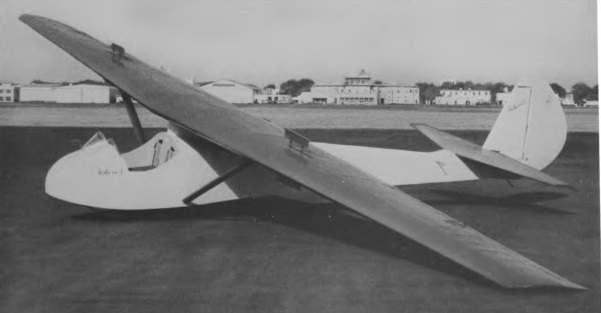
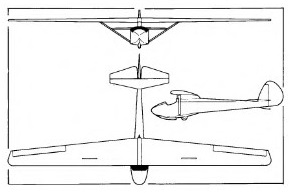
Ashvini is the first nakshatra, a lunar based division of the ecliptic in Hindu astrology. The glider named after it was the first Indian two seater, developed for the Indian Civil Aviation Gliding Centres and the National Cadet Corps. Designed by S.Ramamritham, the first prototype, the TS-2 Ashvini, was first flown on 3 September 1958 by F.H. Irani and later in its development by the very experienced glider pilot Hanna Reitsch. It was displayed to Prime Minister Nehru at Delhi Airport in February 1959.

The reports of both pilots led to improvements incorporated in the next three pre-production prototypes, termed TS-3 Ashvini, along with some alterations made to ease later production. The first TS-3 flew in July 1959. The series production aircraft, first flown in prototype form in December 1960, was named the TS-4 Ashvini II. Alterations included revised forward fuselage contours and changes to control runs in the cockpit which allowed seats and sills to be lowered, easing access. The lift to drag ratio was increased by lowering the wing relative to the fuselage, improving the aerodynamics of the junction. Eleven production TS-4s were built.

The Asvini had an all-wood structure, covered with a mixture of plywood and fabric, using Indian grown spruce and cedar. Its three part wing had two spars and 4° of forward sweep at the quarter chord line. The centre section had a span of 6.10 m (20 ft 0 in) and the outer panels were detachable. In plan the wing was straight tapered (taper ratio 0.41), with forward sweep on both leading and trailing edges. It was ply covered forward of the rear spar around the leading edge, forming a torsion box, and fabric covered over the remaining 30% of chord. Its high cantilever wing was mounted with 1° dihedral on top of the spar. It had plain fabric covered ailerons and short DFS-type air-brake pairs placed behind the forward spar at about one quarter span. There were no flaps.

The Ashvini’s fuselage was a ply covered wooden-semi-monocoque including an integral, ply covered fin with a straight, swept leading edge. Its balanced rudder, full and rounded, extended down to the keel. The horizontal tail was straight edged and double tapered, with square tips. It was mostly fabric covered apart from the leading edge and root and was placed on top of the fuselage, far enough forward that the inner edges of the separate elevators were in line with the rudder hinge. The rear control surfaces were fabric covered.

Pupil and instructor, provided with dual controls, sat in tandem ahead of the wing leading edge, the latter at the rear over the centre of gravity. They had separate perspex canopies; the forward canopy was side hinged and the instructor’s opened rearwards. The main landing gear was a single, non-retractable wheel without brakes. Ahead of the wheel and under the cockpits was a rubber sprung, steel shod skid and at the rear there was a short, tennis ball sprung tail skid.

Variants:
TS-2 Ashvini
First prototype, first flown September 1958.

TS-3 Ashvini
Pre-production prototypes with modifications to ease production and as a result of prototype flight testing. First flown July 1959; three built.

TS-4 Ashvini II
Production version with further improvements: forward fuselage and cockpit revised for easier access and wings lowered to improve wing-fuselage junction aerodynamics. First prototype flew December 1960 followed by eleven production models built by Aeronautical Services Ltd; production ended 1963.

Specifications:

TS-4 Ashvini II
Length: 8.66 m (28 ft 5 in)
Wingspan: 17.68 m (58 ft 0 in)
Height: 2.36 m (7 ft 9 in)
Wing area: 19.51 m2 (210.0 sq ft)
Aspect ratio: 16
Airfoil: NACA 4418 at root, NACA 4412 at tip
Empty weight: 318 kg (701 lb) equipped
Max takeoff weight: 500 kg (1,102 lb)
Wing loading: 25.6 kg/m2 (5.24 lb/sqft)
Maximum speed: 216 km/h (134 mph; 117 kn) placard, smooth air; rough air 120 km/h (75 mph; 65 kn)
Stall speed: 48 km/h (30 mph; 26 kn)
Never exceed speed: 222 km/h (138 mph; 120 kn) in dive
Maximum glide ratio: best, 23 at 77 km/h (48 mph; 42 kn)
Rate of sink: 0.82 m/s (161 ft/min / 2.7 ft/sec) minimum, at 58 km/h (36 mph; 31 kn)
Civil Aviation Department of India RG-1 Rohini / Aeronautical Services Ltd RG-1 Rohini / Veegal Engines and Engineering Co RG-1 Rohini / Hindustan Aeronautics RG-1 Rohini

In the early 1960s S Ramamritham designed a two-seat training sailplane, the RG-1 Rohini, the first (built by Aeronautical Services Ltd RG-1) of four prototypes flying on 10 May 1961. The four prototypes were built between 1961 and 1964 at theTechnical Centre of Civil Aviation. The Rohini is the second two-seat glider to be designed and built in India.

To minimise production costs the Rohini uses a number of components identical to those on the Ashivini II including the tail surfaces, wing ribs and air brakes. The Ashivini is a tandem two-seater while the Rohini has its seating arranged side-by-side. Of all-wood construction, the Rohini has a braced high wing which is a two-spar structure, plywood-covered to the rear spar and with a fabric-covered trailing edge; the fabric-covered wooden ailerons have plycovered leading edges, and there are air brakes above and below the wing on each side. The fuselage is built as a one-piece structure with integral fin, the forward portion to the wing rear spar attachment and the rear portion aft of the tailplane front attachment bulkhead being plywood-covered wooden semi-monocoques, whereas the remaining centre and rear portions have a fabric-covered wooden girder structure. The cantilever wooden tail has a plywood-covered fin and fabric-covered rudder, tailplane and elevators except for the leading edges and that part of the tailplane between the two root ribs, which are ply-covered. There is a trim tab in the starboard elevator. The landing gear consists of a non-retractable unsprung Dunlop monowheel and tyre, with no brake, and a rubbersprung nose skid under the forward fuselage with a replaceable steel shoe; there is a spring steel tail skid. The two pilots sit side-by-side in an open cockpit with small windshields.

Since the Centre does not undertake quantity production of its gliders, but supplies complete sets of drawings of its designs to any firms interested in manufacturing them, the Rohini went into production elsewhere. A total of 17 Rohinis were built by Veegal Engines and Engineering of Calcutta, with Hindustan Aeronautics Limited building a further 86 RG-1s by 1971 at its Kanpur Division. At least 107 were built in total.

RG-1 Rohini 1
Wing span: 16.56 m (54 ft 4 in)
Length: 8.17 m (26 ft 9.5 in)
Height: 2.33 m (7 ft 7.25in)
Wing area: 20.76 m2 (223.5 sq ft)
Wing section: NACA 4418/4412
Aspect ratio: 13.2
Airfoil: NACA 4418 at root, NACA 4412 (modified) at tip
Empty weight: 274 kg (604 Ib)
Max weight: 494 kg (1,089 Ib)
Water ballast: None
Max wing loading: 23.76 kg/m2 (4.86 lb/sq ft)
Never exceed speed: 184 km/h (114 mph; 99 kn)
Stalling speed: 26 kt / 30 mph / 48 km/h
Aerotow speed: 112 km/h (69.6 mph; 60.5 kn)
Winch launch speed: 96 km/h (59.7 mph; 51.8 kn)
g limits: +5 -2.5
Min sinking speed: at 33 kt (61 km/h) 0.85 m (2.8 ft)/sec
Max rough air speed: 65 kt (120 km/h)
Best glide ratio: at 41.5 kt (77 km/h) 22
Maximum glide ratio: 21:1 at 77 km/h (47.8 mph; 41.6 kn)
Rate of sink: 0.85 m/s (167 ft/min) at 61 km/h (37.9 mph; 32.9 kn)
Crew: 2