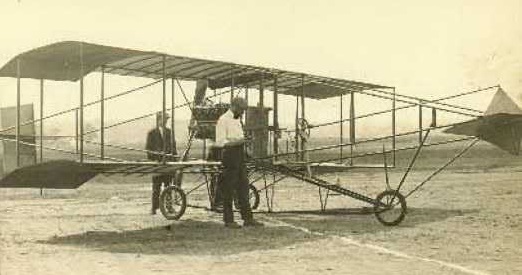
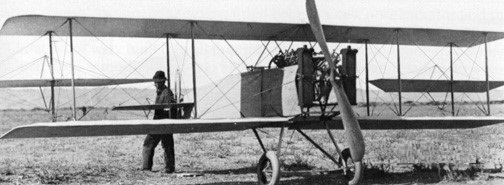
The Curtiss-Willard Banshee Express of 1910 was designed on the specifications of Charles F. Willard and built by Curtiss.
The first flight of the Banshee Express took place at Mineola, N.Y., and established an American record by carrying 3 passengers (1200 lb gross) on August 14, 1910.
The second Curtiss tractor landplane, the Curtiss-Beachey biplane, was intended as an exhibition craft for Lincoln Beachey but, after a short flight, he rejected it as unsuitable.
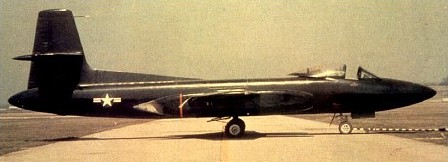
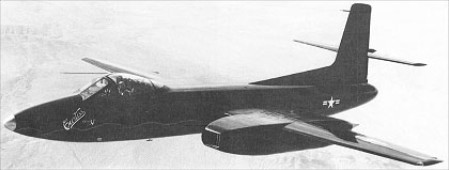
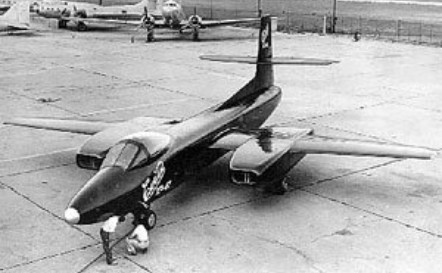
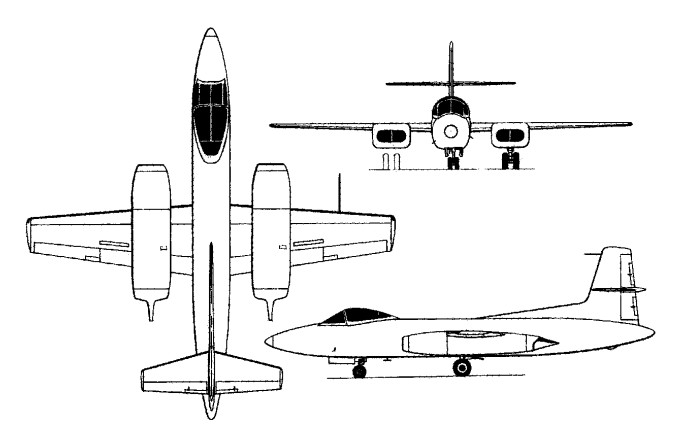
Curtiss had obtained tentative approval to build a twin-jet ground-attack aircraft, the XA-43. On 21 November 1945, this project was redirected towards completion of the Blackhawk fighter, mid-wing, four-engine craft with a two-man crew in side-by-side seating and with large fuel capacity. Powered by four 1360kg thrust Westinghouse XJ34-WE-7 turbojets, the sole XF-87 was flown at Muroc Dry Lake, California, on 1 March 1948 following long delays in its development and shipment from the company’s plant (later sold to North American) in Columbus, Ohio. The two prototypes were S/N identifiers as the 45-59600 and the 46-522. The 46-522 was modified to become the single XF-87A production aircraft.
The XF-87 proved to be underpowered. In the expectation that a different powerplant arrangement would make the Blackhawk more competitive, the twin-engine scheme was resurrected. On 10 June 1948, the USAF awarded a contract to Curtiss for 57 production F-87As to be powered by two 2722kg thrust each General Electric J47-GE-7 engines located in pairs on each wing. A further order was placed for 30 RF-87A reconnaissance aircraft.
The design featured four 20-mm cannon in a fixed nose installation and would have been fitted with a nose turret developed by the Glenn L. Martin Company which revolved in a 60-degree arc enabling four 20mm guns to be fired at any angle from zero to 90 degrees from the centre-line. Though the Blackhawk was able to overcome teething troubles in flight tests and seemed to offer promise as an all-weather interceptor, Curtiss was suffering from management difficulties and Northrop was developing an interceptor with solid potential, the F-89 Scorpion. On 18 October 1948, the USAF cancelled the F-87 Blackhawk programme in favour of the F-89. A second prototype which would have evaluated the twin J47 installation was never completed. It was to be the last Curtiss fighter.
The first aeroplane was known as the Nighthawk and powered by four Westinghouse J34-WE-7 engines, while the second was known as the Blackhawk and powered by four General Electric J47-GE-15 engines, the XP-87 Nighthawk flew. The Nighthawk and its Blackhawk counterpart were later be scrapped.
Curtiss-Wright XP-87 / XF-87 Nighthawk Engines: 4 x Westinghouse XJ34-WE-7 turbojet, 3,000lbs thrust Wingspan: 18.29 m / 60 ft 0 in Length: 19.15 m / 62 ft 10 in Height: 6.1 m / 20 ft 0 in Wing area: 55.74 sq.m / 599.98 sq ft Maximum Speed: 585mph (941kmh; 508kts) Maximum Range: 1,000miles (1,609km) Service Ceiling: 40,000ft (12,200m) Proposed armament: 4 x 20mm cannons in remote-controlled nose turret. 2 x 12.7mm machine guns Crew: 2 Empty weight: 11760 kg / 25926 lb Maximum Take-Off Weight: 49,833lbs (22,604kg)
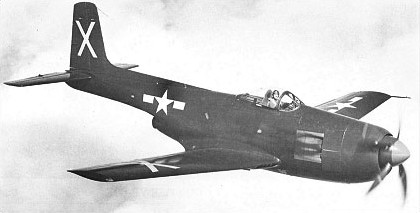
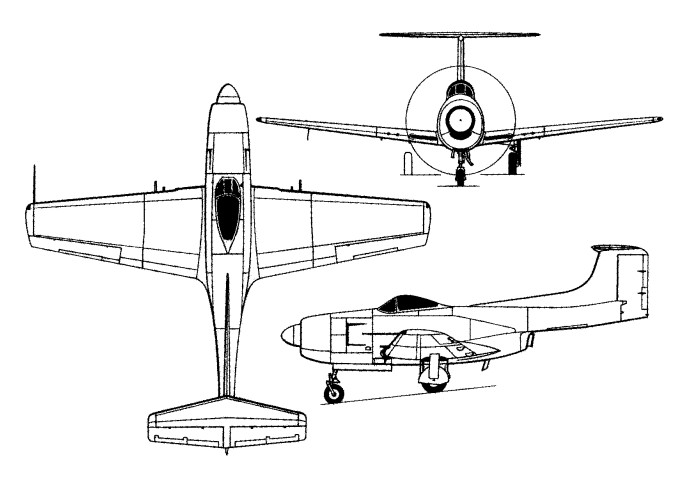
US Navy interest in the mixed-power concept for shipboard fighters had resulted in orders for three prototypes of the Ryan XFR-1, and 100 production FR-1s. Taken a stage further, on 7 April 1944 a contract for three prototypes of the more powerful XF15C-1 was placed with Curtiss. This was to be powered by a 2,100hp Pratt & Whitney R-2800-34W 18-cylinder two row radial in the front with a four-bladed propeller and a 1226kgp Allison-Chalmers J36 (Halford H-1B) turbojet in the belly. Armament was to comprise four wing-mounted 20mm cannon. The first XF15C-1 was flown on 27 February 1945, without the turbojet installed, this fitted by April, but the aircraft was lost on 8 May when it crashed during a landing approach. The second XF15C-1 flew on 9 July 1945, and was joined soon after by the third, both subsequently having their low-set horizontal tail surfaces replaced by a T-tail arrangement. The flight test programme continued until October 1946, by which time the US Navy had lost interest in the mixed power arrangement and cancelled further development.
Engines: 1 x Pratt & Whitney R-2800-34W 18-cylinder two row radial, 2,100hp / 1566 kW and 1 x Allison-Chalmers J36 (Halford H-1B) turbojet, 1226kgp / 2700-lb Max take-off weight: 7543 kg / 16630 lb Empty weight: 5 737 kg Wingspan: 14.63 m / 47 ft 12 in Length: 13.41 m / 43 ft 12 in Height: 4.65 m / 15 ft 3 in Wing area: 37.16 sq.m / 399.99 sq ft Max. speed: 469 mph / 755 km/h Range: 2228 km / 1384 miles
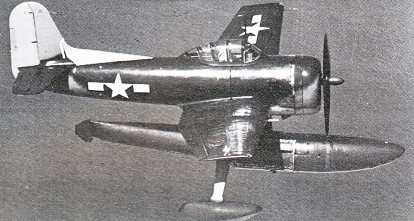
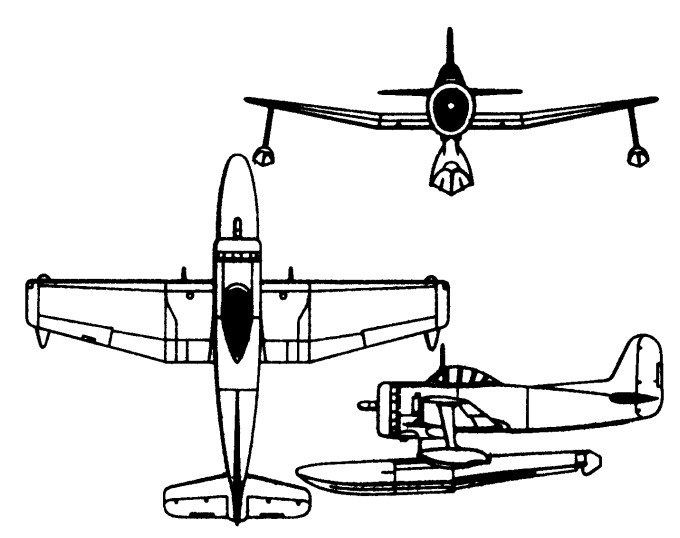
Development of the Curtiss SC Seahawk began in June 1942, when the US Navy requested the company to submit proposals for an advanced wheel/float scout aircraft. An easily convertible landing gear configuration was required so that the aircraft could be operated from aircraft carriers and land bases, or be catapulted from battleships. The type was required to replace the rather similar Curtiss Seamew and Vought Kingfisher which stemmed from a 1937 role. The Curtiss Model 97 design proposal was submitted on 1 August 1942 but it was not until 31 March 1943 that a contract for two XSC-1 (Model 97A) prototypes was issued. An all-metal cantilever low-wing monoplane, the SC Seahawk had folding wings with considerable dihedral on their outer panels and strut-mounted wingtip stabiliser floats. The central float, which could also accommodate some auxiliary fuel, and the main wheeled landing gear units shared common attachment points. Power was a Wright R-1820-62 Cyclone 9 radial engine. The first prototype made its maiden flight on 16 February 1944, and was followed by 500 production SC-1 (Model 97B) aircraft which had been contracted from June 1943. All were delivered as land-planes, the stabiliser floats and Edo central float being purchased separately and installed as and when required by the US Navy. Delivery of production aircraft began in October 1944, the first equipping units aboard the USS Guam. A second batch of 450 SC-1s was contracted, but of these only 66 had been delivered before contract cancellation at VJ-Day. An improved version was developed, changes including the installation of a 1063kW R-1820-76 engine, a clear blown canopy, and a jump seat behind the pilot. The modified prototype, at first designated XSC-1A and then XSC-2 (Model 97C), led to a contract for similar production SC-2 (Model 97D), but only 10 had been delivered by the war’s end.
XSC-1 – Prototype Designation; two examples produced.
SC-1 – Initial Produciton Model Designation; 566 examples produced; introduced in 1944.
SC-2 – Improved two-seat SC-1; nine examples produced; appearing in 1946.
Curtiss SC-1 Seahawk Engine: 1 x Wright R-1820-62 Cyclone radial, 1,350 hp / 1007kW Wingspan: 12.50 m / 41 ft 0 in Length: 11.09 m / 36 ft 5 in Height: 3.89 m / 12 ft 9 in Wing area: 26.01 sq.m / 279.97 sq ft Wing load: 32.19 lb/sq.ft / 157.0 kg/sq.m Max. speed: 272 kt / 504 km/h / 313 mph Cruise speed: 201 km/h / 125 mph Maximum Range: 631miles (1,016km) Rate-of-Climb: 2,500ft/min (762m/min) Service Ceiling: 37,303ft (11,370m) Armament: 2 x 0.50 cal (12.7mm) fixed, forward-firing heavy machine guns. 2 x 100- or 250lb general purpose bombs held underwing. Crew: 1 Hardpoints: 2 Empty Weight: 6,321lbs (2,867kg) Maximum Take-Off Weight: 8,999lbs (4,082kg)
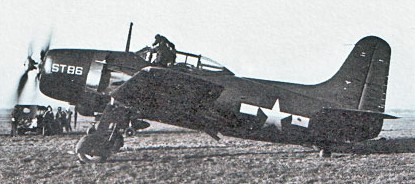
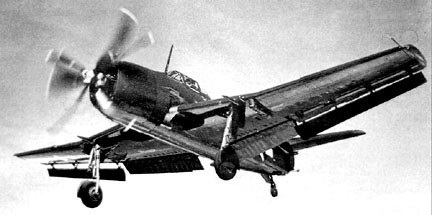
In late 1943 Curtiss received a US Navy order for two single-seat torpedo-bomber aircraft Model 96 prototypes under the designation XBTC-1 931401/314020. A low-wing monoplane with considerable dihedral on the outer wing panels, retractable tailwheel landing gear and a 2237kW Pratt & Whitney R-4360-14 Wasp Major engine and three-blade contrarotating prop, but before the first flew, a slightly different version of XR-4360-8A engine was installed in each aircraft, bringing the redesignation XBTC-2. Armament was four 20mm wing cannon. However, Curtiss was now in competition with Douglas, Fleetwings and Martin for this requirement, losing out to Douglas and Martin whose contenders were produced as the AD-1 Skyraider and AM Mauler respectively.
Curtiss XBTC-2
In March 1945 Curtiss gained a contract for 10 of the generally similar XBT2C-1. This Model 98 differed by having a lower-powered Wright R-3350-24 engine, reduced armament, accommodation for a crew of two and a search radar pod mounted beneath the starboard wing. Only nine of the 10 were built, and these were the last Curtiss-built aircraft for the US Navy.
96 / XBTC Engine: 2237kW Pratt & Whitney R-4360-14 Wasp Major Wingspan: 14.02 m / 45 ft 12 in Length: 11.51 m / 37 ft 9 in Height: 3.76 m / 12 ft 4 in Wing area: 34.84 sq.m / 375.01 sq ft Empty weight: 4 800 kg Useful load: 3963 lb Max. speed: 611 km/h / 380 mph Cruise speed: 180 mph Stall: 85 mph Ceiling: 28,000 ft Range: 2180 km / 1355 miles Seats: 1
98 / XBT2C-1 Engine: 1 x 1864kW Wright R-3350-24 radial Take-off weight: 8618 kg / 19000 lb Empty weight: 5565 kg / 12269 lb Wingspan: 14.50 m / 47 ft 7 in Length: 11.94 m / 39 ft 2 in Height: 3.68 m / 12 ft 1 in Wing area: 38.65 sq.m / 416.02 sq ft Max. Speed: 531 km/h / 330 mph Ceiling: 8015 m / 26300 ft Range: 2108 km / 1310 miles Armament: 2 x 20mm cannon, 907kg of bombs Seats: 1
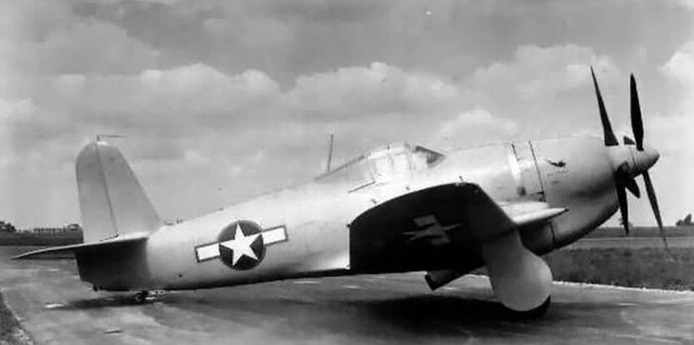
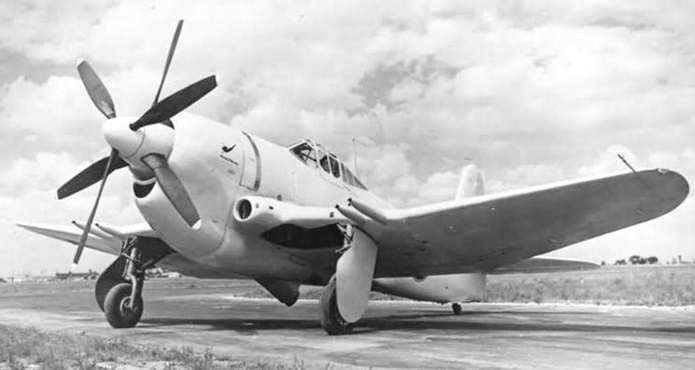
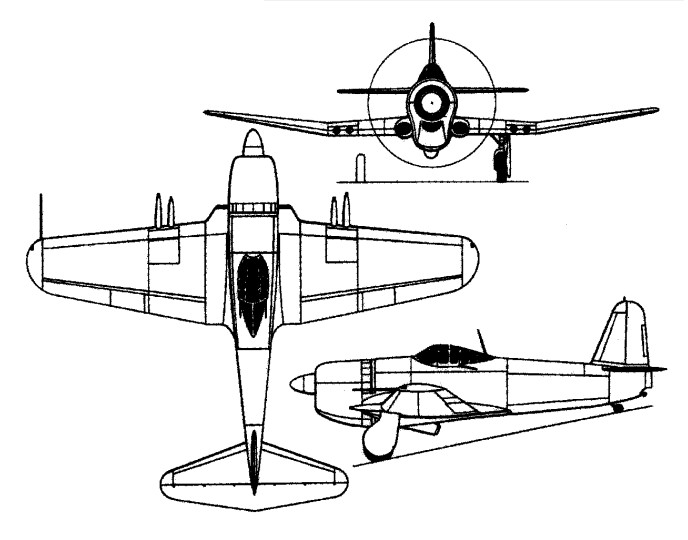
On 30 June 1941, Curtiss received a prototype development contract for the XF14C-1 single-seat shipboard fighter designed around the 2,200hp Lycoming XH-2470-4 liquid-cooled engine.
At a relatively early stage in the programme, the unsatisfactory state of development of the Lycoming engine led to the redesign of the fighter to accept an 18-cylinder two-row Wright R-3350 as the XF14C-2, this engine driving a six-blade contraprop.
Powered by an XR-3350-16 rated at 2,300hp, and carrying an armament of four 20mm cannon, the XF14C-2 was flown for the first time in September 1943, but not delivered to the US Navy until July 1944.
Performance proved to be substantially below that specified and the prototype suffered excessive vibration. In consequence, further development of the XF14C-2 was abandoned.
The Curtiss XP-62 was the final propeller-driven fighter built by Curtiss and its dimensions were exceeded only by the Boeing XF8B naval fighter. The XP-62 was ordered by the USAAF on 27 June 1941 with the 1715kW Wright R-3350 radial engine.
Curtiss XP-62 Article
Initial plans called for delivery of one XP-62 and one XP-62A and later for 100 production P-62 fighters, but it was clear almost from the beginning that the design was overweight, underpowered, and an uneconomical alternative to continued Curtiss production of the P-47G Thunderbolt.
Because it would be an effective testbed for dual-rotation propellers and a pressurized cabin, it was decided on 18 July 1942 to proceed with a sole airframe, the remaining machines on order being cancelled. Development of the XP-62’s cabin pressurisation system was delayed and the aircraft did not fly until early 1944. By then even the XP-62’s value as a test ship was marginal and the programme was terminated after a few hours’ flying time.
Engine: 1715kW Wright R-3350 radial Max take-off weight: 6640 kg / 14639 lb Empty weight: 5340 kg / 11773 lb Wingspan: 16.36 m / 53 ft 8 in Length: 12.04 m / 39 ft 6 in Height: 4.95 m / 16 ft 3 in Wing area: 39.02 sq.m / 420.01 sq ft Max. speed: 720 km/h / 447 mph Ceiling: 10800 m / 35450 ft Range: 1140 km / 708 miles
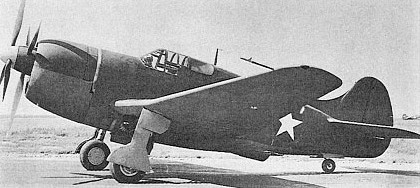
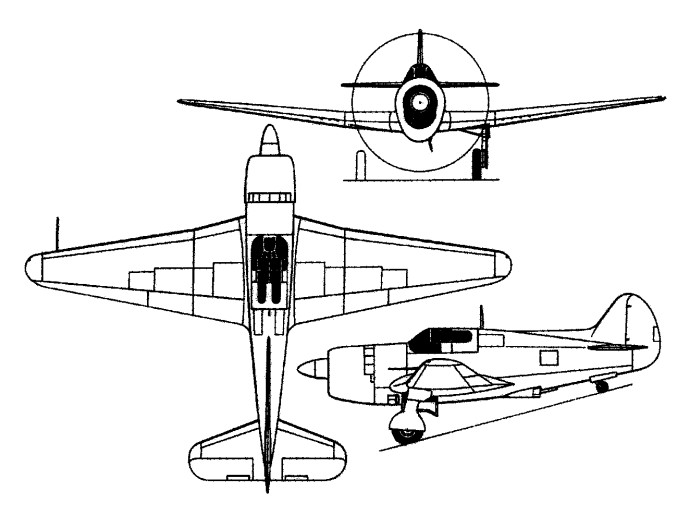
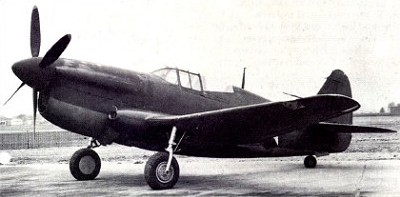
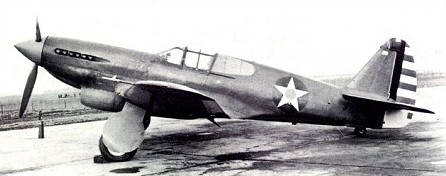
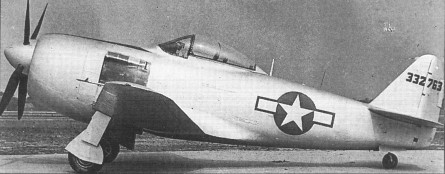
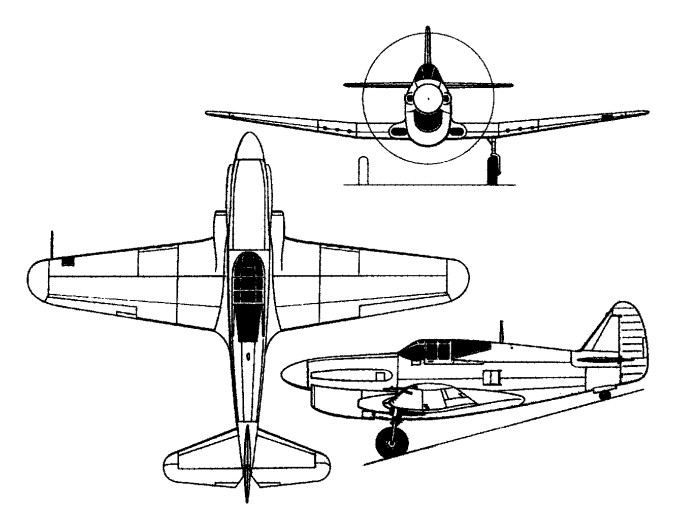
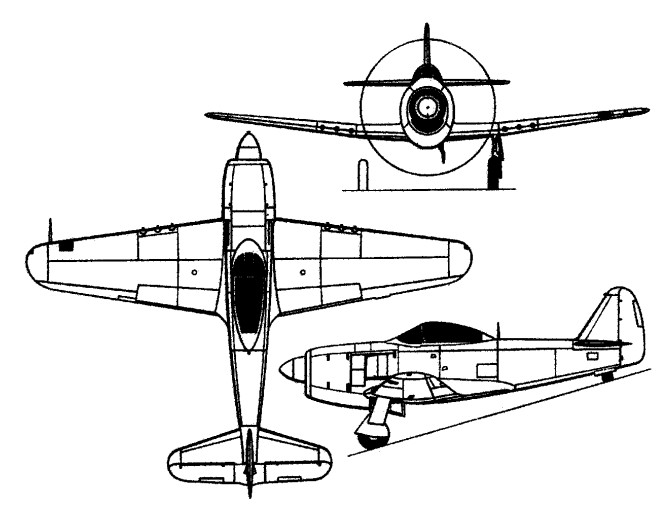
The P-60 designation applies to a family of widely different Curtiss fighters, each reflecting the urgency of the builder’s unsuccessful effort to develop a P-40 replacement. Though only four airframes carried out the P-60 programme, no fewer than nine designations were involved: XP-60, XP-60A, YP-60A, P-60A, XP-60B, XP-60C, XP-60D, XP-60E and YP-60E. The programme ran from early 1941 to December 1944 and was Curtiss’s last gasp in the propeller-driven fighter field, an effort which involved several engines, propellers, and canopy configurations. Four XP-60 prototypes were flown with various engines, and designations.
The XP-60 was a low-wing, conventional-gear fighter developed from the uncompleted XP-53 but powered by a 969kW Packard V-1560-1 licence-built Merlin, determined by the USAAF to be the best engine available in 1941. This airframe flew on 18 September 1941. With all Merlin-related resources soon committed to the P-51 Mustang programme, the USAAF then decided to employ the 1062kW Allison V-1710-75 in planned production-model P-60s. On 31 October 1941, 1,950 such fighters were ordered. Soon, however, it became evident that Curtiss’ Buffalo, New York, plant could be more usefully employed building P-47G Thunderbolts and the contract was cancelled. Three XP-60A airframes were tested with the Allison powerplant before being re-engined. The proposed YP-60A, which would have had a 1491kW Pratt & Whitney R-2800-10 radial, was another variation which did not result in a finished airframe. The XP-60B was to have been the original machine with a shift from Merlin to Allison power but apparently this change was never made.
YP-60E
The XP-60C, converted in 1943 from one of the three Allison test ships, employed the R-2800 radial. This was the sole example tested with Curtiss Electric contra-rotating propellers. The XP-60D was the original machine retaining its Merlin but with enlarged tail surfaces and other minor changes. The XP-60E was another R-2800 radial-powered variant. Last in the series was the YP-60E, another conversion, again R-2800 radial-powered but now uncamouflaged and with bubble canopy, the result being formidable competition to the Curtiss P-40Q for the claim of most beautiful fighter ever built. In November 1942, the US Army ordered 500 Pratt & Whitney-powered P-60 fighters but the production contract was soon set aside in favour of other priorities. The P-60 programme ended by mid-1944, the last airframe being scrapped on 22 December 1944. In May 1944, Curtiss indicated to the AAF that it wished to abandon further work on the P-60 series fighters because of the disappointing results achieved with the XP-60C and XP-60E. Earlier, the P-60 had been eliminated from the production schedules, the number of aircraft on contract having been reduced to two. However, the AAF insisted on completion of one of the two aircraft still on order. These, originally ordered as YP-60As, had been redesignated as YP-60Es because the design modifications incorporated were most directly descended from the XP-60E. The YP-60E differed principally in having a 2,100hp R-2800-18 engine, a deeper cowling incorporating the ventral cooler intake, a cut-down rear fuselage and a bubble-type cockpit canopy. The sole YP-60E completed was flown on 13 July 1944, but only one further flight was made before the aircraft was transferred to Wright Field where it was eventually disposed of without further testing. Armament comprised six wing-mounted 12.7mm machine guns.
XP-60C Engine: Pratt & Whitney R2800. Prop: Curtiss Electric contra-rotating. Take-off weight: 4770 kg / 10516 lb Empty weight: 3945 kg / 8697 lb Wingspan: 12.60 m / 41 ft 4 in Length: 10.39 m / 34 ft 1 in Height: 4.57 m / 14 ft 12 in Wing area: 25.55 sq.m / 275.02 sq ft Max. speed: 621 km/h / 386 mph Ceiling: 10900 m / 35750 ft Range: 990 km / 615 miles
XP-60D Engine: Packard Merlin V-1560-1, 969kW
XP-60E Engine: Pratt & Whitney R2800. Take-off weight: 4658 kg Empty weight: 3758 kg Wingspan: 12.60 m / 41 ft 4 in Length: 10.34 m / 33 ft 11 in Height: 3.81 m / 12 ft 6 in Wing area: 22.55 sq.m / 242.73 sq ft Max. speed: 652 km/h / 405 mph