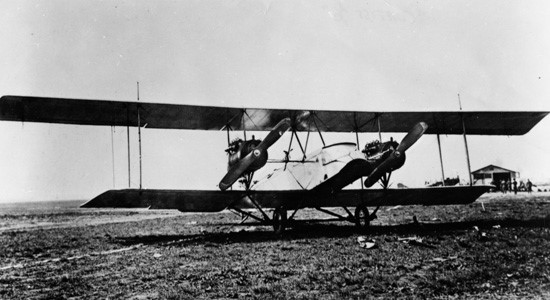
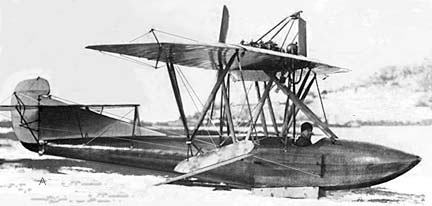
The Curtiss Twin JN (retrospectively called the Model 1B and also known as the JN-5) was an Experimental aircraft built by the Curtiss Aeroplane and Motor Company for the United States Army Air Service. It was a biplane, designed for observation missions.
Based on the successful Curtiss JN-4, the Twin JN used the same wing structure, but the wingspan was extended by enlarging the center section. Lateral control was achieved with the tail of a Curtiss R-4. The Twin JN was powered by a pair of 90 hp (67 kW) Curtiss OXX-2 engines located between the wings.
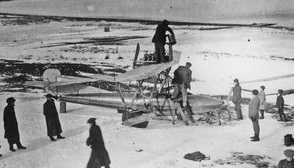
Eight were built in 1916, and one aircraft was evaluated by the United States Navy as a twin-float seaplane.
Engines: 2 × Curtiss OXX-2 water-cooled V-8, 90 hp (67 kW) each Wingspan: 52 ft 9⅜ in (16.08 m) Wing area: 450.3 ft2 (41.83 m2) Length: 29 ft 0 in (8.83 m) Height: 10 ft 8⅜ in (3.26 m) Empty weight: 2,030 lb (921 kg) Gross weight: 3,110 lb (1,411 kg) Maximum speed: 80 mph (129 km/h) Service ceiling: 11,000 ft (3,350 m) Crew: two
In 1916 a pusher version of the Curtiss R, based on wings of R, with new fuselage nacelle accommodating two crew was built. Only the one example was made.
The Curtiss R-7 of 1916 was a long-wing version of the R-6 specially built for the New York Times. The long range landplane was built for an attempted to fly non-stop from Chicago to New York in 1916. It failed to complete the flight but still set an American distance record of 452 miles (727 km).
Fitted with long-span wings, it was similar to the R-3 and R-6, and powered by Curtiss V-2-3 engine. Only one was built.
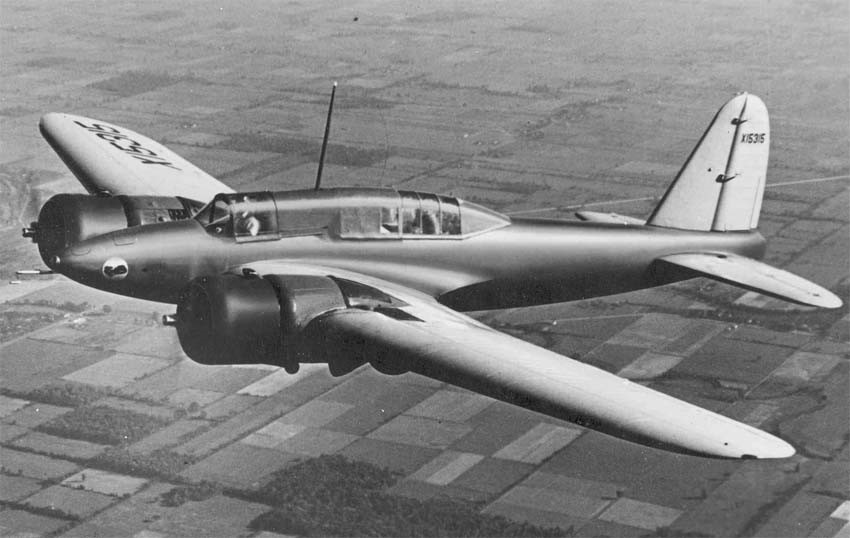
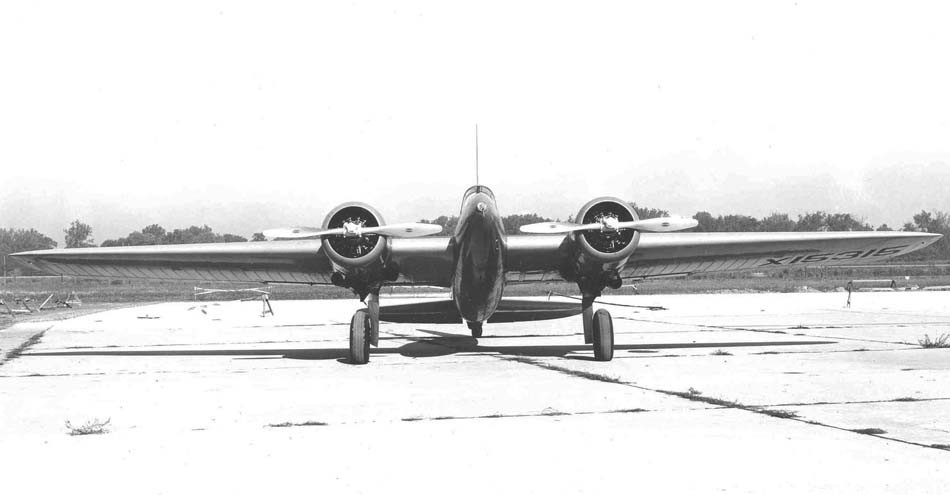
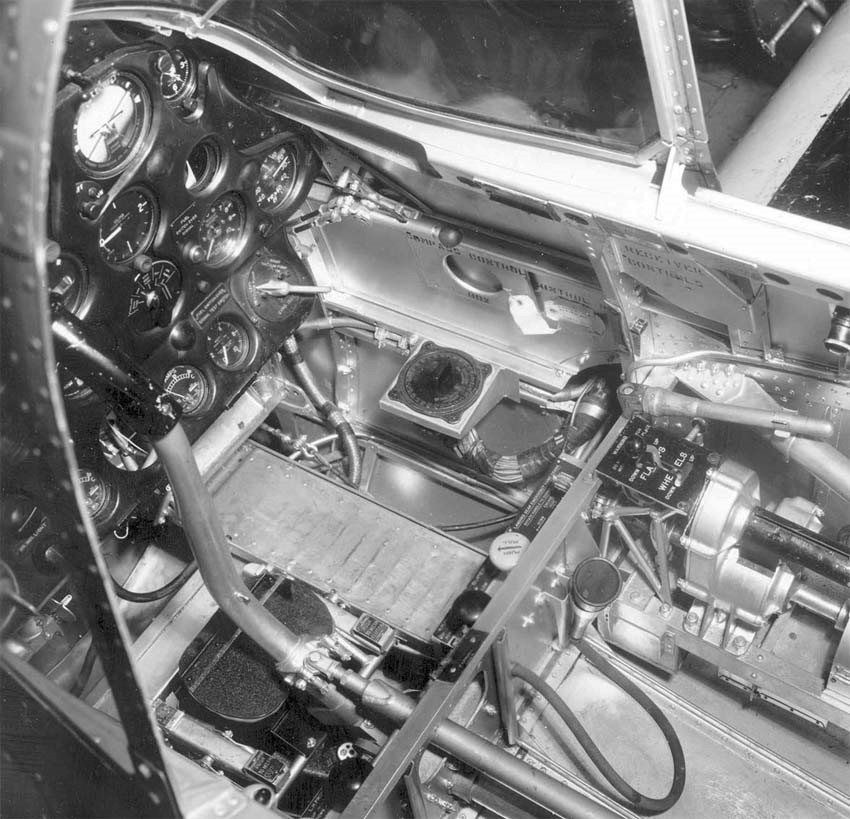
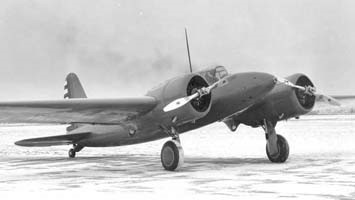
In 1934, Curtiss began work on a brand new twin-engined attack aircraft, which received the designation Model 76 and the name “Shrike”. Originally built as an in-house venture as the Curtiss Model 76, the 76 was of all-metal construction with an oval section semi-monocoque fuselage, described as “pencil slim” with a fabric covering of ailerons, rudder and stabilizers. The main landing gear retracted into the engine nacelles, the rear wheel also retractable
First flying on 17 July 1935, with the civil registration NX15314, the first multi-engine attack aircraft tested by the United States Army Air Corps at the Wright Field air base in Ohio, but in the fall it was returned to the company for improvements. Carrying a crew of two, it was as fast as the standard pursuit aircraft in service at the time.
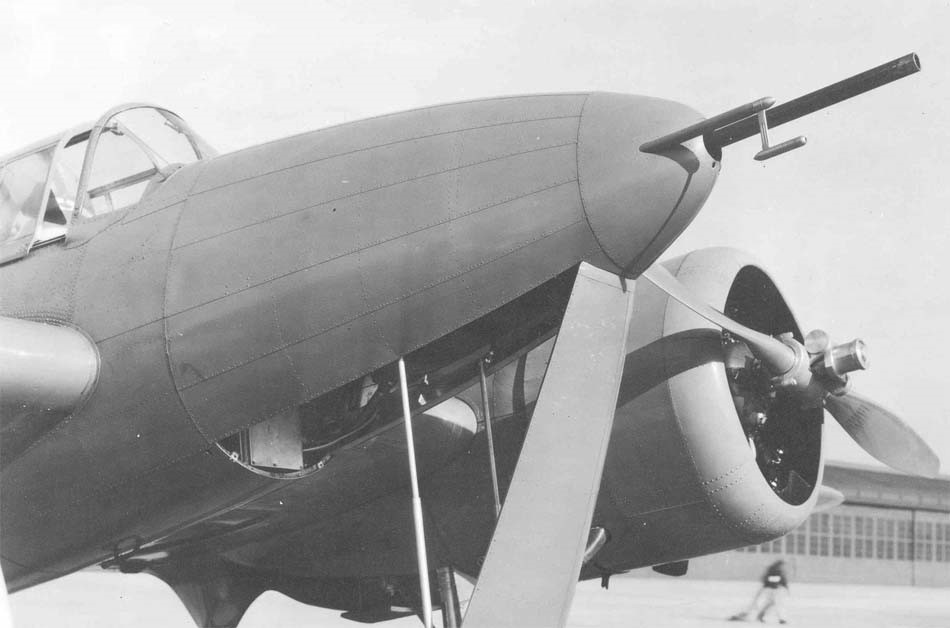
The XA-14 was extensively tested, at one stage being fitted with a 37 mm (1.46 in) nose cannon. Powered by two experimental Wright XR-1510 radial engines, flight testing was sufficiently impressive that after the USAAC appraisal the Model 76 was returned to Curtiss and fitted with two 775 hp (578 kW) Wright R-1670-5 Cyclone engines with two-blade constant-speed propellers. This configuration was accepted by the Army with the designation XA-14 given to the sole example. It had standard Army markings with the serial number 36-146.
The Great Depression of 1929-1932 severely curtailed military allocations. The price of a single Wright engine was then $ 90,000, which was considered excessively expensive for mass construction.
On 23 July 1936, 13 pre-production versions, re-engined with two Wright R-1820-47 Cyclone twin-row radials with three-blade propellers, were ordered into production as the Y1A-18.
The only prototype XA-14 was initially planned to be used to set aviation records, but instead in June 1936 this aircraft was tested with a new 37-mm cannon (sometimes it was called YA-14). At the end of the year, it was dismantled for scrap after 158 hours of flight time.
Engines: 2 × Wright R-1670-5 Whirlwind, 775 hp (578 kW) each Wingspan: 59 ft 5 in (18.11 m) Length: 40 ft 3 in (12.27 m) Height: 10 ft 9 in (3.2.7 m) Empty Weight: 3680 kg Max takeoff weight: 11,750 lb (5,330 kg) Maximum speed: 254 mph (221 kn, 409 km/h) Cruising speed: 340 km / h Range: 825 mi (717 nmi, 1,328 km) Service ceiling: 27,100 ft (8,260 m) Crew: two Armament: 4 × .30 in (7.62 mm) M1919 Browning machine guns forward-firing 1 × .30 in (7.62 mm) machine gun aft-firing 650 lb (295 kg) bombs in internal bay
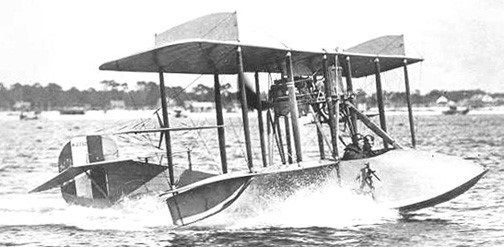
The 1916 Model 18 MF (Acronym was for “Modernized F”) was first powered by the 100hp Curtiss OXX-3. Later motors included 150hp K-6 and 400hp K-12.
Twenty-two were built; A2345-2350, A4403-4418, of which many were modified after WW1 by Cox-Klemin Co for civil use. Post-war production version became the Seagull.
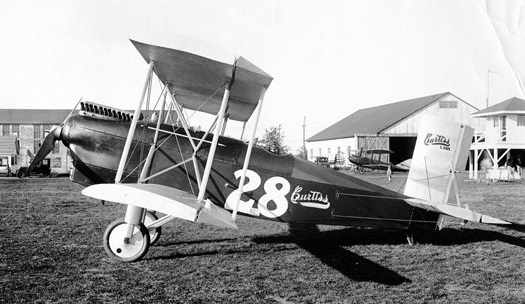
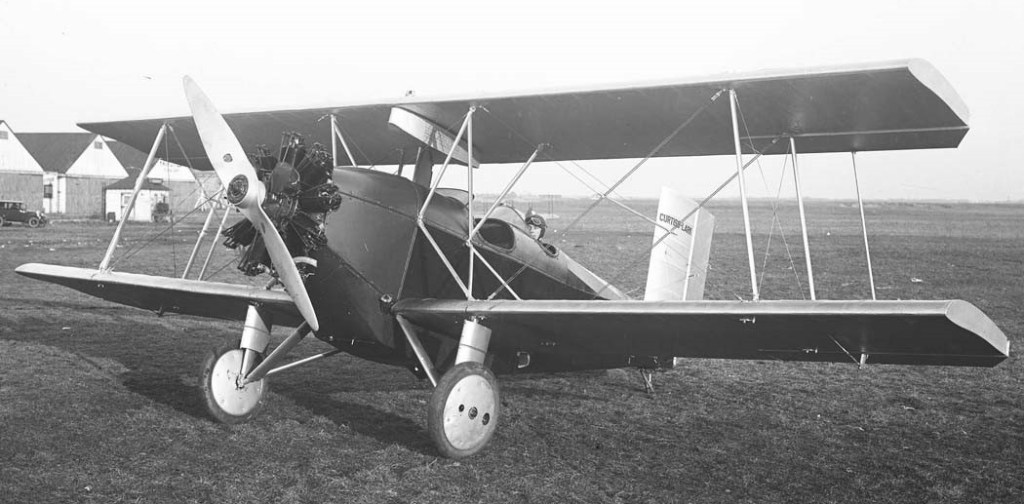
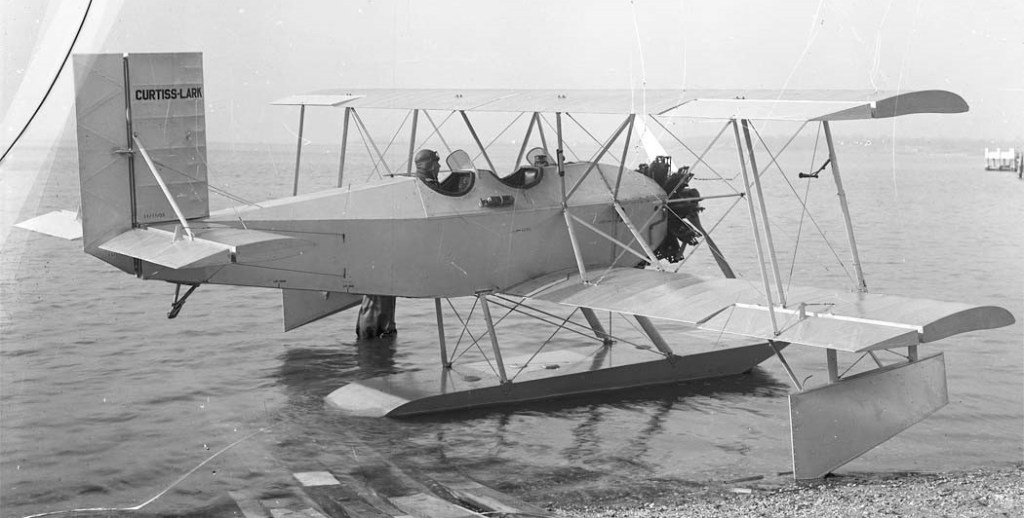
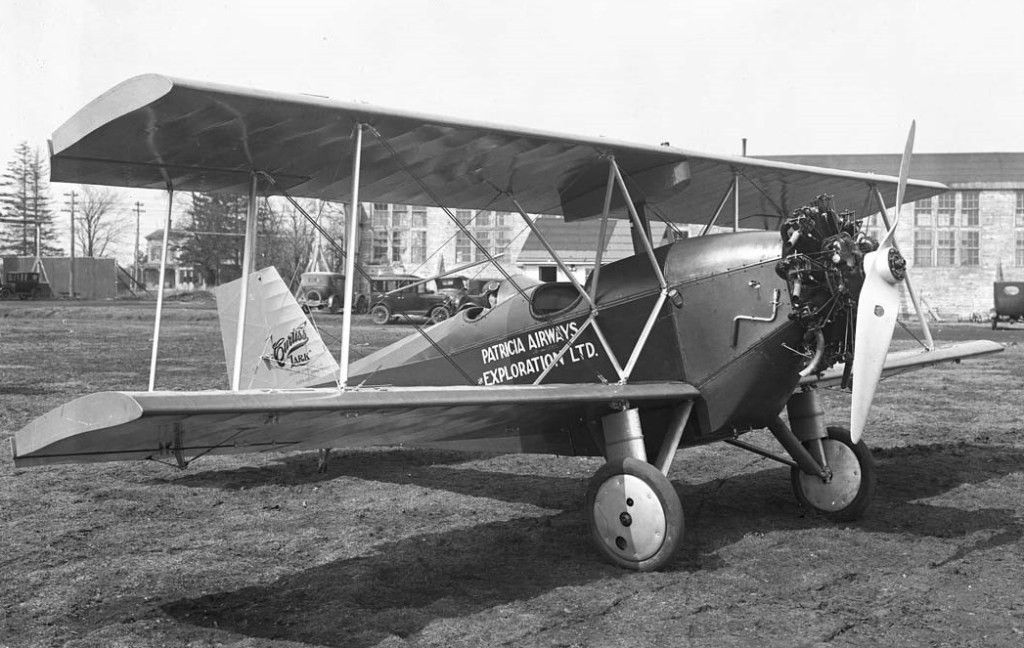
Developed in 1925, the Curtiss Model 41 Lark biplane was based on the Curtiss Carrier Pigeon, a purpose-built aircraft for airmail operations. The Lark also had a longer-span lower wing, similar to the Carrier Pigeon. Some models were converted to floatplane configuration with a central mounted pontoon and wing-mounted floats.
It was a four-seater biplane of a mixed design, equipped with a Curtiss C-6 engine with a power of 160 hp. The biplane was made of welded tube with fabric covering. It was available with three engine choices, the Curtiss C-6, the Wright J-4 Whirlwind, and the Wright-Hisso E. All four wing panels were interchangeable, giving the aircraft its unusual longer lower wings.
Lark with J-4 motor Whirlwind
A 200 hp Wright J-4 variant was tested for the United States Navy with two floats. This installation proved superior in performance to the Curtiss engined model. This version eventually became the basis for the Curtiss Fledgling series of aircraft.
Patrica Airways operated a Lark for early bushplane operations. The aircraft flew with floats in warm weather, and skis in the winter. The aircraft was pressed into service as an early hearse once, with the cargo needing to be seated upside down in the open seat and secured with haywire.
Florida Airways operated a Curtiss Lark Miss Tallahassee on its CAM-10 U.S. airmail route between Miami and Atlanta. The aircraft was bought to take the place of two lost Stout 2-AT Pullman aircraft that could not operate out of the poorly prepared airstrips.
Colonial Air Transport owned the first Curtiss Lark C1052 which was one of the first aircraft to be registered using the new Underwriters Laboratories all-letter system (1921 to 1923). This Lark, a single place special mailplane, registered as N-AABC, was used on the CAM-1 U.S. airmail route.
Engine: 1 × Curtiss C-6, 160 hp (120 kW) Wingspan: 30 ft 7.5 in (9.335 m) Wing area: 264.3 sq ft (24.55 sq.m) Length: 22 ft 2.5 in (6.769 m) Height: 8 ft 11 in (2.72 m) Empty weight: 1,579 lb (716 kg) Gross weight: 2,708 lb (1,228 kg) Maximum speed: 99 kn; 183 km/h (114 mph) Cruise speed: 84 kn; 156 km/h (97 mph) Stall: 48 mph Range: 382 nmi; 708 km (440 mi) Ferry range: 330 nmi; 612 km (380 mi) Absolute ceiling: 13,100 ft Service ceiling: 12,500 ft (3,800 m) Rate of climb: 860 ft/min (4.4 m/s) Crew: one
Engine: Wright J-4 Whirlwind, 160 hp Wing span: 9.34 m Length: 6.77 m Height: 2.72 m Wing area: 24.55 sq.m Empty weight: 692 kg MTOW: 1228 kg Maximum speed: 188 km / h Cruising speed: 163 km / h Range: 611 km Rate of climb: 244 m / min Ceiling: 3993 m Crew: 1 Passengers: 3
The sole 1913 Curtiss A-3 was a two place, open cockpit biplane, becoming a USN patrol land/hydroplane. Powered by a pusher engine, it was later re-designated AH-3.
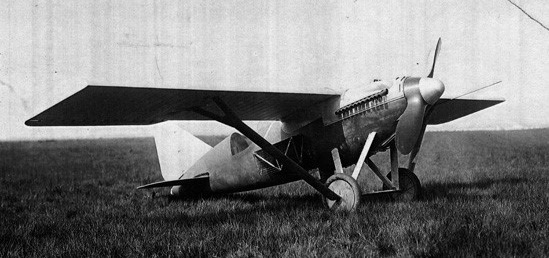
In 1920 the American oil millionaire S.Cox had two specialised racing monoplanes built for him by the Curtiss Aeroplane and Motor Company to take part in the Gordon Bennett Trophy race to be held in France in September 1920. The two aircraft, named Texas Wildcat and Cactus Kitten, were single-engined, braced, high-wing monoplanes powered by a 427 hp (318 kW) Curtiss C-12 inline piston engine. They had streamlined wooden fuselages with the pilot sitting in an enclosed cockpit towards the rear of the fuselage, under a forward sliding canopy. The wing, which had a special double camber airfoil section, was high-mounted, and was braced by struts to the mainwheels of the fixed conventional landing gear. The V-12 engine drove a two-bladed tractor propeller, and was cooled by radiators mounted on the side of the fuselage between the cockpit and the wings.
The Texas Wildcat was briefly tested in the United States before shipment, being fitted with a different wing with a more conventional airfoil for operation out of the confined Curtiss Field. First flying on July 25, it demonstrated a speed of 183 mph (295 km/h), with a speed of 215 mph (346 km/h) expected when fitted with the high speed racing wing. Both aircraft were then sent by ship to France, with no testing carried out on the high speed wing and Cactus Kitten unflown before sailing. Texas Wildcat was reassembled at the Morane-Saulnier factory with the high speed wing, but was found to be unstable at high speeds when flown by test pilot Roland Rohlfs. A set of biplane wings were therefore quickly designed and fitted to Texas Wildcat. Texas Wildcat was wrecked in a landing accident when being flown to Étampes prior to the race.
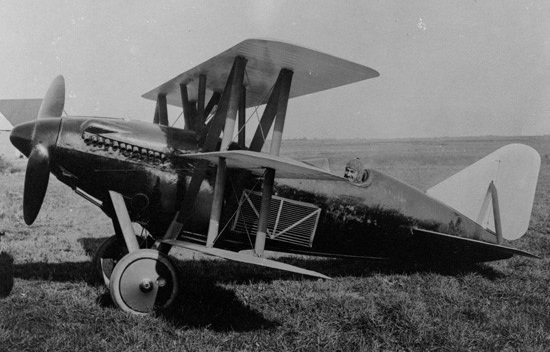
Although the Cactus Kitten was taken to France it remained unflown and was returned to the United States. It was then rebuilt with a set of short-span triplane wings modified from those of a Curtiss 18T, with the enclosed cockpit replaced by a more conventional open cockpit.
Cactus Kitten
Thus modified, it was entered into the 1921 Pulitzer Trophy Race, where, flown by Clarence Coombs at an average speed of 170.3 mph (274.1 km/h), it gained second place behind a Curtiss CR piloted by Bert Acosta. It was later sold to the United States Navy as a trainer for high-speed racing aircraft.
Engine: 1 × Curtiss C-12, 435 hp (324 kW) Wingspan: 20 ft (6.1 m) Wing area: 175 sq ft (16.3 m2) Length: 19 ft 3 in (5.87 m) Gross weight: 2,406 lb (1,091 kg) Maximum speed: 196 mph (315 km/h; 170 kn) Crew: one