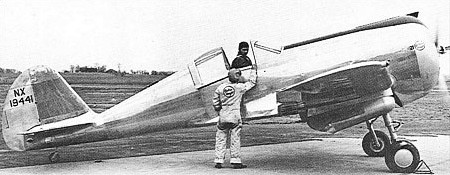
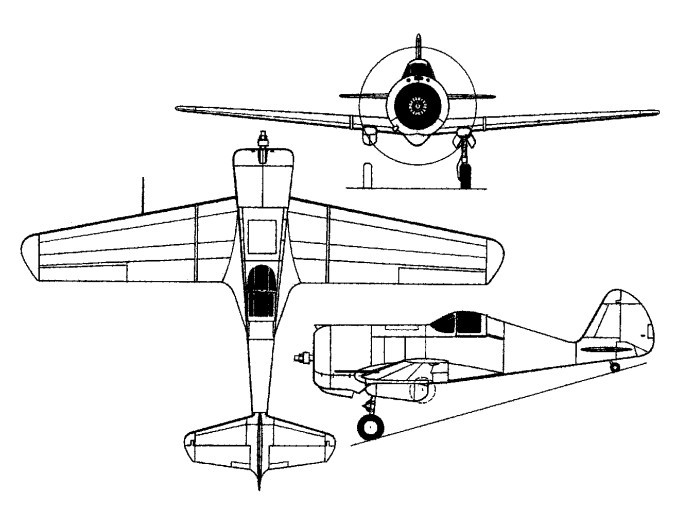
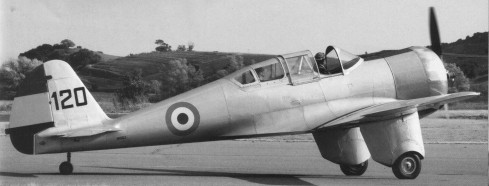
In 1938, chief engineer Willis Wells of the St Louis Airplane Division of the Curtiss-Wright Corporation began the development of a single-seat fighter based on the A-19R tandem two-seat military basic trainer. Designated CW-21, it had a Wright R-1820-G5 Cyclone nine-cylinder radial engine rated of 1,000hp for take-off and 850hp at 1830m, and an all-metal stressed-skin structure with a semi-monocoque fuselage. The mainwheels retracted into clamshell-type underwing fairings and armament was two synchronised 12.7mm machine guns. The prototype CW-21 was flown on 22 September 1938, and shipped to China for demonstration. The prototype was purchased by the Chinese government and a contract placed for three production aircraft and 27 sets of components for assembly by CAMCO. The first production CW-21 was flown on 20 March 1940, and provision was made to increase the armament with a pair of 7.62mm weapons. All three CW-21s built by the parent company were lost as a result of engine failures after taking-off from Lashio while being ferried to Kunming. Assembly of CW-21s by CAMCO at Loi-wing had reached an advanced stage when it was decided to evacuate and, on 1 May 1942, burn the factory to avoid its capture by Japanese forces, the partly-assembled fighters also being destroyed. In April 1939, Curtiss-Wright’s St Louis Airplane Division flew the prototype of the CW-23 basic combat trainer which was essentially a tandem two-seat, lower-powered derivative of the CW-21 single-seat fighter. It introduced inward-retracting, fully-enclosed main undercarriage members and hydraulically-actuated rather than manually-operated flaps, and these features were adopted for a new version of the single-seat fighter, the CW-21B. On 17 April 1940, the Dutch government signed a contract for 24 CW-21B fighters (of which there was no prototype) and the first of these was flown the following mid-September. The CW-21B retained the R-1820-G5 Cyclone of the earlier CW-21 and armament comprised two 7.62mm Colt machine guns mounted in the forward fuselage. The CW-21B fighters were shipped to Java during October-December 1940, entering service with the MLKNIL. Their light structure and lack of fuel tank protection was to render them particularly vulnerable when committed to operations against Japanese forces in the early months of 1942, the last combat mission being flown by a CW-21B on 5 March.
Curtiss-Wright CW 21 Demon Engine: Wright R 1820-G5, 986 hp Length: 27.165 ft / 8.28 m Height: 8.924 ft / 2.72 m Wingspan: 35 ft 0 in / 10.67 m Wing area: 174.269 sqft / 16.19 sq.m Max take off weight: 4500.4 lb / 2041.0 kg Weight empty: 3382.5 lb / 1534.0 kg Max. speed: 274 kts / 507 km/h Cruising speed: 245 kts / 454 km/h Service ceiling: 34301 ft / 10455 m Wing load: 25.83 lb/sq.ft / 126.0 kg/sq.m Range: 548 nm / 1014 km Crew: 1 Armament: 2x cal.30 MG (7,62mm), 2x cal.50 MG (12,7mm)
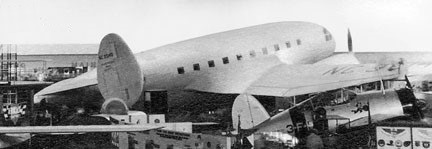
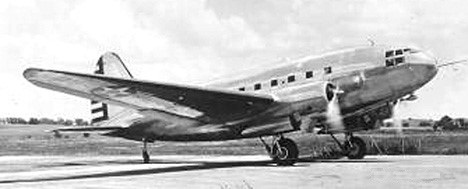
The 1937 design specifications called for the Commando to feature a pressurized cabin for up to 36 combat-ready troops, longer range than anything available to the USAAF and an above average cruising speed. Design headed by George Page the CW-20 first appeared in prototype form on 26 March of 1940 as the twin-rudder CW-20T.
Curtiss-Wright CW-20 Mock-up of twin-tail prototype at 1939 NYC World’s Fair
Because the US Army was impressed with its possibilities, authorisation was obtained for the purchase of a large number as cargo transports. In the meantime the prototype was bought, modified and given the Army designation C-55. It was later re-converted for civil use and sold to the British government.
The 1941 C-55 (Model CW-20A) was a single-tail prototype Curtiss-Wright CW-20T for evaluation as a USAAF transport, rejected in favour of the C-46. A projected name of Skytruck was not officially assigned. Costing $363,600, the one built 41-21041, later went as Lend-Lease to England and BOAC as G-AGDI.
Curtiss C-55 (41-21041)
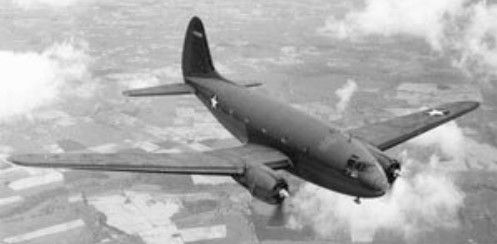
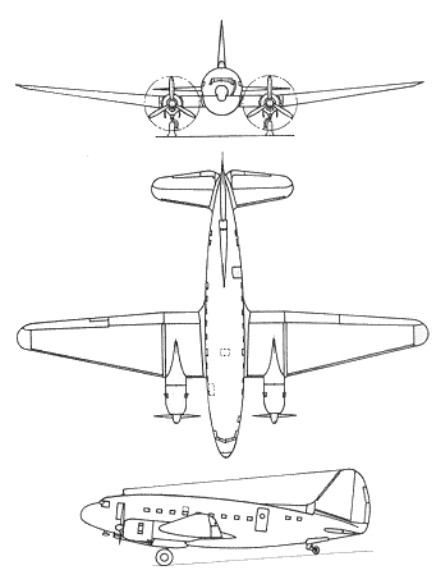
The CW-20T prototype later evolved into the CW-20A that featured a revised tail in the form of the more recognizable single rudder assembly. Later development focused in on the requirements as put forth by the United States Army Air Corps which put the CW-20A under trials and consequently ordered a production version of the model designated CW-20B. The main compartment of the C-46 could accommodate (in addition to general cargo) 40 fully equipped troops, up to 33 stretchers, five Wright R-3350 engines or their equivalent weight of other goods.
Curtiss C-46A 41-5159
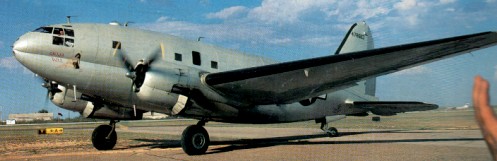
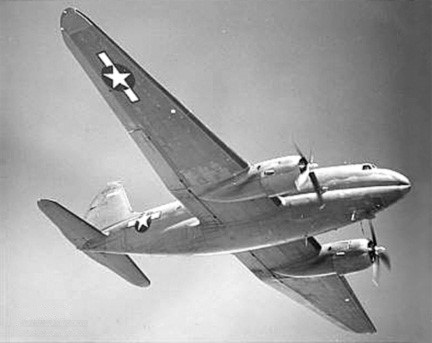
The 1942 Army production model of the CW-20B, designated C-46A, was a redesign not only to suit it to the duties of a military cargo or task-force aircraft but to allow easy large-scale production. It was produced in three large manufacturing plants and was put into widespread use by the US Army Air Transport Command, Air Service Command and Troop Carrier Command, and by the US Naval Air Transport Command and Marine Corps. Two were built by Higgins Industries (boat manufacturer), New Orleans LA. Final trial models were provisioned to fit up to 45 combat-ready troops and fitted with two Pratt & Whitney R-2800-51 radial engines, a large cargo door and folding wall seats. The C-46 entered service with the plain designation of simply C-46 in the Pacific Theatre – and used almost exclusively there up until about March of 1945, to which the Commando would be seen across the European Theatre as well.
The United States Navy utilized a designation of R5C-1 for their own Commando version, transferred from USAAF inventory, with 120 models of the R5C-1 (39492-39611) going to the United States Marine Corps. Ten of these went to the USCG with long-range fuselage fuel tanks used as cargo and personnel haulers until 1950.
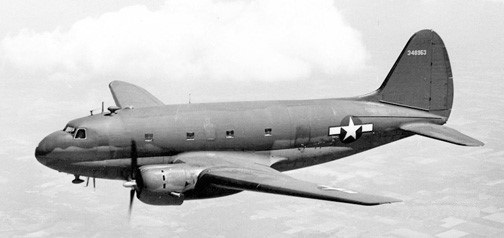
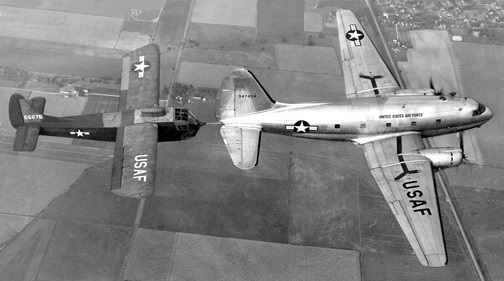
Curtiss XC-46B 43-46963
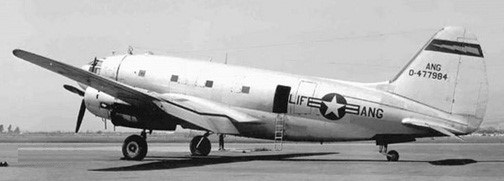
The 1944 C-46D, TC-46D (Model CW-20B-2) troop transport had a revised nose and double loading doors. An unknown number were modified as TC-46D trainers.
Curtiss C-46D with single door 44-77984
The 1944 C-46E (Model CW-20B-3) were C-46A airframes with stepped windshield and single cargo door. Seventeen were built (43-47403/47419).
Curtiss C-46E
Curtiss C-46E Glider tug (43-47404)
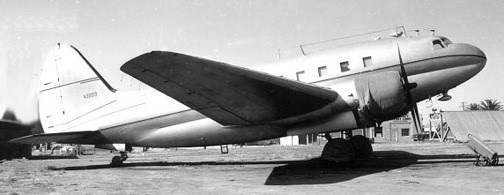
In 1944 Curtiss prepared designs and a mock-up of a commercial version of the aircraft for immediate post-war production. Curtiss-Wright hoped to market it as a 36 passenger civil version of the C-46E, with two 2500hp (1860 kW) Wright C18-B2 engines. Although a total of 26 were on order at one time the CW-20E never really had a chance as a new-production post-war airliner.
Curtiss C-46E Post-war civil (N30019)
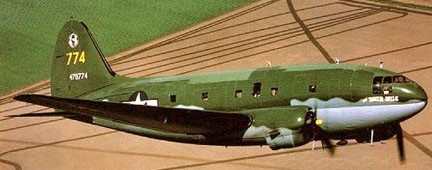
The 1945 C-46F (Model CW-20B-4) had engine modifications, squared wingtips, and cargo doors on both sides. 234 were built (44-78545/78778).
Curtiss C-46F (44-78774)
To give the C-46s added performance, some C 46Fs were fitted with two Turbomeca Palas turbojets in underwing pods to operate in Brazil (from 1953). Other aircraft were fitted with more powerful engines as ‘Super C 46s’.
The 1945 C-46G (Model CW-20B-5) was powered by two 2100hp R-2800-34W and featured a stepped windshield. The one built was originally scheduled as a C-46C (44-78945), and later converted to XC-113.
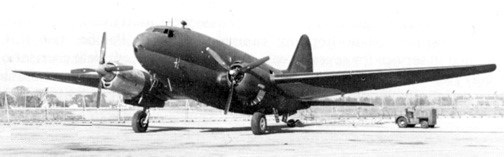
Built in 1945, the sole C-113 (Model CW-20G) 44-78945 was a C-46G with a four-blade General Electric TG-100 turboprop installed in the right nacelle for tests, retaining its original three-blade Wright R-2800-34W on the left. This proved to be an unmanageable arrangement and the ship was damaged in ground runs and never flew.
Curtiss XC-113 44-78945
Planned modifications for double tailwheels and R-3350-BD engines, the C-46H, XC-46K (Model CW-20E-2) was cancelled by the Armistice, although a few other post-war C-46 mods were labelled as C-46H.
The three 1945 XC-46L (Model CW-20H) conversions were test-beds for 2500hp Wright R-3350-BD Double Cyclones.
In October 1954, Terneo Aircraft Corp. announced a contract to overhaul 87 of’ them. The U.S.A.F. still had some of these veteran wartime passenger-freighter in 1955.
In total, US forces accepted 3144, and the C-46 was officially retired from service in 1968, replaced by the C-130 series of transports.
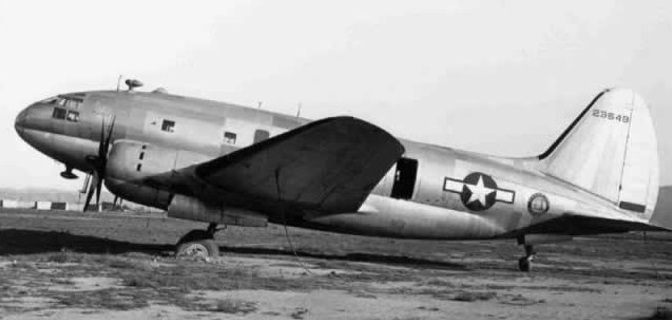
Curtiss C-46A Commando, S/N 42-3649, for sale at Cal-Aero Field, California, post-WWII
Riddle Airlines produced a modification kit in the mid-1950s which added 40mph (64kmh) to cruising speed and 2,204 lb (1,000 kg) to the payload. The improved model was designated C-46R, and Riddle subsequently converted its own fleet of 32 to have 2,100 hp Pratt & Whitney engines.
CW-20B-1 / XC-46B 1944 Stepped windshield. Engines: 2 x R-2800-34W, 2100hp Number built: 1 modified from C-46A (43-46963)
C-46C Prototype built as C-46G instead.
CW-20B-2 / C-46D Commando / TC-46D 1944 Engine: 2 x Pratt & Whitney R-2800-51 Double Wasp, 1973 hp, 1495kW Wingspan: 32.9 m / 107 ft 11 in Length: 23.3 m / 76 ft 5 in Height: 6.6 m / 21 ft 8 in Wing area: 1359.924 sqft / 126.340 sq.m Max take off weight: 56009.2 lb / 25401.0 kg Weight empty: 32404.7 lb / 14696.0 kg Max. speed: 234 kts / 433 km/h Cruising speed: 159 kts / 295 km/h Service ceiling: 27592 ft / 8410 m Wing load: 41.21 lb/sq.ft / 201.0 kg/sq.m Range: 1043 nm / 1931 km Range w/max.fuel: 2770 km / 1721 miles Crew: 3 Payload: 54pax Cost: $233,377 Number built: 1,410 (44-77295/77443, -77445, -77447/78544)
CW-20B-3 / C-46E 1944 Number built: 17 (43-47403/47419)
CW-20B-4 / C-46F 1945 Cost: $221,550 Number built: 234 (44-78545/78778)
CW-20B-5 / C-46G 1945 Engines: 2 x R-2800-34W, 2100hp Number built: 1 originally scheduled as C-46C (44-78945), converted to XC-113.
CW-20E-2 / C-46H / XC-46K Planned modifications for double tailwheels and R-3350-BD engines cancelled by the Armistice, although a few other post-war C-46 mods were labelled as C-46H.
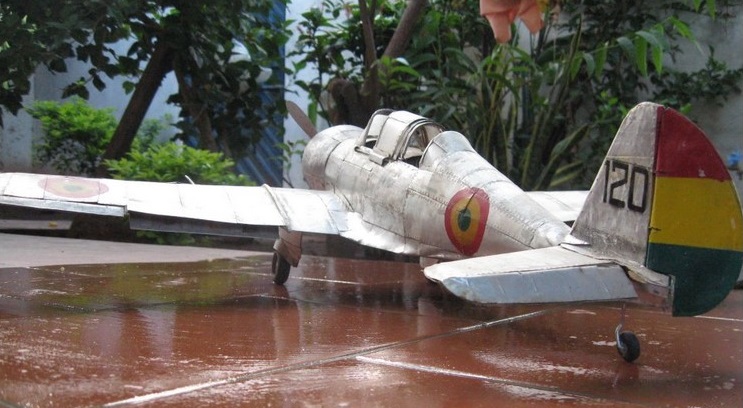
In 1935, the Curtiss-Wright Corp, in response to an order from the US Bureau of air Commerce, and George Page designed and produced a single prototype of the CW-19L Coupe at its St. Louis, Missouri plant. A development of the CR-2 Coupe design, the model 19L was a two seat, fixed undercarriage low-wing monoplane, powered by a 90 hp 5 cylinder Lambert R-266 radial engine. Of all metal monocoque construction with an enclosed cabin, the CW-19 was envisioned to be sold to private owners. The two occupants were side-by-side, with a car type door on each side. The fixed undercarriage was enclosed in streamlined spats. Registered as NS69, it was granted an Approval Type Certificate (ATC number 589) on 3 December 1935. Later repowered with a 145 hp Warner Scarab engine, the sole prototype became the 19W, with a 154 mph maximum and 132 mph cruise speeds. The performance and cost were too great for private pilots. No production was under taken and the original prototype was the only example built. Curtiss decided to develop the design as a military trainer. As the model 19R, re-configured into a tandem layout, with the two seats under sliding clear canopies. Still with fixed undercarriage, power was increased, initially to a 350 hp Wright R-760 Whirlwind, and later a 420 hp Wright R-975. A single, fixed synchronised 0.30 calibre machine gun was mounted in the nose and provision was made for an additional flexible mount machine gun in the rear cockpit (for use as a gunnery trainer). Bomb racks could also be fitted. Two 35 USG were fitted. A photo-recon variant, with two belly-mounted cameras was also developed and at least one of the Bolivian examples appears to have been delivered in this configuration. When the flaps were extended a latch was released, allowing the undercarriage struts to fully extend, the wheels dropping an additional 6 inches from the spats. When the aircraft had landed the struts were compressed again, retracting the flaps re-engaging the latch so the wheels were held in their ground position until the flaps were lowered for landing again. The prototype, c/n 19R-1 was registered NR11781 and was first flown in early 1936. Approved Type Certificate 629 was issued on 19 February 1937. Performance was increased from the model 19L, with maximum 185 mph and cruise 164 mph speeds. The prototype was written off in Brasil during a sales tour of South America. Orders were received for 23 from several Latin American governments. Two more company demonstrators were built, c/n 19R-10 (N16417) in January 1937 and A19R-14 (NC16421) also in 1937. N16417 was later converted to CW-22 specifications and sold in May 1940, and NC16421 crashed in Miami in April 1938. A total of 26 CR-19Rs were built between 1936 and 1938. 23 for export plus 3 company demonstrators. An unarmed basic trainer version of the CW-19R was built as the CW-A19R. Flown in February 1937 it was tested by the US Army but no production orders followed. The type is known to have been evaluated by the USAAC at Wright Field in Ohio, and also by USAAC pilots at Bolling Field and US Naval pilots at Anacostia NAS, both in Washington DC. Ecuador ordered six aircraft in June 1936 and all were delivered in the following September. They were c/ns 19R-2 to 19R-7, and were given the Ecuadorian AF serial numbers 51 to 56. Two were lost in service and the remained served until at least early 1946. Dominican Republic ordered two (c/ns 19R-11 and –12) in early 1937. One was not repaired after a landing accident in February 1942, and the other was retired in 1946, to be preserved in a museum near Santo Domingo. Cuba ordered 5 in 1937, all delivered by January 1938. C/ns 19R-8, -9, -13, -15 and –16, they carried serial numbers 50-54 in Cuba. Three survivors were later re-serialed 100-102, all but 102 lost in accidents by 1949, when 102 was retired. Bolivia bought the last ten produced (c/ns 19R-17 to 19R-26, Bolivian AF 118-127). They were delivered crated in late 1938 to El Alto aerodrome near La Paz and re-assembled under the supervision of Harry Berguer.
Courtesy Yerko Jaldin
CW-19L Engine: 90 hp / 67 kW Lambert R-266 5 cylinder radial Max speed: 130 mph Cruise speed: 115 mph
CW-19W Engine: 145 hp / 108 kW Warner Scarab Max speed: 154 mph Cruise speed: 132 mph
CW-19R Engine: Wright R-760E2 (J-6-7) Whirlwind, 350 hp / 261kW Wingspan: 10.67 m / 35 ft 0 in Length: 8.03 m / 26 ft 4 in Height: 2.49 m / 8 ft 2 in Wing area: 16.16 sq.m / 173.94 sq ft Max take-off weight: 1588 kg / 3501 lb Empty weight: 904 kg / 1993 lb Max speed: 298 km/h / 185 mph Cruise speed: 164 mph Rate of Climb: 2000 fpm Armament: 2 x 7.7mm machine-guns, light bombs on underwing racks
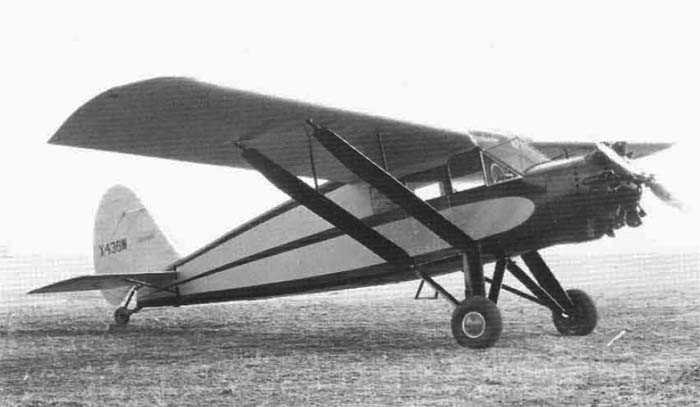
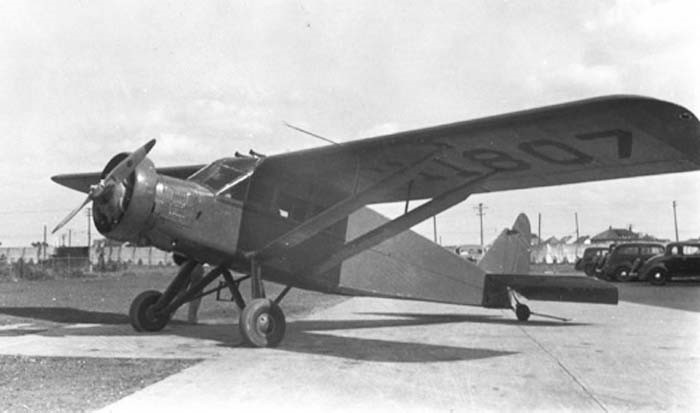
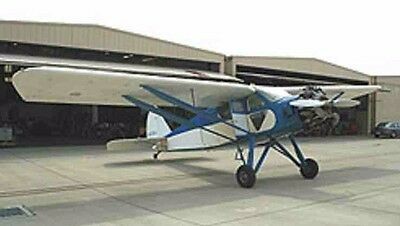
The Curtiss-Wright CW-15 Sedan was a four-seat utility aircraft produced in small numbers in the United States in the early 1930s. It was a braced high-wing monoplane with conventional tailwheel landing gear with a fully enclosed cabin, superficially resembling the Travel Air 10. At the time of the CW-15’s design, Travel Air had recently been acquired by Curtiss-Wright.
CW-15N
Designed by Walter Burnham, the CW-15 Sedan first flew in 1931 and 15 were built.
The -15 Sedan was initially produced with the 180 hp Curtiss Challenger and 210 hp Kinner C-5 engines, but the remaining examples were powered by 300 hp Wright Whirlwind (Sedan 15-D) and 245 hp Jacobs (Sedan 15-N).
CW-15C Engine: Curtiss R-600 Challenger, 185 hp (138 kW) Propeller: 2-bladed fixed-pitch metal Wingspan: 46 ft 5 in (14.15 m) Wing area: 240 sq ft (22 m2) Airfoil: Göttingen 593 Length: 30 ft 5 in (9.27 m) Height: 8 ft 10 in (2.69 m) Empty weight: 2,083 lb (945 kg) Gross weight: 3,281 lb (1,488 kg) Maximum speed: 115 mph (185 km/h; 100 kn) Cruise speed: 97 mph (156 km/h; 84 kn) Range: 525 mi (456 nmi; 845 km) Service ceiling: 12,000 ft (3,700 m) Rate of climb: 600 ft/min (3.0 m/s) Crew: 1 Capacity: 3 pax nine built
Sedan 15-D Engine: 300 hp Wright Whirlwind Wing span: 43 ft 5 in Wing area: 215.06 sq.ft Length: 30 ft 5 in Height: 9 ft 7 in Empty weight: 2121 lb Loaded weight: 3319 lb Max speed: 135 mph ROV: 750 fpm Service ceiling: 14,000 ft Range: 500 mi Three built
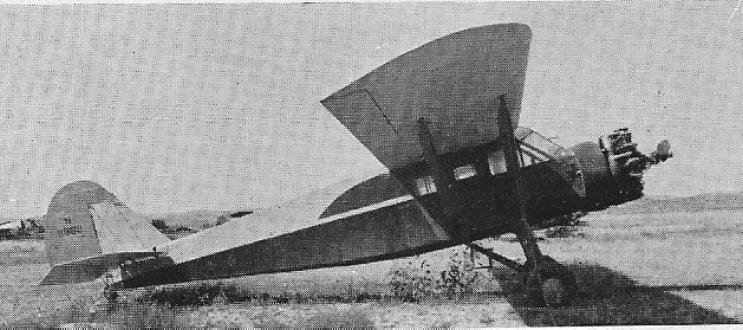
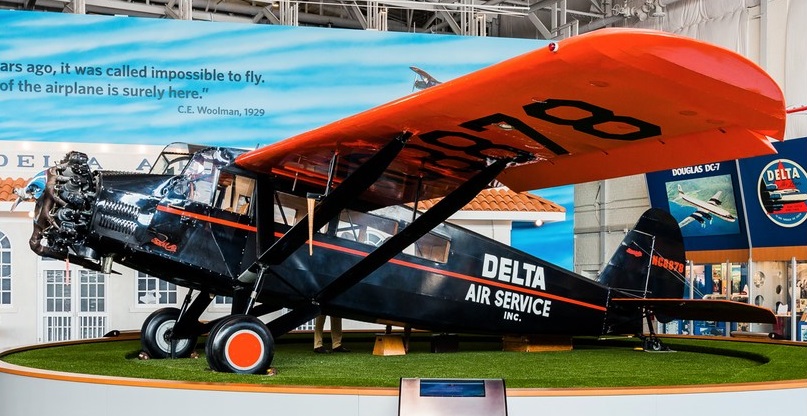
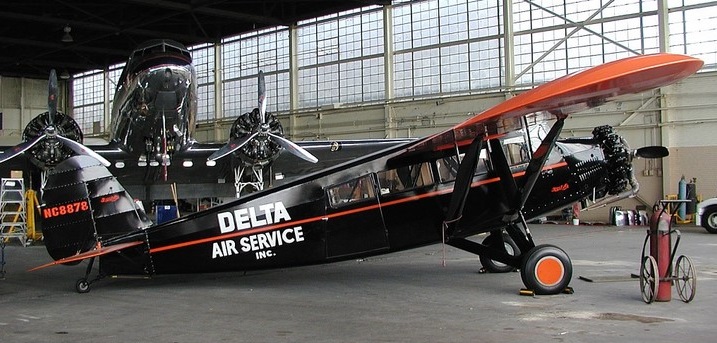
Passenger Aircraft, USA, 1927 Delta conducted their first passenger flight with a Curtiss-Wright 6 B Sedan on June 17, 1929 from Dallas to Jackson with stops at Shreveport and Monroe.
Powered by a Siemens engine and registered N9742 c/n 2-C, the designation conflicts with one built in August 1933 by Curtiss-Wright as a CW-4, aka T-32 Condor II, c/n 35.
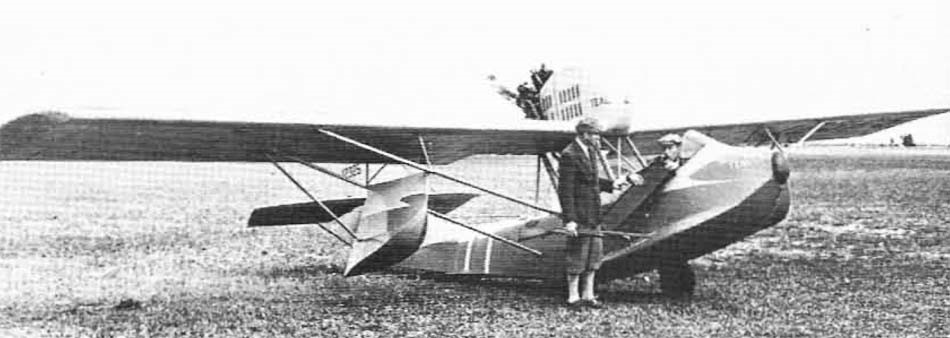
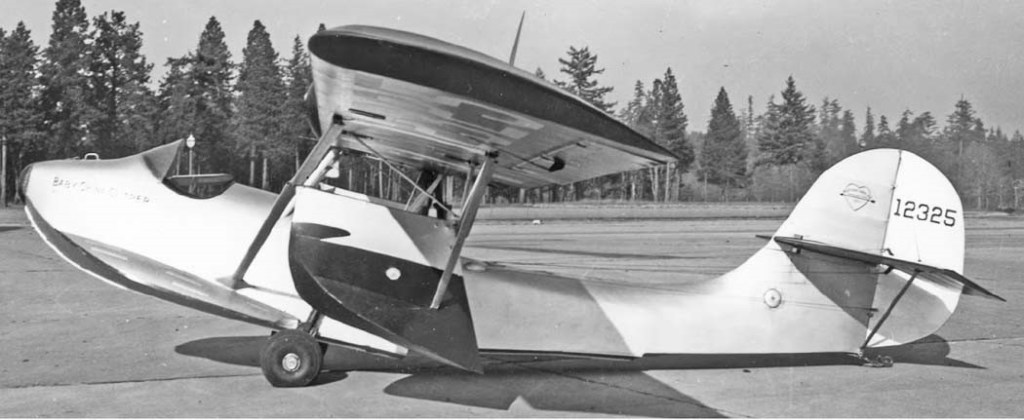
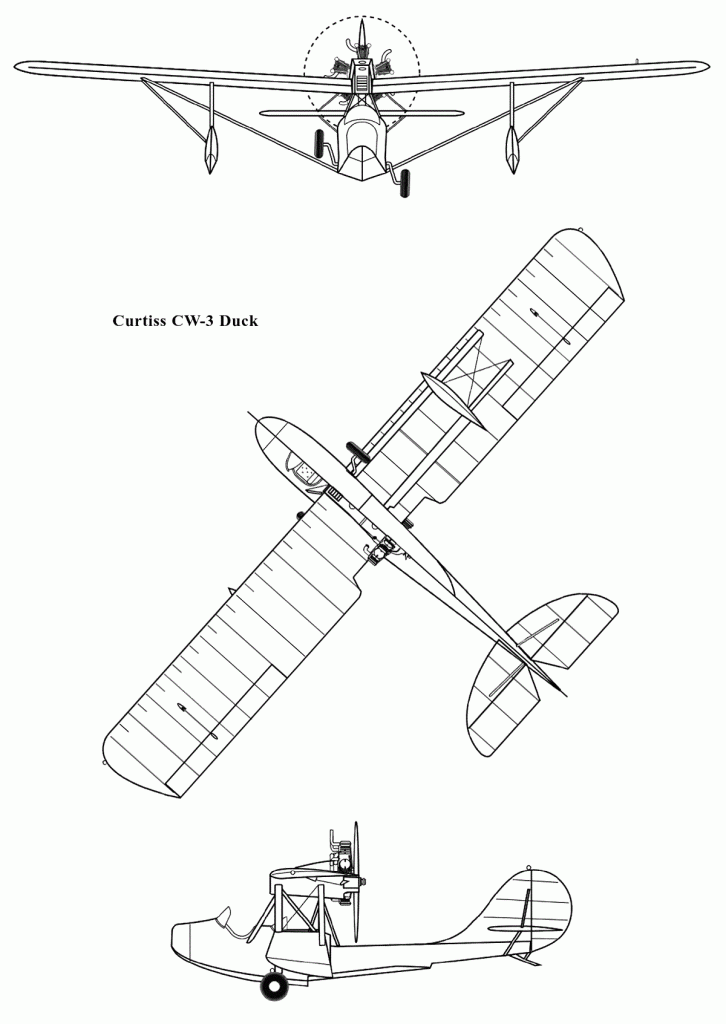
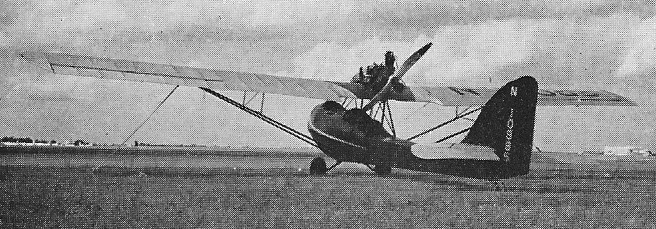
The Curtiss-Wright CW-3 Duckling (sometimes called the Teal) was an American two-seat amphibian flying-boat developed by Curtiss-Wright as a modification of the CW-1 Junior. The new aircraft was distinguished by a double cabin, where the pilot and passenger sat side by side, and the new fuselage. The fuselage had a plywood V-shaped underside added and the addition of strut-mounted pontoons. The engine was mounted above the wing driving a pusher propeller. The wing and engine installation remained unchanged, although floats were added under the wing for stability on the water surface.
First flying in 1931 only three aircraft were built, all powered by different engines, but the power was the same – 90 hp (67 kW).
The first prototype was equipped with a Velie M-5 radial engine, the second CW-3L for $1,250 with a Lambert engine, the third CW-3W with a Warner Scarab engine.
CW-3L
The release of CW-3 ended there, since the financial crisis began in the USA and there were no amphibious customers.
CW-3L Engine: Lambert, 90 hp MTOW: 544 kg Wingspan: 12.04 m Length: 6.48 m Wing area: 16.38 sq.m Maximum speed: 129 km / h Cruising speed: 105 km / h Crew: 2
CL-3W Engine: 1 × Warner Scarab, 90 hp (67 kW) Wingspan: 39 ft 6 in (12.04 m) Length: 21 ft 3 in (6.48 m) Crew: two
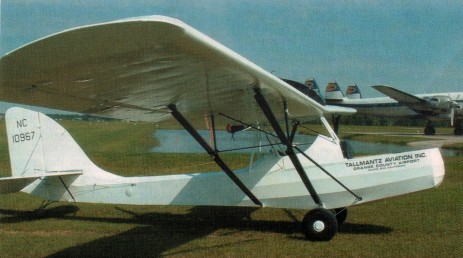
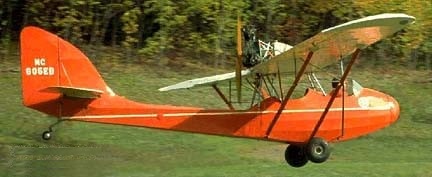
The Curtiss-Wright CW-1 Junior of 1931 (ATC 397) was designed by Karl White (modified from the CR-1 Skeeter). Selling for $1,490-1,595, 270 were built.
Curtiss-Wright CW-1 NC805EB
Engine options were numerous — even four tiny model-aircraft motors were used at the 1938 Nationals to demonstrate its modest power demands in order to fly, which it did, piloted by Dick Granere). Many were later converted to Continental A-40 to -65 power.
The CW-1A Junior of 1933 (ATC 2-442) was a single CW-1, NC11851, as a test bed for a 35hp Augustine B4-40 engine.
Two CW-1S Junior were built in 1936 (ATC 2-525) as CW-1 with 40hp Salmson AD-9 engines.
CW-1 Engine: 45hp Szekely SR-3 pusher Wingspan: 39’6″ Length: 21’3″ Height: 7 ft 4 in Wing area: 176 sq.ft Empty weight: 570 lb Loaded weight: 975 lb Useful load: 420 lb Max speed: 80 mph Cruise speed: 70 mph Stall: 32 mph ROC: 600 fpm Service ceiling: 12,000 ft Range: 200 mi Seats: 2
The Curtiss-Wright CR-2 Coupe side-by-side cockpit with unfaired landing gear, strut-braced wing monoplane began as a Curtiss-Robertson project. Two were built in 1930, N627V and N637V, the design later evolved into the CW-19L.