Donnet-Lévêque Type A / Type C

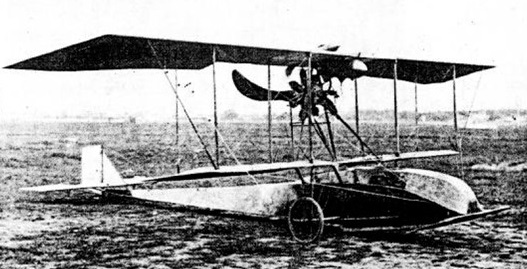
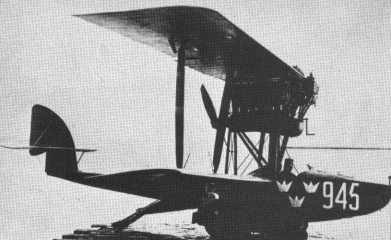
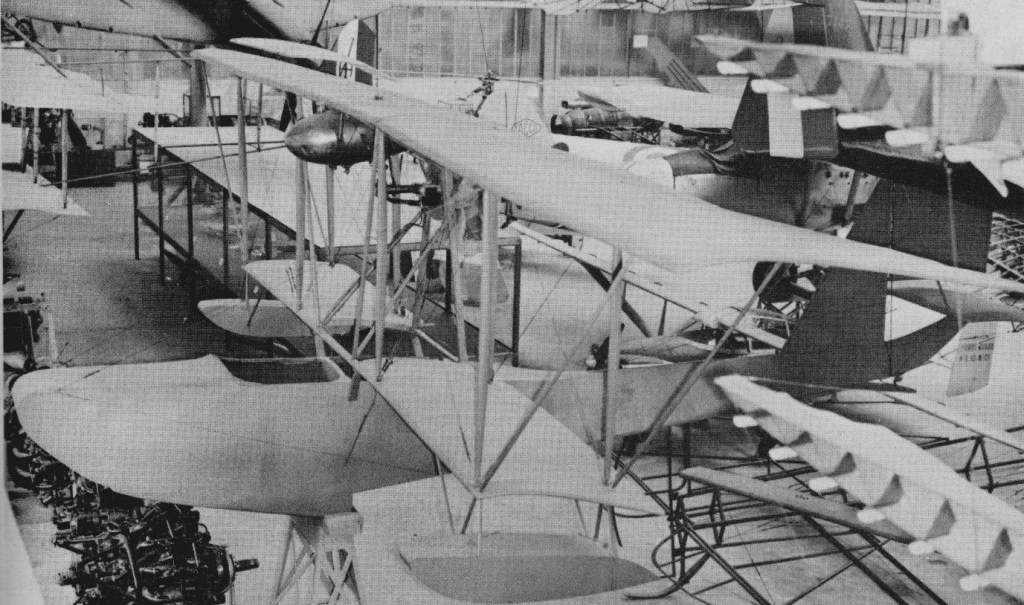
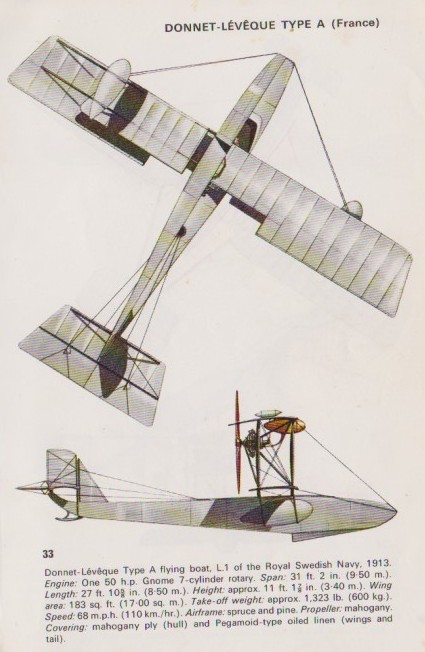
In 1912 four Donnet-Lévêque flying boats type A (no ailerons) and type C (with ailerons) – assigned numbers from 8 to 12 – were obtained by K.u.k. Seeflugwesen. A two-place hulled hydroplane designed by Francois Denhaut, they were powered by a 50 hp Gnome engine.

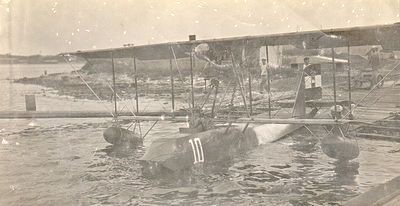
Aircraft sporting number 10 entered service on January 4, 1913 and was written off in December 1913 due to damage sustained in a crash.

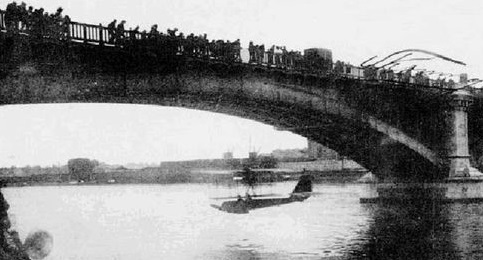
At Argenteuil in 1913, piloted by the marine Konning

On 9 August 1912, Jean Conneau (also known as Beaumont) attempted a Paris-to-London flight. He took off from the Seine, near Bezons, made stops at Quilleboeuf and Le Havre, and the landed at Boulogne-sur-Mer where an accident cancelled the flight.

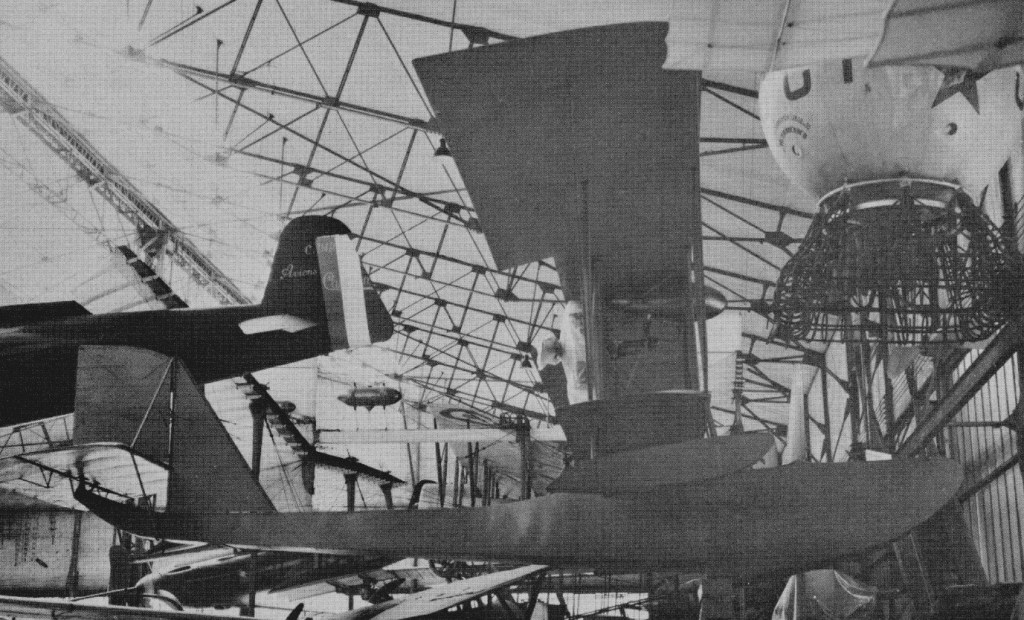
Jean Conneau’s aircraft was donated to the Musse de L’Air by the Schreck concern.

Jean Conneau’s aircraft

Engine: Gnome, 50 hp
Wingspan: 31.16 ft
Length: 28.86 ft

Domrachiev Leningrad

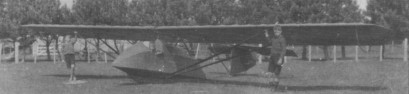
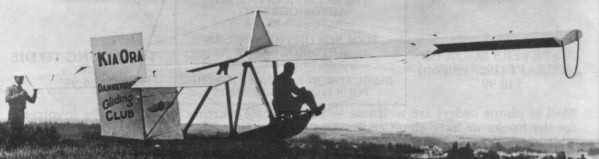
The Domrachiev “Leningrad” (Russian: Домрачев «Ленинград») glider was designed by Yuri Vladimirovich Domrachiev as a single-seater glider and built in the OSOVIAJIM glider workshops in Leningrad. Construction was completed in time to participate in the IX National Sailing Competitions held between August 12 and September 20, 1933 in Koktebel.

Structurally, the “Leningrad” was designed as a high-wing braced monoplane. The wings, built with No.60R aerodynamic profile, featured large wingspan with a constant chord central zone and notable taper towards the ends of the consoles. Steel tapes used as turnbuckles that were attached to the landing ski departed from the wing intrados. In the upper part of the centroplane, just above the longitudinal axis of the glider, there was a raised structure to which the extrados bracing straps were attached. The wing trailing edge featured double-section louvered ailerons.

The tail unit was attached to a high bar. On both sides of this bar the horizontal planes, of an integral type, were fixed. The empennage was oval in shape and inserted symmetrically into the bar, half above and half below.

The pilot was located in a low gondola in the bow region, in an open-type cockpit. Under this gondola the landing ski was located.

First flying in August 1933, the “Leningrad” participated in the IX National Sailing Competitions, held in Crimea. During the IX edition of the glider competitions and during a landing, the “Leningrad” made a ground connection supporting two points: the landing ski and the wing tip. This caused the tail bar to break and the glider was unable to continue in the competition.

Leningrad
Wingspan: 21.80 m
Wing area: 21.10 m²
Aspect ratio: 22.5
Length: 9.10 m
Height: 2.15 m
Empty weight: 185 kg
Wing loading: 13.0 kg / m²
Glide ratio: 25
Elevator area: 1.87 m²
Empennage surface: 0.75 m²
Rudder surface area: 0.75 m²
Ailerons area: 2.10 m²
Accommodation: 1

Domrachiev D-2

The Domrachiev D-2 (Russian: Домрачев Д-2) was designed as a two-seater aerobatic glider. Its construction was carried out in the LENOAX construction workshops in 1934 with the aim of participating in the X National Sailing Competitions to be held that year in Koktebel.

The D-2 was designed as a high-bridged, two-seater glider with long wings and a high tail bar. The wing was braced by means of steel tapes that started from the wing intrados towards the landing ski and from the extrados towards a raised structure located on the longitudinal axis of the glider. This configuration made it possible to build an extremely light wing without detriment to its structural rigidity.

Another significant detail was the wing attachment to a vertical pile located above the head of the second crew member, which allowed excellent visibility and easy access to the cabins. This vertical pile had as a distinctive feature the possibility of being moved forward or backward in order to modify the aerodynamic centering of the glider.

The landing gear consisted of a fixed ski located in the ventral region of the nacelle, following the line of the glider axis.

The gondola with the tandem cabins also featured an additional luggage area with a capacity of 80 kg. In the rear cabin a shelf was to locate a telephone set that could be used for communication with the tug aircraft.

Built in Leningrad in 1934 and first flying that September, it participated in the X National Sailing Competitions, held in Crimea, where it was aero-towed. The acrobatic two-seater Domrachiev D-2 glider arrived at the competitions in Koktebel by air, towed by a plane.

D-2
Wingspan: 18.10 m
Wing area: 19.80 m²
Length: 8.05 m
Height: 2.68 m
Empty weight: 230 kg
Optimal speed: 61 km / h
Glide ratio: 20
Minimum descent speed: 0.78 m / s
Wing loading: 19.70 kg / m²
Surface of the horizontal plane: 2.82 m²
Vertical plane surface: 1.58 m²
Ailerons area: 2.10 m²
Wing elongation: 16.5
Accommodation: 2

Domrachiev, Yuri Vlarimirovich

Soviet aircraft builder Yuri Vlarimirovich Domrachiev (Russian: Юрий Владимирович Домрачев) designed and built several gliders in Leningrad in the 1930s.

From 1931 Domrachiev began to work in the aeronautical construction section of the NIAI under the direction of IM Zharnilski. By 1934 this section separated from the NIAI, becoming an independent Special Construction Bureau (OKB), initially subordinate to the Institute’s Student Combined and later to the LII GVF.

In the OKB the Lisichkin, Bedunkovich, Krylov, Domrachiev and later Bakshayev brigades were created. Each developed their own aircraft, but in many cases they were combined to achieve the end result.

In 1933 and 1934 Domrachiev created two competition planners that participated in the national competitions at Koktebel.

When the Institute of Engineers of the Leningrad Civil Air Fleet was created, Domrachiev went on to work in the research department. In 1937, together with LS Vildgrube, he designed and built a transport glider with an M-11 engine.

Dominion Skytrader 800 / Skytrader Corporation UV-23A Scout

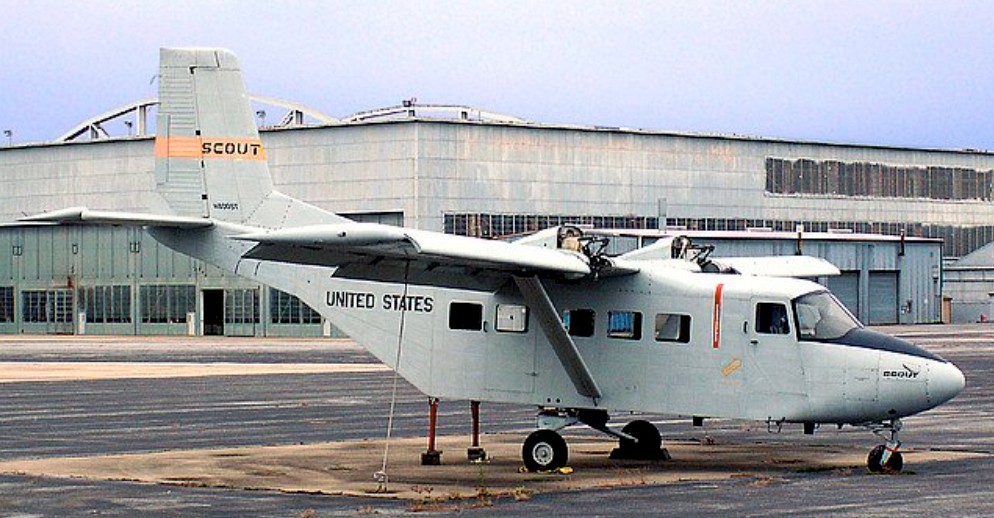
The Skytrader was a conventional high-wing, strut-braced monoplane with fixed tricycle undercarriage designed in Renton, Washington, by laid-off Boeing engineers in 1972. The design was optimised for easy freight handling and featured a fuselage of rectangular cross-section with large loading doors to the side and a loading ramp at the rear. The aircraft’s tail unit was angled upwards from the rear fuselage to facilitate loading operations beneath it, and the main undercarriage was fitted in sponsons on the fuselage sides so as not to intrude into the internal cargo volume. Passenger, freight, executive transport, and water-bomber versions were projected.

Work on the aircraft commenced in 1972 and the prototype (N800ST) flew on 21 April 1975. Marketing the aircraft proved difficult, however, and despite a flurry of initial interest, by 1977, only two firm orders are known to have been placed. Two years later, the bank that had been financing the project collapsed and Dominion went bankrupt. The prototype and the program were purchased the following year by Grant MacCoon, and over the next few years were bought and sold by a number of entities, finally becoming the property of a new firm, Skytrader Corporation, in 1984. Skytrader Corporation was founded in 1984 to develop the Skytrader 800 but with some changes.

Skytrader proposed a revised version of the original design as the Skytrader ST1700 or Conestoga. Originally powered by IO-720s, it was planned to fit Thunder TE495-TC700 liquid-cooled V-8s, but it was then planned with Turbomeca Astazou turboprops. This had a stretched cabin, T-tail, redesigned nose, wings, and landing gear, and was to be turboprop powered. A scaled-down version was to be offered as the ST1400 Commuterliner. Apart from passenger and freight versions, dedicated military versions were also proposed as the Evader, carrying 26 troops, or the smaller Scout. This would have been able to carry 12-15 troops and provision was made for armament in the form of 2.75 in air-to-ground rockets. In 1987, Skytrader announced a deal with Mitsui that would provide $20.5 million to fund FAA certification of the ST1700, and initial production of the Scout.

The Mitsui money never appeared, and the following year, Skytrader made co-production deals with the government of the Philippines and Samsung, but these did not eventuate either. The final chapter in the Skytrader’s development was the entry of the Scout in a US Army competition for an intelligence gathering plane. During the late 1980s, the U.S. Southern Command became interested in acquiring a reconnaissance plane which would do well in the rugged terrain and with the clandestine operations that the command was executing at the time. A contest, named Grizzly Hunter, was opened for interested contractors to enter candidate airplanes for consideration.

The Scout was entered as a joint project between Skytrader and McDonnell Douglas Helicopter, and was selected as the winning design, receiving the designation UV-23. Revisions to the original Scout design included blown wings and new propellers and gearboxes to significantly reduce the aircraft’s IR and noise signatures. The Skytrader 800 prototype was re-engined at this point, and flew with Turbomeca Astazou XIV turboprops. Before any production of the UV-23 could be undertaken, however, Grizzly Hunter was cancelled and replaced by a different requirement which was won by the RC-7. With the Army order falling through, Skytrader declared bankruptcy in April 1989 with intentions on continuing operations and was liquidated in August 1989.

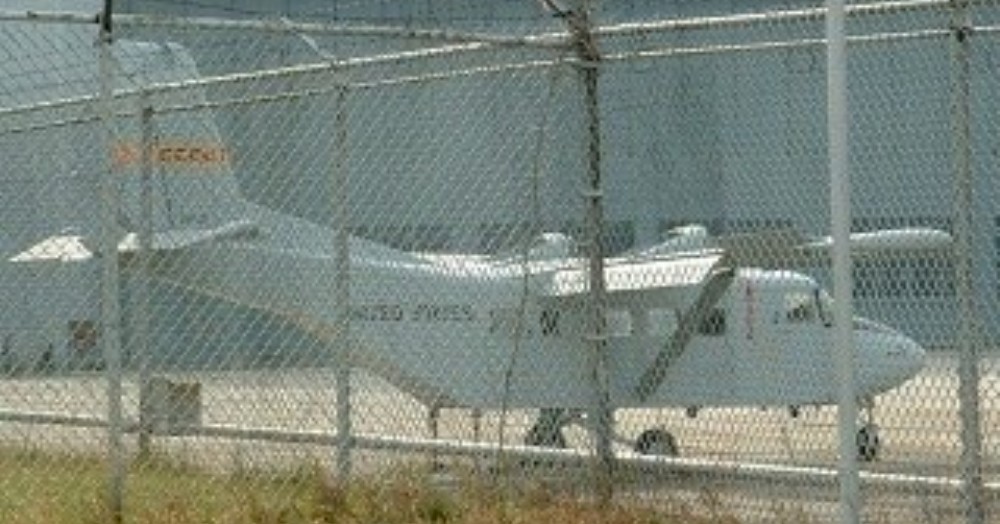
As of 2007, the prototype lay derelict, with engines stripped, at Washington County Regional Airport, in Hagerstown, Maryland.

Gallery

Skytrader 800
Engines: 2 × Lycoming IO-720-B1A, 400 hp (298 kW)
Wingspan: 55 ft 0 in (16.76 m)
Wing area: 385 sq.ft (35.77 sq.m)
Length: 41 ft 0 in (12.50 m)
Height: 18 ft 10¾ in (5.76 m)
Empty weight: 4,950 lb (2,245 kg)
Gross weight: 8,500 lb (3,855 kg)
Maximum speed: 210 mph (338 km/h)
Cruise speed: 150 mph (241 km/h)
Range: 1,430 miles (2,300 km)
Service ceiling: 17,500 ft (5,355 m)
Rate of climb: 1,600 ft/min (8.1 m/s)
Crew: Two pilots
Capacity: 12 passengers