In 1922 Elias made first of seven EM/EO “Marine Expeditionary” two-seat biplanes (wheels or floats).
Aircraft
Elias, G. & Brothers Inc
USA
Formed in 1881 but made aircraft only after First World War, at Buffalo, NY. By 1929 had made nine experimental types for U.S. air services and Post Office, as well as armament types for the Air Corps. In 1922 made first of seven EM/EO “Marine Expeditionary” two-seat biplanes (wheels or floats). XNBS-3, tested August 1924, was large twin-engined bomber with steel-tube fuselage and wooden wings. Elias-Stupar was twin-engined cantilever civil biplane. EC-1 of 1927-1928 was “convertible” light parasol monoplane; the cockpit could be open or closed.
El Gavilan sa
Established 1991 and producing the Gavilan 358 eight seat single piston-engine utility monoplane (formerly Aero Mercantil Gavilan), able to operate from short and unprepared airstrips (first flown April 1990, with production examples from 1997).
Electric Aircraft ElectraFlyer-C
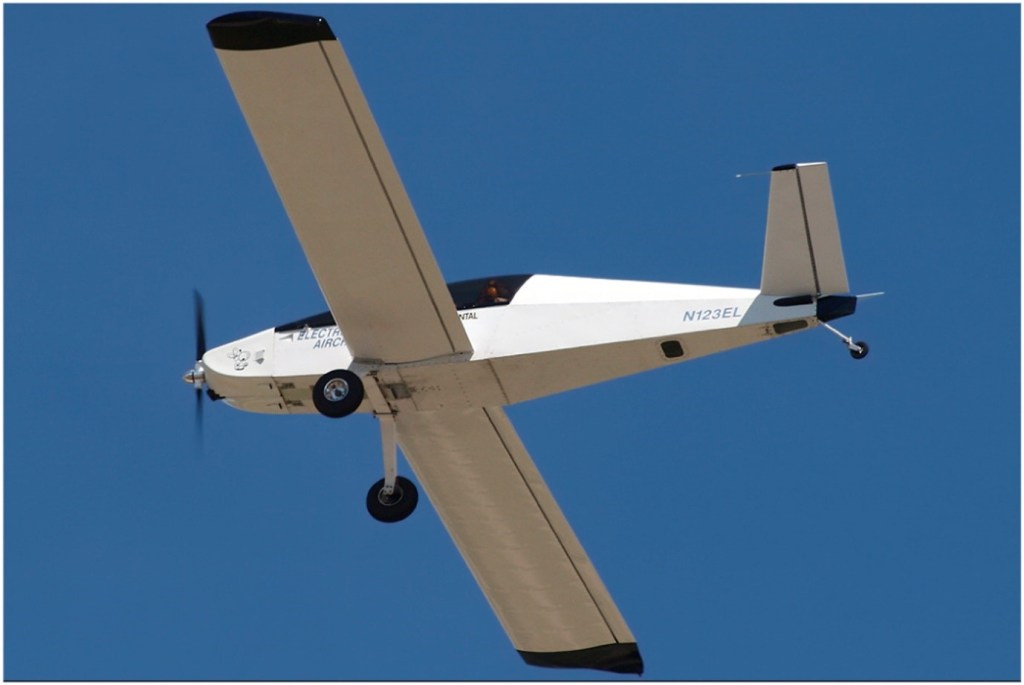
In 2008 was the debut of the ElectraFlyer-C at the Experimental Aircraft Association AirVenture in Oshkosh. This all-electric, single passenger aircraft, fitted with a custom-built lithium polymer battery pack was able to cruise at 70 mile/h for 1–1/2 to 2 h and charged in as little as 2 hours.
The ElectraFlyer-C was designed and built as a prototype and proof of concept for economical electric flight.
Eldred Flyer’s Dream
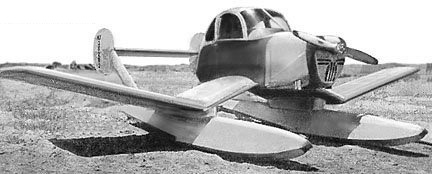
Dewey Eldred’s Flyer’s Dream NX36282 was a very original prototype floatplane designed by Dewey Eldred and Sol Fingerhut. Built in 1946 in Willoughby, Ohio, it featured an automobile-like nacelle mounted on top of a 30-ft span W-shaped wing placed in lowermost position. Its tail was mounted at the end of twin-booms extending attached to the rear of the floats. It used a 125 hp engine and first flew June 4, 1946.
Elam Eurocub Mk.IV

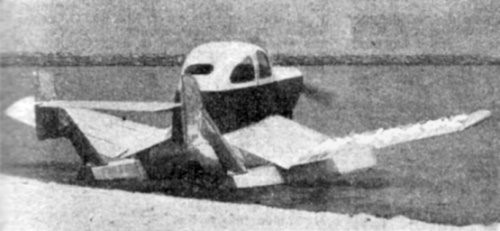
Elam Eurocub has larger tail fin and elevator than the older Cuby and that gives a lower stall speed.
Stall: 32 kt / 37 mph / 59 kmh
Cruise: 85 kt / 98 mph / 157 kmh
VNE: 110 kt / 127 mph / 204 kmh
Empty Weight: 269 kg / 593 lbs
MTOW Weight: 450 kg / 992 lbs
Climb Ratio: 1200 ft/min / 6 m/s
Glide Ratio: 1:11
Take-off distance (50ft obstacle): 330 ft / 100 m
Landing distance (50ft obstacle): 330 ft / 100 m
Ekolot KR 030 Topaz
Ekolot KR 010 Elf
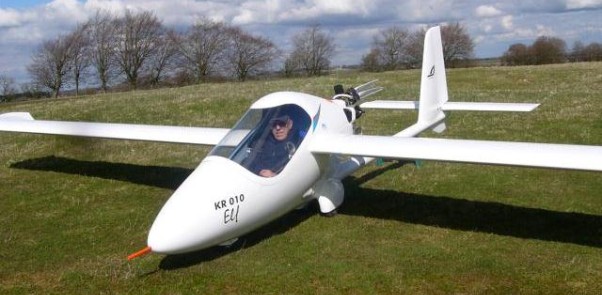
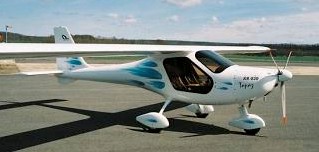
Jerzy Krawczyk, in addition to Ekolot’s Junior and Topaz, has several light aircraft, crop sprayer, and sailplane designs to his credit. In creating the self launching Elf sailplane, he employed composite sandwich and carbon structures to achieve the exceptional strength and durability required to pass UK BCAR Section ‘S’ airworthiness certification.
The Elf prototype used the JPX 330 engine which, unfortunately, was withdrawn from production in 2006 after over 20 years in the market. Fortunately, Compact Radial Engines in Canada has produced a very similar unit. This is 20% more powerful than the JPX and also employs a clutch which eliminates folding prop ‘chatter’ on start-up and allows the prop to fold whilst the engine is on idle. This engine has displayed instant re-start capability.
The Elf employs full span flapperons, and airbrakes, and has excellent rudder/stick co-ordination. The NN17-18 aerofoil possesses mild stall characteristics and overall, the handling conveys a strong sense of stability and security to the pilot.
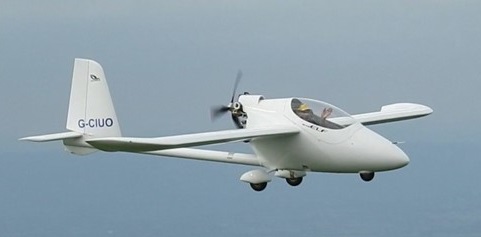
Production aircraft will have the more powerful Compact Radial engine and a 126cms prop with a projected climb rate of 500 ft/min.
Engine off, the Elf with it’s 120 ft/min sink rate is capable of slowing down to exploit the slightest lift and core the smallest thermal. This is where the fun and skill challenge begins and where, if the pilot falls out of lift into sink, he can be confident of a quick engine restart and climb back to the area of lift.
Prototype
Engine: JPX 330, 24 hp
Prop dia: 116cms , folding
Weight: 145 kg (with BRS)
Gross Weight: 260 kg
Area: 10.8 sq/m
Span: 11.2 m
Length: 5.7m
Aerofoil: NN18-17
Fuel Capacity: 15 litres (3 hours + reserve)
Proof Load: +6 / -3
Max Pilot Height: 1.9m (6’3”)
Max Pilot Weight: 100kg (220lbs)
Cruise: 50 mph at 5,100rpm
Max Climb: 400ft/min at 30mph
Stall: 27mph
Best L/D: 26.4:1, 150ft/min at 45mph
Min Sink: 120ft/min at 39 mph
Airbrake: 300ft/min at 45mph (13:1)
Fuel burn: 4.5 litres/hour
Ekolot KJ 05L Junior
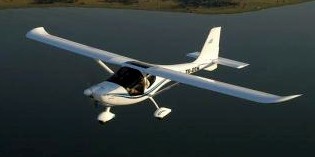
Stall: 35 kt / 40 mph / 65 kmh
Cruise: 86 kt / 99 mph / 160 kmh
VNE: 97 kt / 112 mph / 180 kmh
Empty Weight: 280 kg / 617 lbs
MTOW Weight: 480 kg / 1058 lbs
Climb Ratio: 1200 ft/min / 6 m/s
Take-off distance (50ft obstacle): 330 ft / 100 m
Landing distance (50ft obstacle): 490 ft / 150 m
2009 Price: 35000 EURO
Eklund Engineering
19960 Elliott Road
P.O. Box 1510
Lockeford, CA 95237-1510
Eklund Engineering, Inc. is an aero-mechanical consulting firm which holds the rights to the Thorp T-18 and John Thorp’s engineering legacy. The Thorp T-18 was designed by John Willard Thorp as the first good all metal homebuilt design. The two place side by side design was first envisioned as an open cockpit, uncowled, simple to build sport plane to use the converted Lycoming O-290G ground power engine. It soon grew into a high performance design which incorporated pressure cowl, canopy and slotted flaps. The T-18 can use any of the Lycoming O-290, 320, 340, 360 engines.

