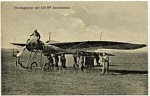
The 1911 Etrich “Etrichapparat” monoplane was designed and built by Igo Etrich.
The 1911 Etrich “Etrichapparat” monoplane was designed and built by Igo Etrich.
The 1909 Etrich “Nurflügel” (Only Wings) tractor monoplane was designed and built by Igo Etrich.
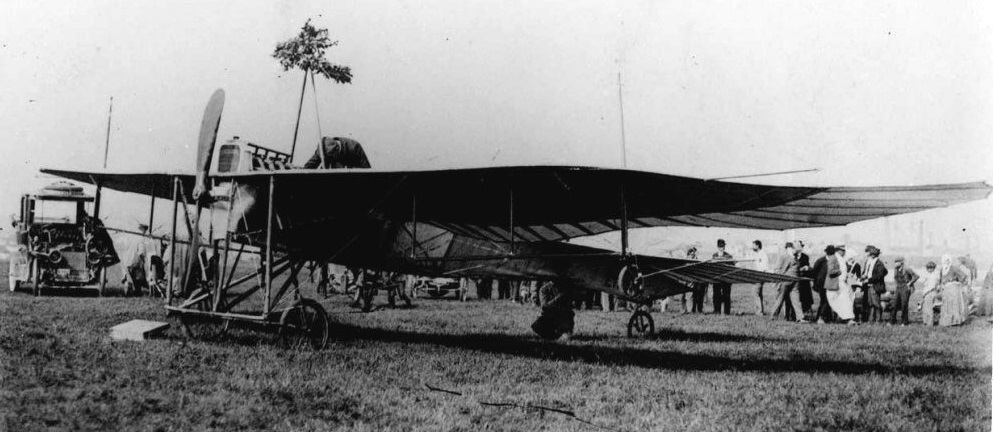
The Etrich Taube was designed by Igo Etrich in 1908 in Austria. After considerable successes, the rights were sold to the German Government, who commissioned Rumpler to produce 20.
These were so successful that the design was standardised for issue to the German Armies.
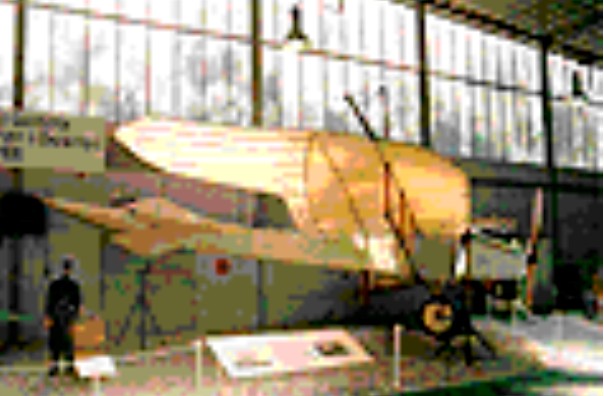
A training and reconnaissance aircraft, about 500 were ordered from various companies. Those built by Albatros, Gotha and Rumpler had wooden airframes while those produced by DFW and Jeannin had steel structures.
It was built in large scale by Rumpler in Germany and became the first German military aircraft to be used in large scale. A 100hp Mercedes or Argus engine was standard, and no armament was fitted.
The wooden airframe of the Rumpler Taube was fabric covered and wing-warping was used instead of ailerons. The tail surfaces usually comprised a long-chord tailplane ad elevator, fixed fin and a small rudder.
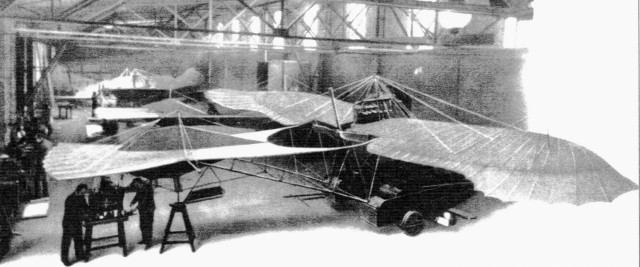
Taubes were noted for their high flying qualities at the beginning of the War and just before the war began a Rumpler Taube broke the then record by reaching just below 20,000 ft.
Taubes were used operationally in the first nine month of the war, mainly for reconnaissance, and one played a leading role I the Battle of Tannenberg, in East Prussia, by reporting a Russian advance that would have taken the German Army unawares. With clear doping on their fabric covered wings they were relatively invisible at height.
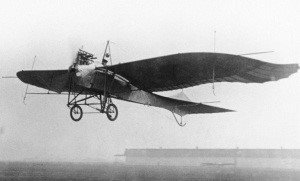
Lt. von Hiddesen dropped five tiny bombs on Paris from a Taube on 30 August 1914, accompanied by a second, piloted by then Lt. Max Immelmann, dropped message inviting the city to surrender.
Rumpler built in 1912-1913 a small number of Taube floatplanes, two with a single float and the others with two floats. It was a pusher, powered by a 100 hp Daimler, and had two floats and a four-blade propeller. The photo was taken at the Johannisthal works in late 1913.
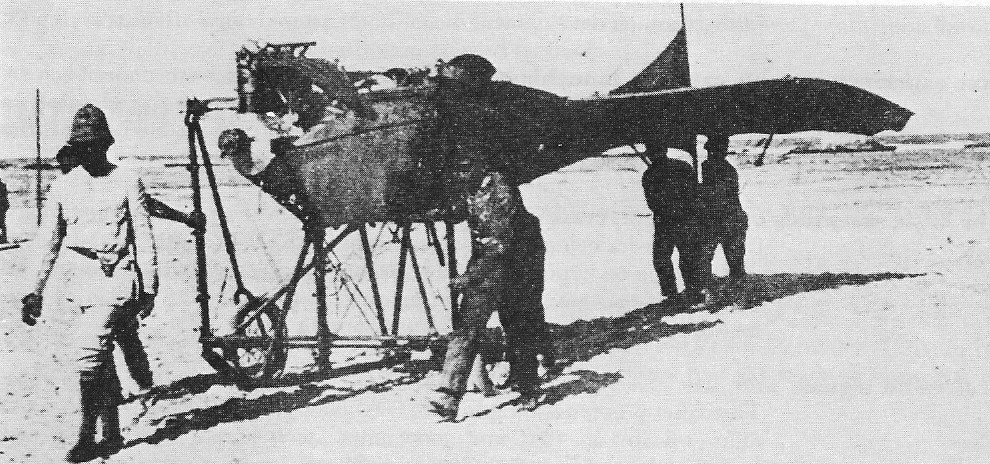
Lincoln Beachy, stunt pilot, took off from the Panama Pacific International Exposition at San Francisco on his fatal flight.
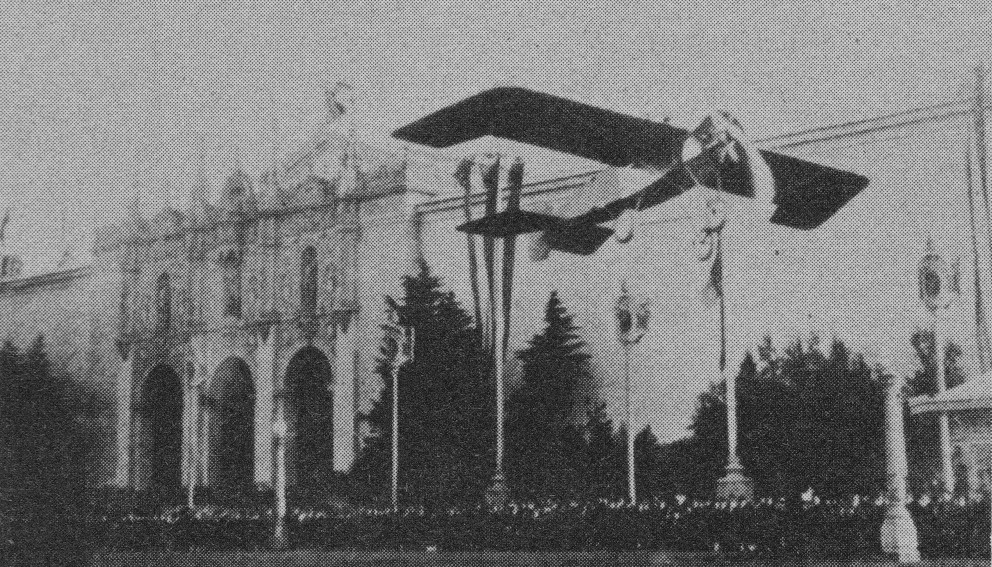
Ultralight replica:
Airdrome Airplanes 1909 Taube
Engine : Argus As I, 99 hp
Length: 33.465 ft / 10.2 m
Height : 10.499 ft / 3.2 m
Wingspan : 45.932 ft / 14.0 m
Wing area : 301.392 sq.ft / 28.0 sq.m
Max take off weight : 1896.3 lb / 860.0 kg
Weight empty : 1323.0 lb / 600.0 kg
Max. weight carried : 573.3 lb / 260.0 kg
Max. speed : 54 kt / 100 km/h
Cruising speed : 49 kt / 90 km/h
Wing load : 6.36 lb/sq.ft / 31.0 kg/sq.m
Range : 162 nm / 300 km
Crew : 2
1909 Etrich Taube (Dove)
Span: 48’7″
Length: 32’9″
Gross 1750 lb
Max speed: 70 mph
Rumpler Taube
Engine: Mercedes, 100 hp
Wingspan: 45 ft 4 in
Length: 26 ft 11 in
Height: 10 ft 2 in
Empty weight: 1323 lb
MTOW: 2005 lb
Max speed: 74 mph at SL
Endurance: 4 hr
Rumpler Taube
Engine: Daimler, 100 hp / Austro-Daimler, 120 hp
Wing span: 46 ft
Wing area: 301 sq.ft
Length: 27 ft 3 in
Height: 9 ft 9 in
Empty weight: 682 lb
Loaded weight: 1323 lb
Wing loading: 4.3 lb/sq.ft
Max speed: 75 mph at SL
Crew: 1-2
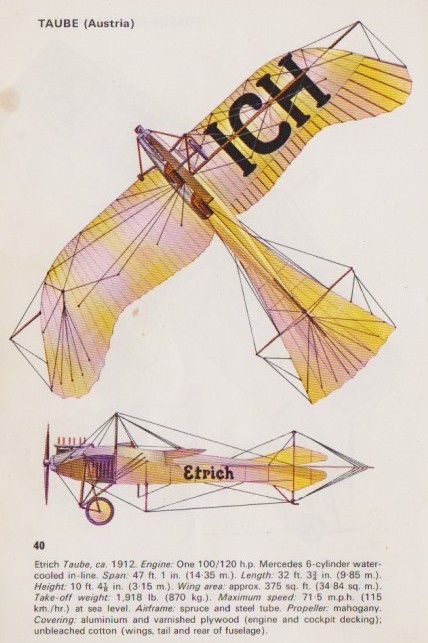
Austrian Igo Etrich (1879-1967) experimented in aeronautics from 1899. After working with engineer Franz Wels he made a tailless glider with backswept wings in 1907. This was intended to be powered, and led to the Etrich Taube monoplane (bird-like, with backswept warping outer wings and fan-like tail) in 1909-1910. Object was inherent stability; first flight at Wiener-Neustadt in November 1909.
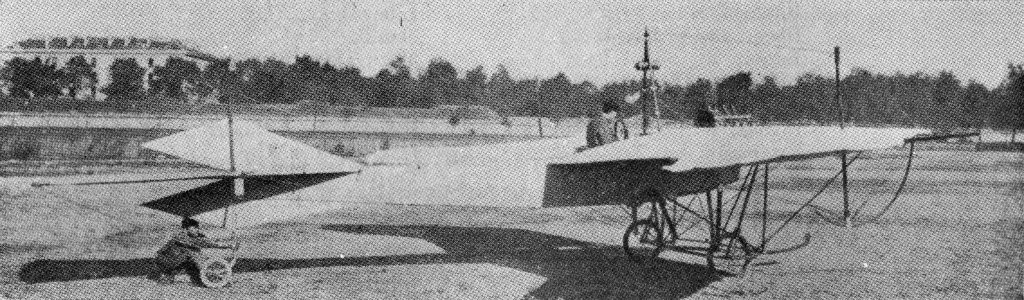
Small-scale production (Etrich Flieger Werke) and competitive success followed, in U.K. and other countries and the type was imitated frequently. Early Etrich pilots included Hellmuth Hirth. Jointly with his businessman father, Etrich had a private experimental establishment at Josefstadt. Etrich A-1 and A-2 monoplanes served with Austro-Hungarian Army before First World War. Etrich Fliegerwerke GmbH established at Liebau, Silesia, in 1912, independent of Motorluftfahrzeug Gesellschaft of Vienna and Rumpler of Berlin, each of which held a license for the Taube. Rumpler built the type from 1911-1914, and other German makers built similar machines, as used by the German Army before and during the war. First product from Liebau was a remarkable three-seat cabin monoplane with wings of variable incidence and camber, and nosewheel landing gear. In 1914 the company was absorbed by Brandenburgische Flugzeugwerke.
Company’s Agro Aircraft Manufacturing division is producing the Ag-Cat Corporation Ag-Cat G164B Turbine under the name Eshet for distribution and operation in Ethiopia and African countries except Algeria, South Africa, and Tunisia.

Circa 1998, the wood Pataplum is a tandem two seater. It has no controls for the rear seat, which is limited to a 60kg passenger.
Engine: VW 1600, 48 hp
Wing span: 6.60 m
Empty weight: 190 kg
MAUW: 370 kg
Max speed: 130 kph
Cruise speed: 100 kph
Minimum speed: 60 kph
Climb rate: 2.5 m/s
Seats: 2
Fuel consumption: 8 lt/hr
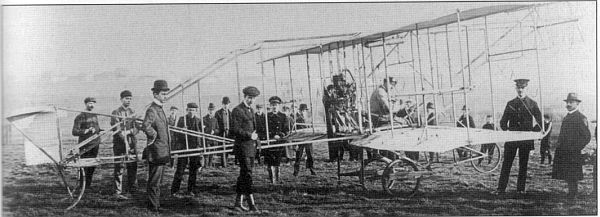
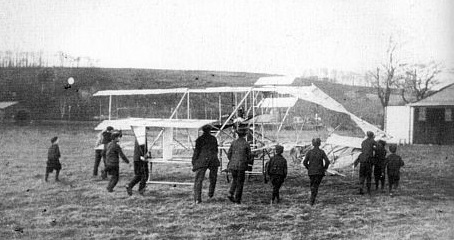
The Essen NVfL “Essener Flugmaschine” Gleiter of 1909 was owned by the Flugtechnische Kommission of Sektion Essen of the flying club NVfL (Niederrheinischer Verein für Luftfahrt). It was designed by a member of the club, Ing. Düll, and built under the direction of Otto Hilsmann at the carpenter’s workshop “Schmetz & Diepenbrock” during 1908/1909. Tests were made by Heinrich Schmetz, flown from a ramp [Flugplatz Holten] that could be turned into the wind.
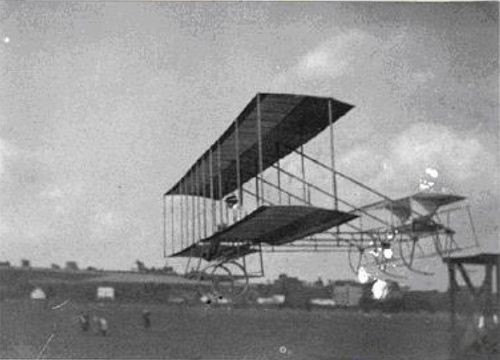
During one of the flight tests in the first half of 1910, the NVfL’s machine crashed when the left wing got ground contact.
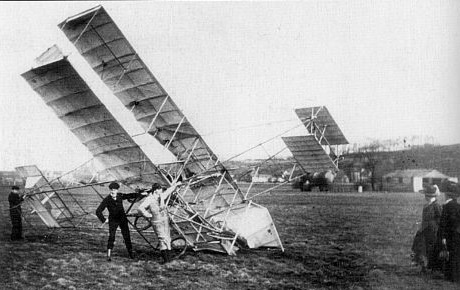
The self-built flying machine was pushed back into the workshop and rebuilt. Flights were then made to Holten Airport (Oberhausen), which had already been built in 1909, as the terrain in the Ruhr meadows was no longer suitable for flight operations.
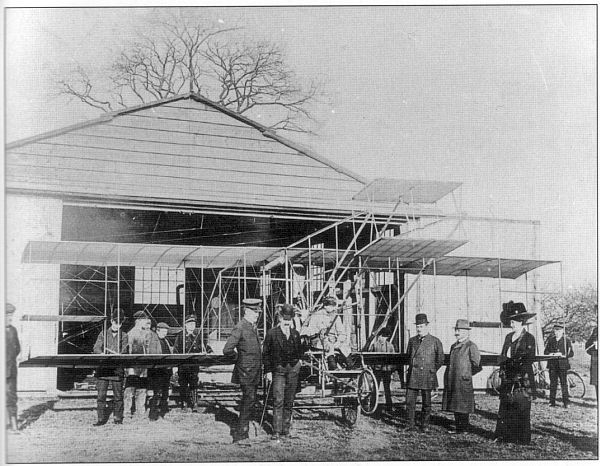
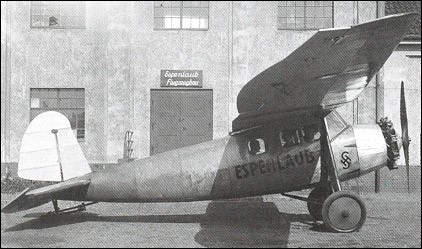
Germany
Gottlieb Espenlaub achieved an international reputation in the 1920s building and flying gliders. Company formed at Dusseldorf early in the 1930s to build light aeroplanes as well as gliders. Types included a tailless monoplane, a two-seat high-wing monoplane and a five-seat high-wing cabin monoplane with engine of about 125 hp. During Second World War a Riga subsidiary did stress calculations for Bf 109G wooden tailplane.
1910 Esnault-Pelterie Type B monoplane
Span: 42′
Length: 32′ 2″

