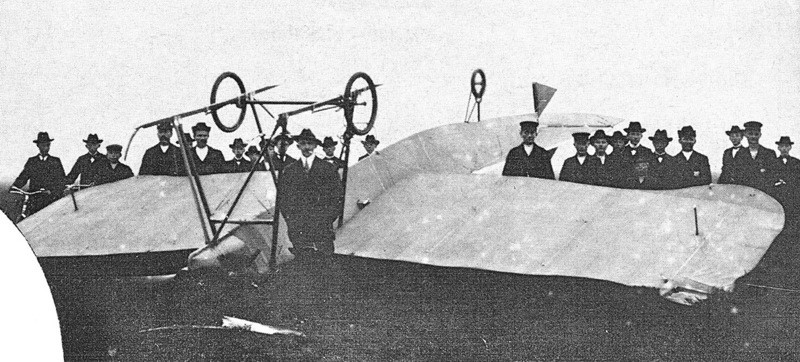
One of the earliest British tractor monoplanes, designed in 1908 by E. I. Everett and constructed by Everett Edgcumbe and Co. Ltd., of Colindale. The machine was powered by a four-cylinder 35 h.p. J. A.P. engine which drove a 6 ft. diameter propeller. The framework was of wood with fabric covering overall; the flying surfaces were double-covered. Warping was used for lateral control, and this was operated by turning the hand-wheel on the control column, the fore-and-aft movement of which actuated the elevators. The engine was water-cooled, its radiator being carried at an angle under the nose of the fuselage.
Tests were carried out in a field at Colindale which was to become part of the London Aerodrome at Hendon. The plane was nicknamed “The Grasshopper”, as it failed to fly properly and succeeded only in making hops from the ground during trials made on 6th and 7th December, 1910, by Bernard Clutterbuck and again during January, 1911, by E. I. Everett. [The machine has been incorrectly identified as the Prosper monoplane (Canada, 1909)]
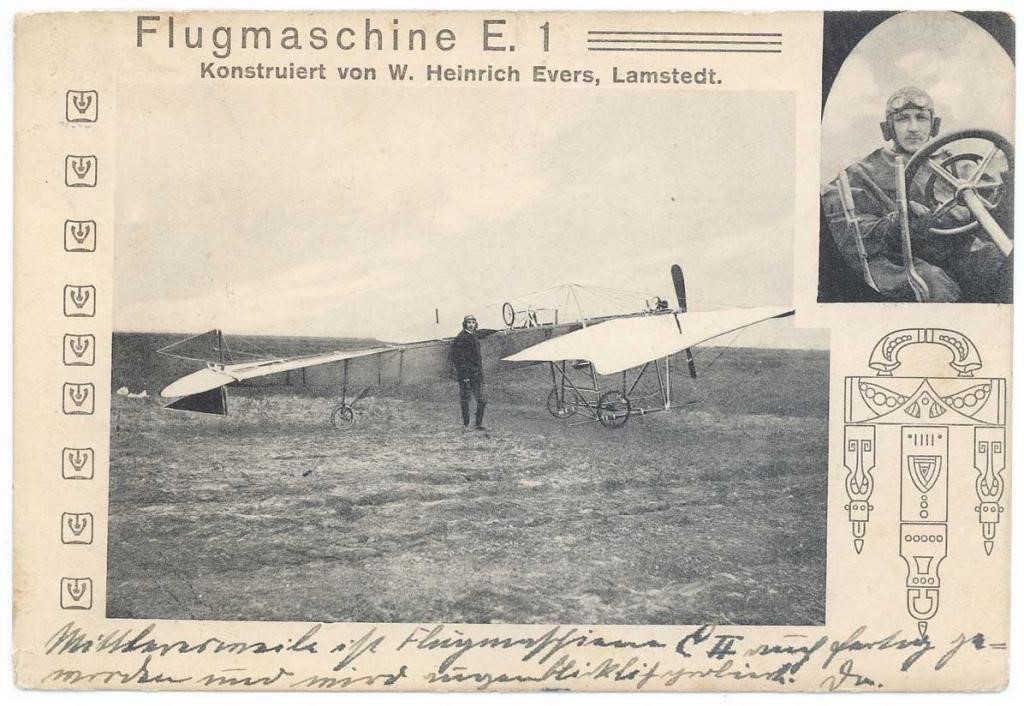
A tractor monoplane, designed and built by W. Heinrich Evers of Lamstedt, Germany, and powered by a three-cylinder Hilz engine. It was tested in December 1910 at the Winzer Heide near Lamstedt. It crashed, but was later repaired.
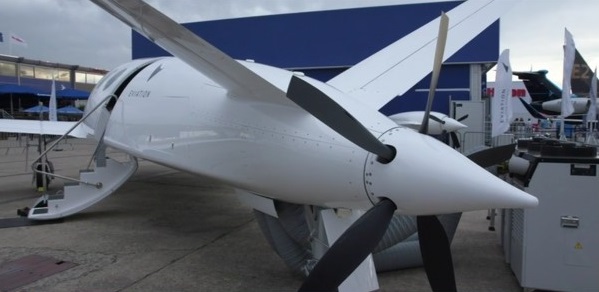
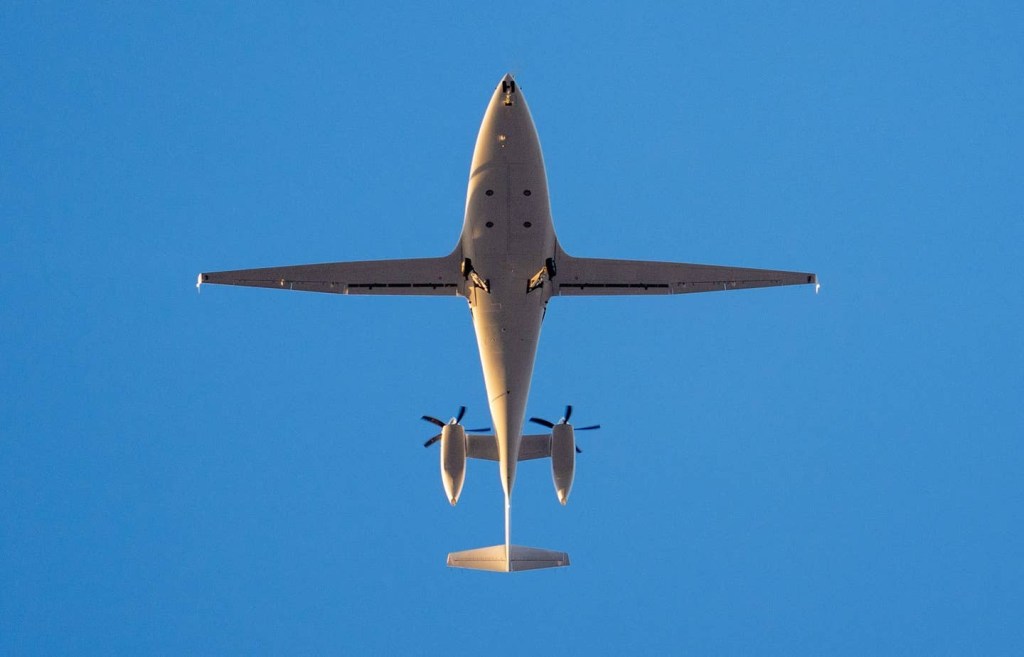
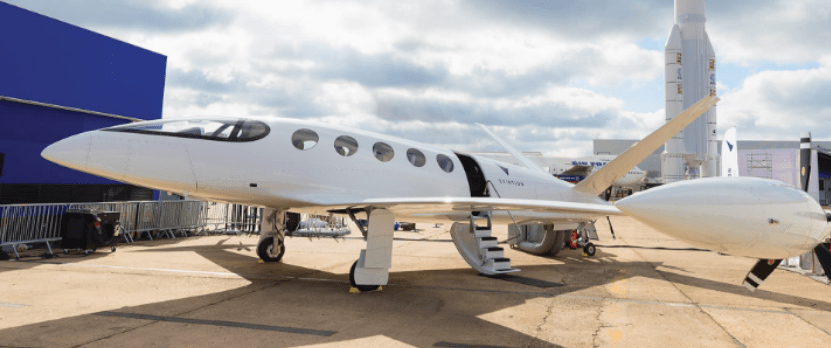
In June 2019 Eviation Aircraft was preparing to start flight testing Alice, its new all-electric regional airliner, in the U.S. En route to its U.S. base in Prescott, Arizona, the Israeli start-up company brought its full-scale prototype of the nine-seat, all-composite design to the Paris Air Show in June 2019 and announced a “double-digit” launch order for the $4 million aircraft from U.S. operator Cape Air.
In June 2019 Eviation Aircraft was preparing to start flight testing Alice, its new all-electric regional airliner, in the U.S. En route to its U.S. base in Prescott, Arizona, the Israeli start-up company brought its full-scale prototype of the nine-seat, all-composite design to the Paris Air Show in June and announced a “double-digit” launch order for the $4 million aircraft from U.S. operator Cape Air.
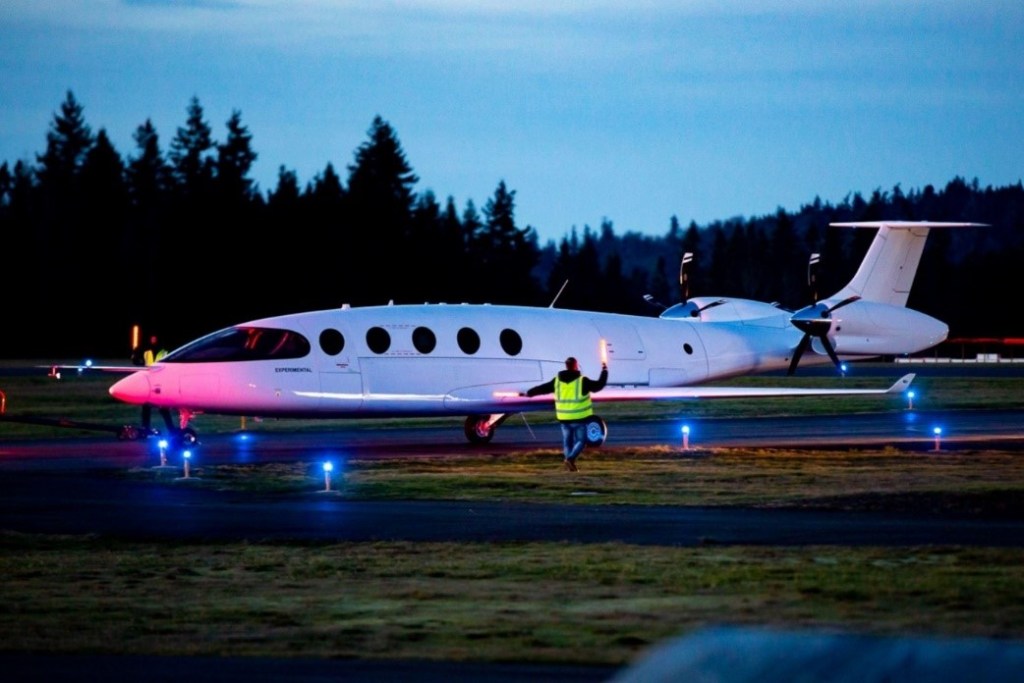
On 27 September 2022 the Alice first flew, from Grant County International Airport, Washington State, USA.
The world’s first flight was for eight-minutes. The successful maiden flight reached an altitude of 3,500 feet (1,067m) and the zero-emissions plane was powered by two 640-kilowatt electric motors.
Eviation expected the path to FAA Part 23 type certification to take between 24 to 30 months after the Alice achieves its first flight by the end of 2019, allowing for entry into service by the end of 2022. It was set to be the first Part 23 all-electric aircraft and the first with full fly-by-wire flight controls. The manufacturer claimed it was fully funded through to the start of series production.
The requirements for an all-electric plane are very different from those of conventional aircraft. The biggest challenge is weight, thanks to the fact that batteries provide considerably less mileage to the pound compared to energy-dense jet fuels.
That makes slashing the weight of other components a priority and the plane features lightweight composite materials “where no composite has gone before,”. Eviation has also done away with the bulky mechanical systems used to adjust control surfaces on the wings, and replaced them with a much lighter fly-by-wire system that uses electronic actuators controlled via electrical wires.
The company’s engineers have had to deal with a host of other complications too, from having to optimize the aerodynamics to the unique volume and weight requirements dictated by the batteries to integrating brakes designed for much heavier planes.
Eviation says the Alice will be comparable in price to similar sized turboprop aircraft like the Beechcraft King Air and cheaper than small business jets like the Embraer Phenom 300. And crucially the relative simplicity of electrical motors and actuators compared with mechanical control systems and turboprops or jets means maintenance costs will be markedly lower.
In Feb 2022 the first commercial all-electric passenger plane was just weeks away from its maiden flight, according to its maker Israeli startup Eviation. If successful, the nine-seater Alice aircraft would be the most compelling demonstration yet of the potential for battery-powered flight.
The Alice was undergoing high-speed taxi tests at Arlington Municipal Airport close to Seattle. This involved subjecting all of the plane’s key systems and fail-safe mechanisms to a variety of different scenarios to ensure they are operating as expected before its first flight. The company was five or six good weather days away from completing those tests, after which the plane should be cleared for takeoff.
The Alice should ultimately be capable of cruising speeds of 250 knots (463 kph) and a maximum range of 440 nautical miles (815 km).
The company has already received advance orders from logistics giant DHL and Massachusetts-based regional airline Cape Air.
Conceptual rendering of Eviation’s Alice, the first commercial all-electric passenger plane, in flight.
Even accounting for the need to replace batteries every 3,000 flight hours, Eviation expects Alice’s operating costs to be about half those of similar sized aircraft.
Eviation’s all-electric Alice makes its first and only test flight in 2022.
In 2025 Electric aviation’s prospects took a hit after a leading developer paused work on its prototype aircraft. Eviation laid off the majority of its staff and halted development of its all-electric Alice, designed for two crew and as many as nine passengers. The manufacturer struggles to secure funding to keep the project alive. Founded one decade ago, Eviation unveiled its first one-quarter-scale Alice prototype, “The Orca,” at the 2017 Paris Air Show. At the 2019 event, it revealed the first full-scale prototype of the regional commuter aircraft. Since then, though, the model has undergone more redesigns (two) than test flights.
Alice was conceived as a middle-mile aircraft, designed for short-hop, city-to-city flights spanning about 250 nm. Its two electric engines produce zero emissions. According to the company, they are cheaper, quieter, and require less maintenance than combustion engines. The aircraft can carry nine passengers or up to 2,500 pounds of cargo, with a top speed of 260 ktas.
Eviation has taken more than 600 orders for Alice, including from DHS Express, Air New Zealand, and GlobalX.
The program would not be fully shut down but did not elaborate further.
According to SMG Consulting’s Advanced Air Mobility (AAM) Reality Index, which tracks investments in manufacturers of electric and other AAM aircraft, Eviation has received $200 million in funding. Its last funding raise was in 2019.
Engines: 2 x Magni 650, 640 kW Wingspan: 62 ft 10 in / 19.15 m Length: 60 ft 9 in / 18.52 m Height: 14 ft / 4.28 m MTOW: 16,500 lb Payload (Commuter): 2,500 lb Typical Cruise Speed: 250 kts Max cruise speed: 250 kts Max Range: 440 NM Climb Rate: 2,000 ft/min Landing Distance: 2,040 ft Take-off Distance: 2,600 ft
Eviation was co-founder by Omer-Yohay (left) and Aviv Tzidon (right) in Tel Avib, Israel, in 2015.
The company initially bult drones.
In 2019 Clermont Group acquired 70% of Eviation.
A full-size, functional prototype, the Alice, appeared at the 2019 Paris Air Show.
In 2020 Eviation moved its headquarters to Arlington, WA, USA, and secured manufacturing facilities. Assembly of the first production configuration Alice (commuter variant), Executive and cargo variants was unveiled.
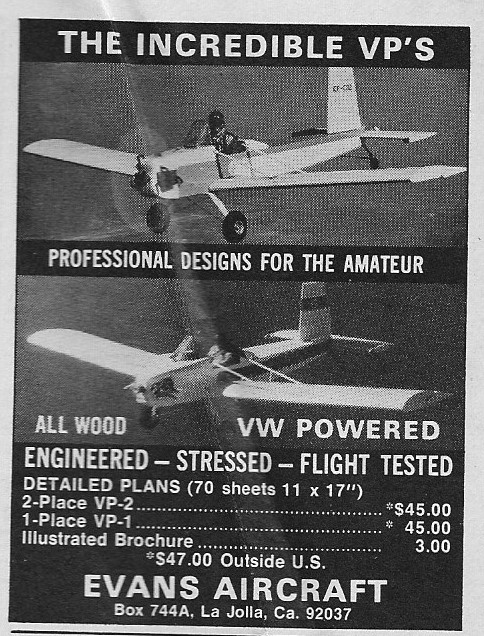
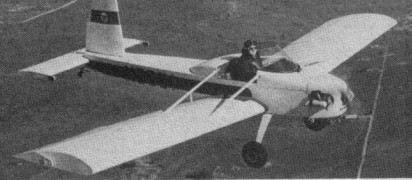
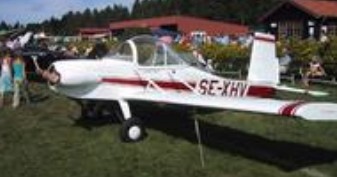
Following the success of the Volksplane VP-1, Evans designed the VP-2, capable of carrying two persons side by side. Construction is generally similar to the VP-1. The fuselage is of rectangular cross-section and consists of four wooden longerons, bulkheads and plywood skin. A fibreglass fairing is located behind the open cockpit. The fuselage width at the cockpit is approximately 35 inches. The wing is made up of two solid spruce spars. wooden ribs, compression struts and internal wire bracing. Each wing panel is fabric covered and externally braced to the fuselage with streamline steel tube struts. No flaps are fitted. The airfoil section is NACA 4415. The rudder consists of wooden ribs clamped to an aluminium tube mounted vertically in the rear fuselage. The all moving tailplane is a wooden cantilever structure, consisting of a simple box spar to which are glued wooden ribs. Both tailplane and rudder are fabric covered. The main wheels are carried on bent wire braced 2024-T3 aluminium alloy legs which are bolted to the fuselage. Shock absorption is taken by low pressure 600 x 6” tyres. Fuel is carried in a moulded II Imperial gallon fibreglass fuel tank aft of the firewall. VW engines up to 65 h.p. (2100cc) may be installed. The VP-2 with a passenger aboard is designed for “normal category” use, which allows non-aerobatic operation and all maneuvers incident to normal flying. Without a passenger, Utility category use is permitted, which includes stalls, lazy eights, chandelles and steep turns with a bank angle of more than 60 degrees. Aerobatics are not approved in either the VP-1 or VP-2.
Feb 1974
For a super-quick build some builders fly the primary structure alone; no cowls, canopy, turtleback, fairings, etc. Then they design and build lines at their leisure.
Engine Volkswagen (1834 cc), 60-hp. Gross Wt. 1040 lb. Empty Wt. 640 lb. Fuel capacity 14 USG. Wingspan 27 ft. Wing Area: l30 sq.ft. Wing Loading: 8.0 lb/sq.ft. Length 19 ft. Wing area: 130 sq.ft. Top speed: 95 mph. Cruise: 75 mph. Stall: 45 mph. Climb rate 500 fpm. Ceiling 10,000 ft. Takeoff run 700 ft. Landing roll 400 ft. Range 200 miles. Seats: 2
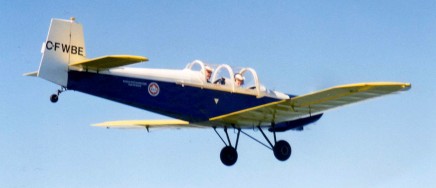
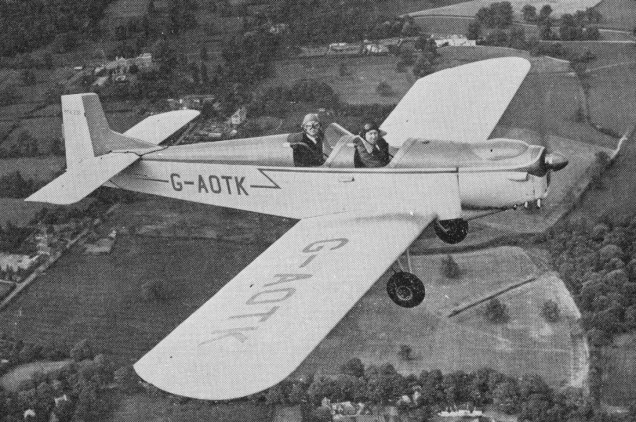
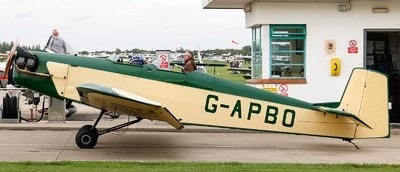
After designed the Turbulent, Roger Druine created the two-seat version, the D.5 Turbi. The prototype first flying in the late 1940s, powered by a Beaussier Bo2.
The Turbi tandem two-seater follows the same lines as the Turbulent and the construction is very similar. The rear turtle-decking on early models was fabric covered, but later models are plywood covered. Dual controls are fitted. The fuselage is of rectangular slab-sided construction with four spruce longerons and frames. The fin is built integral with the fuselage. The tailplane is non-adjustable and like the fin is plywood covered. The wings employ fixed slots, a box type main spar, drag spar, rear spar, lattice type ribs and plywood cover¬ing forward of the main spar. The remainder including the ailerons are fabric covered. The main undercarriage is of divided type and has coil springs for shock absorption. A variety of engines may be installed from 45 to 85 h.p.
Falconar plans show open cockpit with dual controls that can be flown solo from either the front or back seat, the original design was a dual windshield open cockpit. Early Turbi’s built in England were powered with the DH Gipsy Minor. The 4 cylinder 65hp Czech Walter LOM II AE has a dry weight of only 132 lbs – which is a similar configuration to the Gipsy Minor. Other popular engines can be a Continental or Lycoming 65 to 115 HP.
Built by the de Havilland Technical School students – Walter Mikron 60 hp
Druine D-53 Turbi. C/n (msn): PFA 229
Falconar updated plans & kits for this light 2-seater tandem sportplane, in the LSA catergory. Options include enclosed cockpit either with single curvature windows or vacuum formed bubble canopy.
The Volksplane VP-1 is a single seat aircraft designed by W.S. Evans, and first flown in 1968. The bare angular look is due to the designer’s aim to build a simple aeroplane where appearance and performance were of secondary importance. The wings consist of two solid spruce spars, band sawn ¼ inch plywood ribs, internal wire bracing and fabric covering. The wing is made in two separate panels, bolted to the fuselage at the inboard end and externally braced by streamline tubular steel struts. The airfoil section is NACA 4412. The fuselage is a square wooden 3-bulkhead box structure, plywood covered. A single tube over the windscreen serves as an overturn bar. The empennage consists of a wooden all-flying tailplane, to which is fitted an anti-servo tab and a single all-moving rudder. Both the rudder and tailplane are fabric covered. No fin is fitted. The undercarriage is made up of bent 3/8” 2024-T3 aluminium alloy plate wire braced and bolted to the fuselage. Shock absorption is taken by the two 600 x 6 tyres. A 6½ Imperial gallon moulded fibreglass fuel tank is installed behind the firewall. Engines up to 50 h.p. may be fitted. The only welding in the entire airplane is in the control stick assembly, the flying struts and the stabilator horn. Both the VP-1 and VP-2 can be stowed at home and require no trailer for highway towing. Aerobatics are not approved in either the VP-1 or VP-2.
For a super-quick build some builders fly the primary structure alone; no cowls, canopy, turtleback, fairings, etc. Then they design and build lines at their leisure.
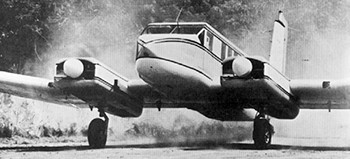
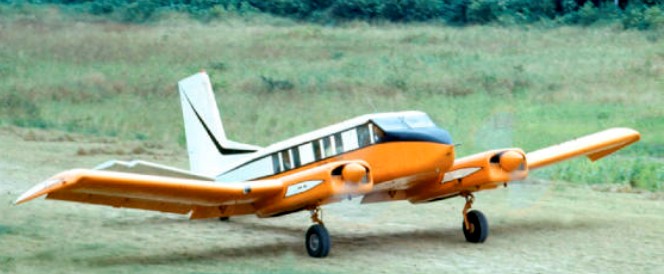
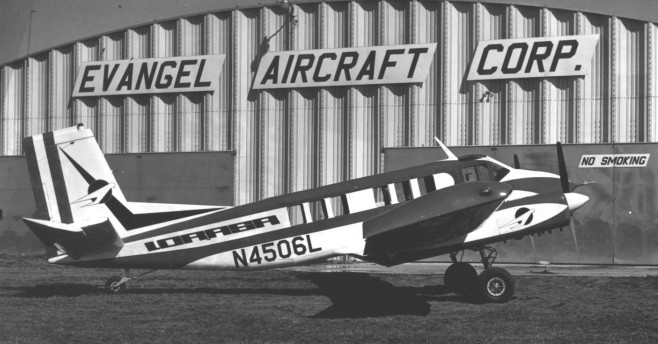
The Evangel Aircraft Corporation was established to design and build a bush aircraft particularly for use by missionary groups. For work in South America it had to have STOL capability and be simple to operate and maintain. The aircraft that was designed was designated the Evangel 4500-300 and was a twin-engined monoplane.
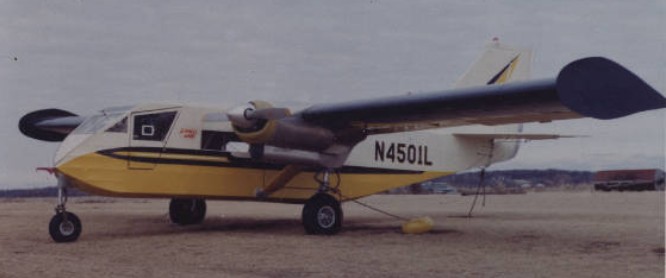
By 1963, Carl Mortenson had created a high wing strut-braced, twin engine plane with a fabric over metal tubing fuselage and a metal wing. At that time it was a fixed gear tricycle design.
Evangel 4500
The prototype Evangel 4500-300 first flew in June 1964 and the first production aircraft in January 1969. The aircraft needs a very short take-off run and can achieve a take-off to 50 ft (15m) within 375yds (343m).
With a planned first production run of 12, only a total of 8 were built (a 9th was never completed). The unit cost was US$70,500 in 1971 but manufacture ceased in 1974 after seven production aircraft were built.
4500 The sole prototype, with a high strut braced wing and tricycle undercarriage.
4500-300 Production variant
4500-300-II Used to identify aircraft fitted with turbochargers.
Specifications: Engines: 2 × Avco Lycoming IO-540-K1B5, 300 hp (224 kW) each Wingspan: 41 ft 3 in (12.57 m) Length: 31 ft 6 in (9.60 m) Height: 9 ft 6 in (2.90 m) Wing area: 251 sq.ft (23.32 sq.m) Empty weight: 3,455 lb (1,567 kg) Gross weight: 5,500 lb (2,495 kg) Fuel capacity: 111 Usgals Maximum speed: 230 mph (370 km/h) Cruise speed: 175 mph (282 km/h) Stall speed: 67 mph Range: 700 miles (1,126 km) Service ceiling: 21,030 ft (6410 m) Rate of climb: 1,500 ft/min (7.6 m/s) Takeoff distance (50 ft.): 1,125 ft Landing distance (50 ft.): 1,140 ft. Crew: 1 Capacity: 8 passengers
USA Designed twin-engined STOL light passenger/cargo aircraft in 1962. Prototype Evangel 4500-300 first flew in June 1964, having rugged structure and intended for bush operations/missionary work. Manufacture ceased in 1974 after seven production aircraft were built.