1991: Experimental Aviation, 3021 Airport Avenue, Hangar 109, Santa Monica CA90405, USA.
1995-6: 3025 Airport Ave, Santa Monica, CA 90405, USA.
A Chapter 11 reorganisation attempt followed the loss in 1995 of the company’s demo pilot and demonstrator in an accident at Santa Paula, California, and a lawwsuit from a former partner.
In 1996 Experimental Aviation filed Chapter 11 bankruptcy.
1997-8: 3025 Airport Ave, Santa Monica, CA 90405, USA.
Experimental Aviation was reconstituted as Renaissance Composite, operating from the same address (1998).
Developed the Berkut as tandem two-seat compositesbuilt canard monoplane with pusher engine, first flown 1991 and made available in kit form.
Aircraft
Expedition E350

Engine: Lycoming IO-580-B1A, 315 hp@SL
TBO: 1800 hr
Propeller: 3-blade, CS, 82-in. Hartzell
Landing gear: Tri./Fixed
Gross weight: 3800 lb
Takeoff weight: 3800lb
Empty weight, std.: 2300 lb
Useful load, std: 1500 lb
Payload, full std. fuel: 912 lb
Usable fuel: 98 USgal
Baggage capacity: 250 lb
Wingspan: 38 ft. 9 in.
Wing loading: 20.5 lbs./sq. ft
Power loading: 12.1 lbs./hp
Seating capacity: 4 + 1
Cabin doors: 4
Cabin width: 52 in
Cabin height: 50 in
Cabin length: 138 in
Cruise speed@gross: 150 KTAS
Cruise speed@3,200 lb: 160 KTAS
Max range: 793 nm
Stall speed: 54 KCAS
Rate of climb@gross: 1091 fpm
Takeoff distance: 775 ft
Takeoff over 50 ft. obstacle:1286 ft
Base price: US$485,000
Excalibur Aviation Co.
Ed Swearingen returned to airplanes in 1959 by forming his own company, Excalibur Aviation, to produce the Swearingen Excalibur. This was a cleaned up, re engined modification of the Beech Twin Bonanza, and it was followed by Queen Air conversions and then the popular turboprop Merlin series.
In October 1960 Excalibur Aviation acquired all rights for conversion program (for which it already had responsibility) of Beechcraft Queen Air and Twin-Bonanza marketed by Swearingen Aircraft. Continues production at San Antonio, Texas. New company has adopted the name Queenaire 800 for former Swearingen 800.
Excalibur Aircraft Excalibur
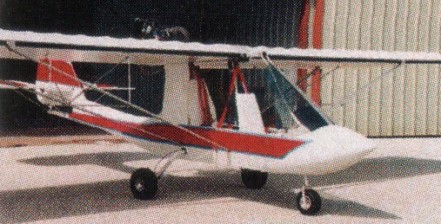
Four versions of this aircraft (LSA) were produced: the standard series and the wide body model, the stretch model and four stroke model.
The kit for the Excalibur II features prebuilt tail surfaces, wings, ailerons end fuselage, and all the controls are already installed. Build time for the kit is estimated at 100 to 200 hours.
Options include: 60-hp HKS 700E air-cooled 4-stroke or 4O-hp Rotax 447 air- cooled 2-stroke engine, instruments (ASI, altimeter, tach, dual CHT dual EGT, panel-mounted compass, ignition switch), standard or amphibious floats, fiberglass wheel pants, BRS ballstic emergency parachute, doors, strobe lights and paint materials.
Construction is 6061-T6 and 2024-T3 aluminum tube airframe with chromoly steel weldments where needed, stainless steel pop rivets and AN or military spec hardware. Wings and surfaces are covered with Superflite fabric. No welding or machining is necessary and all the critical work is completed at the factory.
Standard Engine; Rotax 503 (52HP)
Wingspan; 31 ft. 6 in.
Chord; 60 in
Length; 20 ft. 0 in.
Height; 6 ft. 0 in.
Wing area; 185 sq.ft.
Empty weight; 450 lbs.
Useful load; 500 lbs.
MTOW; 900 lb
Ultimate load factor; +6 -4
Build time; 100-200 hours
Field assembly time; 20 min.
VNE; 100 mph
Top level speed; 90mph
Cruise speed; 50-90 mph
Stall speed; 30-35 mph
Climb rate; 1200 fpm solo, 700 ft. dual
Take off roll; 96 ft.solo, 196 ft. dual
Glide ratio; 11:1 solo, 9:1 dual
Service ceiling; 14,000 solo, 12,500 dual
Range; 290 sm
Fuel used at cruise; 2.3 gph to 4 gph
Fuel capacity; 10 gal. (U.S.)
Cockpit width Standard Body; 26 inches
Seats: 2 Tandem
Undercarriage; nose wheel
LSA
Excalibur Wide Body
Engine: Rotax 503, 52 hp
HP range: 52-65
Cruise: 80 mph
Stall: 33 mph
Range: 290 sm
Rate of climb: 1200 fpm
Takeoff dist: 100 ft
Landing dist: 300 ft
Fuel capacity: 20 USG
Empty weight: 450 lb
Gross weight: 950 lb
Length: 20 ft
Wing span: 32 ft
Wing area: 183 sq.ft
Cockpit width: 31 in
Seats: 2
Landing gear: nose wheel
LSA
Excalibur Four Stroke
Engine: Rotax 582, 65 hp
Cruise: 80 mph
Stall: 33 mph
Range: 290 sm
Rate of climb: 1200 fpm
Takeoff dist: 96 ft
Landing dist: 300 ft
Fuel capacity: 20 USG
Empty weight: 470 lb
Gross weight: 950 lb
Length: 20 ft
Wing span: 31.5 ft
Wing area: 183 sq.ft
Cockpit width: 26 in
Seats: 2
Landing gear: nose wheel
LSA
Excalibur Stretch
Stall: 26 kt / 30 mph / 48 kmh
Cruise: 70 kt / 80 mph / 129 kmh
VNE: 87 kt / 100 mph / 161 kmh
Empty Weight: 204 kg / 450 lbs
MTOW Weight: 454 kg / 1000 lbs
Climb Ratio: 1200 ft/min / 6 m/s
Glide Ratio: 11:1
Take-off distance (50ft obstacle): 200 ft / 61 m
Landing distance (50ft obstacle): 300 ft / 91 m
Evgenij Kovalenko E-12N
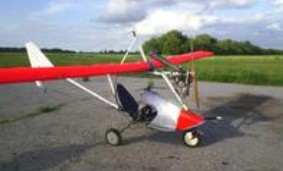
Very simple REAL Ultralight Aircraft for flyweight pilots. Delivered as kit package or ready to fly planes by Evgenij Kovalenko with several engine choices. 2009 Price: 6200 EURO
Stall: 35 kt / 40 mph / 65 kmh
Cruise: 43 kt / 50 mph / 80 kmh
VNE: 67 kt / 78 mph / 125 kmh
Empty Weight: 55 kg / 121 lbs
MTOW Weight: 145 kg / 320 lbs
Glide Ratio: 7
Take-off distance (50ft obstacle): 480 ft / 145 m
Landing distance (50ft obstacle): 390 ft / 120 m
Everson Evo III
The Everson brothers went on to build several aircraft, including one with a single-seat twin-engined design called Evo III. This aircraft, in which the pilot’s head was inches away from the propeller tips, was initially condemned by the authorities. Nevertheless it remains the only twin-engined homebuilt aircraft made in New Zealand.
Everson Evo II
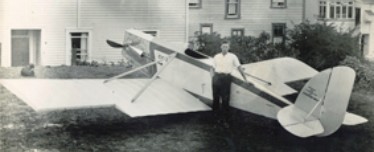
Built by Ron and Ernie Everson in the early 1960s.
Everson, Ron & Ernie
New Zealand
The brothers were passionate about aviation for many decades around the 1960s.
Evergreen Stinson Model O Senior Trainer replica
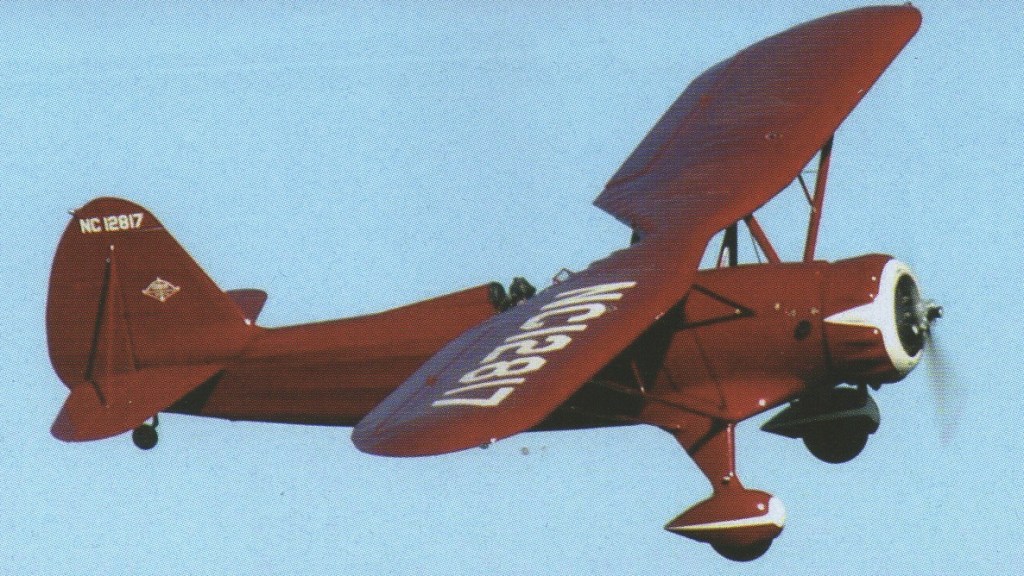
Using a Stinson SR5A Reliant as a donor, Evergreen Aviation Services began on the wings.
The flap hardware was removed and each wing was shortened by 24 in by cutting off the tips, and the lift strut and jury strut mounts were moved inboard by 19in. The inboard ribs were redesigned for the removal of the flaps and to make provision for a new 10ft 6in aileron. They also had a change in profile to blend in with the centre section.
The 7ft wide centre section was built from scratch, considering only two photographs were available for reference. This section has an hour-glass shape and the middle of the trailing edge goes so far forward that it is actually 12in forward of the rear spar. It is made of 4130 steel tubes tubes with some flat steel used for reinforcements.
Based on a photograph of the bare fuselage structure and the undercarriage common with the Reliant, a drawing of the fuselage was computer generated, and then built.
Struts were created based on 20 odd photographs, and aileron cables, fuel lines, pitot and static lines, electrical and fuel vent lines all go through the struts.
The swivel only tailwheel was modified to lockable. The cowling is from a UC-78 Bobcat, turned 90 degrees, hinging the top so it would ‘clam-shell’. They added blisters for cylinder clearance.
Evergreen designed and built the throttle quadrant, and copied the elevator trim controls from photographs. All of the engine plumbing are copper lines with brass fittings.
Evcassagneres
USA
Offers plans for the Ryan STA, as a representation of the 1930’s two-seater.

