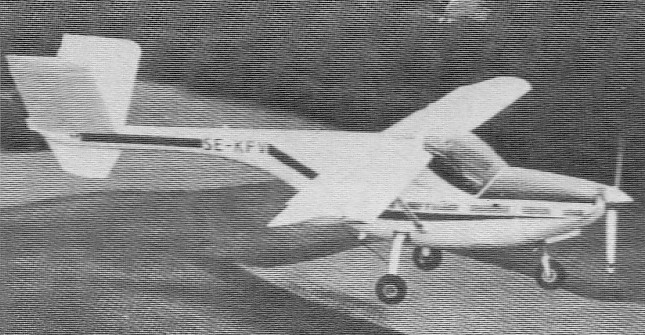
FFV-Aerotech BA.14 Starling

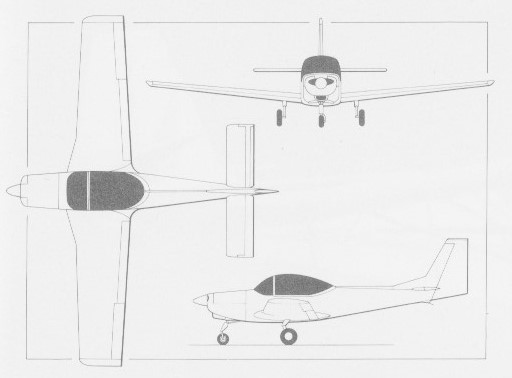
Construction of the BA-14 Starling recreational trainer, designed by Bjorn Andreasson, began 1987.

First flying on 25 August 1988, the BA-14 SE-KFV was the result of a partnership between MFI and FFV Aerotech. The two seat BA-14 is powered by a 115hp Lycoming O-235 and is almost wholly of composite construction, one of its purposes being to allow FFV Aerotech to gain additional experience in the design of primary structure, production, testing and certification with this type of material.

It became a joint venture project between MFI and FFV Aerotech, but later redesigned by MFI to FAR Pt 23A. Development delayed by other work, but resumption of flight testing apparently still awaited.

Engine : Lycoming O 235, 85 hp
Length : 21.654 ft / 6.6 m
Height : 8.858 ft / 2.7 m
Wingspan : 37.402 ft / 11.4 m
Wing area : 122.71 sq.ft / 11.4 sq.m
Max take off weight : 1797.1 lb / 815.0 kg
Weight empty : 1058.4 lb / 480.0 kg
Max. weight carried : 716.6 lb / 325.0 kg
Max. speed : 124 kt / 230 km/h
Landing speed : 40 kt / 75 km/h
Cruising speed : 103 kt / 190 km/h
Initial climb rate : 590.55 ft/min / 3.0 m/s
Service ceiling : 11155 ft / 3400 m
Wing load : 14.56 lb/sq.ft / 71.0 kg/sq.m
Range : 346 nm / 640 km
Crew : 2
FFT / Gesellschaft Fur Flugzeug- Und Faserverbund-Technologie Mbh

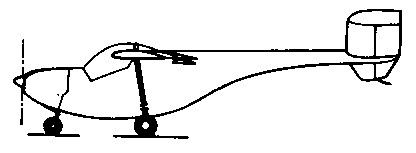
Gyroflug Ingenieursgesellschaft Mbh was founded 1978 to develop the SC 01 Speed Canard as full production aircraft based on U.S. Rutan VariEze. 1989 renamed FFT / Gesellschaft Fur Flugzeug- Und Faserverbund-Technologie Mbh, and became subsidiary of Justus Dornier Group 1984. Also developed manned and unmanned surveillance versions, but this program halted. Also took over development of FFA-2000 trainer from FFA, becoming Eurotrainer 2000A.

FFG Prag Fg227

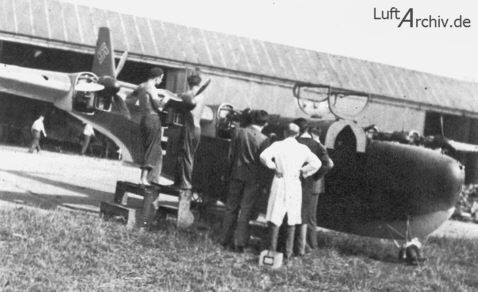
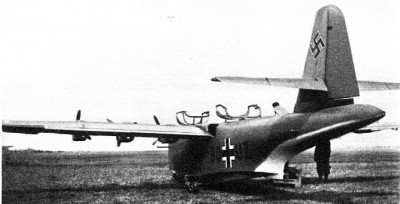
The quarter scale FFG Prag Fg227 was powered by 6 ILO 2 stroke engines rated at 21hp each. It was a ¼ scale BV.238 built by students at Prag under the direction of Dipl.Ing. Ludwig Karch.

A quarter-scale testbed called the FGP 227, registered as BQ+UZ, was deemed necessary to test the aerodynamics and water handling.

Intended to allow flight tests to commence from the manufacturers airfield, the FGP 227 refused to take-off from the grass airfield.

The aircraft was dismantled and transported to Erprobungsstelle See, Travemünde (E-Stelle – flying boat testing station). During transport French prisoners of war loading the wing onto flat-bed trucks allowed it to fall from a crane causing damage which was not repaired until September 1944.

Flight tests commenced in September 1944 as soon as the repairs were completed, but all six engines stopped due to fuel starvation soon after take-off, resulting in a heavy landing on the water. The FGP 227 was again repaired after which the aircraft flew several more times. By this time construction and testing of the BV 238 had started, so no useful data was gleaned from the programme.

Powerplant: 6 × ILO F 12/400 air-cooled two-stroke piston engines, 15.7 kW (21.1 hp) each
Propellers: 3-bladed fixed pitch propellers
Wingspan: 15.25 m (50 ft 0 in)
Length: 11.95 m (39 ft 2 in)
Height: 3.54 m (11 ft 7 in)
Wing area: 24.24 sq.m (260.9 sq ft)
Empty weight: 1,250 kg (2,756 lb)
Gross weight: 1,640 kg (3,616 lb)
Crew: 2

FFA FFA-2000

The FFA Flugzeugwerke FFA-2000 was built for the Swissair training school to replace Piaggio P-149s. After starting studies in 1986, FFA began full development testing of a 10 ft / 3 m span model in the FAF wind-tunnel at Emmen was followed by the decision in February 1988 to build two prototypes, and the Swissair order for eight aircraft was placed on 25 April.

The FFA-2000 is largely of composite construction, using a wing designed in Germany by Gyroflug-FFT.

FFT / Gesellschaft Fur Flugzeug- Und Faserverbund-Technologie Mbh took over development of FFA-2000 trainer from FFA, becoming Eurotrainer 2000A.

Engine: Porsche PFM 3200, 217 hp
Seats: 2

FFA AS.202 Bravo

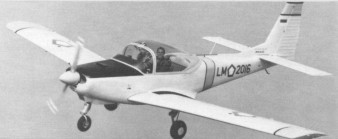
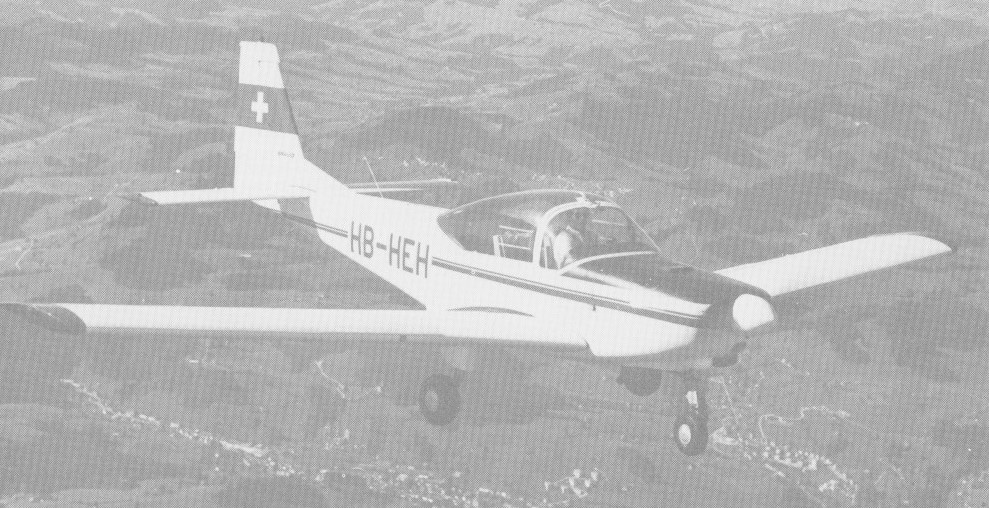
The Bravo first flew in March 1969, with a 112kW engine, as the 202/15. After completing an agreement with SIAI-Marchetti to produce the AS.202 Bravo, the Swiss developed the AS.202/18A. This suffix indicated its uprated 180-hp (134-kW) Lycoming engine and full aerobatic capability. The Swiss company Flug- und Fahrzeugwerke AG Altenrhein flew the first example (HB-HEY) of the AS.202/18A, a two/three-seat aerobatic development of the Italian SIAI-Marchetti AS.202 Bravo on 22 August 1974. These were followed by the 195kW 202/26 in 1978. Civilian and military operators have bought 166 Bravos up to 1987.

FFA AS.202 Bravo Article

AS.202/15
Engine: Lycoming O-320-E2A, 150 hp
Wingspan: 31 ft 11.75 in / 9.75 m
Length: 24 ft 7.25 in / 7.50 m
Empty weight: 1388 lb / 630 kg
Max payload: 595 lb / 270 kg
Max cruise 75% 8000ft/2440m: 114 kt / 131 mph / 211 kph
ROC SL: 633 fpm / 193 m/min
Service ceiling: 14.000 ft / 4265 m
Max range: 498 nm / 574 mi / 925 km
Seats: 2
Cabin length: 7 ft 0.5 in / 2.15 m
Cabin width: 3 ft 4.25 in / 1.02 m
Cabin height: 3 ft 7.25 in / 1.10 m
Rear baggage: 220 lb / 100 kg

AS.202 Bravo
Engine: 1 x Lycoming AEIO-540, 195 kW.
Span: 9.8 m.
Length: 7.5 m.
Wing area: 13.9 sq.m.
Empty wt: 795 kg.
MTOW: 1200 kg.
Warload: 195 kg.
Max speed: 265 kph.
Initial ROC: 360 m / min.
Ceiling: 5700 m.
T/O run: 185 m.
Ldg run: 210 m.
Fuel internal: 160 lt.
Range: 850 km.

FFA AS 202 / 18A Bravo
Length: 24.606 ft / 7.5 m
Height: 9.186 ft / 2.8 m
Wingspan : 32.152 ft / 9.8 m
Wing area : 149.62 sqft / 13.9 sq.m
Max take off weight : 2381.4 lb / 1080.0 kg
Weight empty : 1565.6 lb / 710.0 kg
Max. weight carried : 815.9 lb / 370.0 kg
Max. speed : 130 kts / 241 km/h
Landing speed : 49 kts / 90 km/h
Cruising speed : 110 kts / 203 km/h
Initial climb rate : 787.40 ft/min / 4.00 m/s
Service ceiling : 16995 ft / 5180 m
Wing load : 15.99 lbs/sq.ft / 78.00 kg/sq.m
Range : 616 nm / 1140 km
Engine :
Lycoming AEIO 360 B1F, 132 hp
Crew : 2

AS 202-18A-3 Bravo

AS.202/26 Bravo
Engine: 1 x Lycoming AEIO-540, 195 kW.
Span: 9.8 m.
Length: 7.5 m.
Wing area: 13.9 sq.m.
Empty wt: 795 kg.
MTOW: 1200 kg.
Warload: 195 kg.
Max speed: 265 kph.
Initial ROC: 360 m / min.
Ceiling: 5700 m.
T/O run: 185 m.
Ldg run: 210 m.
Fuel internal: 160 lt.
Range: 850 km.

FFA P-16

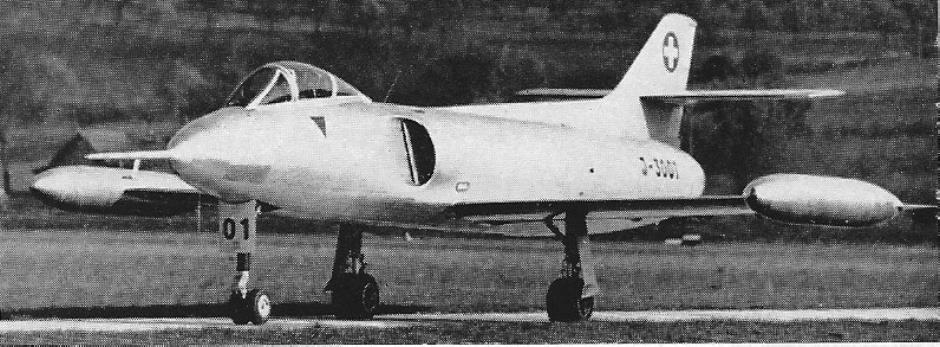
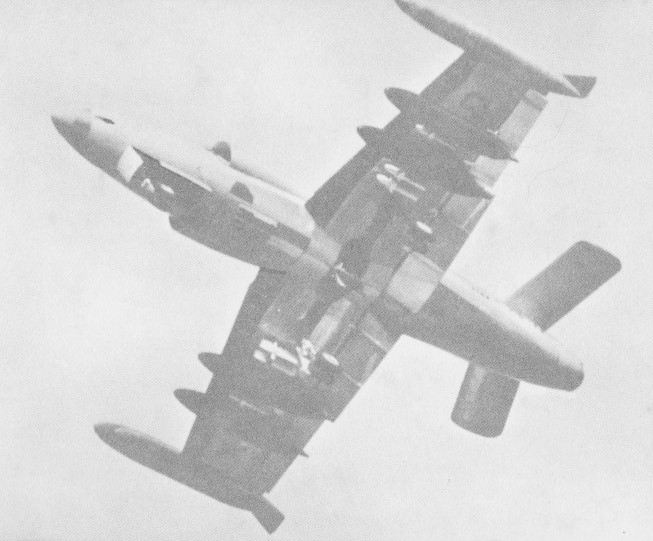
FFA was awarded development contract July 1952 for P-16.04 interceptor/ground-attack aircraft with Armstrong Siddeley Sapphire, first flown April 28,1955. Fitted with leading-edge flaps, the first prototype had a wing thickness/chord ratio of between 5 and 6%. The second prototype was reduced to 4% and a higher powered turbojet.

P-16.04

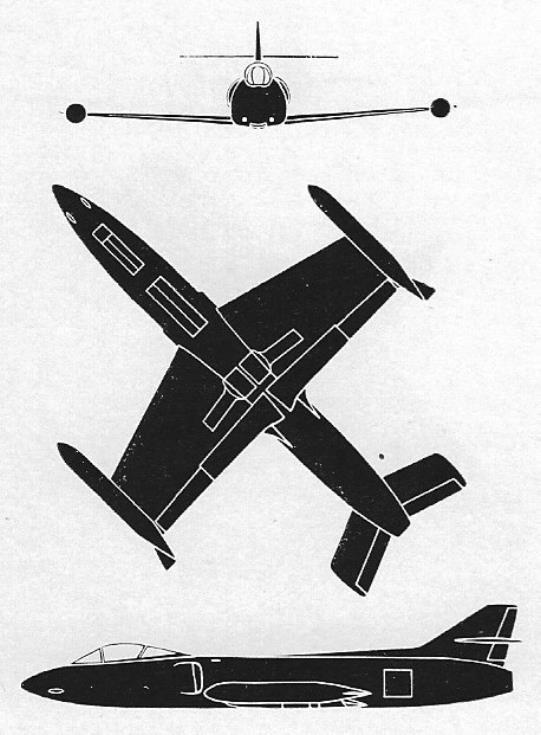
The airframe is low wing, with 20o sweepback. Swept tail surfaces, have a variable incidence tailplane mounted mid-way up the fin, with conventional rudder and elevators. The ailerons can be lowered with Fowler flaps to provide additional flap area. Full-span leading edge flaps and an air-brake is fitted on each side of the rear fuselage. A tricycle undercarriage, with twin wheels on each unit, main wheels retracting inwards into the fuselage and the nose wheel retracts reward.

Internal fuel capacity is 550 gal, including fixed wingtip tanks. The is provision for two 100 gal underwing jettisonable tanks. Armament is two 30mm Hispano cannon in the nose and 44 air-to-air unguided rockets in fuselage pack.

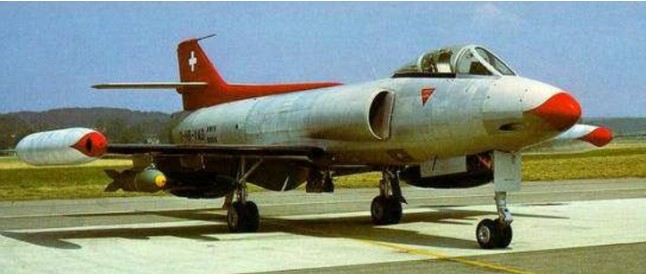
The prototype Mk.III first flew in March 1960.

Mk.III

Program cancelled by Swiss Government but continued as private venture until June 1960; five aircraft built.

The P-16 wing formed the basis of the Gates Learjet design.

1st prototype
Engine: Armstrong Siddley Sapprire A.S.Sa.6, 7900 lb
Loaded weight: 17,857 lb
Max speed: 630 mph approx.
Armament: 2 x 30mm Oerlikon 302RK cannon

Engine: Armstrong-Siddeley Sapphire Sa.7
Length: 11.14 m
Span: 12.3 m
Max T/O weight: 11700 kg
Weapons load: 3000 kg
Max. horizontal speed: 1140 km/h / M 0.92
Altitude: 14000 m
T/O and Landing roll: < 500 m
Range: 1480 km

P-16 Mk.III
Engine: Bristol Siddeley Sapphire, 11,000 lb
Wingspan: 36 ft 7 in
Wing area: 320 sq.ft
Length: 46 ft 9 in
Height: 13 ft 5 in
Empty weight: 15,520 lb
MTOW: 27,795 lb
Internal fuel: 550 gal
Max speed: 696 mph SL
Service ceiling: 46,000 ft
Max range: 620 mi
Armament: 2 x 30mm Hispano cannon
Hardpoints: 4
Wheel track: 10 ft 2 in
Wheel base: 18 ft

FFA / Flug- und Fahrzeugwerke AG

Founded 1948, the reorganized Swiss Domier-Werke Alntenrhein, Flug- und Fahrzeugwerke AG discontinued development of Morane-Saulnier piston-engined fighters after completing prototype D-3803. Awarded development contract July 1952 for P-16.04 interceptor/ground-attack aircraft with Armstrong Siddeley Sapphire, first flown April 25,1955. Program canceled by Swiss Government but continued as private venture until June 1960; five aircraft built. Participated in license-production programs for de Havilland Vampire and Venom, Pilatus P-3, Mirage IIIRS, and HIS. Designed and manufactured Diamant glassfiber sailplane. Currently named FFA Flugzeugwerke Altenrhein AG., continues to produce (under original agreement with SIAI-Marchetti signed in 1967) the AS-202 Bravo two-seat trainer/aerobatic aircraft (first flown 1969). FFA-2000 programme was transferred to FFT.

Fetterman Chickadee

Fred Fetterman, a 38 year old high school instructor in aviation, worked for more than a year to build an all-metal sports plane. Fetterman built the plane in his spare time in a garage near his home at 1372 East 92nd St, Brooklyn.

The plane was an all-metal, two seat low wing monoplane, powered by a 50 hp Franklin engine.

He took it out to Floyd Bennett airport for an official take-off several weeks earlier but was prevented from flying by bad weather. On 3 March , Fetterman rose to around 1500 ft on the first flight.

At an altitude of 500 ft, according to Kenneth Behr, field manager, and other observers, the plane slid into a tail-spin and Fetterman struggled with it briefly as it dropped. He tried to straighten out, partly succeeded at about 250 ft and then jumped.

Fetterman’s parachute failed to open properly and he fell head first into a marsh half a mile southwest of the airport. He was instantly killed.

The plane drifted slowly down, landing on its nose in the soft ground, almost undamaged.

Fetterman, Fred

Fred Fetterman was an airplane engine mechanic who taught at Haaren High School. He rebuilt several aircraft before he built the Chickadee. Fetterman designed and built the aircraft and named it the Fetterman Chickadee. He was survived by a wife and children.