Avio Linee Italiane operated Fiat GA18Vs.
Aircraft
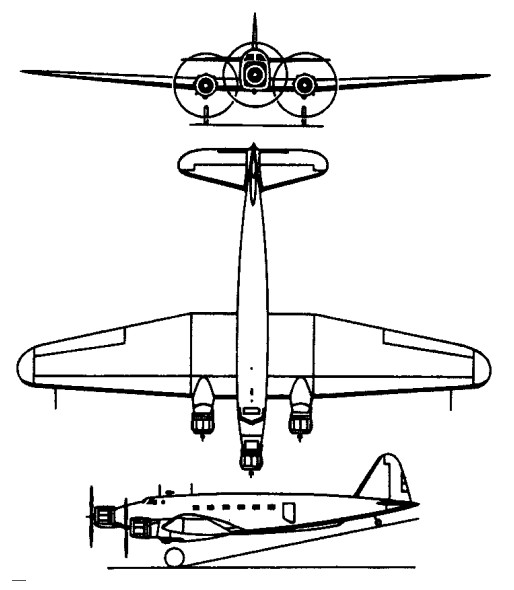
Fiat G.212
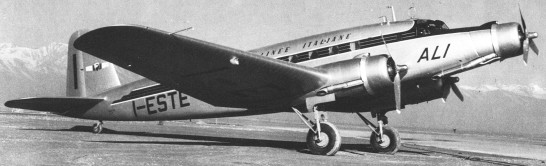
An enlarged development of the G.12.
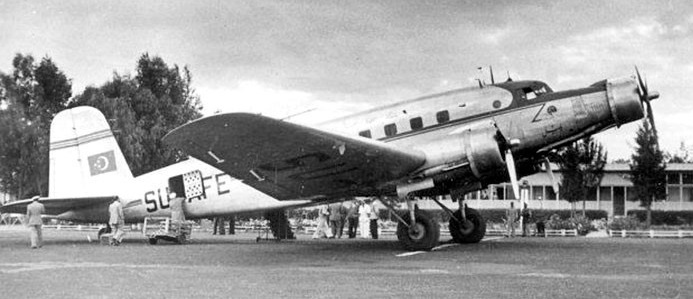
G.212CP – Engines: 3 x Pratt & Whitney.
Fiat G.12
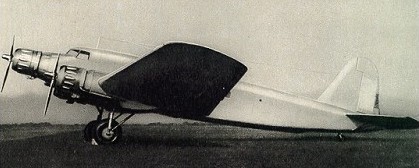
The first prototype flew in May 1941.
The 23 seat G-12L had a longer fuselage and carried more passengers.
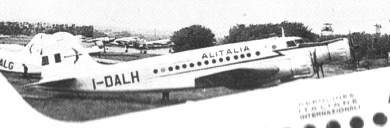
G.12C
Engine: 3 x FIAT A.74 RC 42, 574kW
Wingspan: 28.6 m / 93 ft 10 in
Length: 20.16 m / 66 ft 2 in
Height: 4.9 m / 16 ft 1 in
Wing area: 113.5 sq.m / 1221.70 sq ft
Max take-off weight: 12800 kg / 28219 lb
Loaded weight: 8890 kg / 19599 lb
Max. Speed: 396 km/h / 246 mph
Cruise speed: 308 km/h / 191 mph
Ceiling: 8000 m / 26250 ft
Range: 1740 km / 1081 miles
Crew: 3
Passengers: 14
G.12L
Engines: 3 x Fiat A.74 RC.42, 770 hp.
Crew: 4.
Pax cap: 13.
G.12LB
Engines: 3 x Bristol Pegasus 48, 730 hp.
Crew: 4.
Pax cap: 13.
Fiat G.8
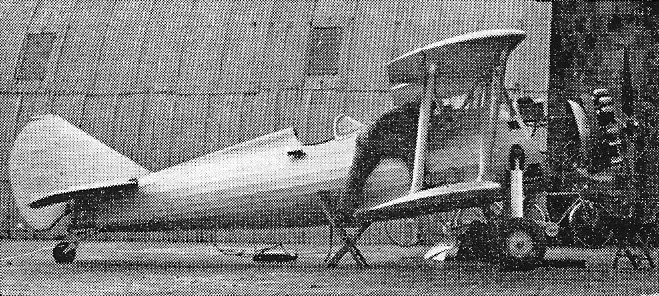
The Fiat G.8 was a military utility aircraft produced in Italy in the mid-1930s. Its design and production were undertaken at the CMASA works in Pisa which became part of Fiat in 1930, hence the type is sometimes referred to as the CMASA G.8 or Fiat-CMASA G.8.
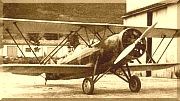
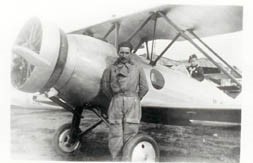
Designed by Giuseppe Gabrielli, it was a conventional biplane design with staggered wings of unequal span braced by struts arranged in a Warren truss. The pilot and a single passenger (or instructor) sat in tandem open cockpits, and the aircraft was fitted with fixed tailskid undercarriage with divided main units.
The prototype first flew on 24 February 1934, sixty more of these aircraft were purchased by the Regia Aeronautica and used for liaison and training duties. They were retired in 1950.
Powerplant: 1 × Fiat A.54, 99 kW (135 hp)
Wingspan: 8.76 m (28 ft 9 in)
Wing area: 18.9 m2 (203 sq ft)
Length: 7.00 m (23 ft 0 in)
Height: 2.50 m (8 ft 2 in)
Empty weight: 560 kg (1,230 lb)
Gross weight: 840 kg (1,850 lb)
Maximum speed: 212 km/h (132 mph, 115 kn)
Range: 925 km (575 mi, 500 nmi)
Service ceiling: 5,200 m (17,100 ft)
Crew: one, pilot
Capacity: one passenger
Fiat G.5
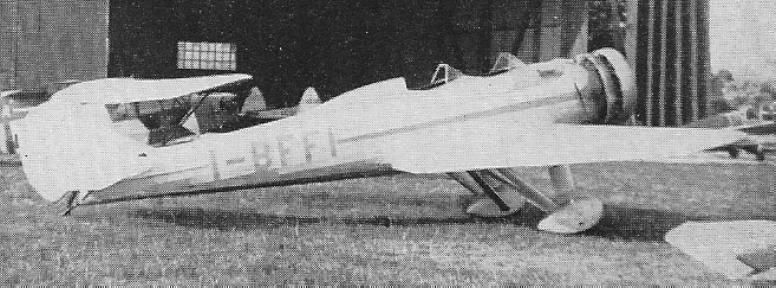
The Fiat G.5 tandem two-seat touring and training monoplane was produced in 1933 in two versions, the G.5 with a 140 hp Fiat A.54 radial engine, and the G.5bis with a 205 hp Fiat A.70 radial.
The prototype G.5 was powered by a 142 hp Fiat A.60 four cylinder inverted inline engine. The wing structure was entirely wood and the fuselage a welded steel-tube structure. Dual controls were fitted and the aircraft is fully aerobatic.
The G.5 was also produced as a three-seater.
G.5
Engine: 140 hp Fiat A.54
G.5bis
Engine: 205 hp Fiat A.70
Max speed: 143 mph
Cruise: 126 mph
Ceiling: 18,900 ft
Range: 478 mi
Empty weight: 1280 lb
Loaded weight: 1898 lb
Wing span: 34 ft 1.5 in
Length: 25 ft 9 in
Height: 7 ft 11.75 in
Fiat G.2 Espaguetti
The FIAT G.2 ‘Espaguetti’ (Spaghetti) was unique, being the only one built. Mussolini’s son flew it before VARIG acquired the aircraft. VARIG’s pilots hated it because the throttles operated in the opposite direction to every other airplane, that is, to add power one had to pull back on the throttles.
Fiat AS.1 / AS.2 / TR.1
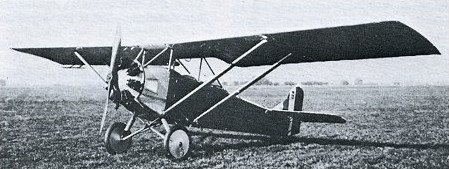
The Fiat AS.1 was a light touring aircraft developed in Italy in the late 1920s. It was a basic and conventional design: a parasol wing monoplane with tailskid undercarriage and seating for two in tandem open cockpits. The type proved extremely popular, and the production run would eventually extend to over 500 machines, with roughly half of these purchased by the Regia Aeronautica as trainers and liaison aircraft. Construction was of wood throughout, covered by plywood, fabric, and (around the nose) metal. A later development, designated TR.1 featured a metal structure instead.
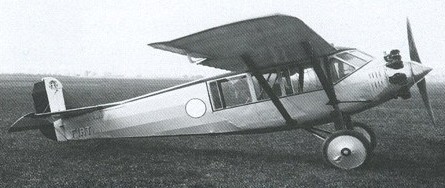
AS.1s were used successfully in a number of competitions and record-breaking events. In August 1929, they participated in the Challenge 1929 international contest, and in January 1930, an AS.1 piloted by Renato Donati with mechanic Gino Capannini was used to set endurance, distance, and altitude records in its class (29 hr 4 min 14 sec, 2,746.2 km/1,706.4 mi, and 6,782 m/22,251 ft respectively). On 28 December 1932, Furio Niclot and Mariano Lanciani used a specially-engined example to set the seaplane altitude record in its class (7,362 m/24,154 ft), then swapping wheels for pontoons, the same aircraft went on to set the equivalent landplane record two days later (9,282 m/30,453 ft). Long-distance feats included flights from Rome to Mogadishu and Vercelli to Tokyo (both by Francis Lombardi and Gino Capannini) and an aerial circumnavigation of Africa (27,600 km/17,150 miles) in 54 days by Francis Lombardi, Count Lodovico Mazzotti, and Mario Rasini).
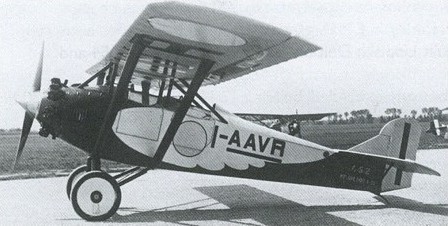
Variants
AS.1 – initial version with Fiat A.50 engine
AS.1 Idro – floatplane version
AS.1 Sci – ski-equipped version
AS.2 – version with strengthened structure and Fiat A.50S engine
TR.1 – version with metal structure and enclosed cabin
AS.1
Engine: 1 × Fiat A.50, 67 kW (90 hp)
Length: 6.10 m (20 ft 0 in)
Wingspan: 10.40 m (34 ft 2 in)
Height: 2.53 m (8 ft 4 in)
Wing area: 17.5 sq.m (188 sq.ft)
Empty weight: 450 kg (990 lb)
Gross weight: 690 kg (1,520 lb)
Maximum speed: 158 km/h (98 mph)
Range: 1,000 km (621 miles)
Service ceiling: 6,800 m (22,310 ft)
Crew: 1, pilot
Capacity: 1 passenger
Fiat
ITALY
Aeronautica d’ltalia SA was the aeronautical branch of Fiat, occupying the factories of the old Ansaldo company which it had absorbed by the 1920s, although the Ansaldo name was still used. For this company and the Societa Italiano Aviazione the name Fiat (or Fiat-Aviazione, or Fiat- Divisione Aviazione) was used after 1924.
Renamed FIAT, SOCIETA PER AZIONE 1949 to succeed Aeronautica d’ltalia, inheriting its plant and program. (Fiat’s Divisione Aviazione merged subsequently with Aerfer as Aeritalia formed November 12,1969, fully operational January 1,1972.) Fiat G49 advanced trainer flown September 1952. G80 jet trainer with de Havilland Goblin 35 engine, first flown December 9,1951, was first postwar Italian jet aircraft. In conjunction with Macchi built 80 de Havilland Vampire FB.52As; built 221 F-86K all-weather fighters for Italy, France, and West Germany, first example completed June 1955. G91 adopted as NATO light tactical fighter; prototype flown August 9,1956 and several hundred built subsequently. Prototype of G91Y variant first flew December 27,1966; 65 built for Italian Air Force. License-built 205 F-104S Starfighters for Italian Air Force. G222 twin-turboprop military transport project initiated before establishment of Aeritalia.
Aeritalia was created in 1969 by a merger of Fiat’s aviation divisions with two smaller companies.
FFVS J-22
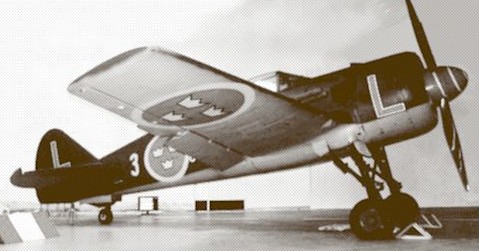
In 1939-1940, the Swedish air force had only a single fighter wing, equipped with 50-60 Gloster Gladiators with the Swedish designation J 8 (J = Jakt, interceptor or fighter). The government decided to equip two new wings and a total of 264 fighters of the types Seversky Republic EP-1 and Vultee Vanguard 48C 1 were ordered in the USA. 60 of the 120 EP-1s were delivered via Petsamo and were given the Swedish designation J 9. In July 1940 all export of fighters from the USA was stopped by a US Government embargo.
An indigenous fighter design was required, but with SAAB busy producing its B17 bomber, Flygforvaitninggens Verkstad (FFVS) was formed and designer Bo Lundberg was appointed to design a machine using non-strategic materials.
The air force chief instructed the aircraft designer Bo Lundberg to start planning for a Swedish made fighter. Lundberg had been in charge of the Swedish Air Commission in USA and before that chief designer of Götaverken’s aircraft division during the time they designed the GP 8 bomber which competed with SAAB 18 and the cancelled GP 9 fighter.
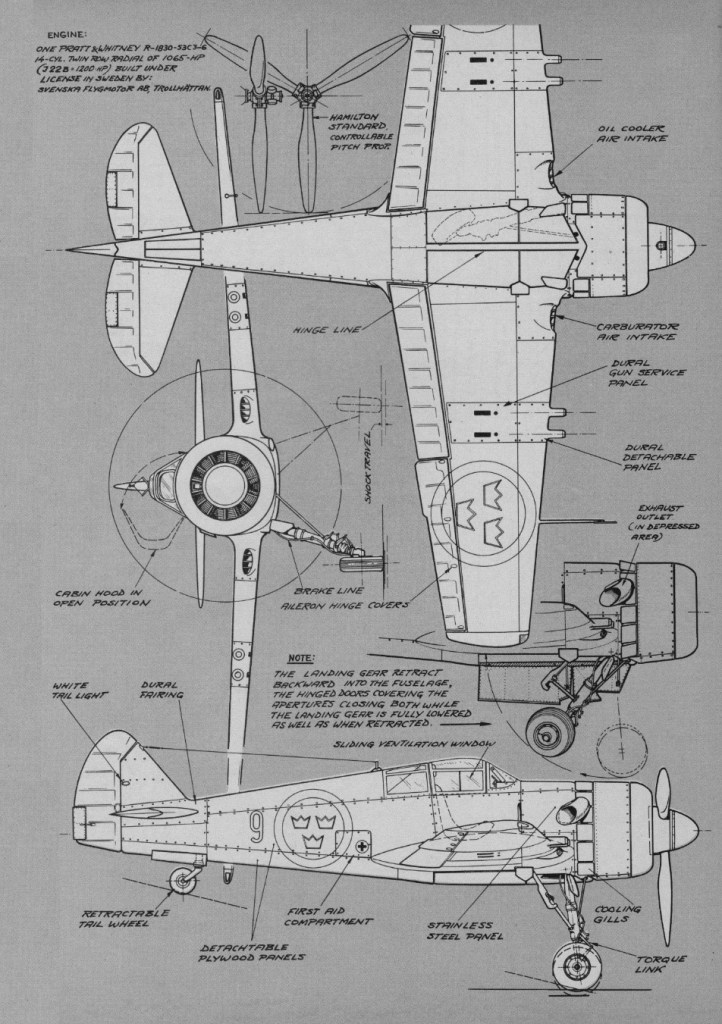
When Lundberg returned to Sweden at the end of 1940, he had already started planning for the new fighter. Requirements was that it should use the same engine as EP-1, STWC-3, a Swedish made Pratt and Whitney Twin Wasp, should be small and light, be made of components that could be made by a large number of subcontractors. The project was designated P 22 and a temporary air force branch was instituted to run the project, Flygförvaltningens Verkstad i Stockholm (FFVS).
The aircraft was from the outset designed for the Pratt&Whitney Twin Wasp, an American engine not available to Sweden. Even worse, the Severskies using the same engine had been delivered without spare engines so the shortage was really acute!
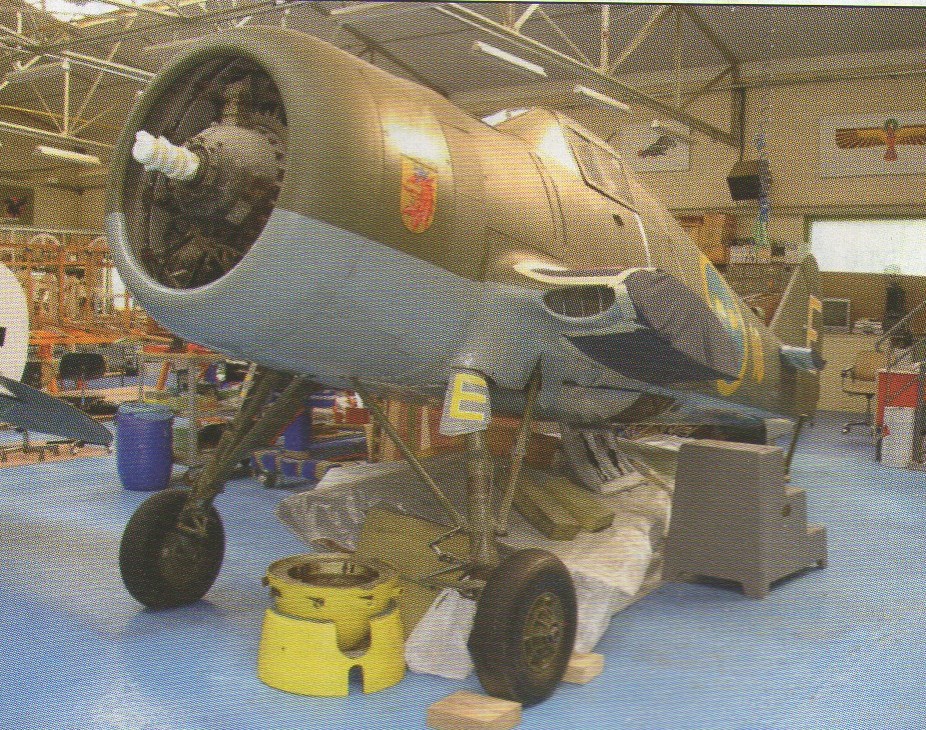
However, Flygmotor at Trollhättan started an ambitious programme to copy an original Pratt&Whitney Twin Wasp engine – without any drawings or material data at all. Working hard, they almost managed to meet the schedule. In 1942, to compensate for the lag in the engine project, Sweden managed to purchase a batch of 100 engines from the French Vichy regime via Germany. The Swedish-made engines, designated STWC-3, proved very good. One of them was still flying in the late 1980s, now mounted in one of the Swedish Airforce’s last flying C-47s.
Since the GV GP 9 was designed to use aluminum, it couldn’t be used as a basis for the new fighter, but its landing gear where the wheels were rotated as the were retracted back into the fuselage was used. The landing gear was made to accept skis, but as the air force’s ability to clear snow off runways had improved, they never were fitted on J 22.
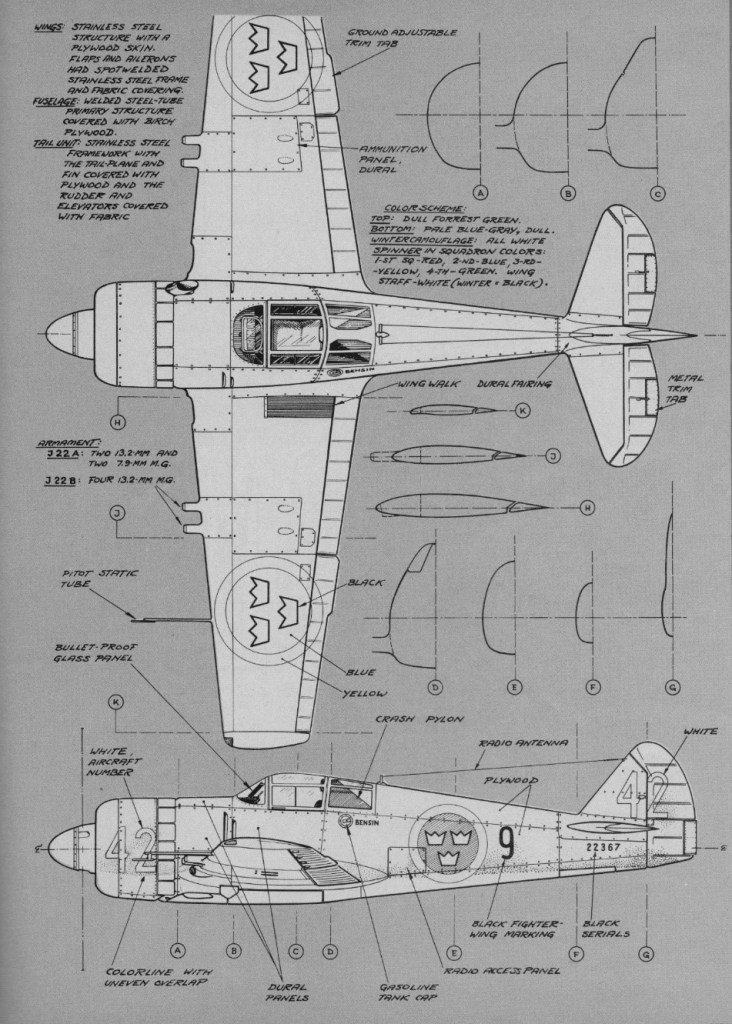
Since a wooden wing couldn’t be made strong enough if it was made thin enough for a fast fighter, so the aircraft was made of steel tubing covered with moulded birch plywood.
The windshield was made either of 6 mm laminated Gemax or acrylic. The center part was 60 mm thick for ballistic protection.
The first prototype of the aircraft which was to be designated J 22 was built in the workshop of Flygtekniska Försöksanstalten (FFA) near Bromma airport, and first flew on September 20,1942, and deliveries began to F9 at Gothenburg in September 1943.
Both protypes crashed, one probably due to oxygen starvation of the pilot, the other due to engine failure during landing.
Of the 17000 component parts, 12000 were made at 500 subcontractors all over Sweden, with final assembly in a hangar at Bromma, except for the final 18 which were assembled at the air force central workshop at Arboga (CVA), which was set up in 1944 to be the central maintenance facility.
198 aircraft were built and delivered 1943-46. Of these the first 143 were of the version J 22A and the rest J 22B. The only difference between them was that J 22A was armed with two 13.2 mm and two 8 mm guns in the wings, and J 22B with four 13.2 mm guns. The sight was a fixed reflex sight.
The J 22 was a light and very manoeuvrable aircraft with good acceleration but when it entered service it was no match for the fighters then current. Tests were made against the P-51 after the war and even if the J 22 could hold its own for a while, especially with a skilled pilot, there is no doubt that the Mustang was the better fighter by a safe margin.
In 1945 J 22A was redesignated J 22-1, J 22B into J 22-2 and S 22 became S 22-3. The last ones were retired in 1952.
Nine J 22A were converted into reconnaissance aircraft in 1946 and redesignated S 22 (S = Spaning, reconnaissance) and converted back into fighters in 1947.
Engine: STWC-3, 1065 hp
Span: 10 m
Length: 7.8 m
Height: 3.6 m
Wing area: 16 sq.m
Empty weight: 2020 kg
Combat weight: 2835 kg
Fuel load:525 litres
Max speed: 575 km/h
Cruise speed: 440 km/h
Landing speed: 140 km/h
Range: 1270 km
Endurance: 2.9 h
Max altitude: 9300 m
Armament: 2 x 13.2 mm + 2 x 8 mm guns or 4 x 13.2 mm
FFVS / Flygforvaltningens Verkstad
On January 1,1941 the Air Board of the Royal Swedish Air Force instituted Flygforvaitningens Verkstad and its own design, which became the FFVS J-22 fighter, first flown September 1942. Subcontracted program with final assembly at Air Board Workshops, Ulvsunda; the first of more than 200 was delivered September 1,1943.

