Dr. Alberti was a lawyer who financed some aeroplane designers, for example in 1909 the Focke-Alberti Ente.
A single seat canard.
Dr. Alberti was a lawyer who financed some aeroplane designers, for example in 1909 the Focke-Alberti Ente.
A single seat canard.
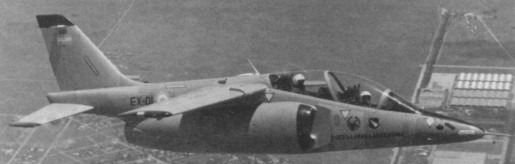
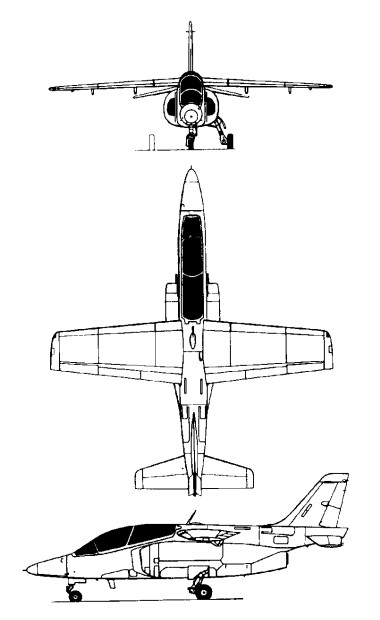
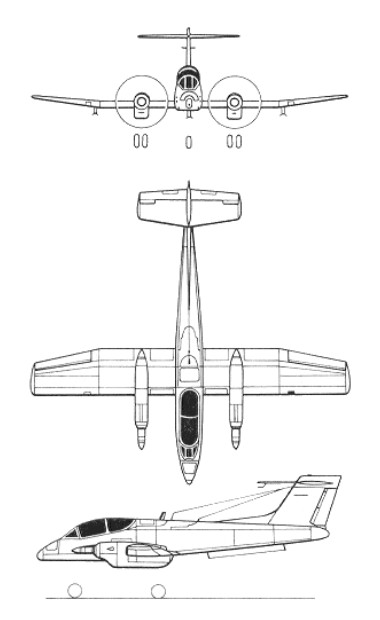
Work on the IA.63 began in 1979 by the Fabrica Militar de Aviones and by early 1980 a straight-wing configuration powered by a single TFE 731 had been decided upon. Dornier provided technical assistance in the design and development stages, and also in the construc¬tion of the wing and tail surfaces of the proto¬types. The first flight took place on October 6, 1984, and by March 1986 three prototypes were flying. Construction of three flying prototypes was initiated in March 1981 and the first IA-63 flew on 6 October 1984.
A cantilever shoulder-wing monoplane, the fuselage incorporates a tricycle landing gear, a single turbofan engine and a pressurised cockpit with tandem seats for the pupil and instructor on zero/zero ejection seats.
Delive¬ries of 64 IA-63As to the Argentine air force began in May 1988. The FAA requirement was for 64 aircraft, The IA-63A can also be used for weapon training with a 30mm Defa cannon pod on the fuselage centreline, and other ordnance on four under¬wing pylons, though better capability in this and the light attack roles is offered by the IA-63B under development in the early 1990s with the 4,300-lb (1,950-kg) thrust TFE731-5 turbofan and a head-up display tied into a more capable nay/attack system.
Powered by a Garrett TFE 731 turbo-fan engine providing 3500 lbs thrust, the Pampa “is capable of carrying a large and varied weapons load and a HUD and Weapons Aiming Computer System are being incorporated in future deliveries to meet Argentine Air Forces requirements”. Pampa promotional material emphasises the type’s fuel endurance of around 2.8 hours at 300 knots and a STOL/grass strip capability. Maximum speed is listed at 400 knots.
In 1990, FMA teamed with LTV to offer a version of the IA 63, designated Pampa 2000, to compete for the Joint Services Primary Aircraft Training System (JPATS) search for a common US trainer.
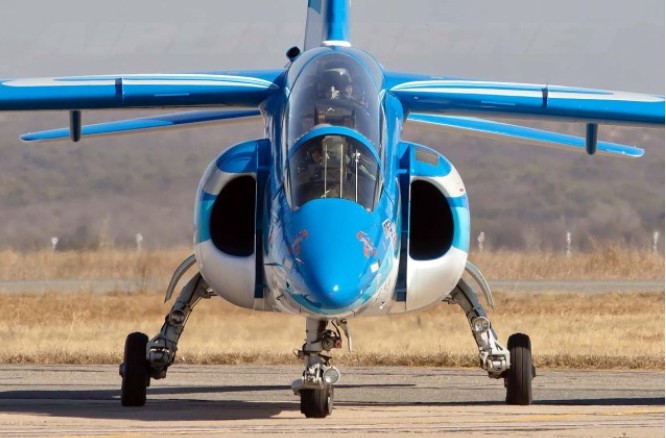
IA.63 Pampa
Engine: 1 x Garrett TFE731-2-2N turbofan, 3,500lb st (15,75 kN).
Installed thrust: 15.6 kN.
Span: 9.69 m / 31 ft 9 in.
Length: 10.93 m / 35 ft 10 in.
Height: 4.29 m / 14 ft 1 in
Wing area: 15.63 sq.m / 168.24 sq ft.
Empty wt: 2627 kg / 6219 lb.
MTOW: 5000 kg / 11023 lb
Warload: 1160 kg.
Max speed: 755 kph / 469 mph.
Initial ROC: 1813 m / min.
Ceiling: 12,900 m / 42300 ft.
T/O run: 400 m.
Ldg run: 515 m.
Fuel internal: 980 lt (+400 lt).
Range w/max.fuel: 1500 km / 932 miles.
Hardpoints: 5.
Crew: 2
IA-63A Pampa
Engine: one 4300-lb thrust Garrett TFE731-2-2N turbofan.
Maximum speed 509 mph (819 km/h) at 22,965 ft (7,000 m)
Initial climb rate 5,950 ft (1,813 m) per minute
Service ceiling 42,325 ft (12,900m)
Radius 223 miles (360 km) on a hi-lo-hi mission with a 2,205-lb (1,000-kg) warload
Empty weight 6,219 lb (2,821 kg)
Maximum take-off 11.023 lb (5,000 kg).
Wing span 31 ft 9.25 in (9.686 m)
Length 35 ft 9.25 in (10.90 m)
Height 14 ft 1 in (4.29 m)
Wing area 168.2 sq ft (15.63 sq.m)
Armament: provision for a 30-mm cannon pod and up to 2,866 lb (1,300 kg) of disposable stores.
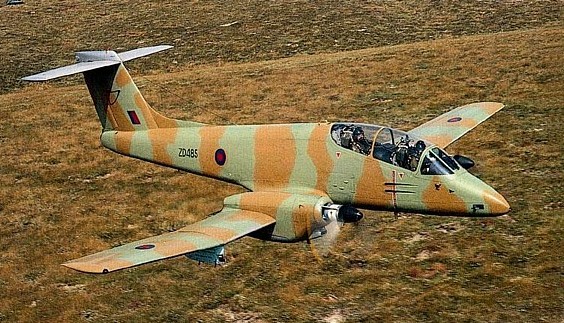
In the mid 1960s the Argentine government issued a requirement to Fabrica Militar de Aviones (FMA), for a new combat aircraft suitable for the COIN, CAS and recce roles.
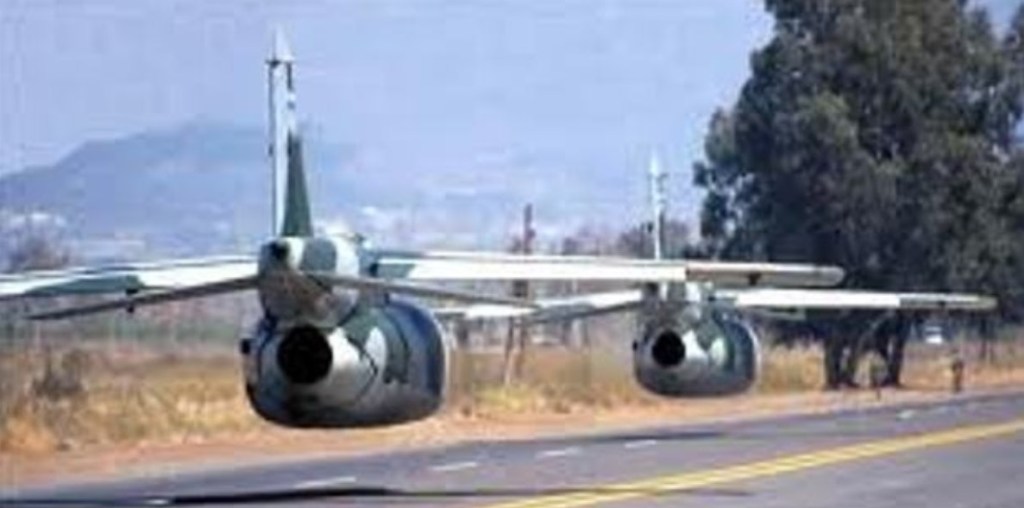
Development of the FMA IA 58 Pucara ground-attack aircraft began in August 1966 and led to the flight of an unpowered aerodynamic test vehicle on 26 December 1967. The first powered prototype, by then known as the AX-2 Delfin, and with two 674kW Garrett TPE3311/U-303 turboprop engines installed, was flown for the first time on 20 August 1969. Subsequent prototypes were powered by Turbo-meca Astazou XVIG engines and fitted to all production aircraft.
A cantilever low-wing monoplane of all-metal construction, the Pucara has a T-tail, a retractable tricycle landing gear, and accommodation for a pilot and copilot in tandem on Martin-Baker ejection seats beneath a large transparent canopy. It has narrow fuselage and tail section and a tandem seat cockpit with a steep sloping nose. Because of the steep nose the pilot has excellent forward visibility. Although heavily armed the weapons are unguided and visually aimed by the crew. The IA 58 only needs a minimum of ground support to operate, it is able to operate from unprepared rough terrains.
More prototypes were produced and on 8 November 1974 the first of 60 IA 58A production aircraft for the Argentinian Air Force made its maiden flight.
The initial production version, the IA 58A, flew for the first time on 8 November 1974 and first deliveries of 108 ordered for the Argentine air force began early in 1976 and continued until 1986. Six were also ordered for the air force of Uruguay.
Forty improved IA 58B Pucara Bravos with advanced avionics and more powerful armament (30mm instead of 20mm cannon) were ordered for the Argentine air force in 1980 but were completed as IA 58As following the Falklands campaign.
A single IA 66, a Pucara with more-powerful 746kW Garrett TPE331 engines, began its flight test programme in 1980 but did not proceed any further.
Pucara production ended with a batch of 40 IA 58As built from 1986 onwards but no further sales were subsequently announced and they are believed to be in store as ‘white tails’.
About 3 aircraft were captured by the United Kingdom during the Falkland War, they are now preserved by the RAF.
First flown on December 30, 1985, the single-seat IA.58C is a developed version of the earlier IA.58A, in which the forward cockpit is replaced by a new nose section housing a 30mm Defa cannon with 270 rounds, in addition to the usual armament of two 20mm cannon and four 7.62mm machine-guns. The Astazou engines of the IA.58A are retained, but feature self-starters and modified exhausts to reduce their infrared signature. The IA.58C incorporates a complete avionics upgrade, including an Omega/VLF navigation system, Hud, IFF, and radar warning receiver, together with a Saab RGS-2 lead-computing sight for air-to-air or air-to-ground use.
The IA 58A is also operated by Colombia, Sri Lanka and Uruguay but only in small numbers. In December 1989, Argentina delivered three Pucaras to Colombia on loan for use against drug manufacturers and smugglers.
IA.58A
Engines: 2 x Turbomeca Astazou XVIG, 760kW / 988 shp
Max take-off weight: 6800 kg / 14992 lb
Empty weight: 4037 kg / 8900 lb
Wingspan: 14.5 m / 47 ft 7 in
Length: 14.3 m / 46 ft 11 in
Height: 5.4 m / 17 ft 9 in
Wing area: 30.3 sq.m / 326.15 sq ft
Max. speed 3.000m (9,840 ft): Mach 0.48 / 500 km/h / 311 mph
Cruise speed: 500 km/h / 311 mph
Ceiling: 10000 m / 32800 ft
Initial ROC: 1080 m / min.
Range w/max.fuel: 3400 km / 2113 miles
Combat radius hi-lo-hi: 350 km.
T/O run: 300 m.
Ldg run: 200 m.
Fuel internal: 1280 lt.
Air refuel: No.
Warload: 1500 kg.
Armament: two Hispano HS804 20mm cannons with 270 rounds per gun, four FN Browning 7.62mm guns with 900 rounds per gun; up tp 1500 kg (3,307 lb) of free fall load.
Hard points: 3.
Crew: 2
IA 66
Engines: 2 x 1,000-shp Garrett TPE331-11-601W turboprop
Wingspan: 14.5 m / 47 ft 7 in
Length: 14.3 m / 46 ft 11 in
Height: 5.4 m / 17 ft 9 in
Wing area: 30.3 sq.m / 326.15 sq ft
Crew: 2
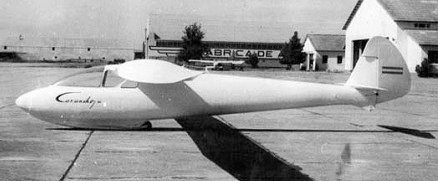
In October 1963 the Argentine state aircraft factory DINFIA began construction of the prototype IA 54 two-seat research sailplane intended to test a new 19m (62ft 3.5in) span wing; the fuselage was based on that of a Schleicher Condor 4 and the all-wood wing, of 18% thickness/chord ratio, had down-turned wing tips, Frise ailerons, unslotted flaps and – inboard of the flaps – metal trailing edge air brakes.
Wingspan; 19.00 m / 62 ft 4 in
Length; 8.00 m / 26 ft 3 in
Wing area; 29.00 sq.m / 312.15 sq ft
Max take-off weight; 548 kg / 1208 lb
Max. speed; 240 km/h / 149 mph
Crew; 2
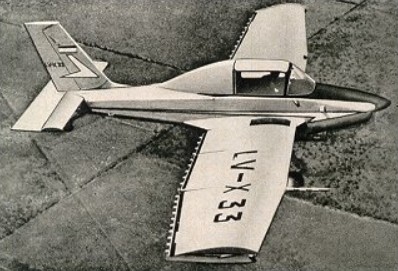

Engine; 1 x Cont. O-470-R, 170kW or Lyc. O-540-B2 B5, 175kW
Wingspan; 11.6 m / 38 ft 1 in
Length; 8.4 m / 27 ft 7 in
Height; 2.8 m / 9 ft 2 in
Wing area; 21.5 sq.m / 231.42 sq ft
Max take-off weight; 1525 kg / 3362 lb
Empty weight; 880 kg / 1940 lb
Max. speed; 185 km/h / 115 mph
Cruise speed; 160 km/h / 99 mph
Ceiling; 4300 m / 14100 ft
Range w/max.fuel; 750 km / 466 miles
Crew; 1
Passengers; 1
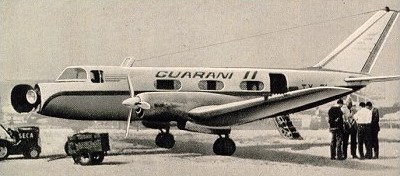
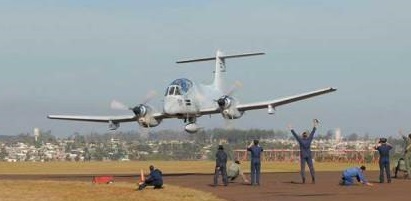
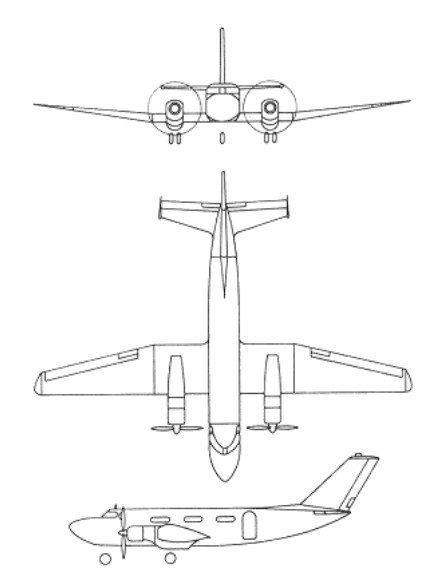
The Guarani I light transport first flew in prototype form on 6 February 1962 and utilised about 20% of the structural components of the IA.35 Huanquero. Power was provided by two 633kW Turbomeca Bastan IIIA turboprop engines. The Guarani II was developed from it and the prototype flew for the first time on 23 April 1963. It was placed in production for the Argentinian Air Force for communications, photographic (with the Military Geographic Institute) and executive transport duties, while the Navy received one as a staff transport. A total of 41 G.IIs were built.
Engines; 2 x Turbomeca Bastan IVA
Wingspan; 19.6 m / 64 ft 4 in
Length; 15.3 m / 50 ft 2 in
Height; 5.6 m / 18 ft 4 in
Wing area; 41.8 sq.m / 449.93 sq ft
Max take-off weight; 6500 kg / 14330 lb
Empty weight; 4000 kg / 8819 lb
Max. speed; 490 km/h / 304 mph
Cruise speed; 485 km/h / 301 mph
Ceiling; 3100 m / 10150 ft
Range w/max.fuel; 2500 km / 1553 miles
Range w/max.payload; 2000 km / 1243 miles
Crew; 1
Passengers; 10-15

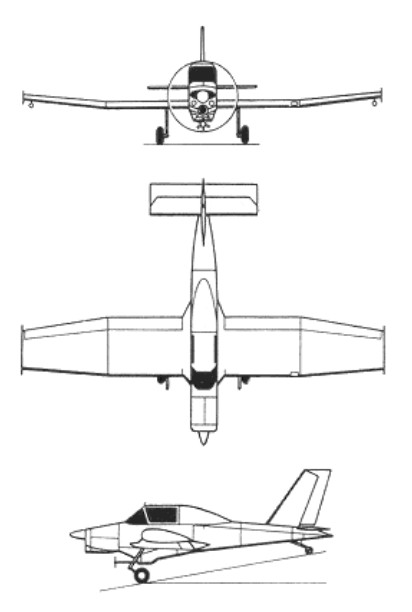
Under DINFIA (Direccion Nacional de Fabricaciones e Investigaciones Aeronauticas) name, design and construction of the IA 46 light aircraft began. Adaptable as a three-seat tourer, the IA 46 Ranquel first flew on 23 December 1957.
A pre-production series of 14 was completed early in 1960, subsequent contracts calling for production of 150.
A development version, the IA 51, flew for the first time on 16 March 1963 and production was initiated. The IA 51 has metal skinning for the wing in place of the fabric of the IA 46, increased flap area, a redesigned rear fuselage, a variable-incidence tailplane, and a 180 hp Lycoming O-360-A1A.
The IA 53 is a derivative of the IA 51 with a nose wheel undercarriage and swept vertical tail.
A quick install and jettisonable 88 ImpG / 400 lt belly tank for agricultural chemicals could be attached.
Model 46 Ranquel
Engine: Lycoming O-320-A2B, 150 hp
Wingspan: 38 ft 1.5 in / 11.62 m
Length: 24 ft 5 in / 7.45 m
Empty weight Tourer: 1390 lb / 630 kg
Empty weight Agricultural: 1520 lb / 690 kg
MTOW Tourer: 2115 lb / 960 kg
MTOW Agricultural: 2555 lb / 1160 kg
Max speed: 112 mph
Max cruise 75%: 83 kt / 96 mph / 155 kph
ROC SL: 530 fpm
Service ceiling: 13,125 ft / 4000 m
Max Range 75%: 351 nm / 405 mi / 650 km
Front seating: 1
Rear seating: 2
IA 51 Super Ranquel
Engine: Lycoming O-360-A2A, 180 hp
Max speed: 119 mph
Max cruise 75%: 109 mph
ROC SL: 710 fpm
Service ceiling: 14,750 ft

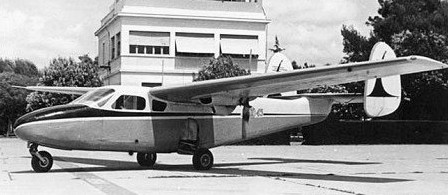
A 1957 twin-engined transport.
IA.45B
Engines; 2 x 180hp Lycoming O-360
Wingspan; 13.75 m / 45 ft 1 in
Length; 8.92 m / 29 ft 3 in
Height; 2.80 m / 9 ft 2 in
Wing area; 19.30 sq.m / 207.74 sq ft
Take-off weight; 1800 kg / 3968 lb
Empty weight; 1170 kg / 2579 lb
Max. speed; 275 km/h / 171 mph
Cruise speed; 245 km/h / 152 mph
Ceiling; 7500 m / 24600 ft
Rate of climb; 420 m/min / 1400 ft/min
Range; 684 km / 425 miles
Crew; 1-2
Passengers; 5
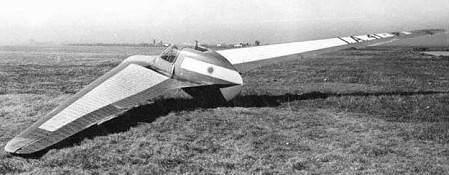
1956
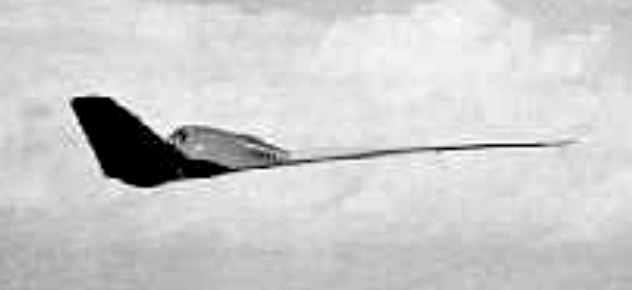
Wingspan; 18.00 m / 59 ft 1 in
Length; 4.40 m / 14 ft 5 in
Height; 1.90 m / 6 ft 3 in
Wing area; 28.00 sq.m / 301.39 sq ft
Length; 4.40 m / 14 ft 5 in
Height; 1.90 m / 6 ft 3 in
Max. speed; 180 km/h / 112 mph
Empty weight; 250 kg / 551 lb
Max. speed; 180 km/h / 112 mph
Crew; 1

