S 24 Kiebitz two-seat trainer won 1931 German Aerobatic Championship flown by Gerd Achgelis, who conducted maiden flight of Fw 44 Stieglitz trainer late summer 1932.
Aircraft
Focke-Wulf F.19 Ente
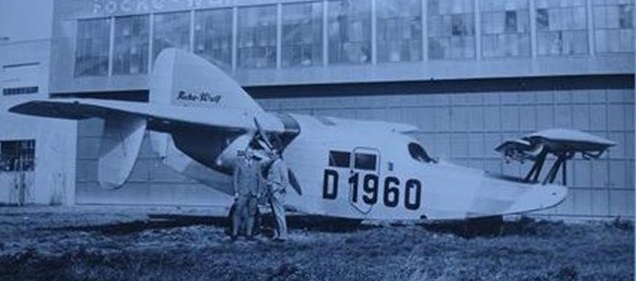
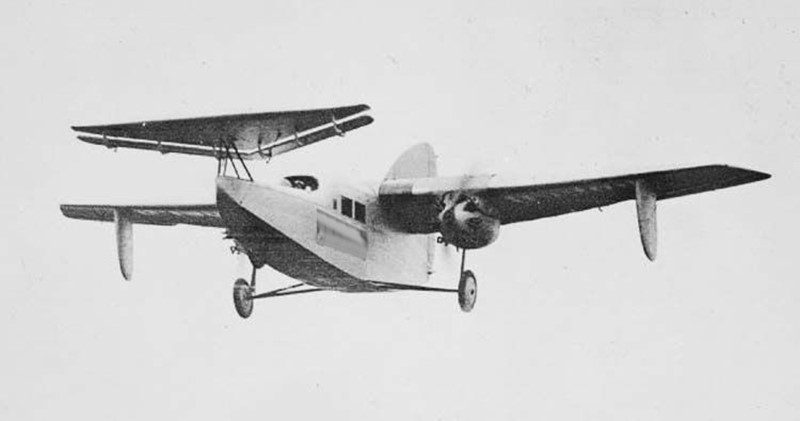
Focke Wulf Flugzeugbau G.m.b.H. built a twin engined canard in 1927. They called it the F.19 Ente, claiming that the tail first configuration gave it ‘exceptional stability and control at low speeds’. Stability and control in slow flight means safety.
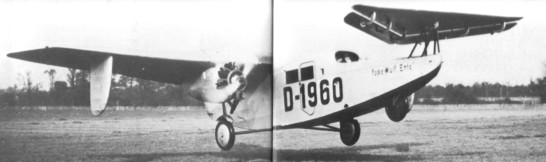
Georg Wulf was killed September 29, 1927 test-flying an F-19 Ente canard.
Focke-Wulf A 38
three-crew/ten-passenger A 38 airliner
Focke-Wulf A 29
The A 29 airliner was powered by a 650 hp BMW Vl.
Focke-Wulf A 17
eight/nine-seat commercial transport
Focke-Wulf A.16
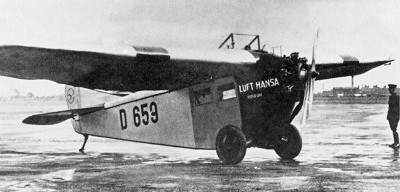
A three/four-seat commercial transport.
Engine; 1 x Siemens Sh.11 7-cylinder radial, 56kW
Wingspan; 13.90 m / 45 ft 7 in
Length; 8.50 m / 27 ft 11 in
Height; 2.30 m / 7 ft 7 in
Max take-off weight; 970 kg / 2138 lb
Max. speed; 135 km/h / 84 mph
Ceiling; 2500 m / 8200 ft
Range; 550 km / 342 miles
Crew; 1
Passengers; 4
Focke-Wulf A 7 Storch
Financial support followed success of A 7 Storch two-seater, flown November 1921.
Focke-Wulf Flugzeugbau GmbH
An association between Heinrich Focke and Georg Wulf was formalized January 1,1924 with formation of Focke-Wulf Flugzeugbau AG. at Bremen. Financial support followed success of A 7 Storch two-seater, flown November 1921.
First company design was A16 three/four-seat commercial transport, followed by the eight/nine-seat A17, the more powerful 650 hp BMW Vl-powered A 29 and the three-crew/ten-passenger A 38 airliners.
In 1931 acquired license to build Cierva C.19 Mk IV autogiro. Focke concentrated on rotary-wing activities, fixed-wing design was entrusted to Kurt Tank, formerly of BFW and of Rohrbach Metallflugzeug GmbH. Albatros Flugzeugwerke GmbH, Berlin, amalgamated with Focke- Wulf. On Focke’s resignation to form Focke-Achgelis, Tank appointed technical director. Reorganized June 1936 as GmbH under control of AEG. Ceased operations 1945, reformed 1951 and combined with Weser Flugzeugbau to form Vereinigte Flugzeugtechnische Werke.
S 24 Kiebitz two-seat trainer won 1931 German Aerobatic Championship flown by Gerd Achgelis, who conducted maiden flight of Fw 44 Stieglitz trainer late summer 1932, widely used by embryo Luftwaffe and in European and South American countries. First Tank design produced in any numbers (approximately 1,000) was Fw 56 Stosser fighter/dive-bomber advanced trainer, followed in 1935 by Fw 58 Weihe communications aircraft/crew trainer and in 1938 by Fw 189 reconnaissance aircraft. Fw 200 Condor airliner flown July 1937, developed into Fw 200C long-range reconnaissance aircraft. With production total of more than 19,000, Fw 190 fighter was the most notable of Focke-Wulf’s designs; after the first flight on June 1,1939, entered squadron service August 1941. High-altitude version, with revised high aspect ratio wing, designated Ta 152.
Focke-Wulf joined VFW in 1964.
Focke-Kolthoff-Wulf A.V / A.IV
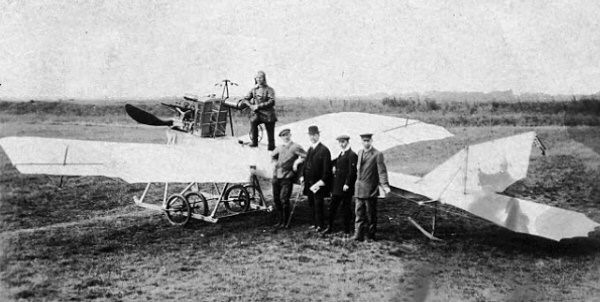
This monoplane with Taube-like wings tips and a big rudder (sometimes identified as the A.V) was built in 1912 in Bremen (Germany). The engine was a 50 hp Argus, and it flew for the first time on July 28th, 1912.
Focke Falk III / A.3
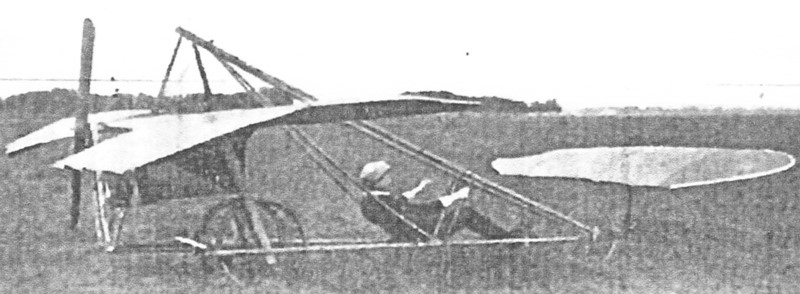
Wilhelm and Henrich Focke were interested in canard types and acquired a German patent in 1908. After two glider models – the “Falk” I and II – Henrich Focke designed and built a powered model identified at the time as the “Falk III” in 1910. Probably later the identifications were changed to Focke A 1, A 2 and A 3 etc. The “Falk III” was powered by a V-2 Neckarsulm engine developing cirka 10 hp driving a pusher propeller. This engine gave all sorts of problems and probably was too weak anyway. The “Falk III” never did leave the ground.

