In 1929 Jos P. Bauer designed the Model A tandem-seat biplane (55hp Velie). This led to Franklin Aircraft, at Franklin, PA. Nine Model A were followed by a Model B.
Aircraft
Franklin Aircraft
USA
The Franklin Aircraft Corporation of Franklin, Pennsylvania (1930-1933) built at least three models of aircraft: the Sport 65 (also known as the A), the Sport 70 (B), and the Sport 90.
In 1929 Jos P. Bauer designed the Model A tandem-seat biplane (55hp Velie). This led to Franklin Aircraft, at Franklin, PA. Nine Model A were followed by a Model B (70hp LeBlond) and six Sport 90s (90hp Lambert), ending in 1933.
Franklin Waco UPF-7 / Jet Waco
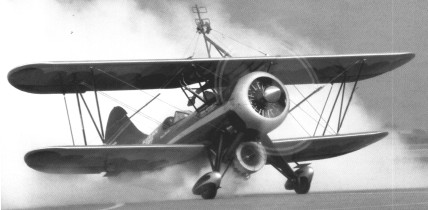
Jimmy Franklin first conceived it, built it, and then flew it. He first debuted the Jet Waco in 1999, and quickly made it one of the air show world’s most popular acts of all time.
The Franklin 1937 UPF-7 Waco bi¬plane that has a conventional radial engine and a 2200-lb-thrust jet unit from a Cessna Citation bolted between the main gear. Warm the Pratt & Whitney R-985 piston engine up well, test the smoke system a few times for good crowd effect, pretend to take off in the normal fashion by pointing the nose into wind up the runway, then give it the gas: full noise but across the runway and straight up.
Jimmy Franklin put his Waco into a routine of loops and rolls, with son Kyle Franklin as wing walker, in pure jaw dropping entertainment. With over 4,500 lbs of thrust and 2,000 horsepower, Jimmy performed stunts that no one has ever attempted in this type of aeroplane.
Franklin PS-2 / Taxaco Eaglet
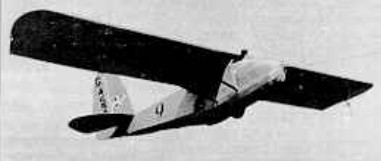
The Franklin PS-2 of the 1930’s won three of the first four U.S. Championships. It gave a start in soaring to notables such as Richard du pont, Warren Eaton, Floyd Sweet, Stan Smith and many others. The designation PS-2 was coined for the intended function of the glider, a primary and a secondary too. The ship has no spoilers, wood/fabric wings, and a steel-tube/fabric fuselage. Several cross-country tow experiments were made with the ship.
The long-wing prototype, the Taxaco Eaglet was towed from California to Elmira by Frank Hawks in 1931. That ship is now at the Smithsonian Air & Space Museum.
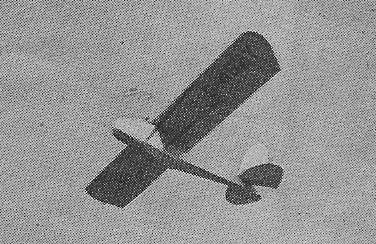
The 1934 Lustig Skytrain experiment had Jack O’Meara, R.E. Franklin and Stan Smith towed nose to tail behind a towplane, starting in New York, dropping a glider in Philadelphia one in Baltimore and ending in Washington.
In a more normal application, Ralph Barnaby directed a U.S. Navy primary flight training experiment in Pensacola, FL using PS-2’s in 1934.
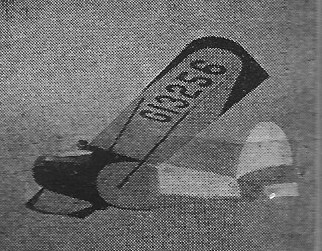
The National Soaring Museum has two examples and another (the last of the 6 acquired for the U.S. Navy experiment) belongs to the National Museum of Naval Aviation at Pensacola, FL.
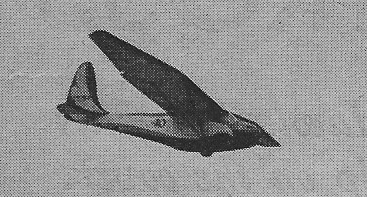
Wing span: 10.98m / 36ft
Wing area: 6.72sq.m / 180sq.ft
Empty Weight: 100kg / 220lb
Payload: 82kg / 180lb
Gross Weight: 182kg / 400lb
Wing Load: 10.88kg/sq.m / 2.2lb/sq.ft
Water Ballast: 0
L/DMax: 15
MinSink: 0.76 m/s / 2.5 fps / 1.48 kt
No. of Seats: 1
Aspect ratio: 7.2
Franke and Erhard Doppel-Eindecker
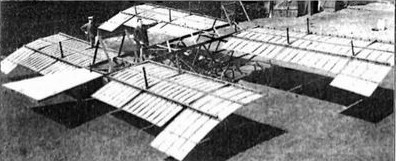
A big tandem monoplane glider, weighing 250 kg and with a wing area of 40 sq.m. It was tested at the Pfaffendorfer Weise outside Halle in 1911, towed by a 20 hp automobile. It would take off at a speed of 25 km/h. During a following flight the towing rope broke and the plane crashed to the ground when it lost speed, breaking all upper rigging wires. After the crash it was abandoned because the two young men could not raise enough money to repair it.
Frank Nieuport 11
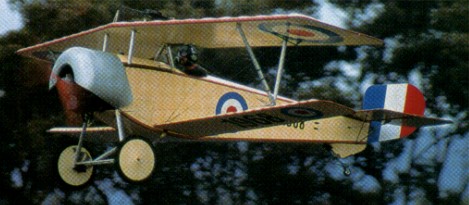
A 75% scale replica of a Nieuport 11 circa 1999. Based in Australia. Built by Peter Frank.
Franchault 1913 monoplane / Franchault-Loctin
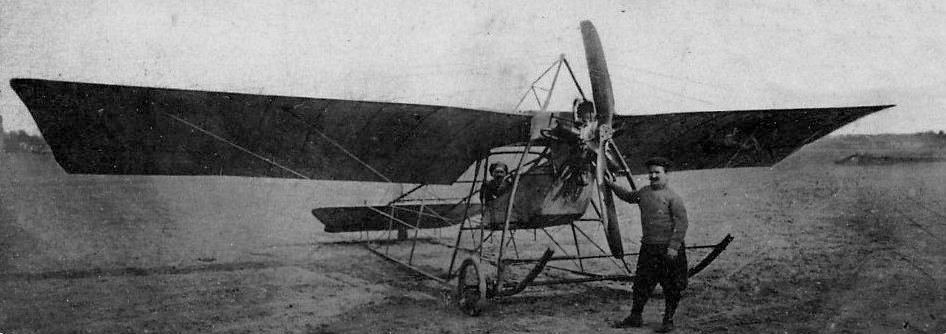
A tractor monoplane with a slight resemblance to the Caudron biplanes, powered by a five-cylinder Anzani. Two high inverted Vs at the front formed the undercarriage and the wing pylons, and the two pilots sat in a short nacelle inbetween. It was flown in France by Loctin in May 1913, and was sometimes referred to as the Franchault-Loctin – Loctin may have been Franchault’s financial partner.
Francis-Angell Special / The Whistler
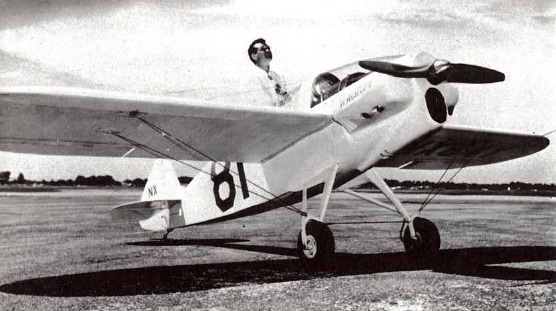
The Francis-Angell Special ‘The Whistler’ was flown in the 1947 Goodyear races by Bill Taylor, Wichita, Kansas.
Franchini & Moncher 1910 biplane
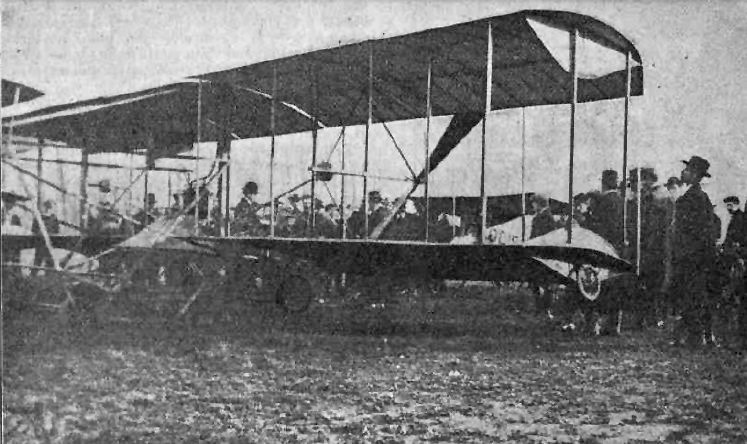
This twin-propeller pusher was built by Guido Moncher and his mechanic Nino Franchini in Italy. The latter made some short flights in it at Milan in January 1910.
Frakes Turbo Cat
A Grumman Ag-Cat conversion.
Engines: P&WAC PT6A-34, 750 hp.
Seats: 1.
Wing loading: 18.52 lb/sq.ft.
Pwr loading: 8.1 lb/hp.
Max TO wt: 6075 lb.
Empty wt: 2807 lb.
Equipped useful load: 3231 lb.
Payload max fuel: 2751 lb.
Hopper cap: 300 USG.
75% cruise: 113 kt.
Working speed: 96 kt.
Working endurance: 2.5 hr.
Stall: 51 kt.
ROC: 2000 fpm.
Min field length: 900 ft.
Fuel cap: 276/480 lb.

