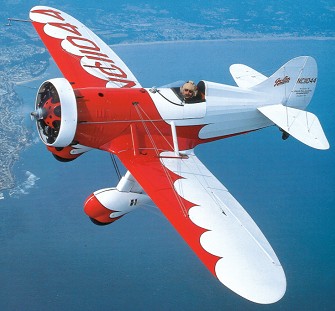
The type certificate for the E Sportster was issued on 2 June 1931 and subsequently five examples were built.
Engine: Warner Scarab, 110 hp.
The type certificate for the E Sportster was issued on 2 June 1931 and subsequently five examples were built.
Engine: Warner Scarab, 110 hp.

The first of the Granville brothers’ Gee Bee racers, of 1930.
Engine: Menasco, 125 hp.
Top speed: 159 mph.
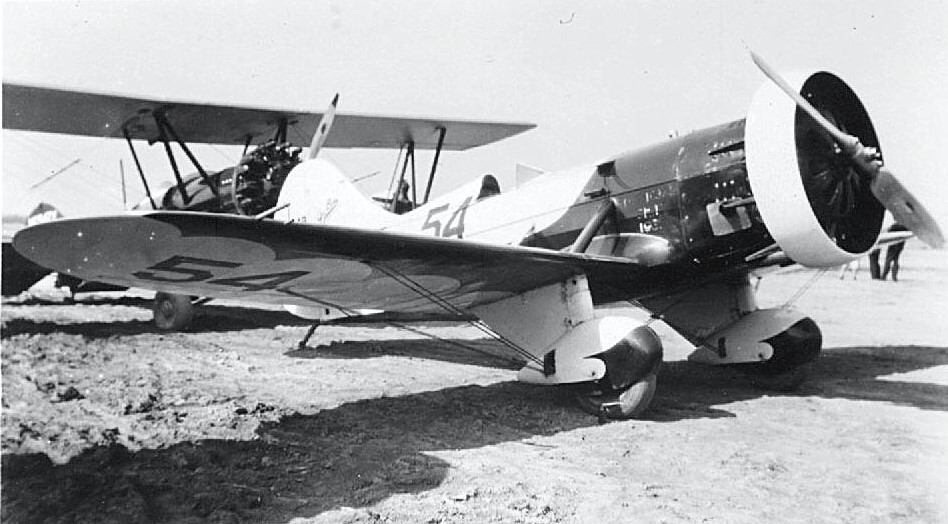
Chief engineer Bob Hall’s “Gee Bee” (for Granville Brothers) racers had dominated the 1931 Nationals. In the Thompson, Hall took a Model Y Senior Sportster to fourth and Lowell Bayles flew a Wasp Jr.-powered Model Z Super Sportster to victory.
2 seat
2 built
X11049 Wasp C engine
X715Y Lycoming
1 seat
8 built
Cirrus 110 hp, 2 built
Menasco C-4, 125 hp 2 built
Warner Scarab, 110 hp 4 built
2 place biplane
Engine: Kinner 12-5, 118 hp
9 built
Based at Springfield, Massachusetts, Granville became known for the 1930-1933 series of Gee Bee racers, first of which came second in the 1930 All-America Air Derby round the U.S.A. In September 1932 Gee Bee R-1 Super Sportster set new world landplane speed record of 294.417mph (473.820kmh).
Liquidated fall of 1933
After liquidation the workforce built the QED for the 1934 England to Australia race, and the ‘Time Flies’ a racer for Frank Hawks.
Company succeeded by Granville, Miller, and de Lackner in 1934. Built Granville R6H Cyclone-engined monoplane for England-Australia race, but aircraft only reached Bucharest.
Skylander was a Desmond Norman’s last project. Intended for rough field work in remote areas, the rights for this twin PT6A turboprop have been bought by GECI of France for further development.
Skylander (provisional)
Engines: Two 1100shp Pratt & Whitney Canada PT6A 65B turboprops.
Span, 71 ft (21.6m).
Length, 47ft 2in (14.38m).
Height, 20ft 1 in (6.lm).
Max take off weight, 18,5001b (8.4 tonnes).
Max payload, 7,2751b (3.3 tonnes)
Cruise speed, 230kt (426km/h).
Range, 1,207nm (2,235km).
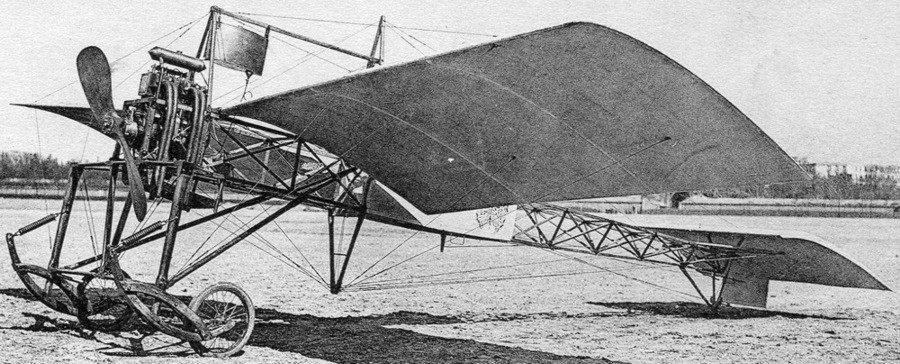
Built in France by Guyot, Bœswillwald et Stahl (G.B.S.), three of these Blériot-like planes with triangular cross-section were entered in the 1910 Tours meeting, but never showed up. Powered by a 40 hp Labor engine.
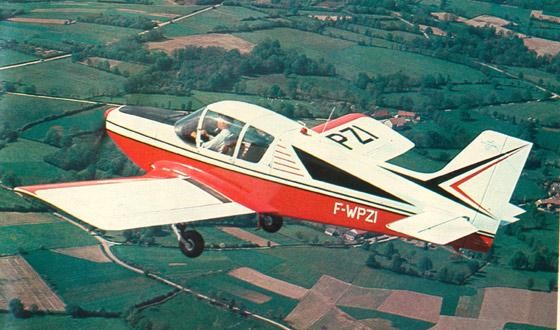
The company produced a 2/3-seat light aircraft, the GV 103L, which first flew on 1 May 1969. Subsequently built a second example with the intention of finding a sponsor for production of the type.
The GV 10-20 was an aerobatic two-seat version with 115 hp Lycoming engine.
The GV 10-31 was a four-seat version.
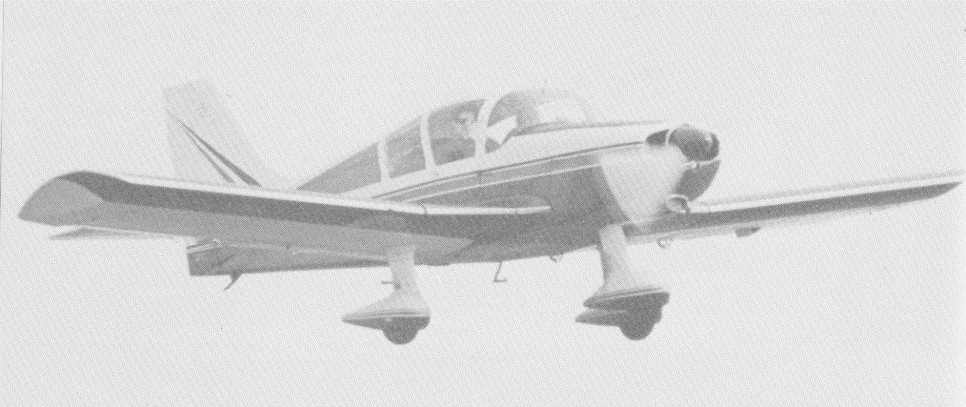
GV 10-31
Engine: Lycoming O-320, 150 hp
Wingspan: 28 ft 8.5 in / 8.75 m
Length: 21 ft 7.75 in / 6.60 m
Empty weight: 1212 lb / 550 kg
MTOW: 2182 lb / 990 kg
Max cruise 75%: 122 kt / 140 mph / 225 kph
ROC SL: 787 fpm / 240 m/min
Service ceiling: 14,760 ft / 4500 m
Range: 594 nm / 683 mi / 1100 km
Seats: 4
Max rear seat load: 340 lb / 154 kg
Baggage: 22 lb / 10 kg
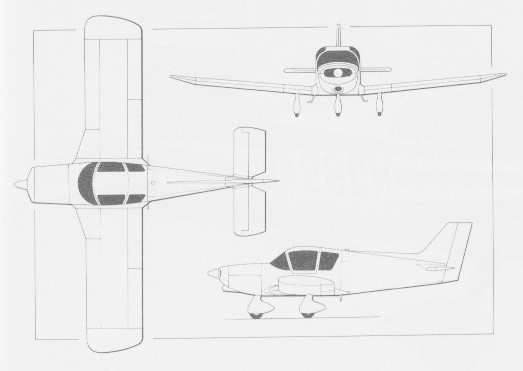
France
Known mainly as light aircraft maintenance company. Gazuit was formerly a designer with Morane-Saulnier, and Valladeau had been a subcontractor for some Wassmer aircraft. The company produced a 2/3-seat light aircraft, the GV 103L, which first flew on May 1,1969. Subsequently built a second example with the intention of finding a sponsor for production of the type, but this did not materialize.

