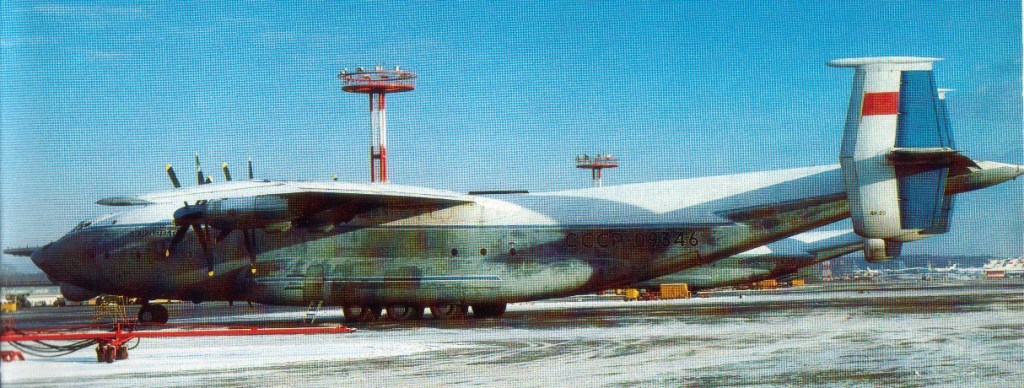
Antonov An-22

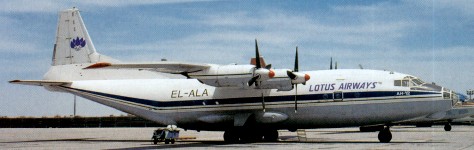
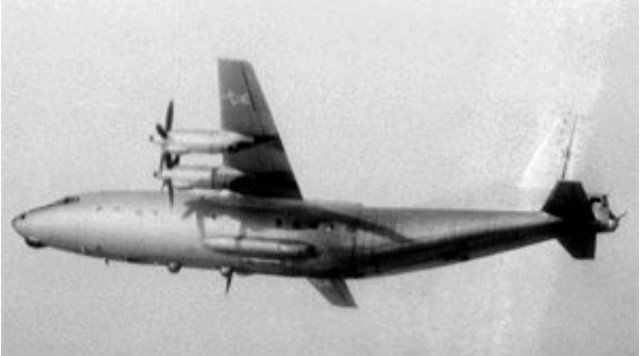
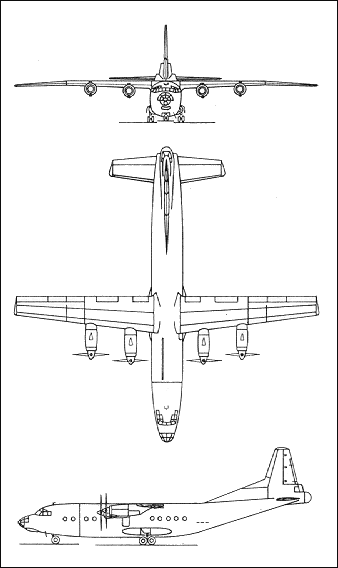
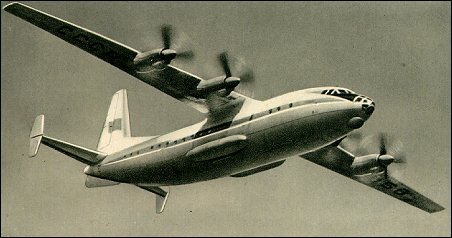
Carrying the NATO reporting name Cock, the An-22 is a very large, long-range heavy transport. The An-22 was the world’s largest aircraft when first flown on 27 February 1965, powered by four Kuznetsov turboprop engines, each driving two contrarotating coaxial propellers.

Antonov An-22 Article

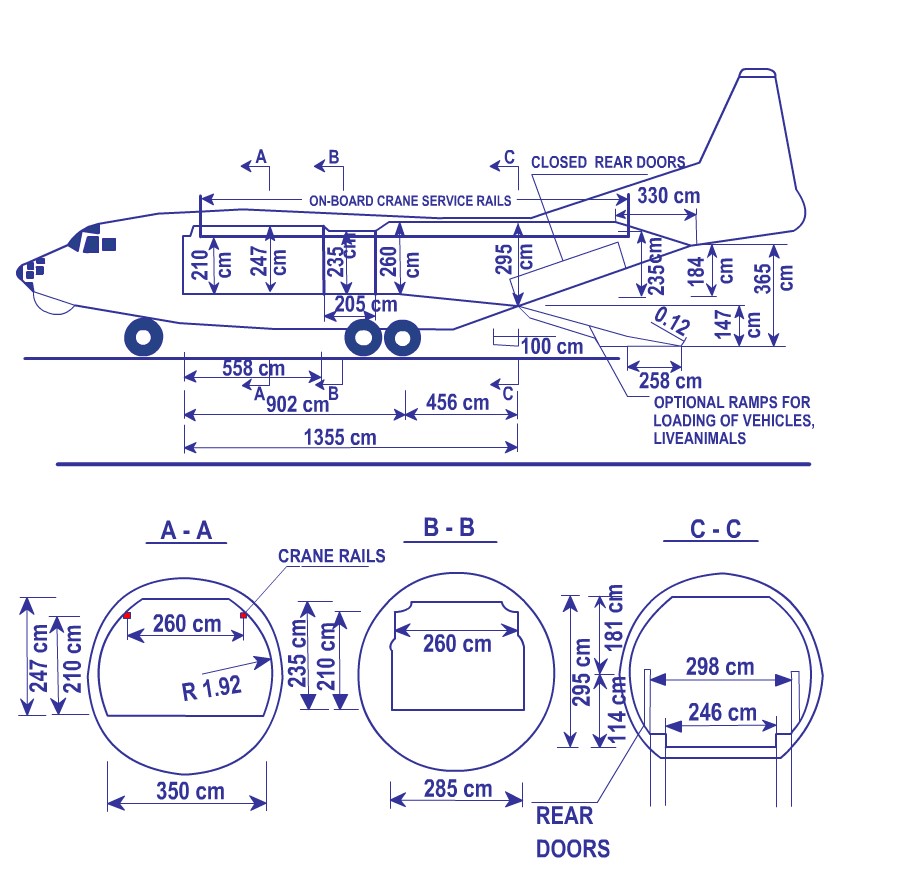
A very heavy freighter for the Soviet Air Force and Aeroflot, it was given a rear loading ramp to provide access to the 26.4m cargo hold, and can carry a payload of up to 176,350 lb (80 000 kg), including Ganef and Scud-A missiles on their tracked launchers.

Entering Soviet service in 1967 all 65 production aircraft were built at the Chakalov factory in Tashkent for the VTA/Soviet Air Force Transport Service, but were available to Aeroflot for charter and so all were painted in Aeroflot colours.

In October 1967 an An-22 established 14 payload-to-height records. With a payload of 100,000kg of metal blocks it reached a height of 7,848m, thereby qualifying also for the intermediate records from 35,000kg. Max payload lifted to a height of 2,000m was 104,444.6 kg. A take-off run of just over one kilometre was reported; the flight duration was 78 minutes.

In 1972 a further series of ten records for speed with payload were set up by Marina Popovich, wife of the Soviet cosmonaut Pavel Popovich. The aircraft averaged a speed of 593.318km/h around a 2,000km closed circuit with a 50,000kg payload, qualifying also for the intermediate records from 30,000kg. In addition the aircraft averaged a speed of 608.449km/h in a flight two days later around a 1,000km circuit with the same payload. The An-22 also holds three further records for speed with payload over a 5,000km circuit, established in 1974 and 1975.

Deliveries to both the Soviet Air Force and Aeroflot were completed during 1974.
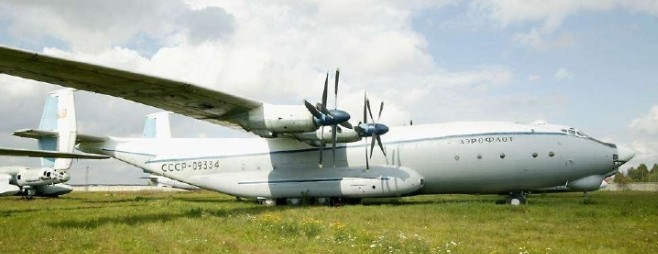
Gallery

Antonov An 22 A Antei
Engines: 4 x Samara / Kusnetsov NK-12MA, 14602 shp
Prop diameter: 6.2 m
Length: 188.025 ft / 57.31 m
Height: 41.142 ft / 12.54 m
Wingspan: 211.286 ft / 64.4 m
Aspect ratio: 12.02
Wing area: 3713.58 sqft / 345.0 sqm
Max take off weight : 496125.0 lb / 225000.0 kg
Weight empty : 261793.0 lb / 118727.0 kg
Max. payload weight : 132300.0 lb / 60000.0 kg
Max. speed : 324 kts / 600 km/h
Landing speed : 130 kts / 240 km/h
Cruising speed : 313 kts / 580 km/h
Take off distance : 4790 ft / 1460 m
Landing distance : 3412 ft / 1040 m
Wing load : 133.66 lb/sq.ft / 652.00 kg/sq.m
Maximum range : 5940 nm / 11000 km
Range (max. weight) : 2700 nm / 5000 km
Crew : 5
Payload : Cabin for 29 Pax, freight hold volume 640cu.m

Antonov An-22M Antei (Cock)
Engines: 4 x KKBM Kuznetsov NK-12MA turboprop, 14602 shp
Prop diameter: 6.2 m
Length: 190.03ft (57.92m)
Wingspan: 211.29ft (64.40m)
Aspect ratio : 12.02
Wing area : 3713.58 sqft / 345.0 sqm
Height: 41.11ft (12.53m)
Maximum Speed: 460mph (740kmh; 400kts)
Landing speed : 130 kts / 240 km/h
Cruising speed : 313 kts / 580 km/h
Maximum range : 5940 nm / 11000 km
Range (max. weight) : 2700 nm / 5000 km
Service Ceiling: 24,606ft (7,500m)
Crew : 5
Weight empty : 261793.0 lb / 118727.0 kg
Maximum Take-Off Weight: 551,156lbs (250,000kg)
Max. payload weight : 132300.0 lb / 60000.0 kg
Payload : Cabin for 29 Pax, freight hold volume 640cu.m
Take off distance : 4790 ft / 1460 m
Landing distance : 3412 ft / 1040 m
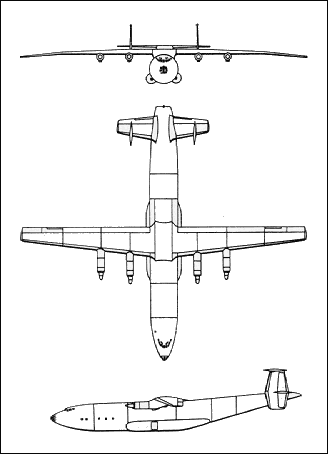
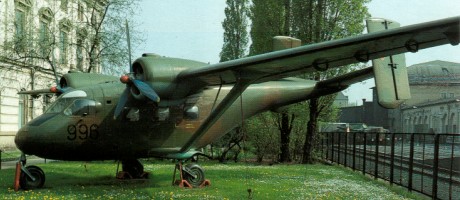
Antonov An-14 Pcheika

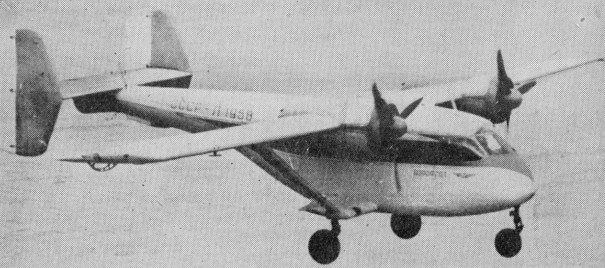
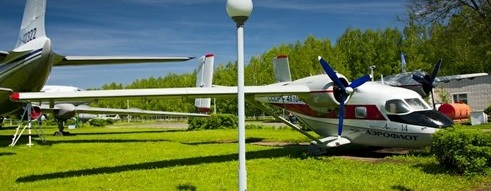
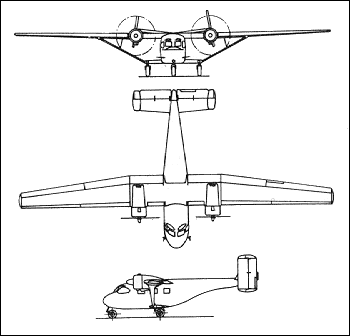
The Antonov designed An 14A Ptchelka (Bee), first flown on March 15, 1958, entered service with Aeroflot as a successor to the An 2 biplane, after five and a half years of flight testing and modification. Production began both for Aeroflot and the Soviet armed forces at the Progress Plant at Arsenyev in 1965 and by the mid-1970s well over 300 aircraft had been delivered. The military version, first seen at the Domodedovo air display in 1967, appeared not to differ from the civilian passenger version externally.

Antonov An-14 Pcheika Article

The An-14A featured an increase in wing span and the introduction of 300 hp AI 14RF engines.

The An-14 was a light transport used for agricultural and air ambulance duties which eventually evolved into the 19-seat An-28, and was produced by PZL Mielec in Poland until at least 1991. It entered service with only one division of Aeroflot, in Khazakistan.

Carrying the NATO reporting name Clod, An-14 were also in service with the air forces of Bulgaria, the German Democratic Republic and Guinea.

The An-14 was withdrawn from LSK service in 1981.

Gallery

An-14A
Engine: 2 x AI-14RF, 220 kW
Wingspan: 21.4 m / 70 ft 3 in
Length: 11.0 m / 36 ft 1 in
Height: 4.2 m / 13 ft 9 in
Wing area: 43.5 sq.m / 468.23 sq ft
Take-off weight: 4410 kg / 9722 lb
Empty weight: 2310 kg / 5093 lb
Payload: 1,323 lb (600 kg)
Max. speed: 350 km/h / 217 mph
Cruise speed: 106 112 mph (170.5 180 km/h)
Ceiling: 5000 m / 16400 ft
Range: 1550 km / 963 miles
Range w/max.fuel: 780 km / 485 miles
Range 1,235 lb (560 kg) payload, 1 hr res: 453 mls (730 km).
Range w/max.payload: 300 km / 186 miles
ROC: 1,020 fpm (5.18 m/sec)
SE ROC: 300 ft/min (1.5 m/sec)
Take off distance: 295 ft (90 m) fully loaded
Landing distance: 361 ft (110 m).
Crew: 1
Passengers: 7-9

Antonov An-12 Cub / Harbin Y-8

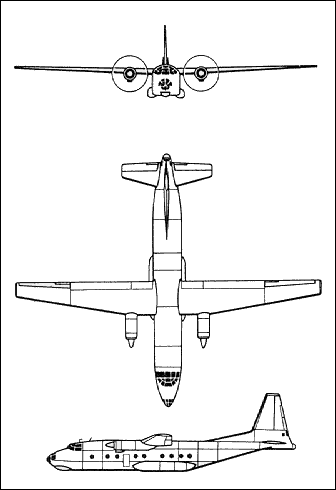
The An-12 (NATO reporting name ‘Cub’) is a military development of the An-10 airliner. The An-12 prototype (7900101) built at Irkutsk, flew first on 16 December 1957 powered by four Kuznetsov NK-4 turboprops of 4,000 horsepower and differs from the An-10 in featuring a more upswept rear fuselage and rear loading ramp, entering service in 1959.

Antonov An-12 Article

Fully pressurised, the An-12 has high performance yet can operate from unpaved surfaces. At least one was fitted with large skis with shallow V planing surfaces equipped with heating (to prevent sticking to ice or snow) and brakes. Nearly all have the tail turret, and under the transparent nose is a weather and mapping radar.
The rear ramp door is made in left and right halves which can be folded upwards inside the fuselage, either for loading heavy freight with the aid of a built-in gantry or for the dispatch of 100 paratroops in less than one minute.
The An 12 BP became the standard Soviet Air Force cargo and paratroop transport since 1960, also being exported for both military and commercial use to the air forces of India, Egypt, Indonesia, Poland, Iraq, Algeria and Bangladesh and to 70 other freight operators.
Powered by four 4,000 ehp (2 985 kW) Al-20K turboprops, standard transport variants of the An-12 have been adapted for EW and ELINT duty with SovAir and SovNavAir. Variants include Cub-A and Cub-B for ELINT role and Cub-C and Cub-P with varying antenna and radomes, to perform passive and active ECM duty.
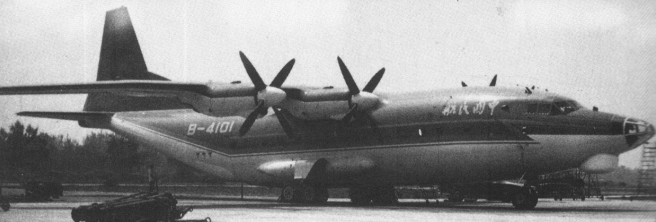
With a max payload of 20,500 kg or up to 4 crew and 90 troops, series production of the An-12 in a number of variants continued until 1973. Around 1,400 were built with AI-20K engines and the type was also produced by Shaanxi Aircraft Company (or Harbin), China as the Yunshuji-8 (Y-8) redesigned transport version and derivatives.

Harbin Y-8

The first Shaanxi Y8, assembled from Russian components, flew in December 1974, the first Chinese-manufactured example following a year later.

About 200 remained in service in civil marks in 1992, including some working as aerial laboratories, with industry and with the WA (Air Force Transport Service) in Aeroflot colours, plus at least 25 An-12BK/PP/PPS “Cub-A/B/C/D” electronic warfare conversions in air forces and Naval Aviation. The An 12 was gradually superseded by the Il 76 with the Soviet forces from 1974.

Gallery

Engines: 4 x Ivchenko Al-20K turboprop, 4,000 ehp (2 985 kW).
Wing span 124 ft 8 in (38 m)
Length 121 ft 4½ in (37 m)
Height 32 ft 3 in (9.83 m)
Empty weight: 61.730 lb (28.000 kg)
Loaded weight: 121.475 lb (55.100 kg)
Payload: 44,090 lb (20,000 kg) of freight or 100 troops.
Maximum speed: 482 mph (777 km/h)
Maximum cruise: 416 mph (670 km/h)
Maxi¬mum rate of climb: 1970 ft (600 m)/min
Service ceiling: 33,500 ft (10200 m)
Range with full payload: 2,236 miles (3600 km).
Armament: powered tail turret with two 23 mm NR-23 cannon.

Engine: 4 x turbo-prop AI-20, 3125 kW
Take-off weight: 54000-61000 kg / 119050 – 134483 lb
Empty weight: 30500 kg / 67241 lb
Wingspan: 38.0 m / 124 ft 8 in
Length: 37.0 m / 121 ft 5 in
Height: 9.8 m / 32 ft 2 in
Wing area: 121.7 sq.m / 1309.97 sq ft
Max. speed: 640 km/h / 398 mph
Cruise speed: 600 km/h / 373 mph
Ceiling: 10000 m / 32800 ft
Range: 5500 km / 3418 miles
Crew: 6
Passengers: 130
Armament: 2 x 23mm machine-guns

An-12BK (Cub)
Engines: 4 x ZMDB Progress (Ivchenko) AI-20M turboprop, 4,252eshp
Length: 108.60ft (33.1m)
Wingspan: 124.67ft (38.00m)
Height: 34.55ft (10.53m)
Maximum Take-Off Weight: 134,482lbs (61,000kg)
Maximum Speed: 300mph (482kmh; 260kts)
Maximum Range: 2,237miles (3,600km)
Service Ceiling: 34,449ft (10,500m)
Armament: Some with tail-mounted 2 x 23mm cannons
Crew: 4 or 5

An-12BP
Powerplants: – Four 2985kW (4000ehp) Ivchenko Al-20K turboprops
Wing span 38.00m (124ft 8in)
Length 33.10m (108ft 7in)
Height 10.53m (34ft 7in)
Wing area 121.7sq.m (131.0sq ft).
Empty weight 28,000kg (61,728lb)
MTOW 61,000kg (134,480lb).
Max Landing Weight: 58,000kg 127,870lb
Max Zero Fuel Weight: 48,000kg 105,790lb
Structural Payload: 44,090kg 20,000lb
Fuel Capacity: 21,000kg 46,295lb
Max speed 777km/h (420kt)
Max cruising speed 670km/h (360kt)
Max initial rate of climb 1970ft/min
Service ceiling 33,465ft
Takeoff run MTOW 700m (2296ft)
Range max fuel 5700km (3075nm)
Range max payload 3600km (1940nm).
Accommodation: Flightcrew of two pilots, flight engineer, navigator (in glazed nose) and radio operator, plus loadmasters.
Main Deck Useable Volume: 97m3 285ft3 4in3
Cargo Area Width: 3.5m 11ft 5in
Cargo Area Height: 2.6m 8ft 6in
Main Cargo Door Width: 2.95m 9ft 8in
Main Cargo Door Height: 2.6m 8ft 6in

Antonov An-10 Ukrania

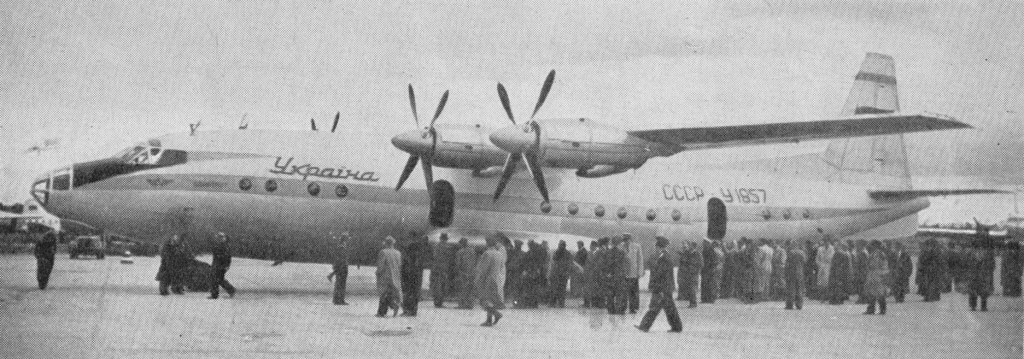
Design of the An-10 airliner began in November 1955 and the prototype (named Ukraina) first flew on 4 July 1957,
The An-10 was the initial version with accommodation for 84 passengers and a room at the rear. It entered service in July 1959 on routes from Simferopol to Moscow and Kiev. The An-10A developed version had a 2m longer fuselage and accommodated 100 to 130 passengers. It entered service in February 1960. An-10A also operated on skis in the far north of the Soviet Union.
No An-10/10A were exported and Aeroflot withdrew the airliners in 1973 after a series of crashes. 104 were built.

Both versions had the NATO reporting name Cat.
From this was derived the An 12 military and civil freighter, with redesigned rear fuselage incorporating a cargo loading and air drop ramp. The An 10, accommodating from 84 to 130 passengers, was designed as a bulk passenger carrier for remote and under developed regions of Russia.

Gallery

Engine: 4 x turbo prop AI-20K, 2940 kW
Take-off weight: 55000 kg / 121255 lb
Empty weight: 30500 kg / 67241 lb
Wingspan: 38.0 m / 124 ft 8 in
Length: 37.0 m / 121 ft 5 in
Height: 9.8 m / 32 ft 2 in
Wing area: 120.0 sq.m / 1291.67 sq ft
Max. speed: 725 km/h / 451 mph
Cruise speed: 660 km/h / 410 mph
Ceiling: 10000 m / 32800 ft
Range w/max.fuel: 4000 km / 2486 miles
Range w/max.payload: 1200 km / 746 miles
Crew: 5
Passengers: 100-132

Antonov An-8

The An-8 military and civil transport aircraft was designed for the Soviet Air Force and Aeroflot. Both aircraft carried the NATO reporting name Camp. First flown in February 1955, the prototype military An-8 was exhibited at Tushino in 1956, powered by two 3,800kW Kuznetsov turboprop engines and with a cannon in a tail turret. 151 were built in several versions.

Antonov An-8 Article

Engine: 2 x turbo-prop Kuznetsov AI-20D, 3810 kW
Take-off weight: 43400 kg / 95681 lb
Empty weight: 24400 kg / 53793 lb
Wingspan: 37.0 m / 121 ft 5 in
Length: 30.7 m / 100 ft 9 in
Wing area: 117.2 sq.m / 1261.53 sq ft
Max. speed: 520 km/h / 323 mph
Cruise speed: 450 km/h / 280 mph
Ceiling: 9600 m / 31500 ft
Range w/max.fuel: 3900 km / 2423 miles
Range w/max.payload: 1000 km / 621 miles
Armament: 2 x 23mm machine-guns
Crew: 6
Passengers: 70

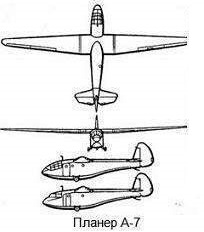
Antonov A-7

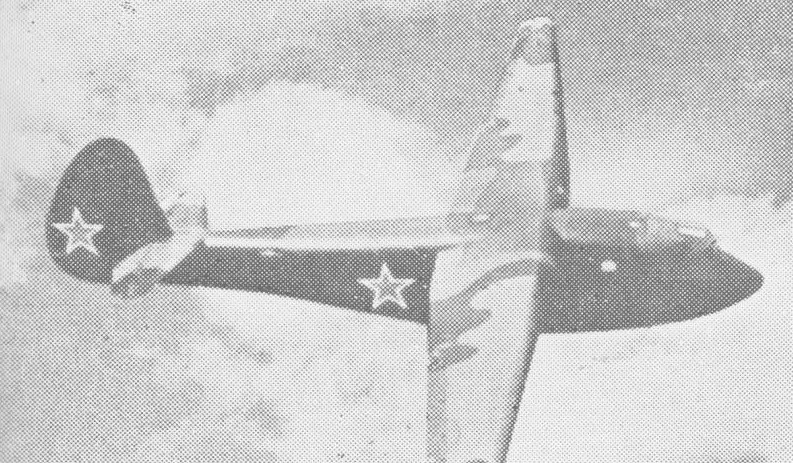
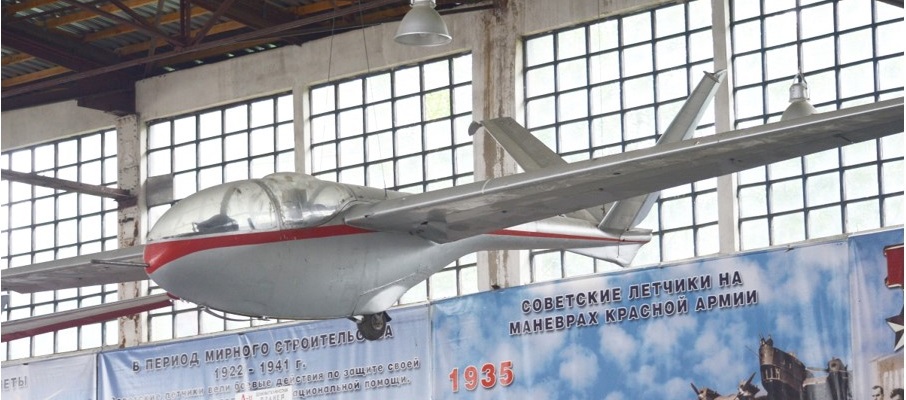
The Antonov A-7 won a design competition held in December 1940 for a “partisan transport glider.

In September 1941 the Germans were approaching Voronezh, but even under these circumstances the aviation factory continued to deliver Il-2 assault aircraft to the front. At the beginning of September 1941, the decision was made to evacuate Factory No. 18 and OKB-31 led by Moscaliov.

The new production base was established in the Siberian village of Zavodoukovsk, located in the Tyumen Oblast, where a new factory was organized that was numbered 499. AS Moscaliov was selected as director and main constructor.

Some time later the factory began to deliver the Antonov A-7 7-seater landing glider productions and a little later the A-2 training gliders, from the same manufacturer.

Some 400 were built.

Wingspan: 62 ft 3 in
Length: 37 ft 9 in

Antonov A-15 Flying Limousine

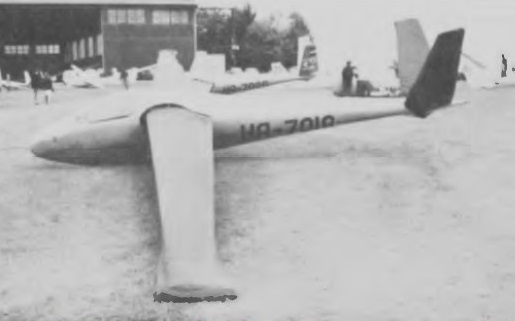
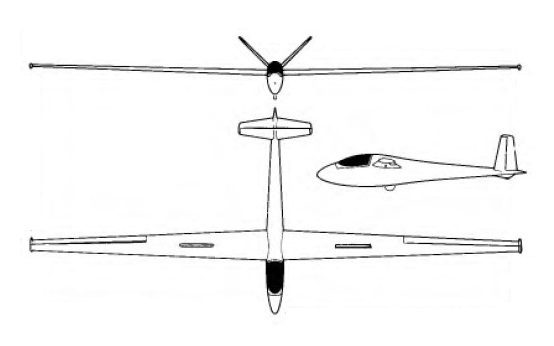
The single-seater A-15 is a high-performance Open Class design of all-metal construction like the A-11 and A-13 but considerably more refined than these earlier types, and capable of aerobatics, spinning and cloud flying. The prototype first flew on 26 March 1960 and the A-15 soon set up a number of records, including the World goal flight distance record of 443 miles / 714.023km in June 1960.

The mid-set wing has a single aluminium main spar of box section, and there is a 50 litre (13.2gal) water ballast tank built into the wing; wing covering is all-metal. The light alloy ailerons and Fowler flaps have plastic foam filling between the ribs, and there are lift spoilers on the wing upper surfaces. Small end-plate fairings called ‘salmons’ can be fitted on the wing tips. The fuselage is a light alloy semi-monocoque structure and the sideways-opening blown plastic canopy opens to starboard. The pilot’s back-rest and rudder pedals are adjustable, and there is provision for oxygen and radio. Landing gear consists of a retractable sprung monowheel with brake. The cantilever butterfly tail has an included angle of 90° between the tail surfaces; the tailplanes are of light alloy and the elevators of mixed alloy and wood construction with fabric covering.

Wing span: 17 m / 55 ft 9in
Length: 7.2 m / 23 ft 5 in
Wing area: 12.3 sq.m / 132 sq.ft
Empty Weight: 300 kg / 661 lb
Gross Weight: 380 kg/ 838 lb
Wing Load: 30.89 kg/sq.m / 6.32 lb/sq.ft
Water Ballast: 50 kg / 110 lb
Aspect ratio: 24
Airfoil: NACA 64s618/633616
Max speed: 155mph / 135 kt / 250 km/h (in smooth air)
Max aero-tow speed: 87mph
Max rough air speed: 135 kt / 250 km/h
Stalling speed 29.5 kt / 55 km/h
MinSink @ 48.5kt (90kph): 0.63m (2.07ft)/sec
Best glide ratio: 40:1 at 62 mph / 54 kt / 100 km/h
Structure: Aluminium Alloy
Seats: 1
No. Built: 350

Antonov A–13

Antonov A13-M

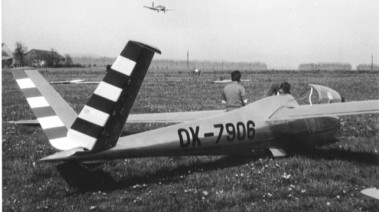
Developed in parallel with the Antonov A-11, and making its first flight exactly a week before the latter, the A-13 utilises the same fuselage, undercarriage and tail unit as the A-11 married to a shorter span (39 ft 8.5 in) wing of lower aspect ratio for aerobatic training. This wing is very similar in construction to the A-11’s, with a single spar in the root and two spars in the outer wings, and fabric covering aft of the main spar, but flaps are not fitted and the fabriccovered ailerons are not slotted. There are lift spoilers in the upper surfaces. The shorter span wing results in a higher wing loading of 7.07lb/sq ft and a much higher minimum sinking speed of 3.74ft/sec.

Altogether about 350 examples of the A-11 and A-13 were built.

Lyulka has produced the small TS-31M turbojet, which weighing only 51 lb (23 kg) and affording a thrust of 121 lb (55 kgp), is used by the Antonov A13 powered glider.

A-13
Span: 39 ft 8.5 in
Length: 19 ft 8.5 in
Wing area: 112.4 sq.ft
Aspect ratio: 13.8
Empty weight: 560 lb
Max take-off weight: 794 lb
Max speed: 217 mph (in smooth air)
Max aero-tow speed: 124 mph
Min sinking speed: 3.74 ft/sec at 60 mph
Best glide ratio: 25:1 at 70 mph

A13-M
Crew: one pilot
Length: 6.4 m (21 ft 0 in)
Wingspan: 12.1 m (39 ft 8 in)
Height: 1.6 m (5 ft 3 in)
Wing area: 10.4 sq.m (112 sq.ft)
Aspect ratio: 14:1
Empty weight: 270 kg (600 lb)
Gross weight: 360 kg (800 lb)
Maximum speed: 400 km/h (250 mph)
Maximum glide ratio: 25:1
Rate of sink: 1.1 m/s (220 ft/min)

Antonov A–11

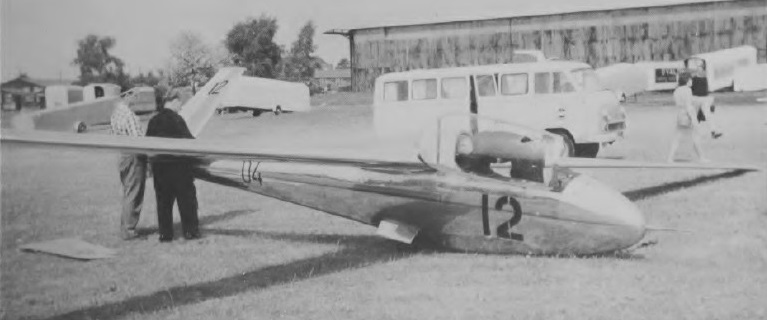
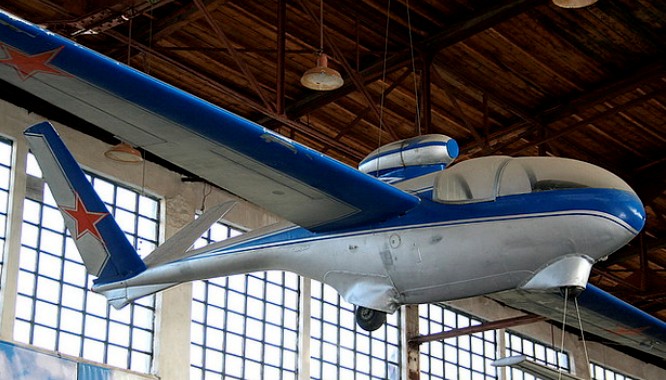
The A-11, which first flew in prototype form on 12 May 1958, is a high-performance single-seater which of all-metal construction. The steamlined forward fuselage, housing the pilot under a blown plastic canopy, tapers to a slim boom carrying the cantilever butterfly tail, with an included angle of 90 degrees between the tail surfaces.

The A-11 is aerobatic and suitable for both spinning and cloud flying, and the mid-set wing has a single spar in the root and two spars in the outer wings. The leading edge is metal-covered, with fabric covering aft of the main spar. The fabric covered slotted ailerons can be drooped through 8 degrees to supplement the slotted flaps, and there are also lift spoilers on the wing upper surfaces. The monocoque fuselage has a retractable sprung monowheel and a rubber-mounted tailskid.

Altogether about 350 examples of the A-11 and A-13 were built.

A- 11
Span: 54 ft 1.5 in
Length: 19 ft 8.5 in
Wing area: 130.8 sq.ft
Aspect ratio: 22.4
Empty weight: 648 lb
Max take-off weight: 882 1b
Max speed: 217 mph (in smooth air)
Max aero-tow speed: 124 mph
Min sinking speed: 2.43 ft/sec at 53.5 mph
Best glide ratio: 32:1 at 60 mph