Arado Ar.196

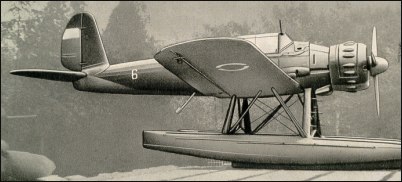
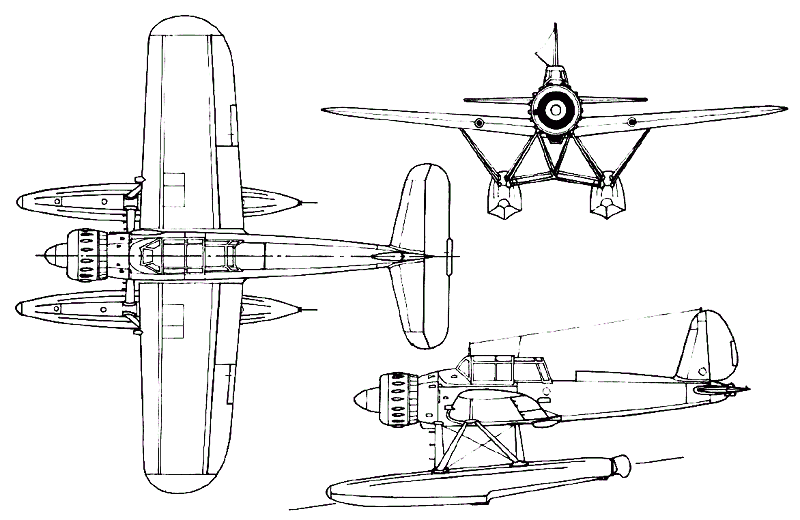
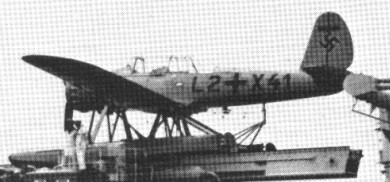
A development of the Ar.95, the Ar 196 was designed to replace the Heinkel He 60 floatplane aboard the warships as a shipboard catapult-launched reconnaissance floatplane (with a secondary role as a coastal patrol platform). Arado submitted their design consisting of a two-seat monoplane with all-metal skin and after an evaluation period, the Arado design was selected with development beginning in 1937.

The first prototype flew in 1938. The development, which produced four prototypes, tested two arrangements of floats. One prototype was fitted with a centerline float and two outboard floats whilst the remaining three utilized the more traditional twin pontoon floats each situated under their respective wing.

Following a number of pre-production aircraft, production proper began with twenty Ar.196A-1, which were delivered from mid-1939. Production continued with A-2 to A-5 versions and a few modified single-float Ar.196B.

The Ar 196 was constructed as two production series separated by classification role. The “shipboard” Ar 196 series was designed for catapulting from German warships. This series was comprised of the A-1 and A-4 models. The “coastal” Ar 196 variant operations involved taking off and returning to their respective port areas. This production series comprised of the A-2 and A-3 models. An A-5 model was later offered that featured improved radio equipment and twin 7.92mm machine guns for the radio operator in the rear cockpit. Basic armament consisted of varying quantities of 20mm cannons and 7.92mm machine guns. The Ar 196 could field two 110lb bombs in the strike role.
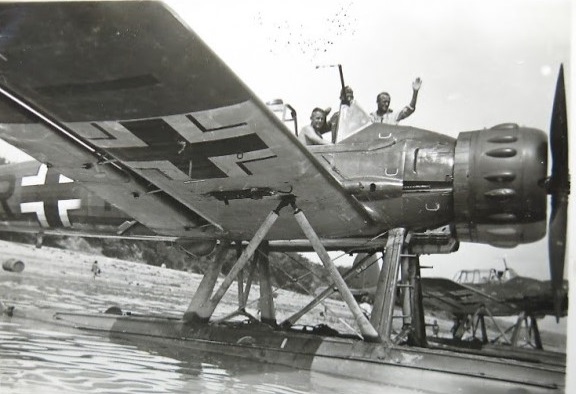
Ar.196 seaplanes were operational with the German Navy in reconnaissance, patrol and anti-submarine roles throughout World War II and were for many years the standard catapult sea-plane of the Navy, up to four being carried on board some battleships. The aircraft was eventually deployed on German warships that included the Deutschland, the Admiral Scheer, the Admiral Hipper and the Leipzig. This floatplane was in use with Bulgaria and Romania.

About 435 were built.

Gallery

Ar 196A fication
Engine: 1 x BMW 132K, 705kW
Take-off weight: 3600 kg / 7937 lb
Empty weight: 1265 kg / 2789 lb
Wingspan: 12.4 m / 40 ft 8 in
Length: 11.0 m / 36 ft 1 in
Height: 4.5 m / 14 ft 9 in
Wing area: 28.3 sq.m / 304.62 sq ft
Max. speed: 315 km/h / 196 mph
Cruise speed: 268 km/h / 167 mph
Ceiling: 6600 m / 21650 ft
Range w/max.fuel: 1080 km / 671 miles
Range w/max.payload: 820 km / 510 miles
Crew: 2
Armament: 2-3 machine-guns, cannon, 100kg of bombs
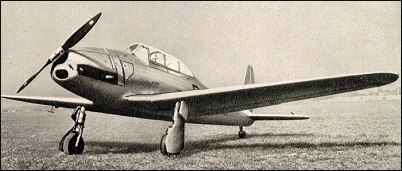
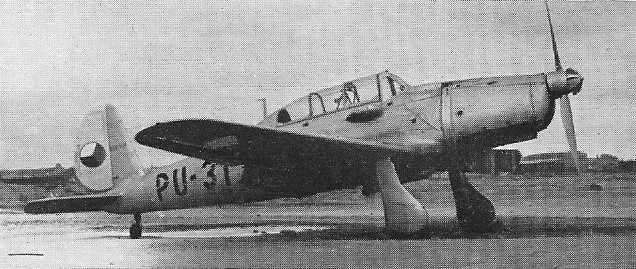
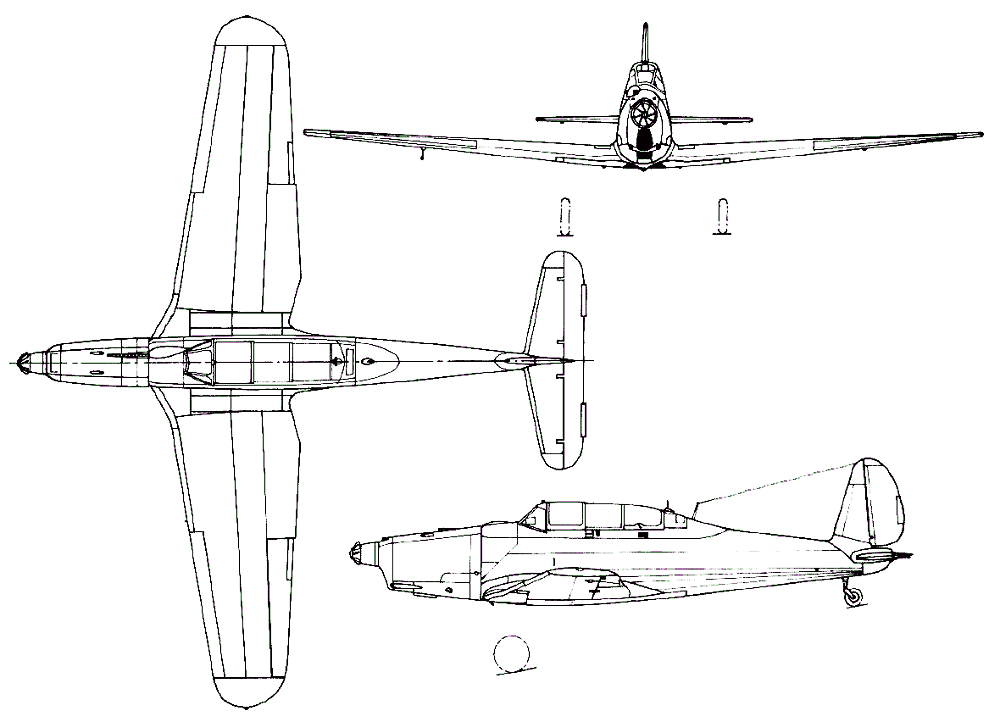
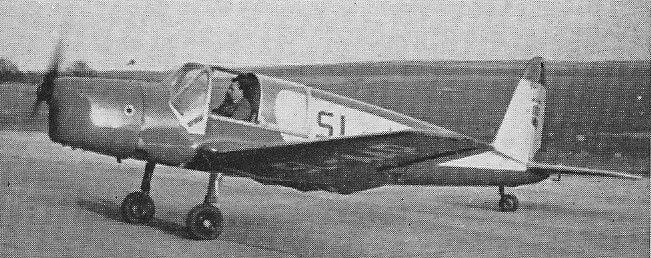
Arado Ar.96 / Avia C.2 / Letov C.2

A 1936 tandem two-seat monoplane trainer with retractable landing gear. Powered by one 335kW Argus As.410A engine on Ar.96B production aircraft built from 1940 (prototype had one 179kW Argus As.10C). The Ar.199 was a development of the design.

During the war years, production was transferred to Letov and Avia in Czechoslovakia where manufacturing continued until the end of 1948 as C.2B-1. Letov built the Arado Ar-96B trainer as the C-2A (back designation for wartime production Ar-96 for Luftwaffe), and C-2B (Arado Ar-96B produced for Czech Air Force).

Avia C.2-1

The C.2B-1 was a standard basic trainer in the Czechoslovak Air Force and National Security Guard.

Engine: 1 x As 410A, 340kW
Wingspan: 11.0 m / 36 ft 1 in
Length: 9.1 m / 29 ft 10 in
Height: 2.6 m / 8 ft 6 in
Wing area: 17.1 sq.m / 184.06 sq ft
Take-off weight: 1750 kg / 3858 lb
Empty weight: 530 kg / 1168 lb
Max. speed: 330 km/h / 205 mph
Cruise speed: 275 km/h / 171 mph
Ceiling: 7000 m / 22950 ft
Range w/max.fuel: 990 km / 615 miles
Crew: 2
Armament: 1-2 machine-guns

Ar 96B / Avia C.2B-1
Engine: Argus As 410A, 465 hp
Wingspan: 35 ft 11.5 in
Wing area: 186.22 sq.ft
Length: 29 ft 11.25 in
Height: 8 ft 6 in
Empty weight: 2854 lb
Loaded weight: 3747 lb
Max speed: 219 mph
Cruise: 175 mph
Range: 428 mi

Arado Ar.80

Single-seat fighter, a monoplane with open cockpit and fixed landing gear. Production aircraft would have had retractable landing gear. The Ar 80 had a disappointing performance, and the Luftwaffe preferred the Bf 109. Entirely metal construction, six were built: 3 prototypes and 3 production aircraft.

Ar 80-V1:
Engine: Argus Ace 10C, 240 hp
Propeller: two-blade
Wingspan: 10,88 m
Length: 10,30 m
Height: 2,65 m
Empty weight: 1642 kg
MTOW: 2125 kg
Max speed: 349 Kmh
Ceiling: 10000 m
Range: 800 Km
Seats: 1

Ar 80-V2:
Engine RR Kestrel, 695 hp
Propeller: two-blade
Wingspan: 10,88 m
Length: 10,30 m
Height: 2,65 m
Empty weight: 1642 kg
MTOW: 2125 kg
Max speed: 349 Kmh
Ceiling: 10000 m
Range: 800 Km
Seats: 1

Ar 80-V3:
Engine: Junkers Jumo 210C, 640 hp
Propeller: two-blade
Wingspan: 10,88 m
Length: 10,30 m
Height: 2,65 m
Empty weight: 1642 kg
MTOW: 2125 kg
Max speed: 349 Kmh
Ceiling: 10000 m
Range: 800 Km
Seats: 2

Arado Ar.79

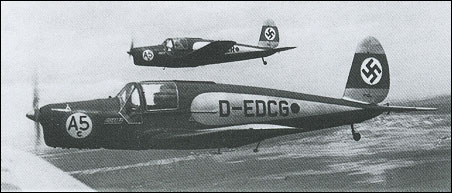
Designed as an aerobatic two-seat training and touring aircraft, the Arado Ar 79 first appeared in 1938, powered by a 78kW Hirth HM 504A-2 engine. The forward fuselage was of welded steel-tube construction, the rear section being a monocoque structure. The wings were of single-spar wooden construction with plywood and fabric covering: The aircraft featured retractable tail-wheel landing gear, the main wheels retracting sideways and inwards into the wing centre section.

Ar 79B

Ar 79s set a number of international class speed records during 1938, including solo 1000km at 229.04km/h on 15 July, and solo 2000km at 227.029km/h on 29 July. Later that year an Ar 79 was prepared for an attempt on the long-distance record, a jettisonable 106-litre fuel tank being fitted under the fuselage and a 520-litre tank at the rear of the cabin. Pilots Oberleutnant Pulkowski and Leutnant Jennett ferried the aircraft from Brandenberg to Benghazi in Libya, the starting point for what was to be a 6303km non-stop flight to Gaya, India, accomplished between 29 and 31 December at an average speed of 160km/h.

Engine: Hirth HM 504A-2, 105 hp
Propeller: two-blade fixed pitch
Wingspan: 10,00 m
Length: 7,62 m
Height: 1,87 m
Wingarea: 14 sq.m
Empty weight: 460 kg
MTOW: 760 kg
Max speed: 230 Kmh
Cruise: 205 Kmh
Ceiling: 5500 m
Range: 1025 Km

Ar 79B
Engine: Hirth H.M.500-A1, 105 hp
Wingspan: 32 ft 9.5 in
Length: 25 ft
Height: 6 ft 10.4 in
Empty weight: 1014 lb
Loaded weight: 1675 lb
Max speed: 143 mph at SL
Cruise: 127 mph
Range: 636 mi
ROC: 1020 fpm

Aquafugh Aqua / W-6

Aqua I

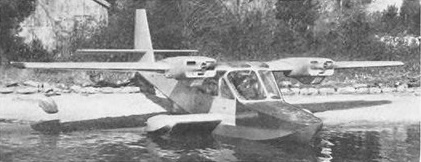
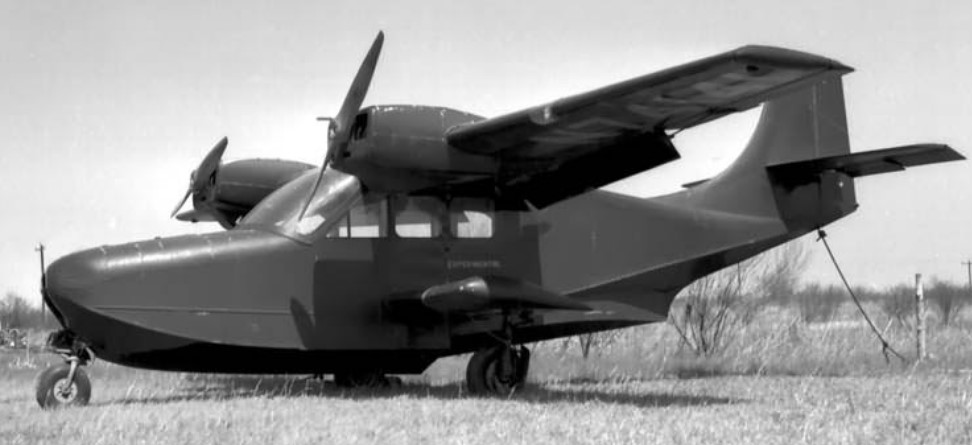
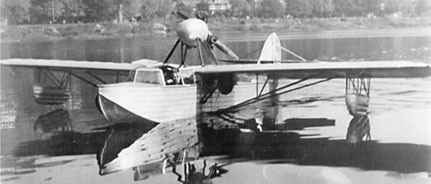
The Aqua was an original design developed by Aquaflight, Inc, a company founded in 1946 by Meredith C. Wardle. The type was only produced in prototype form and possibly the prototype was flown in two versions.

The W-6 Aqua I was the first version, a 4-6 seat utility flying boat which had two 125 hp Lycoming O-290-A series engines. Registered NX74141 it made the first flight during 1946 and was extensively tested at the Philadelphia Seaplane Base. Aqua I had an all metal fuselage, with a wooden hull and had a claimed cruise of 125 mph.

The W-6A Aqua II was possibly modified from the Aqua I, and had several major changes such as re-contoured nose section, a modified vertical tail and fin assembly and a tricycle landing gear, making it an amphibious flying boat. The Aqua II was powered by two 225 hp Lycoming O-435 engines and it made the first flight in 1949. No further work on either the Aqua I or II was undertaken.

Reports that later the boat hull of the Aqua II was used in the homebuilt Collins W-7 Dipper are incorrect.

The Aqua II was tested as landplane also.

W-6A Aqua II

W-6 Aqua I
Engines: 2 x Lycoming O-290, 125 hp (93 kW)
Wingspan: 36 ft 6 in (11.13 m)
Wing area: 215 sq ft (20.0 m2)
Airfoil: NACA 23012-16
Height (on land): 12 ft 0 in (3.66 m)
Length: 29 ft 6 in (8.99 m)
Empty weight: 2,200 lb (998 kg)
Gross weight: 3,600 lb (1,633 kg)
Fuel capacity: 100 US gal (83 imp gal; 380 L)
Max speed: 135 mph (217 kmh)
Cruise speed: 125 mph (201 km/h, 109 kn)
Stall speed: 40 mph (64 km/h, 35 kn) (half load)
Rate of climb: 1,250 ft/min (6.4 m/s)
Crew: one pilot
Capacity: 5 passengers

W-6A Aqua II
Engines: 2 x Lycoming O-360, 125 hp (93 kW)

Applegate Duck

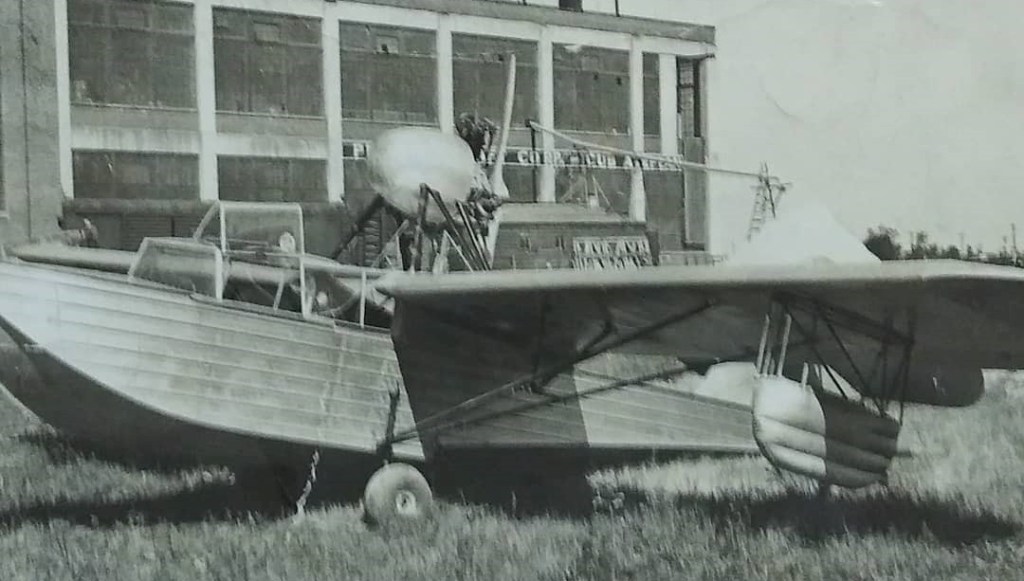
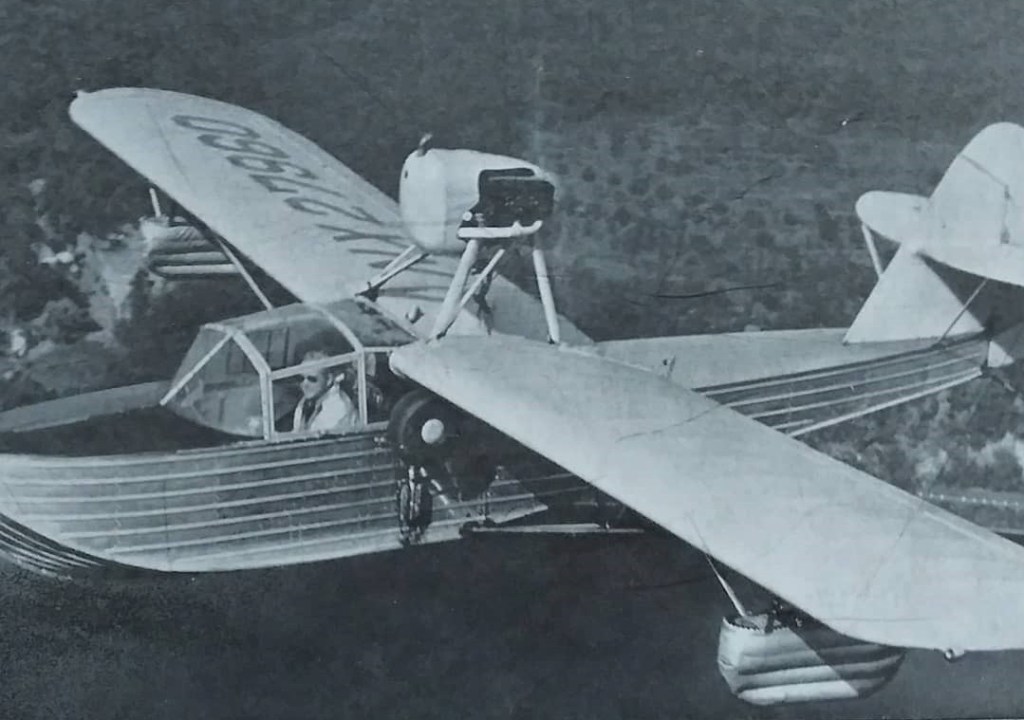
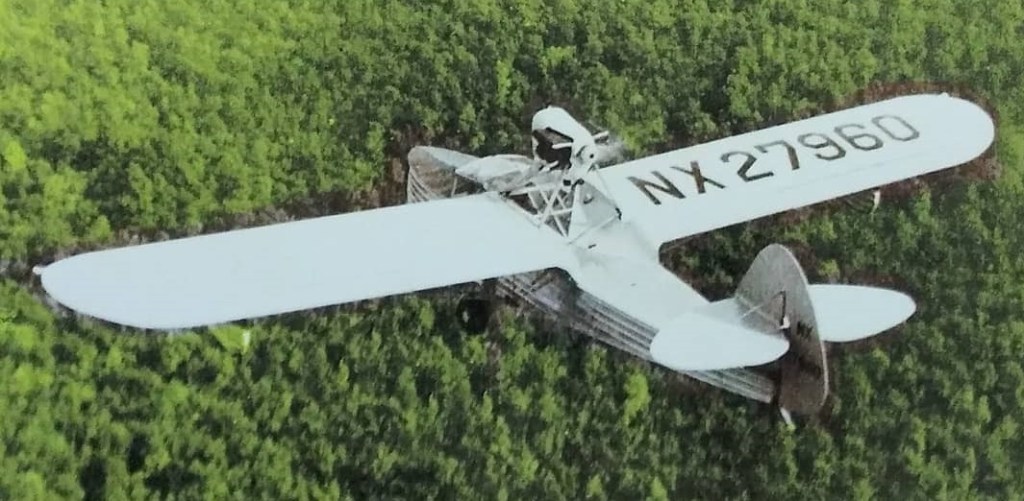
This is the Duck Amphibian that was created by Ray Applegate in 1937. He brought the Amphibian to Lock Haven in 1939 to see if Piper would be interested in manufacturing it. However the project was eventually dropped. Mainly due to WWII.

Designed by Ray Applegate, the 1937 amphibian, registered NX17866, used a Piper J-3 wing and was priced at $2,500±.

Applegate Duck NX17866

Only one was built, the name changed to Applegate 3 Clipper in 1947.

Walter Jamouneau recalled ‘The airplane didn’t fly very well. It made a lot of noise but didn’t go anywhere. The drag was spectacular”.

Engines: various 55-145hp
Wingspan: 34’5″
Length: 22’0″
Useful load: 650 lb
Cruise: 85 mph
Seats: 2

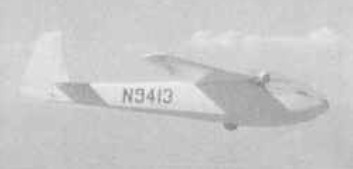
Applebay Mescalero

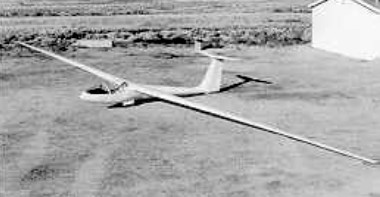
The Mescalero was designed by George Applebay in response to a 1970 sailplane design competition promoted by the Soaring Society of America and first flew in 1975. The controls are 100% mass balanced and connect automatically.

Wing span: 21.9m / 72ft
Wing area: 13.56sq.m / 146sq.ft
Empty Weight: 454kg / 1000lb
Payload: 227 kg / 500 lb
Gross Weight: 680 kg / 1500 lb
Wing Load: 50.15 kg/sq.m / 10.27 lb/sq.ft
Aspect ratio: 36
Airfoil: Wortmann
L/DMax: 44
No. of Seats: 1
Structure: fuselage and tail assembly, glass monocoque ; wing, composite metal-fiberglass.

Applebay Chiricahua GA-11

The Chiricahua was designed by George Applebay to comply with the Standard Class rules existing at the time construcion started, 1959, the first flew in 1970. It has a fixed main wheel and top surface Schempp-Hirth type airbrakes for approach control.

Wing span: 15m / 49.2ft
Wing area: 13.77sq.m / 148.2sq.ft
Empty Weight: 268kg / 590lb
Payload: 100kg / 220lb
Gross Weight: 368kg / 819lb
Wing Load: 26.73kg/sq.m / 5.47lb/sq.ft
No. of Seats: 1
Aspect ratio: 16.2
Airfoil: Gottingen 549
Structure: wood, plywood, ceconite

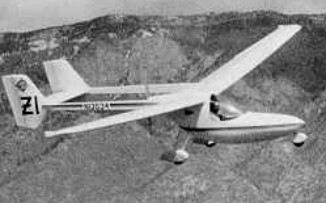
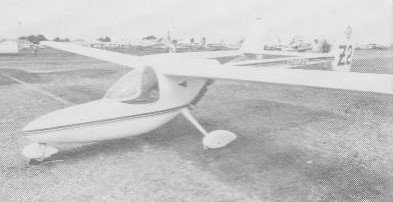
Applebay Zia

The Zia was originally conceived as a tailless motor glider and transformed by Oshkosh 1983 into the twin-boom pusher.

George Applebay entered the ultralight world with a very soaring oriented design, the Zia, whose control system consists of tip rudders, angled so that they work in roll as well as yaw and controlled by stick and pedals through a mixer, and a slotted flap occupying 25% of the canard surface, which provides pitch control. Glidepath control is by flaps which extend to 45 degs.
The tricycle undercarriage has a steerable nosewheel and the braked main wheels are suspended on glass fibre struts reinforced with Kevlar. He designed the Zia according to the JAR22 standard, using composite construction in the main but with Dacron wing covering.
Single seat single engined mid wing monoplane with conventional three axis control. Wing has swept forward leading and trailing edges, and tapering chord; no tail, canard wing. Pitch control by flaps on canard; yaw/roll control by angled tip rudders; control inputs through stick for pitch/yaw/roll and pedals for yaw/roll. Cantilever wing; wing profile; double surface. Undercarriage has three wheels in tricycle formation; suspension on nosewheel and glass fibre/Kevlar suspension on main wheels. Flush right go right nosewheel steering connected to yaw control. Brakes on main wheels. Composite construction fuselage, totally enclosed. Engine mounted at wing height driving pusher propeller. The engine is started by a pull rope either on the ground or for air starting.

Engine: Robin EC25PS, 18 hp.
Power per unit area 0.14 hp/sq.ft, 1.6 hp/sq.m.
Fuel capacity 4.0 US gal, 3.3 Imp gal, 15.0 litre.
Length overall 13.1ft, 4.00m.
Wing span 43.3ft, 13.20m.
Total wing area 125sq.ft, 11.6sq.m.
Empty weight 209 lb, 95kg.
Max take off weight 452 lb, 205kg.
Payload 243 lb, 110kg.
Max wing loading 3.62 lb/sq.ft, 17.7 kg/sq.m.
Max power loading 25.l lb/hp, 11.4kg/hp.
Never exceed speed 81 mph, 130kph.
Cruising speed 59mph, 95 kph.
Stalling speed 28 mph, 45 kph.
Best glide ratio with power off 27/1 at 42 mph, 67 kph.
No. of Seats: 1

Wing span: 14m / 46ft
Wing area: 118 sq.ft / 10.96 sq.m
Empty Weight: 182kg / 400lb
Payload: 113kg / 250lb
Gross Weight: 295kg / 650lb
Wing Load: 26.92kg/sq.m / 5.5lb/sq.ft
Aspect ratio: 18
Airfoil: Wortmann FX 66-197
Structure: fiberglass, carbon spar

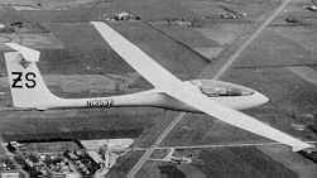
Applebay Zuni / Aero Tek Model V

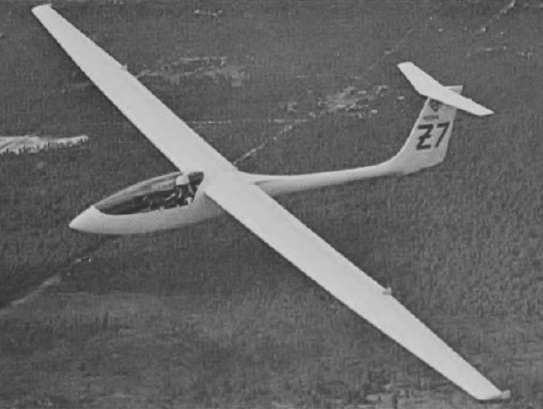
Designed and built by the New Mexico-based firm of Aero Tek under the direction of George Applebay, the Zuni, previously known as the Aero Tek Model V Zuni.

The single-seat 15-meter Zuni, which first flew on 18 November 1976 in New Mexico, was in limited production from 1977 until 1983.

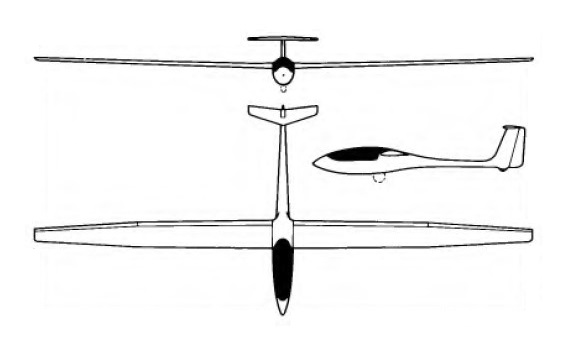
It is sailplane of conventional layout, with a flush transparent canopy and a T-tail. It made its first fight on 18 November 1976, and is of glassfibre construction overall. The cantilever shoulder-mounted wing has a Wortmann wing section developed at the Akaflieg Stuttgart and has full-span camberchanging flaps and ailerons. The flaps and ailerons may be operated separately or interconnected. There is provision for up to 180kg (397lb) of water ballast in the wing, and the undercarriage consists of a single monowheel with a tail bumper fairing under the fin; the forward fuselage tapers to a slimmer boom section carrying the tail unit, and the wings have rectangular inner sections and tapered outer panels.

The fuselage features a roomy cockpit with a semi-reclining seat and in-flight adjustable rudder pedals under a large one-piece canopy. The controls for flaps and landing gear are mounted on the left-hand side of the cockpit, with a side-mounted control stick on the right. The all-moving tailplane is trimmed with a press-button on the control stick.

The two-piece high-set wings contain control linkages which engage automatically when the sailplane is rigged. The interconnecting flaps and ailerons extend the full span of the wings. Flaps can be lowered to +90° for landing or for use as airbrakes. The landing gear consists of a large manually operated retractable monowheel, designed to withstand landings at maximum weight including water ballast, and a tail wheel.

The Zuni II model has carbon spar caps and optional carbon control surfaces, and water ballast capacity is increased to 219 kg. / 483 lb.

Aero-Tek Model V Zuni
Length: 22.047 ft / 6.72 m
Height: 4.265 ft / 1.3 m
Wingspan: 49.213 ft / 15.0 m
Aspect ratio: 22.2
Wing area: 108.716 sq.ft / 10.1 sq.m
Height: 4 ft 8in
Max take off weight: 959.2 lb / 435.0 kg
Weight empty: 493.9 lb / 224.0 kg
Max. speed: 157 kts / 290 km/h / 207mph (in smooth air)
Min sinking speed: 1.71 ft/sec at 50mph
Landing speed: 37 kts / 68 km/h
Cruising speed: 45 kts / 84 km/h
Wing load: 8.82 lb/sq.ft / 43.0 kg/sq.m
Crew: 1

Zuni II
Wing span: 15m / 49.2ft
Wing area: 10.13sq.m / 109sq.ft
Empty Weight: 238kg / 525lb
Payload: 306kg / 675lb
Gross Weight: 544kg / 1000lb
Wing Load: 53.7kg/sq.m / 11.01lb/sq.ft
Water Ballast: 220kg / 483lb
L/DMax: 38@ 98 kph / 53 kt / 61 mph
Aspect ratio: 22
MinSink: 0.55 m/s / 1.8 fps / 1.07 kt
Airfoil: Wortmann mod.
Structure: all fiberglass
No. of Seats: 1

Applebay Zuni
Wing span: 15.0 m (49 ft 2 l/2 in)
Length: 6.71 m (22 ft 0 in)
Height: 1.3 m (4ft 3 in)
Wing area: 10.13 m 2 (109.0 sq ft)
Wing section: Wortmann FX-67K-1707150
Aspect ratio: 22.2
Empty weight: 249 kg (550 lb)
Max weight: 544 kg (1,200 lb)
Water ballast: 181 kg (400 lb)
Max wing loading: 53.7 kg/sq.m (11.0 lb/sq ft)
Max speed: 180 kt (334 km/h)
Stalling speed: 34 kt (63 km/h)
Min sinking at 43.5 kt (80 km/h): 0.52 m (1.71 ft) /sec