A developed version, the BJ-3A appeared in 1968 and this was followed by the BJ-4, two of which were built for the 1970 World Championships, in which the existing BJ-3 wings were married to a new fuselage and tail unit, the T-tail being replaced with a taller fin and rudder and an all-flying tailplane repositioned on the fuselage behind the rudder.
Monoplane
Beatty-Johl BJ-3
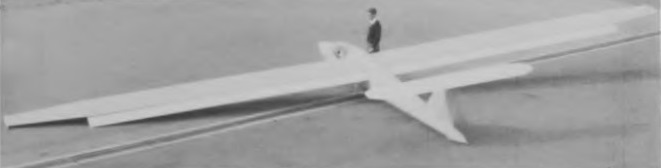
Designed by P. J. Beatty of Johannesburg and W. A.T. Johl especially for South African climatic conditions and the strong thermals experienced in that country, the single-seater BJ-3 was based on experience gained with the successful BJ-2. The prototype, which was built by Performance Sailplanes of Activia Park, Germiston, made its first flight in 1965 and a BJ-3 set up an international speed record over a 500km triangular course on 28 December 1967 of 84 mph.
The BJ-3 is of largely all-metal construction except for the fuselage, which is of glassfibre from the nose to the wing spar, the remainder being a semi-monocoque with duralumin skin and stringers. Landing gear consists of a retractable monowheel aft of the centre of gravity, with a brake, and a retractable nosewheel; in its original form the BJ-3 was to have had a nose-skid. The one-piece plastic canopy hinges to open at the rear, jet fighter fashion, and the BJ-3 is fitted with a full instrument flight panel as well as VHP radio and oxygen. The wings have a basically duralumin load-carrying structure with a wide spar, and are covered with polystyrene foam with an outer protective skin of glassfibre which gives a smooth finish. An unusual feature is the very generous flap area, the Fowler flaps covering no less than 80% of the span and increasing the wing area by 30% when lowered to their full 30°; they have a steel tube spar and, like the main wing structure, are covered in polystyrene foam and glassfibre. Four sets of double DFS-type air brakes are fitted above and below each wing, and the ailerons are of foam and glassfibre. Another unusual feature for a sailplane is a tail braking parachute housed in the tail cone. The fin and rudder are of duralumin, whereas the fixed-incidence tailplane is of plywood-covered spruce construction.
A developed version, the BJ-3A appeared in 1968 and this was followed by the BJ-4, two of which were built for the 1970 World Championships, in which the existing BJ-3 wings were married to a new fuselage and tail unit, the T-tail being replaced with a taller fin and rudder and an all-flying tailplane repositioned on the fuselage behind the rudder.
Beatty-Johl BJ-3
Span: 16.15 m / 52 ft 11.75 in
Length: 7.5 m / 24 ft 7.25 in
Wing area: 12.3 sq.m / 132.4 sq.ft
Wing section: NACA 661 212/0009-64A-0.8
Aspect ratio: 20 (flaps in)
Aspect ratio: 15.82 (flaps extended)
Max weight: 522 kg / 1,151 lb
Water ballast: None
Max wing loading: 42.44 kg/sq.m / 8.69 lb/sq.ft
Max speed: 177 mph / 154 kt / 285 km/h (in smooth air)
Stalling speed: 28.5 kt / 53 km/h
Max aero-tow speed: 138 mph / 120 kt / 222 km/h
Min sinking speed: 0.67 m/sec / 2.2 ft/sec at 46 mph / 40kt / 74 km/h
Best glide ratio: 40:1 at 81 mph / 70kt / 130 km/h
Bearn
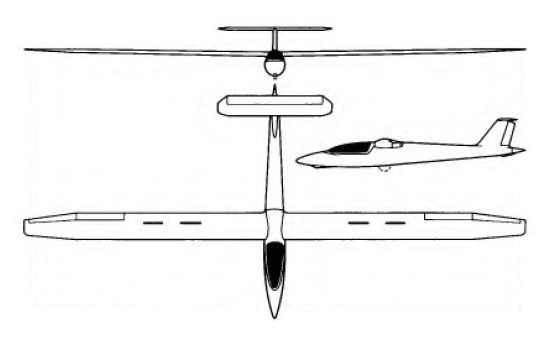
Constructions Aeronautiques du Beam was responsible for production of the Minicab two-seat lightweight cabin monoplane designed by Yves Gardan. Designated Beam Minicab GY-201, it was powered as standard with a 65 hp Continental flat-four engine.
Bear Aircraft Bear 360
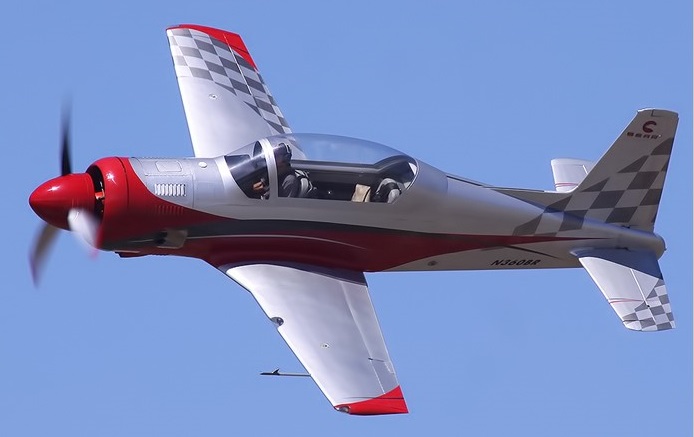
The Bear 360 is a new manufacture, all metal, high-performance, 360 HP radial M-14P powered, tandem seating, Warbird styled aircraft, created by the American-Russian design team that includes Russian aircraft designer, Sergey Yakovlev, and American combat fighter pilot and air racer, Skip Holm. Sergey Yakovlev developed the Bear 360 to military specifications, to meet FAR Part 23 requirements as well as full Russian Military Specifications.
The Bear 360 two place tandem seated cockpit has dual flight controls. Sold in the experimental category, the Bear 360 meets specifications for this type of FAA aircraft category and is a fully documented FAR Part 23 engineered aircraft.
The Bear 360 is powered by the Vedeneyev M-14P, 360 horsepower, supercharged, air-cooled, reciprocating nine-cylinder radial engine. The M-14P will maintain sea level power to 7,500 ft altitude. Engine controls are simplified through fuel scheduling hardware so that the pilot operates only the throttle and RPM controls. Engine starting is electric. Vedeneyev dictates the M-14P’s TBO in terms of cycles, which is a common practice in Russia and Eastern Block countries. In the West and Europe’s JAR it has certified the engine for a 1500 TBO. The Bear 360 has a three bladed hydraulically controlled constant speed MT Propeller certified to meet FAA specifications.
The Bear 360 wing has a NASA 63-215 root and 63-412-tip laminar flow airfoil. Lateral stability has been demonstrated in the full wind tunnel to 30 degrees angle of attack with flaps full up or full down. The wing is constructed around a single piece tapered main spar with stressed aluminum flush riveted skin over conventional stamped aluminum ribs. Wing dihedral is 5.0 degrees. Fuel is contained entirely in the wing structure and no bladders or individual tanks are used except the center sump tank, which feeds the engine (An auxiliary external centerline fuel tank is also available on all aircraft). The landing gear system attaches to the main spar and its surrounding structure. The wing is attached to the fuselage as a single piece structure and the four attach points are precision machined so there is no special rigging required for wing removal/replacement.
The Bear 360 flight control surfaces are all-metal construction and mass balanced. Flight control actuation is through torque and push – pull tube assemblies; no cables are used. Trim on all three axis is electric. Controlled with standard individual push-pull controls.
The Bear 360 fuselage is semi-monocoque, all metal, flush riveted construction. The cockpit width at the sliding rails is 25.5 inches. The windscreen is 3/8ths polycarbonate, and the canopy is a large unobstructed bubble that slides aft, operated by a hand crank. The canopy may be left partially open during start, taxi, takeoff/landing and pattern operating speeds.
The landing gear is conventional, retractable, including the tail wheel. The main gear track is 9.3 feet. The main gear struts are oleo-pneumatic accommodating 8.00X10 inch tires. The brakes are of US manufacture employing two actuation cylinders per brake rotor.
The tail wheel is steerable and pivots through 360 degrees for ground handling/towing. The landing gear retraction and extension is hydraulically operated. An electro-hydraulic pump of US manufacture provides hydraulic pressure. Emergency landing gear extension is by means of a pneumatic charged unlock of the over-center locking mechanism and blow down system. The landing gear system normal operating pressure is nominally 800 PSI. The Bear 360 electrical system is 28 volts and is charged by a 35 amp B&C Specialties SK35 engine driven alternator, and a 24 VDC battery.
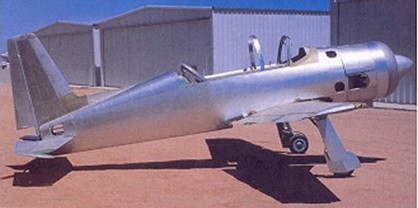
The fuel system consists of three wing fuel reservoirs, an engine driven fuel pump, and an emergency electrical fuel boost pump. Wet wings accommodate 37 US gallons each and the sump/feeder tank in the bottom center of the wing holds the remaining 2 gallons of the fuel system, for a total of 76 gallons. For normal operations the fuel boost pump is not required as the engine driven mechanical fuel pump provides both the suction to pull fuel from the sump tank as well as pressure for normal fuel scheduling throughout the engine operating range. The fuel boost pump provides full normal engine operation for starting, takeoff and landing. Additionally, an optional removable 22 US gallon centerline mounted external tank, similar to a WWII drop tank design, is available for all aircraft. This external tank fuel is delivered via an electric fuel pump.
The flaps are electrically actuated, via an electric flap switch and can be manually stopped at any flap position. This 3-position flap switch commands flaps in these positions: flaps up, flaps stopped, or flaps lowering. An electrically actuated speed brake is mounted near the aerodynamic center of the aircraft between the flaps. The speed brake can be employed throughout the entire aircraft flight envelope with minimal change to steady state trim settings. The speed brake can also be employed as a flap for landing.
The cross country baggage compartment or equipment bay is 4.2 cubic feet and is designed to carry airline carry-on-baggage for both pilots. It will accommodate a maximum of 65 pounds.
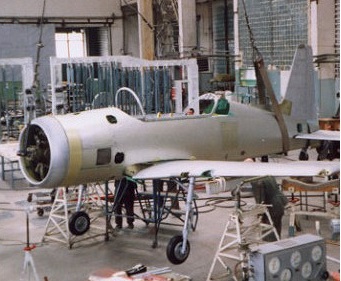
The Bear 360 had over 1,000 hours of wind tunnel and load testing to destruction, and undergone extensive flight-testing to US military standards in the hands of test pilot Skip Holm, to be issued FAA approval.
The aircraft exhibits buffet 6 knots above the stall, and stalls at 81 KTS. The engineering estimation at stall altitude was 78 KTS at an empty weight of 1878 pounds plus fuel, whereas the prototype was 1901 empty plus fuel/PAX on board. The stall was straightforward, stalled with a mild buffet, and did not have any tendency to snap.
Four different configuration options were offered in 2015:
Ready to Fly (RTF)
Warbird Edition (2015: US$310,000)
Skip Holm Signature Series
Almost Ready to Fly (ARF) Does not include: Engine, propeller, avionics, interior or paint. Cockpit, engine, landing gear and wheel wells are painted in 5th generation fighter grey. 2015 US$185,000
The Skip Holm Signature series was the luxury variant of the Bear 360, including a choice of high-end avionics, autopilot, fully customized paint, plus well-appointed cabin amenities such as plush, hand-tooled, leather seating and panels, custom built by the Yakovlev factory.
The Almost Ready to Fly (ARF) Aircraft excludes Engine, Propeller, Avionics, Interior and Paint. If a buyer provided engine and propeller to the factory, these would be installed without charge.
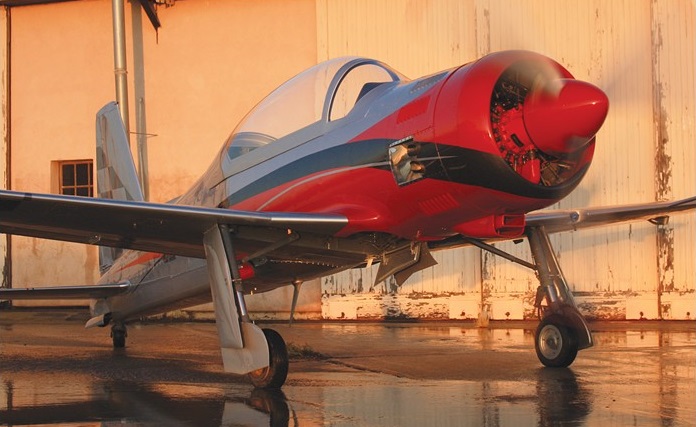
The Bear was under production in Orenburg, Russia, in 2015.
Engine: Vedeneyev M-14P, 360 hp / 420 hp (optional)
Wingspan: 23.10 ft
Wing area: 93 sq ft
Length: 23.25 ft
Gross weight: 2760 lb
Empty weight: 1860 lb
Fuel capacity: 76 USgal
Wing loading (at gross): 29.7 lbs/sq ft
Vne: 280 kias
Max cruise (at Sea Level): 250 kias
75% cruise (at Sea Level): 210 kias
Stall (landing configurations) Vso: 70 kias
Stall (clean) Vsi: 78 kias
S L rate of climb: 1850 fpm
Max range @ SL (20 Min reserve): 890 nm
Take off roll at sea level (Std day): 825 ft
Take off roll over 50 Ft obstacle: 1050 ft
Landing at sea level (Std day): 825 ft
Landing over 50 Ft obstacle: 1100 ft
Max roll rate: 180 Degrees/Second
Max ‘G’: +6, -3
Fuel: 100 Low Lead Av Gas, 91 Octane with NO Ethanol
Beagle 242-X / Beagle-Miles 218
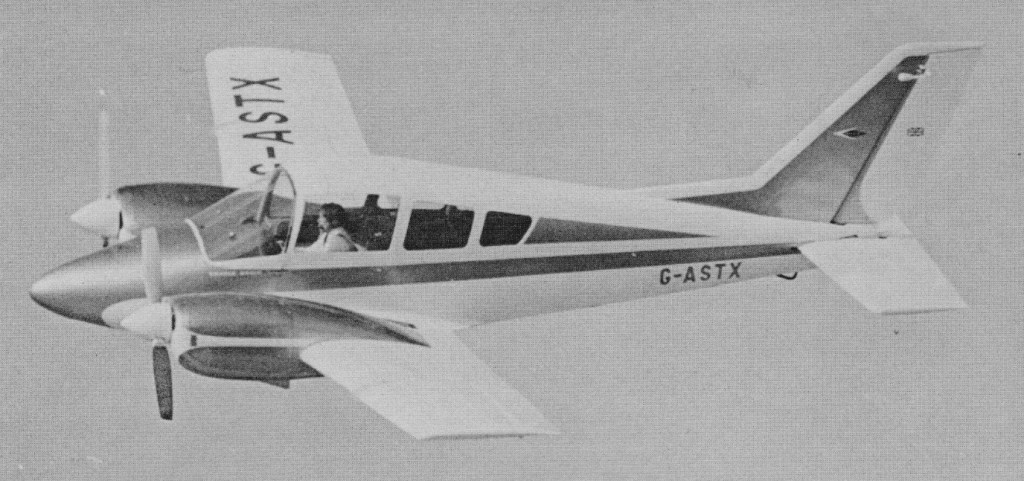
The Beagle-Miles 218 was first shown at Farnborough in 1962.
In 1964 the re-worked Beagle-Miles 218 appeared as the Beagle 242-X executive transport prototype.
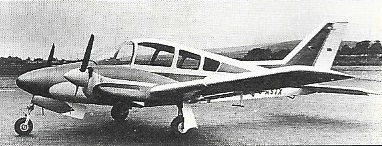
The Beagle 242-X was built by Pressed Steel Ltd.
Beagle B.206 Basset
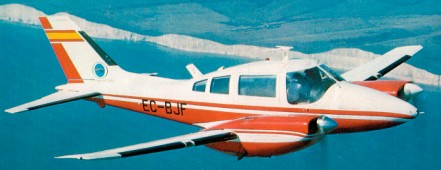
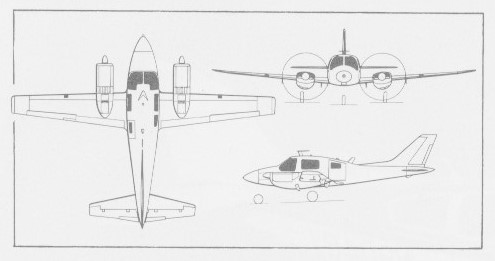
Twin-engined light transport aircraft with accommodation for five to eight persons. The first prototype flew on 15 August 1961, powered by Continental 194kW IO-470-A engines. The second prototype had increased dimensions and two 231kW Rolls-Royce/Continental GIO-470-As.
The initial commercial version was the B.206 Series I or B.206C. Early aircraft have overwing cabin door, later aircraft a passenger / cargo door aft of wings.
The B.206R was the military production version, ordered for communications and ferrying duties with the RAF under the name Basset CC.l. The B.206-S was a development of the Series I with supercharged engines and other refinements, first flying on 27 January 1966.
The B.206 Series II (B.206S) was development, with later production aircraft featuring an extended cabin, additional rear window on each side, and larger passenger / cargo door at rear on port side.
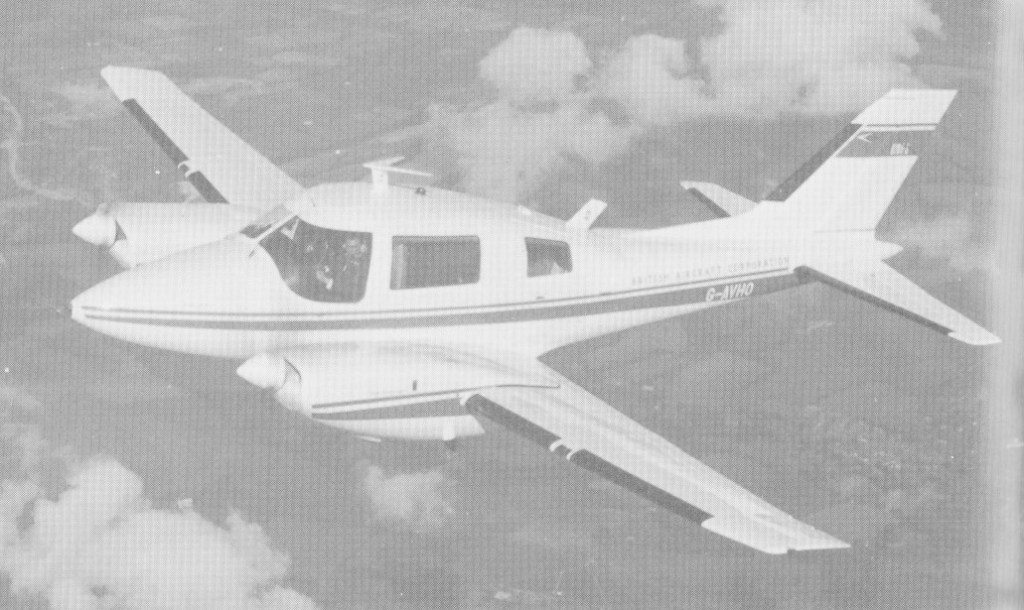
Deliveries included two ambulance models for the Royal Flying Doctor Service of New South Wales, Australia.
By the close of 1969 40 B.206 Series I and II aircraft, 20 Bassets and two B.206Z pre-production types for the Ministry of Technology had been delivered.
The B.206 Series III developed version, seating 10 passengers, with dorsal and ventral fins, small tabs on main fin, extended tailplane trailing edge. A prototype only was built.
Beagle B.206 Srs.I / B.206C
Powerplant: 2 x Rolls-Royce Continental GIO-470-A, 310 bhp take-off power (ISA SL)
Propeller: McCauley two-blade constant speed fully feathering metal.
Span, 45 ft 9 in
Length 33 ft 8 in
Height, 11 ft 4 in
Gross wing area, 214 sq.ft
Max. usable floor area, 44 sq.ft
Max. usable cabin volume, 221 cu.ft
Max. cabin length, 14 ft
Max. width, 62 in
Max. height, 50 in
Accommodation: 6-8.
Baggage space: 14 cu.ft
Basic operational (gross less usable fuel and payload) wt, 4650 lb
Total fuel, 1368 lb
Max. take-off weight, 7500 lb
Max. landing, 7125 lb
Max. payload (volume limited), 1530 lb
Max. zero fuel, 7050 lb
Power loading (max. take-off weight), 12.1 lb/bhp
Wing loading (max. take-off weight, 35.0 lb/sq.ft
Wing loading (max. landing weight), 33.3 lb/sq.ft
High-speed cruise, 184 kt. at 8 000 ft
Long-range cruise, 160 kt. at 8 000 ft
Approach speed 87 kt. EAS
Take-off field length, ISA SL, 2,370 ft
Landing field length, ISA at sea level; 2290 ft
Range with allowances, max. fuel, 1482 lb payload, 1440 nm
Engines: 2 x RR/Cont. GIO-470, 230kW
Take-off weight: 3223 kg / 7106 lb
Empty weight: 1978 kg / 4361 lb
Wingspan: 13.9 m / 45 ft 7 in
Length: 10.3 m / 33 ft 10 in
Height: 3.4 m / 11 ft 2 in
Wing area: 19.9 sq.m / 214.20 sq ft
Max. speed: 352 km/h / 219 mph
Cruise speed: 348 km/h / 216 mph
Ceiling: 6210 m / 20350 ft
Range: 1500 km / 932 miles
Range w/max.fuel: 3000 km / 1864 miles
Range w/max.payload: 1850 km / 1150 miles
Crew: 1
Passengers: 4-7
Engines: 2 x RR/Cont. GIO-470, 230kW
Take-off weight: 3223 kg / 7106 lb
Empty weight: 1978 kg / 4361 lb
Wingspan: 13.9 m / 45 ft 7 in
Length: 10.3 m / 33 ft 10 in
Height: 3.4 m / 11 ft 2 in
Wing area: 19.9 sq.m / 214.20 sq ft
Max. speed: 352 km/h / 219 mph
Cruise speed: 348 km/h / 216 mph
Ceiling: 6210 m / 20350 ft
Range: 1500 km / 932 miles
Range w/max.fuel: 3000 km / 1864 miles
Range w/max.payload: 1850 km / 1150 miles
B.206 Srs.II / B.206S
Powerplant: two Rolls-Royce Continental GTSIO-520C, 340 bhp take-off power (ISA SL)
Propeller: McCauley three-blade 7 ft 6 in diameter
Wing span: 45 ft 9.5 in (13.96 m).
Length: 33 ft 8 in (10.26 m)
Height: 11 ft 3 in (3.43 m).
Gross wing area, 214 sq.ft
Max. usable floor area, 44 sq.ft
Max. usable cabin volume, 196.5 cu.ft / 5.56 cu.m
Max. cabin length, 11 ft 11 in / 3.63 m
Max. width, 62 in / 1.57 m
Max. height, 52 in. / 1.32 m
Accommodation: 6-8.
Baggage space: 21 cu.ft / 0.59 cu.m
Basic empty weight, 4800 lb / 2177 kg
Total fuel, 1386 lb
Max. take-off weight, 7500 lb (3401 kg)
Max. landing weight, 7125 lb
Max. payload (volume limited), 1500 lb
Max. zero fuel, 7000 1b
Power loading (max. take-off weight), 11.02 lb/bhp
Wing loading (max. take-off weight), 35.2 lb/sq.ft
Wing loading (max. landing weight), 35.2 lb/sq.ft.
Max level speed: 258 mph (415 kph).
High-speed cruise 75%: 189 kt / 218 mph / 351 kph at 8000 ft
Long-range cruise, 176 kt. at 8000 ft
Approach speed 89 kt. EAS
ROC SL MAUW 1340 fpm / 408 m/min
Service ceiling: 27,100 ft / 8260 m
Take-off field length, ISA SL, 2380 ft
Landing field length, ISA at sea level, 2390 ft
Range with allowances, max. fuel, 1060 lb payload: 1389 nm / 1600 mi / 2570 km
Seats: 5-8
B.206 Srs.III
Passenger capacity: 10
Prototype only
Beagle Bullfinch

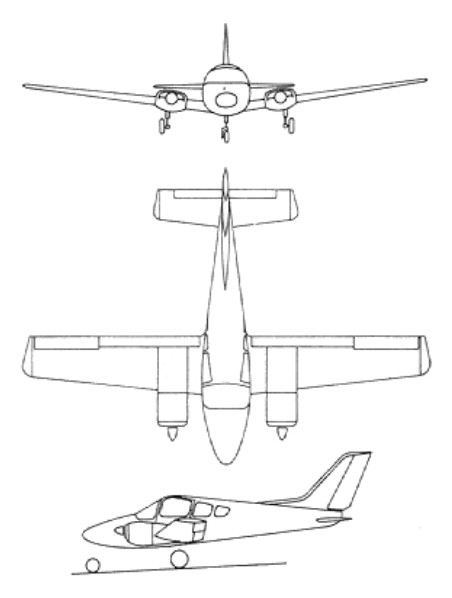
A survivor of Beagle Aircraft efforts was the Scottish Aviation Bulldog/Bullfinch line, fixed gear and retractable versions, respectively, of the original Pup, with 200 hp engines and substantial airframe changes. A retractable four seater, the Bullfinch had a 1,500 pounds useful load, 140 knot cruise and many small improvements over the Bulldog. The Bullfinch was shelved when Scottish Aviation was nationalised.
Beagle B.125 Bulldog / Scottish Aviation Bulldog
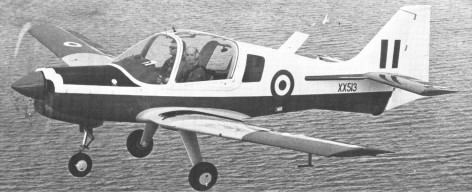
A military version of the Pup was developed after being assessed by Rolls Royce Test Pilot Graham Andrews, who made 12 recommendations including its adaptation to a twin seated aircraft suitable for training purposes. The aircraft evolved into the Beagle B.125 Bulldog with a 200 hp (150 kW) Lycoming engine. Only one prototype aircraft was built by Beagle (with another largely complete) before it ceased operations; the design and production was taken over by Scottish Aviation.
Scottish Aviation Bulldog Article
The Bulldog development of the B121 Pup was designed by Beagle as the B125, the prototype G-AXEH (c/n 001) flying from Shorehamon May 19,1969. Following Beagle’s collapse Scottish Aviation took over design and production rights in May 1970 and moved manufacturing facilities to Prestwick. SAL flew the second prototype G-AXIG (c/n 002) on February 14, 1971, in the colours of the Swedish Air Force. The third airframe (c/n 003) was used for ground structural testing. Designated the Bulldog Series 100, the first production aircraft G-AYWN (c/n BH100-101) was flown on June 22 as the first Bulldog for Sweden, serialled 61001, and operated in Sweden as the Sk61. It was followed by the second for Sweden, G-AYWO/61002 (c/n BH100-102), on July 14, both being delivered on July 26. Further allocations are G-AYWP, ‘YZL, ‘YZM and G-AZAK to ZAT, respectively BH100-103 to 114 and serialled 61003 to 61015. These are all known as Model 101. Following on the production line are the first Model 102s for the Malaysian Air Force, BH100-115 and 116. In 1971 orders were for 58 Bulldogs for Sweden, 15 for Malaysia and five for Kenya.
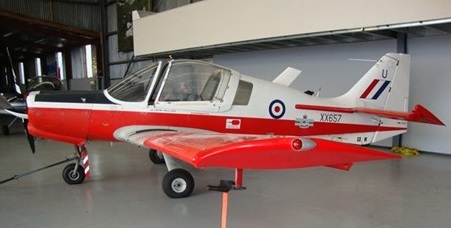
In 1973, Finnaviation received a research and development contract from the Swedish Air Force to design skis for their primary trainer, Beagle Bulldog. The Swedes had developed a unique bottom shape for the skis around which an aerodynamic casing and load carrying structure of fiberglass epoxy laminate was designed. The skis were test loaded in the Helsinki University of Techonology structures lab.
Beagle, tried to get its two airplane line accepted in the U.S. The Pup, was expensive, slow for such a clean appearing airframe, and was against the most difficult market for an import the low cost basic trainers. Beagle Aircraft Limited went into receivership and production ceased in 1982.
Following delivery in 1981 of a follow-on batch of five Bulldog 125s to the Royal Jordanian Air Force, a further order for five was placed, making 23 in all. In 1981 the Nigerian Air Force ordered another four Bulldog 123s to bring its total to 36.
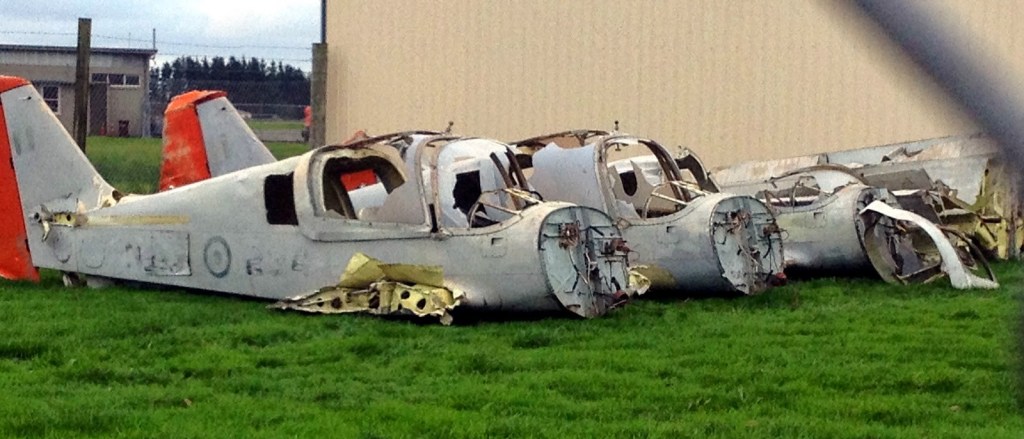
In 2014, Ex-Nigerian Air Force Bulldogs were sold as scrap and shipped to Palmerston North, New Zealand, for rebuild or resale.
Beagle B 125 Bulldog
Engine: Avco Lycoming IO-360-A1B6
Length: 23.261 ft / 7.09 m
Wingspan: 33.005 ft / 10.06 m
Max take off weight: 2350.5 lb / 1066.0 kg
Max. speed: 130 kts / 241 km/h
Range: 540 nm / 1000 km
Crew: 2+1
Mk.102
Seats: 2.
Mk.103
Seats: 2.
Mk.120
Engine: Lycoming IO 360 A1B6, 200 hp.
Seats: 2.
Mk.121 / T.1
Engine: 200 hp.
Wing span: 33 ft (10m).
Seats: 2/3
Cruise: 120 knots.
Load limit: +6/ 3 G
Rear seat cap: 200 lb.
Max speed: 150 mph (241 km/h).
B.121 Pup 150
Engine: Lycoming, 150hp.
Wing span: 31 ft 0 in (9.45 m).
Length: 22 ft 9 in (6.93 m).
Height: 8 ft 6 in (2.59 m).
Max TO wt: 1600 lb (725 kg).
Max level speed: 153 mph (246 kph).
Mk.123
Seats: 2.
Mk.125
Seats: 2.
Mk.127
Seats: 2.
Mk.128
Seats: 2.
Beagle B.121 Pup

An aerobatic lightplane, the Pup was built by Beagle Aircraft in England at Shoreham Airport and Rearsby Aerodrome. The Pup was designed as a single-engined all-metal two-seat aerobatic aircraft or a four-seat touring aircraft.
Beagle B.121 Pup Article June 1968
The prototype Pup (a Series 1 G-AVDF) first flew from Shoreham Airport on 8 April 1967. Production of the Pup-100 began in February 1968. The Pup-100 model carries two seats and two optional children’s seats. It’s powered by a 100 hp Rolls-Royce/Continental O-200-A four cylinder engine.

The more powerful Pup 150, with seating for an extra adult, was flown in October 1967. The second (G-AVLM) and third (G-AVLN) aircraft were Series 2 aircraft fitted with an enlarged rudder which became standard on all production aircraft.

The Pup-150 fuselage is only three inches longer than the Pup-100 while wingspan dimensions of the low-wing tricycle gear airplane remain the same. A 150 hp Lycoming O-320-A2B engine allows optional seating for four. The Pup-150 also offered a larger 34-Imperial-gallon fuel tank as opposed to the standard 24-Imperial-gallon tank installed as standard equipment in the 100 and 150 models. A large rudder on the 150 allows full aerobatics including unlimited spinning.
The first delivery (a Series 1) was to the Shoreham Flying School on 12 April 1968.
A Series 3 variant, a four-seater, was developed for the Iranian Civil Air Training Organisation. G-AVLM was converted during 1968 to become the series 3 prototype aircraft with a further enlarged rudder.
By 1969 production had increased at Shoreham to one Pup a day, aircraft were flown to either Rearsby Aerodrome or Cambridge Airport for painting and finishing. One aircraft was evaluated by the Royal New Zealand Air Force in 1969, but was not ordered. Deliveries were made to civilian operators in several countries including Australia, Sweden and Switzerland.
The Pup-160 was powered with a 119kW Lycoming O-320-D2C engine.

The Pup was more spacious than its direct competitors and was a more complex design to manufacture and was also corrosion proofed throughout (usually then only an option on US-built competitors). For these reasons it was correspondingly more expensive to build, yet was sold at a competitive price. Its maintenance requires more care (i.e. expense) and its early days were troubled by issues with the doors and spares availability.
A total of 128 Pups had been delivered by the close of 1969, when 267 aircraft were on order. In December 1969 the government withdrew financial support for Beagle and the company was placed in receivership. Production ceased with the 152nd aircraft. Some remaining nearly completed aircraft were finished at a variety of locations, the last being completed G-BCGV (s/n B121-176) was first registered 17 June 1974. The Pup was developed into the Bulldog by Beagle, then Scottish Aviation.
A military version of the Pup was developed after being assessed by Rolls Royce Test Pilot Graham Andrews, who made 12 recommendations including its adaptation to a twin seated aircraft suitable for training purposes. The aircraft evolved into the Beagle B.125 Bulldog.
B.121 Srs.1 Pup 100
Engine: 1 x RR/Cont. O-200-A, 100 hp / 74kW
Wingspan: 31 ft / 9.45 m
Length: 22 ft 11 in / 6.99 m
Height: 2.3 m / 7 ft 7 in
Wing area: 119.5 ft² / 11.10 m²
Take-off weight: 1,600 lb / 725 kg
Empty weight: 985 lb / 447 kg
Max. speed: 225 km/h / 140 mph
Cruise speed: 127 mph / 204 km/h
Ceiling: 2000 m / 6550 ft
Range: 800 km / 497 miles
Seats: 3
B.121 Srs.2 Pup 150
Engine: Lycoming 0-320-A2B, 150 hp (112 kW)
Wingspan: 31 ft 0 in / 9.45 m
Wing area: 119.5 ft² / 11.20 m²
Length: 23 ft 2 in / 7.06 m
Height: 7 ft 6 in / 2.29 m
Empty weight: 1090 lb / 494 kg
MTOW: 1925 lb / 873 kg
Fuel capacity: 24 ImpG / 109 lt
Fuel capacity w/opt: 34 ImpG / 155 lt
Cabin length: 6 ft 6 in / 1.98 m
Cabin max width: 3 ft 9 in / 1.14 m
Cabin max height: 3 ft 6 in / 1.07 m
Cabin volume: 85 cu.ft / 2.4 cu.m
Baggage space: 15 cu.ft / 0.42 cu.m
Top speed: 138 mph / 222 km/h
Max cruise 75% 7500ft/2290m: 114 kt / 131 mph / 211 kph
Range w/opt fuel: 549 nm / 633 mi / 1020 km
Service ceiling: 14,700 ft / 4480 m
Fuel @ 65% pwr: 45 lb/hr
Endurance 65% power: 5 hours
Stalling (clean/flaps): 53-48 mph/85-76 kmh
Max ROC SL: 700 fpm / 244 m/min
Take-off distance, 50 ft: 1350 ft.
Landing distance, 50 ft: 1430 ft.
Seats: 2-4
B.121 Srs.3 Pup 160
Engine: Lycoming O-320-D2C, 160 hp
Fuel capacity: 36 ImpG / 164 lt
Seats: 2+2
No built: 6


Beagle A.113 Husky / Auster A.113 / Auster D.4 / D.5 / D.6

A new range of Auster lightplanes appeared in early 1960. It included the two-seat D.4/108, three seat D.5/160 and /180 and four-seat D.6, all powered by Lycoming engines and featuring metal spars. The Auster D.6 was developed from the J/5V, but J/5V G-APUW did not have the metal spar and other refinements of the D.6
A total of 157 D.4 and D.5 had been sold by the beginning of March 1964.

The 1961 types in the Auster range – D.4, D.5 and D.6 development of the Auster Alpha were announced with Lycoming engines, but since then the company was taken over by the Pressed Steel Co., Ltd., as part of its Beagle (British Executive and General Aviation, Ltd.) group. Beagle has announced that Rolls Royce/Continental powerplants will be installed in Auster/Beagle aircraft being developed under the direction of Mr. Peter Masefield.

The Beagle group had continued production of the Auster D.5/160 and Auster D.5/180, the latter as the A.113 Husky when fitted with a 134kW Lycoming O-360-A1A engine.
A major innovation of the D series was the use of metal wing spars which, with new low-flammability long-weathering plastic-based butyrate dope and paint finishes, made the D entirely suitable for use in the tropics. The D.4 was a two-seater with either a 9.75m or 10.98m wingspan and an 80, 112/119 or 134kW Lycoming engine; the D.5 was a three-seater offering the two wing spans but only the 119 and 134kW engines; and the D.6 was a four-seater with the greater wing span and engines as for the D.5.
The first production D.4/108 flew on 12 February 1960.
The first D.5/160 on 10 January 1960. Beagle developed the D5/160 as the “Beagle D5/180 Husky” with a 180 hp Lycoming O-360 engine, the first being G-ASBV first flown in 1962. A small number were sold until production was discontinued in 1967.
The first D.6/160 flew on 9 May 1960.

133 examples (Auster D.5/160) were built by the Oficinas Gerais de Material Aeronáutico in Portugal from 1961 onwards; and the Portuguese Air Museum preserves two of these; one in flying condition.

The designation “A.113” was only a design number and was not used in promotional material or in aircraft registrations with the Civil Aviation Authority where the term ‘D5/180’ was preferred. Additionally, the name Husky was only given to this version and not to the D5/160.
One Beagle Husky (XW635) was won by Sir Billy Butlin in a raffle and presented to the RAF’s Air Training Corps in 1969. It flew with No. 5 Air Experience Flight, flying air cadets from Cambridge Airport until it was retired in 1989 and sold to a civilian user.
Operators included the Burma Air Force, Portuguese Air Force, and Thai Border Patrol Police – One aircraft only.
Beagle-Auster D.4/108
Beagle-Auster D.5/160
Engine: 1 × Lycoming O-320-A2A, 160 hp (119 kW)
Wingspan: 36 ft 0 in (10.98 m)
Wing area: 185 ft² (17.2 m²)
Length: 23 ft 4½ in (7.13 m)
Height: 7 ft 11 in (2.41 m)
Empty weight: 1,450 lb (659 kg)
Loaded weight: 2,450 lb (1,114 kg)
Maximum speed: 125 mph (109 knots, 201 km/h)
Cruise speed: 108 mph (94 knots, 174 km/h)
Range: 460 mi (400 nmi, 741 km)
Service ceiling: 12,800 ft (3,900 m)
Rate of climb: 640 ft/min (3.3 m/s)
Crew: one pilot
Capacity: 2 passengers
D.5/180 Husky / A.113 Husky
Engine: 1 x Lyc. O-360-A2A, 132kW / 180 hp
Wingspan: 10.97 m / 36 ft 1 in
Length: 7.1 m / 23 ft 4 in
Height: 2.5 m / 8 ft 2 in
Take-off weight: 1090 kg / 2403 lb
Empty weight: 646 kg / 1424 lb
Max take off weight: 2400 lb / 1088kg
Range: 502 nm / 930 km / 580 mi
Max. speed: 206 km/h / 128 mph
Cruise speed: 177 km/h / 110 mph / 96 kt
Max ROC SL: 800 fpm / 245 m/min
Ceiling: 4420 m / 14,500 ft
Seats: 4
4 built
Beagle-Auster D.6/180


