BOT-Aircraft SC07 Speed Cruiser

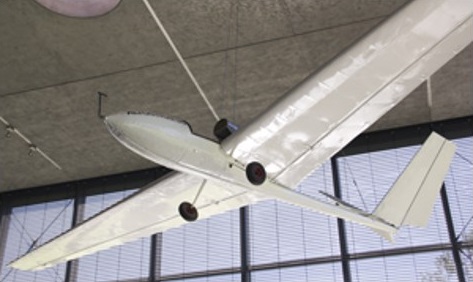
The Polish-designed, German-built, mostly carbon-fiber composite high-wing Speed Cruiser received ASTM certification (#131). It has a custom-built power plant and paraplegic controls for pilots in the Wounded Warrior flight program. The D-Motor is a flathead four-cylinder liquid-cooled direct drive plant rated at 95 hp and weighs 125 pounds. Cabin width is 48 inches, and seats are adjustable.

Stall: 35 kt / 40 mph / 65 kmh
Cruise: 127 kt / 146 mph / 235 kmh
VNE: 141 kt / 162 mph / 261 kmh
Empty Weight: 127 kg / 280 lbs
MTOW Weight: 214 kg / 472 lbs
Range: 650 nm
Climb Ratio: 6 ft/min
Glide Ratio: 15
Take-off distance (50ft obstacle): 490 ft / 150 m
Landing distance (50ft obstacle): 660 ft / 200 m
2009 Price: 59800 EURO
2012 Price: US$129,000.

BOT-Aircraft

Headquarters:
Aeulestrasse 1
Triesen
Triesen 9495
Liechtenstein

Manufacturer of ultralight aircraft designed to prepare modern lightweight aircraft with better handling. The company’s ultralight aircraft are made with carbon fiber and the skin is made in optical fiber-glass, enabling pilots to make great movements at higher altitudes.

Reiner Tauern was a co-Founder and Chief Executive Officer, with Erwin Bigger an executive.

Boshoff SB2

Building the SB2 was started in 1994 by S Boshoff, before the KR2S concept gained momentum. Looking for an aircraft that had better aerodynamic characteristics than the KR2, and the simplicity of the KR2, the SA-CAA granted permission to build an aircraft that was based on the KR2, but they would not allow it to be register as a KR2. Hence the SB2 which has the same wing as the KR2 with a lengthened fuselage and bigger tail areas.

The aircraft had its maiden flight on 23 November 2001.

SN: 1
Engine: Turbo charged VW 2.0 l t
Wing Span: 6150 mm
Length: 5050 mm
Empty weight: 310 kg
MAUw: 545 kg
Vstall: <50 mph
Vcruise: 155 mph
Vne: 190 mph
U/C: Fixed Composite MLG, Steerable NLG

Borzęcki JB-4 Skowronek               

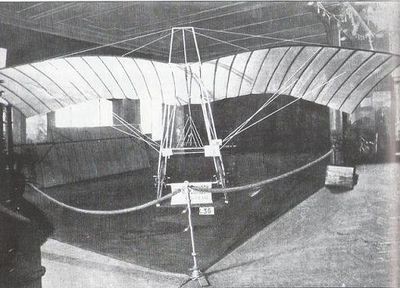
Józef Borzęcki choose Olesno Śląskie as his place of residence. There, he designed and built the fourth ultra-light structure called JB-4 “Skowronek”.

In the fall of October 29, 1989, in the presence of Elżbieta’s daughter, “Skowronek” made several successfully completed take-offs and landings. A year later, on October 14, 1990, he made his last flight. From a height of 200 m, while descending to land, the left wing girder was broken. On this day, Józef Borzęcki died.

Borzęcki Altostratus

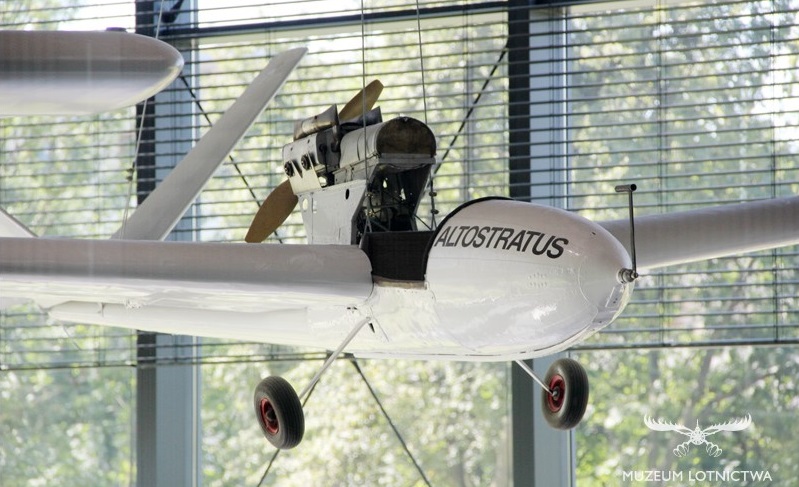
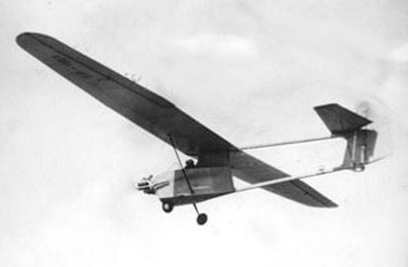
In late 1960s Józef Borzęcki undertook a rebuilding of his Stratus motor glider. The aircraft was fitted with wings from Komar (mosquito) glider, lighter and providing better glide ratio and flat two-stroke four-cylinder RB2 engine, designed by J. Borzęcki out of two connected Riedel starter engines from German Junkers Jumo 004 turbojet engine from World War II.

After this rebuilding the motor glider was named Altostratus and first flew in 1972. It remained in use until 1982.

Since 1994, “Altostratus”, as the only surviving structure of Józef Borzęcki, was transferred to the Polish Aviation Museum in Krakow.

Engine: RB2 Four-cylinder two-stroke, 18 kW (24 hp)
Span: 10 m (32.8 ft)
Length: 5.5 m (18 ft)
Empty weight: 90 kg (198 lb)
Take-off weight: 160 kg (353 lb)
Glide ratio: 20
Sink rate: 0.9 m / s
Maximum speed: 100 km / h (54 kt)
Minimum speed: 48 km / h (30 kt)

Borzęcki Cirrus  

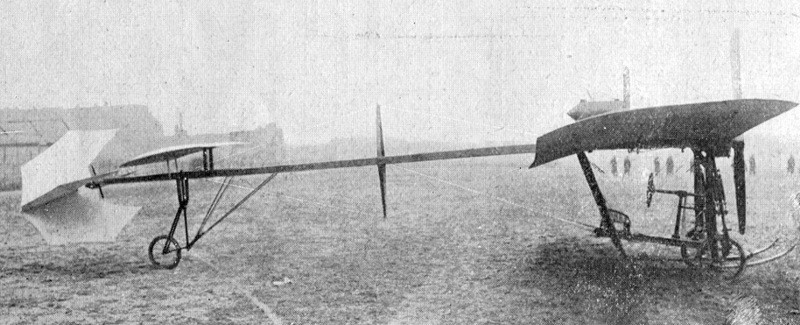
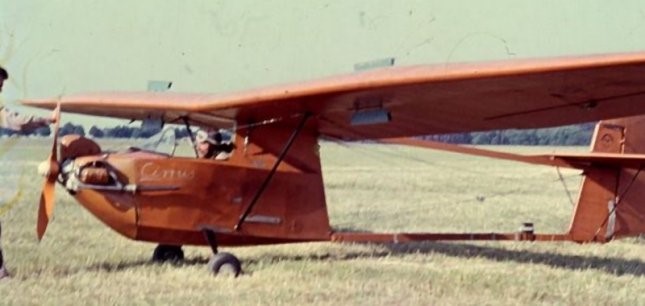
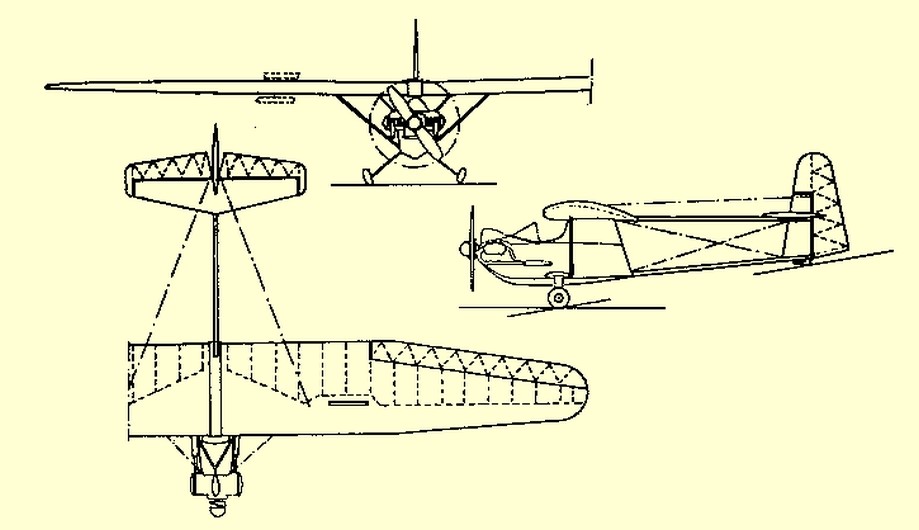
In the autumn of 1967, Józef Borzęcki began preparations for the construction of the “Cirrus” motor glider (“Salamandra moto”). In its construction, he used the experience gained while working on the “Stratus” motor glider. In the airframe, the designer used a number of wooden construction details from the school glider IS-A “Salamandra 53” (SP-1161) Kiibelwagen. He used a Volkswagen Kübelwagen car engine that he converted. A technical curiosity was the so-called elastic chassis, made of special shock-absorbing steel. The chassis on a single spring shank in the shape resembling the letter M was made of railway spring steel. This type of chassis designed and constructed by Borzęcki was the first of its kind in Poland to be used for light aircraft. The plane had, like “Stratus”, coupled control only by means of a joystick.

Looking for new solutions and constructional improvements, he used, among others double engine speed control system. It consisted in the fact that the aircraft also had a gas throttle mounted on the inside of the pilot’s cabin (as in a normal plane), and a car-type foot pedal, whose pressure increased the engine speed. These two control systems operated independently. The builder of Cirrus took the propeller-engine assembly very seriously. He took an exhaust gas analyzer, connected to the engine exhaust system, to the cabin. Flying at different heights, the amateur designer and pilot simultaneously selected the optimal composition of the gas-air mixture. The end result of these efforts was a significant engine economy with good performance of power.

“Cirrus” was flown on October 22, 1967. It had the characteristics of an ordinary glider after switching off the engine in flight. The powered glider carried out many flights in different weather conditions and seasons. Some of them on the ceiling 3000-4000 m and sometimes lasted 2-3 hours, with the engine turned on and off, circling in the thermals, enjoying a slow flight. For several years of using Cirrus, there were no accidents. The constructor flew about 2000 hours on it.

The constructor’s activities were revealed by a press article in 1968 and in 1969, unknown perpetrators destroy the motor glider, which, however, was rebuilt and flown. From 1971, the motor glider was hangar in the hangar of the Wroclaw Aeroclub, where in 1972 unknown perpetrators destroy Cirrus again, this time completely.

Engine: Volkswagen, 21 kW (28 HP).
Span: 12.5 m
Length: 6.5 m
Height: 1.95 m
Wing area: 16.8 sq.m
Empty weight: 200 kg
Total weight: approx. 300 kg.
Permissible speed: 140 km / h
Max speed: 120 km / h
Landing speed: 45 km / h
Minimum speed: 42 km / h
Rate of climb – 1.4 m / s
Glide: 12 / 1.3-1.5 m/s
Theoretical ceiling: 5000 m
Range: 400 km

Borzęcki Stratus

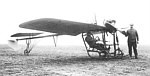
Józef Borzęcki was absorbed in the idea of building a simple, amateur glider for everyone. It was created under the influence of information about the pre-war Polish glider Bąk, designed by Adam Kocjan. His interest in aviation matters grew. He collected aerial books and magazines. He visited libraries and private collections. Despite many classes at work and family responsibilities, he devoted every spare moment to design work on his dream glider. Independently acquired the knowledge necessary to carry out the construction project.

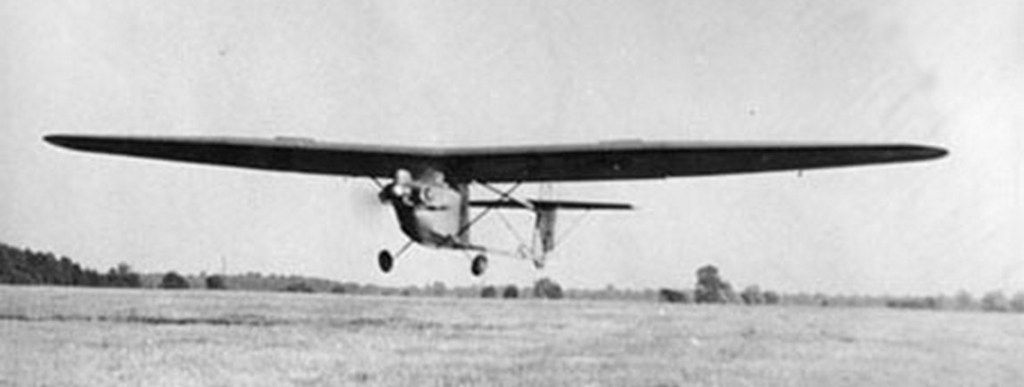
During 1952–1961 Józef Borzęcki designed and built a motor glider called Stratus. He even built his own dyno to choose the right engine. He made this engine himself, based on a Czech circular saw engine. He designed and made the propeller himself, then he began making parts and assembling the airframe. He made all parts, from the smallest ones (e.g. he tapped several thousand rivets!) By himself. The construction of the powered sailplane was carried out in extremely difficult conditions – an apartment and a garage served as a workshop. The designer believed that all parts should be made perfectly, because flight safety depends on them. At the same time, he strived for its construction to be characterized by simplicity of operation and reliability of operation.

It was initially powered by an engine from a Czech chainsaw and wings from Żuraw (crane) glider. It initially featured classic flight control system with a control stick and rudder pedals, subsequently replaced by a “coupled” control system, designed by Borzęcki, in which the stick was used to control the aircraft in all axes (pitch, roll and yaw). It was aimed at facilitating flight training and increasing comfort in non-professional conditions.

The construction of the powered sailplane was completed in 1960 and J. Borzęcki began the first tests. During an attempt to take off, during Easter 1962, the wing was seriously damaged. Failures broke the constructor’s stubbornness. He no longer wanted to repair the glider, but he returned to work on it. He used in it (later used in all its constructions) so-called coupled control, i.e. only with a joystick that deflects the rudders and provides longitudinal and transverse control. Control of this kind, which he developed and developed completely independently, took him two years of hard work. Coupled control system of J. Borzecki’s idea had a number of advantages, especially significant in the case of little experience of amateur pilot. He again began the tests, which showed the correct flight properties of the powered sailplane. Over the next few months, he often performed test flights, which slowly turned into flying for pleasure. During 1961–66 the Stratus was flown illegally and in secrecy.

In July 1966, the designer invited the pilot of the flight and the editor of the newspaper Polish Word – editor Andrzej Macko to perform a test flight. He made several test flights, issuing a very favorable opinion about him. Articles by A. Macko published in Kulisach and the Polish Word about Józef Borzęcki’s motor glider started a nationwide discussion on amateur aviation in Poland.

In May 1967, an extensive article on amateur aviation was published in Winged Poland, a lot of space was devoted to the glider “Stratus”. In the press and everywhere where there were people interested in aviation, from aeroclubs to the Department of Aviation, there was a discussion about the future of amateur aviation in Poland.

In late 1960s the constructor undertook a rebuilding process. After this rebuilding the motor glider became the Altostratus.

Florov-Borovkov I-207/5 Object 10

Florov and Borovkov continued with the “Object 10” project airplane that had a clear influence of the I-207 fighter, which is why the literature has sometimes named it I-207/5.

The project for this aircraft was ready for 1940 and envisaged the use of a Shvietsov M-71 engine. The fundamental objective of this new project was to achieve a design capable of eliminating all the difficulties encountered during the I-207 tests.

The aim was to demonstrate the possibility of creating a highly maneuverable biplane fighter with minimal resistance to advance, capable of competing with the best monoplane fighters of the time. The selection of a biplane wing box, according to its creators, should guarantee a more compact aircraft with better visibility for the pilot.

On this occasion and in order to achieve a wing as thin as possible, the builders decided to use a gull-type wing configuration for the upper wing and inverted gull for the lower wing. As in the I-207, the use of any type of bracing or upright was not foreseen. According to calculations the “Object 10” should reach a speed of 650 km / h with a turn time of 14 – 16 seconds.

In an attempt to achieve the highest possible speed, the builders designed from the beginning of the design stage, the use of reactive engines.

As early as July 1939 the engine manufacturer Merkulov had proposed the use of auxiliary ramjets in piston-engined aircraft. These ramjets were characterized by using the same jet fuel as the main power plant. These motors were called DM, acronym for Dopolnitielni Motor or auxiliary motor.

DM motors were designed as short-term supports for those moments in combat when additional speed was required. The first tests of these auxiliary engines were developed on a Polikarpov I-15bis in late 1939. The results were promising and for this reason in 1940 the constructors Borovkov and Florov installed these engines on the I-207/3. The test pilot of Factory No.207, LM Maximov, carried out about twenty flights without difficulties on this plane.

In the “Object 10” project the DM was installed inside the rear fuselage, behind the cockpit. In this way, its installation did not affect performance during the flight under normal conditions. The DM could be switched on by the pilot. For this, some side doors were opened that allowed air access to the engine and it was turned on. An increase in speed was calculated to about 840 km / h.

Unlike the previous models, the tail section was designed as a monocoque duralumin structure with a structure similar to that used in the wing. This was due to the need to reinforce the tail for the installation of the DM engine and to the need to avoid possible fires caused by the hot exhaust gases from the ramjet.

The armament was designed in such a way that it could be added or removed depending on the mission. The initial version was armed with two ShKAS 7.62 mm machine guns and a BS 12.7 mm machine gun, which could be replaced in field conditions by two 23 mm guns in the ground attack version. The armament had to include the possibility of transporting 250 – 500 kg bombs and dropping them accurately during dive on the target.

In the design, 350 – 400 kg were estimated for the armor and the installation of the guns. The cockpit and vital organs of the plane had to be protected. In the fighter version, the pilot’s back was protected by 8.5 mm thick concrete armor capable of defending the pilot from the firing of normal caliber weapons. The frontal armor was provided by the radial motor. This, together with the small dimensions of the plane, guaranteed an important level of safety to the pilot. The fuselage fuel tank was also protected.

A feature was the retractable type tricycle undercarriage. This configuration had been successfully tested by the TsAGI on an SB bomber. As early as 1940, several Soviet models included this type of landing gear in their design. In the case of “Object 10” this decision was forced by the fact that the tail was occupied by Merkulov’s engine.

The “Object 10” project was handed over to the NKAP in the summer of 1940. This project envisaged the use of a Shvietsov M-71 engine and a maximum armament capacity of 1000 kilograms. The armament could be made up of 250 or 100 kilogram bombs, although the possibility of using eight RS-82 reactive rockets under the wings was envisaged. The armament was also composed of two 12.7 mm and two 7.62 mm machine guns.

The cockpit armor comprised a 4 – 4.5mm armored seat plus an 8.5mm cement plate at the rear of the seat.

The project data showed a speed of 658 km / h without the auxiliary engine in the fighter version. The ground attack model had to fly at a speed of 550 km / h.

The project was reviewed by a directed commission for academic BN Yuriev on 3 August 1940, which considered objective the construction of the aircraft in its hunting version high manoeuvrability and in its version with two FAB-250 or four FAB- 100. The commission noted that the actual speed to be reached without the auxiliary engine would be only 605 km / h.

With these results, this variant in general could become an excellent ground attack aircraft. The possibility of using the M-82 engine was also evaluated.

With the start of the war, neither this model nor its development known as “Object 11” were built.

Object 10
Engine: 1x Shvetsov M-71 (1700/2000 hp); 1x Merkulov DM ramjet
Wing span: 9.5 m
Wing area: 24.0 sq.m
Length: 8.35 m
Takeoff weight: 3500 kg
Wing loading: 146 kg/sq.m
Max speed w/out ramjet: 650 km/h
Max speed with ramjet: 750-800 km/h
Climb to 8000 m (with ramjet active): 8.0 min
Flight range: 800 km
Armament: 1x 12.7 mm Berezin BS, 2x 7.62 mm ShKAS or 2x 23 mm cannons.
Crew: 1