Bristol Bagshot

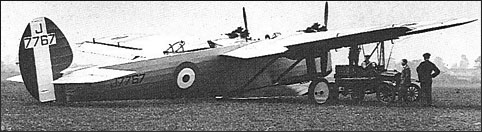
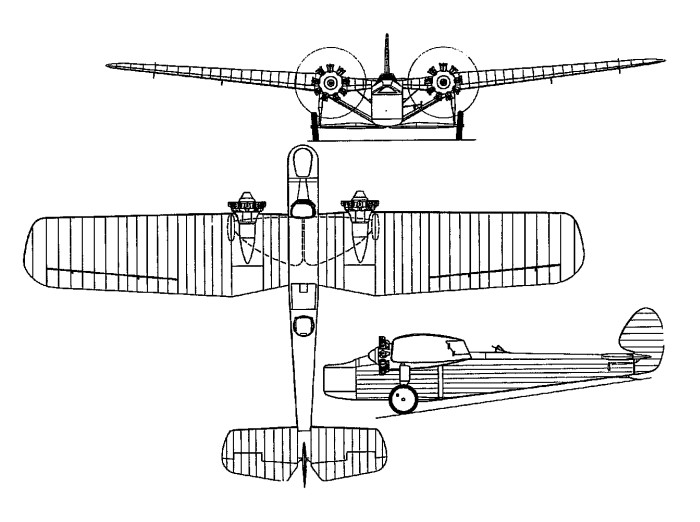
Specification 4/24 issued in 1924 called for a multi-seat twin-engined fighter capable of carrying two of the 37mm Coventry Ordnance Works (COW) cannon. To meet this requirement Frank Barnwell designed the Bagshot, the sole prototype of which was first flown on 15 July 1927.
Powered by two 450hp Bristol Jupiter VI engines, the Bagshot had a triangular-section, steel-tube, fabric-covered fuselage and a two-spar, shoulder-mounted wing with a steel primary structure. One 37mm COW gun was carried in an open nose turret and another in a dorsal position, a Scarff-mounted 7.7mm Lewis being carried aft of the latter gun. The crew comprised pilot and two gunners. During flight trials it was discovered that aileron reversal resulting from wing torsional flexibility produced ineffective lateral control, and as it was concluded that the shortcomings of the aircraft could be eradicated only by virtually complete redesign, further flight trials with the Bagshot were abandoned.

Enginhe: 2 x 450hp Bristol Jupiter
Take-off weight: 3717 kg / 8195 lb
Empty weight: 2313 kg / 5099 lb
Wingspan: 21.34 m / 70 ft 0 in
Length: 13.69 m / 44 ft 11 in
Height: 2.89 m / 9 ft 6 in
Wing area: 78.04 sq.m / 840.01 sq ft
Max. speed: 201 km/h / 125 mph
Armament: 2 x37mm COW gun, 1 x 7.7mm Lewis

Bristol 91 Brownie

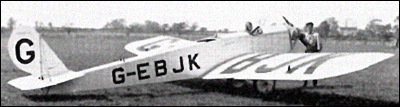
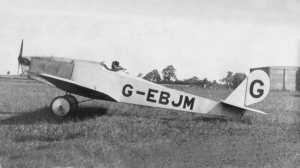
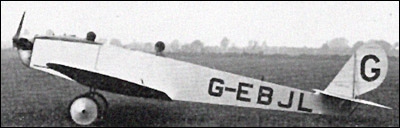
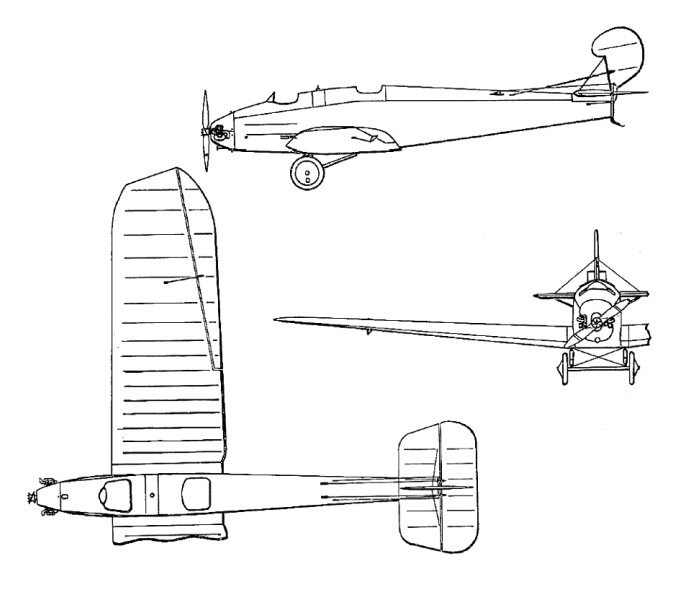
In 1927, a lightweight two-seater Brownie G-EBJM, built for the Lympne ultralight trials and much modified as a prospective basic trainer for the Air Ministry, had been allocated to Frank Barnwell as his personal runabout.

Bristol Brownie G-EBJM

Barnwell flew it in all weathers, on one occasion remaining in view for over an hour from Filton as he battled enormous easterly headwinds over the Cotswolds. In March 1928, he crashed it at Farnborough, only yards from his decapitated tree.

91 (wood)
Engine: 1 x 32hp Bristol Cherub I
Take-off weight: 395 kg / 871 lb
Empty weight: 227 kg / 500 lb
Wingspan: 10.54 m / 34 ft 7 in
Length: 8.00 m / 26 ft 3 in
Height: 1.98 m / 6 ft 6 in
Wing area: 18.95 sq.m / 203.98 sq ft
Max. speed: 113 km/h / 70 mph
Range: 161 km / 100 miles

Bristol Brownie II Type 91B

Bristol B.72 Racer

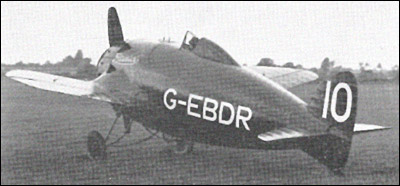
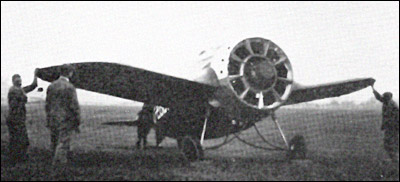
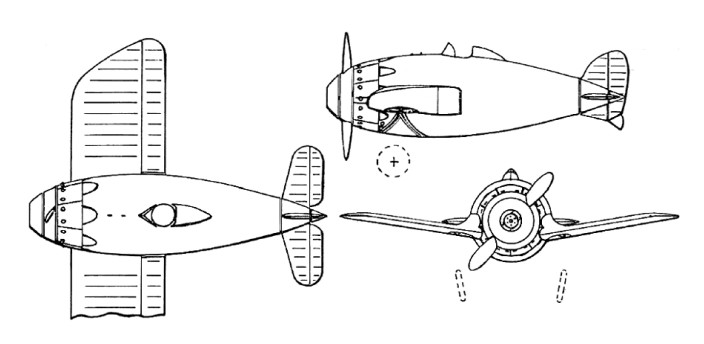
The Bristol 72 Racer was designed in 1922, by engineer Wilfrid Thomas Reid. It has a cylindrical monocoque fuselage and retractable landing gear. Of mixed construction wood and metal for the fuselage, the wings fabric covered. Power way provided by a Bristol Jupiter IV of 480 hp.

Controlled by Mr. FC Uwins, it first flew in June 1922. The Racer encountered many problems with instability. Envisaged entering the Aerial Derby of 1922, it was painted red, registered G-EBRD, and given the number 10, it did not take part as it was not ready. With continuing difficulties with development, it was abandoned in 1924 after having flown only 8 times.

Bristol M1 Monoplane / B.20

M1C

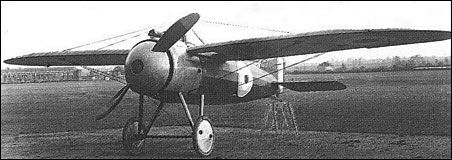
The prototype Bristol M.1A, designed by Frank Barnwell with a 110 hp Clerget engine, flew for the first time on 14 July 1916. Streamlined for its day, it reached a top speed of 132 mph.

Four M.1B’s were built for service trials, differing from the prototype only in having a pyramid-shape wing support structure, in place of the former curved cabane, and a 7.7mm Vickers machine-gun on the port side of their front fuselage and a clear-view cut-out panel in the starboard wing root to afford the pilot a measure of downward visibility.

A production order for 125 aircraft was placed on 3 August 1917 as M.1s. Powered by a 110hp Le Rhone 9J nine-cylinder rotary engine, the M.1C had a centrally-mounted Vickers gun, but its subsequent operational career was largely confined to the Middle East where 33 M.1Cs were sent during 1917-18.

M .1C

Only five squadrons were partly equipped with the M1 for operational use although a number were issued to flying schools. No aircraft of this type were issued to RFC squadrons based in France, the 97km/h landing speed being considered too high for small Western Front airfields.

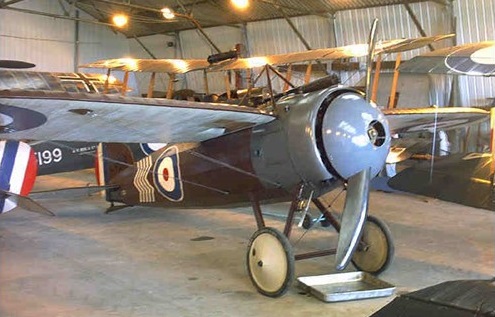
Northern Aeroplane Workshops Replica Bristol M1C

Replica: Northern Aeroplane Workshops Bristol M1C

Gallery

M.1A
Engine: 110 hp Clerget
Seats: 1

M.1B
Engine: 110 hp Clerget
Seats: 1

M.1C
Engine: 110hp Le Rhone 9J nine-cylinder rotary
Wingspan: 9.37 m / 30 ft 9 in
Length: 6.23 m / 20 ft 5 in
Height: 2.37 m / 7 ft 9 in
Wing area: 13.47 sq.m / 144.99 sq ft
Empty weight: 406 kg / 895 lb
Take-off weight: 611 kg / 1347 lb
Fuel capacity: 18 gal
Max. speed: 209 km/h / 130 mph at SL
Service ceiling: 20,000 ft
Endurance: 1 hr 45 min
Armament: 1 x Vickers 7.7mm mg
Seats: 1

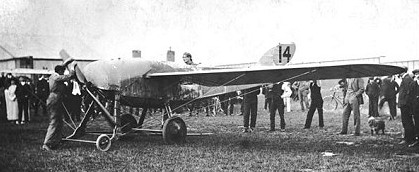
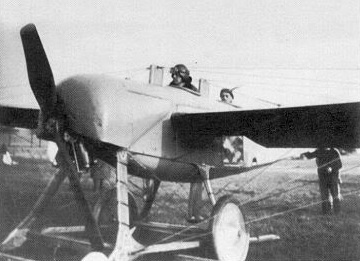
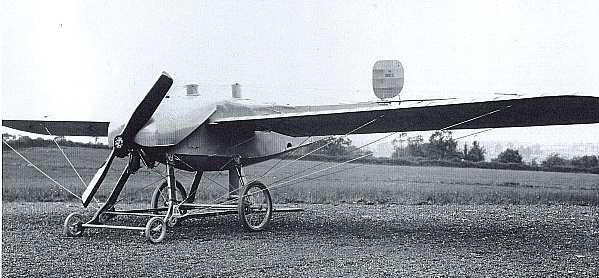
Bristol Coanda School / Coanda WO / Coanda Monoplane / Military Monoplane

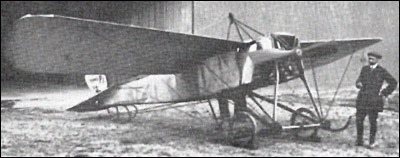
The Romanian aircraft designer Henri Coandă joined Bristol in January 1912 and his first design for Bristol was a two-seat monoplane trainer, a development of the Bristol Prier Monoplane, controlled by wing warping. The first prototype flew in March 1912.

Several versions of the plane were built from 1912 onwards with both tandem and side-by-side cockpits. Several were purchased by the War Office for use as trainers by the Royal Flying Corps. International purchases were by Italy and Romania.

Henri Coandas’ second monoplane, No. 80, was similar but had side-by-side seats with dual controls. It was built in May 1912 and remained in continuous use as a school machine at Brooklands and Larkhill until crashed by Merriam and Gipps on 26 January 1914.

A series of similar aircraft followed with both tandem and side-by-side cockpits, known as the School Monoplane and the Side by Side Monoplane. The first School and Side by Side monoplanes entered service with flying schools operated by Bristol at Larkhill and Brooklands.

The two Competition Monoplanes were bought by the War Office after the Military Aircraft Competition, being used as trainers for the RFC. However, on 10 September 1912, one of the Competition Monoplanes crashed, killing Lieutenants Edward Hotchkiss and Claude Bettington. While this was traced to one of the bracing wires becoming detached, it resulted in a five-month ban of flying of all monoplanes by the military wing of the RFC.

Despite this ban, Military Monoplanes were purchased by Romania and Italy, with a production license being granted to Caproni (although this license was later cancelled, only two being built by Caproni). One tandem and two side-by-side machines were sold to Italy, with four tandem and three side-by-side aircraft being sold to Romania.

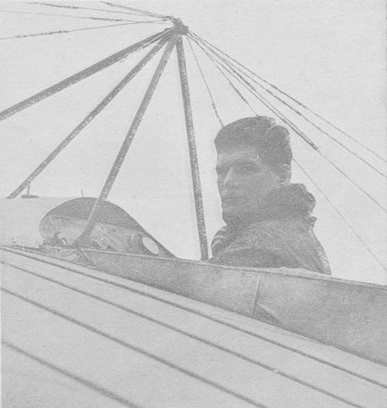
A more powerful derivative was built for a competition to provide aircraft for the British War Office. Two aircraft, known as Competition Monoplanes were built and entered into the competition, together with two Bristol Gordon England biplanes. The aircraft were flown by Harry Busteed, Bristol’s test pilot and James Valentine.

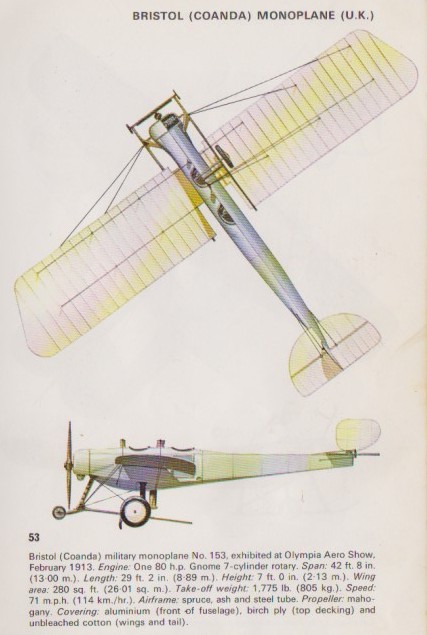
These did well in the competition, rated equal fifth and were described at the time as “well-designed and well-constructed” though criticised as “heavy for the wing area” and lacking in power. This resulted in their being purchased by the War Office for use as trainers by the Royal Flying Corps. These two aircraft formed the basis for a revised military trainer, the Military Monoplane, which had increased wingspan.

One example of the 37 built survives in the Gianni Caproni Museum of Aeronautics, Trento, Italy, being the oldest surviving Bristol aircraft still in existence. This aircraft was a pattern aircraft sent to Caproni as a basis for their licensed production, never being flown, but was restored to a complete example for display at the museum. The Military Monoplane later formed the basis for the Bristol TB.8, several being rebuilt into TB8s.

There is a monument in Wolvercote, Oxfordshire to Lieutenants Edward Hotchkiss and Claude Bettington, killed in a Bristol Coanda crash in 1912. The crash of a Coanda Military Monoplane on 10th September, 1912, at Wolvercote, Oxford, in which Lts. C. A. Bettington and E. Hotchkiss were killed, was responsible for the decision of the War Office to ban the use of all monoplanes in the Military Wing of the R.F.C. after several fatal accidents had occurred also with other types of monoplane.

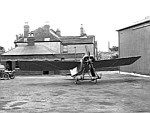
A couple of dozens were built and exported to Bulgaria, Germany, Italy and Roumania. No. 150, one of the three sent to the Deutsche Bristol Werke, at Halberstadt in April 1913.

Variants:

School Monoplane
Trainer aircraft with tandem cockpits. Powered by 50 hp (40 kW) Gnome engine. Six built.

Side by Side Monoplane
Trainer aircraft with side-by-side cockpit. Powered by 50 hp (40 kW) Gnome engine. Six built.

Competition Monoplane
Two aircraft built for War Office Military Aeroplane Competition. Powered by 80 hp (60 kW) Gnome engine.

Daimler Monoplane
Single aircraft powered by 70 hp (50 kW) Daimler engine. Overweight and unsuccessful.

Coanda School
Engine: 1 x 50hp Gnome
Take-off weight: 499 kg / 1100 lb
Empty weight: 350 kg / 772 lb
Wingspan: 12.19 m / 39 ft 12 in
Length: 8.23 m / 27 ft 0 in
Height: 2.13 m / 6 ft 12 in
Wing area: 25.55 sq.m / 275.02 sq ft
Max. speed: 105 km/h / 65 mph

Military Monoplane
Improved development of Competition Monoplane with increased wingspan.
Powered by 80 hp (60 kW) Gnome engine.
21 built.

Military Monoplane
Engine: 1 × Gnome Rotary, 80 hp
Wingspan: 37 ft 8 in (11.48 m)
Length: 29 ft 3 in (8.92 m)
Wing area: 450 ft² (41.8 m²)
Empty weight: 970lb (441 kg)
Max. takeoff weight: 1,665 lb (757 kg)
Maximum speed: 56–61 knots (65–70 mph, 105–113 km/h)
Endurance: 5 hours
Climb to 3000 ft (915 m): 11 min
Armament: Some with a 7.92mm machine gun
Bombload: 12 x 10 lb (4.5 kg) light bombs
Crew: two

Military Monoplane
Engine: Gnôme 80ps, 79 hp
Length: 27.067 ft / 8.25 m
Height: 9.022 ft / 2.75 m
Wingspan: 41.995 ft / 12.8 m
Wing area: 279.864 sq.ft / 26.0 sq.m
Max take off weight: 1323.0 lb / 600.0 kg
Weight empty: 771.8 lb / 350.0 kg
Max. weight carried: 551.3 lb / 250.0 kg
Max. speed: 62 kts / 114 km/h
Cruising speed: 54 kts / 100 km/h
Wing load: 4.72 lb/sq.ft / 23.0 kg/sq.m
Range: 130 nm / 240 km
Crew: 2
Bristol Prier P.1

The 1911 P1 monoplane, designed by Prier, Dickson and Coanda, was built as single- or two- seaters, and with various dimensions; Span: 30’2″, 32’9″, 34′, 35’6″ Length: 24’6″, 27′.

A reconnaissance version was exhibited at the Salon de l’Aeronautique at Paris in December 1911, where it was the only British product on show. The type was also used for early wireless experiments.

Australian Mr Busteed flying the Bristol Monoplane in 1911

Gallery

Prier P-1
Engine: 1 x 50hp Gnome
Take-off weight: 372 kg / 820 lb
Empty weight: 291 kg / 642 lb
Wingspan: 9.19 m / 30 ft 2 in
Length: 7.47 m / 24 ft 6 in
Height: 2.97 m / 9 ft 9 in
Wing area: 15.42 sq.m / 165.98 sq ft
Max. Speed: 109 km/h / 68 mph
Crew: 1

BRM Aero Bristell NG 5

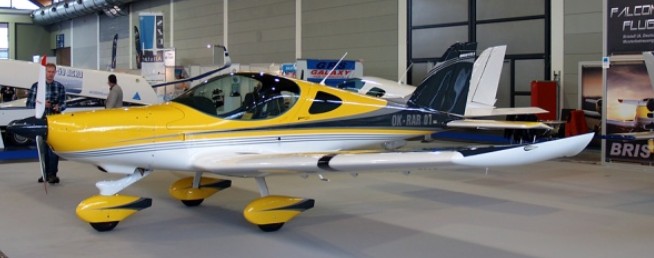
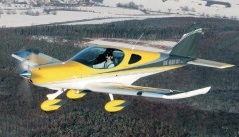
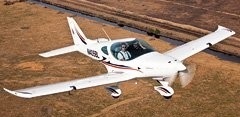
The BRM Aero Bristell is a Czech low-wing, two-seat in side-by-side configuration, single engine in tractor configuration, ultralight and light-sport aircraft that was designed by Milan Bristela and produced by BRM Aero. The aircraft was supplied as a complete ready-to-fly aircraft.

The aircraft was designed to comply with both European microlight rules and also the US light-sport aircraft regulations, by using different versions for each regulatory environment.

The aircraft is made from aluminium and features a 130 cm (51 in) wide cabin at the shoulder, with a bubble canopy over the cockpit. The wings feature flaps. The standard engine is a 60 kW (80 hp) Rotax 912UL, with the 75 kW (101 hp) Rotax 912ULS, the 71 kW (95 hp) ULPower UL260i/iS and the 88 kW (118 hp) ULPower UL350iS powerplants optional. The 115 hp (86 kW) Rotax 914, 85 hp (63 kW) Jabiru 2200 and 120 hp (89 kW) Jabiru 3300 are also available. Other engines are planned, particularly for the United States market. The aircraft has a useful load of 279 kg (615 lb). The landing gear is of tricycle configuration.

The aircraft was introduced at the Aero show held in Friedrichshafen in 2011. After 42 examples had been completed (September 2011) the aircraft was introduced into the US market in September 2011 at the AOPA Summit. The 2011 base price was US$125,000.

Ultralight aeroplane Bristell UL and its modifications Bristell HD, Bristell RG and Bristell LSA are aeroplanes for flight training in flight schools, gliders towing and recreational flying.
The Bristell HD version offers heavy-duty wing spars, and Bristell RG is a version with retractable undercarriage.

The Bristell tricycle-gear (and new taildragger version), low-wing S-LSA comes standard with 10-inch Dynon SkyView or Advance Flight Systems AF5600 EFIS panel, Com, two-axis autopilot, BRS parachute and leather interior. Price 2012: $156,000.

Gallery

Variants:

Bristell UL
Base ultralight model
Engine: 1 × Rotax 912ULS , 75 kW (100 hp)
Wing span: 8,13 m (26 ft 8 in)
Wing area: 10,5 sq.m (113 sq ft)
Wing loading: 45 kg/ sq.m
Length: 6,45 m (21 ft 2 in)
Height: 2,28 m (7 ft 6 in)
Cabin width: 1,3 m
Empty weight: 290 kg (639 lb)
Maximum take-off weight: 472,5 kg (1,042 lb)
Useful load: 182,5 kg
Fuel tanks capacity: 130 lt (29 imp gal; 34 US gal)
Fuselage luggage compartment: 15 kg
Wing luggage compartment: 2 x 20 kg
Load factors: +4/-2g
Stall speed with flaps VSO: 52 km/h
Stall speed without flaps Vs1: 67 km/h
Manoeuvring speed VA: 165 km/h
Maximum flap speed VF: 139 km/h
Cruising speed: 214 km/h 250 km/h
Never exceeded speed VNE: 270 km/h
Seats: 2

Bristell HD
Heavy duty model
Wing span: 8,13 m
Wing area: 10,5 sq.m
Wing loading: 57,1 kg/ sq.m
Length: 6,45 m
Height: 2,28 m
Cabin width: 1,3 m
Empty weight: 310 kg
Maximum take-off weight: 600 kg
Useful load: 290 kg
Fuel tanks capacity: 130 lt
Fuselage luggage compartment: 15 kg
Wing luggage compartment: 2 x 20 kg
Load factors: +4/-2g
Stall speed with flaps VSO: 78 km/h
Stall speed without flaps Vs1: 87 km/h
Manoeuvring speed VA: 165 km/h
Maximum flap speed VF: 139 km/h
Cruising speed: 250 km/h
Never exceeded speed VNE: 290 km/h

Bristell LSA
Model for the US light-sport aircraft category
Wing span: 9,13 m
Wing area: 11,75 sq.m
Wing loading: 51,06 kg/sq.m
Length: 6,45 m
Height: 2,28 m
Cabin width: 1,3 m
Empty weight: 330 kg
Maximum take-off weight: 600 kg
Useful load: 270 kg
Fuel capacity: 130 lt
Fuselage luggage capacity: 15 kg
Wing luggage compartment: 2 x 20 kg
Load factors: +4/-2g
Stall speed with flaps VSO: 58 km/h
Stall speed without flaps Vs1: 74 km/h
Manoeuvring speed VA: 165 km/h
Maximum flap speed VF: 139 km/h
Cruising speed: 250 km/h
Never exceeded speed VNE: 290 km/h

Bristell RG
Rectractable gear model
Wing span: 9,13 m (30.0 ft)
Wing area: 11,75 sq.m
Wing loading: 51,06 kg/ sq.m
Length: 6,45 m
Height: 2,28 m
Cabin width: 1,3 m
Empty weight: 335 kg
Maximum take-off weight: 600 kg (1,323 lb)
Useful load: 265 kg
Fuel tanks capacity: 130 lt
Fuselage luggage compartment: 15 kg
Wing luggage compartment: 2 x 20 kg
Load factors: +4/-2g
Stall speed with flaps VSO: 58 km/h
Stall speed without flaps Vs1: 74 km/h
Manoeuvring speed VA: 165 km/h
Maximum flap speed VF: 139 km/h
Cruising speed: 250 km/h
Never exceeded speed VNE: 290 km/h

Bright Star Gliders Valkyrie

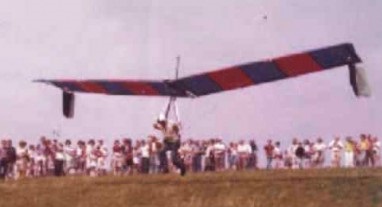
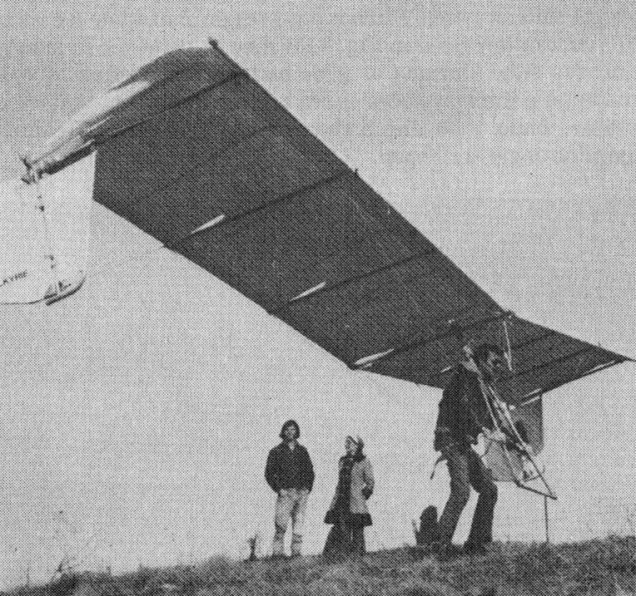
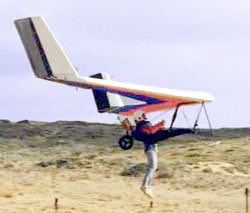
Designed by Bill Wolf of Columbus, Indiana, USA. It was easy to build with just the construction plan. But one big disadvantage: it could not be completely disassembled, only folded in half.

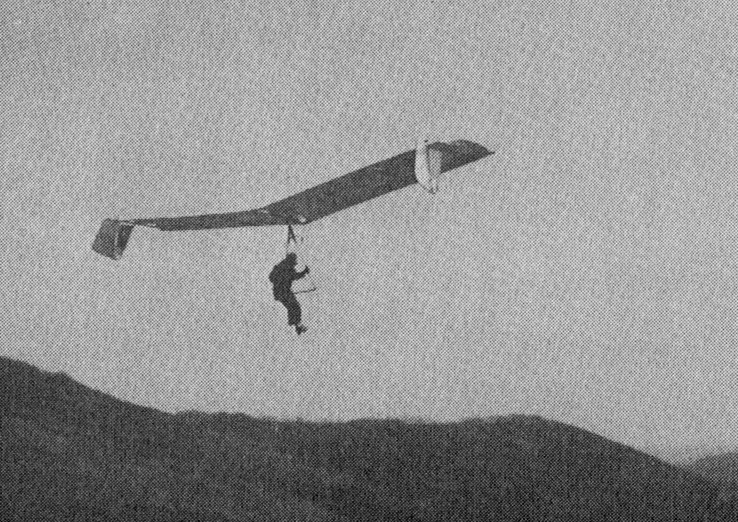
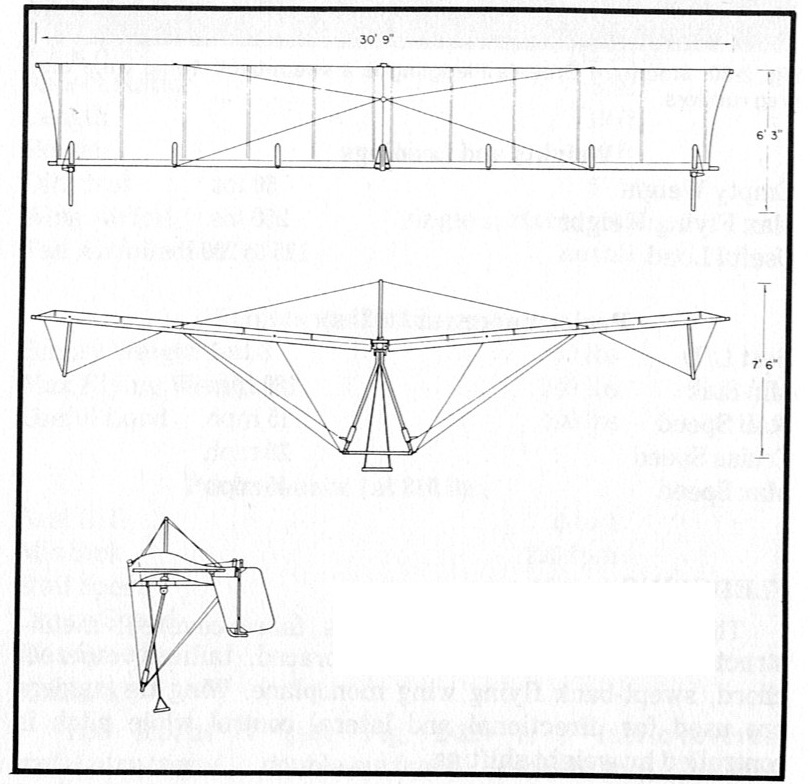
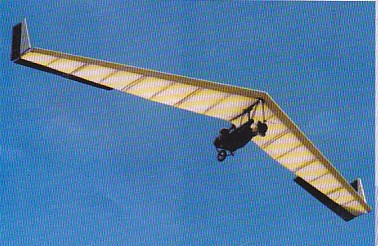
The Valkyrie is a fabric covered metal-structured, cable-braced, tailless, flying wing of constant chord and straight leading edge. Wingtip rudders are used for directional control, while pitch control is achieved solely by means of weight shifting. The tip rudders may be deflected to induce drag for either turning or glide path control. Deflecting one rudder at a time produces a turn and bank about the deflected rudder, while deflecting both rudders simultaneously causes the glide angle to steepen.

Take down / setup times are about 10 minutes without tools, and the Valkyrie should be carried on a special rack to minimise damage. Pilot suspension is via typical swing seat. It takes about 50 to 60 hours to build a kit.

Bill Wolf’s unique Valkyrie

Wing area: 12.82 m²
Wing span: 9.37 m
Aspect ratio: 6.8
Hang glider weight: 22 kg

Wing span: 30 ft 9 in
Wing area: 138 sq.ft
Aspect ratio: 6.8
Length: 6 ft 3 in
Height: 7 ft 6 in
Dihedral: 5 degrees
Wing Airfoil: single surface, reflex
Empty weight: 50 lb
Max flying weight: 250 lb
Useful load: 125-200 lb
Best L/D: 8-1
Min sink: 180 fpm
Stall: 15 mph
Cruise: 20 mph
Max speed: 45 mph

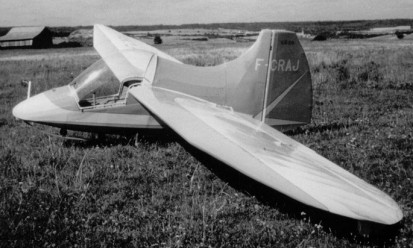
Briffaud GB-80 Aerovoiler

While landing on a wet section of the runway, however, the nosewheel of the GB-6 dug in and it flipped over violently. The pilot was only slightly injured.
Only the wing was salvageable. Georges Briffaud considered re-using it by enlarging it for use in a motorglider project, the GB-80. This was a midwing single-seater whose engine, placed near the center of gravity, was to drive via a short driveshaft a two-bladed propeller located between the fixed vertical fin and the rudder. This solution had the advantage of fairing in the propeller during soaring flight without requiring feathering or the retraction of the engine-propeller assembly. The airframe was of fabric-covered wood; the cockpit was equipped with a molded canopy.
The GB-80 made its first flight as a glider on 21 September 1960 at Beynes with pilot Jacques Gomy at the controls, pulled by the club towplane. During succeeding flights, several modifications proved necessary, notably an increase in rudder area. Handling of the GB-80 was similar to that of other gliders of the same generation, and the machine’s wing performance was close to that of the Nord 2000 (French version of the German “Meise”), despite a low aspect ratio of only 7.6. It received its certificate of airworthiness (CNRP) on 4 July 1961. On one flight, it was double-towed with another flying wing, the AV-36 flown by Eric Nessler.
The motor originally intended for it, a 2-stroke, 18 hp Kroeber, was never installed, being replaced by an equivalent weight of ballast. The engine had no starter, and the development of that accessory was never completed (Charles Fauvel faced similar problems with the AV-45). Georges Briffaud designed a version designated GB-81, with a new, easier to build fuselage, but that project was never realized. Disappointed, Georges Briffaud decided in 1963 to dismantle the GB-80.

Wing span: 11.20 m
Length: 4.20 m
Wing Area: 15.4 sq.m
Airfoil: modified NACA 23012
Aspect ratio: 7.6
Empty weight: 165 kg
Max. weight: 260 kg
Best glide ratio: 22:1
Minimum sink rate: 0.90 m/s