The Burgoyne-Stirling Dicer was a low-wing monoplane built in 1948, probably at Knowle, UK.
The Dicer flew with the officially un-sanctioned registration G-AECN, which had previously been allocated to an unfinished Pou de Ciel c/n DCB.1 of D.C. Burgoyne pre-war.
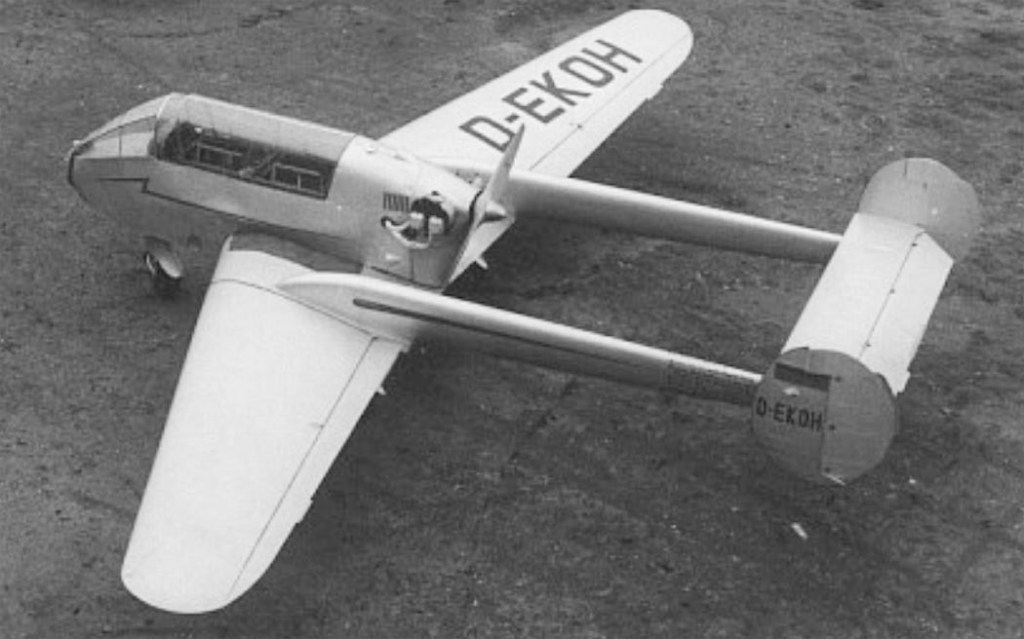
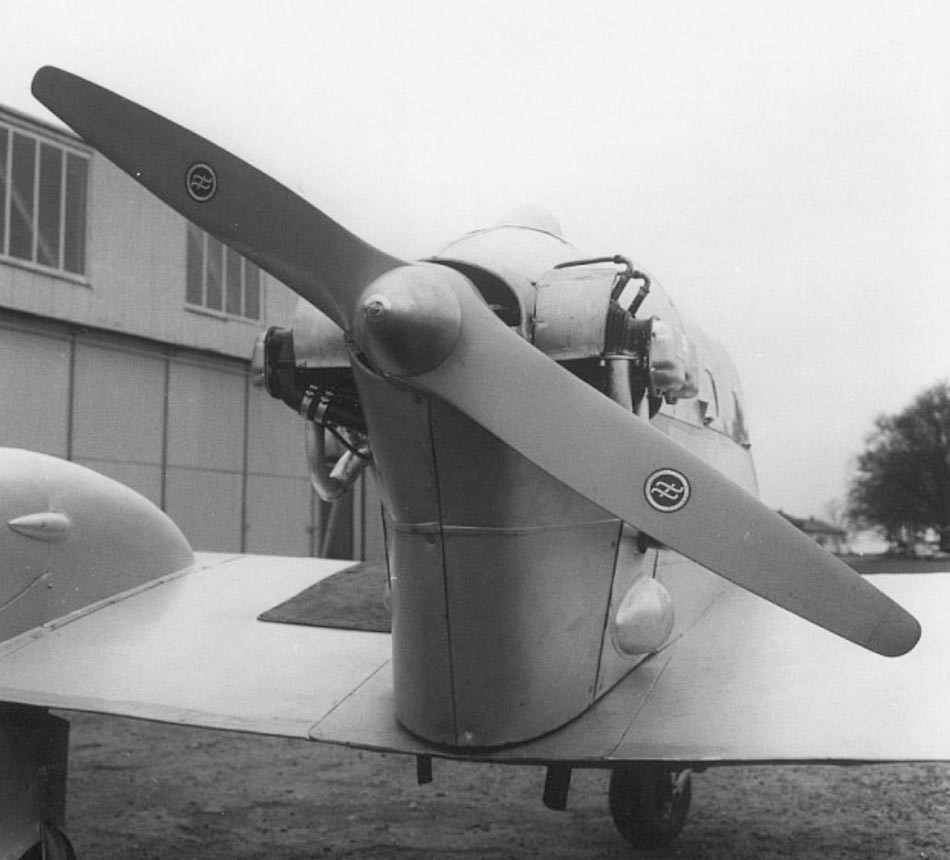
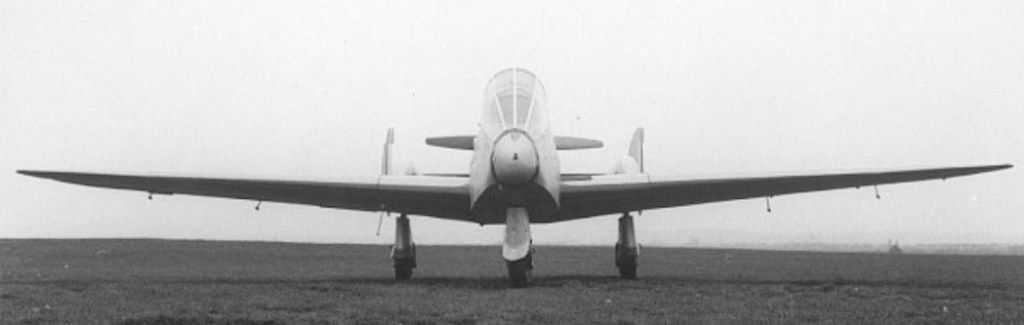
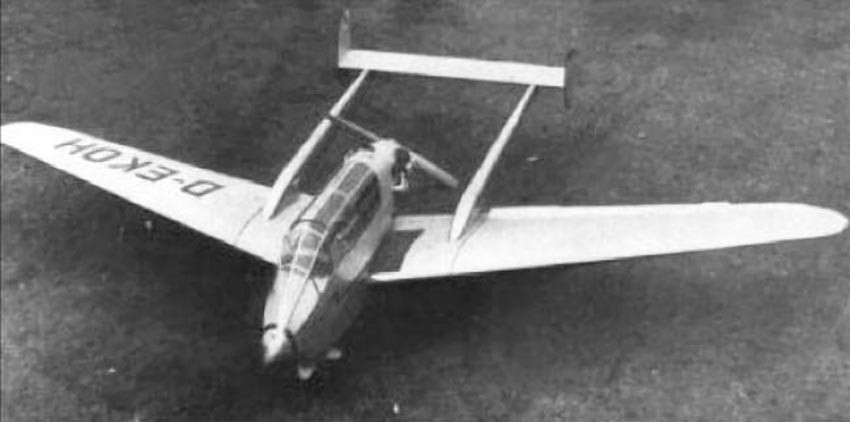
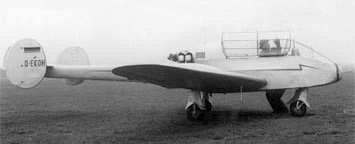
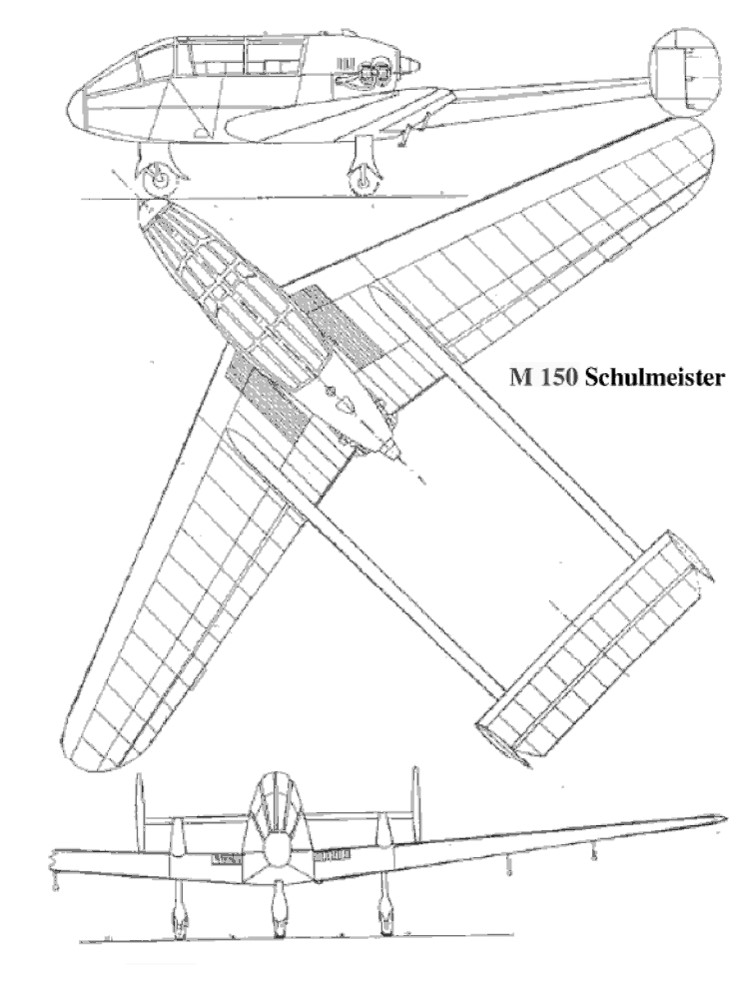
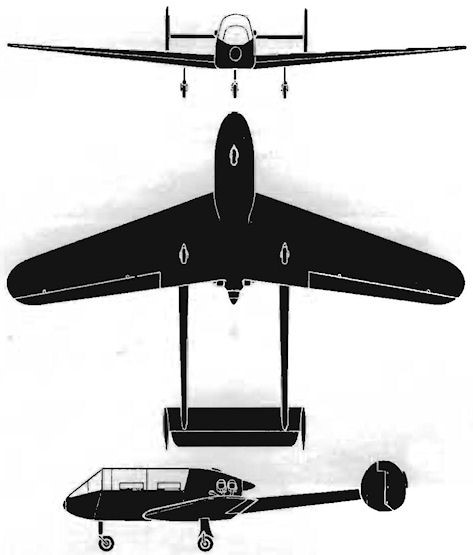
Developed from the A-15 (WN-16) aircraft, designed by the former Wiener-Neustadt company, the M-150 Schulmeister (Schoolmaster) is a two-seat, low-wing type, powered by a 65 hp Continental C90 incorporating a pusher propeller.
In the early 1950s, the German company Burgfalke Segelflugzeugbau became interested in the aircraft. Maidl modernized the project to meet new requirements resulting in 1956, with the M-150 Schulmeister.
The M-150 is capable of simple aerobatics, and the makers claim that it is almost impossible to spin even under extreme flight conditions. Construction is of mixed wood and steel, the main structural members being of steel. The wing and tail units are mostly of wood, with the leading edge and undersides ply covered, and the upper surfaces fabric covered. Fuselage is of a tubular structure and fabric covered.
The prototype aircraft first flew on September 14, 1957. Having received the civil registration D-EKOH in the same year, the aircraft was tested, but could not interest potential customers.
M-150 Engine: Continental C90, 90 hp Wingspan: 9.84 m Wing area: 13.50 sq.m Length: 7.27 m Height: 1.80 m Empty weight: 350 kg Maximum takeoff weight: 590 kg Maximum speed: 165 km/h Cruise speed: 145 km/h Practical range: 500 km Practical ceiling: 4200 m Crew: 2
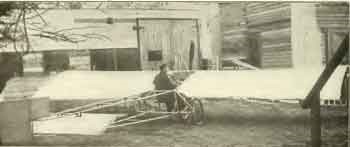
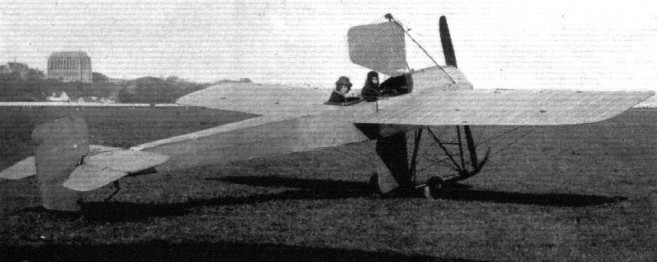
The people behind this design were E.H. Wiseman and R.C. Burgess of Cleveland, Ohio, USA. Wiseman himself designed and built the monoplane, including the flat four-cylinder engine which was to have provided 25hp.
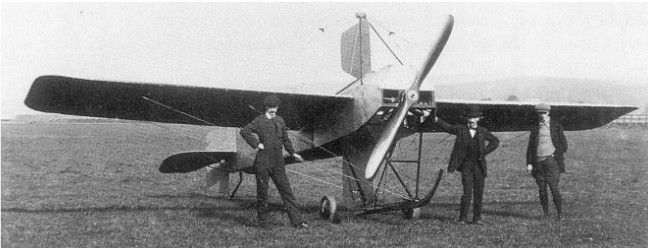
Lieut. R.F. Burga of the Peruvian Navy made the radical suggestion that it might be better to effect lateral control with two rudder-like surfaces, mounted near the centre of gravity and at right angles to the wings. A roll would be initiated by turning these surfaces, one below and one above the fuselage, in opposite directions. Burga applied for a patent in 1910 and it was published on 2 November 1911. He approached A.V Roe & Co., who would build other people’s designs for them, and in 1912 a single engined shoulder winged monoplane was produced with the novel control surfaces. It has been suggested that this aircraft may have been the Avro 502.
The Burga monoplane was built at Avro’s Manchester factory at the same time as the prototype Avro Type E biplane, and it used the same tail unit and undercarriage. Control surfaces apart, it differed primarily in being a monoplane, but also in having a more slender fuselage, though still a two seater, and in using a less powerful but lighter engine, a 50 hp (37 kW) Gnome rotary. The wings were braced from below to strong points on the undercarriage and from above to a pylon just ahead of the front cockpit. A vertical shaft attached to this pylon appears also to have carried the leading edges of the lateral control surfaces; the one below the fuselage was almost rectangular but the upper one was shaped to avoid the passenger’s head. There was no wing warping.
Though Avro aircraft had always been built in Manchester, they had never flown from there but rather from the Avro School’s base at Brooklands; in August 1912, however the school had moved to Shoreham on the south coast, which is where the Burga machine was test flown. The first flight was on 20 November 1912, piloted by H.R. Simms, one of the School’s pilots. The monoplane had been designed to take wings of different camber and incidence, and those chosen for the early testing were expected to give the highest speed. Simm’s reported hat the aircraft was fast and had a good rate of climb, but no reports on handling with the new surfaces seems to have survived. Further taxying trials were made by H. S. Powell in the following month, and in January 1913 the Burga monoplane returned to the Avro works at Manchester for modification. After more flying, the aircraft was reported as back at the Avro factory for modification but was not seen again.
Engine: 1 × Gnome et Rhône 7-cylinder rotary, 50 hp (37 kW) Length: 29 ft 0 in (8.84 m) Crew: 1 Passenger capacity: 1
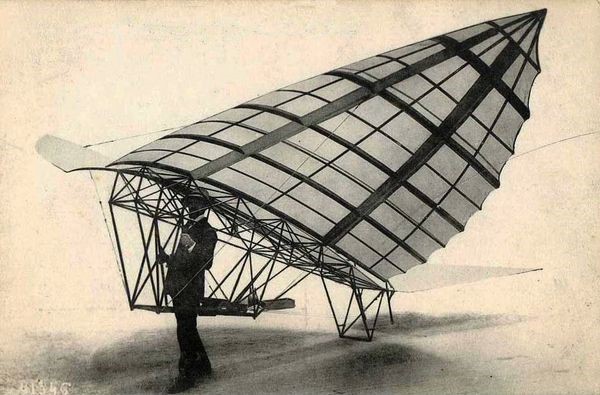
Built by the “Société de Construction d’Appareils Aériens” in Levallois, based on the design of M. Bünzli during 1908-09. The firm’s specialty, the production of wooden parts, destined the framework to be made entirely of wood. The glider consisted of a pair of V-shaped wings set at an angle of 14 degrees, held into place by elastic cords attached to the top and the bottom of the frame. The underside of the frame had an ingenious slide construction that made it possible to move the pilot seat forwards and backwards. Cords were fixed at levers mounted on the elevator, which were then fastened to the moveable pilot chair, which in turn controlled the elevator at the back of the glider. When the pilot slid forward in his seat, the elevator turned down, lowering the nose of the glider. When sliding backwards the opposite happened as the elevator went up assisted by a spring device. Its wing area, the surfaces covered with balloon fabric, totalled 20 square meters; and weighing only about 36 kg, the length of the machine was 5.60 meters, its span 7 meters. It is said that better flights were made with this glider than with the machine of Chanute.
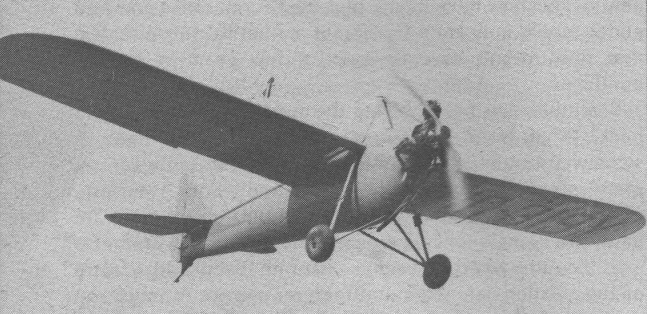
The only established airplane manufacturer of significance to succeed with a single-seater designed specifically to meet the depression was the Buhl Aircraft Co. of Detroit, Michigan. It marketed the 45-hp Flying Bull Pup in 1931 and sold over 100.
Note the windows in the wing root to give the pilot some downward visibility. While more than 100 were sold, they weren’t enough to keep the firm in business.