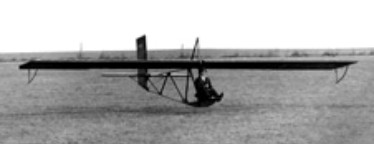
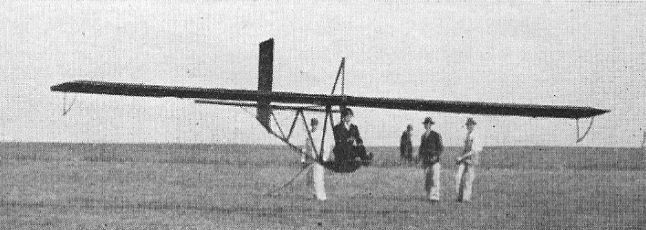
Cessna CG-2      

Designed by Eldon Cessna, Clyde’s son, the company produced and sold 300 Cessna CG-2 single-seat primary gliders that helped the company through the hard times of the Depression. The company produced 300 CG-2 but finally, at the insistence of the stockholders, the factory was closed although the company still existed. This situation continued through 1931 until 1934.

Cessna CW-6     

Cessna rolls out its first six-passenger plane, the Model CW-6, on November 1, 1928.

In November 1928 the CW-6 was flown. A six-seater powered by a 164kW Wright Whirlwind J-5 radial engine, it appeared at the 1929 Auto Show in Wichita.

The aircraft first flew in November 1928, powered by a 220 hp (164 kW) Wright Whirlwind J-5 radial engine.

The aircraft was displayed at the 1929 Auto Show in Wichita, Kansas.

The CW-6 was in Mexico when the revolution started, and the Mexican Air Force confiscated it and used it as a bomber against the rebels. When the revolution was crushed the Mexican Government formally purchased the CW-6.

A scaled-down four-seat version, the Cessna DC-6, was also developed.

Engine: 1 × Wright J-6 Whirlwind, 300 hp (220 kW)
Wingspan: 43 ft 4 in (13.21 m)
Height: 8 ft 2 in (2.49 m)
Wing area: 296 sq ft (27.5 sq.m)
Length: 29 ft 4 in (8.94 m)
Empty weight: 2,175 lb (987 kg)
Gross weight: 3,950 lb (1,792 kg)
Fuel capacity: 80 US gal (67 imp gal; 300 L)
Maximum speed: 148 mph (238 km/h; 129 kn)
Cruise speed: 120 mph (193 km/h; 104 kn)
Range: 610 mi (530 nmi; 982 km)
Service ceiling: 17,500 ft (5,300 m)
Rate of climb: 900 ft/min (4.6 m/s)
Crew: 1
Capacity: 5 passengers

Cessna BW

A three-seat version of the Model A was known as the Model BW, of which 13 were built with a 164kW Wright J-5 engine. The first Model BW rolled off the production line in March 1928.

Although the Model BW was a four-seater, it was restricted to three persons as the weight of the 220 hp Wright J-5 produced a forward centre of gravity problem.

The Depression caught up with Cessna in 1930, forcing the factory to suspend production.

Cessna A Series / AW

AW

The first Cessna design to enter series production was the Cessna Model A, the first of a long and immensely successful line of high-wing monoplanes. A four-seater of mixed wood and steel-tube construction with fabric covering, the type was built in several versions with different engines.

A Series prototype

The first Cessna A-series aircraft was delivered to Edwin A. Link of Pittsburgh, Pa., on February 28 for $6,500.
Type certification is issued for the Model AA on August 27 1928.

14 of the Model AA were manufactured with an 89kW Anzani, one of the Model AC with a 97kW Comet, three of the Model AF with a 112kW Floco/Axelson, four of the Model AS with a 93kW Siemens-Halske, and 48 of the Model AW powered by a 125-hp / 93kW Warner Scarab.

Model AA 120hp Anzani

The model AW was produced between 1928 and 1930, introduced at the 1928 National Races, and won the Class “A” Transcontinental Air Derby. Forty AW were delivered to the Curtiss Flying Service.

Cessna AW

At least one AW model was converted to take the Continental 220 engine.

1927 A Series

Gallery

AW
Engine: Warner Scarab, 110 hp
Wingspan: 40 ft 6.5 in
Length: 23 ft 8.5 in
Height: 7 ft 4 in
Wing area: 224 sq.ft
Empty weight: 1250 lb
Loaded weight: 2300 lb
Max speed: 128 mph
ROC: 700 fpm
Ceiling: 18,000 ft