Corby CJ-1 Starlet

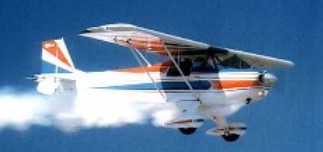
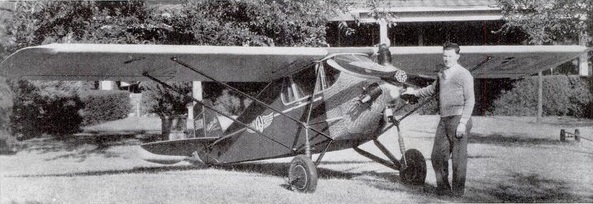
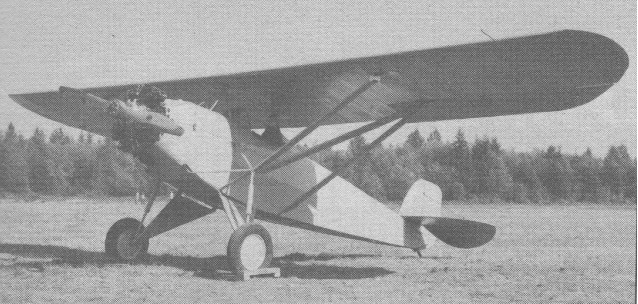
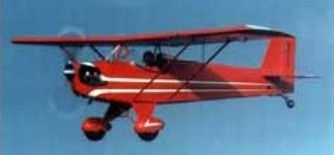
The Starlet was designed by Australian aero engineer John Corby of Sydney, N.S.W, Australia, for a competition held by English company Rollason Aircraft Ltd in 1964. The design was placed eighth, although it became first from the competition to be built. The prototype (VH-CBS) first flew on August 9th, 1967.
The Corby Starlet is a semi-aerobatic sports aircraft made of an all-wood onstruction.
The fuselage is a combination of spruce longerons and frames and is sheeted with plywood. The wing is a single-piece structure, consisting of a solid laminated spar and built-up ribs. The remainder of the wing, including the ailerons, is open-structure and fabric covered. The D-nose leading edge is plywood covered. The main undercarriage consists of spring-steel legs bolted to a stiffened frame in the fuselage, immediately behind the firewall. An 8 Imp. gallon fuel tank is located in the fuselage, immediately behind the firewall.
Powered usually by a VW conversion, the Starlet will take any suitable engine up to 75 hp and 72 kg (160 lb) in weight, and is aerobatic with limitations of +4.8 and 1.8G. Fuel consumption in the Starlet is between 10 and 14 litres per hour, depending on the power settings used, with an economic cruise of 110 knots. The Starlet can carry 15 lbs in a locker behind the seat, still normally within centre of gravity limits. Extra freight in most single seat homebuilts is usually either worn or sat upon to keep the C of G in the same place. Economic cruise is around 85 knots. At almost full throttle (3400 revs) the aircraft will approach VNE (138kts). The stall in a glide came at 35 knots.
Some Starlets have been outfitted with 2180’s (75-80 hp) and these cruise at VNE (185) and climb at 1900 fpm.

Gallery

Corby CJ-1 Starlet
Engine: VW or Jabiru
Horsepower: VW 45 – 75 hp Jabiru 80 hp
Propeller: Wood 54 inch
Overall Length: 15.1 ft (4.6 m)
Height: 4.8 ft (1.46 m)
Wingspan: 18.5 ft (5.63 m)
Wing Area: 68.5 sq ft (6.36 sq m)
Wing Loading: 10.9 lbs/sq ft (4.9 kg/sq m)
Cabin Width: 21.75 inch (.55 m)
Empty Weight: 450 lbs (203.6 kg)
Gross Weight: 750 lbs (339.4 kg)
Useful Load: 300 lbs (135.7 kg)
Fuel Capacity: 11.1 gal (42 l)
Maximum Speed: 139 kts @ sea level
Cruise Speed: 113 kts
Stall (or Min.) Speed:@ gross weight 30 kts
Service Ceiling: 14,500 ft (4419 m)
Takeoff Distance: 350 ft (106 m)
Landing Distance: 450 ft (137 m)
Rate of Climb (gross): 1000 fpm
Maximum Range: 425 nm
“G” Loading: +4.5g (+6.75g ultimate), -4.5g
Landing Gear: FG (Tailwheel)
Seats: 1

Corby Starlet
Engine: VW conversion, 70 hp
Engine range: 160 lbs or less 75 hp
Fuselage Length: 14 ft 9 in
Height: 4 ft 10 in
Width: 21.75 in
Span: 18 ft 6 in
Wing Area 68.5 sq.ft
Wing loading 10.2 lb/sq.ft
Power loading 11.6 lbs per hp
Empty Weight 450 – 500 lbs
Gross weight one piece wing: 750 lbs
Gross weight two piece wing: 650 lbs
Takeoff distance 350 ft
Landing distance 450 ft
Fuel capacity 11 gals US/ 9.7 Imp. Gals/44 lbs/20 kg
Stall (power off) 35 mph
Top speed (level) 160 mph
Normal Cruise 115-130 mph
Fuel burn Cruise 3.5 gph US / 21 lbs per hr
VNE (Mph) 159 (tested to 185)
Rate of Climb 850 fpm
Range 425 sm
Servive ceiling: 14,500 ft
Roll Rate 270 dps (approx.)
Take-off dist 50 ft: 1200 ft
Landing dist 50 ft: 1200 ft
Design Load +/- 4.5 proof (+/- 6.75 ultimate) Utility or Semi Aerobatic
MAC 45 in
Incidence 2.5 deg – 1 deg Tip
Airfoil: NACA 43012A
Aileron Deflection +15 deg – 15 deg
Horizontal tailplane
Span: 6 ft 6 in
Area: 13.75 sq. ft.
Elevator deflection +30 deg – -20 deg
Vertical Tailplane
Area: 7.4 sq. ft.
Rudder Deflection +/- 25 deg
Horsepower range: 30 to 60
Engine Weight 130-160 lbs
C.G. Range: 20 – 25% MAC or 8.7 in to 11.4 in” aft of Wing LE
Number of Seats:
One Building Time: 1400+

Engine: Agusta, 42 h.p.
Span: 18’ 6”.
Length: 14’ 9”.
Wing Area: 68.5 sq. ft.
Empty Weight: 400 lb.
Loaded Weight (semi-aerobatic): 650 lb.
Wing Loading: 9.2 lb/sq. ft.
Max. Speed: 115 mph.
Cruise Speed: 104 mph.

Engine: VW, 60 hp.
Vne: 160 mph.
Cruise: 130 mph.
Range: 425 sm.
Stall: 35 mph.
ROC: 1000 fpm.
Take-off dist: 350 ft.
Landing dist: 450 ft.
Service ceiling: 14,500 ft.
Fuel cap: 11 USG.
Weight empty: 450 lbs.
Gross: 750 lbs.
Height: 4.8 ft.
Length: 15.1 ft.
Wing span: 18.5 ft.
Wing area: 68.5 sq.ft.
Seats: 1.
Landing gear: tail wheel.

Corben Super Ace

Pober Super Ace

The Super Ace is constructed of basic materials, 4130 steel tubing for the fuselage, tail group, landing gear, fittings and wing struts. The wings are spruce spars and the wing ribs of spruce cap strips. The complete aircraft is covered with the PolyFiber covering materials. The wheels are 600×6 with hydraulic toe brakes. The control system is cable operated. The Prototype Super Ace is powered by a Continental C-85-8 engine of 85 hp. It does not have a starter or an electrical system. Power plants of up to 150 hp can be used; however, weight and balance considerations must be given to maintain the same engine and cowling lines and to keep the airplane’s proportions. The continental engine swings a Sensenich prop, which give a cruise speed of some 90 mph. The stall characteristics are gentle and straight forward. The coil springs mounted in tubes provide a soft landing and the wide landing gear adds to the ease of ground handling and a reasonable crosswind landing.
One of the many designs to come from the drawing board of EAA’s founding President, Paul H. Poberezny, the Super Ace, is an ideal project for first time builders. It offers the excitement of open cockpit flying and excellent performance. With options for 85 hp to 150 hp, the Super Ace can meet a wide range of desires. The fuselage is a traditional 4130 steel tube frame that’s covered with Stits Poly-fiber. The two-piece wing is made of Sitka spruce spars, ribs formed with 1/2” x 1/2” spruce caps and covering is again Stits Poly-fiber. Wing span is 27’-3 1/2”, length is 18’5” and empty weight is 685 pounds with a useful load factor of 385 pounds. Using a C-85 on the prototype, cruise speed is 90 mph. Info packs on the Pober Super Ace were $8.00, plans were $125.00 in 2009.

Pober Super Ace
Engine: Continental C-85, 80 hp.
HP range: 85-150.
Speed max: 160 mph.
Cruise: 110 mph.
Range: 250 sm.
Stall: 44 mph.
ROC: 500 fpm.
Take-off dist: 350 ft.
Landing dist: 450 ft.
Service ceiling: 25,000 ft.
Fuel cap: 12 USG.
Weight empty: 685 lbs.
Gross: 1030 lbs.
Height: 6.6 ft.
Length: 18.42 ft.
Wing span: 27.3 ft.
Wing area: 118 sq.ft.
Seats: 1.
Landing gear: tail wheel.
Corben Junior Ace / Ace Aircraft Junior Ace

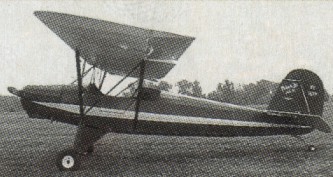
The Junior Ace is lightweight, easy to build, fun to fly and requires minimal maintenance. It has been modified from the original Corben Baby Ace so that it can utilize aircraft engines. The fuselage has also been widened, the horizontal stabilizer was modified for easier construction and modern aircraft wheels and brakes are now called for. With nearly a 34 ft wingspan and Clark Y airfoil, the Pober Junior Ace, designed by EAA founding president Paul Poberezny, is docile in stall and landing patterns. Airframe is 4130 steel tubing, wings are all wood and the recommended powerplant is a Continental C-85. Empty weight of the Junior Ace is 750 pounds and gross capacity is 1,320 pounds.

Junior Ace E

The Pober Junior Ace made its first flight with Captain Bud Judy at the controls. This first flight was successful and displayed the short field capabilities as well as low stall speed – ideal for small airstrips. The drawings for the airplane have full size wing rib drawings and two types of ailerons – the Friess aileron being a bit more responsive and lighter on aileron control. The indicated stall speed with one person on board is approximately 36 mpg. Indicated cruise with the Continental C-85-8 was a little over 80 mph. The Pober Junior Ace is open cockpit. The fuselage is chromoly steel tube, the tail group is chromoly steel tube and flat sheet stock to form ribs. The landing gear is chromoly tube with coil spring shocks. Wings are spruce spars and ribs. Two place side by side.
The kit price in 2009 was US$20950.

Junior Ace E
Engine: 85hp.
Span: 26’5”.
Wing area: 112 sq.ft.
Length: 17’9”.
Max wt: 1150 lbs.
Empty wt: 640 lbs.
ROC: 500 fpm.
Cruise: 78 kts.
Seats: 2.

Pober Junior Ace
Engine: Continental C-85, 85 hp.
HP range: 85-125.
Speed max: 130 mph.
Cruise: 80 mph.
Range: 250 sm.
Stall: 38 mph.
ROC: 500 fpm.
Take-off dist: 350 ft.
Landing dist: 450 ft.
Service ceiling: 25,000 ft.
Fuel cap: 12 USG.
Weight empty: 750 lbs.
Gross: 1320 lbs.
Height: 7.33 ft.
Length: 20 ft.
Wing span: 34 ft.
Wing area: 168 sq.ft.
Seats: 2.
Landing gear: tail wheel.
Engine: Lycoming O-235.
Hp range: 65-125.
Wingspan: 26.5 ft.
Length: 17.9 ft.
Wing area: 110 sq.ft.
Empty wt: 700 lbs.
Mtow: 1320 lbs.
Fuel cap: 22 USG.
Cruise: 100 mph.
Stall: 44 mph.
Range: 410 sm.
Roc: 500 fpm.
To dist: 600 ft.
Ldg dist: 300 ft.
Cockpit width: 40 in.

Ace Aircraft Corben Junior Ace Model E
Engine: Continental, Lycoming
Horsepower: 85-120
Propeller: 2 blade metal or wood
Cabin Width: 30 or 36 inches (76 or 91 cm)
Gross Weight: 1320 lbs (600 kg)
Empty Weight: 700 lbs (345 kg)
Useful Load: 620 lbs (270 kg)
Fuel Capacity: 22 USG (83 l)
Wingspan: 26.5 ft (8 m)
Wing Area: 110 sq.ft (10.2 sq.m)
Wing Loading: 12 lbs/sq.ft (58.6 kg/sq.m)
Overall Length: 18 ft (5.49 m)
Maximum Speed VNE: 113 kt | 130 mph | 209 kmh @ sea level
Cruise Speed: 95 kts
Stall Speed(@ MTOW): 38 kt | 44 mph | 71 kmh
Service Ceiling: 10,500 ft (3,200 m)
Takeoff Distance: 600 ft (183 m)
Landing Distance: 300 ft (91.5 m)
Rate of Climb(gross): 500 fpm
Center Of Gravity Aft Limit: 18.36″
Center Of Gravity Forward Limit:11.88″
Empty Cg: 12.5″ To 13.5″
Incidence Angles: Reference: Upper Longeron
Horiz. Stab: 0.0 Degrees
Wing: +1.18 Degrees
Engine: 0.0 Degrees Vert./Hor.
Vertical Fin: 0.0 Deg. (Fuse C/L)
Control Surface Travel Ailerons: 20 Deg. Up/Dn
Elevator: 32 Deg. Up/Dn
Rudder: 27 Deg. L/R
Center Of Gravity Aft Limit=18.36″
Forward Limit=11.88″
Empty Cg= 12.5″ To 13.5″
Incidence Angles: Reference= Upper Longeron
Horiz. Stab.= 0.0 Degrees
Wing= +1.18 Degrees
Engine= 0.0 Degrees Vert./Hor.
Vertical Fin= 0.0 Deg. (Fuse C/L)
Control Surface Travel Ailerons: 20 Deg. Up/Dn
Elevator: 32 Deg. Up/Dn
Rudder: 27 Deg. L/R
Landing Gear: FG (tailwheel or trike)
Seats: 2 Side-by-Side

Acro SportInc Pober Junior Ace
Engine: Continental C-85, 85 hp
HP range: 85-125 hp
Top speed: 130 mph
Cruise: 80 mph
Stall: 38 mph
Range: 250 nm
Rate of climb: 500 fpm
Takeoff dist: 350 ft
Landing dist: 450 ft
Service ceiling: 25,000 ft
Fuel capacity: 12 USG
Empty weight: 750 lb
Gross weight: 1313 lb
Height: 7.3 ft
Length: 20 ft
Wing span: 34 ft
Wing area: 168 sq.ft
Seats: 2
Undercarriage: tailwheel

Corben Baby Ace / Ace Aircraft Baby Ace

The Corben Baby Ace of 1929 was a professional design based on the Heath Parasol, but was a little more comfortable and had much better performance because of higher power. A 40-hp French Salmson AD-9 was used. Only six were factory-built, and a few were built from magazine plans in the 1930s.

The original Corben Baby Ace first flew back in 1931.

A single seat, high wing, sport plane powered by a modified Ford Model A 4 cyl inline engine. A simple and conventional design of open cockpit, strut-braced wing and tailplane, and a fixed, strutted, undercarriage. Later up-dated and marketed as the Pober Super Ace.

In 1954, Paul Poberenzy, who a year earlier had founded the still fledgling Experimental Aircraft Association, built a Baby Ace aircraft as a three part series in Mechanix Illustrated. The success of the articles caused an explosion in the homebuilt movement. The Baby Ace that Mr. Poberenzy built for Mechanix Illustrated is now in the EAA AirVenture Museum.

Corben Baby Ace D

The Baby Ace was extensively redesigned in 1955 as an ultralight monoplane specially designed for the amateur builder, the Baby Ace Model D. Baby Aces usually carry Continental engines rated from 65 to 85 hp and their performance is considered excellent by owners. Construction consists of a steel tube fuselage, all-wood wings and fabric covering. The wing is Clark Y mod from the root to the tip.

The Model C was refined by Ed Jacobs as the Model D. This first flew, as the DuCharme/EAA Baby Ace, on 16 November 1956.

In 1961 Ace Aircraft Mfg Co (Edwin T Jacobs), McFarland WI, purchased Baby Ace rights from Cliff DuCharme, West Bend WI.

Plans offered in 1968 for single-place Baby Ace ($28.50) and two-place Junior Ace, or Model E ($36.50). The kit price in 2009 was US$18950.

Gallery

Variation:
Dunn D-1

Specifications:

Engine: Szekley, 40 hp
Wingspan: 28 ft 8 in
Length: 17 ft 5 in
Height: 6 ft 0 in
Speed: 85 mph
Seats: 1

Baby Ace Model D
Engine: Continental C-65, 65 hp.
Hp range: 65-120.
Gross Wt. 950 lb.
Empty Wt. 575 lb.
Fuel capacity 17 USG.
Wingspan 26 ft 5 in
Length: 17 ft 9in
Wing area: 112 sq.ft.
Top 110 mph.
Cruise 90-100 mph.
Stall 34-38 mph.
Climb rate 1200 fpm.
Takeoff run 200ft.
Landing roll 250 ft.
Range 350-400 sm
Cockpit width: 34 in.
Seats: 1.

Ace Aircraft Corben Baby Ace Model D
Engine: Continental, Lycoming
Horsepower: 65-100
Propeller: 2 blade metal or wood
Cabin Width: 24 inches (61 cm)
MTOW Weight: 950 lbs (430 kg)
Empty Weight: 575 lbs (260 kg)
Useful Load: 375 lbs (170 kg)
Fuel Capacity: 17 USG (64 lt)
Wingspan: 26.5 ft (8 m)
Wing Area: 110 sq.ft (10.2 sq.m)
Wing Loading: 8.6 lbs/sq.ft (42 kg/sq.m)
Overall Length: 17.9 ft (5.46 m)
Maximum Speed VNE: 96 kts | 110 mph | 177 kmh @ sea level
Cruise Speed: 87 kts | 100 mph | 161 kmh
Stall Speed(@ MTOW): 30 kts | 34 mph | 55 kmh
Service Ceiling: 10,500 ft (3,200 m)
Takeoff Distance: 300 ft (91.5 m)
Landing Distance: 250 ft (76 m)
Rate of Climb(gross): 1200 fpm | 6 m/s
Centre of Gravity Aft Limit: 18.36 in
Centre of Gravity Forward Limit: 11.88 in
Empty Cg: 12.5 in To 13.5 in
Incidence Angles: Reference: Upper Longeron
Horiz. Stab: 0.0 Degrees
Wing: +1.18 Degrees
Engine: 0.0 Degrees Vert./Hor.
Vertical Fin: 0.0 Deg. (Fuse C/L)
Control Surface Travel: Ailerons: 20 Deg. Up/Dn
Elevator: 32 Deg. Up/Dn
Rudder: 27 Deg. L/R
Landing Gear: FG (tailwheel or trike)
Seats: 1

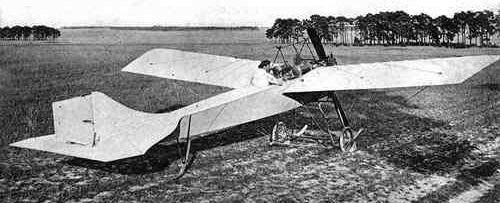
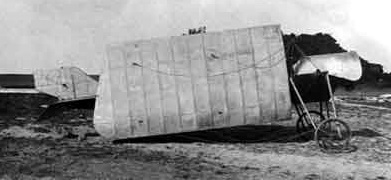
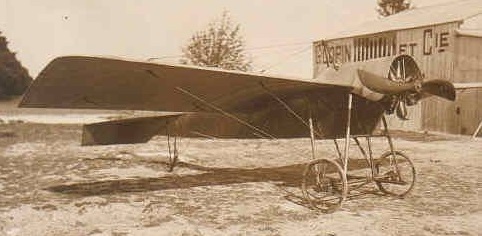
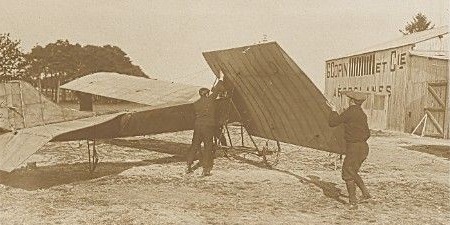
Copetta El Burrito

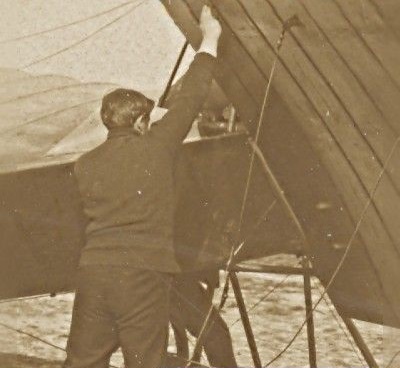
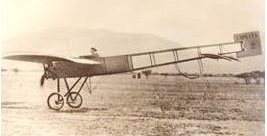
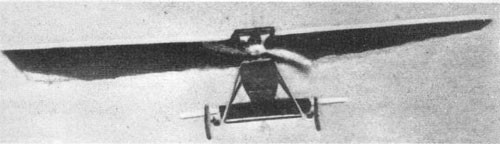
The first four airplanes constructed in Chile, were designed and built by the Copetta brothers. The first of them flew in 1911 and its name was “El Burrito” (young donkey). This airplane followed the lines of the Blériot IX in some way and was built in the necessity to fly after the irreparable destruction of their Voisin biplane, brought originally from France. Regardless of it being the first, “El Burrito” bore on its tail the inscription “Copetta 2”, since in those years it was common to put the name of the pilot and constructor; in this case Copetta and Copetta.

Cooke Avian Adventurer

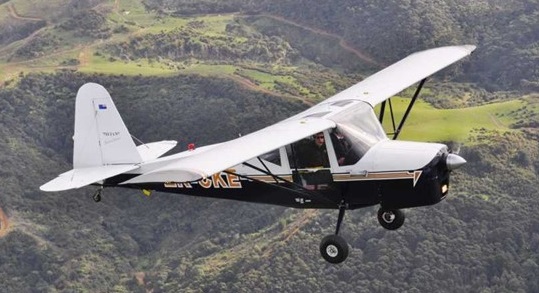
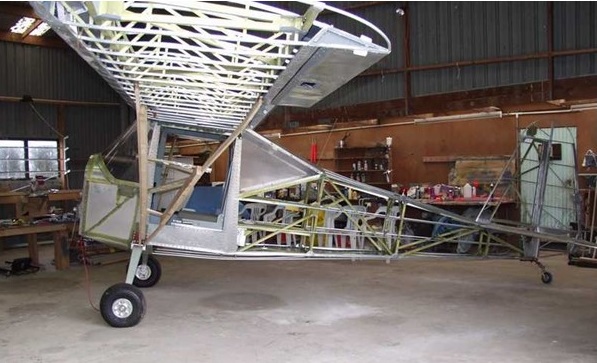
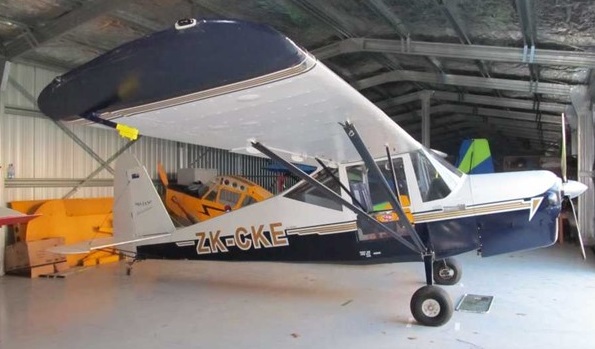
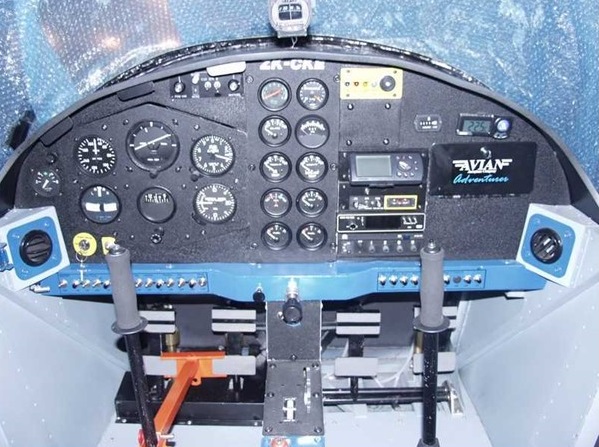
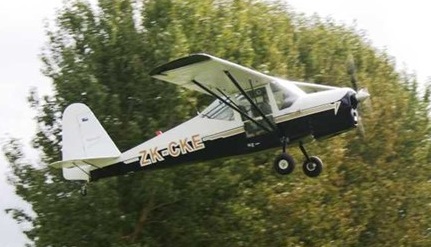
The Cooke Avian Adventurer is a one-off design constructed of riveted alloy extrusions, and fabric covered. Design and built by Bruce Cooke of Cambridge, New Zealand, construction was over 10 years and the approximate cost to build was NZ$10000-$20000. A two seat side by side plus large baggage bay, ultralight, there are full dual controls.

The aircraft is influenced by the classic taildraggers such as the Piper Cub, Cessna Bird Dog and the Auster series. Construction is of rivetted interlocking aluminium extrusions. This construction method results in a high component count but it avoids the necessity for expensive sheetmetal tooling. The outward sloping cabin sides reduce the amount of bending required for the bottom longerons while allowing very generous shoulder room for the two side by side occupants and giving an almost directly down view through the fully glazed upward opening doors. The airframe is covered with Stits Polyfiber fabric.

The engine is Subaru EJ 20 “Matariki” (Subaru and Matariki both refer to the cluster of 6 stars in the Taurus constellation named Pleiades by the ancient Greeks), which produces 140 HP Nominal and drives a 3 bladed electrically variable Ivoprop through a Neil Hintz gearbox.

Bruce Cooke’s Avian Adventurer ZK-CKE c/n AV08-1 was first registered on 19/11/08, although it did not fly until March 2011.

The first flight in March 2011 was at Hamilton with test pilot Bob Monds.

Gallery

Engine: Subaru EJ20 Matariki, 140 hp
Prop: Ivoprop 3 bladed electrically variable
Wingspan: 10.23 metres
Length: 7.63 metres
Empty Weight 640kg
MAUW 850kg
Cruise: 90-95 knots
Stall speed: 35 knots
Fuel burn at cruise: 27 lt/hr

Cook JC-1 Challenger

John Cook was trained in England and emigrated to the US to work on aircraft when the UK industry imploded in the 60’s. After stints at several companies including Helio, he went to work for Northrop on the 747 (Northrop designed and built the center and aft fuselage) and after work in the evenings and on weekends, several co-workers went down to Torrance and helped production design this plane in return for stock in the company. They built a prototype and a static test article, intending to obtain an FAA Type Certificate. The aircraft first flew in May 1969 and performed well; it passed static tests with very minor fixes. During a spin test, the FAA pilot kept the power on during the first turn of the spin – we had always closed the throttle as it stalled – and the plane entered an unrecoverable spin mode. John and the FAA pilot parachuted to safety, but the plane N21CA fell into the LA Harbor.

They built a second prototype, N72CA first flying in November 1971, and John Cook and John Parker test flew it to determine a safe aft CG limit. During one of these tests in January 1972 they got into the same situation and bailed out. JP was fine but Cook’s parachute was hit by the spinning plane and he was killed.

The company continued for a while and a third prototype was first flown in 1972 (N123CA) and an attempt was made to market the project as a homebuilt. This was not successful, the company folded and the plane was sold.

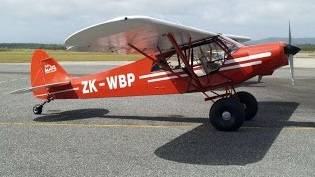
Cook Westland Bush Plane             

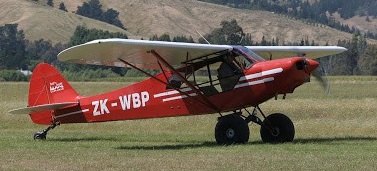
The Westland Bush Plane was built by Russell Cook of Kaihinu, north of Hokitika, New Zealand, around 2008. It may look like a Cub, but the only original bit of a Cub is one wing. The dimensions are all bigger than the standard PA-18, and the whole lot is built from scratch. The tundra tyres are for landing in the West Coast river beds.

Registered ZK-WBP (c/n 0017251) the Westland Bush Plane has an extra side door to the luggage area behind the rear seat.

It received some minor damage on 23 July 2011 whilst landing on a river bed.