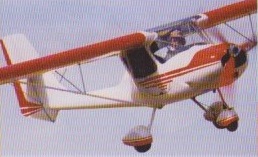
Cosmos Helios

Built almost entirely of composited, it was planned, circa 198, to build the Helios from the new Cosmos factory at Darois Aerodrome.

Engine: Rotax 582, 64 hp
Wing span: 10.9 m
Wing area: 15.7 sq.m
MAUW: 450 kg
Empty weight: 154 kg
Fuel capacity: 60 lt
Max speed: 165 kph
Cruise speed: 130 kph
Minimum speed: 60 kph
Climb rate: 4 m/s
Fuel consumption: 10 lt/hr
Seats: 2
Price (1998): 142,500 Fttc
Kit price (1998): 122,280 Fttc

Cornelius XFG-1

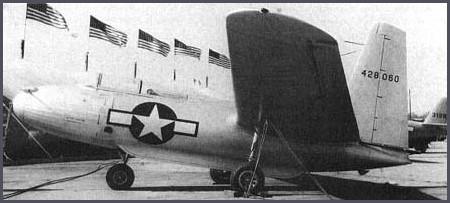
The 677 gal (2,563 l) experimental fuelling glider XFG-1 incorporated Cornelius’ experience with swept-forward wings and was intended to be towed (by a Douglas C 47) pilotless with the controls locked. After the fuel was transferred to the towplane, it was to be cast off and abandoned. An alternative use was as a piloted fuel carrier, jettisoning its undercarriage after take-off, and landing at its destination on two skids at the bottom of the fuselage.

Basically a flying fuel tank, the forward swept wings were mounted behind the cylindrical fuel tank forming the fuselage centre section. The incidence of the XFG-1 wing was adjustable on the ground at 3°, 5° and 7°. With a swept-forward wing, an increase in incidence raises the wingtips and produces dihedral, which may explain why some accounts describe the adjustment as variable-dihedral.

Two were produced for the USAAF in 1945 by the Spartan Aircraft Corporation at Tulsa, Oklahoma, under the serials 44-28059, 44-28060. Thirteen flights were made in prototype 44-28059 by Reitherman, on the last of which he was killed after failing to recover from a spin. The second machine, 44-28060, made 19 flights, but work was discontinued with the end of WW II.
Cornelius Mallard

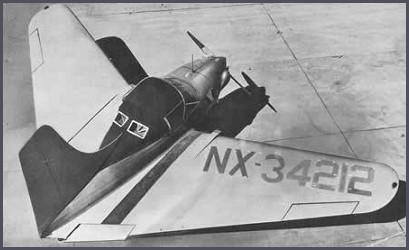
The Mallard (NX34212) was a forward swept-winged tailless monoplane with a 130 hp Franklin flat-four engine. With side-by-side two-seating it was demonstrated publicly by Alfred Reitherman. No production resulted. The 125 mph cruising speed quoted may have been projected rather than actual, considering it was described as 700 lb overweight and underpowered.

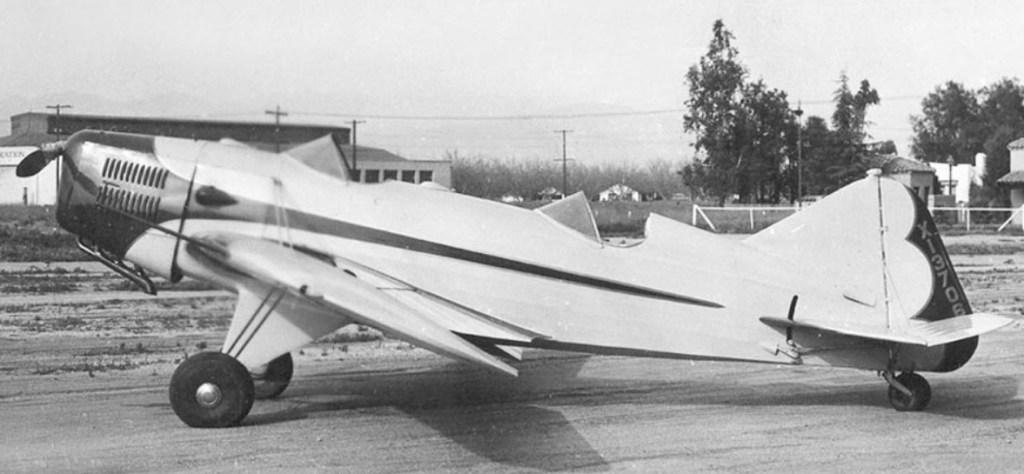
Cornelius LW-1

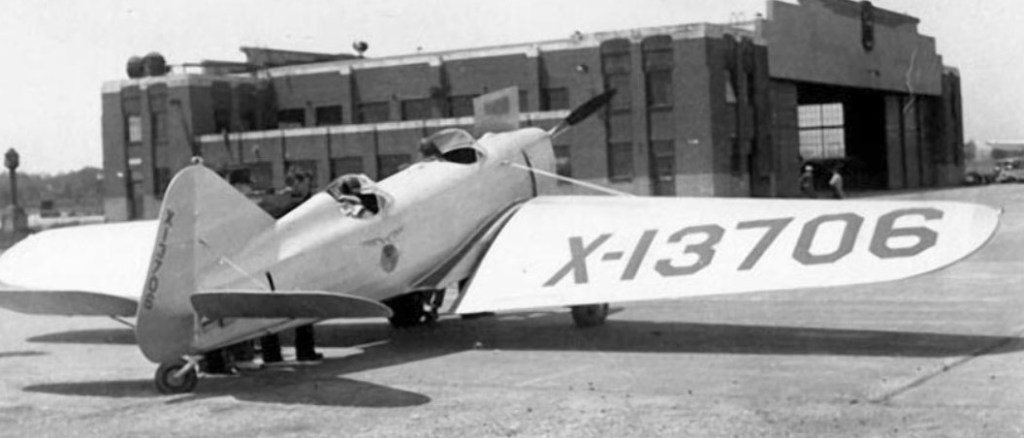
Continuing to experiment with a wing with a variable angle of attack (variable-incidence wing), American engineer George Wilbur Cornelius built his second aircraft in 1933, the designation LW-1 (from Low-Wing, and as a further development of the PW-1, from Parasol-Wing).

The low-wing two-seater LW-1 (X13706) used the short-lived four-cylinder inverted in-line 120 hp Martin 133 engine and had the same control system as the Cornelius FreWing. The incidence of the mainplanes was adjusted differentially like ailerons, and collectively like elevators in conjunction with a stabilator tailplane.

It was intended to improve performance by dispensing with the drag of the multiple strutting needed for its parasol predecessor.

The LW-1 NX13706 is one of a kind.

Gallery

Engine: Martin 333, 120 hp
Maximum speed: 237 km/h / 147 mph
Cruise: 201 km/h / 125 mph
Stall: 45 mph
Seats: 2

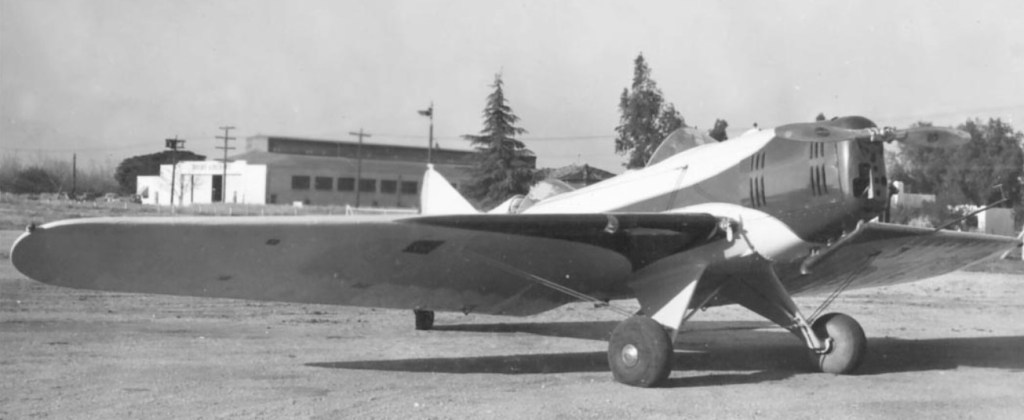
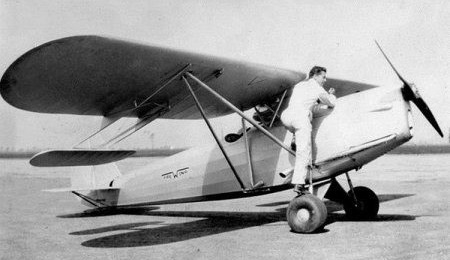
Cornelius FreWing

Cornelius FreWing (NX182W c/n PW-1)

The first aircraft of the Cornelius Aircraft Co, the FreWing, was designed by Cornelius and C.C. Spangenberger. It was a parasol monoplane single-seater in which the incidence of the mainplanes was adjusted differentially like ailerons, and collectively like elevators in conjunction with a stabilator tailplane. Initially, each mainplane had a servo surface extending behind it on two booms attached to the undersurface, but these were later removed as unnecessary.

Engine: 125 hp Menasco B-4
Span: 30 ft 6 in (9.30m)
Length: 20 ft 6 in (6.25 m).

Corivi Aviation Vulcan C100

Vulcan C100 was a real aircraft available both fixed and retractile landing gear. Designed for Italian ultralight aviators it is inspired to Frati’s Falco lines. With all metal construction it can support engines from 80 hp to 150 hp. The suggested engine is the Rotax 912 series.
Main parts in 2024 Avional T3 Alloy
Landing gear and Engine mount in 4130 steel
Bolts in 8.8 steel
Engine cover and cockpit fairing in Fiberglas
Electric actuated Flaps
Retractile landing gear – pneumatic actuated
Stabilizer Trim – electric actuated

Engine: Rotax 912 ULS
Propeller: Carbon composite Three blade Ground adjustable
Wing span: 26.40 feet (8 m)
Length: 21,45 feet (6,50 m)
Height: 7.59 feet (2,30 m)
Wing area: 114.14 sq feet (10.61 sq.m)
Wheel track: 8.25 feet (2.50 m)
Empty weight: 621 lb (282 Kg)
Tanks capacity: 24.96 US gallons (96 litres)
MTOW Weight: 450 kg / 992 lbs
VNE: 167 kt / 193 mph / 310 kmh
Max horizontal speed: 140 Kts (260 Km/h)
Cruise speed (75% pwr): 124 Kts (230 Km/h)
Stall speed (Flaps down): 34 Kts (62 Km/h)
Climb rate: 1200 ft/min (6 m/sec)
Take off run: 726 feet (220 m)
Take-off 50 ft obstacle: 1617 ft
Landing run: 462 feet (140 m)
Max. range: 653 nm (1210 Km)
Endurance (with 30min reserve): 5 hr 30 min

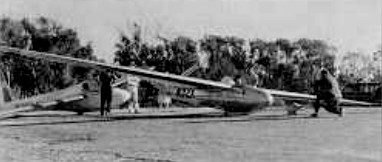
Cordas SCS-1

Designed by A. C. Cordas, the SCS-1 features a V-tail, spoilers in a hatch aft of the canopy and a 3-piece wing.

Wingspan: 13.41m/ 44ft
Wing Area: 12.31 sq.m / 132.5 sq.ft
Empty Weight: 148 kg /326lb
Payload: 102kg / 224lb
Gross Weight: 250kg / 550lb
Wing Load: 20.31 kg/sq.m / 4.15 lb/sq.ft
Aspect ratio: 14.6
Airfoil: NACA 33012
L/DMax: 30 at 88 kph/ 49 kt/ 55 mph
MinSink: 0.67 m/s / 2.2 fps / 1.3 kt
No. Built: 1
No. of Seats: 1

Corby CM-2

Two prototypes of a metal development of the Starlet designated at this stage as the CM-2 were being built in New Zealand. The aircraft is sufficiently close to Starlet to provide high confidence in performance and flight characteristics, but provides some features to builders who may prefer building in metal. Cockpit width, range, AUW, and aerobatic [6 Gs] have been increased, and recommended power is 60 to 90 HP. The CM-2 should be an impressive cross country machine, with excellent aerobatic capability.
Discussions with Jabaru on their higher powered engine suggest this combination with the CM-2 has great potential and they would be interested in cooperating on the project. The CM-2 is planned to be available in kit form and will have a high degree of parts commonality with the CJ-3 two seater which is underway but not yet ready for building.

Corby CM-2
Estimated Performance: 75hp
Maximum speed: 145kt
Maximum cruise: 130kt
Economy cruise: 120kt
Max rate climb: 1250fpm (330kg/725lbs)
Wing span: 5640mm – 18’6″
Wing Area: 6.55sq.m – 70sqr ft
Length: 4725mm – 15’8″
Fuselage width: 610mm – 24″
Overall height: 1525mm – 5′
Tailplane span: 1980mm – 6’6″
Powerplant: 60-90hp -66-77kgmax
Empty weight: 227kg – 500lbs
Pilot – Baggage: 90kg – 200lbs
Fuel: 60lt-13gals 43kgs- 95lbs
Oil: 2kgs – 5lbs
Total weight Aerobatic: 340kg-750lbs
Total weight x country: 363kg – 800lbs
Stress Factors: (+6,-3)G
Fully aerobatical: 340kg-750lbs

Corby CM-2
Estimated Performances: 85hp
Maximum speed: 148kt
Maximum cruise: 134kt
Economy cruise: 125kt
Max rate climb: 1400fpm (330kg/725lbs)
Wing span: 5640mm – 18’6″
Wing Area: 6.55sqrm – 70sqr ft
Length: 4725mm – 15’8″
Fuselage width: 610mm – 24″
Overall height: 1525mm – 5′
Tailplane span: 1980mm – 6’6″
Powerplant: 60-90hp -66-77kgmax
Empty weight: 227kg – 500lbs
Pilot – Baggage: 90kg – 200lbs
Fuel: 60 lt-13gals 43kgs- 95lbs
Oil: 2kgs – 5lbs
Total weight Aerobatic: 340kg-750lbs
Total weight x country: 363kg – 800lbs
Stress Factors: (+6,-3)G
Fully aerobatical: 340kg-750lbs