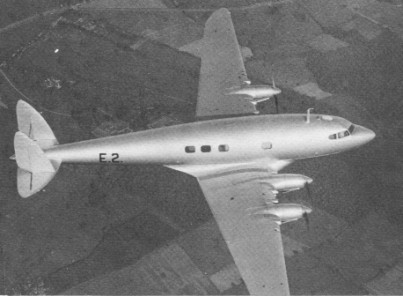
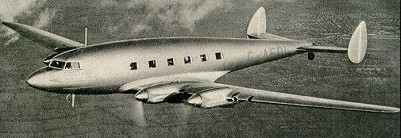
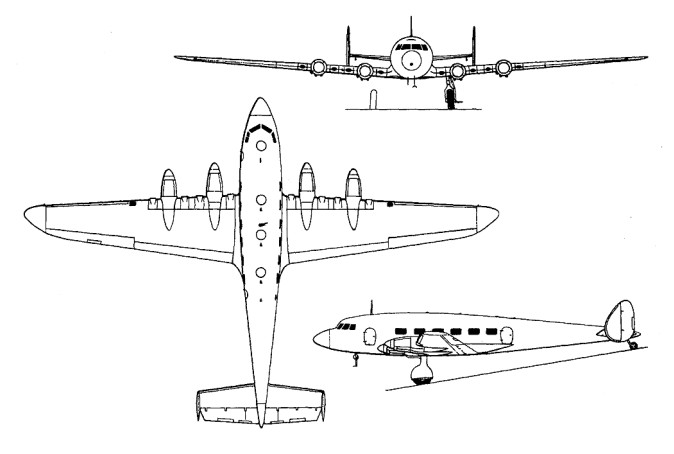
Designed by A. E. Hagg to an Air Ministry specification for a transatlantic mailplane, the de Havilland D.H.91 Albatross fuselage was made of laminations of cedar ply and balsa wood, built as a monocoque in which the skins bore the load, and had a one-piece wing.
Powered of four de Havilland Gipsy Twelve engines driving constant-speed propellers, and with the landing gear main units electrically retractable, the prototype, initially with twin fins mounted at mid-span on the tailplane, was flown for the first time at Hatfield on 20 May 1937. Directional instability saw a change to more traditional endplate fins with unbalanced rudders and trim tabs. Passenger entry was through a door just 1m tall and the rear fuselage was particularly cramped. In general the cabin was noisy and the ride was uncomfortable.
Problems with the landing gear retraction system resulted in a wheels-up landing for the first prototype on 31 March 1938, and a structural weakness in the rear fuselage was revealed when the second prototype broke into two a few months later when landing during overload trials. Effective modifications were soon evolved and the two prototypes were repaired and used experimentally by Imperial Airways.
Their range made them particularly useful for a shuttle service between the UK and Iceland, and they were impressed for RAF use with No. 271 Squadron in September 1940. Five Albatrosses, with reduced capacity, additional cabin windows and slotted flaps replacing the split trailing edge flaps, were delivered to Imperial Airways between October 1938 and June 1939. With accommodation for 22 passengers and a crew of four, they saw wartime service on the Bristol-Lisbon and Bristol-Shannon routes until, with their numbers reduced to two by enemy action or accidents, the survivors were scrapped in September 1943.
D.H.91 Engines: 4 x de Havilland Gipsy Twelve, 391kW/ 525 hp Max take-off weight: 13381 kg / 29500 lb Empty weight: 9630 kg / 21231 lb Wingspan: 32.00 m / 105 ft 0 in Length: 21.79 m / 71 ft 6 in Height: 6.78 m / 22 ft 3 in Wing area: 100.15 sq.m / 1078.00 sq ft Wing loading: 27.47 lb/sq.ft / 134.00 kg/sq.m Max. speed: 362 km/h / 225 mph Cruise speed: 338 km/h / 210 mph Ceiling: 5455 m / 17900 ft Max range: 3,300 miles (5,300 km) Range: 1674 km / 1040 miles Crew: 4 Passengers: 22
Sir Macpherson Robertson announced that he would put up the prizes for a race from Mildenhall, England, to Melbourne, Australia, to mark the Centenary of Victoria. de Havilland advertised that they were prepared to produce a 200 mph specially designed racer if anyone would put up the cash, and they received orders for three.
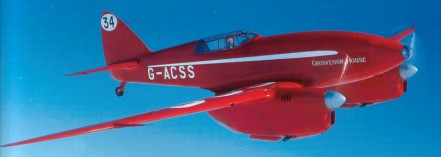
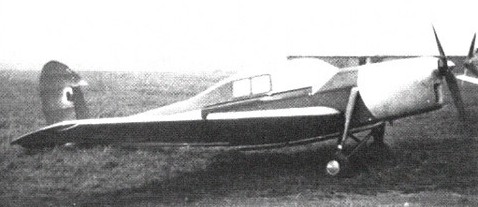
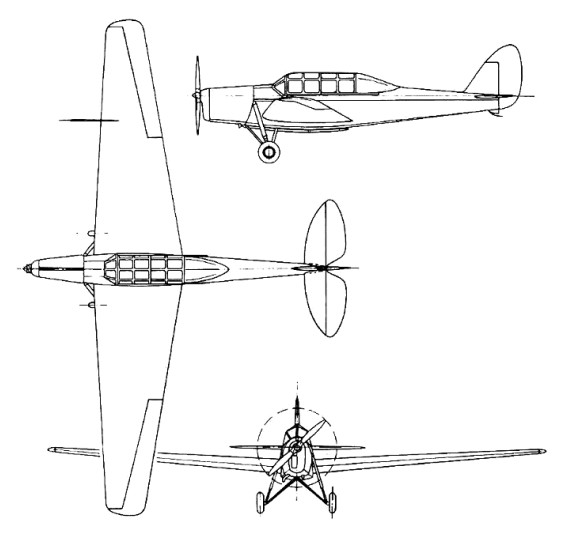
The de Havilland D.H.88 Comet attracted three orders before the February 1934 deadline which had been stipulated by the manufacturer for guaranteed delivery before the Race in October. Purchasers were Mr A. O. Edwards, managing director of the Grosvenor House Hotel, Bernard Rubin, and Jim and Amy Mollison. The Comet was of wooden construction throughout, the front section of the fuselage containing three large fuel tanks behind which were two tandem seats for the pilot and copilot. Two 230 hp high compression de Havilland Gipsy Six R engines were installed, driving Ratier two-position propellers which were set to fine pitch before each flight. These went into coarse pitch automatically at 241km/h, when a sealing disc in the spinner opened to release the unit’s internal pressure and thus activate the control mechanism. Other notable features included the provision of manually retractable landing gear and split trailing-edge flaps.
Designed and built in 7.5 months the first Comet was flown on September 8, 1934, only six weeks before the start of the race.
Hubert Broad flew the first Comet, intended for the Mollisons, at Hatfield on 8 September 1934. Its Certificate of Airworthiness was issued on 9 October and certificates for the other two aircraft on 12 October, just eight days before the Race.
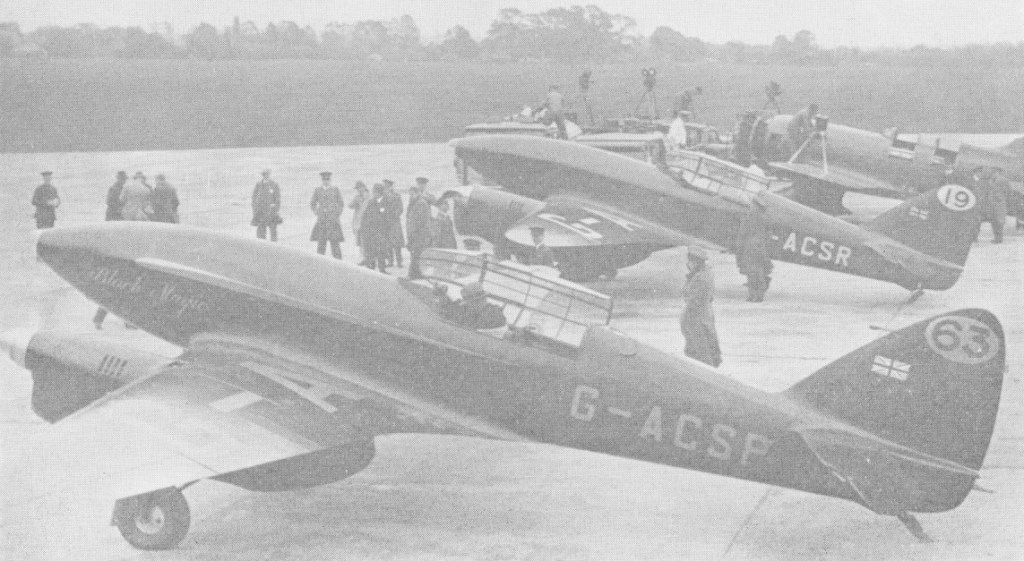
Dawn on 20 October saw the departure of the first contestants, including the Mollisons’ Black Magic G ACSP, Owen Cathcart-Jones and Ken Waller’s G-ACSR (owned by Rubin) and C. W. A. Scott and T. Campbell Black in G ACSS Grosvenor House. Black Magic accomplished successfully the non-stop London-Baghdad leg but was forced to retire with engine trouble at Allahabad. Cathcart-Jones and Waller, after getting lost and being forced to land in Persia, struggled through to Melbourne to finish fourth in the speed section. They flew straight back, with mail and film, to set an out-and-return record of 131/2 days. Scott and Black were the speed section winners, covering the course in 70 hours 54 minutes; Grosvenor House is now preserved by the Shuttleworth Trust at Old Warden, Bedfordshire.
The start of the England-Australia race
Two further Comets were built, one as a mailplane for the French government and the other for Mr Cyril Nicholson, who sponsored two unsuccessful attempts on the London-Cape record. During the second attempt the crew baled out over Sudan, on 22 September 1935.
Several more records were made, including a New Zealand and back record of 10 days 21.5 hrs.
D.H.88 Engines: 2 x de Havilland Gipsy Six R inline, 172kW / 230 hp Max take-off weight: 2413 kg / 5320 lb Empty weight: 1288 kg / 2840 lb Wingspan: 13.41 m / 44 ft 0 in Length: 8.84 m / 29 ft 0 in Height: 3.05 m / 10 ft 0 in Wing area: 19.69 sq.m / 211.94 sq ft Max. speed: 381 km/h / 237 mph Cruise speed: 354 km/h / 220 mph Ceiling: 5790 m / 19000 ft Range: 4707 km / 2925 miles at 220 mph Crew: 2
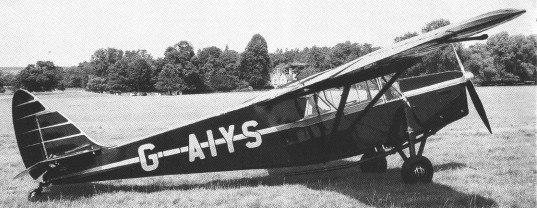
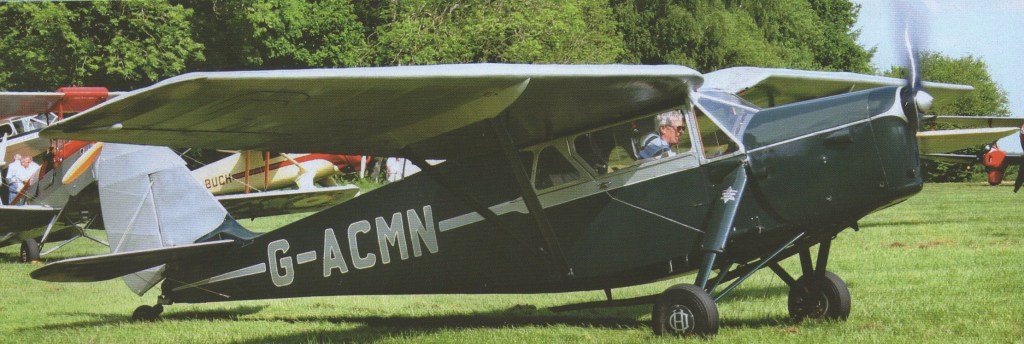
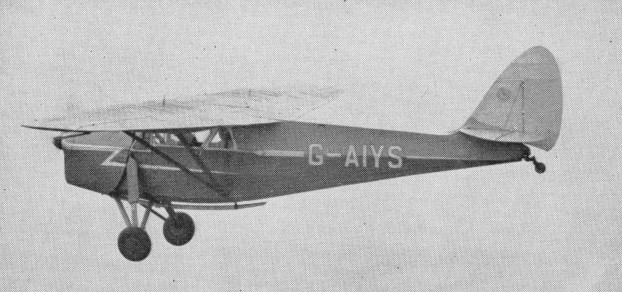
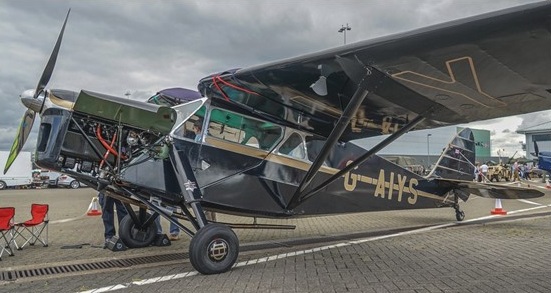
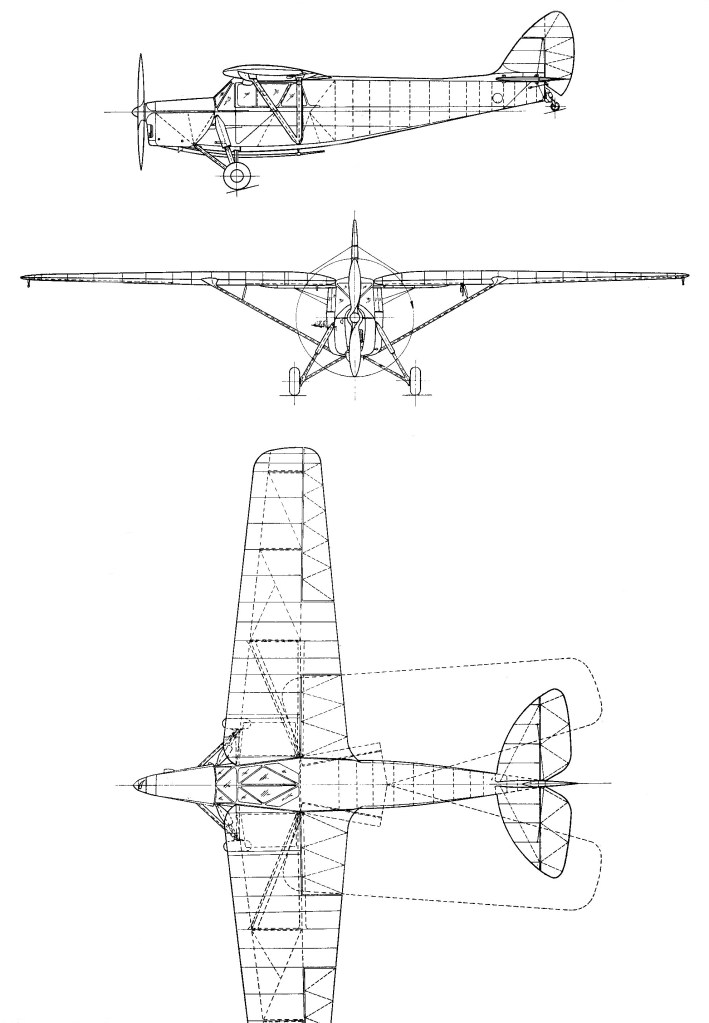
Following a series of fatal wing failures and the resulting bad press concerning the initially very popular and successful D.H.80 Puss Moth, Geoffrey de Havilland set about redesigning the basic airframe which resulted in the D.H.85 Leopard Moth. Although similar in appearance the aircraft was superior overall. A spruce and plywood fuselage was chosen over welded steel tube construction. The timber airframe was not only cheaper to manufacture but was also lighter, the improved gross to tare weight ratio allowing a third passenger to be carried in a side by side arrangement behind the pilot. This produced a wider slab sided fuselage in the early models, however this was later addressed by longitudinal stringers on the outside of the fuselage and applying a fabric covering. The tapered and thinner fabric covered wing allowed a faster cruising speed (118 mph/ 190km/h at 1,000 ft/304 m), but also meant a higher landing speed. The principal way of visually distinguishing between the two aircraft was the position of the main undercarriage compression legs. The Puss Moth’s main legs were anchored at the top of the front windscreen, whereas these legs only travelled as high as the base of the windscreen frame on the Leopard Moth. These legs could be rotated through 90 degrees to serve as a rudimentary air brake, this action reducing air speed by about 35 mph (56 km/h). These steepened the glide angle from 12-1 to 9-1. The 2 gallon (9 litre) oil tank also moved from an external position in the Puss Moth, to behind the firewall in the Leopard.
An initial batch. of six machines were built at de Havilland’s Stag Lane facility, a cautious approach adopted until a first flight could be undertaken and the design could prove its worth. Powered by a 4 cylinder inline air- cooled 130 hp D.H. Gipsy Major driving a two blade fixed pitch propeller, the prototype (G-ACHD) made its first flight on 27 May 1933 at Stag Lane piloted de Havilland for a 20 minute flight.
It was later in the calm of the evening that the remarkable stability of the D.H. 85 was revealed. When flying with the chief engineer Bob Hardingham, de Havilland left the controls and joined Bob in the passenger seat, only being obliged to lean over an adjust the trim once. It was obvious that design was worth pursuing and marketing efforts were spooled up. Included in this effort was an offer to private owners that would see an entirely new (to aviation at least) maintenance service offered. An owner could opt to take advantage of fixed charges for servicing and overhaul required for the Certificate of Airworthiness – all of which would be carried out by de Havilland’s own engineering staff.
Geoffrey de Havilland flew the prototype, which he retained for his private use, to victory in the 1933 running of the King’s Cup Race, clocking an average speed of 139.51 mph (224.51 km/h). The two other Leopard entries (G-ACHC and G-ACHB) came in third and sixth in what was an impressive performance from the new type.
Orders started coming in from both the private sector and business owners and consequently serious production got underway at Stag Lane and thereafter Hatfield, over the next three years. The first 30 aircraft featured a slab side fuselage, but later aircraft were fitted with stringers which ‘padded out’ the sides. During this time 132 examples were built, 71 of which operated in the UK. Several of these undertook long range flights to such diverse destinations as the Cape Verde Islands, Timor and Australia, the latter as a survey flight prior to the MacRobertson Air Race in 1934 when G-AC1X flew an outbound trip lasting 15 days. It almost halved that on the return leg and in doing so set a record of eight days, 12 hours. It was from Australia again that one of the last of these types of flights occurred when ‘Jimmy Broadbent flew VH-AHB from Darwin to Lympne on 3rd May 1937 in just over six days.
A total of 61 examples were built for export, mostly as self assembly kits and were spread throughout the world from India to South Africa and from Switzerland to Argentina.
The price of a DH 85 in the 1930s was £1125.
As with many civil aircraft, Leopard Moths were conscripted into RAF service at the outbreak of WW2, 44 being impressed into the communications role whilst those in the Commonwealth found themselves similarly employed.
Following an accident that saw Geoffrey de Havilland’s G-ACHD come off second best after a run in with a brick wall during a servicing incident, the aircraft was handed over to the Engine Division for use as a test bed for the new 200 hp Gipsy Six which was heavier and longer than the Major. This was compensated for by reducing the sweep back of the wings and moving the wheels fractionally forward. Designated the D.H. 85A, engine tests continued for 20 hours before a flight was made on 23rd October 1933. Prior to the MacRobertson Air Race G-ACHD was again anchored to the ground for some 500 hours of trials of a Gipsy Six fitted with both Ratier and Hamilton props were tested from May to August 1934 when the engine was finally granted approval. It ended its days undergoing icing trials, eventually being scrapped by the end of 1940.
Three years’ production, initially at Stag Lane and then at Hatfield, totalled 132 examples.
D.H.85 Engine: 1 x de Havilland Gipsy Major inline, 97kW / 130 hp Wingspan: 11.43 m / 37 ft 6 in Length: 7.47 m / 24 ft 6 in Height: 2.67 m / 8 ft 9 in Wing area: 19.14 sq.m / 206.02 sq ft Take-off weight: 1009 kg / 2224 lb Empty weight: 637 kg / 1404 lb Fuel capacity std: 17.5 gallon / 79.5 litre Max. speed at SL: 220 km/h / 137 mph Max speed at 10,000 ft / 3048m: 129 mph / 207 km/h Cruise speed: 192 km/h / 119 mph Service ceiling: 17,800 ft / 5425 m Range: 400 miles / 644 km Range with opt. Fuel: 1151 km / 715 miles
On 24 August 1931 de Havilland had flown the only example of the de Havilland D.H.81 Swallow Moth, a low wing open-cockpit two-seater powered by a 60 kW (80hp) Gipsy IV engine. With production capacity filled by orders for various models of the Moth the project was discontinued, to be resurrected some years later when advantage could be taken of some structural techniques used in the Comet and Albatross, as the prototype D.H.94 Moth Minor.
Developed to provide private pilots with cabin comfort, the three seat prototype de Havilland D.H.80 (G-AAHZ) was first flown at Stag Lane on 9 September 1929. It introduced the inverted de Havilland Gipsy II engine, improving the pilot’s view over the nose, and had a slab-sided plywood-covered fuselage with the pilot (forward) and two passengers slightly staggered at the rear of the cabin. Two doors were on the right side.
Production aircraft began to appear in March 1930, designated D.H.80A Puss Moth, incorporating a welded steel-tube and fabric-covered fuselage. The wings were foldable. Notable were swivelling main landing gear shock-absorber fairings which could be turned broadside to the airflow to act as airbrakes. Other changes included single doors on each side of the fuselage, and installation of the improved 89kW Gipsy III; later examples were powered by the 97kW Gipsy Major. A total of 259 aircraft was manufactured in the UK, the last leaving Stag Lane in March 1933, and many were used for pioneering flights. Another 25 aircraft were built by de Havilland Aircraft of Canada Ltd.
During July 1931 Amy Johnson used Jason II to fly from Lympne to Tokyo in 8 days 22 hours 35 minutes, and in 1932 Jim Mollison flew from Lympne to Cape Town in 4 days 17 hours 19 minutes. Mollison’s second Puss, The Heart’s Content, had a 727-litre fuel tank installed in the front of the cabin and additional windows in the rear, its 5794km range enabling him to make the first solo east-west North Atlantic crossing, leaving Portmarnock Strand, Dublin, on 18 August 1932 and arriving 31 hours 20 minutes later at Penfield Ridge, New Brunswick. On 6 February 1933, Mollison took off from Lympne en route to Natal, Brazil, and became the first man to make a solo crossing of the South Atlantic.
Six served with the RNZAF on communications duties 1931-37 and 1939-46.
DH.80 Engine: 1 x de Havilland Gipsy III inline, 89kW Max take-off weight: 930 kg / 2050 lb Empty weight: 574 kg / 1265 lb Wingspan: 11.2 m / 36 ft 9 in Length: 7.62 m / 25 ft 0 in Height: 2.13 m / 6 ft 10 in Wing area: 20.62 sq.m / 221.95 sq ft Max. speed: 206 km/h / 128 mph Cruise speed: 174 km/h / 108 mph Ceiling: 5335 m / 17500 ft Range: 483 km / 300 miles
DH.80A Engine: DH Gipsy Major III, 130 hp. Wingspan: 36 ft 9 in / 11.2 m Length: 25 ft / 7.62 m Max speed: 127 mph / 203 kph Cruise: 110 mph. Range: 450 miles. Ceiling: 17,500 ft Price 1931: £900
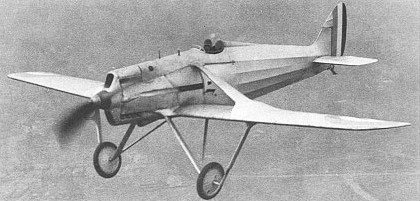
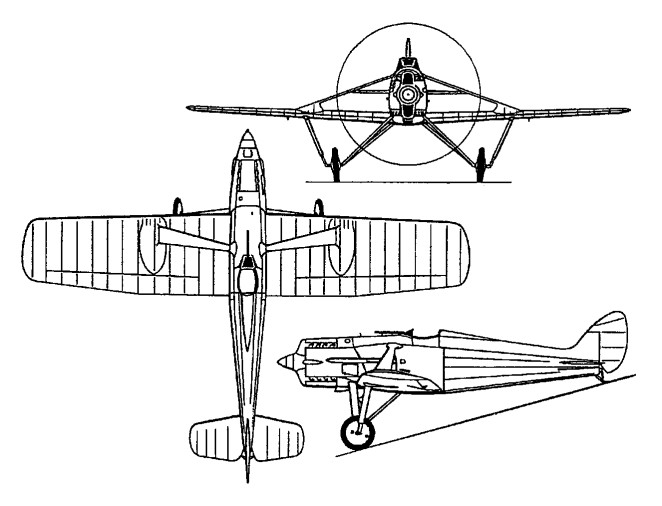
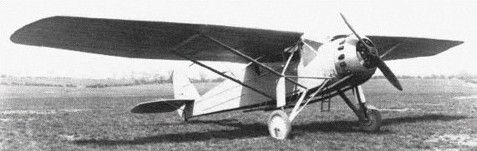
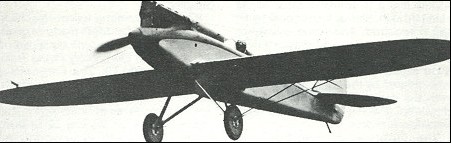
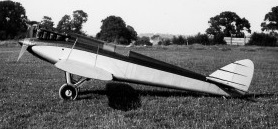
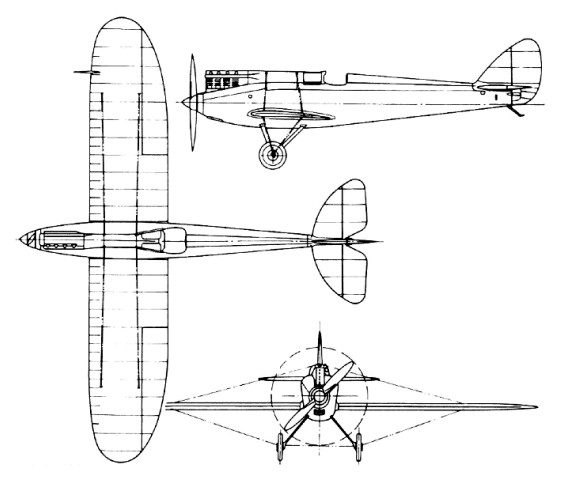
Designed for Specification F.20/27 which called for a short-range, fast-climbing, lightly-loaded single-seat interceptor fighter, the D.H.77 was designed by W G Carter in close collaboration with F B Halford. Halford designed for the fighter a supercharged air-cooled engine of low frontal area which was built by D Napier, as the Napier H type and later known as the Rapier I, of 301 hp. Of mixed construction, the wing had two steel spars and wooden ribs with fabric skinning, and the fuselage, also fabric-covered, a box girder of steel tube with wooden formers. The D.H.77 carried an armament of two 7.7mm Vickers guns and flew early in December 1929. The sole prototype was purchased by the Air Ministry and after the completion of official trials was used primarily for Rapier engine development. It was fitted, in December 1932, with a 295 hp Rapier II, the Hawker Hornet biplane (renamed Fury) having been selected for production as the RAF’s first standard interceptor.
Engine: Napier H / Rapier I, 301 hp Take-off weight: 1 034 kg Empty weight: 751 kg / 1656 lb Wingspan: 9.80 m / 32 ft 2 in Length: 7.44 m / 24 ft 5 in Height: 2.44 m / 8 ft 0 in Wing area: 15.14 sq.m / 162.97 sq ft Max. speed: 327 km/h / 203 mph
In order to carry out research on high-speed flight and to test replacement engines for the Cirrus, de Havilland built in 1927 two small single-seat monoplanes designated de Havilland D.H.71 Tiger Moth. Such was the degree of streamlining required that it was designed around test pilot Hubert Broad. The two aircraft were entered for the King’s Cup Air Race, for it then seemed accepted that any new light aircraft of that time were required to thus prove themselves. However, one was scratched before the race; the other, powered by an A.D.C. Cirrus II engine, was withdrawn during the race due to bumpy conditions.
In August 1927 the first D.H.71, then with alternative wings of only 5.69m span and a new 101kW Gipsy engine, was flown by Broad to a new 100km closed circuit record for aircraft of its class of 300.09km/h. Five days later Broad attempted the world’s altitude record for the category, but having no oxygen the limitation was on man and not machine. He reached 5849m before having to give up, although the aircraft was still climbing at over 305m per minute. In 1930 the first D.H.71 was taken to Australia, but crashed during practice for an air race after suffering engine failure on take-off, killing the pilot. The second airframe, minus engine, was destroyed at Hatfield in an air raid during October 1940. D.H.71 Engine: 1 x A.D.C. Cirrus II inline piston engine, 63kW Take-off weight: 411 kg / 906 lb Empty weight: 280 kg / 617 lb Wingspan: 6.86 m / 22 ft 6 in Length: 5.66 m / 18 ft 7 in Height: 2.13 m / 6 ft 12 in Wing area: 7.11 sq.m / 76.53 sq ft Max. speed: 267 km/h / 166 mph
The British Air Ministry promoted a series of “Light Aeroplane Trials” in the hope of evolving an everyman’s airplane. But the contest rules specified only such little engines that the trials machines were inevitably underpowered freaks.
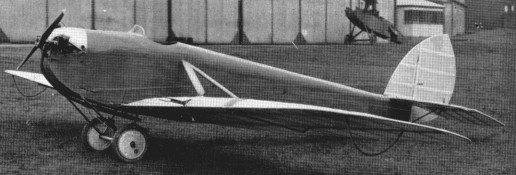
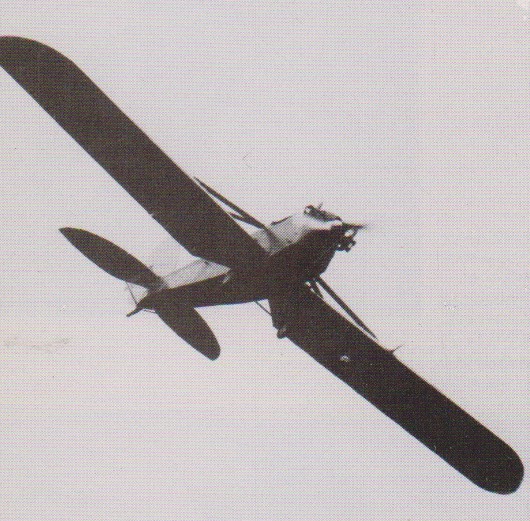
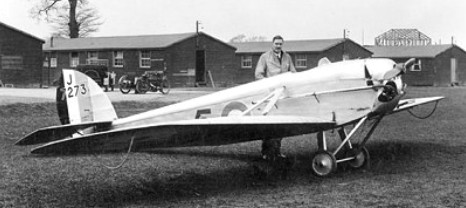
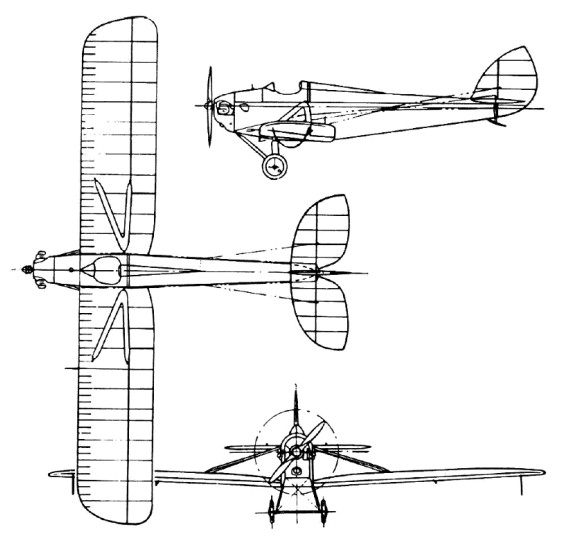
De Havilland entered the field of ultralight aircraft with the de Havilland D.H.53 Humming Bird which was built for the Daily Mail light aeroplane trials held at Lympne, Kent, in October 1923.
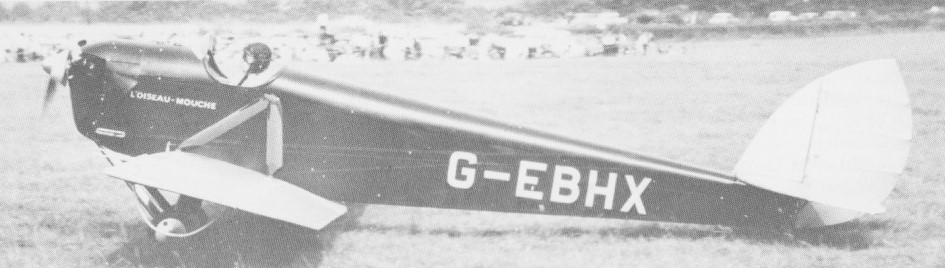
Two examples of the little monoplane were built, G-EBHX Humming Bird and G-EBHZ Sylvia II. Powered by 750cc Douglas motorcycle engines, and in spite of considerable problems with this powerplant both aircraft did well.
DH53 G-EBHX
In an effort to make the type more reliable, a Blackburn Tomtit engine was installed and other detail changes made before the Humming Bird was flown to the Brussels Aero Show in 1923. The pilot reported after a flight from Brussels, he had been overtaken by a Belgian freight train of the slowest sort. It later took part in several air races together with the second aircraft, owned by a group of RAF officers who re-engined it with a 26kW A.B.C. Scorpion engine which proved unreliable.
Because of its economical performance, the first Humming Bird had secured for de Havilland an Air Ministry order for eight aircraft for communications and flying practice. Five others were built for civil customers, three going to Australia, one to Czechoslovakia and one to Russia.
The last two RAF Humming Birds were used in experiments which involved launching them from the airship R-33 and recovering them in the air. Following the disposal of all eight aircraft by the RAF in 1927, six were civil registered and flown for several years. One survives with the Shuttleworth Trust at Old Warden, having been rebuilt with a number of new components post-war. It was flown on occasions, but following extensive damage is no longer airworthy and maintained as a static exhibit.
Parts from a DH53 were rebuilt into the Martin Monoplane G-AEYY.
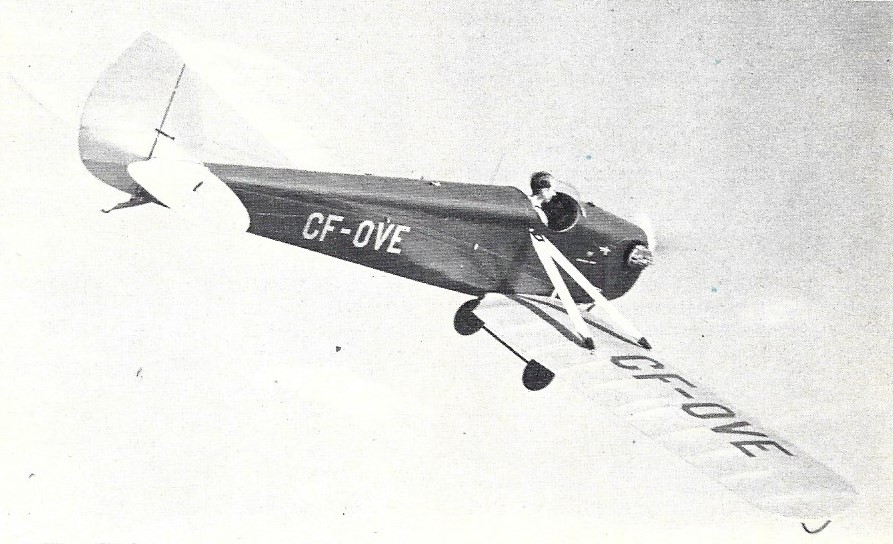
Stan Green built a replica DH.53 Humming Bird at Calgary, Canada, CF-OVE, based on drawings used by de Havilland apprentices when they restored DH.53 G-EBHX. First flown on 7 May 1967, piloted by Gordon Fryer, it differs from the original 1923 aircraft only in having a Continental A-40 engine.
DH.53 Humming Bird replica CF-OVE
D.H.53 Engine: 1 x Blackburn Tomtit two-cylinder piston, 19kW Take-off weight: 256 kg / 564 lb Empty weight: 148 kg / 326 lb Wingspan: 9.17 m / 30 ft 1 in Length: 5.99 m / 19 ft 8 in Height: 2.21 m / 7 ft 3 in Wing area: 11.61 sq.m / 124.97 sq ft Max. speed: 117 km/h / 73 mph Cruise speed: 97 km/h / 60 mph Ceiling: 4570 m / 15000 ft Range: 241 km / 150 miles
Engine: ABC Scorpion, 35 hp Wingspan: 30 ft 1 in Length: 19 ft 8 in All up weight: 565 lb Max speed: 74 mph
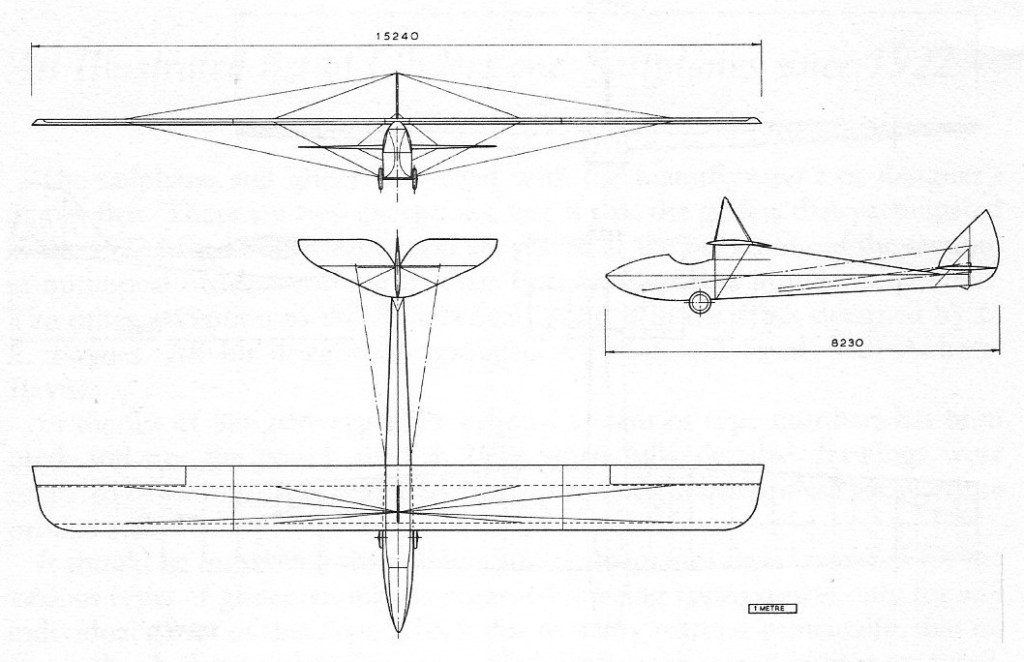
The two DH 52 built were single-seat gliders for the 1922 Itford, UK, competition. Built at Stag Lane, Edgeware, Middlesex, UK, the were of wooden construction with mixed spruce and ply. They had wire braced wings, twin main wheels and a tail skid. No brakes or flaps were fitted.
Flown in the competition by H.S. Broad (No.4) and E.D.C. Herne (No.33), both crashed after very short flights.
No.4 Sibylla was damaged and written off on 16 October 1922.
No.33 Margon was converted to wing-warping but crashed on 19 October 1922.
Wing span: 15.24 m / 50 ft 0 in Length: 8.23 m / 27 ft 0 in Wing area: 20.44 sq.m / 220 sq.ft Aspect ratio: 11.35 Empty weight: 113.4 kg / 250 lb AUW: 1181.44 kg / 400 lb Wing loading: 9.75 kg/sq.m / 1.82 lb/sq.ft