EoN 460 / EoN 463 / EoN 460/463 / Elliotts AP/10 / EoN 465

EoN 460

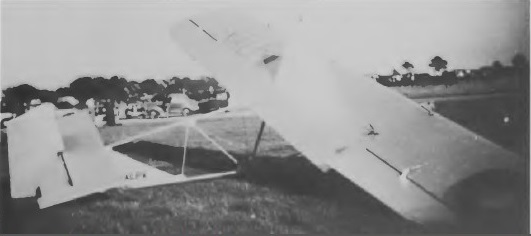
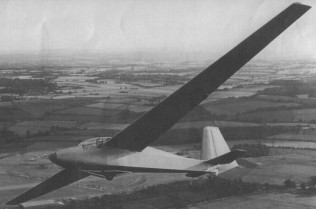
Intended as a Standard Class 15m span single-seater to replace the popular Olympia, the EoN 463, also known as the EoN 460/463, was the production version of the EoN 460 and incorporated the design experience and certain features of the laminar flow Olympia variants, especially the Olympia 403 and 419.

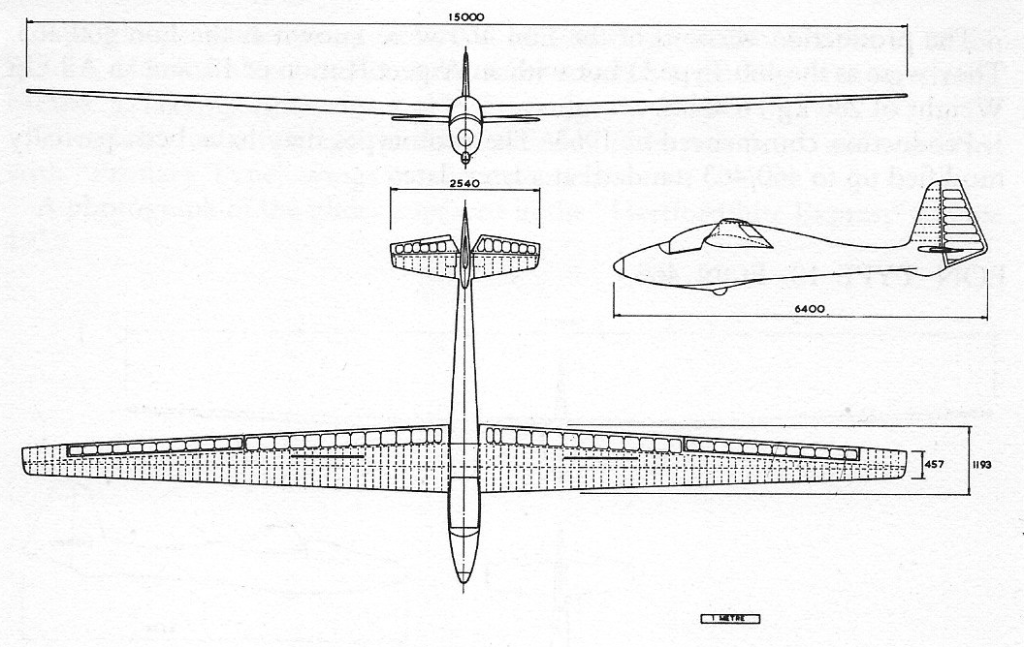
The EoN 460, or Elliotts AP/10 Type 460 as it was also known, first flew in prototype form on 26 April 1960 and only the five prototype 460s were built; the first had an aspect ratio of 20 and an all-up weight of 600 lb, the second and third had an aspect ratio of 18 and an all-up weight of 630 lb, the fourth was the same as the first but with a modified one-piece canopy and the fifth prototype was the same as the fourth but had modified outer wing sections. The tail unit was very similar to the Olympia 419’s and, as on the latter, the tailplane could be folded upwards for transport. The shoulder wings were set slightly lower than the Olympia’s and the centre and forward fuselage were similar to the Olympia 419’s, while the same NACA 64-series laminar flow wing section as on the 419 was used.

The Type 10 C EoN 460 was fitted with a modified cockpit canopy. The Type D was as the Type C but with modified sections to the outer wing. All types were fitted with folding tailplanes and the wings have Frise type ailerons.

The production versions of the EoN 460 were known as the EoN 460/463. They wee as the 460 Type D but with an aspect ratio of 18, and an AUW of 286 kg / 630 lb.

The production EoN 463 first flew in April 1963 and a total of 48 were built; this was practically the same as the fifth prototype 460, with an aspect ratio of 18 and an all-up weight of 630lb. The fabric and stringer top fuselage fairing of the 460 was now replaced by a glassfibre one on the 463, which also had a glassfibre instead of plywood nose section and a new cockpit canopy.

Both the 460 and 463 have wooden wings with light alloy spars, plywood-skinned and with overall fabric covering; the wings are similar to the Olympia 419’s except for the reduced span, the Frise ailerons being fabriccovered and the DFS-type air brakes of plywood. The fuselage, like the 460’s, is a wooden Warren girder type structure with plywood covering and a glassfibre rear fairing. The tail unit is a conventional fabric-covered wooden structure and the tailplane, unlike the all-moving surface of the Olympia 403 and 419, reverts to conventional elevators with a trim tab in the starboard one. There is a fixed unsprung mono-wheel with an internal expanding brake, and a tailwheel. The pilot’s canopy has direct vision panels and a demister, and oxygen and radio can be fitted if desired.

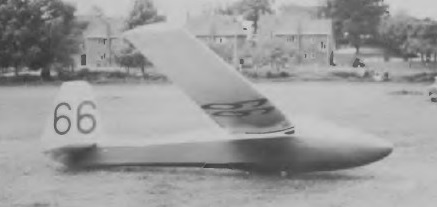
The 463 was followed by the EoN 465, developed for the 1965 World Championships, only two of these being built, the first one, the Series 1, making its maiden flight on 8 March 1965. The 465 had the fuselage height reduced and the pilot seated in a reclining position to reduce cross sectional area and hence drag; the main landing gear skid was deleted and the monowheel centre raised. An all-moving tailplane was reintroduced which did not fold up for storage. Pendulum sealed ailerons were fitted. The EoN 465 Series 1 had an all-up weight of 680lb and the second one, known as the Series 2, had a thinner wing section than the Series 1 and a strengthened main spar; its all-up weight was 700lb and wing area was increased to 140sq ft.

The 465 Srs.1 first flew in March 1965 and the Srs.2 in April 1965.

Following the death of Elliott’s managing director, Mr H. C. G. Buckingham, in the summer of 1965 the firm’s board of directors, after reviewing the situation, decided to end glider production due to its increasing unprofitability.
EoN 465

Type 10 EoN 460 Type A
Wingspan: 15.0 m / 49 ft 2 in
Length: 6.4 m / 21 ft 0 in
Wing area: 11.15 sq.m / 120 sq.ft
Aspect ratio: 20
Wing section: NACA 64,3,618 root / NACA 64,4,421 tip
Empty weight: 159.21 kg / 351 lb
AUW: 272 kg
Max speed: 215 kph / 134 mph
Aerotow speed: 152 kph / 95 mph

Type 10 EoN 460 Type B
Wingspan: 15.0 m / 49 ft 2 in
Length: 6.4 m / 21 ft 0 in
Wing area: 11.15 sq.m / 120 sq.ft
Aspect ratio: 18
Wing section: NACA 64,3,618 root / NACA 64,4,421 tip
Empty weight: 159.21 kg / 351 lb
AUW: 286 kg
Max speed: 215 kph / 134 mph
Aerotow speed: 152 kph / 95 mph

EoN 463
Span: 49 ft 2.5 in / 15.0 m
Length: 21 ft 0 in / 6.4 m
Height: 5ft 8 in
Wing area: 132 sqft / 12.26 sq.m
Aspect ratio: 18.0
Wing section: NACA 643618/421
Empty weight: 400 lb / 181 kg
Max weight: 630 lb / 286 kg
Water ballast: None
Max wing loading: 23.33 kg/sq.m / 4.78 lb/sq ft
Max speed: 136 mph / 117.5 kt / 218 km/h (in smooth air)
Max rough air speed: 74 kt / 137 km/h
Stalling speed: 30 kt / 56 km/h
Min sinking speed: 2.2 ft/sec / 0.67 m/sec at 42.5 mph / 37 kt / 69 km/h
Best glide ratio: 32:1 at 48 mph / 42 kt / 78 km/h
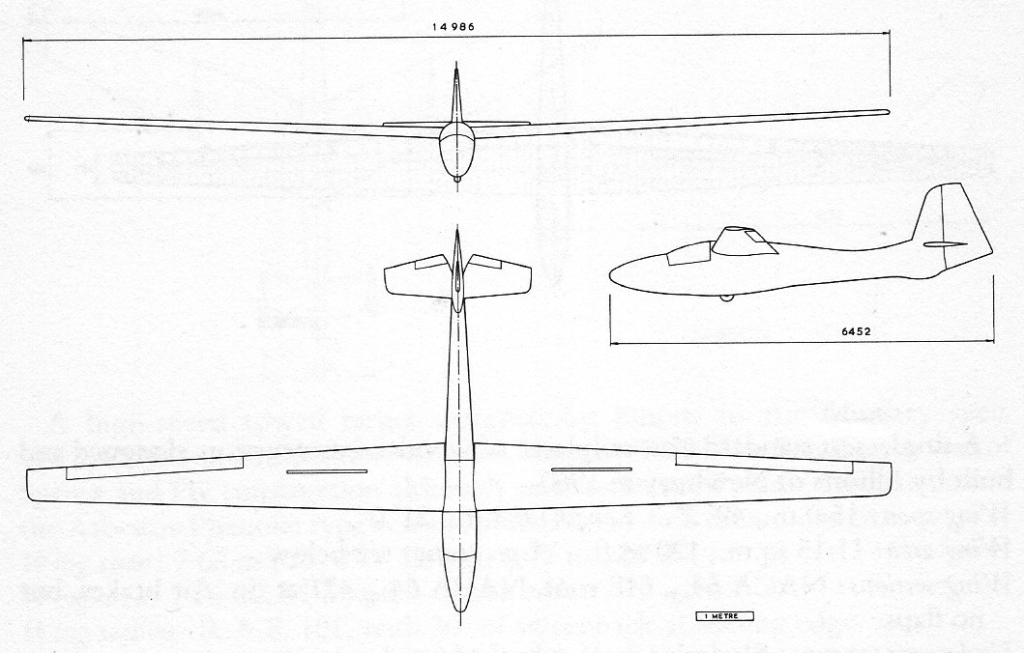
EoN 465 Srs.1
Span: 49 ft 2.5 in / 15.0 m
Length: 21 ft 2 in / 6.45 m
Height: 5ft 8 in
Wing area: 132 sqft / 12.26 sq.m
Aspect ratio: 18.0
Wing section: NACA 643618/421
Empty weight: 400 lb / 181 kg
Max weight: 680 lb / 308.44 kg
Water ballast: None
Max wing loading: 23.33 kg/sq.m / 4.78 lb/sq ft
Max speed: 136 mph / 117.5 kt / 218 km/h (in smooth air)
Max rough air speed: 74 kt / 137 km/h
Stalling speed: 30 kt / 56 km/h
Min sinking speed: 2.2 ft/sec / 0.67 m/sec at 42.5 mph / 37 kt / 69 km/h
Best glide ratio: 32:1 at 48 mph / 42 kt / 78 km/h
EoN 465 Srs.2
Span: 49 ft 2.5 in / 15.0 m
Length: 21 ft 2 in / 6.45 m
Height: 5ft 8 in
Wing area: 132 sqft / 12.26 sq.m
Aspect ratio: 18.0
Wing section: NACA 643618/421
Empty weight: 400 lb / 181 kg
Max weight: 700 lb / 317.52 kg
Water ballast: None
Max wing loading: 23.33 kg/sq.m / 4.78 lb/sq ft
Max speed: 136 mph / 117.5 kt / 218 km/h (in smooth air)
Max rough air speed: 74 kt / 137 km/h
Stalling speed: 30 kt / 56 km/h
Min sinking speed: 2.2 ft/sec / 0.67 m/sec at 42.5 mph / 37 kt / 69 km/h
Best glide ratio: 32:1 at 48 mph / 42 kt / 78 km/h
Type 10 EoN 460
EoN 460/465

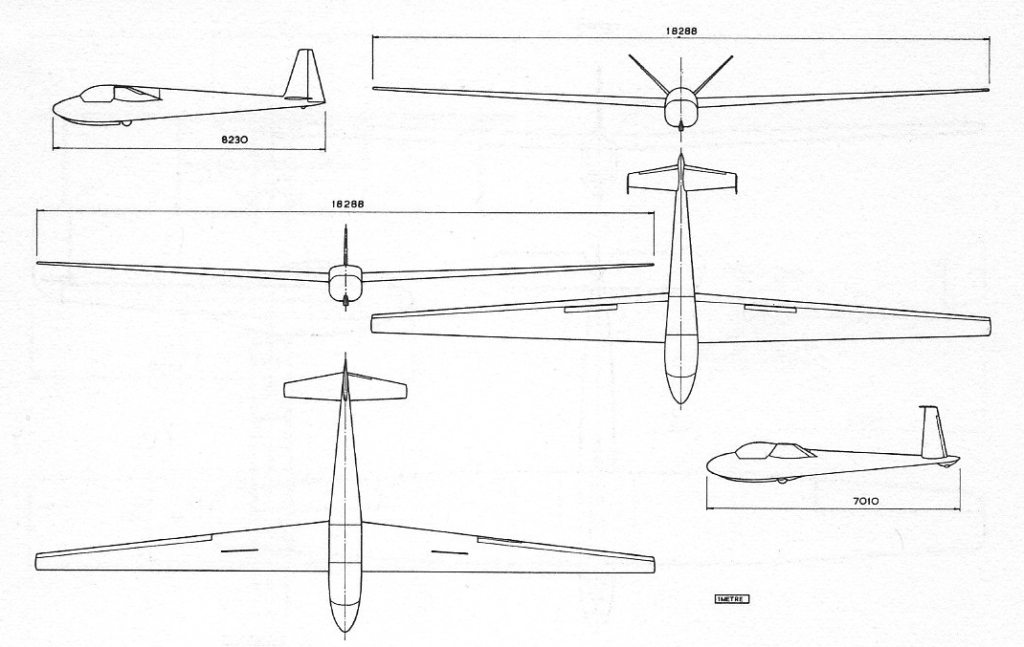
Elliots of Newbury Eon Type 9 / Kendall Crabpot / Kendall K.1

The initial version, known as the Crabpot, was designed by H. Kendall for the 1947 B.G.A. Two-seat Sailplane Competition. Conventional wooden construction, apart from the wings which had several spanwise webs and few ribs. The webs were 15mm thick, and the ribs were spaced at from 900 to 1200 mm pitch.

A cantilever wing, no flaps but airbrakes were fitted. All moving tailplane.

A project only, it won the competition.

Having one the competition, the Crabpot was re-designed. The wing section was altered, a “V” tail introduced, and the fuselage shortened. The wing material was altered and it was decided to manufacture it using an asbestos reinforced low pressure thermos setting plastic structure, a method that involved the use of heated concrete moulds and tailored felts. The wing was manufactured by F.G. Miles Ltd at Redhill Aerodrome, under the designation Miles M.76, but when tested, it broke up at a fraction of the design load. The K.1, as the Crabpot was by then known, was later built, using the traditional wooden construction methods, by Elliots of Newbury, as the EoN Type 9.

Only one was built, the first flight being at Lasham in March 1954, with full span ailerons. No CofA was issued as the K.1 was abandoned due to unsatisfactory flying characteristics, particularly unsolvable spinning problems.

Kendall Crabpot / K.1
Wingspan: 18.3 m / 60 ft 0 in
Length: 8.24 m / 27 ft 0 in
Wing area: 18.58 sq.m / 200 sq.ft
Aspect ratio: 18
Wing section: NACA 43018 root, NACA 43012A tip
Empty weight: 232 kg / 516 lb
AUW: 414 kg / 911 lb
Wing loading: 21.0 kg/sq.m / 4.3 lb/sq.ft
Max L/D: 27 at 77 kph / 49 mph

EoN Type 9
Wingspan: 18.3 m / 60 ft 0 in
Length: 7.01 m / 23 ft 0 in
Wing area: 18.58 sq.m / 200 sq.ft
Aspect ratio: 18
Wing section: NACA 66,3,418, NACA 64,2,415 tip
Empty weight: 300 kg / 661.5 lb
AUW: 453.6 kg / 1000 lb
Max speed: 200 kph / 125 mph
Stall: 64 kph / 40 mph
Max L/D: 35

EoN AP.7 / EoN Primary / EoN Eton

Elliott AP.7 EoN Primary

The EoN Primary, or Elliotts AP/7 Primary EoN as it is known in full, is a more modern but essentially very similar version of the Dagling/SlingsbyT-3 Primary and SG 38 formula of the 1930s for a simple single-seater basic training glider.

The prototype made its first flight in February 1948, and the first production model flew in April that year; the type was used not only by clubs but by the Air Training Corps and Combined Cadet Force under the service name of Eton TX Mk 1 to replace the Daglings previously used for Cadet instruction. It could also be supplied with a static training stand which acted as a simple flight simulator in which the glider was balanced on a pivot and wind forces assisted the trainee pilot to get the feel of the controls.

The constant chord wooden wing is wire-braced and has a high lift section of 12% thickness/chord ratio; it has a plywood leading edge and fabric covering, with fabric-covered wooden ailerons. Plywood leading edge spoilers are featured for use during ground-slides only. The fuselage is a flat wooden open girder-type structure supported by a horizontal beam with the landing skid underneath, with sprung compression legs; the pilot has a single open seat with minimum controls. Unlike the Dagling and Slingsby Primary, the EoN design did not have the option of a nacelle to provide some protection for the pilot. The tail unit is of fabric covered wooden construction and strut and wire braced, effective fin area being provided by filling in part of the open rear fuselage in front of the rudder.

EoN Primary

Production of the EoN Primary ended in 1958 after 80 had been built, but a number of these were still at Elliotts’ works at Newbury ready for final assembly in the spring of 1965, not long before Elliotts ceased all glider production.

Span: 34 ft 0 in 10.36 m
Length: 20 ft 6 in / 6.25 m
Height: 8 ft 0 in
Wing area: 180 sqft / 16.72 sq.m
Aspect ratio: 6.0
Empty weight: 250 lb / 113 kg
Max weight: 490 lb / 222 kg
Wing loading: 2.8 lb/sq.ft / 13.7 kg/sq.m
Max speed: 73 mph / 117 kph
Max aero-tow speed: 54 mph / 87 kph
Stalling speed: 27 mph / 43.5 kph
Max L/D: 8

Eon 1 / Type 4 Eon 2

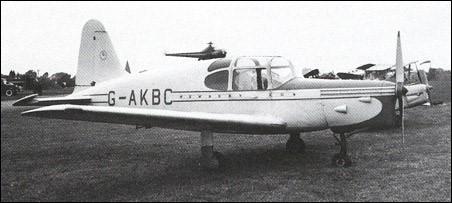
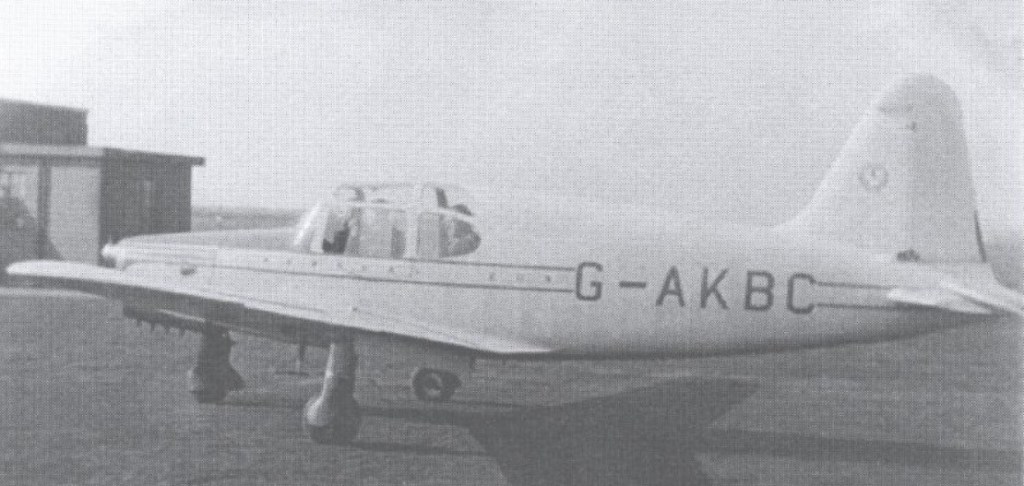
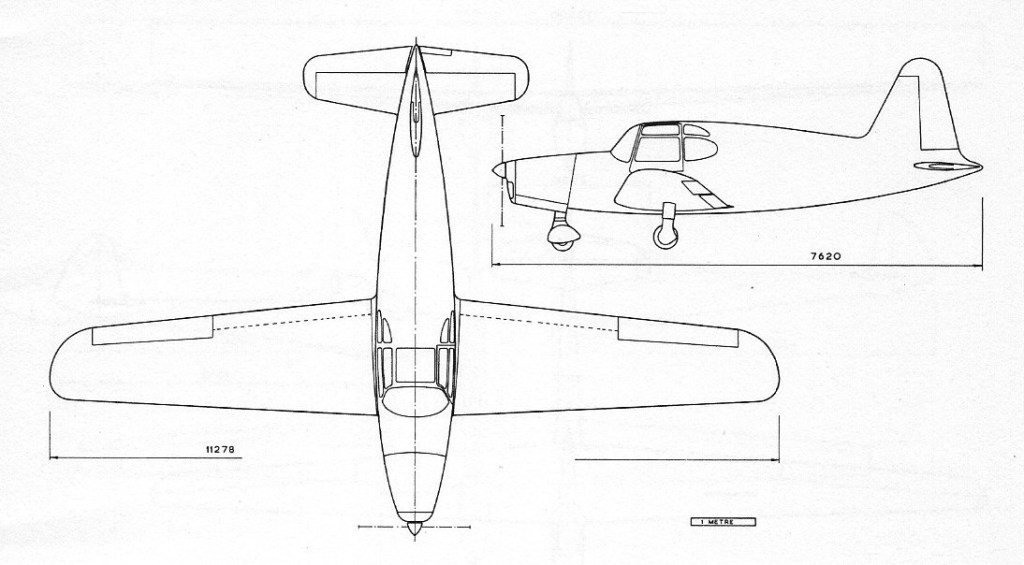
A four-seat single engine light aircraft built by Elliots of Newbury Ltd, of all wood construction. The undercarriage was fixed tricycle.

On 8 August 1947 the Type 4 first flew, registered G-AKBC powered by a 100 hp (75 kW) Blackburn Cirrus Minor, at Welford, Berkshire.

The prototype was later altered to have a DH Gipsy Major engine as the Eon 2.

The sole completed Eon aircraft was used as a glider-tug to demonstrate the company’s gliders. The aircraft met its end at Lympne airfield, Kent, on 14 April 1950, when, with a glider attached the pilot started the aircraft by swinging the propeller with the aircraft’s wheels not secured by chocks. The engine started, and the craft moved forward; the pilotless aircraft and the glider were damaged as the aircraft passed through a boundary hedge. The glider pilot had also abandoned his cockpit when he realised what was happening.”

EoN 1
Engine: Blackburn Cirrus Minor II
Wingspan: 11.28m / 37 ft 0 in
Wing area: 15.5 sq.m / 173 sq.ft
Aspect ratio: 8
Length: 7.62 m / 25 ft 0 in
Empty weight: 596 kg / 1314 lb
AUW: 882 kg / 1950 lb
Max speed: 180 kph / 112 mph
Cruise: 160 kph / 100 mph
Seats: 4

Eon 2
Powerplant: 1 × de Havilland Gipsy Major 10, 145 hp (108 kW)
Propeller: 2-bladed fixed-pitch, 6 ft 0 in (1.83 m) diameter
Wingspan: 37 ft 0 in (11.28 m)
Wing area: 173 sq ft (16.1 m2)
Aspect ratio: 8:1
Airfoil: NACA 2R.12
Length: 25 ft 6 in (7.77 m)
Height: 9 ft 9 in (2.97 m)
Empty weight: 1,714 lb (777 kg)
Max takeoff weight: 2,350 lb (1,066 kg)
Fuel capacity: 18 imp gal (22 US gal; 82 L)
Maximum speed: 136 mph (219 km/h, 118 kn)
Cruise speed: 116 mph (187 km/h, 101 kn)
Stall speed: 50 mph (80 km/h, 43 kn) (flaps down)
Range: 350 mi (560 km, 300 nmi)
Service ceiling: 13,400 ft (4,100 m)
Rate of climb: 675 ft/min (3.43 m/s)
Take-off run to 50 ft (15 m): 1,635 ft (498 m)
Landing run from 50 ft (15 m): 1,500 ft (460 m)
Crew: 1
Capacity: 3 passengers

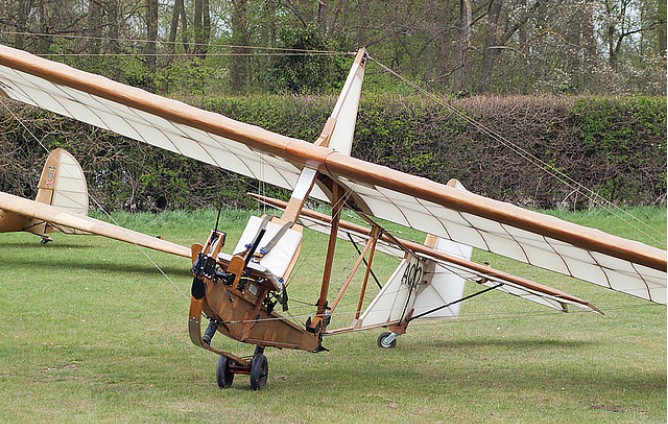
Ellehammer VI / Ellehammer 1910 Monoplane

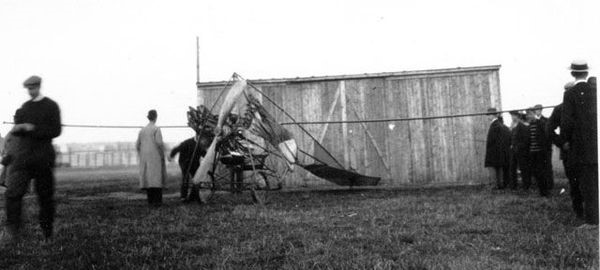
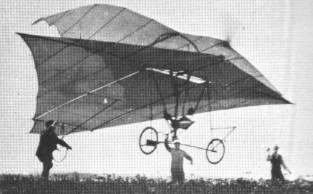
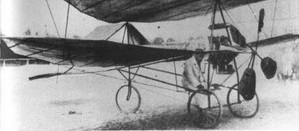
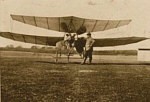
This machine has sometimes been called “Ellehammer”, and while the aircraft was capable of flight, its performance was rather modest, and as a consequence was nicknamed “graesslaamaskinen” (the grass cutting machine, or “Lawn-mower”) in the newspaper Ekstrabladet. With a six-cylinder Ellehammer radial engine and triangular fuselage shape in typical Ellehammer style, the ribs including the cloth could be pushed inboard along the main spar, which then could be folded along the fuselage. The main spars are still in transverse position in this photograph; believed to have been taken at “Kløvermarken” in 1910. Frederik Moltke was to compete with this machine for the first crossing-flight over the Øresund to Sweden. Unfortunately the airplane was not ready when Robert Svendsen had then already overflew the waters.

Span: 27’9″
Length: 24’7″

Ellehammer Aeroplane

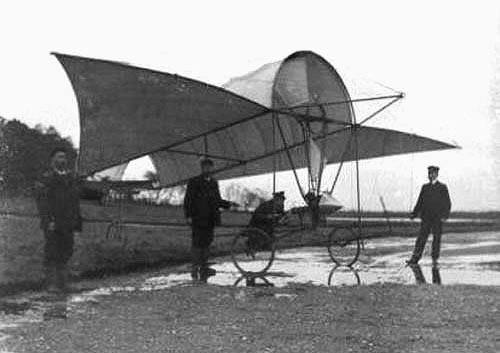
Danish inventor Jacob Christian Hansen Ellehammer’s 1905 first full-scale attempt did not fly. Ellehammer then experimented with an upper “sail”, added it to the machine, and succeeded in making brief tethered ascensions from a circular track on September 12, 1906. Since the island of Lindholon, on which tests were carried out, was too small for a straight flight to have been attempted.

Ellehammer IV Article

Many people acknowledge J.C.H.Ellehammer of Denmark as the first to fly in Europe because of a reported 42 m hop about 20 inches above the ground made on 12 September 1906.

Ellehammer’s work does not seem to have relied on the designs of his predecessors. He did fail to develop a workable control system. Lack of funds finally forced Ellehammer to abandon his experiments.

1908 Ellehammer IV

Engine: Ellehammer air cooled radial, 20 hp.
Prop: 4-blade.
Wing span: 30 ft 11.75in (9,35 m).
Length: 20 ft 4 in (6,20 m).
Height: 10 ft 8.25in (3.26 m).
Wing area: 398.3 sq. ft (37.00sq.m).
Gross weight: approx 397 lb (180 kg).
Speed: 35 mph (57 kph).
Seats: 1.

1908 Ellehammer IV
Span: 39’4″
Weight: empty 290 lb
Speed: 42 mph

Elite Macro

The Macro is an all metal low wing monoplane. The cantilever wind consists of a built up “I” beam spar with hand beaten aluminium ribs. The monocoque fuselage is of 2024T3 aluminium. A twin seat version was under construction which will have twin wing mounted engines.

Engine: Fuji Robin 244.
Prop: 81 cm x 38 cm pitch.
Wingspan: 7.0m.
Length: 3.96m.
Weight: 89.8 kg.
Fuel capacity: 18 ltr.
Econ cruise speed: 56 kts.
Stall: 35kts.

Elitar Sigma

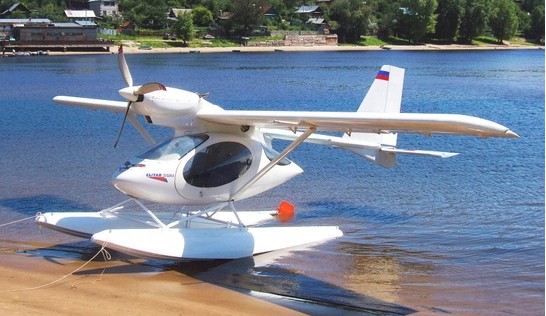
Sigma 4

The Sigma 4 was designed for training, tourism and sport.
The airplane was designed according to requirements of JAR VLA

Engine: Rotax 912 ULS
Power: 100 hp
Take-off weight: 544 kg
Emty weight: 360 kg
Max speed: 115 knts
Cruise speed: 90 knts
Minimal speed: 30 knts
Rate of climb: 8 m/s
Take off distance(nil wind): 70 m
Landing distance (nil wind): 100 m
Range: 700km
Perfomance overload: +4-1
Flaps: electric

Electric Aircraft ElectraFlyer-C

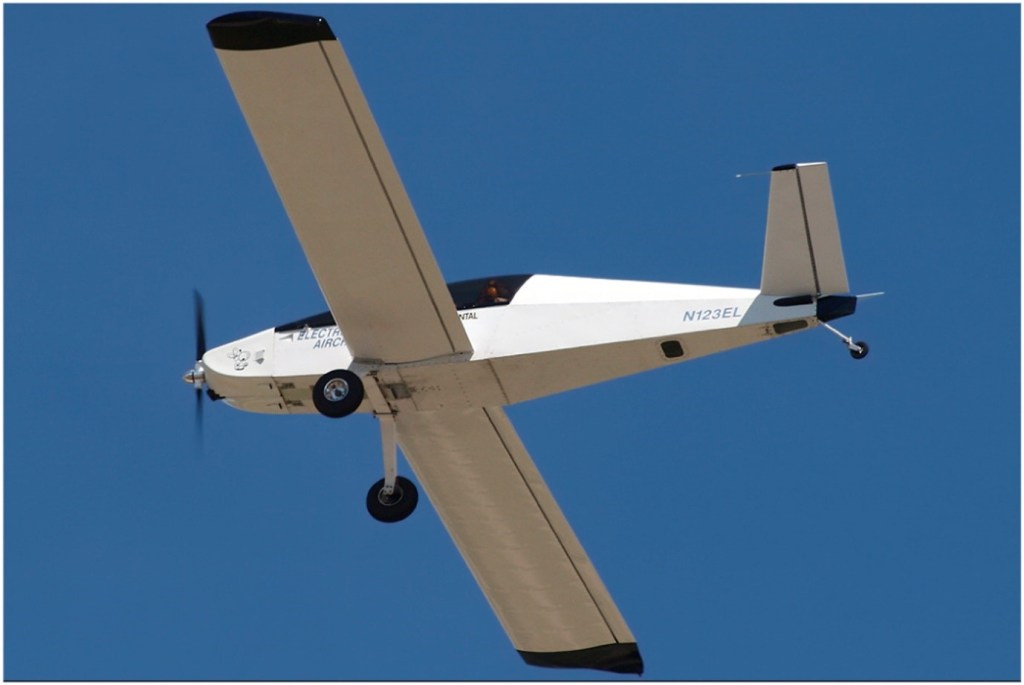
ElectraFlyer-C flown at Oshkosh AirVenture, August 2008.

In 2008 was the debut of the ElectraFlyer-C at the Experimental Aircraft Association AirVenture in Oshkosh. This all-electric, single passenger aircraft, fitted with a custom-built lithium polymer battery pack was able to cruise at 70 mile/h for 1–1/2 to 2 h and charged in as little as 2 hours.

The ElectraFlyer-C was designed and built as a prototype and proof of concept for economical electric flight.