Freebird Sport Aircraft Freebird

Freebird

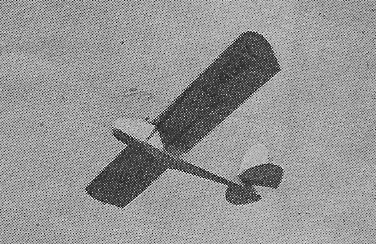
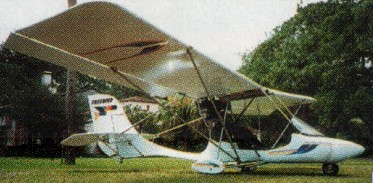
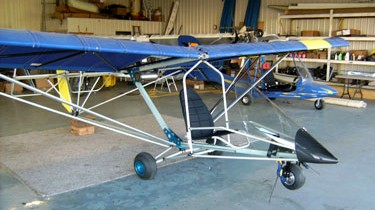
The FreeBird 103 was computer designed to make a legal 254lb ultralight with 3 axis control, steerable nose wheel, and the Black Max hydraulic brake system. Using the same basic wing design used on the LS-Ultra, the fuselage was totally redesigned to shave weight without compromising integrity.
Designed by Sherman Hawley, the wings fold for storage in a one bay garage, and the craft can be towed by car, and wing unfolded in ten minutes.

Freebird 103

Top speed: 80 mph
Cruise: 75 mph
Stall: 28 mph
Range: 170 sm
Rate of climb: 800 fpm
Takeoff dist: 125 ft
Landing dist: 150 ft
Service ceiling: 12,000 ft
Engine: Rotax 503, 52 hp
Fuel capacity: 10 USG
Empty weight: 385 lb
Gross weight: 970 lb
Height: 4.5 ft
Length: 17 ft
Wing span: 28 ft
Wing area: 132 sq.ft
Seats: 2
Landing gear: nose

Frederick-Ames EOS

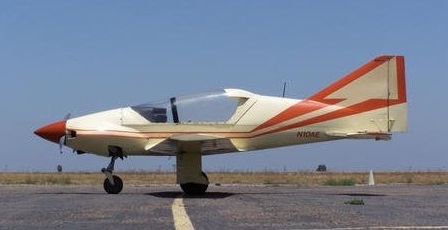
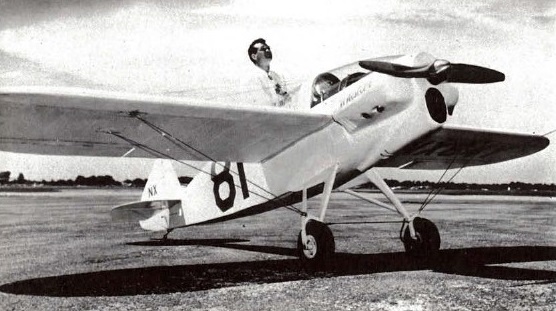
Fred Smith, president of Frederick-Ames Research Corporation at Novi, Michigan, USA, designed a small single-seat sporting aircraft called the EOS (after the Greek goddess of the dawn) N10AE, which first appeared in an incomplete form at the 1973 EAA Fly-in at Oshkosh.

Type: Single-seat light sporting aircraft.
Wings: Cantilever tapered low-wing monoplane. Wing section NACA 651212. Light alloy all-metal structure, except for glass fiber wing fillets, pop riveted and epoxy resin bonded.
Fuselage: Conventional light alloy semi-monocoque structure, pop riveted and epoxy resin bonded. Glass fiber engine cowling and 7 in (178 mm) prop extension shaft with Mooney 201 spinner.
Tail unit: Cantilever light alloy structure, comprising triangular fin, integral with rear fuselage, rudder, and all-moving tail plane with projecting balance arms at roots. Tail plane actuated via servo tabs.
Landing gear: Manually-retractable tricycle type. Main units retract inwards. Fully castoring and steerable nose wheel. Rubber-in-compression shock-absorption. Disc brakes.
Accommodation: Single glass fiber seat under large transparent canopy.
Systems: Electrical system includes 45A alternator and starter.

On its maiden flight on April 25, 1974, the 55 hp Hirth 650 cc engine seized and the aircraft crash landed, causing extensive damage. Despite some restoration work, the aircraft was abandoned through lack of finance.

In early 1978 the project was revived, with a modified Volkswagen motor car engine in place of the original engine. First flight of the reworked aircraft was in mid-1978, piloted by Robert Bishop. By August 1978 the EOS had completed about ten flying hours, and further modifications to the aircraft had been made. Eventually the release of plans and/or kits was never realized, and the prototype remains the only example ever built.

Power plant: Volkswagen 1,834 cc, 70 hp
Propeller: Rand Robinson three-blade ground-adjustable
Propeller diameter: 4 ft 2 in (1.27 m)
Span: 26 ft 0 in (7.92 m)
Wing area: 75 sq.ft (6.97 sq.m)
Wing aspect ratio: 9
Length: 16 ft 7 in (5.05 m)
Height: 6 ft 6 in (1.98 m)
Empty weight: 670 lb (304 kg)
Loaded weight: 975 lb (442 kg)
Fuel capacity 15 gal (56.75 l)
Max speed: 200 mph (322 kmh)
Cruise speed: 175 mph (281 kmh) at 5,000 ft (1,525 m)
Stall speed: 57 mph (92 kmh) at 4,500 ft (1,370 m)
Climb: 1,000 ft (305 m)/min
Take off run: 1,000 ft (305 m)
Frankfort Cinema II / Cinema B / TG-1

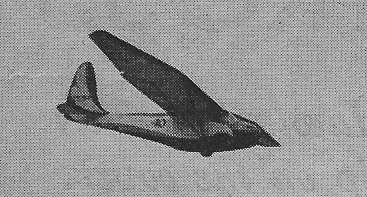
Designed by Stanley Corcoran, the two-place tandem Cinema II was developed in 1940 from the single-place Cinema I. The Cinema has wood/fabric wings and tail, steel-tube/fabric fuselage, and I-strut braced wings. Original versions had small, all-moving tails but the military TG-1A’s had conventional tails. The few civilian models, also known as Cinema B’s, became TG-1B’s, C’s, or D’s, largely dependent on when they were acquired.
Sixty-two were built.
One TG-1A was donated to the Smithsonian Air & Space Museum. The Vintage Sailplane Association has copies of the military manuals, drawings of the military paint scheme and colour chips available.

Cinema II
Wing span: 14.1m / 46.27ft
Wing area: 18.05sq.m / 194.3sq.ft
Empty Weight: 227kg / 500lb
Payload: 190kg / 420lb
Gross Weight: 417kg / 920lb
Wing Load: 23.1kg/sq.m / 4.7lb/sq.ft
Water Ballast: 0
Airfoil: Go 549
Aspect ratio: 10.7
L/DMax: 20
MinSink: 0.97 m/s / 3.2 fps / 1.90 kt
Seats: 2

Franklin Woodsy 1

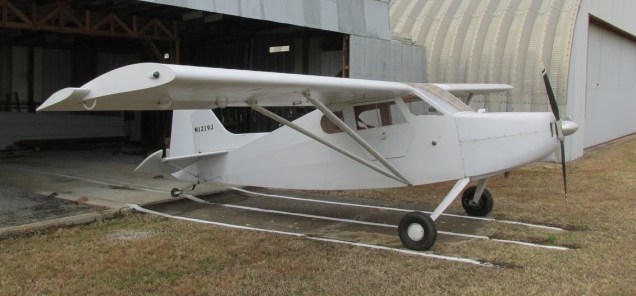
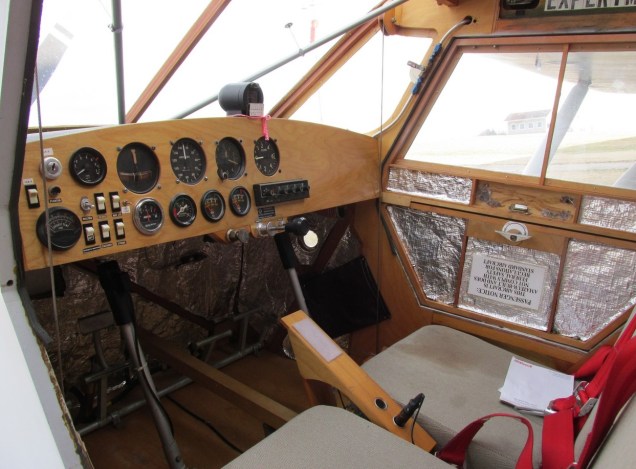
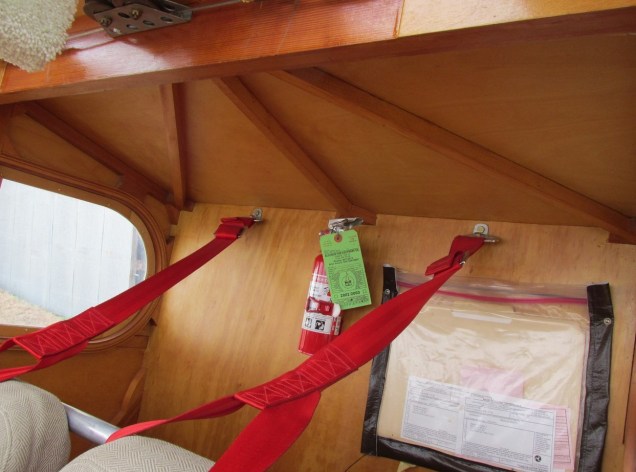
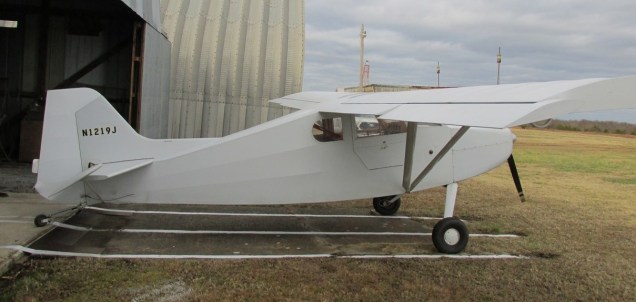
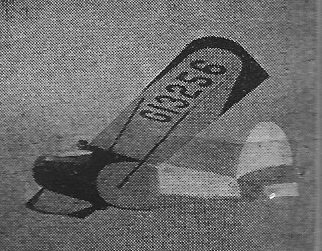
Built in 2003, the Franklin Woodsy 1 N1219J S/N: 1 is an experimental, one of a kind, all wooden, home-built aircraft. A two-seater powered by a Subaru auto engine, the Woodys is very aero-dynamically balanced and has a slow stall speed. The all wood structure has tapered steel rod landing gear and Freise ailerons. Wingspan is 28 ft and cruise 100 mph. It is equipped with two 12 USgallon wing tanks and 3-blade, ground adjustable prop.

In 2020 the Woodsy 1 was for sale with 317 Hours Total Time, engine and airframe. It was located at Wagoner, Oklahoma, USA, and priced at USD$20,000.

Franklin PS-2 / Taxaco Eaglet

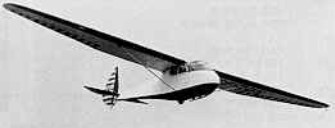
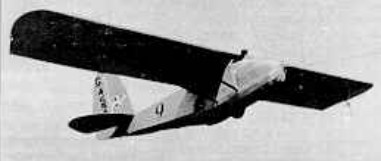
The Franklin PS-2 of the 1930’s won three of the first four U.S. Championships. It gave a start in soaring to notables such as Richard du pont, Warren Eaton, Floyd Sweet, Stan Smith and many others. The designation PS-2 was coined for the intended function of the glider, a primary and a secondary too. The ship has no spoilers, wood/fabric wings, and a steel-tube/fabric fuselage. Several cross-country tow experiments were made with the ship.

The long-wing prototype, the Taxaco Eaglet was towed from California to Elmira by Frank Hawks in 1931. That ship is now at the Smithsonian Air & Space Museum.

The 1934 Lustig Skytrain experiment had Jack O’Meara, R.E. Franklin and Stan Smith towed nose to tail behind a towplane, starting in New York, dropping a glider in Philadelphia one in Baltimore and ending in Washington.

In a more normal application, Ralph Barnaby directed a U.S. Navy primary flight training experiment in Pensacola, FL using PS-2’s in 1934.

1938

The National Soaring Museum has two examples and another (the last of the 6 acquired for the U.S. Navy experiment) belongs to the National Museum of Naval Aviation at Pensacola, FL.

1938

Wing span: 10.98m / 36ft
Wing area: 6.72sq.m / 180sq.ft
Empty Weight: 100kg / 220lb
Payload: 82kg / 180lb
Gross Weight: 182kg / 400lb
Wing Load: 10.88kg/sq.m / 2.2lb/sq.ft
Water Ballast: 0
L/DMax: 15
MinSink: 0.76 m/s / 2.5 fps / 1.48 kt
No. of Seats: 1
Aspect ratio: 7.2

Franke and Erhard Doppel-Eindecker

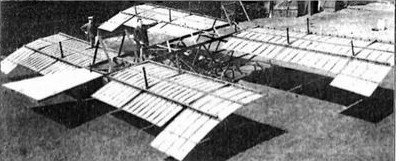
A big tandem monoplane glider, weighing 250 kg and with a wing area of 40 sq.m. It was tested at the Pfaffendorfer Weise outside Halle in 1911, towed by a 20 hp automobile. It would take off at a speed of 25 km/h. During a following flight the towing rope broke and the plane crashed to the ground when it lost speed, breaking all upper rigging wires. After the crash it was abandoned because the two young men could not raise enough money to repair it.

Franchault 1913 monoplane / Franchault-Loctin

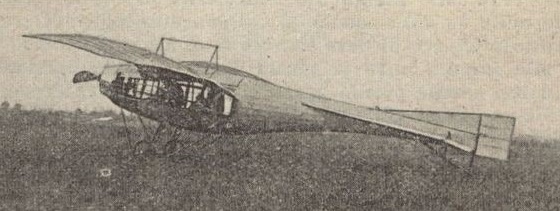
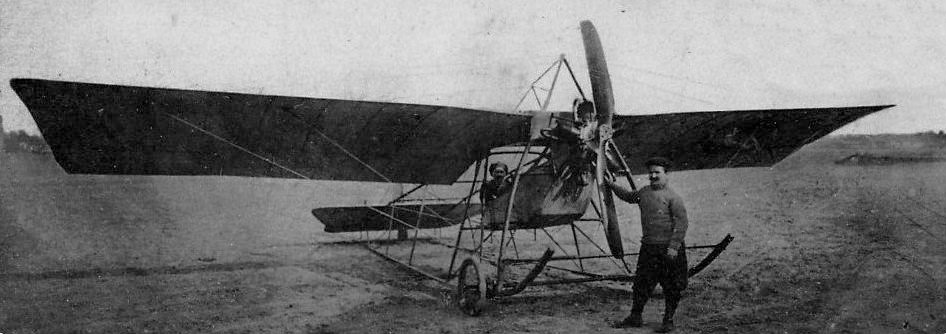
A tractor monoplane with a slight resemblance to the Caudron biplanes, powered by a five-cylinder Anzani. Two high inverted Vs at the front formed the undercarriage and the wing pylons, and the two pilots sat in a short nacelle inbetween. It was flown in France by Loctin in May 1913, and was sometimes referred to as the Franchault-Loctin – Loctin may have been Franchault’s financial partner.