Gippsland GA-8 Airvan / Mahindra Airvan

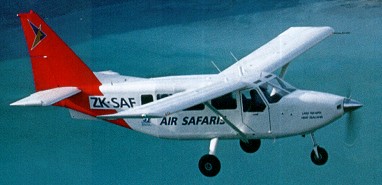
Designed by Peter Furlong to be between the Cessna Caravan and 206. Design work had begun in earnest in early 1994, with the first aircraft (VH-GAV and later re-registered as VH-PTR), powered by a 250 hp Textron Lycoming 0-540, making its maiden flight on 3 March 1995. On 7 February 1996, this air¬craft was destroyed during spinning trials. A second airframe was completed to a major component stage for static testing and a third, VH-ZGI, became the second flying prototype. The second prototype was first flown in August 1996 with a 300-hp Textron Lycoming IO-540K-lAS engine. Flight testing was completed by No-vember 1998 after a total of 350 hours had been collectively flown by the two aircraft. The basic simplicity of the aircraft’s non-turbo engine, automatic fuel management system, manual flaps, no cowl flaps, large cabin area with centre aisle, and useful centre of gravity range serve a utility role. It is of a strut braced high wing design, using the same wing as the GA 200, with a fixed undercarriage. It is of an all metal stressed skin construction which is fully corrosion protected. Up to eight passengers can be carried with entry gained by a large sliding door on the port side. The cabin floor has a quick release mechanism to permit rapid conversion between passenger and cargo roles or combi configuration.
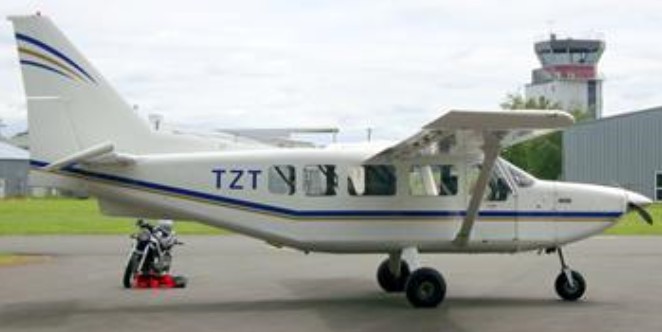
The second prototype was re-registered VH-XGA in January 1999 and provisional type certification was achieved in early 1999, followed by full certification on 10 October 2000.
The first production Airvan (004) was assembled in November 2000 and delivered to Air Fraser Island in Australia on 22 December 2000 as VH-RYT. The first export aircraft was 008, which was delivered to Maya Island Air in Belize, Central America, in late 2001 as V3-HGJ.
Planned is a 2.4-metre-long, 18 cu.ft underbelly cargo pod that can carry 400 lbs (180 kg). The pod is able to be retrofitted.

In July 2005 the Airvan was awarded EASA European certification. Gippsland had delivered about 80 Airvans by the end of July including the last of 16 for the US Civil Air Patrol.

In August 2006 the 100th GA8 was handed over to Missionary Aviation Fellowship.
 Several engine variants were under evaluation. These include a 320-hp version of the Lycoming IO-580, a turbo-charged Lycoming TIO-540, a diesel version powered by the Thielert TAE 135 turbo diesel or the French SMA engine, and a turbine example powered by the Rolls-Royce Allison 250 BT7F. The consideration of a turbine-powered Airvan has meant a study into a stretched 10-seat turbine version, aimed at paramilitary and special mission applications.
The Australian Civil Aviation Safety Authority (CASA) certified the GA8 Airvan for IFR flight. Certification work was also undertaken on an under belly cargo pod for the aircraft. The 18 cu ft pod will allow a total increase in weight lift of 180 kg and accommodate items up to 2.4 metres in length.

Mahindra agreed to pay about $40 million for a controlling stake in two small Australian aviation companies, Gippsland Aeronautics and Melbourne-based component maker Aerostaff Australia.
Mahindra Airvan 10

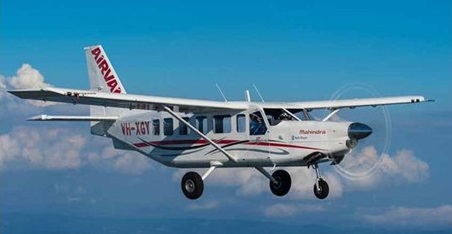
Developed by Mahindra Aerospace, the Airvan 10 10-seat single-engine turboprop received U.S. and Australian certification in 2017. With a price of around $1.7 million, it is targeted as a competitor to pricier turboprops, namely the Cessna Caravan and Quest Kodiak.

The Airvan 10 was planned to cost around $1.7 million and provide competition for turboprops like the Cessna Caravan and Quest Kodiak. The market introduction for the new turboprop was being supported by GippsAero, a Mahindra subsidiary in Australia and the original designer of the airplane.
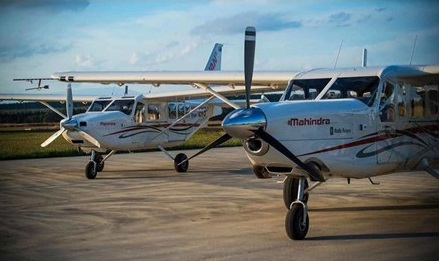
GA-8 Airvan & Airvan 10

The Rolls-Royce M250-powered model, with a useful load of 2,300 pounds (1,400-pound full-fuel payload) and cruise speed of 145 ktas, is a follow-on to the piston-powered eight-seat Airvan 8, which Mahindra’s aircraft business unit in Australia produces. Certified in more than 42 countries, over 220 Airvan 8s were in service.

By 2025 more than 260 of the Airvans operating in 43 countries around the world.

The company employed up to 180 local people to send one GA8 Airvan out the factory door every two weeks in 2025.
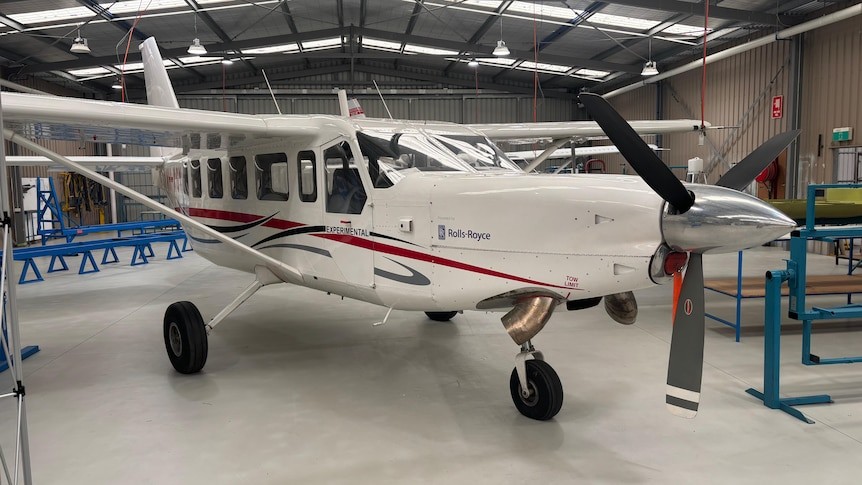
Gallery

Engine: Lycoming IO-540-K1A5, 300 hp.
Seats: 8.
Payload: 900 kg.
Wing Area: 208 sq.ft.
Aspect Ratio: 8:1.
Cabin Floor Area: 54 sq.ft.
Cabin Internal Volume: 180 cu.ft.
Empty Weight: 2,200 lb (997 kg).
Certified TOW: 4,000 lb (1814 kg).
Span, 40ft 5in (12.3m).
Length: 29ft 4in (9m).
Width: 40 ft 8 in (12.4 m).
Height: 12 ft 8 in (3.9 m).
Wheel Track: 9ft 2in (2.8m).
VNE: 185 KIAS.
Max speed, 140kt (259km/h).
Normal Cruise: 121 KIAS @ 56 1/hr.
Normal Range: 730 nm (6 hr).
Economic Cruise: 104 KIAS @ 37 1/hr.
Maximum Range: 930 nm (9 hr).
Take-off Performance to 50 ft: 550 m (1800 ft).
Landing Performance from 50ft: 370 m (1200 ft).
ROC: 788 ft/min.
Stall Speed (Clean): 60 KIAS.
Stall Speed (Full Flap): 52 KIAS
Ginn-Lesnlak Kestrel

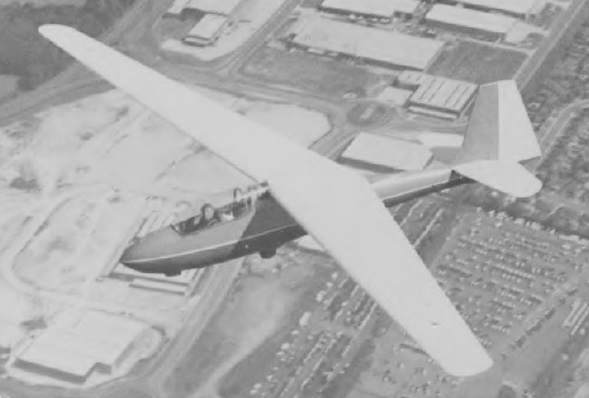
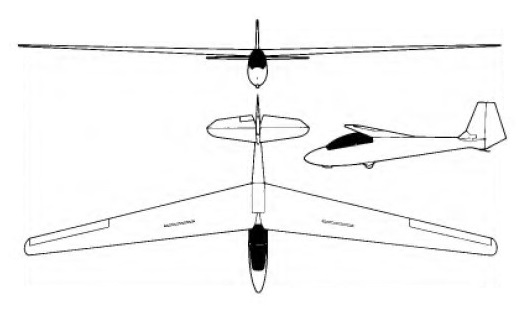
This two-seater semi aerobatic sailplane with its distinctive forward wing sweep was designed in 1956 by Mr Lesniak, who began construction of a prototype with Mr Vie Ginn at the Dunstable Gliding Club’s workshops at Dunstable, UK.

After a time the project was abandoned and after several years the uncompleted Kestrel prototype was saved
from destruction by Mr Ron Dodd, a chartered engineer who had worked at the RAE Farnborough, and Mr Jeff Butt. They reactivated the project, with Mr Dodd recalculating, modifying and improving the design, and they completed the Kestrel prototype, which eventually made its first flight on 19 July 1969 at Enstone as c/n 1 BGA.1571.

It is of conventional wood and fabric construction, the two-part wings incorporating large Schempp-Hirth air brakes and Frise ailerons, and there are metal-bonded reinforcements at the wing roots. The all-wood fuselage has plywood/balsa sandwich reinforcement from the tip of the nose to just aft of the cockpit. Landing gear consists of a fixed monowheel and a tailskid, with a skid block mounted under the nose to protect it. The pilots sit in tandem in a roomy cockpit under a two-piece canopy, the sideways-hinged forward section being a complete Skylark 4 canopy which also secures the transparent detachable rear half.

Span: 59 ft 0.5 in / 18.0 m
Length: 24 ft 8.25 in / 7.54 m
Wing area: 243 sq ft / 22.57 sq.m
Aspect ratio: 14.3
Wing section: Gottingen 549/M12
Empty weight: 680 lb / 308 kg
Max weight: 1,100 lb / 499 kg
Water ballast: None
Max wing loading: 4.55 lb/sq ft / 22.21 kg/sq.m
Max speed: 98 mph / 85 kt / 158 km/h
Stalling speed: 32.5 kt / 60 km/h
Max rough air speed: 71.5 kt / 133 km/h
Min sinking speed: 2.2 ft/sec / 0.67 m/sec at 50 mph / 43 kt / 80 km/h
Best glide ratio: 28:1

Gilmore Monoplanes

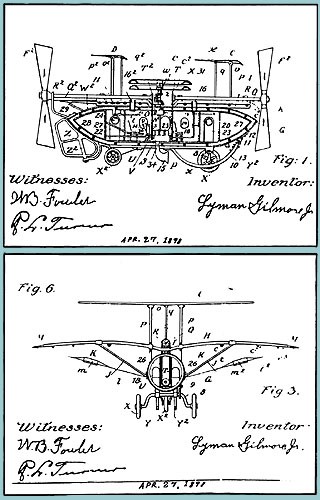
Copies exist of patent drawings of an aeroplane designed by Lyman Wiswell Gilmore Jr., although the April 27, 1898, date ascribed to them (and written on them in a hand other than the patent artist’s) is unsubstantiated, as far as can be determined.

The Gilmore Monoplane design – said to date from 1898

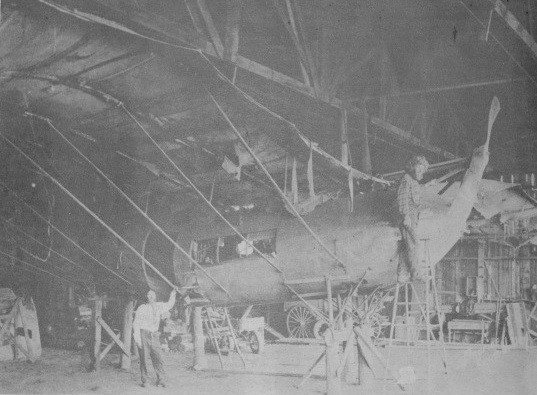
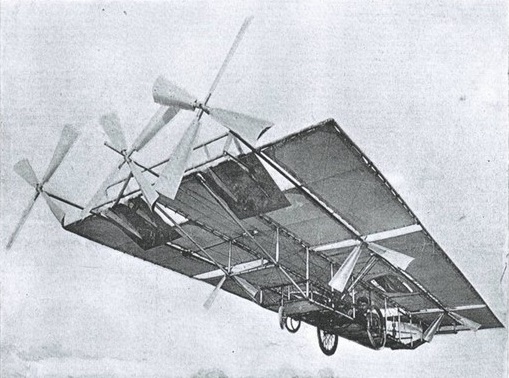
About 1909 Gilmore built a large machine of his 1898 design. Gilmore kept both the smaller monoplane and the large “1898”-type monoplane in a barn at his modest ranch, “The Lyman Gilmore Aerodrome,” in Red Bluff, California.

During the 1910’s Gilmore’s efforts picked up ‘steam’ and he built a large monoplane, apparently patterned to a degree after Louis Bleriot’s Bleriot XII (not Bleriot XI) monoplane of 1909. Gilmore seems to have claimed that he built that machine in 1908, but that assertion, as with so much of Gilmore’s story, seems to be lacking corroboration. During August and September of 1909, Gilmore was experimenting with what seems to have been a clockwork-powered large model aeroplane, which was apparently successfully demonstrated to a small number of people.

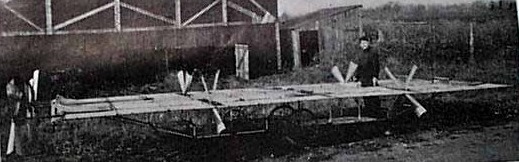
The Gilmore Monoplane “1898” design and the smaller monoplane, right, built about 1911

Gilmore would often roll the machines outside for the display until 1935, when the barn and the two machine were destroyed in a fire. His smaller (although still quite large) monoplane was apparently flight tested on September 21, 1911, although the crankshaft on his monoplane’s Roberts engine broke before the machine could be flown. A second attempt, before a large crowd on March 17, 1912, proved the machine, at 1,600 lb., to be too heavy for flight.

Lyman Gilmore, Jr., standing on the ground, Charles Lyman on a ladder

Gillespie 1905 Aeroplane

Designed by G. Curtis Gillespie and featured on the cover of Scientific American for June 26, 1905.
Trussed frame of light aluminium tubing reinforced by piano wire 24 feet overall with a beam of 10 feet, covered in light duck and steered by two integrated flaps.

The motive power consisted of an air-cooled gasoline engine having six cylinders, opposed three to three in a horizontal plane with cranks set an an angle of 60 degrees.

The machine’s total weight was 150 pounds, and developed 20 horse-power.

Gilbert DG2

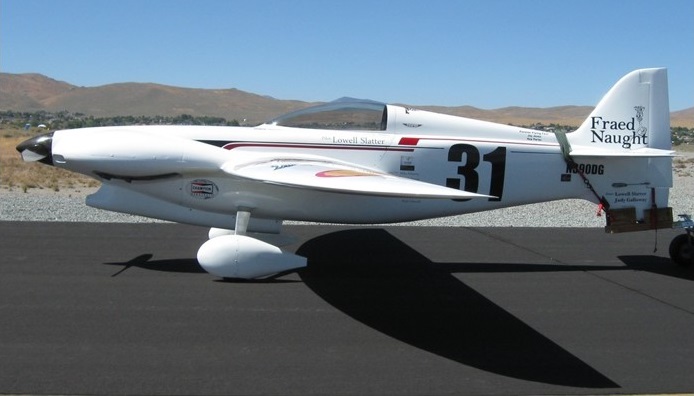
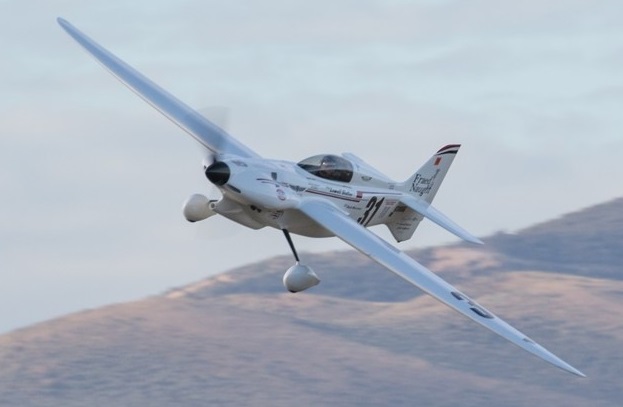
Constructed as a DG2 it was registered to Lowell J. Slatter, Buhl, ID on 18 June 2011 with new c/r N390DG. Originally designed and built by Dan Gilbert and incorporating the lessons learned from his DG-1 (last raced by Charlie Greer as Miss B Haven), this aircraft has a fuselage similar to Nemesis but significantly scaled down and with a ventral fin to raise the tail wheel up. Lowell had done considerable developmental flying and enlarged the rudder to improve directional control.

From 9 September 2013 to 15 September 2013 it raced as #31, named Fraed Naught. Competed at the National Championship Air Races in the Formula One class. The primary pilot was Lowell Slatter from Brookville, OH. Finished in 4th place with an average speed of 227.225 mph.
From 12 September 2016 to 18 September 2016 competed at the National Championship Air Races in the Formula One class. The primary pilot was Lowell Slatter from Buhl, ID. Qualified in 1st place with an average speed of 253.787 mph. Raced in the Gold race. Finished in 1st place with an average speed of 256.728 mph.

Gigax C-22 Fox / Comco-Ikarus Fox

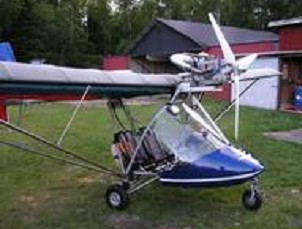
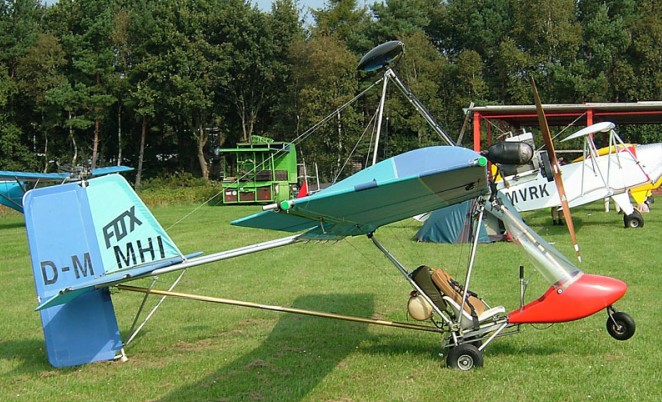
The Fox was designed by Hans Gigax in Switzerland in 1982. Single seat single engined high wing mono-plane with conventional three axis control. Wing has unswept leading edge, swept for¬ward trailing edge and tapering chord; cruci¬form tail. Pitch control by elevator on tail; yaw control by fin¬-mounted rudder; roll control by half span ailerons; control inputs through stick for pitch/roll and pedals for yaw. Wing braced from above by kingpost and cables, from below by cables; wing profile double surface. Undercarriage has three wheels in tricycle formation; suspension on all wheels. Push right go right nose-wheel steering connected to yaw control. Hand actuated brake on nosewheel. Aluminium tube framework, with pod. Engine mounted at wing height driving tractor propeller.
The Fox single seater made its first flight in December 1982 and underwent a programme of test flights with the intention of obtaining certification in West Germany. It was only a prototype. Rigging and derigging take 20 minutes and when folded it is transportable on a roof rack. The noise measured on the ground with the machine flying at 492ft (150m) with the motor at maximum power is 58dB; West German regulations stipulate 60 dB maximum.

Ikarus C-22 Fox

Evektor-Aerotechnik also is marketing the braced high-wing two-seat Fox (a variant of the German Ikarusflug Eurofox, with Evektor of the Czech Republic having undertaken important design work, and Aeropro of Slovakia building airframes for Fox and Eurofox).

The single-seater Comco-Ikarus Fox D is a first generation micro-light aircraft. The single-seat Sherpa I was the first motorised Ikarus micro-light aircraft and entered serial production in 1982. In 1983, the single-seater Sherpa I was replaced in production by the Fox D, an open single-seater constructed out of aluminium tube covered with sailcloth. The nose of the plane is made out of glassfibre composite as used by the 2-seater Sherpa II. The prop of the Fox D is driven by a Göbler-Hirth F263 engine.

Gallery

Length overall 15.6 ft, 4.75 m.
Height overall 8.7ft, 2.65m.
Wing span 33.1ft, 10.10m.
Chord at root 4.8ft, 1.45 m.
Chord at tip 4.5ft, 1.36m.
Dihedral 3deg.
Sweepback 0deg.
Tailplane span 10.1ft, 3.08m.
Fin height 5.5 ft, 1.69 m.
Total wing area 142 sq.ft, 13.2 sq.m.
Total aileron area 12.7 sq.ft, 1.18 sq.m.
Fin area 5.1 sq.ft, 0.47 sq.m.
Rudder area 5.5 sq.ft, 0.51 sq.m.
Tailplane area 18.2 sq.ft, 1.69 sq.m.
Total elevator area 10.5 sq.ft, 0.98 sq.m.
Wing aspect ratio 7.7/1.
Wheel track 5.1 ft, 1.54 m.
Wheelbase 4.7 ft, 1.40 m.
Nosewheel diameter overall 12 inch, 30 cm.
Main wheels diameter overall 12 inch, 30 cm.
Engine: Hirth 383 cc, 22 hp at 4200 rpm.
Propeller diameter and pitch 55 x 28 inch, 1.40 x 0.70 m.
Belt reduction, ratio 1.5/1.
Max static thrust 166 lb, 75 kg.
Power per unit area 0. 15 hp/sq.ft, 1.7hp/sq.m.
Fuel capacity 2.6 US gal, 2.2 Imp gal, 10.0 litre in main tank; 2.6 US gal, 2.2 Imp gal, 10.0 litre in res.
Empty weight 190 lb, 86 kg.
Max take off weight 442 lb, 200 kg.
Payload 252 lb, 114 kg.
Max wing loading 3.11 lb/sq.ft, 15.2kg/sq.m.
Max power loading 20.1 lb/hp, 9.1kg/hp.
Load factors; +6.0, 3.0 ultimate.
Max level speed 53 mph, 85 kph.
Never exceed speed 81 mph, 130 kph.
Max cruising speed 47 mph, 75 kph.
Economic cruising speed 31 mph, 50 kph.
Stalling speed 24 mph, 40 kph.
Max climb rate at sea level 400ft/min, 2.0m/s.
Take off distance 82ft, 25m.
Landing distance 33ft, 10m.
Range at average cruising speed 171 mile, 275 km.

Comco Ikarus C-22 Fox
Stall: 23 kt / 27 mph / 43 kmh
Cruise: 49 kt / 56 mph / 90 kmh
VNE: 65 kt / 75 mph / 120 kmh
Empty Weight: 204 kg / 450 lbs
MTOW Weight: 390 kg / 860 lbs
Climb Ratio: 700 ft/min / 4 m/s
Take-off distance (50ft obstacle): 660 ft / 200 m
Landing distance (50ft obstacle): 660 ft / 200 m

Ikarus Comco Ikarus C 22
Empty weight: 185 kg
Wing span: 10.4 m
Wing area: 15.2 sq.m
Fuel capacity: 40 lt
Engine: Rotax 582, 64 hp
MAUW: 400 kg
Seats: 2
Max speed: 145 kph
Cruise speed: 130 kph
Minimum speed: 55 kph
Climb rate: 5 m/s
Fuel consumption: 14 lt/hr
Price (1998): 33 000 DM

Ikarus Comco Ikarus C 22
Empty weight: 185 kg
Wing span: 10.4 m
Wing area: 15.2 sq.m
Fuel capacity: 40 lt
Engine: Rotax 582, 64 hp
MAUW: 400 kg
Seats: 2
Max speed: 145 kph
Cruise speed: 130 kph
Minimum speed: 55 kph
Climb rate: 5 m/s
Fuel consumption: 14 lt/hr
Price (1998): 33 000 DM

Gigax Sherpa / Comco Sherpa

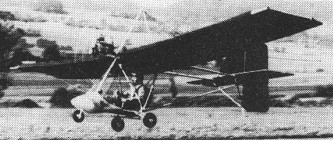
Hans Gigax developed his Sherpa using experience acquired with the earlier Microstar, the two machines sharing a similar configuration and technology. The Sherpa made its first flight as a single seater in May 1982 and the two seater took to the air in July of the same year. Since then both have been put into production by the West German Ikarus company, under which heading we give greater detail. Briefly, however, the Sherpas are provided with a cage where the tubes form a double triangular structure ensuting excellent rigidity whilst offering considerable passive security. The aircraft also exhibits the peculiarity of having been designed from the start to be usable either as a single seater, with the seat fitted in the central position, or as a two seater, its frame being large enough to be fitted either with a double bench seat or two separate seats, the pro¬totype being equipped with a central stick.
Single seat single engined high wing mono¬plane with conventional three axis control. Wing has unswept leading and trailing edges, and constant chord; cruciform tail. Pitch control by elevator on tall; yaw control by fin mounted rudder; roll control by one third ¬span ailerons; control inputs through stick for pitch/roll and pedals for yaw. Wing braced from above by kingpost and cables, from below by cables; wing profile double ¬surface. Undercarriage has three wheels in tricycle formation with additional tailskid; rubber suspension on nosewheel and suspension on main wheels. Push right go-¬right nosewheel steering connected to yaw control. Optional brake on nosewheel. Alumi¬nium tube framework, without pod. Engine mounted at wing height driving tractor prop¬eller.
A manufacturer of hang¬-gliders for many years, Ikarus has just acquired the licence to produce and sell the Sherpa designed by the Swiss Hans Gigax. The first Sherpa single seater flew for the first time in May 1982 and Hans made the first flight with the Sherpa two-¬seater on the way to the amateur constructors convention at Brienne le Chateau in France at the end of July 1982.
The prototype used a Konig SD570 four¬ cylinder engine of 570cc, but this was aban¬doned on the commercial versions. Instead, Ikarus chose to fit its single seater, the Sherpa I, with a twin cylinder Hirth 263R 383cc engine developing 22hp. By February 1983, Ikarus had already delivered eleven machines and in March at the Friedrichshafen show the firm announced orders for 200 machines.
The Sherpa I options include electric starter (with alterna¬tor and battery) and a package allowing the single seater to be transformed into a two ¬seater. This package contains a second seat fitted with belts, dual controls, and the Hirth 438cc engine and costs an extra DM2150.
Though very similar to the Sherpa I, the Sherpa II differs by the addition of a second seat, dual controls (on production models), structural reinforcements and a more powerful engine. Otherwise few changes are needed, as the Sherpa was designed from the outset to be a two seater. The Sherpa II can be turned back into a single seater in a few minutes and uses the Hirth 438cc engine developing 42hp. Following three pre production models built during the first quarter of 1983, produc¬tion started. A pod and instrument panel are optional.

Sherpa I
Length overall 16.2 ft, 4.95 m.
Height overall 9.3ft, 2.82m.
Wing span 34.4ft, 10.50m.
Constant chord 5.2 ft, 1.60 m.
Sweepback 0deg.
Tailplane span 9.8 ft, 3.00 m.
Total wing area 169 sq.ft, 15.7 sq.m.
Wing aspect ratio 7.0/1.
Wheel track 5.9 ft, 1.80 m.
Wheelbase 4.3 ft, 1.30 m.
Engine: Hirth 263R, 22hp at 4200rpm.
Propeller diameter 55 inch, 1.40 m.
Toothed belt reduction, ratio 1.8/1.
Max static thrust 143 lb, 65 kg.
Power per unit area 0.13hp/sq.ft, 1.4hp/sq.m.
Fuel capacity 3.4 US gal, 2.8 Imp gal, 13.0 litre in main tank; 3.4 US gal, 2.8 Imp gal, 13.0 litre in res.
Empty weight 221 lb, 100 kg.
Max take off weight 475 lb, 215kg.
Payload 254 lb, 115kg.
Max wing loading 2.81 lb/sq.ft, 13.7kg/sq.m.
Max power loading 21.6 lb/hp, 9.8kg/hp.
Load factors; +6.0, 3.0 ultimate.
Max level speed 56 mph, 90 kph.
Never exceed speed 68 mph, 110 kph.
Max cruising speed 50 mph, 80 kph.
Economic cruising speed 37 mph, 60 kph.
Stalling speed 24 mph, 40 kph.
Max climb rate at sea level 300 ft/min, 1.5 m/s.
Min sink rate 400 ft/min at 31 mph, 2.0 m/s at 50 kph.
Best glide ratio with power off 7/1.
Take off distance 200ft, 60m.
Landing dis¬tance 130 ft, 40 m.
Range at average cruising speed 93 mile, 150km.

Sherpa II
Engine: Hirth 263R, 22hp at 4200rpm.
Propeller diameter 55 inch, 1.40 m.
Toothed belt reduction, ratio 1.8/1.
Max static thrust 143 lb, 65 kg.
Power per unit area 0.13hp/sq.ft, 1.4hp/sq.m.
Length overall 16.2 ft, 4.95 m.
Height overall 9.3ft, 2.82m.
Wing span 34.4ft, 10.50m.
Constant chord 5.2 ft, 1.60 m.
Sweepback 0deg.
Tailplane span 9.8 ft, 3.00 m.
Total wing area 169 sq.ft, 15.7 sq.m.
Wing aspect ratio 7.0/1.
Wheel track 5.9 ft, 1.80 m.
Wheelbase 4.3 ft, 1.30 m.
Fuel capacity 3.4 US gal, 2.8 Imp gal, 13.0 litre in main tank; 3.4 US gal, 2.8 Imp gal, 13.0 litre in res.

Engine: Hirth 276R, 42 hp at 4200 rpm.
Propeller diameter 63 inch, 1.60 m.
Toothed belt reduction, ratio 1.8/1.
Max static thrust 232 lb, 105 kg.
Power per unit area 0.25 hp/sq.ft, 2.7 hp/sq.m.
Length overall 16.2 ft, 4.95 m.
Height overall 9.3ft, 2.82m.
Wing span 34.4ft, 10.50m.
Constant chord 5.2 ft, 1.60 m.
Sweepback 0deg.
Tailplane span 9.8 ft, 3.00 m.
Total wing area 169 sq.ft, 15.7 sq.m.
Wing aspect ratio 7.0/1.
Wheel track 5.9 ft, 1.80 m.
Wheelbase 4.3 ft, 1.30 m.
Fuel capacity 3.4 US gal, 2.8 Imp gal, 13.0 litre in main tank; 3.4 US gal, 2.8 Imp gal, 13.0 litre in res.
Empty weight 254 lb, 115kg.
Max take off weight 662 lb, 300kg.
Payload 408 lb, 185
Max wing loading 3.91 lb/sq.ft, 19.1 kg/sq.m.
Max power loading 15.8 lb/hp, 7.1 kg/hp.
Load factors; +6.0, 3.0 ultimate.
Max level speed 50 mph, 80 kph.
Max cruising speed 44 mph, 70kph.
Economic cruising speed 37mph, 60kph.
Stalling speed 26mph, 42kph.
Max climb rate at sea level 400 ft/min, 2.0 m/s.
Min sink rate 400ft/min at 31mph, 2.0m/s at 50 kph.
Best glide ratio with power off 7/1.
Take off distance 150ft, 45m.
Landing distance 115ft, 35m.
Range at average cruising speed 93 mile, 150 km.

Gigax Microstar

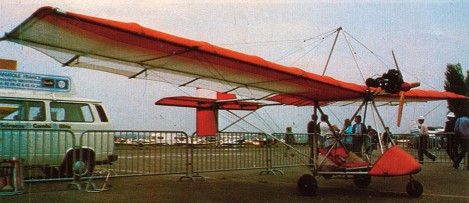
Single seat single engined high wing mono¬plane with conventional three axis control. Wing has unswept leading and trailing edges, and constant chord; cruciform tail. Pitch control by elevator on tail; yaw control by fin mounted rudder; roll control by spoilers; control inputs through stick for pitch/roll and pedals for yaw. Wing braced from above by kingpost and cables, from below by cables; wing profile 80% double surface. Undercarriage has three wheels in tricycle formation with additional tailskid; no suspension on nosewheel and steel spring suspension on main wheels. Push right go right nosewheel steering connected to yaw control. No brakes. Aluminium tube framework, without pod. Engine mounted at wing height driving tractor propeller. Leading edges of the wing are stiffened with polyester under the Dacron covering.
Designed and built by Hans Gigax, the Microstar, which made its first flight at the beginning of 1981 and was shown by Hans at the annual homebuilders’ meet at Brienne le Chateau in France. The machine went on sale in 1982 from ASW, which has ceased to produce aircraft in Switzerland at the beginning of 1983. The Microstar was directly involved in a fatal accident in West Germany in 1982 which led the maker to stiffen its empennage by two additional tubes.
Having acquired the licence to build and sell the single seater Microstar as designed by Hans Gigax, the ASW company embarked in 1982 on the production of several examples as the Microstar Mark I. The distribution seems to have been very small, but at least one Microstar was exported to France, bought by the French agent of the Swiss parent company.

Length overall 17.1ft, 5.20m.
Wing span 33.6ft, 10.20m.
Constant chord 4.4ft, 1.32 m.
Sweepback 0 deg.
Total wing area 145 sq.ft, 13.4 sq.m.
Wing aspect ratio 7.8/1.
Engine: Konig SC430, 24 hp at 4200 rpm.
Propeller diameter 43 inch, 1.09 m.
No reduction.
Max static thrust 132 lb, 60 kg.
Power per unit area 0.17 hp/sq.ft, 1.8 hp/sq.m.
Fuel capacity 5.3 US gal, 4.4 Imp gal, 20.0.
Empty weight 154lb, 70kg.
Max take off weight 441 lb, 200 kg.
Payload: 287 lb, 130 kg.
Max wing loading: 3.05 lb/sq.ft, 14.9 kg/sq.m.
Max power loading 18.4 lb/hp, 8.3kg/hp.
Load factors: +6.0, 3.0 ultimate.
Max level speed 50 mph, 80 kph.
Never exceed speed 68 mph, 110 kph.
Max cruising speed 44 mph, 70 kph.
Economic cruising speed 24mph, 40kph.
Stalling speed 17 mph, 28 kph.
Max climb rate at sea level 250ft/min, 1.5m/s.
Take off distance 65ft, 20m.
Landing distance 50ft, 15 m.
Service ceiling 11,480 ft, 3500 m.