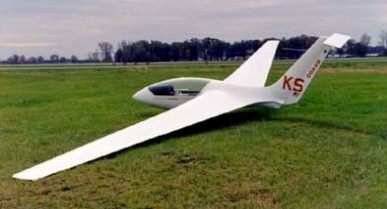
Group Genesis Genesis 2

The prototype Genesis 1 flew for the first time in 1993, and various improvements were applied, resulting in the production version, Genesis 2. The later has slightly modified wing geometry, fully retractable landing gear and a ballistic parachute (optional).

The design provides for automatic control hookups, and a ballistic recovery parachute is intended to be fitted as standard. Kits and complete airframes are to be produced by Sportina Aviacija in Lithuania, the builder of the LAK-12. The production version, Genesis 2, is expected to bring empty weight back to close to that predicted for the prototype. Other refinements incorporated as a result of prototype flight testing include a change to the aerodynamic twist to the wing, a modified tip airfoil section and a retractable nose wheel.
The kit price in 1997 was US$27,900.

Wing span: 15.0 m
Length: 4.86 m
Wing Area: 11.15 sq.m
Airfoil: Roncz
Aspect ratio: 20.2
Empty weight: 241 kg
Max. weight: 526 kg
Minimum speed: 67 km/h
Maximum speed: 276 km/h
Stall: 42 mph
Best glide ratio: 44:1 at 97 km/h
Minimum sink rate: 0.58 m/s
Seats: 1
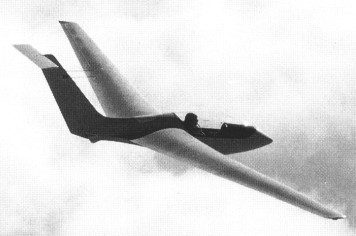
Group Genesis Genesis 1

The Genesis I is a standard class glider from Marion, Ohio-based Group Genesis and intended for the homebuilt market.
Chief designer Jim Marske was given a clean sheet and chose a flying wing concept, but with conventional pilot pod and tall vertical stabiliser, topped by a small elevator, not tailplane. Aerodynamicist John Roncz, whose previous work has included the world-circling Voyager, did extensive work with computer modelling to come up with the final shape. The wing is a stable aerofoil with several changes in section and forward sweep across the span, and initial pilot reports (four different pilots flew the prototype within its first dozen flights) indicate high stability and control coordination.
The small horizontal surface found at the top of the Genesis’ fin is used only to control the glider’s angle of incidence. The wing has reverse sweep in order to put the variable masses close to the center of gravity, and incorporates water ballast tanks.
The prototype flew for the first time in 1993, and various improvements were applied, resulting in the production version, Genesis 2.
Specifications are for the prototype Genesis 1 as designed : on completion, empty weight was substantially greater.

Wing span: 15m / 49.2ft
Wing area: 11.19sq.m / 120.5sq.ft
Empty Weight: 227kg / 500lb
Payload: 298kg / 657lb
Gross Weight: 525kg / 1157lb
Wing Load: 46.91kg/sq.m / 9.6lb/sq.ft
Water Ballast: 0
Aspect ratio: 20.2
Speed max: 180 mph.
Cruise: 140 mph.
Stall: 40 mph.
L/DMax: 43 120 kph / 65 kt / 75 mph
MinSink: 0.71 m/s / 53 kt / 61 mph
Airfoil: Roncz G-74S
Structure: GFRP/CFRP/aramid
Seats: 1
Landing gear: single wheel.

Gross JG-2

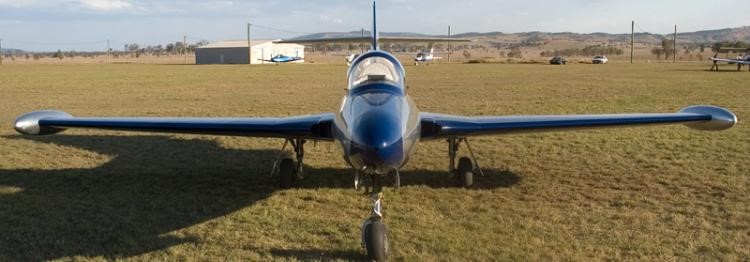
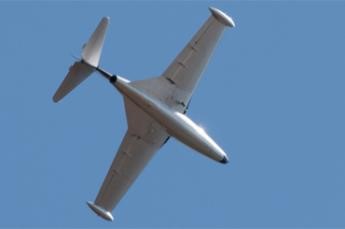
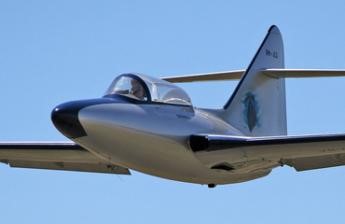
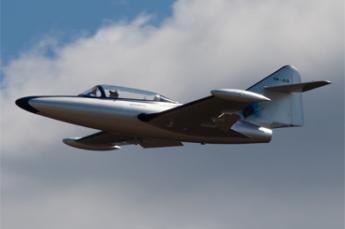
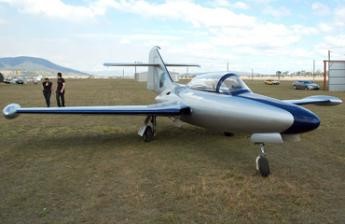
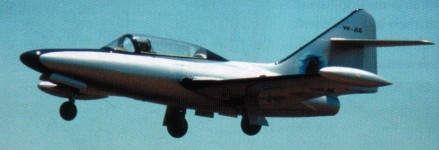
Designer and builder, John Gross, built the 3/4 scale replica Grumman F9F Panther at a Mt Cotton property a few miles south east of Archerfield (Australia).

After 8 years of work, the homebuilt JG-2 took-off for the first flight on April 1 2006 at Kingaroy airport.

Power is from a GE T58-8F turbojet.

Gross Sky Ghost

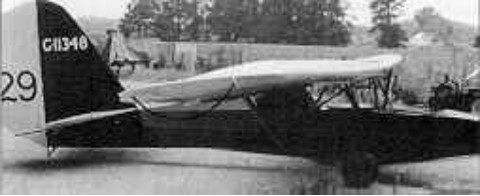
The third design of Akaflieg Darmstadt graduate Frank Gross, following the Akron Condor and the Baker McMillen Cadet, the Sky Ghost was relatively advanced for its time. A two-place dual control glider was a relative novelty when most training was accomplished by the solo method of ground slides graduating to low hops, high hops and patterns. It had a single fixed main wheel, with a two wheel gear as an option. Gross made the first multi-place flight in the U.S. of over two hours in the Sky Ghost. An example is in the National Soaring Museum.

Span: 13.11 m / 43ft
Area: 19.97sq.m / 215sq.ft
Empty Weight: 141kg / 310lb
Seats: 2
Structure: steel tube, fabric covered fuselage

Gruppo Costruzioni Aeronautiche GCA.3 Eta Beta

The Gruppo Costruzioni Aeronautiche GCA.3 Eta Beta is virtually a tandem two-seat scaled-up version of the earlier GCA.2 Dumbo, retaining the V-tail assembly. The Eta Beta appeared in 1952, and was designed for both training and touring roles.

The fuselage is an all-wood stressed-skin structure and the wing is an all-wood monospar structure with a stressed plywood skin. Cantilever spring steel main undercarriage legs are fitted, and the enclosed cabin is provided with dual controls and HF radio.

Engine: 60 hp C.N.A, D4S
Wingspan: 27 ft 10,5 in
Length: 20 ft 4 in
Empty weight: 710 lb
Loaded weight: 1151 lb
Max speed: 124 mph at SL
Cruise: 106 mpg
ROC: 984 fpm
Range: 404 mi

Gruppo Costruzioni Aeronautiche GCA.2 Dumbo

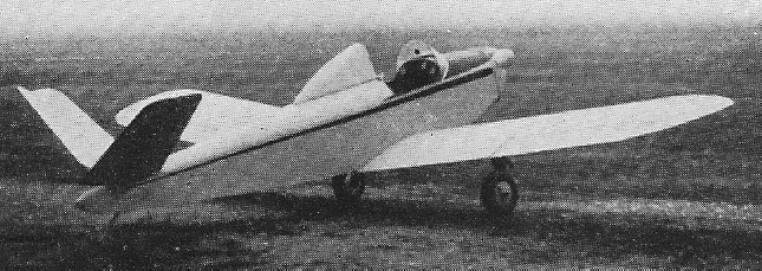
The second machine from Gruppo Costruzioni Aeronautiche of Milan, the GCA.2 Dumbo was designed by Emilio Bianchi and Giovanni.

First flown in 1951, only one prototype was built.

The Dumbo is a single-seat light monoplane with a butterfly tail assembly. All-wood construction with plywood and fabric covering. The power is a 23 hp Ambrosini P.25.

Engine: 23 hp Ambrosini P.25
Wingspan: 24 ft 3 in
Wing area: 85.249 sq.ft
Length: 16 ft 5 in
Height: 5 ft 7 in
Empty weight: 264 lb
Loaded weight: 484 lb
Max speed: 93 mph
Cruise: 75.5 mph
Time to 3280 ft: 6 min 30 sec
Ceiling: 12,120 ft
Range: 300 mi

Gruppo Costruzioni Aeronautiche GCA.1 Pedro

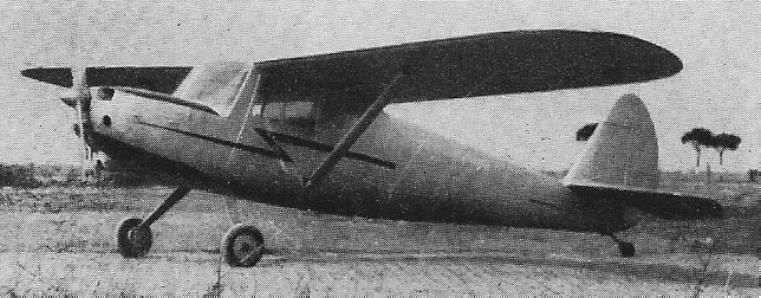
Designed by Emilio Bianchi and built in 1953 by the Gruppo Costruzioni Aeronautiche, the GCA.1 Pedro is a side-ny-side two-seat cabin monoplane powered by a 60 hp C.N.A. D4 air-cooled engine.

The Pedro is of all-wood construction with plywood covering. Dual controls are fitted.

Engine: 60 hp C.N.A. D4
Wing span: 32 ft 1.5 in
Wing area: 140 sq.ft
Height: 6 ft 2.5 in
Empty weight: 748 lb
Loaded weight: 1276 lb
Max speed: 106 mph
Cruise: 93 mph
Time to 3280 ft: 6 min 30 sec
Service ceiling: 14,100 ft
Absolute ceiling: 17,550 ft
Cruise range: 342 mi