Gulfstream Commander 900

Gulfstream American Commander Divi¬sion announced it will build a lower-¬powered version of its large cabin 1000 model. The new airplane will be called the Commander 900. By moving the floor and the pressure bulkhead and by chang¬ing the windows, Gulfstream has been able to come up with a great deal more cabin space inside the old Commander fu¬selage.
First built in 1982.

AE-900
Engines: 2 x Garrett TPE-331-5-254K, 748 shp.
Props: Dowty Rotol 3-blade, 106-in.
Seats: 7/9.
Length: 42.9 ft.
Height: 14.9 ft.
Wingspan: 52.1 ft.
Wing area: 279 sq.ft.
Wing aspect ratio: 9.8.
Maximum ramp weight: 10,775 lbs.
Maximum takeoff weight: 10,700 lbs.
Standard empty weight: 7000 lbs.
Maximum useful load: 3775 lbs.
Zero-fuel weight: 9000 lbs.
Maximum landing weight: 10,550 lbs.
Wing loading: 38.3 lbs/sq.ft.
Power loading: 7.2 lbs/hp.
Maximum usable fuel: 2848 lbs.
Best rate of climb: 2779 fpm.
Service ceiling: 32,325 ft.
Max pressurisation differential: 6.7 psi.
8000 ft cabin alt @: 31,000 ft.
Maximum single-engine rate of climb: 924 fpm @ 112 kts.
Single-engine climb gradient: 480 ft/nm.
Single-engine ceiling: 18,140 ft.
Maximum speed: 289 kts.
Normal cruise @ 18,000ft: 286 kts.
Fuel flow @ normal cruise: 648 pph.
Endurance at normal cruise: 3.9 hrs:
Stalling speed clean: 79 kts.
Stalling speed gear/flaps down: 77 kts.
Turbulent-air penetration speed: 188 kts.
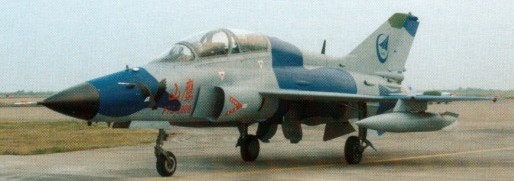
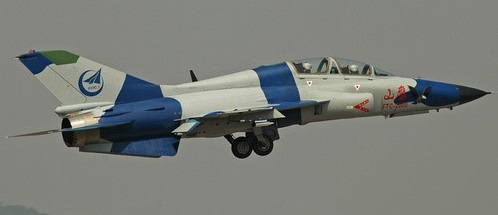
Guizhou JL-9 / FTC-2000 Mountain Eagle

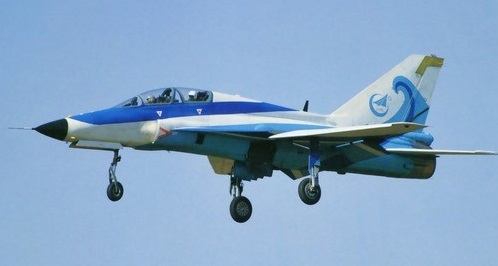
In 2001, Guizhou began development of a new trainer aircraft to replace the JJ-7 (MiG-21) trainers and better prepare pilots for flying the J-11 (Su-27) and J-10. To reduce costs and development time, Guizhou based their design off of the JJ-7. It uses the same fuselage and wings of the late-model JJ-7s, while radically redesigning the forward fuselage. The intakes were moved to the sides of the fuselage, allowing for a solid nose holding a radar. To improve the view for the instructor, the tandem cockpits were stepped. While intended as a trainer, it retains secondary attack capabilities. It comes standard with an ECM suite and a radar warning receiver, as well as an inflight refueling probe. Armament consists of an internal 23mm cannon and five hardpoints for unguided air-to-ground munitions and short-range AAMs.

Also known as the FTC-2000 Mountain Eagle, on December 13, 2003, the JL-9 derivative of the JJ-7 first flew, from An Shun/Huang Guo Shu (AVA) airport. Involving little change from the JJ-7, the JL-9 took 28 months from design to first flight.

The PLAAF began service trials of the JL-9 in 2006, while Guizhou continued to upgrade the onboard systems. In 2009, the JL-9 passed trials, and began production.

Meanwhile a navalized variant for the PLANAF has arose, incorporating several major modifications. The nose intakes were modified to prevent engine stalls at high angles of attack, the vertical stabilizer and leading-edge root extensions were enlarged, and the ventral fins were deleted to make space for the landing hook.

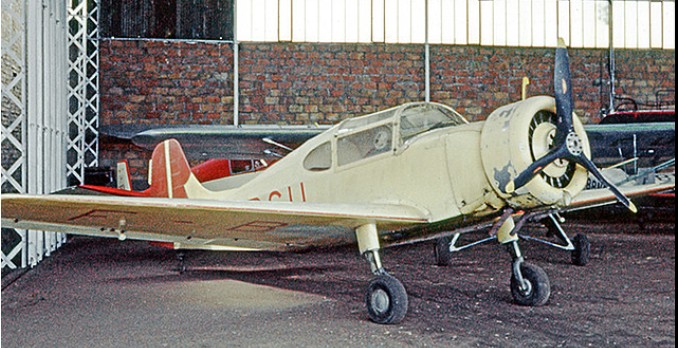
Guerpond Autoplan

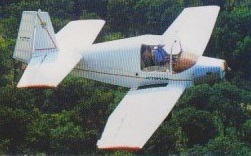
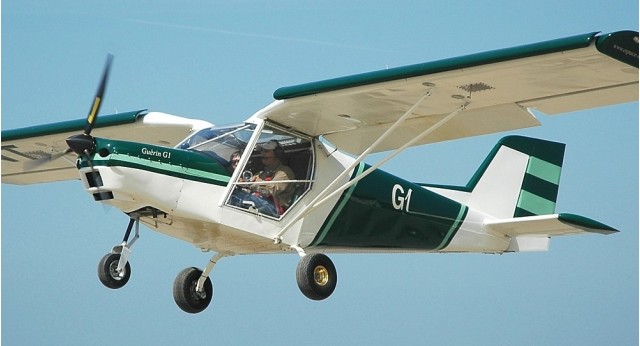
The Guerpond Autoplan is an all-wood tandem microlight aimed at the amateur constructor. The large tailplane allows a large CoG range. Engines of up to 64 hp can be used.

Engine: Rotax 462, 52 hp
Wing span: 8.60 m
Wing area: 17.50 sq.m
MAUW: 420 kg
Empty weight: 230 kg
Fuel capacity: 50 lt
Max speed: 150 kph
Cruise speed: 130 kph
Minimum speed: 50 kph
Climb rate: 4 m/s
Seats: 2
Fuel consumption: 15 lt/hr

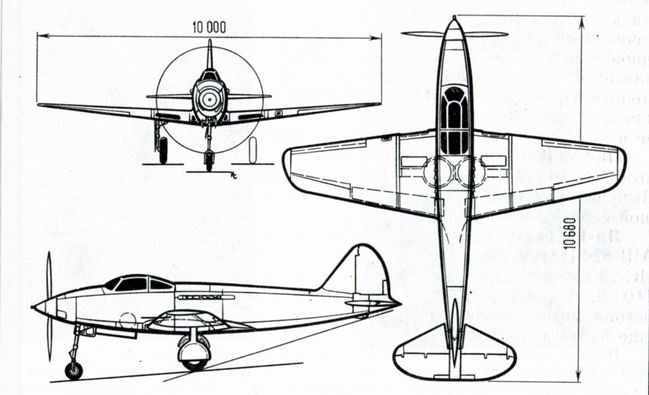
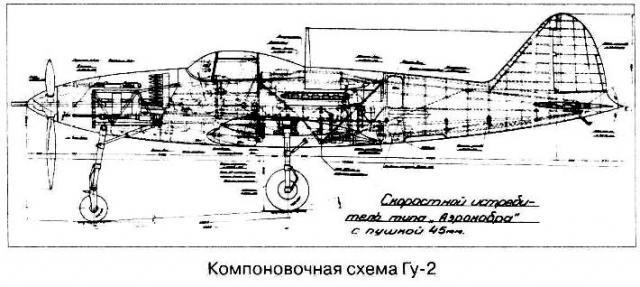
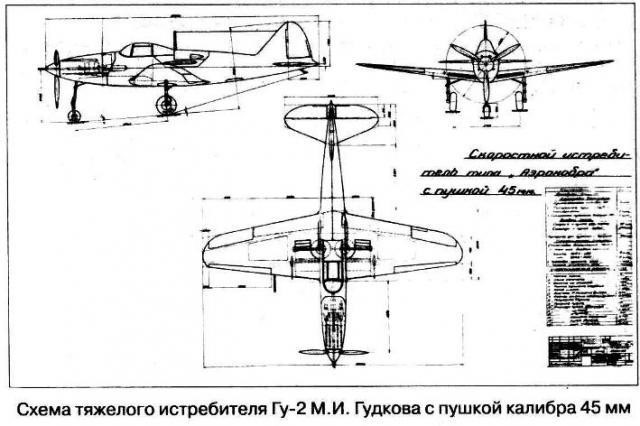
Gudkov GU-1

The Gu-1 single-seat fighter designed by Mikhail Gudkov had a liquid-cooled engine installed aft of the pilot’s cockpit, close to the CG, and driving the propeller via an extension shaft and reduction gear. Design of the Gu-1 was commenced in 1940, and the fighter was of mixed construction, with welded steel-tube forward and centre fuselage covered by duralumin skinning and metal wing mainspars, the remainder of the airframe being of wood. Power was provided by a Mikulin AM-41 12-cylinder liquid-cooled engine, the main coolant radiators for which were buried in the wings. The Mikulin bureau experienced difficulties with the extension shaft and reduction gear which were not ready for testing until 1942. Armament comprised a single 37-mm Taubin cannon firing through the propeller shaft. In the event, the Gu-1 proved to be seriously overweight.

The initial flight test was performed by A I Nikashin on 12 July 1943, but after reaching some 650 ft (200 m), the fighter dived into the ground, killing the pilot, and further development of the Gu-1 was abandoned. No illustrations of the Gu-1 appear to have survived and the only available data are the weights.

Engine: Mikulin AM-41 12-cylinder liquid-cooled
Empty weight, 8,249 lb (3 742 kg).
Loaded weight, 10, 163 lb (4610 kg).
Armament: 1 x 37-mm Taubin cannon

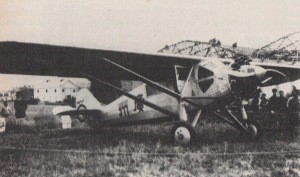
Guangzhou/Kunming Chu Kiang

Charles Lindbergh’s New York to Paris solo in 1927 generated enthusiasm for aviation around the world.

The Chu Kiang, was patterned after a four-seat Ryan Brougham, in 1929.

The Chronicle of Aviation datelined this item January 14, 1929, Peking: “China has acquired one of its first aircraft, an exact copy of the Ryan Brougham, and thus resembling Charles Lindbergh’s Spirit of St. Louis. Piloted by Chang Wai-chung, the 250-hp Chu Kiang recently completed a 2500-mile flight across China.”