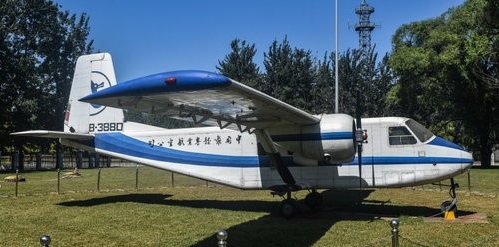
Harbin Y-11

The Y-11 failed to attract export orders while equipped with Chinese radial engines, so it was converted to the Y-12.

In July 1982 it was reported that the Harbin Aircraft Works had developed a turbine-powered version of the Y-11, with PT6A-110 turboprops. A prototype was reputed to have flown. With a gross weight of 12,125 lb / 5500 kg, the maximum payload is 3748 lb / 1700 kg, and the Y-11T is estimated to have a max speed of 175 mph / 282 kph and a max range of 876 miles / 1410 km.

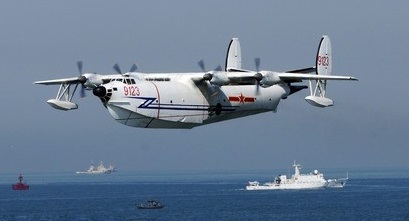
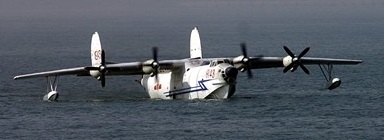
Harbin SH-5/PS-5

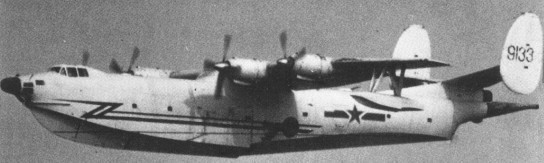
The SH-5 is an indigenous seaplane designed to replace the domestically produced Beriev Be-6s then in PLANAF service. Design work began in 1970, with the new aircraft aimed at performing maritime patrol and search and rescue duties. An entirely new in design, static testing didn’t begin until 1974. The Harbin Shuishang Hongzhaji 5 / PS-5 first flew April 1976, with series production commencing 1984 and 8-9 built to 1987 at Harbin.

The four-turboprop amphibian PS-5 appears to have the wing and powerplant of the Y-8 (An-12) transport and the tailplane and twin fins of the Beriev Be-6, combined with a new fuselage.

Powered by four 3,150 hp WJ¬-5A-1 (AI-24A) turboprops, PS-5S has 22,045-lb (10-tonne) max payload, includ¬ing four torpedoes or AShMs on underwing racks, or up to 13,227 lb (six tonnes) of depth bombs.

The SH-5 saw active use, and several of the aircraft were upgraded with EW systems. One example was converted for use as an aerial firefighter. In 2009, production of a new variant was announced with deliveries planned for 2014.

Hants and Sussex Aviation / HAS Antoinette

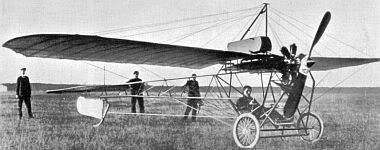
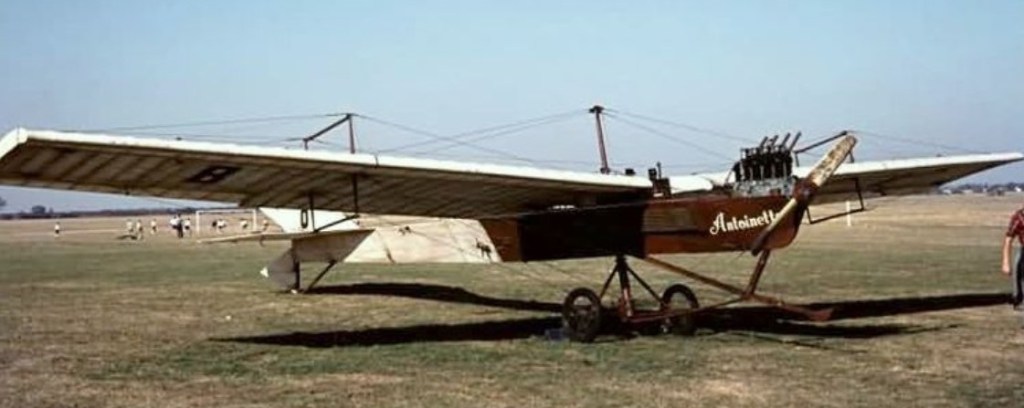
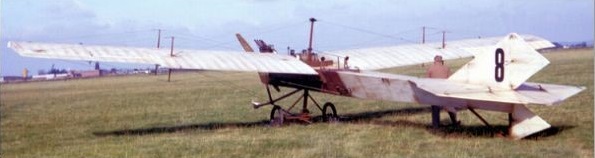
In 1964 Hants & Sussex Aviation was contracted to build three Levavasseur Antoinette IV monoplane replicas of 1910 vintage for the film ‘Those Magnificent Men in Their Flying Machines’. The Antoinette IV movie model closely replicated the slim, graceful monoplane that was very nearly the first aircraft to fly the English Channel, in the hands of Hubert Latham, and won several prizes in early competitions. When the Hants and Sussex Aviation Company from Portsmouth Aerodrome undertook its construction, the company followed the original structural specifications carefully, although an out-of-period de Havilland Gypsy I engine was used.

They were built in wood but the Antoinette’s wing structure proved, however, to be dangerously flexible, and lateral control was very poor, even after the wing bracing was reinforced with extra wires, and the original wing-warping was replaced with “modern” ailerons (hinged on the rear spar rather than from the trailing edge, as in the “real” Antoinette). The final configuration was still considered marginal in terms of stability and lateral control.

Both of the flying examples (one was static only) are thought to still exist. The first machine was noted in a hanger at Fairoaks in 1972 and the second machine was undergoing a rebuild in Geneva, Switzerland.

Hants and Sussex Aviation / HAS Herald

Hants and Sussex Aviation Ltd was an aircraft manufacturer based at Portsmouth Airport, Hampshire, England. It is still in business in the aircraft components industry.

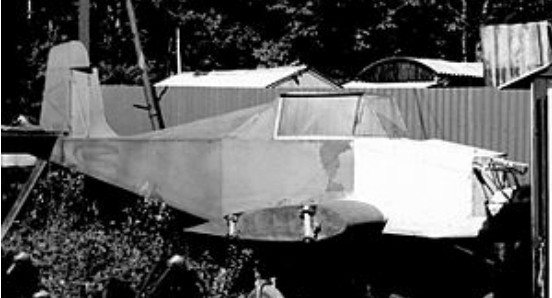
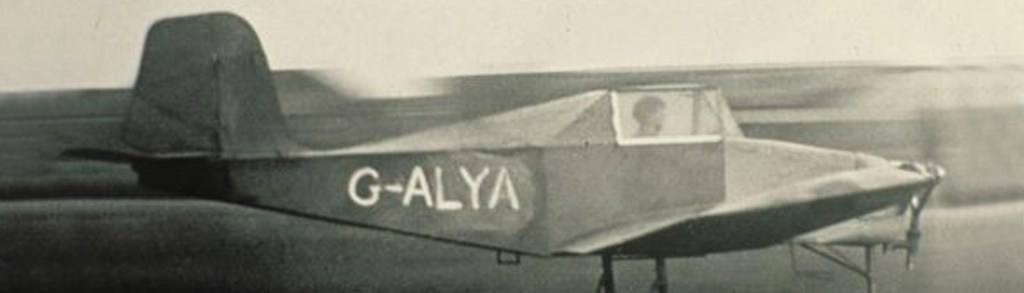
In 1953, HSA designed its first aircraft. This was the H&S Herald. The Herald was a single-seat ultra-light aircraft with a fixed tricycle undercarriage and powered by a 40 h.p. Aeronca-JAP J-99 piston engine.
Aircraft Registration: G-ALYA
Construction Number: HA/AC/001

The Herald made flight tests at Portsmouth Airport in 1953, but these revealed that it had a poor performance and the aircraft was grounded and dismantled in 1955.

Powerplant: 1 × Aeronca-JAP J-99, 40 hp (30 kW)
Wingspan: 29 ft 0 in (8.84 m)
Length: 21 ft 6 in (6.55 m)
Empty weight: 580 lb (263 kg)
Gross weight: 900 lb (408 kg)
Maximum speed: 92 mph (148 km/h, 80 kn)
Cruise speed: 82 mph (132 km/h, 71 kn)
Crew: 1

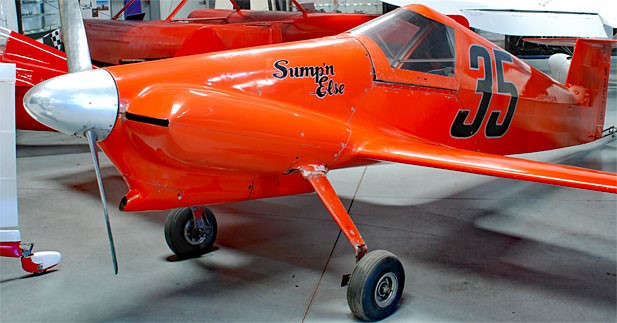
Hanson WH-1 Thunderchicken / Sump’n Else

William Hanson’s WH-1 Formula 1 racer N35TS, Race 35, began life with the name of “Thunderchicken.” The fuselage is of welded tubular steel construction, with the cockpit and engine areas covered with sheet aluminum, and the area aft of the cockpit covered with fabric. The tail surfaces were constructed similarly to the aft fuselage. The wings were made of wood spars and ribs with plywood covering.

The aircraft, wearing the name “Thunderchicken,” qualified at the Cleveland Air Races in 1972, flown by Ken Haas. However, due to failure of the windshield, the aircraft failed to place. The same year, Tom Cooney flew finished in fifth place in the Formula 1 Silver Race at Reno, with a speed of 202.74 mph.

The WH-1 was renamed “Sump’n Else,” retaining race number 35, and repainted for the 1974 Reno Air Races, but did not qualify. In 1975, Thomas Summers flew “Sump’n Else” to a third-place finish in the Silver Race at Reno with a speed of 204.69 mph.

Engine: Continental 0-200
Span: 18 ft. 8 in
Length: 18 ft. 3 in
Height: 6 ft. 2 in
Maximum Speed: 225 mph
Crew: 1
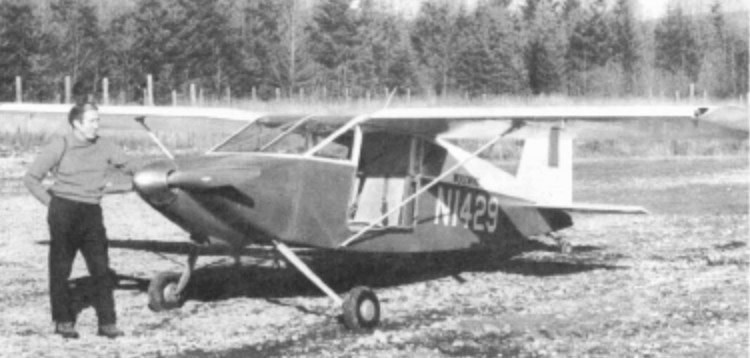
Hanson Woodwind

The Hanson Woodwind is an all-wooden homebuilt aircraft with a fiberglass wing designed by Carl Hansen.

The Woodwind is a two seat side-by-side configuration, strut-braced, high-wing aircraft with conventional landing gear and Plexiglas doors. Some construction elements were adapted from the all-wood Bowers Fly Baby. The Woodwind was a homebuilt copy of the Wittman Tailwind using all-wood construction, rather than welded steel tube and aircraft fabric covering for the fuselage. The Wittman design uses plywood covering for its wings, while the Woodwind uses fiberglass. The fuselage sides and tail surfaces are built flat on a table at the same time and covered with aircraft grade plywood. The wings are covered in fiberglass with stainless steel torque tubes for aileron control. The fuel tanks and cowling are also made from fiberglass. The prototype used a moose-hide interior.

The prototype first flew on 20 June 1969. The aircraft was written off in an non-fatal accident on 5 June 1976 after hitting a large rock.

Engine: 1 × Lycoming O-235-C, 100 hp (75 kW)
Propeller: 2-bladed variable-pitch Sensenich “Skyblade”
Capacity: 2
Empty weight: 851 lb (386 kg)
Gross weight: 1,425 lb (646 kg)
Fuel capacity: 32 U.S. gallons (120 L; 27 imp gal)
Maximum speed: 126 kt / 233 km/h (145 mph)
Cruise speed: 122 kt / 225 km/h (140 mph)
Stall speed: 52 kt / 97 km/h (60 mph)

Hansen Baby Bullet

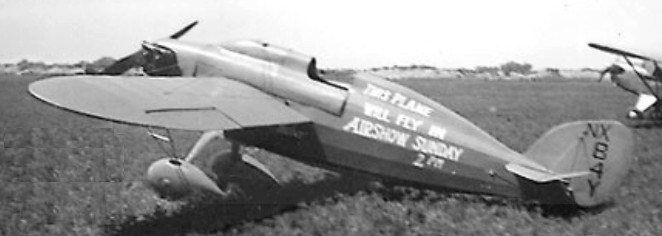
Hansen Special Baby Bullet III NR84Y

Three Hansen racers were built. The first a modified Heath Baby Bullet as Baby Bullet [11351]. The second, from a Heath 115, with 40hp Continental A-40 (span: 16’6″) as Baby Bullet II for 1932 Nationals [NR282W] (piloted by Art Davis and Walt Bagnick). The third as Baby Bullet III for 1934 Nationals [NR84Y] (piloted by Art Davis), and rebuilt in 1947 as Francis-Angell midget racer.

Baby Bullet I
Engine: Wright-Morehouse, 29hp
Wingspan: 20’0″
Seats: 1

Baby Bullet II
Engine: Continental A-40, 40hp
Wingspan: 16’6″
Seats: 1

Baby Bullet III
Seats: 1