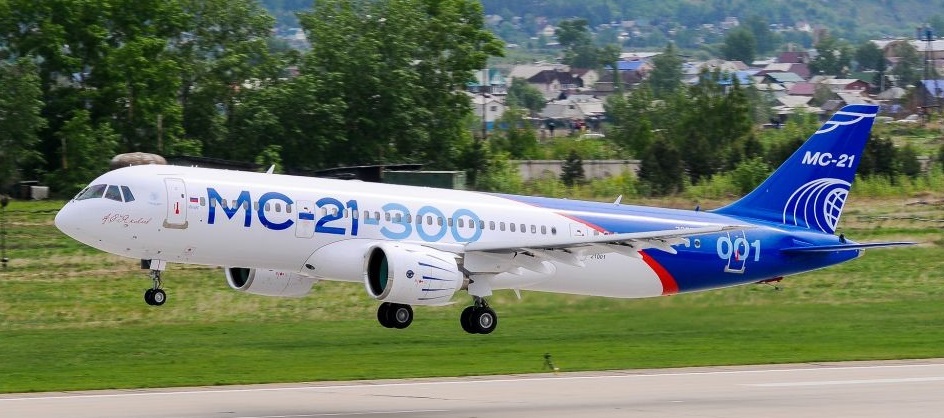
Irkut MC-21

A project of Russian civil aviation was the new-generation narrow-body mid-range airliner MC-21-300. United Aircraft Corporation continued to work on the new civilian aircraft from the very beginning of the COVID-19 pandemic.

IT solutions have made it possible to transfer employees of engineering and corporate centres to remote workstations. The factories also did not stop, shift work was organised to support continuous production processes, on which the implementation of the SDO and MTC programs depended. Strict control over the health status of employees has been introduced, disinfection of territories and premises of UAC enterprises was carried out.

Due to the COVID-19 pandemic, there was a short break, but work resumed. As part of the certification program according to Russian and European standards MC-21-300, a large complex of ground, flight, bench tests was underway.

The MC-21-300 airliner is being created in a wide cooperation of Rostec enterprises. More than half of avionics was developed by the holdings of the State Corporation, and titanium and composite parts are supplied. The first MC-21-300 aircraft is under construction at the Irkutsk Aviation Plant, which will undergo flight tests with PD-14 engines developed by the United Engine Corporation.
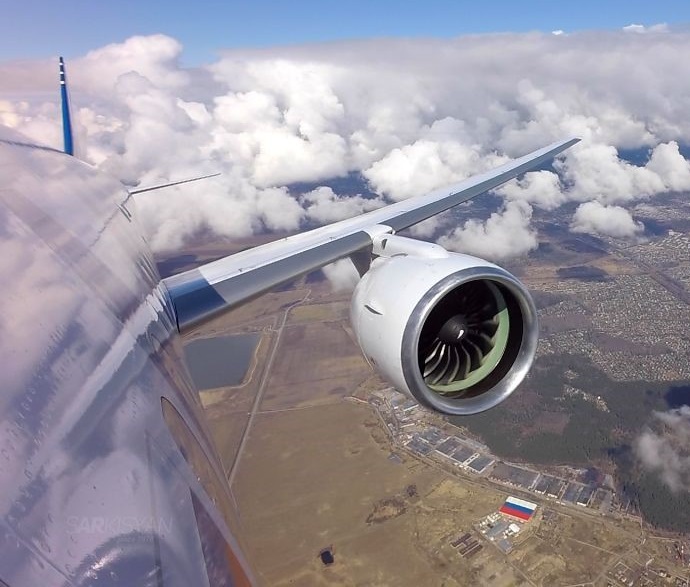
Test flights of the MC-21-300 continued. The program involves four experimental aircraft. Two of them are equipped with passenger cabins. In the case, modifications are being checked with a two-class layout for 163 seats and an ultra-dense layout for 211 seats. Flights are performed by crews of the Irkut Corporation and joint crews: pilots of the corporation and representatives of certification centres. The pace of flight tests is increasing. Often, two aircraft are simultaneously in flight.

During flights, the testing equipment allows recording of about 40 thousand parameters. By 2021 the MC-21-300 was tested for resistance to flutter and at extreme angles of attack. The main engines and auxiliary power unit were tested, including during take-off and landing with a failed engine. The minimum separation speed of the aircraft is determined. The operability of the instrumental landing system and equipment for flying in the dark was confirmed.

The production of MC-21-300 aircraft for delivery to customers had begun by 2021. The start of mass production was allowed by the positive results of flight and ground tests, which proved the correctness of the basic design and technological solutions.

Irbitis I-1 / I-2 Ikarus

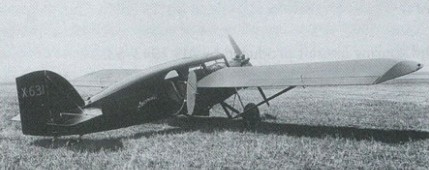
In 1925 Irbitis met Nicholas Pulins. Mr. Pulins had an interest in light aviation and Irbitis influences him to start building a high wing monoplane with Anzani engine. Previously Pulins have interest in biplanes. With the financial support, Irbitris made his first aircraft, the I-1 and it had its maiden flight on 13th June 1925. I-1 was single seat airplane and follow to this is I-2, two seat aircraft and name Ikarus. On I-2 both, Irbitis and Pulins learn to fly.

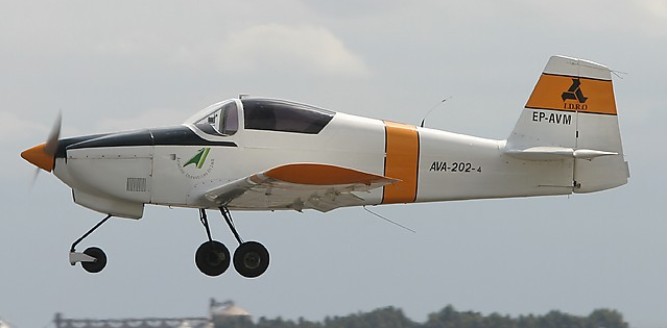
Iranian Aviation AVA-202

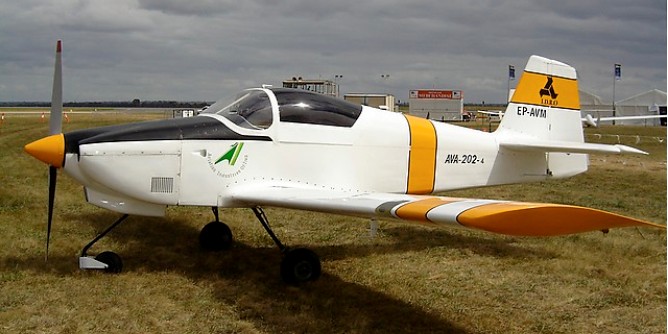
The Aviation Industries of Iran AVA-202 is an Iranian two-seat, light aircraft designed as a trainer and sporting aircraft. It was intended for the Iranian domestic market to avoid dependence on imports.

The AVA-202 was based on the Van’s Aircraft RV-6A and was designed to comply with European JAR-22 and JAR-VLA aircraft certification rules. It features a cantilever low-wing, a two-seats-in-side-by-side configuration enclosed cockpit under a bubble canopy, fixed tricycle landing gear and a single engine in tractor configuration.

The aircraft is made from aluminum sheet. Its 8.74 m (28.7 ft) span wing employs a NACA 63-215 airfoil and the wing root and a NACA 63-015 airfoil at the wing tip. The wingspan is greater than the RV-6’s wingspan of 7.01 m (23.0 ft) from which it is derived. The AVA-202’s wing has an area of 10.87 sq.m (117.0 sq ft) and is equipped with flaps. The standard engine fitted is the 160 hp (119 kW) Lycoming AEIO-320-B2B four-stroke aerobatic powerplant.

First flown on 3 June 1997, four had been built by 2002.

Engine: 1 × Textron Lycoming AEIO-320-B2B, 120 kW (160 hp)
Length: 6.02 m (19 ft 9 in)
Wingspan: 8.74 m (28 ft 8 in)
Height: 2.04 m (6 ft 8 in)
Wing area: 10.87 sq.m (117.0 sq ft)
Aspect ratio: 7.0:0
Airfoil: NASA 632-215
Empty weight: 500 kg (1,102 lb)
Max takeoff weight: 750 kg (1,653 lb)
Maximum speed: 259 km/h (161 mph; 140 kn) at sea level
Cruising speed: 250 km/h (155 mph; 135 kn) (75% power)
Stall speed: 84 km/h (52 mph; 45 kn) (flaps down)
Range: 1,000 km (621 mi; 540 nmi)
Service ceiling: 6,400 m (20,997 ft)
Rate of climb: 7.6 m/s (1,500 ft/min)
Crew: 2

IPE KW 1 / KW 1 Quero Quero

IPE KW/b 2 Quero Quero

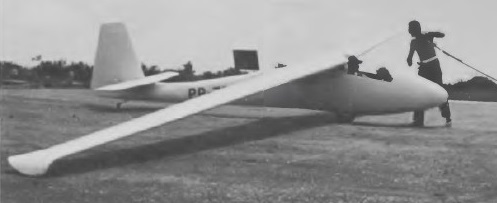
This Brazilian single-seater training glider, known in full as the IPE KW 1 b 2 Quero Quero II, is a development of the original KW 1 designed by Ing Kuno Wiedmaier and made its first flight on 1 October 1972.

The Quero Quero is a cantilever high wing monoplane with the same Wortmann wing section as the Scheibe SF-30 Club-Spatz, which it somewhat resembles, and is of wood and Brazilian pine plywood construction. There are spoilers in the wing upper and lower surfaces, and the wing tips are turned down to provide an endplate effect. Landing gear consists of a non-retractable monowheel and a tailwheel, and the pilot sits under a one-piece detachable cockpit canopy.

Certification from the Brazilian CTA in the semi-aerobatic category, with an extension for cloud flying, was awarded in December 1976 and the Quero Quero II was put into production by IPE – Industria Paranaense de Estruturas at Curitiba in the state of Parana. By 31 March 1979 IPE had completed 28 Quero Queros, consisting of one static test and three flying prototypes, a pre-series of four production aircraft, one of which was lost in a nonfatal accident, and all of a second-series batch of 20 Mk IIs, which were in service with various Brazilian clubs.

Quero Quero II
Span:49ft 2.5 in
Length: 21 ft 2.75 in
Height: 4 ft 4.75 in
Wing area :125.9 sq ft
Aspect ratio: 18.0
Empty weight: 374 lb
Max weight. 595 lb
Max speed: 93 mph (in smooth air)
Min sinking speed: 2.10 ft/sec at 38.5 mph
Best glide ratio: 28:1 at 45 mph

IPE 02 Nhapecam

The 02 tandem two-seater, known as the Nhapecam, is the second training sailplane from the Brazilian firm of IPE – Industrie Paranaense de Estruturas at Curitiba, and has been under development for some months; it made its first flight on 24 May 1979.

The 02 is a cantilever shoulder wing monoplane with a modified Scheibe SF-30 Club-Spatz wing section; it is rather larger than the Quero Quero II, with a span of 16.60m (54ft 5Vain), a longer, more pointed nose and a lengthened one-piece cockpit canopy under which the two pilots sit. There are spoilers in the wing upper and lower surfaces, and the landing gear consists of a non-retractable monowheel and a tailwheel. A powered version of the 02, the IPE 03, was under development; this has a repositioned low wing and a retractable landing gear, and probably a 60hp Limbach powerplant.

An order for at least 30 IPE 02s for the Brazilian Clubs was confirmed in 1980.

Span: 54 ft 5.5 in
Length: 25 ft 11 in
Height: 4 ft 11 in
Wing area: 170.1 sqft
Aspect ratio: 16.6
Empty weight: 551 lb
Max weight: 1,058 lb
Max speed: 124 mph (in smooth air)
Min sinking speed: 2.13 ft/sec
Best glide ratio: 30:1 at 50 mph

Ion Aircraft Ion 100 / 105 / 110 / 120

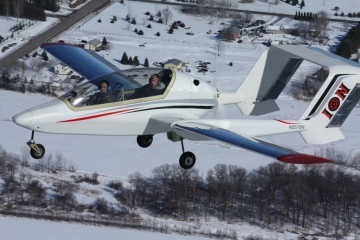
Ion Aircraft is developing a line of light, two-seat (tandem) airplanes suitable for training, sightseeing, cross-country cruising, and generally having fun. All of Ion Aircraft’s engineering is being done by AirBoss Aerospace of Reno, Nevada.
The Ion 100 is a kit aircraft being designed from the ground up to be Light Sport Aircraft (LSA) compliant.

The Ion 105 is a non-LSA variant of the 100, with better cruise performance. The 105 version is meant for the US Experimental category.

The Ion 110 is the export version, intended to comply with upcoming European rules.
All three versions feature easily removable wings for trailer storage and two sets of interchangeable wings to meet differing performance requirements.

The majority of the plane is carbon fiber/epoxy composite material. Specifically;
The cowl is fiberglass. Although it is very slightly heavier than carbon fiber would have been, the cowl is not structural and the fiberglass is much less expensive.
The wings are bonded aluminum as the bonded aluminum process is actually calculated to be a little lighter than composite would have been.
Tthe Ion 120 has a 10 inch (25 cm) removable nose cone to allow access to the nose gear and the batteries. It will also allow it to fit in a 24 foot trailer.

Ion 100
Cruise: 156 mph
Stall: 45 mph
Range: 920 sm
Rate of climb: 1600 fpm
Takeoff dist: 394 ft
Engine: Jabiru 3300, 120 hp
HP range: 100-150
Fuel capacity: 25 USG
Empty weight: 890 lb
Gross weight: 1320 lb
Length: 24 ft
Wing span: 29 ft
Wing area: 113.5 sq.ft
Seats: 2
Cockpit width: 31 in
Landing gear: nose wheel

Ion 120
Engine; 100 hp
Length: 24 ft (7.3 meters)
Wing span / LSA wings: 30 ft, 4 in (9.25 m)
Wing span / cruise wings: 26 ft 10 in (8.2 m)
Cockpit width: 30 in (76 cm)
Cruise 75% SL: 132 kt / 152 mph
Cruise 75% 3000 ft: 135 kt / 155 kt
Cruise 75% 9000 ft: 138 kt / 159 mph