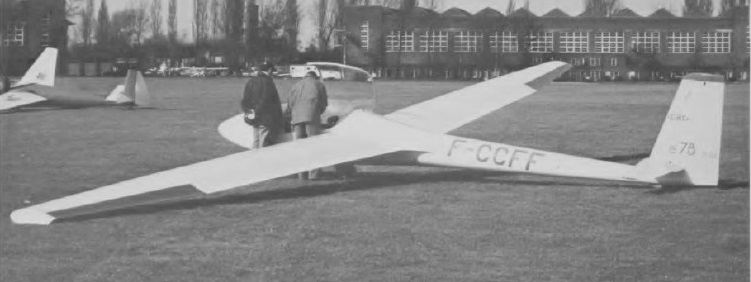
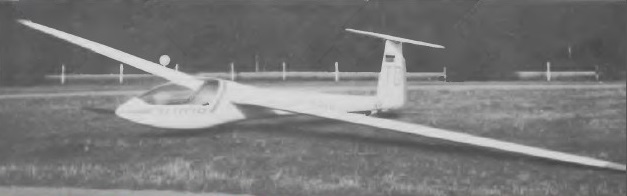
The E 78 Silene side-by-side two-seat sailplane was developed by CERVA (Consortium Europeen de Realisation et de Ventes d’Avions) and is the first French glassfibre two-seater. The company was owned by Siren SA and Wassmer-Aviation SA. The E 78 was designed by Siren and, following the closure of Wassmer, was transferred to Issoire in late 1977. The aim was to produce a sailplane suitable for all stages of glider training from ab initio to cross-country flights.
Construction was started in February 1973 and the prototype first flew at Argenton on 2 July 1974.
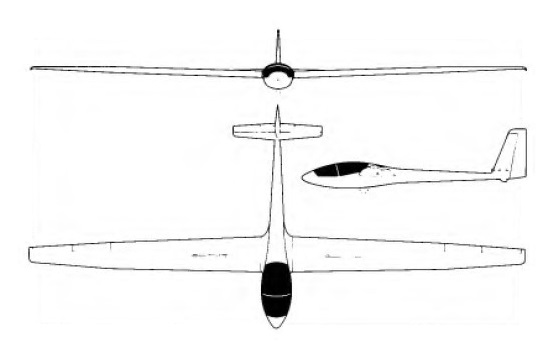
The wings are of glassfibre/plastic foam sandwich construction, incorporating two-section ailerons of similar material and Schempp-Hirth airbrakes operating both above and below each wing. Flaps are not fitted. The fuselage is a semi-monocoque glassfibre/plastic foam sandwich structure. The conventional tail unit incorporates a fixed incidence tailplane and trim tabs on each elevator.
The pilots sit in staggered position to keep the width of the fuselage to a minimum, the starboard seat being set slightly to the rear. The Silene is available with either retractable or fixed landing wheel with hydraulic brake and shock absorber.
E 78 Silene Wing span: 18.0 m / 59 ft 0 3/4 in Length: 7.95 m / 26 ft 1 in Height: 1.5 m / 4 ft 11 in Wing area: 18.0 sq.m / 193.8 sq ft Wing section: Berlin E55 166 Aspect ratio: 18.0 Empty weight: 365 kg / 805 lb Max weight: 565 kg / 1,246 lb Water ballast: None Max wing loading: 29 kg/sq.m / 5.94 lb/sq ft Max speed: 119 kt / 220 km/h Stalling speed: 34 kt / 63 km/h Min sinking speed: 0.59 m/sec / 1.8 ft/sec at 39 kt / 73 km/h Best glide ratio: 38 at 51 kt / 95 km/h
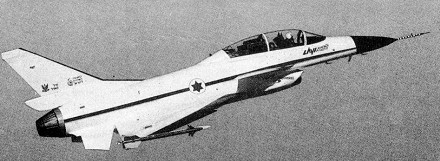
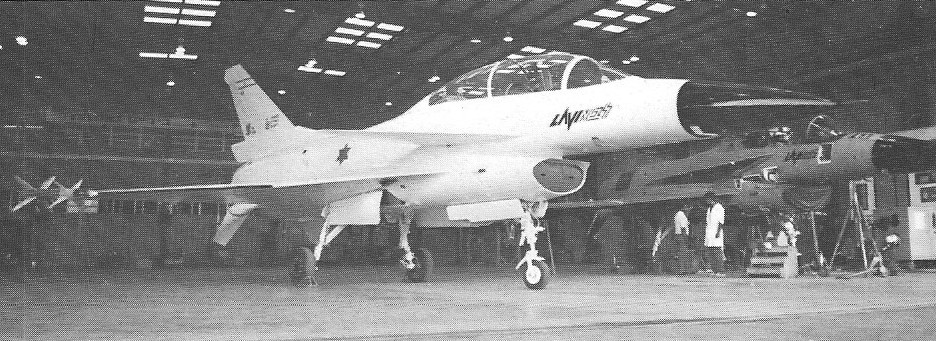
The Lavi, a single-engined canard delta with a chin intake, is similar in appearance to the F-16 but is smaller. A 91.7kN Pratt & Whitney PW1120 turbojet is used, and the aircraft has a quadruplex digital fly-by-wire control system which allows relaxed stability. The cockpit is built around three multifunction colour CRT displays and a wide-angle headup display. The new Elta multimode pulse-Doppler radar, developed from the earlier EL/M-2021B, will include track-while-scan capability in air-to-air mode, and terrain avoidance/ground mapping in air-to-surface mode. Composite materials are used extensively in the airframe, and account for 22 per cent of the structure by weight. Grumman designed and developed the wings, and will also build the first eight sets before production transfers to Israel.
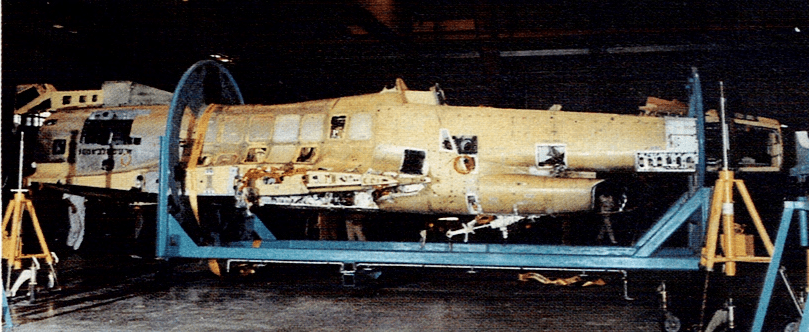
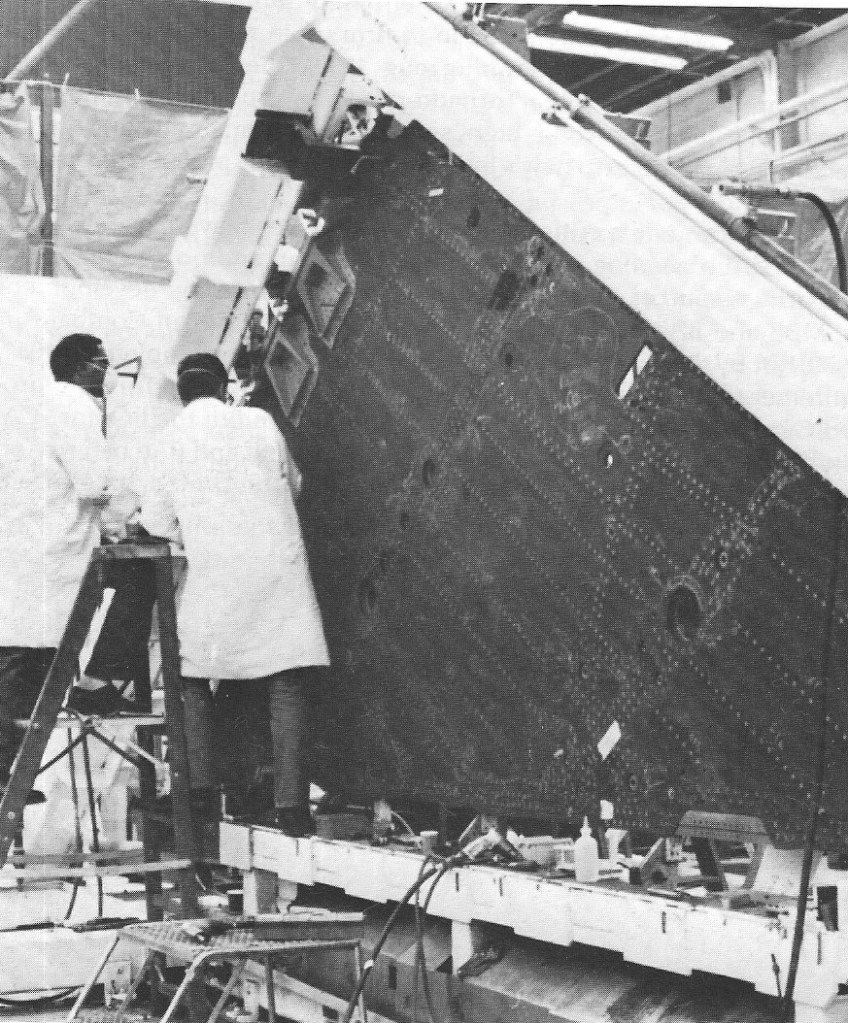
The Lavi carbon-fibre wing has mechanical fasteners to secure the skins to the ribs and spars. While composite skins can be bonded together it is necessary to make at least one skin removable for internal access.
Grumman building Lavi wings
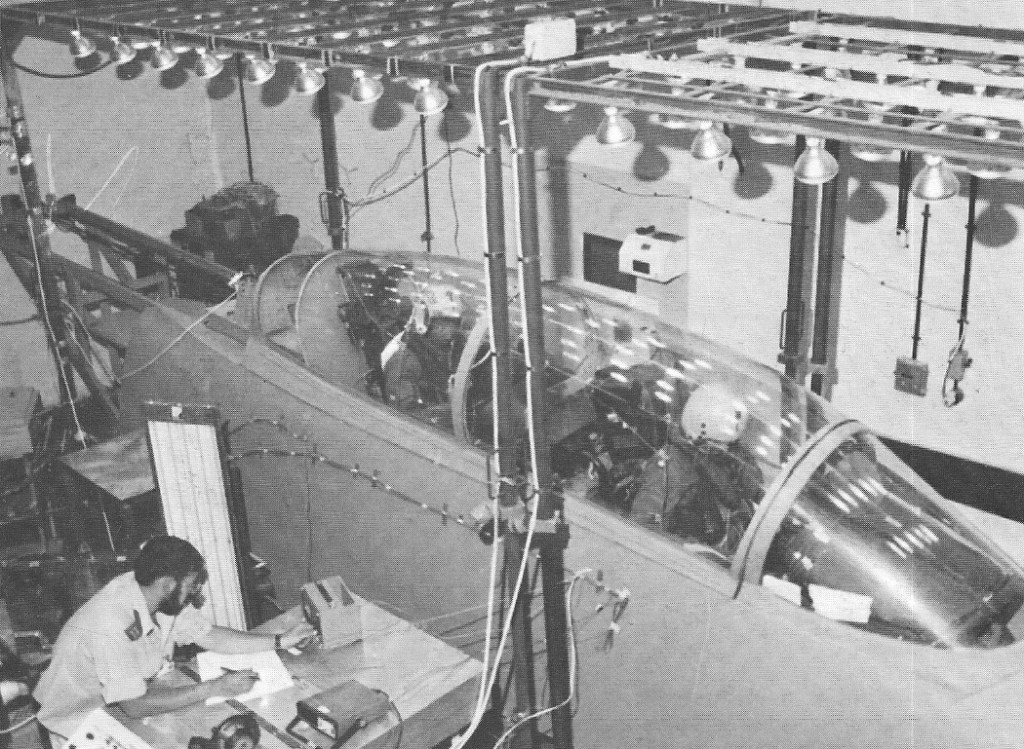
A special rig using a cockpit mock-up was designed to test the fighters air conditioning system.
A second prototype flew on March 30, 1987. The first prototype, which flew on December 31, 1986, and the second aircraft are both two-seaters, while the remaining four development aircraft were to be single-seaters.
The Lavi’s delta wing spans 28 ft 7 in and its empty weight is 15,305 lb, but it can take-off for a long range mission at a weight of 42,000 lb, ie. 175% of its empty weight.
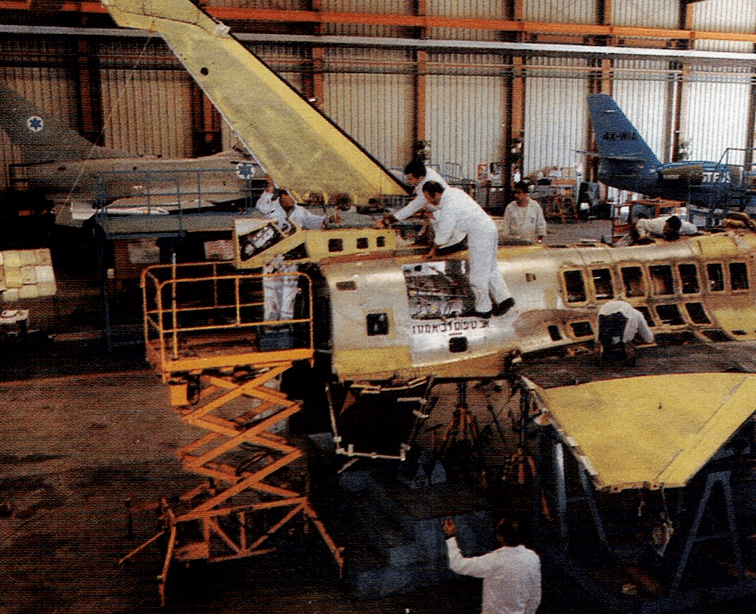
The first six full-scale development aircraft were built on production tooling even with the future not entirely certain.
The program was ultimately cancelled in August 1987, the constructed prototypes went on to see a serviceable life as technology demonstrators for various other flight programs to test avionics and applicable flight systems. It is believed that Israeli involvement in the Chinese program culminated in a similar-looking airframe with multirole capability in the J-10.
Lavi Engine: 1 x P&W PW1120. Installed thrust (dry / reheat): 60 / 92 kN. Span: 8.8 m. Length: 14.6 m. Wing area: 33.05 sq.m. MTOW: 19,300+ kg. Warload: 7257+ kg. Max speed: 1.8 Mach. TO run: 305 m. Combat radius lo-lo-lo: 1110 km. Fuel internal: 3330 lt. Air refuel: Yes. Armament: 1 x 30 mm Hard points: 11 + 2 wing tips.
IAI Lavi B Engine: Pratt & Whitney PW1120, 89958 N / 9170 kp Length: 47.9 ft / 14.6 m Height: 15.748 ft / 4.8 m Wingspan: 28.871 ft / 8.8 m Wing area: 355.212 sq.ft / 33.0 sq.m Max take off weight: 42512.4 lb / 19280.0 kg Weight empty: 19845.0 lb / 9000.0 kg Max. weight carried: 2205.0 lb / 1000.0 kg Max. speed: 800 kts / 1482 km/h Cruising speed: 538 kts / 997 km/h Wing loading: 119.72 lb/sq.ft / 584.0 kg/sq.m Range: 2300 nm / 4260 km Fuel capacity: 880 gal / 3330 lt Crew: 1 Armament: 1x MK 30mm, 2720 kg ext.
The next stage after the Nesher was to go into production with a substantially improved aircraft with a largely new propulsion system, modified air¬frame and totally replanned weapon aiming, navigation and other electronic systems. The selected engine was the General Electric J79, of modified GE 17 subtype, rated at 8120 kg (17900 lb) with maximum afterburning. This required larger inlet ducts, a modified engine bay with ram air inlet at the front of a new dorsal spine, and a wider but sharply cutback rear fuselage. Other changes visible externally include a completely new nose with enlarged and flattened underside, completely new cockpit, strengthened landing gear with increased oleo stroke, and rearranged external panels and hatches. Inside, the systems and equipment are considerably altered, the main changes being increased fuel capacity and totally dissimilar weapon control and aiming systems. Elta Electronics, an IAI subsidiary, has used a Singer-Kearfon licence, clearly indicative of an inertial system.
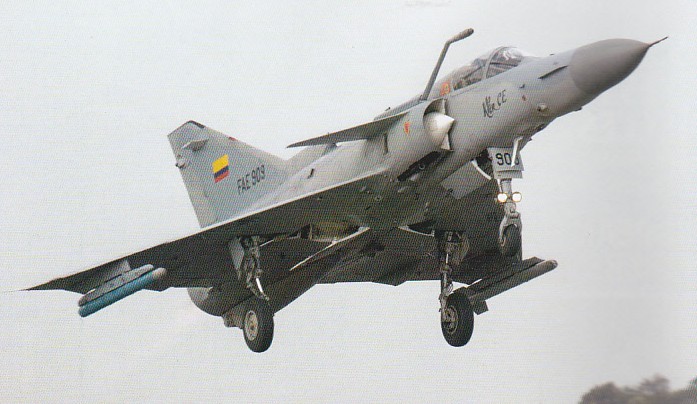
Following testing of J79 engines in an Israeli air force Mirage IIIB the first Kfir (Lion Cub) flew in 1974, and two were publicly shown at Lod airport in April 1975. Compared to the French Mirage III and Mirage 5 it has a more powerful engine, bigger engine air intakes, a longer nose, revised cockpit, Israeli avionics and systems and a fin air inlet located at the lower front end of the fin. The first production versions were designated Kfir-C1. Two Heyl Ha’Avir (Israeli air force) squadrons were equipped with this initial model, which retains the original armament of two 30 mm (1.18 in) DEFA cannon. Seven hardpoints can carry a wide range of external stores for interception, attack or reconnaissance missions, including Shafrir AAMs, Luz, Maverick or Hobos ASMs, Shrike antiradar missiles (ARMs), concrete dibber penetra¬tors, cluster bombs, ECM pods, multi sensor reconnaissance pods, or tanks.
A modestly successful fighter with ground-attack capability, 27 aircraft were built.
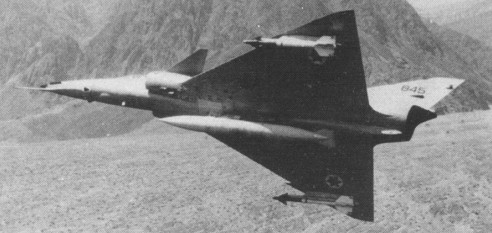
On July 20, 1976, at the Heyl Ha’Avir base at Hatzerim, Negev, IAI gave the first public display of the definitive production version, the Kfir-C2. Basically unchanged, this has three important aerodynamic improvements. A fixed canard surface, much larger than the ‘moustache’ retractable canards of the Mirage Milan, and slightly swept back, is fitted high on each inlet completely out of the pilot’s field of view. Along each side of the tip of the nose is a small strake, which induces a vortex at high angles of attack. At about 60% of the semispan is a dog tooth, the leading edge from there to the tip being extended in chord and drooped in a conical¬ camber arrangement. These changes are claimed to transform the flight capabilities to a new high level, with much tighter sustained turns, better handling (especially at overload weights), reduced low level gust response, flatter and slower approach, better takeoff, reduced field length and greater weapon ¬carrying capability. New avionics were introduced, including a new ranging radar, twin-computer flight control system, multi-mode navigation and weapons delivery system, central air data computer and HUD. By mid 1978 about 150 Kfirs of all types had been built, with output still running at more than two per month. At least some of the early aircraft have been brought up to C2 standard. Ecuador’s attempt to buy 24 Kfirs was vetoed by the US Government, and IAI has since been seeking an alternative engine.
The two seat TC2 entered production in February 1981. Two-seat Kfir-TC2 trainers feature a lengthened and lowered nose for improved view. The longer nose houses the avionics displaced from the C2’s spine and is fitted with small vortex-generating strakes.
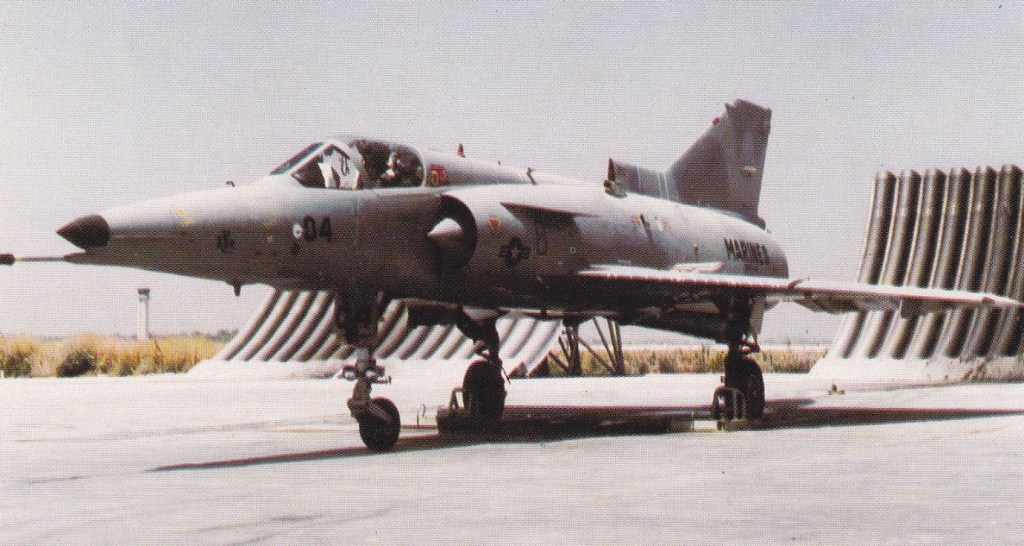
In 1985 the US Navy agreed a three-year lease of 12 Kfirs designated F-21As, for use as agressor aircraft pending the delivery of F-l6Ns. The USMC followed suit in 1986, with the lease of 13 Kfirs to fulfil a similar role. IAI is retrofit Kfirs from C2 to C7 standard. The C1s were modified adding narrow-span canard foreplanes above each air intake and a small rectangular strake either side of the nose behind the ranging radar. These additions greatly improved its combat manoeuvrability and slow speed handling. Production of the latest Kfir-C7 advancd the two-seat TC7 began in 1983, and these are now the standard models. Externally similar to the earlier Kfir-C2, the C7 has an uprated J79-J1E engine giving a 4.4kN increase in augmented thrust, allowing a 1,540kg increase in maximum take-off weight. Thrust-to-weight ratio and combat radius are also improved. Avionics are upgraded with a new hands-on throttle-and-stick (Hotas) weapons delivery and navigation system, and a stores management/delivery system which is able to cope with smart weapons. The C7 has two additional hardpoints for the increased payload.
Kfir-C2/TC2 aircraft were upgraded to C7/TC7 standard. The C7 has a specially adapted version of the J79-GEJ1E with some 1,000 lb (454 kg) more afterburning thrust. The type has two extra hardpoints below the intake ducts and a number of advanced features including capability for the carriage and use of smart weapons, Elta EL/M-2021B pulse-Dopplar radar, a revised cockpit with more sophisticated electronics and HOTAS (Hands On Throttel And Stick) controls and provision for inflight-refueling. Maximum take-off weight is increased by 3,395 lb (1,540 kg), but combat radius and thrust-to-weight ratio are improved to a marked degree. The principal Electronic Countermeasures (ECM) system is the Elta EL/L-8202 advanced self-protection jammer.
The upgrade to Kfir-C10 standardwas developed for export. It features a new Elta EL/M-2032 multimode radar, capability to use a HMD (Helmet Mounted Display) and Python IV air-to-air missiles and two 127x177mm Multi-Function Displays produced by Astronautics.
IAI built 212 Kfirs, with 40 early Kfir-1s (many updated to Kfir-C1 spec), about 12 Kifr-TC2 trainers, and the rest Kfir-C2s.
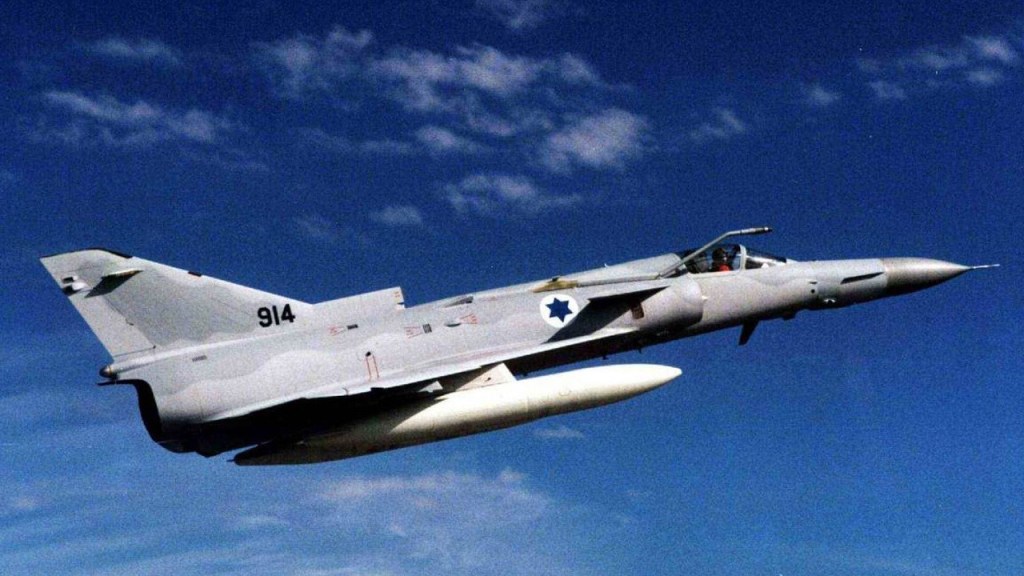
Kfir C7
The principal users were Israel, Colombia, Ecuador, and USA.
As the F-21A, two types of Kfir served with USMC VMFT-401 “Agressor” Sqn, Yuma, Arizona, for dissimilar air combat maneuver training.
F-21A of USMC VMFT-401 “Agressor” Sqn, Yuma, Arizona
The Young Lion was deployed with a squadron of the Israeli Air Force in 1974 and 1975. Then, more aerial units were added to the Kfir. The jet shot down a Syrian MiG-21 in 1979 with an Israeli Shafrir 2 missile. That was the first Israeli home-built missile.
Meanwhile, the Israelis acquired the F-15 and F-16 fighters for aerial combat roles, and the Kfir was more aligned with the ground attack role.
Israel’s Kfir
The Kfir was also exported to Ecuador, where the warbirds shot down three Peruvian airplanes in the 1990s.
Sri Lanka also used the Young Lion during its counterinsurgency against the Tamil Tigers. Five Kfirs are still in service with the Sri Lankan Air Force in 2025.
In Israel, the Young Lions were finally replaced by the F-16s and F-15s.
The Israelis have almost phased out all foreign support for Kfirs in Colombia. Final work with the Colombians will be completed in 2025. Israel had helped Sri Lanka update the Kfir in 2017 with new radars and Python air-to-air missiles.
Kfir C-2 Engine: 1 x General Electric J79-GE-J1E, 17,900 lb / 8119 kg thrust Span: 8.22 m (27 ft) Canard span: 12 ftt 3 in / 3.73 m Length: 15.55 m (51 ft) Height: 14 ft 11.25 in / 4.55 m Wing area: 374.6 sq.ft / 34.80 sq.m Canard area: 17.87 sq.ft / 1.66 sq.m Empty weight: 16,060 lb / 7285 kg Gross weight: 35,714 lb / 16,200 kg Maximum speed: over 2335 km/h (1450 mph, Mach 2.2). Range: 428 mi / 690 km Ceiling: 58,000+ ft / 17,580+ m T/O run: 1450 m. Ldg run: 1280 m. Armament: 2 x 30mm DEFA 552/553 cannon Bombload: 12,731 lb / 5775 kg Seats: 1
Kfir C-7 Engine: 1 x General Electric J79-J1E afterburning turbojet 83.40 kN (18,750 lb st) Installed thrust (dry / reheat): 52.9 / 83.3 kN. Span: 8.22m (26 ft 11½ in) Length: 15.65m (51 ft 4.25¼ in) Height: 4.55m (14 ft 11.25in) Wing area: 34.46 sq.m / 392.47 sq.ft Empty, equipped weight: 7285 kg (16,060 lb) MTOW: 16,500 kg (36,376 lb) Warload: 6085 kg / 13,415 lb Max level speed at 10975m (36,000 ft): Mach 2.3 / 2440 km/h (1516 mph) Time to height: 5min 10 sec to 15,000 m. Service ceiling: 17680m (58,000 ft) Combat radius hi-lo-hi: 1185 km. Fuel internal: 3240 lt. Air refuel: Yes. Armament: 2 x 30 mm DEFA 553 / 140 rounds per gun, 6085 kg (13,415 lb) ordnance Hard points: 9.
When the French government placed an embargo on export of strategic items to Israel in 1967, including a batch of 50 Mirage 5 fighter/attack aircraft built to Israel’s specification and already paid for, the Israeli government realized it had to seek self sufficiency in combat aircraft. As a first step it authorized Israel Aircraft Industries (IAI), whose headquarters were at Lod airport, to build a close copy of the Mirage but with IAI and other locally produced equipment and electronics. The first Nesher (Eagle) flew in September 1969. IAI built 61 Nesher / Daggers, with 51 single-seaters and 10 two-seat Nesher-Ts.
Originally designed by Ted Smith in 1960 and called the Aero Commander Jet Commander, the design first flew in 1963. When the company was taken over by North American Rockwell in 1967, the Justice Department in¬sisted that the new firm divest itself of Rock¬well’s rights to the Jet Commander. The Gov-ernment apparently felt that common owner¬ship of two bizjet designs the Commander and North American’s existing Sabreliner¬ – would give North American Rockwell a lock on the market. For a variety of public and pri¬vate reasons (the Sabreliner’s origin as a mili¬tary project was mentioned most frequently), the Government decreed that the Command¬er must go. The project was bought lock, stock and tooling by Israeli Aircraft Industries. The machine the Israelis developed from the basic Commander design was the IAI Westwind 1124 and its successor, the Westwind 1.
The Jet Commander was so easy to control that flight controls are not boosted hydraulically and there is no artificial stall-warning device. In a deliberate stall, the Jet Commander will not fall off either wing. When Israel Aircraft industries began production of the Commander Jet, several improvements were added: increased takeoff weight, strengthened landing gear, greater fuel capacity, and improved performance. The 1123 Westwind features a longer cabin, auxiliary wingtip fuel tanks, more powerful engines, two additional cabin windows, and modified wing leading edges. The 1124 Westwind is the long-range version utilizing two 3,700-lb. s.t. Garrett turbofans with an 8,620-gallon fuel capacity. The 1123 converted to the 1124 when Garrett TFE731 turbofans were added. That model changed to the 1124A Westwind 2 with improved hot and high performance, better fuel economy and longer range. The Westwind 2 also had a modified wing, winglets, and upgrades to the interior.
Characterised by a mid-fuselage wing, set aft, behind even the rearmost windows, the Westwind is a high versatility, multi-role performer. Israel and Venezuela both have them in use for naval and air-force tracking, while the German air force have three engaged in target towing. As well, Westwinds are to be found perform¬ing fisheries surveillance, anti-submarine reconnisance, air am¬bulance work, VIP carriage, calibration flying, all freight, charter and even, in the case of the Israelis, in the attack role, with missiles attached to fuselage hardpoints. Certified for up to ten passengers and two crew, with seven passengers still air range with mandatory reserves is 2400 nautical miles. An auxilliary fuel tank can be fitted to the rear baggage compartment to give a further 300 nm range. Maximum ramp weight is 23,000 pounds, while a typical Basic Operating Weight runs to 13,200 pounds. Maximum zero fuel weight is 16,500 pounds giving a near 3,500 pound useful load – in the freight configuration this is upped to a 4,000 pound disposable load. Two baggage holds are standard, an 800 pound capacity forward one and a 250 pound rear locker. Both are un¬pressurised though the forward hold is heated. Powered by two Garrett AiResearch TFE 731 engines, each rated at 3,700 pounds static thrust, with clam-shell thrust reversers as standard to minimise brake and tyre wear. Certified under Part 25 of the FAR’s (airline category certification), the Westwind 1 has an excellent balanced-field/range combination. Take-off distance at gross is 5,500 feet, and the aircraft can operate a 2,500 nm sector, with 45 minute reserve, out of a 4,600 foot field carrying four passengers. At the other end of the scale, the same four passengers can be flown a 500 nm trip out of only a 2,550 foot strip. Standard are thrust reversers, antiskid braking, lift dump system, therapeutic oxygen, and single point refuelling. Israel Aircraft Industries flew the IAI 1124 Westwind development aircraft (4X CJA) on 21 July 1975. An improved ver¬sion of the 1123 Westwind introduc¬ing Garrett TFE731 3 turbofans. The new engines have allowed IAI to increase the Westwind’s ramp weight by one ton and other useful changes have been made as well: the wing leading edge cuff has been blunted and drooped slightly in order to maintain reasonable approach speeds de¬spite the weight increases; the two baggage compartments in the tailcone have been enlarged; and the airplane is being delivered from the factory with a completely new avion¬ics package featuring the Collins NCS 31 mul¬tipurpose digital computer a compact RNAV processor and avionics management system. Cabin ac¬commodations, standard, includes four swivelling/tracking/reclining club seats, three fixed seats, a fully enclosed lavatory and a hot¬-and cold refreshment center. A version of the 1124 for the Israeli navy was de¬veloped as the 1124 Sea Scan. A maritime version of the IAI-1124 Westwind corporate jet, the Sea Scan is equipped with a Litton AN/APS 504(V) 360 degree scan search radar, a VLF/Omega naviga¬tion system, and stores pylons on the fuselage sides. Three standard Westwinds, delivered to the Israeli Navy in 1977, have been converted to Sea Scans for maritime patrol and tactical support duties.
Westwind Seats 10. Gross wt. 20,700 lb Empty wt. 9,370 lb Fuel capacity 1,330 USG. Engines two 3,109-lb. s.t. General Electric turbojets. Top speed 428 mph. Cruise 420 mph. Stall 112 mph. Initial climb rate 4,040 fpm. Range 1,600 sm. Ceiling 45,000. Takeoff distance (to 35 ft) 4,100 ft. Landing distance (to 50 ft) 3,400 ft.
IA-1124 Westwind I First built: 1976. Engines: 2 x Garrett TFE 731-3-1G, 3700 lbs thrust. Seats: 7/10. Length: 52.3 ft. Height: 15.8 ft. Wingspan: 44.8 ft. Wing area: 308 sq.ft. Wing aspect ratio: 6.5. Maximum ramp weight: 23,000 lbs. Maximum takeoff weight: 22,850 lbs. Standard empty weight: 12,390 lbs. Maximum useful load: 10,610 lbs. Zero-fuel weight: 16,000 lbs. Maximum landing weight: 19,000 lbs. Wing loading: 74.1 lbs/sq.ft. Power loading: 3.1 lbs/lb. Maximum usable fuel: 8710 lbs. Best rate of climb: 3200. Certificated ceiling: 45,000 ft. Max pressurisation differential: 9 psi. 8000 ft cabin alt @: 45,000 ft. Maximum single-engine rate of climb: 860 fpm @ 150 kts. Single-engine climb gradient: 392 ft/nm. Single-engine ceiling: 25,000 ft. Max speed: 360 kts./.765 Mach. High speed cruise @ 39,000ft: 424 kts/.75 Mach. Fuel flow @ normal cruise: 1048 pph. Long range cruise at 39,000 ft: 393 kts./.7 Mach. Stalling speed, clean, at 19,000 lbs: 113 kts. Stalling speed, flaps 40, at 16,000 lbs: 91 kts. Turbulent-air penetration speed: 230 kts. Duration at high speed cruise: 5.9 hrs. (2,466 nm). Duration at long range cruise: 6.7 hrs (2,640 nm).
IA-1124A Westwind II First built: 1980. Engines: 2 x Garrett TFE 731-3-1G, 3700 lbs thrust. Seats: 9/12. Length: 52.3 ft. Height: 14.8 ft. Wingspan: 44.8 ft. Wing area: 308 sq.ft. Wing aspect ratio: 6.5. Maximum ramp weight: 23,650 lbs. Maximum takeoff weight: 23,650 lbs. Standard empty weight: 12,717lbs. Maximum useful load: 10,933 lbs. Zero-fuel weight: 16,500 lbs. Maximum landing weight: 19,000 lbs. Wing loading: 76.2 lbs/sq.ft. Power loading: 3.2 lbs/lb. Maximum usable fuel: 9555 lbs. Best rate of climb: 3500. Certificated ceiling: 45,000 ft. Max pressurisation differential: 9 psi. 8000 ft cabin alt @: 45,000 ft. Maximum single-engine rate of climb: 900 fpm @ 209 kts. Single-engine climb gradient: 258 ft/nm. Single-engine ceiling: 29,000 ft. Maximum speed: 470 kts. Normal cruise @ 45,000ft: 425 kts. Fuel flow @ normal cruise: 992 pph. Stalling speed clean: 113 kts. Stalling speed gear/flaps down: 99 kts. Turbulent-air penetration speed: 230 kts.
Seascan Engine: 2 x Garrett TFE731 turbofan. Installed thrust: 33 kN. Span: 13.65 m. Length: 15.93 m. Wing area: 28.6 sq.m. Empty wt: 6273 kg. MTOW: 10,952 kg. Warload: 2182 kg. Max speed: 872 kph. Initial ROC: 1524 m / min. Ceiling: 13,715 m. T/O run: 1180 m. Ldg run: 534 m. Fuel internal: 5390 lt. Range: 4275 km. Air refuel: No.
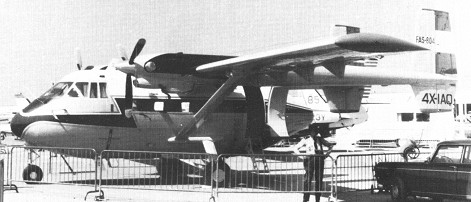
The Arava first flew on 27 November 1969, and entered production for military and civilian customers in 1972. More than 90 had been delivered by mid-1985. The standard military version of the twin-turboprop utility transport is the IAI-201. In the transport role up to 24 troops or 16 para¬troops may be carried, and machine-gun packs can be fitted to the fuselage sides. Rocket pods may be fitted on two additional fuselage pylons. The improved IAI-202 has a lengthened fuse¬lage with accommodation for 30 troops, 20 paratroops, 2,500kg of cargo, or 12 stretcher and five attendants, plus a fully wet wing with winglets for increased range. The winglet modification is available as a retrofit on earlier Aravas.
IAI 202 Arava Engine: 2 x P&WAC PT6A. Installed pwr: 1167 kW. Span: 21.6 m. Length: 13.5 m. Wing area: 43.7 sq.m. Empty wt: 4110 kg. MTOW: 7710 kg. Payload: 2500 kg. Cruise speed: 319 kph. Initial ROC: 390 m / min. Ceiling: 7620 m. T/O run: 400 m. Ldg run: 250 m. Fuel internal: 1663 lt. Range/payload: 630 km with 2500 kg. Capacity: 30 pax.
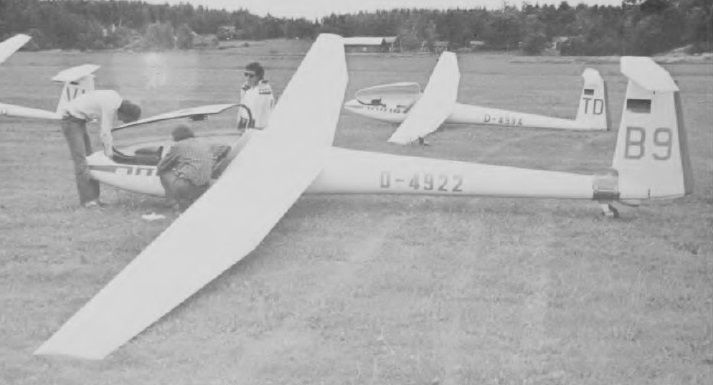
Developed from the original Mistral, which first flew in 1975, the ISF Model 2 Mistral-C single-seat Club Class sailplane is a product of the German firm Ingenieur/Buro Dipling Strauber – Frommhold GmbH & Co KG. Design work on the Mistral-C, which was intended to conform with the new FAI Club regulations, started in October 1974 and the prototype made its first flight in October 1976; 20 examples of this glassfibre T-tailed sailplane had been completed by the beginning of 1979. The type took 3rd place out of 33 contestants in the first Club class international competition held in Sweden in 1979.
The Mistral-C is a cantilever shoulder wing monoplane with 1° forward sweep at the quarterchord line; the wings and tail unit are of glassfibre reinforced plastic/foam/Conticell CC60 sandwich construction, the ailerons being of glassfibre reinforced plastic (GRP). There are Schempp-Hirth aluminium air brakes in the wing upper surfaces.
The fuselage is a GRP monocoque structure, and the landing gear consists of a non-retractable monowheel with a brake, and a tailskid. The tailplane is a fixed incidence one with spring trim, and the pilot sits under a large flush-fitting one-piece canopy that opens sideways. There is a towing hook on the centre of gravity, and a nose-mounted hook is optional.
In 1980 Mistral Flugzeugbau was formed to continue production of the Mistral-C at Hassfurt/Main; it had previously been built at Bensheim.
Mistral-C Span: 15.0 m / 49 ft 2.5 in Length: 6.73 m / 22 ft 1 in Height: 1.45 m / 4 ft 9 in Wing area: 10.9 sq.m / 116.8 sqft Aspect ratio: 20.7 Wing section: Wortmann FX-61-163 Empty weight: 230 kg / 510 lb Max weight: 350 kg / 77 1 lb Water ballast: None Max speed: 155 mph 135 kt / 250 km/h (in smooth air) Max aero-tow speed: 105 mph Stalling speed: 33 kt / 62 km/h Min sinking speed: 2.17 ft/sec at 43.5 mph Min sinking speed: 0.60 m/sec / 1.96 ft/sec at 35 kt / 65 km/h Best glide ratio: 35: 1 at 55.5 mph Best glide ratio: 35 at 49 kt / 90 km/h
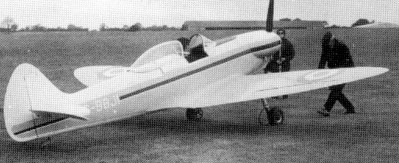
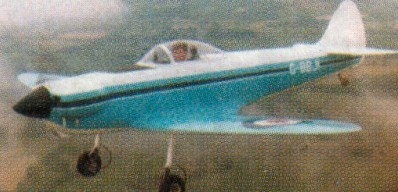
Construction of the 60% replica of the World War 2 Spitfire was begun by John Isaacs in 1969 at Southampton. Wood and fabric construction. Powered by a Rolls-Royce/Continental O-200-A engine, the prototype, c/n.2, later registered G-BBJI PFA.27-10055, first flew in early 1975.
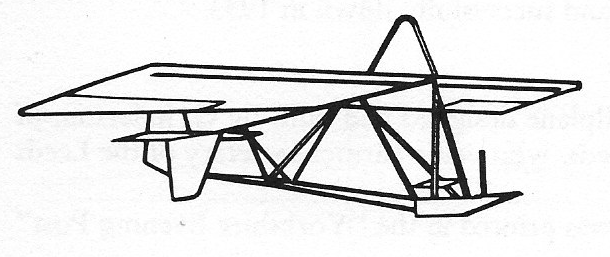
Mr A.C.T. Isaac, of London, later of Hillmorton, near Rugby, Warwickshire, in the UK, built a two-seat primary gliders. The first, in 1923 had trials off Parliament Hill,in North London, resulted in the gliders either breaking up and injuring the pilot, or in requests from the police to ‘take them away’.
1923 glider
A two seat primary type with 9.29 sq.m / 100 sq.ft wing area with a slotted section.
It was left overnight in dead-calm conditions. The following morning it was not to be seen, and was presumed stolen.
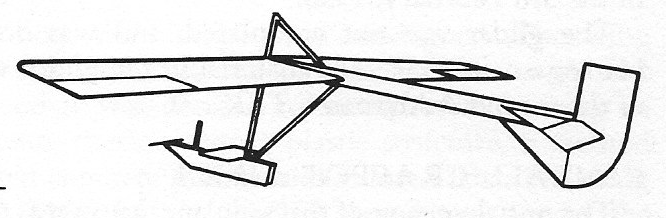
A second machine was built in 1929 to Zogling-like specification but this too was a failure. The flexible structure was abandoned as impracticable. The empty was 45.35 kg / 100 lb.
1929 glider
A biplane glider of 7.32m / 24 ft 0 in span was later built and test flown at Chingford, London.



 All Aero