Kazurov-Poluchkine-Rusakov Chtyvnoplat (Hybrid)

A single seat single engined high wing monoplane with hybrid control circa 1983. Wing has unswept leading and trailing edges, and constant chord. Yaw control by rudder. Control inputs through weight shift for pitch/yaw/roll.
The Chtyvnoplat appears from the very sketchy information available to be a Russian equivalent of the Quicksilver E. It differs from the Eipper-formance machine in that the pilot lays prone, but the control system is similar, being primarily weight shift but assisted by a rudder. The high rectangular wing has a large dihedral and a single boom supports the tail, the whole structure being supported in flight by a web of cables of considerable density.
The claimed glide ratio is 15 17/1.

Length overall 17.1ft, 5.20m.
Wing span 31.5 ft, 9.60 m.
Constant chord 4.8 ft, 1.46 m.
Total wing area 151 sq.ft, 14.0 sq.m.
Wing aspect ratio 6.5/1.

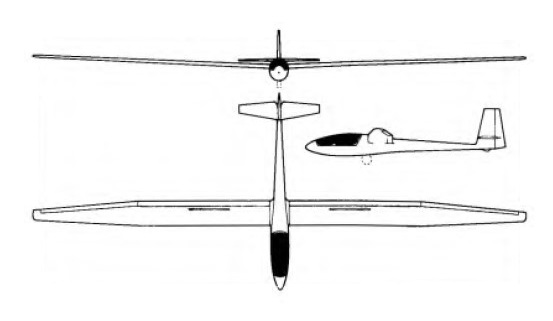
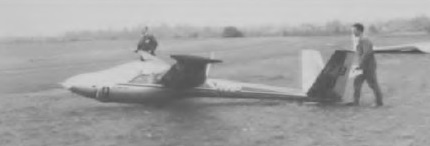
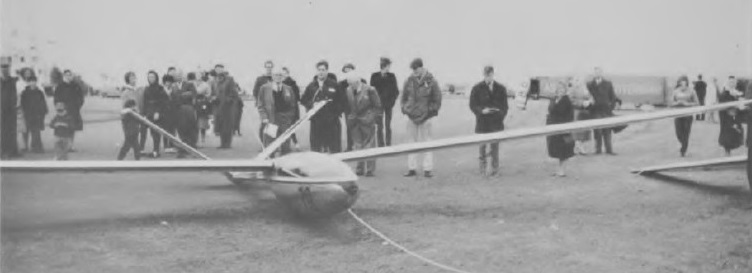
Kazan BK-7 / LAK-9 Lietuva

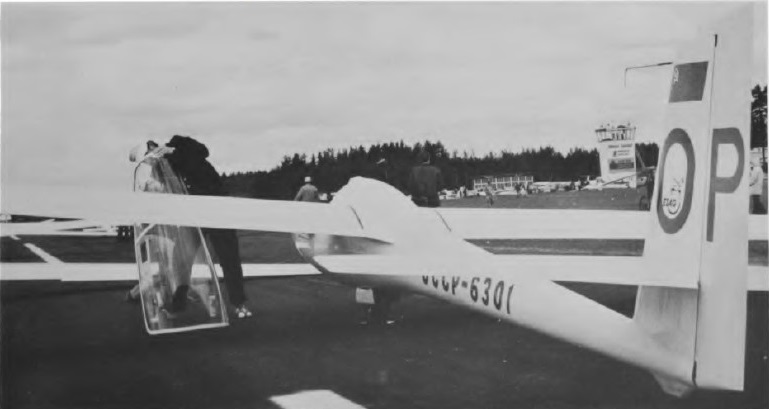
It is believed to have been designed originally by Balys Karvyalis and first flown, under the designation BK-7, in 1972. It had a Wortmann FX-67-K-170 wing section and a retractable monowheel landing gear, with tailskid. The BK-7, which was of glassfibre construction, was subsequently reported to have entered series production and a Polish journal later referred to a ‘BK-7A Lietuva’ with a wing span of 20 m (65 ft 7.5 in), length of 7.27 m (23 ft 10.25 in), weight of 380 kg (837 lb), best glide ratio of 46 and max speed of 210 km/hr (113 kt).

An almost identical aircraft was flown by O. Pasetnik in the Open Class of the June 1976 World Championships in Finland but withdrew from the last two days of the competition because of aileron damage. This aircraft was referred to as the LAK-9 Lietuva and it was reported that the three LAK-9s then built had not, at that time, fully completed flight testing. The LAK-9 is the first Soviet sailplane to compete in the World Championships since 1968.

LAK-9 Lietuva
Wing span: 20.02 m / 65 ft 8 in
Length: 7.27 m / 23 ft 10.25 in
Height: 1.53 m / 5 ft 0 in
Wing area: 14.99 sq.m / 161.4 sq ft
Wing section: Wortmann FX-67-K-170
Aspect ratio: 26.8
Empty weight: 380 kg / 838 lb
Max weight 580 kg / 1,278 lb
Water ballast: 100 kg / 220 lb
Max wing loading: 38.69 kg/sq.m / 7.92 lb/sq ft
Max speed: 121 kt / 225 km/h
Stalling speed: 35 kt / 64 km/h
Min sinking speed: 0.51 m/sec / 1.67 ft/sec at 40 kt / 74 km/h
Max rough air speed: 113 kt / 210 km/h
Best glide ratio: 48 at 55.5 kt / 103 km/h

Kazan KAI-14

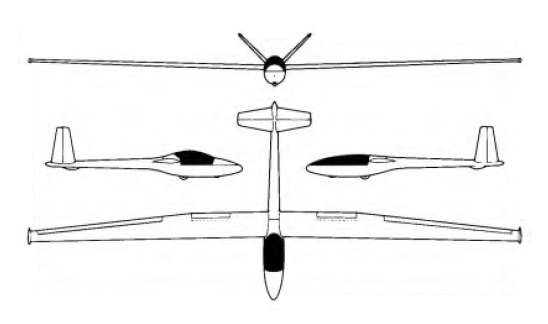
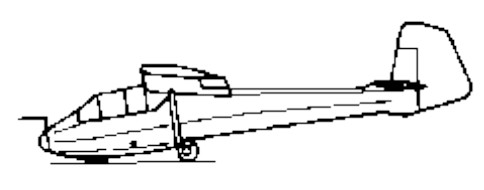
The Kazan Aviation Institute at Kazan designed and produced the KAI-14 high performance Standard Class single seater. Designed by a team headed by M. P.Simonov; of all-metal construction it made its first flight in about 1962, and two KAI-14s were entered in the 1965 World Championships held at South Cerney in England.

Two versions of the type have been produced, the first being for competition flying with the pilot seated in a reclining position under a long flush-fitting one-piece transparent canopy; this version has a polished metal finish to reduce drag.

The second version, intended for series production, is similar except that the pilot sits upright in a conventional seat under a raised cockpit canopy, and is unpolished. Both versions are otherwise the same, with cantilever shoulder wings with a forward sweep of 2° at the leading edges and compound taper on the trailing edges; the inset ailerons are each in two sections and small trailing edge air brakes are featured. The wings are metal-covered as is the semi-monocoque fuselage, in which the forward section tapers to a slimmer rear half carrying the all-metal cantilever ‘butterfly’-type V-tail. The landing gear consists of a non-retractable monowheel faired into the bottom of the fuselage, with a brake that is linked to the air brakes, and a tail bumper.

KAI-14
Span: 49 ft 2.5 in / 15.0 m
Length: 19 ft 1 in / 5.82 m
Wing area: 107.7 sq.ft / 10.0 sq.m
Aspect ratio: 22.5
Max weight: 573 lb / 260 kg
Water ballast: None
Max wing loading: 26.0 kg/sq.m / 5.32 lb/sq ft
Max permissible diving speed: 155 mph / 135 kt / 250 km/h
Max aero-tow speed: 87 mph
Landing speed: 43.5 kt / 80 km/h
Min sinking speed: 1.90 ft/sec / 0.58 m/sec at 56 mph / 48.5 kt / 90 km/h

Kawasaki KAL-2

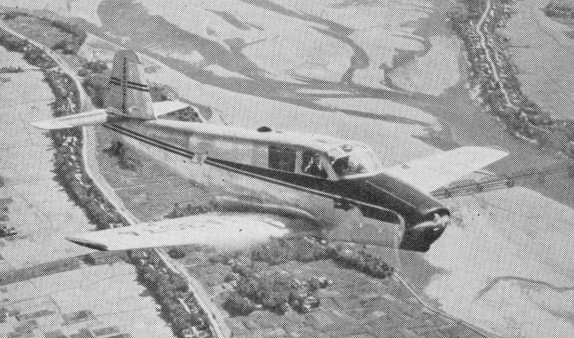
The Kawasaki KAL-2, deigned and built by the Kawasaki-Gifu division of the Kawasaki Aircraft Company, was produced in 1955 as a development of the KAL-1 ns KAT-1.

Of all-metal construction, the KAL-2 seats four.

KAL-2 no.2

An initial order for two was placed by the Japanese Air Self-Defence Force.

Engine: Lycoming GO-435-C2B, 260 hp
Span: 39 ft 0.5 in
Wing area: 206.66 sq.ft
Length: 28 ft 8.5 in
Height: 9 ft 6 in
Empty weight: 2315 lb
Loaded weight: 3527 lb
Max speed: 183 mph at 7742 ft
Cruise: 112 mph
Range: 994 mi
Seats: 4

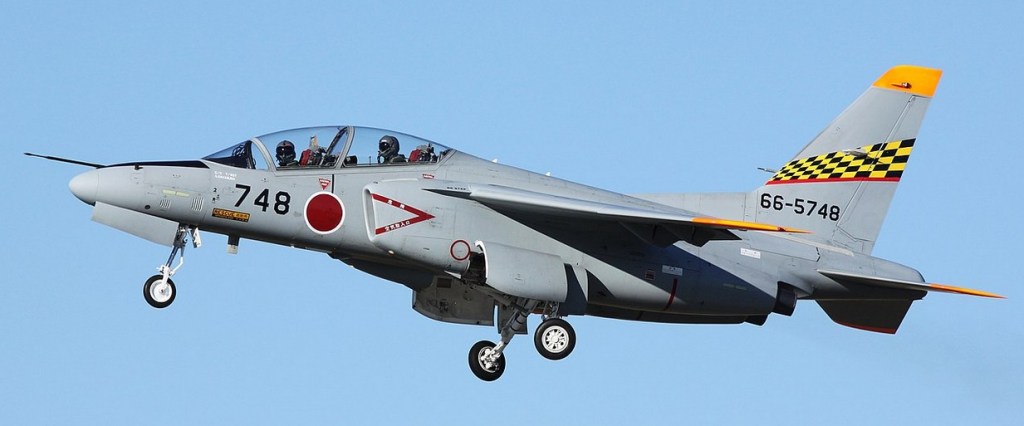
Kawasaki T-4

Based on Kawasaki’s KA-850 project, the T-4 was selected as the JASDF’s new advanced trainer in 1981 to replace the T-33 and Mitsubishi T-1. Kawasaki is the prime contractor, with Fuji and Mitsubishi each taking a 30 per cent share of the pro¬gramme. The aircraft is a mid-wing, twin-turbofan design which uses two indigenous IHI XF3-30 engines and is equipped with Stencel ejection seats, a headup display, an air data computer, and five hardpoints for auxiliary fuel and light weapons. Future developments may include a dedicated ground¬attack version.
Construction of 32 T.4 advanced trainers has been authorised to 1987, against an even¬tual JASDF requirement for more than 200 aircraft, and production of the first batch of 12 was under way, with initial deliveries due in 1988. Four XT-4 prototypes, the first of which flew on July 29, 1985, were engaged in an intensive test programme which was to be completed by March 1988.

The defence Agency awarded the T-4 a type certificate in July 1988.

XT-4
Engine: 2 x IHI XF3-30 turbofan.
Installed thrust: 32.6 kN.
Span: 10 m.
Length: 13 m.
Wing area: 21.6 sq.m
Empty wt: 3700 kg.
MTOW: 7500 kg.
Max speed: M0.9.
Initial ROC: 3000 m / min.
Ceiling: 15,240 m.
T/O run: 549 m.
Ldg run: 670 m.
Fuel internal: 2271 lt.
Range: 1300 km.
Hardpoints: 5.

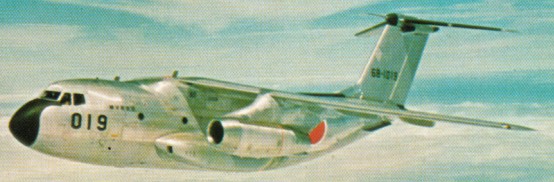
Kawasaki C-1

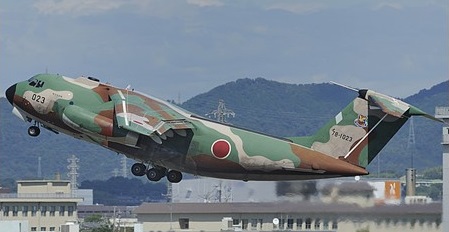
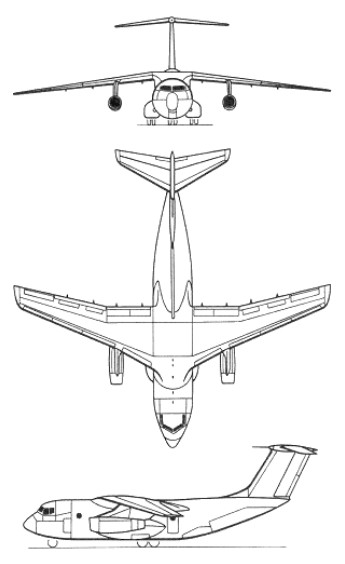
Designed to replace the JASDF’s Curtiss C 46 Commando transport aircraft, the Kawasaki C 1 first flew on 12 November 1970 and was delivered from December 1974.

Kawasaki C-1 Article

Power is provided by two 14,500 lb thrust Mitsubishi produced Pratt & Whitney JT8 M 9 turbofan engines and it can carry 60 troops, 45 paratroops, 36 stretchers, or 26,235 lb (11,900 kg) of freight (including vehicles).

Inordinately expensive because of Japan’s relative inexperience in creating this type of airplane, by law the C 1 could not be sold abroad. Production ceased after 31 were built for the Japanese military, by a consortium of companies including Mitsubishi Heavy Industries, Kawasaki Heavy Indus¬tries, Fuji Heavy Industries, Nihon, Shin Meiwa and Sumitomo Precision practically all the companies involved in Japanese aircraft production.

By 1981 the 31 production C-1s had been delivered, including several long-range aircraft with an additional 4,732 litre wing centre-section fuel tank.

Kawasaki has modified a single C-lA twin-jet tactical transport for use in the ECM training role. Serialled 78 1021, the aircraft was fitted with seven radomes. Featuring nose and tail radomes housing elements of the TRDI/Mitsubishi Electrics XJ/ALQ-5 ECM system, the C-1ECM completed trials with the JASDF’s Air Proving Wing in 1986, and is now in service with the Electronic Warfare Training Unit.

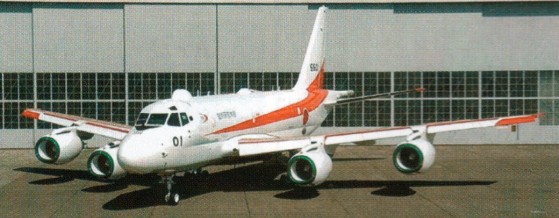
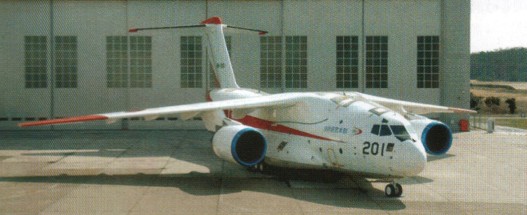
Variation:
Science & Technology Agency Asuka

C-1
Engines: 2 x P+W JT80D-M-9A, 64.5kN
Wingspan: 30.6 m / 100 ft 5 in
Length: 29.0 m / 95 ft 2 in
Height: 10.0 m / 32 ft 10 in
Wing area: 120.5 sq.m / 1297.05 sq ft
Max take-off weight: 38600 kg / 85099 lb
Empty weight: 23700 kg / 52250 lb
Max. speed: 815 km/h / 506 mph
Cruise speed: 705 km/h / 438 mph
Ceiling: 12200 m / 40050 ft
Range w/max.fuel: 3300 km / 2051 miles
Range w/max.payload: 1300 km / 808 miles
Crew: 5
Passengers: 60

C-1ECM
Engines: 2 x Pratt & Whitney JT8D-M-9 turbofan, 14,500 lb (6575 kgp) thrust.
Kawasaki KAL-1

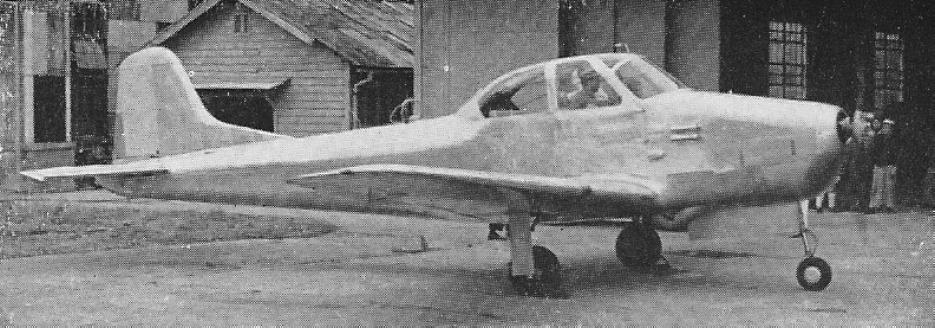
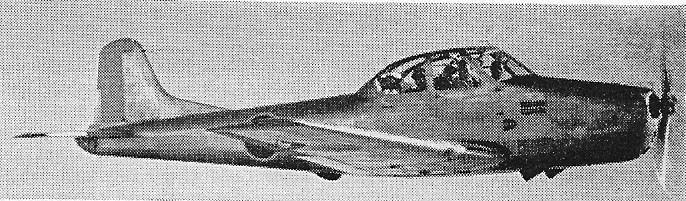
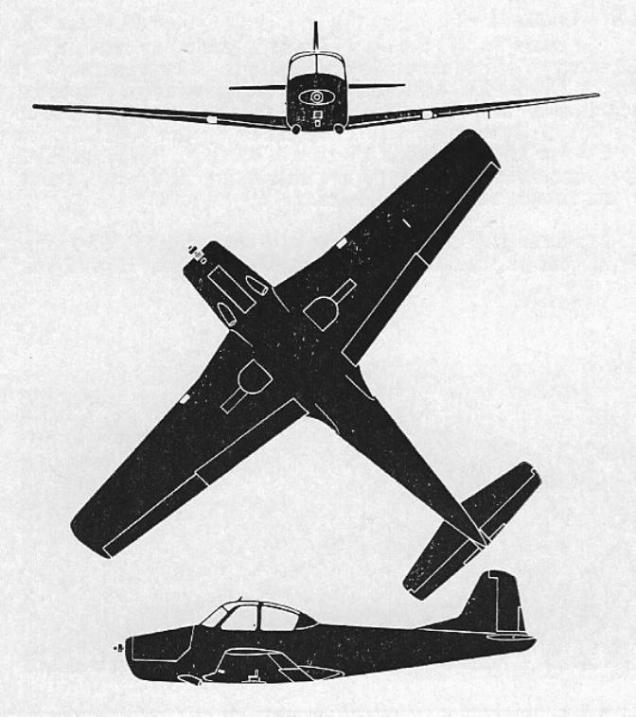
The Kawasaki KAL-1 was the first post-war all-metal aircraft of Japanese design. Flown for the first time on 21 July 1953, the KAL-1 was built by the Kawasaki Gifu works and powered by a 260 hp Lycoming GO-435-C-2 engine. Two prototypes were completed.

Designed as a four-seat liaison aircraft for the Japanese Air Self-Defence Force, the KAT-1 tandem two-seat basic trainer employs a similar wing and tail assembly.

Engine: 260 hp Lycoming GO-435-C-2
Wing span: 34 ft 1.5 in
Wing area: 196 sq.ft
Length: 29 ft 6 in
Height: 8 ft 2.5 in
Empty weight: 2022 lb
Loaded weight: 3230 lb
Max speed: 174 mph
Cruise speed: 167.5 mph
Service ceiling: 19,700 ft
Max range: 1000 mi