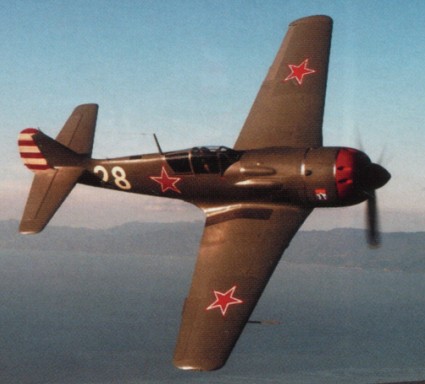
Lavochkin La-9 / La-130 / La-138

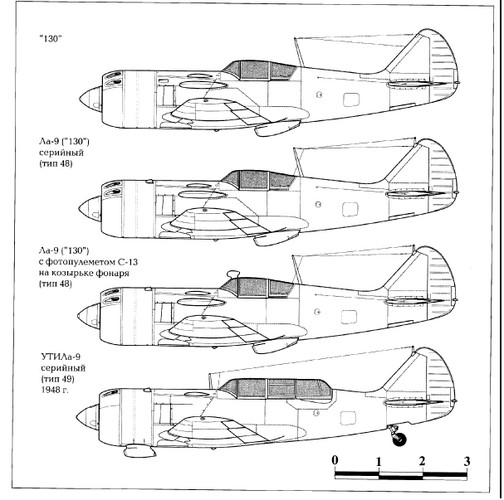
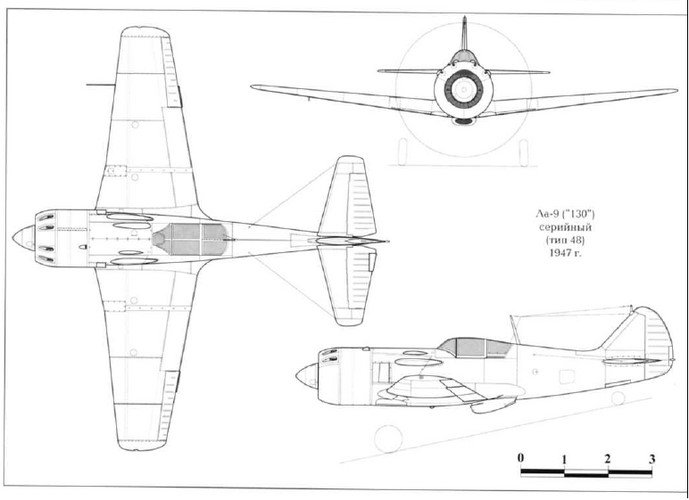
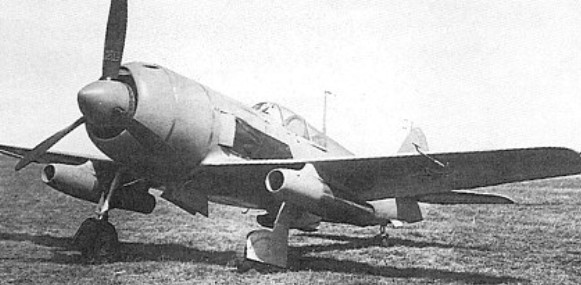
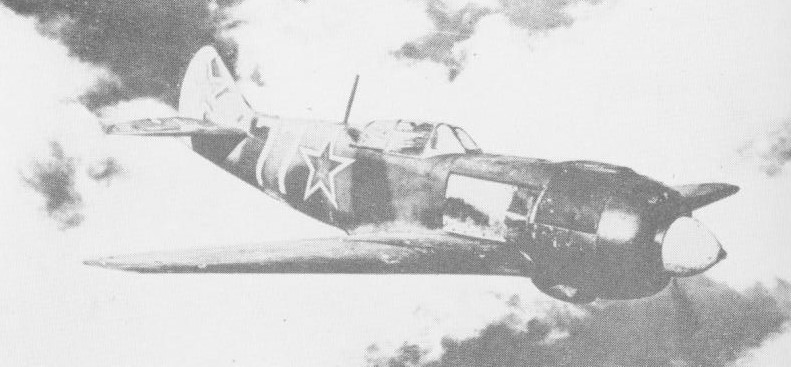
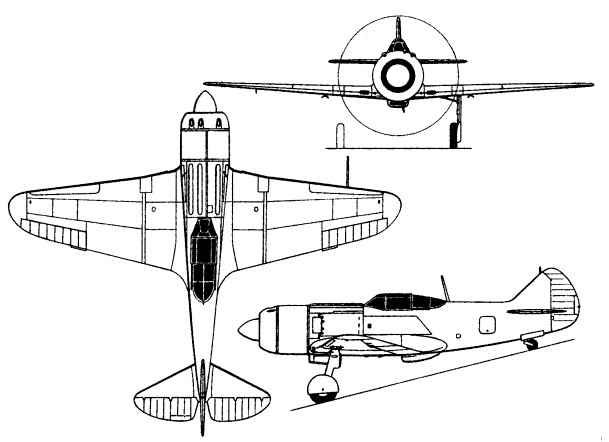
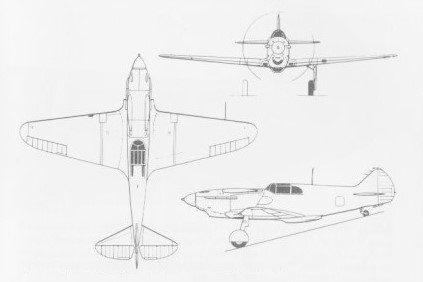
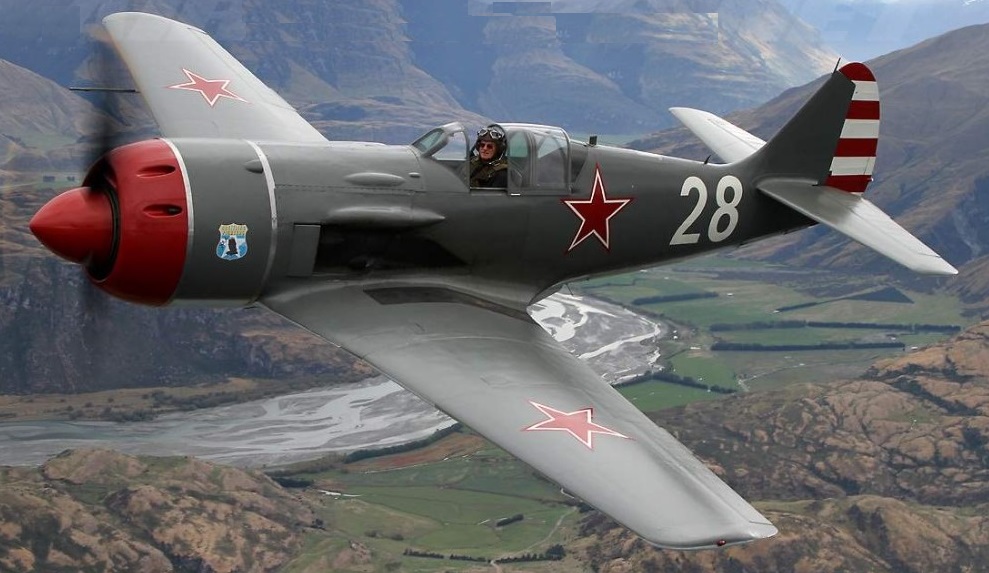
Closely related to the La-126, the La-130 – first flown on 16 June 1946 – encluded a number of refinements, both aerodynamic and structural, and featured a revised fuel system of increased capacity and a laminar flow symmetrical wing section. It retained the ASh-82FN radial of the preceding fighters, but provision was made for four 23mm NS-23 cannon.

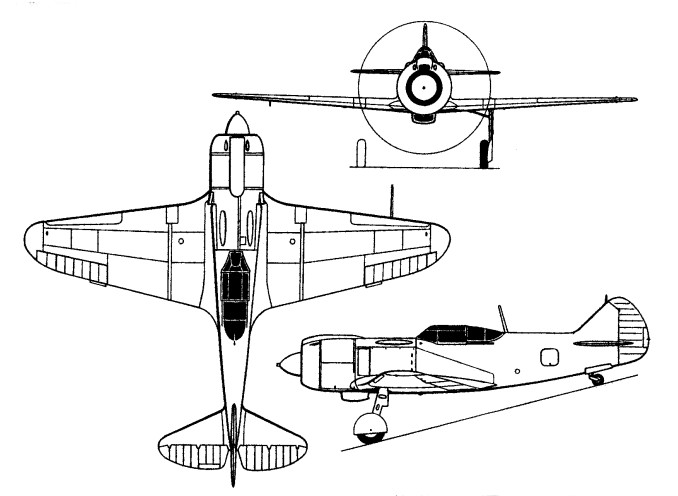
The similarity to the famous Lavochkin La-7 was only superficial; the new fighter was all-metal and had laminar flow wings.

The aircraft’s strength decreased due to the removal of wood from the airframe largely allowing for the fuel and armament capacity of four guns. In combat it showed that the La-130 was equal to the La-7 but was inferior to the Yakovlev Yak-3 in horizontal and vertical maneuvers.
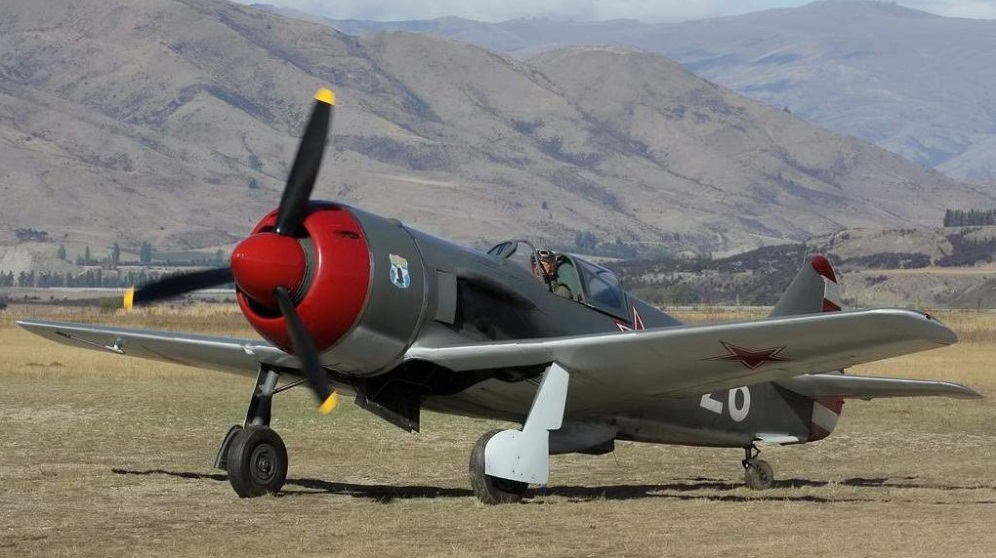
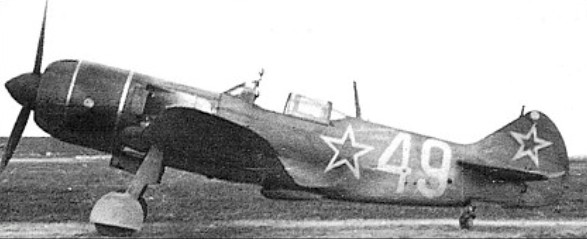
Series production was authorised in November 1946 as the La-9 (Russian: Лавочкин Ла-9), deliveries to the VVS commencing February 1947 from GAZ 21 at Gor’kiy.

A tandem two-seat training version, the La-9UTI, was flown in July 1947, and series production continued for three years, 1,630 single-seaters and 265 two-seaters being built.

One example, designated La-138, was fitted with two PVRD-430 ramjets of 300kg underwing, factory testing performed during March and April 1947, and increases in level speed of 107 to 112km/h were recorded in level flight. A small batch of aircraft was completed with underwing provision for RD-13 pulsating athodyds, or pulse-jets, as La-9RDs. These boosters were found to have a bad effects on the handling characteristics.
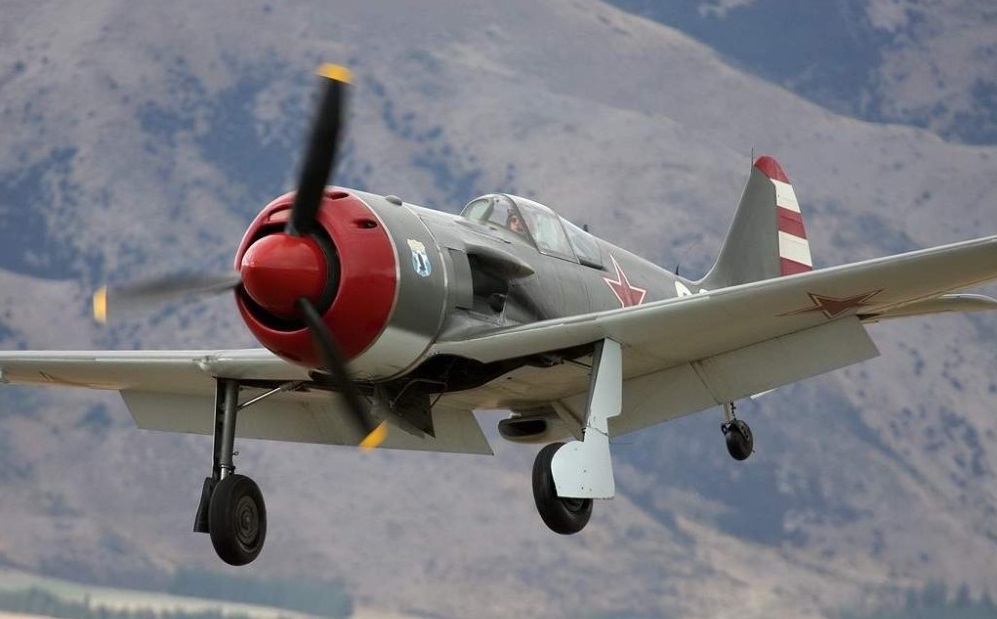
In 1950 China imported 129 La-9 aircraft. The last 5 La-9 fighters were retired in 1959. The Romanian Air Force imported 10 in 1950 (5 La-9 and 5 La-9 UTI), and the type was also operated by North Korea.
Gallery

La-9
Length; 30 ft 2.25 in
Span: 34 ft 9.75 in
Speed SL: 428 mph
Armament: 4 x 20 mm cannon

La-9
Engine: Shvetsov Ash-82FNV, 1825 hp (1,380 kW)
Wingspan: 9.8 m (32 ft).
Wing area: 17.7 sq.m / 190.52 sq ft
Length: 8.46 m
Height: 2.54 m
MAUW: 3,675 kg / 8104 lb
Empty weight: 2660 kg / 5864 lb
Loaded weight: 3,265 kg
Fuel cap: 825 lt.
Max. speed: 690 km/h / 429 mph
ROC: 3200 fpm.
Ceiling: 10800 m / 35450 ft
Cruise: 278 kt (515 kph).
Range: 990 km (615 mi)
Armament: 2 20 mm ShVAK cannons or 3 20 mm Berezin cannons
Bombload: 200 kg
Crew: 1

La-9RD
Engines: 1 x Shvetsov Ash-82 / 2 x RD-13 pulsejet
Max. speed: 474 mph

La-9UTI
Armament: 1 x 12.7 mm UBS machine gun
Seats: 2

La-9UTI
Armament: 1 x 23 mm NS-23 cannon
Seats: 2

La-132
Engine: Shvetsov ASH-82M

La-9M (LA-134)
long-range combat prototype

La-138
An La-9 fitted with two PVRD-450 auxiliary ramjet engines under the wings
Lavochkin La-126

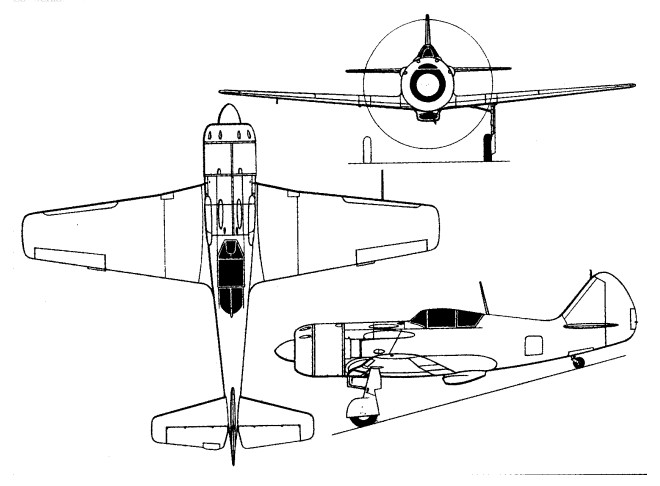
By the end of 1944, the Lavochkin bureau had abandoned further development of the mixed-construction La-7 in favour of an entirely new all-metal design bearing only a configurational similarity to its predecessor, and, early in 1945, work began on this as the La-126. The La-126 possessed no commonality with the Lavochkin bureau’s previous La-7 fighter, apart from an M-82FN (ASh-82FN) engine. It featured an all-metal monocoque fuselage and a TsAGI laminar-section wing. Armament was restricted to two 20mm ShVAK cannon and prototype flight testing was completed at the factory on 10 January 1945, but no production was undertaken, the La-126 serving as a basis for the La-130.
The prototype was subsequently fitted with two Bondaryuk VRD-430 ramjets as the La-126PVRD, and these, it was claimed, increased maximum speed in level flight by 100km/h. The La-126PVRD was tested between June and September 1946, attaining a max speed of 800km/h at 8000m.

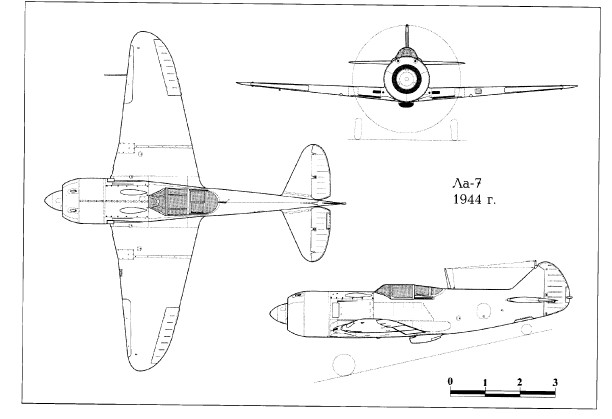
Lavochkin La-7 / La-120

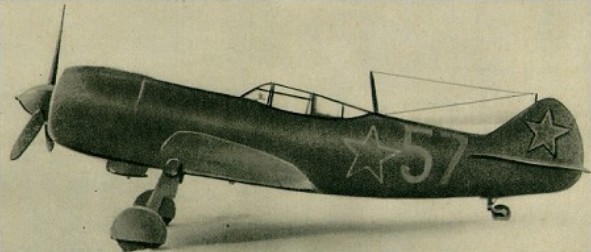
The La-7 was developed from the autumn of 1943 under the bureau designation of La-120. This embodied the results of a TsAGI wind tunnel programme aimed at defining areas in which the basic La-5FN could be aerodynamically improved. Incorporating the modified wing structure (metal spars replacing the wooden box spars) intended for application to the definitive La-5FN (but not to be introduced on that fighter until the late spring of 1944), a revised inboard wing leading edge and an entirely new cowling for the Shvetsov M-82FN engine, the La-120 was first flown in November 1943. In the following spring it entered production as the La-7.

The intended armament comprised three 20mm Berezina B-20 cannon, but while this armament was installed in aircraft built at Yaroslavl, those built at Moscow reverted to the twin ShVAK cannon of the La-5FN.

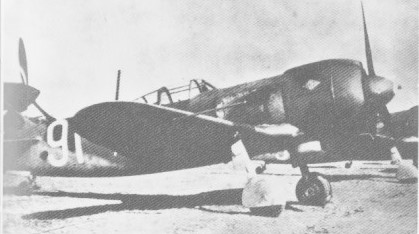
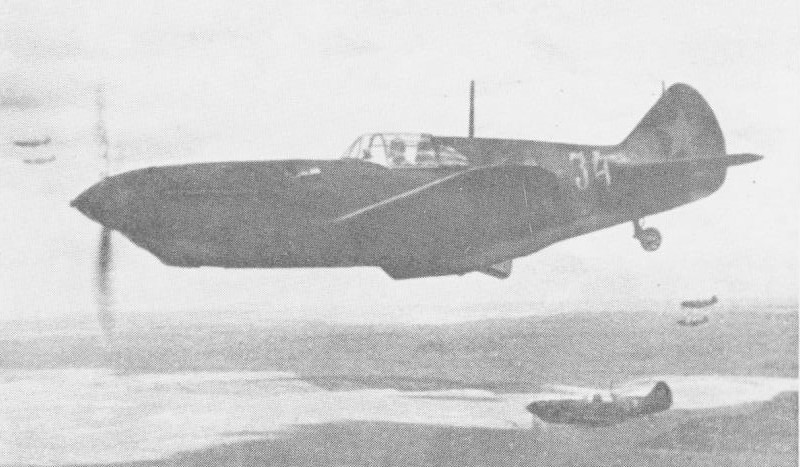
The first series production La-7 were produced in March-April of 1944. That Summer they were handed over to the pilots of 63 GIAP for operational trials. Though they had inferior performance to what was expected the pilots enjoyed great success with this aircraft until engine problems and wing spar failures forced Marshal Novikov to step in an ground all La-7s until the problems could be rectified. The causes were dirt getting into the supercharger air intake at the wingroots and improper execution of lightening holes in the structure. In November 1944 all production irregularities had been worked out and production resumed of the La-7.

La-7

The last war time production model was unchanged except the armament. In February 1945 3xB-20s became the standard armament. Weight was increased to 7,325 but performance was unchanged.

115 La-7 were lost to all military causes (less than half of these to aerial combat) and at the same time accounting for more than 3,100 aerial victories.

Roll rate was considered equal to any Fw-190A.

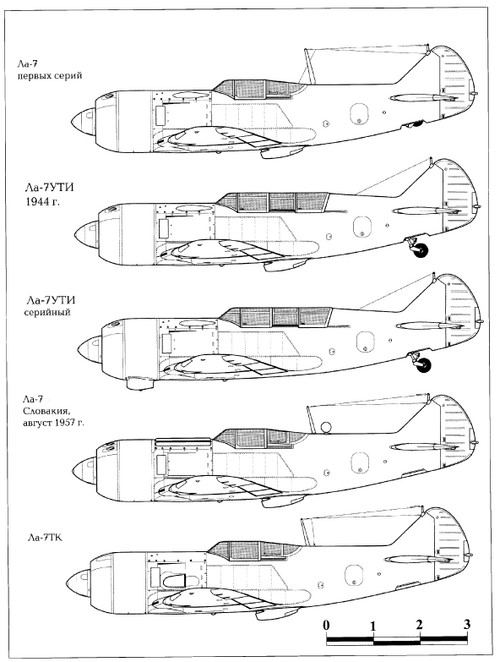
Variants included the tandem two-seat La-7UTI trainer, the La-7TK with a pair of TK-3 turbo-superchargers,
and the rocket-boosted La-7R. The La-7TK was test flown in July- August 1944, but was destroyed when a turbo-supercharger exploded. Another example was fitted with the 2000hp ASh-71TK, trials soon being discontinued owing to the erratic behaviour of this engine’s turbosuperchargers.

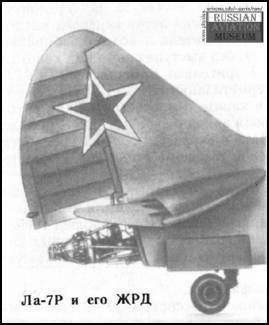
The La-7R, of which two prototypes were tested, was fitted in the rear fuselage with an RD-lKhZ liquid rocket motor of 300kg thrust, the first prototype being destroyed during the initial take-off run in October 1944. Flight testing of the second prototype continued until February 1945, and a further example – a conversion of one of the original prototype airframes and then referred to as the La-120R – entered test in January 1945, this having an improved rocket motor and local airframe structural changes. Testing of the La-120R continued until late 1946.

A total of 5,753 La-7s had been manufactured when production ended in 1946.

Gallery

Engine: Shvetsov M-82FN, 1850hp
Max take-off weight: 3400 kg / 7496 lb
Empty weight: 2620 kg / 5776 lb
Wingspan: 9.8 m / 32 ft 2 in
Length: 8.6 m / 28 ft 3 in
Height: 2.60 m / 8 ft 6 in
Wing area: 17.59 sq.m / 189.34 sq ft
Max. speed: 680 km/h / 423 mph
Cruise speed: 450 km/h / 280 mph
Ceiling: 11800 m / 38700 ft
Range: 990 km / 615 miles
Crew: 1

La-7
Engine: ASh-82FN, 1,850hp.
Max speed: 362mph/SL
Max speed: 413mph/20,200ft.
Climb: 4,000fpm/SL.
Climb to 16,400ft: 4.6min.
Ceiling: 31,000ft.
Armament: 2xShVAK.
Test weight: 7,179 lbs.

La-7
Engine: Shvetsov M-82FN, 1850hp
Max speed: 382mph/SL.
Max speed: 421-423mph/20,200ft.
Climb SL: 4,300fpm
Climb to 16,400ft: 4.2min.
Ceiling: 34,450ft.
Test weight 7,105 lbs.
Armament: 2xShVAK (20mm).

La-7
Engine: Shvetsov M-82FN, 1850hp
Max speed: 382mph/SL.
Max speed: 421-423mph/20,200ft.
Weight: 7,325
Armament: 3x20mm Berezina B-20 cannon

Lavochkin La-5

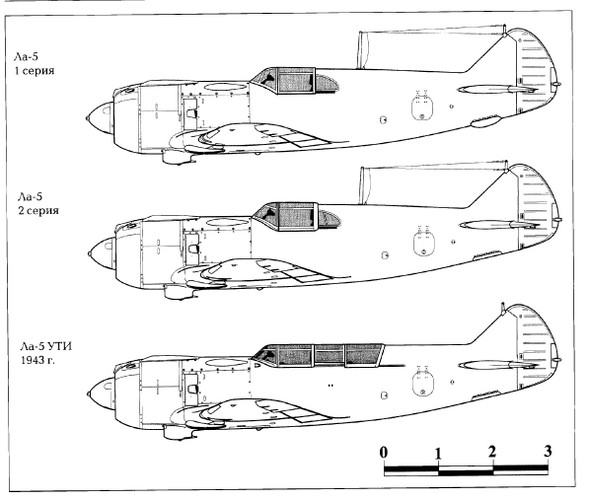
In late 1941 it was decided to improve the performance of the LaGG-3 by installing the more powerful 1600 hp Ash-82A radial engine. The basic LaGG-3 airframe was adapted for a 14- cylinder two-row radial Shvetsov M-82 engine without major redesign (examples converted from existing LaGG-3 airframes on the production line sometimes being referred to as LaG-5s). Despite its fractionally greater installed drag, 1%, it offered speed increase from 353 to 373 mph and improved all-round performance at height. The liquid-cooled fighter was cancelled in May 1942, all production switching to the new machine, designated LaGG-5. With in a few weeks this in turn was replaced om the assembly line by a further improvement, tested as a prototype early in 1942, with a new fuselage containing two 20mm guns and having a lower rear profile behind a canopy giving all-round vision. This was the La-5 which proved to be 28 mph faster than the Bf 109G-2 below 20,000 ft. But the German fighter could outclimb it and efforts were made to reduce weight.

Lavochkin La-5 Article

The prototype conversion was first flown in March 1942 with an M-82 rated at 1700hp for take-off, and the La-5 was cleared for service testing in the following September with an armament of two 20mm cannon. Early machines retained the cockpit and rear fuselage construction of the earlier fighter.

With completion of the conversion of existing LaGG-3 airframes, minor changes were introduced in new production aircraft, the principal of these being the cutting down of the aft fuselage decking and the introduction of a 360 degree vision canopy.

The designed earned Lavochkin the title of Hero of Socialist Labour, and the La-5 made its operational debut at the Battle of Stalingrad in October 1942.

A further development of the La-5AV became the La-7.

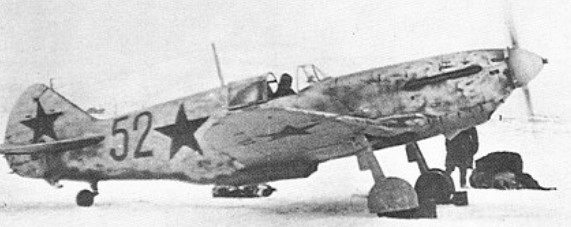
Late in 1942, the improved M-82F engine became available, producing 1650hp at 1650m, aircraft fitted with this engine being designated La-5F, and, from early 1943, fuel tankage was revised.

From late March 1943, the fuel injection M-82FN engine offering 1850hp for take-off replaced the carburettor-equipped M-82F, and with this power plant the fighter became the La-5FN. This version fought in the Battle of Kursk, and was produced in fairly substantial numbers.

La-5FN

When the La-5 was withdrawn from production late in 1944, a total of 9,920 aircraft of this type (including La-5UTI two-seat trainers) had been built.

Gallery

Prototype
Engine: Shvetsov M-82 14- cylinder two-row radial, 1700hp

La-5F
Engine: Shvetsov M-82F, 1650hp at 1650m

La-5FN
Engine: Shvetsov M-82FN, 1850hp
Max take-off weight: 3360 kg / 7408 lb
Empty weight: 2800 kg / 6173 lb
Wingspan: 9.8 m / 32 ft 2 in
Length: 8.60 m / 28 ft 3 in
Height: 2.54 m / 8 ft 4 in
Wing area: 17.50 sq.m / 188.37 sq ft
Max. speed: 648 km/h / 403 mph
Ceiling: 11000 m / 36100 ft
Range: 765 km / 475 miles

La-5FN
Engine: Shvetsov ASh-82FN, 1640hp
Wingspan: 9.8 m / 32 ft 2 in
Length: 27 ft 10 in
Height: 9 ft 3 in
Empty weight: 6085 lb
Loaded weight: 7406 lb
Max. speed: 402 mph at SL
Service ceiling: 11000 m / 36, 000 ft
Max range: 528 miles
Seats: 1
Armament: 2 x 20 mm ShVAK cannon
Bombload: 330 lb

La-5UTI
Seats: 2

Lavochkin LaGG-3

Various remedies for the handling shortcomings of the LaGG-1 were applied, and the first LaGG-1 prototype to introduce these changes was referred to as the I-301 (from the numerical designation of the factory – GAZ-301). This also featured redesigned outer wing panels incorporating additional fuel tanks. The I-301 entered flight test on 14 June 1940, the modified aircraft being assigned the designation LaGG-3 and most pre-series examples of the LaGG-1 being completed to the later standard.

Lavochkin LaGG-3 Article

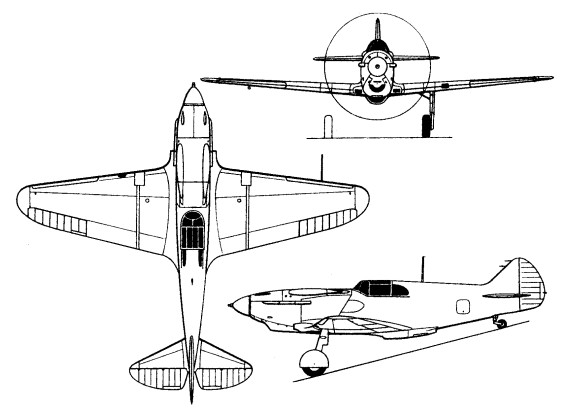
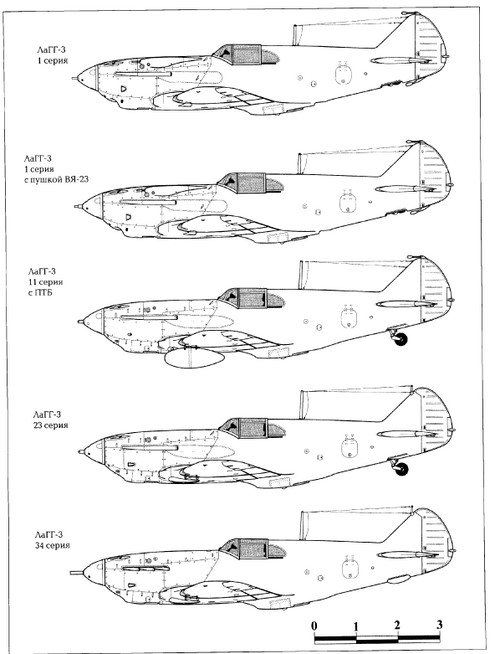
The LaGG-3 was essentially the series production version of the LaGG-1 with a revised outer wing incorporating fuel tanks, and an armament of one 20mm and two 7.62mm weapons. Fixed wing slats – later replaced by automatic slats – were introduced and balance weights were added on the elevators and rudder, but were later discarded in favour of statically and dynamically balanced surfaces. Weight was reduced as a result of a structural analysis. LaGG-3 deliveries commenced in the spring of 1941, initially with the M-105P engine, but, from late in the year, with the M-105PF of 1260hp at 800m.

Provision was later made to replace one or both machine guns by weapons of 12.7mm calibre, the 20mm hub-mounted cannon being replaced by one of 23mm calibre in some cases, and a pair of 12.7mm underwing guns was sometimes fitted. Three aircraft were each fitted with a 37mm cannon and referred to as LaGG-3K-37s, and one example was fitted with the 1650hp Klimov M-107A engine. Production of the LaGG-3 was completed in the late summer of 1942 with a total of 6,528 built, superseded by the La-5.

During 1941 Lavochin converted one LaGG-3 to have an M-82 radial engine. Despite its fractionally greater installed drag, 1%, it offered speed increase from 353 to 373 mph and improved all-round performance at height. The liquid-cooled fighter was cancelled in May 1942, all production switching to the new machine, designated LaGG-5.

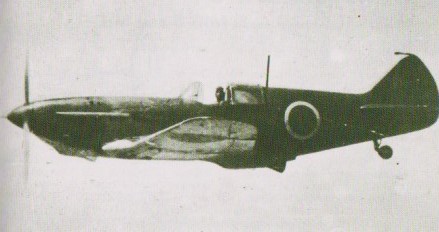
Flown to Manchuris by a Russian deserter and tested by Japanese in 1942 at Harbin

Gallery

LaGG-3
Engine: Klimov M-105, 1100 hp
Wingspan: 9.8 m / 32 ft 2 in
Wing area: 17.5 sq.m / 188.37 sq ft
Length: 8.9 m / 29 ft 2 in
Height: 8 ft 10 in
Empty weight: 2620 kg / 5776 lb
Max take-off weight: 3190 kg / 7033 lb
Max. speed: 570 km/h / 354 mph at 16,400 ft
Cruise speed: 450 km/h / 280 mph
ROC: 2953 fpm / 900 m/min
Ceiling: 9700 m / 31800 ft
Range: 800 km / 497 miles
Armament: 1 x 20 mm ShVAK cannon, 1 x 12.7mm Beresin mg, 2 x 7.62mm ShKAS mg

Lavochkin/Gorbunov/Gudkov LaGG-3

Lavochkin I-22 / LaGG-1

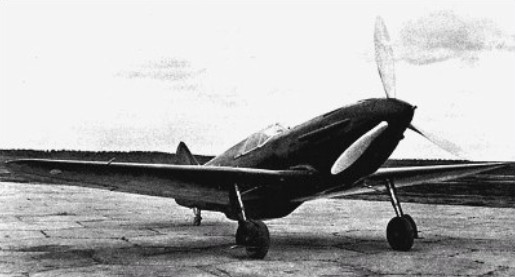
Semyon A Lavochkin, together with V P Gorbunov and M I Gudkov, established a new design bureau in September 1938, and began work on a single-seat tactical fighter. Initially designated I-22, the fighter was novel in that plastic-impregnated wood known as delta drevesina was used extensively in its construction, with stressed bakelite plywood skinning. Power was provided by a 1,100hp Klimov M-105P engine with a 23mm VYa-23V cannon mounted between the cylinder banks, the remaining armament comprising two 12.7mm UB machine guns in the forward upper decking.
Work began simultaneously on seven prototypes, and a pre-series of 100 fighters was laid down. The first prototype was flown on 30 March 1940, the designation having meanwhile been changed to LaGG-1.
It demonstrated inadequate range, ceiling and manoeuvrability, and potentially dangerous handling characteristics. Time did not permit fundamental redesign of the fighter, and the Lavochkin team therefore initiated a programme aimed at alleviating the more serious of the fighter’s defects. Improvements were progressively introduced, while the design was subjected to a thoroughgoing weight analysis. The large calibre machine guns were replaced by 7.62mm ShKAS guns, and the 23mm cannon gave place to one of 20mm. Various remedies for the handling shortcomings were applied, and the first LaGG-1 prototype to introduce these changes was referred to as the I-301 (from the numerical designation of the factory – GAZ-301). This also featured redesigned outer wing panels incorporating additional fuel tanks. The I-301 entered flight test on 14 June 1940, the modified aircraft being assigned the designation LaGG-3 and most pre-series examples of the LaGG-1 being completed to the later standard.

LaGG-1
Engine: 1 x 1,100hp Klimov M-105P
Wingspan: 9.80 m / 32 ft 2 in
Length: 8.81 m / 28 ft 11 in
Height: 4.40 m / 14 ft 5 in
Wing area: 17.50 sq.m / 188.37 sq ft
Max take-off weight: 3380 kg / 7452 lb
Empty weight: 2968 kg / 6543 lb
Max. speed: 600 km/h / 373 mph
ROC: 2953 fpm / 900 m/min
Service ceiling: 31,496 ft / 9600 m
Range: 660 km / 410 miles

Laville DI-4

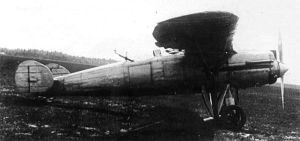
Laville DI-4 (Russian: Лавиль ДИ-4) was a prototype two-seat fighter aircraft developed in the Soviet Union in the 1930s.

The chief designer Henri Laville was one of several French aviation specialists invited to work in the Soviet Union and the DI-4 layout was typical of the French trend at the time with a high-mounted gull wing (first for a Soviet aircraft) and all-metal construction.

First flying on 4 January 1932, the test flight program was completed in 1933 but despite good performance the aircraft did not enter mass production, in part because Soviet Union had no plans to purchase the Curtiss V-1570 engine. Only the one was built.

Powerplant: × Curtiss V-1570 Conqueror, 448 kW (601 hp)
Propeller: 2-blade fixed-pitch
Wingspan: 13.3 m (43 ft 8 in)
Wing area: 23.9 m2 (257 sq ft)
Length: 8.5 m (27 ft 11 in)
Empty weight: 1,448 kg (3,192 lb)
Gross weight: 1,949 kg (4,297 lb)
Maximum speed: 266 km/h (165 mph, 144 kn)
Range: 500 km (310 mi, 270 nmi)
Service ceiling: 6,440 m (21,130 ft)
Time to 5,000 m (16,404 ft): 17 minutes
Wing loading: 81.5 kg/m2 (16.7 lb/sq ft)
Power/mass: 0.230 kW/kg (0.140 hp/lb)
Horizontal turn time: 15 seconds
Crew: 2

Laubenthal Württemberg / Akaflieg Darmstadt Württemberg

The Akademische Fliegeruppe Darmstadt also received some orders from individuals or club and these, built in ones or twos, were client named, received no D- number and brought welcome funds to the group. These, too, were sometimes also designed by student teams and often built by them.

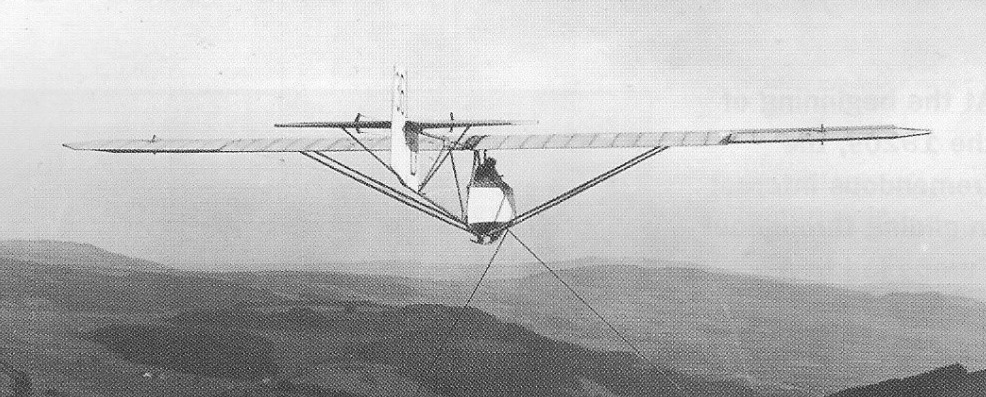
The Württemberg was made for Wolf Hirth, who named it after his home state. The Württemberg was a high, cantilever wing aircraft. Its wing, like the rest of the aircraft was wooden and covered with a mixture of plywood and fabric. It was built around a single spar, with ply covering from it around the leading edge forming a torsion-resistant D-box. Behind the spar the wing was mostly fabric covered. In plan there was a rectangular centre section that filled about 40% of the span and tapered outer panels tapering to elliptical tips. The ailerons filled about 40% of the span from the tips.

The Württemberg’s wing was mounted over the fuselage on a low, ply covered pylon which sat on top of the fuselage and extended well behind the wing trailing edge, gradually decreasing in height. Its open, unscreened cockpit was partly under the leading edge. The fuselage was ovoid in cross section, tapering and becoming more pointed on its underside aft. It was entirely ply covered. All tail surfaces were built in a similar way to the wing. Both rudder and elevators were all-moving and balanced, with straight edges, rounded tips and with their short mountings faired into the fuselage. The rudder extended down to the keel, so a generous cut-out in the elevators was provided for its movement. The Württemberg had a short landing skid under the forward fuselage and a spring type tailskid.

A second Württemberg was completed in 1929 at the Klemm Leichtflugzeugbau GmbH (“Klemm Light Aircraft Company”) for the Württembergischer Luftfahrt-Verband (Aeronautical Association Württemberg) at Stuttgart, with slightly greater wing area and a shorter fuselage.

First flying in 1927, in 1928 Hirth flew the Württemberg in France at the International contest at Vauville, on the Channel coast near Cherbourg, with great success. Glider flight here followed the coast over sandhills and relied on slope lift from a West wind; the Württemberg was suited to the weak wind that blew during the competition. He won prizes for the greatest height gain (327 m (1,073 ft)), straight-line distance (29 km (18 mi)), height (1,244 m (4,080 ft)) and for the number of flights lasting more than 30 minutes (10).

Württemberg (1927)
Wingspan: 15.20 m (49 ft 10 in)
Wing area: 15.75 m2 (169.5 sq ft)
Aspect ratio: 14.6
Airfoil: Göttingen 535
Length: 6.465 m (21 ft 3 in)
Empty weight: 149.25 kg (329 lb)
Gross weight: 235 kg (518 lb)
Wing loading: 15 kg/m2 (3.1 lb/sqft)
Crew: One