Locke Mini-twin

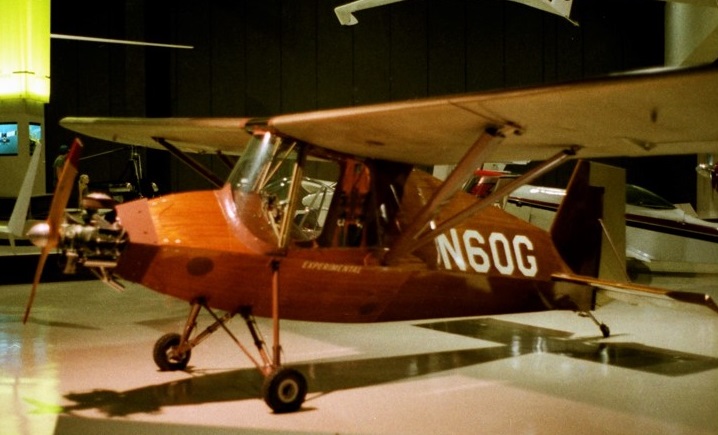
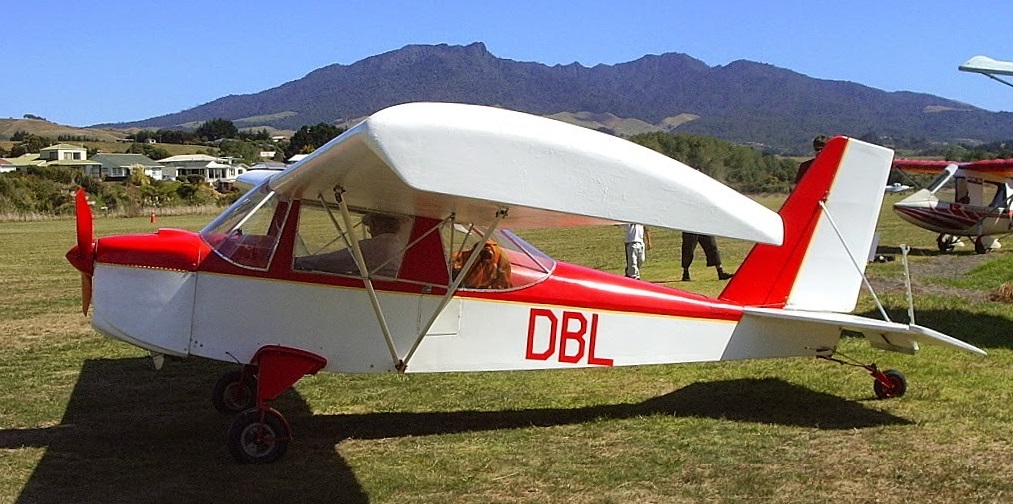
ZK-DBL (c/n DBL 4)

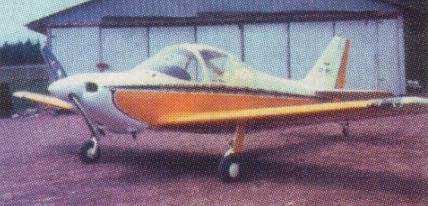
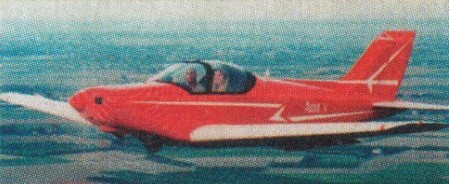
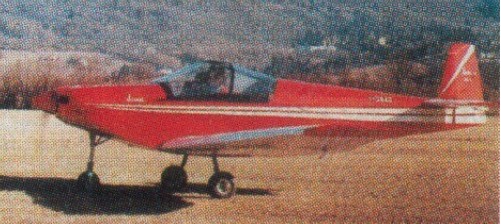
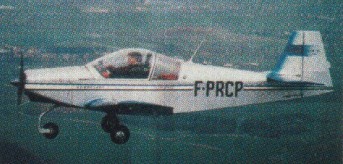
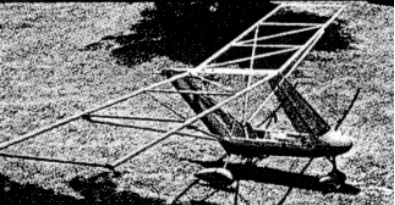
The two- seat Mini-twin was developed from the TEAM “Z” Hi-Max which was a single seater, with the width and wingspan both increased.

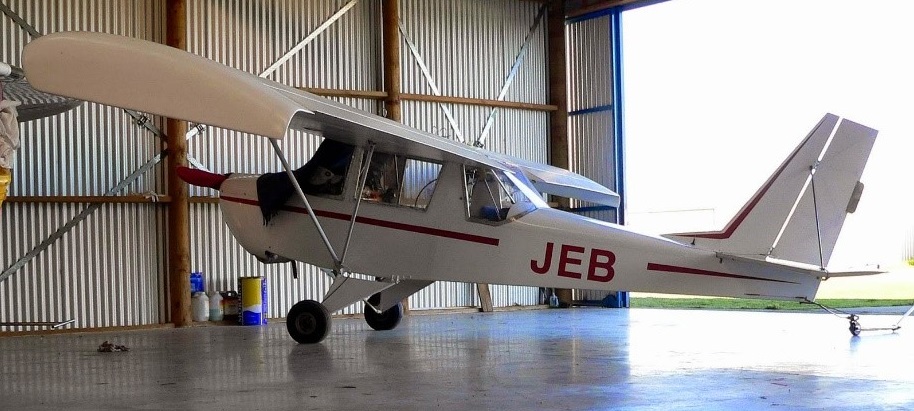
First registered ZK-JEB in 13 May 1996, David Locke test flew the aircraft in May 1996. ZK-JEB (c/n DBL 3) is officially a David Boehm Locke Hi Max Minitwin, and it took 1500 hours to construct over a period of 2 years. Powered by a 45 HP Zenoah engine it has a cruise of 65 mph. MAUW is 660 pound (299 Kg). It was a good aeroplane but not really fast enough for cross country flying so Dave Locke turned his attention to the Minitwin Mk II. On 15/1/01 ownership transferred to B StC C McKenzie of Auckland, then on 25/6/02 to S A Hyde, also of Auckland. It then headed to the South Island, to C G L Pennell of Rangiora with whom it had a forced landing following power loss on 8/12/05. It then went to A C Reid of Fairlie and finally to J D Simpson of Karamea.
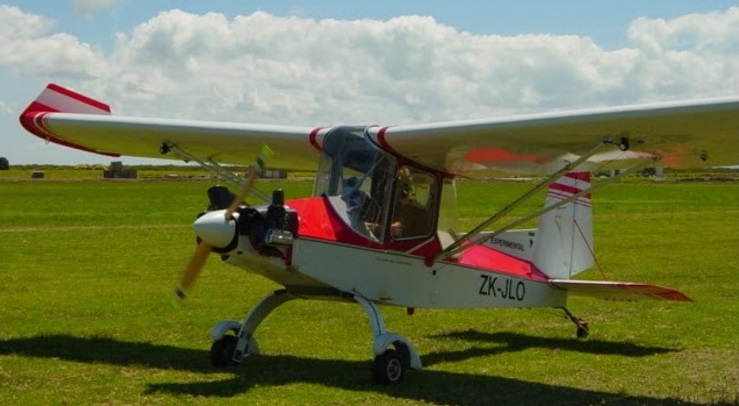
ZK-DBL (c/n DBL 4) is officially a D Locke Mintwin II. It took 2500 hours to construct and it is powered by a 63 HP 3 cylinder 657cc DOHC water cooled engine from a Suzuki Cappucino sports car. It has a 3:1 reduction gearbox that Dave designed and built himself. Cruise is around 85 to 90mph. Empty weight is 630 pounds (287 Kg) and MAUW is 1,070 pounds (485 Kg). It is still owned by Dave Locke.

Wingspan: 27 ft 3 in
Seats: 2.
Lobert Ganagobie / Mousebird

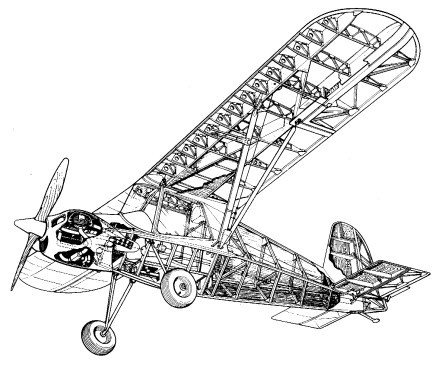
Of all wood construction the first Gangobie was designed and built by two brothers, William and James Lobet, in 1953. The result of intensive wind tunnel testing, the prototype got airborne behind a l6hp Clerget engine. Since built in small numbers in North America, and achieved kitset production status as a peanut scale 13” wing span balsa model.

Grounded after 30 hours of flight time by the failure of the nearly 50 year old engine, the Ganagobie concept was given a new lease of life by a Canadian engineer, Mr George Jacquemin. Mr Jacquemin, an aerospace engineer with Lockheed in California, suggested the modification of the design to accommodate the large numbers of war surplus target drone engines available in the mid fifties. The fuselage was given a boost in size to fit a larger framed pilot and a second prototype begun in Toronto, Canada, by an Experimental Aircraft Chapter. Completed by a Mr Pierre Descamps, the American Ganagobie was engined by a 1934 French-built Poinsard 35hp flat four. A subsequent flight report by De Havilland Canada’s chief test pilot gave the design a boost and some ten Ganagobie 03 projects were begun, largely in the United States and Canada. The original Canadian built Ganagobie was later re-engined with a Volkswagen 1200cc engine, standard fare for a number of homebuilts, and led to the latest in the family, the Lobet Ganagobie 05. The one and only Ganagobie 05, begun in Australia in 1974 after James Lobet migrated there, was shipped to New Zealand in 1982.

Gallery

Engine: Citroën AMI8
Wingspan: 24.03 ft
Length: 16.01 ft
Cruise: 169 kph (100 mph)
Stall: 75 kph (47 mph)
ROC: 5m/sec (1,000 fpm).

LJaM 1912 Monoplane

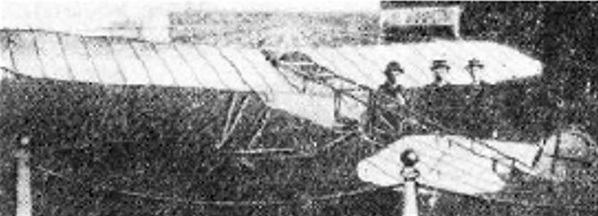
Jerzy Jankowski, Maximilian von Lerche and Francesco Mosca built at workshops of Moscov Aeronautical Society and airplane modeled after Bleriot aircraft with 50hp Gnome engine. It was apparently very well designed and built aircraft that made numerous succesful flights, including one on 14th of May 1912 when Jankowski broke on it Russian flight altitude record of 1775m;

Liverpool University MPAG Liverpuffin

The Liverpool University MPAG bought the remains of Hatfield’s Puffin II in September 1969 and set about a redesign using the main wing structure and thr propellor from the Hatfield project.

The basic layout is a high wing aircraft with a pod-and-boom format fuselage. The wing is of metal structure with expanded polystyrene used to form the leading and trailing edge ribs and cross-pieces. Covering is of ‘Mellinex’. The wing is cranked upwards about mid-span. A conventional tail (tailplane and elevators, fin and rudder) is mounted on the end of a boom projecting from the lower half of the rear fuselage. The pilot is located in the extreme nose, in a totally enclosed canopy. A pusher propellor is mounted aft of the wing, above the boom. Single wheel undercarriage.

First flight was made at RAF Woodvale on 18 March 1972. It then went to Dulles Airport, Washington, USA, where it was exhibited at ‘Transpo 72’.

It is not thought to have flown much since its return, if at all,

Wingspan: 64.00 ft
Wing area: 305 sq.ft
Aspect ratio: 13:1
Empty weight: 140 lb

Littner Whiskey IV / Asso Aerei Whiskey IV

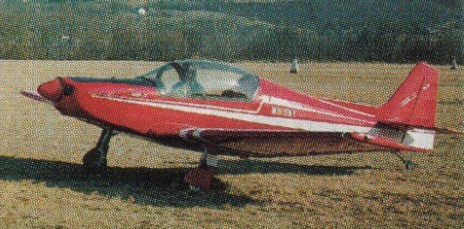
The Whisky IV is a tandem two seat, low wing aircraft designed by Giuseppe Vidor. Construction materials are wood & fabric. The landing gear is a fixed tailwheel configuration.
2009 Complete set of plans $400 (US$)

Engine: Limbach 2000, 80 hp
HP range: 75-100
Wing Span: 26.25 ft.
Wing Area: 120.5 sq. ft.
Length: 21 ft.
Height: 7 ft.
Cockpit Width: 28.3 in.
Aspect Ratio: 5.7
Dihedral Angle: 4°
Wash Out: 1.50°
Empty Weight: 622 lbs.
Gross Weight: 1058 lbs.
Wing Loading: 8.78 lbs./sq. ft.
Power Loading: 13.22 lbs./HP
C.G. Travel: 18.3 to 31% MAC
Fuel Capacity: 13.2 gal. / 79 lbs.
V.N.E: 175 mph.
Max Horizontal Speed: 160 mph.
Cruise 75% Power: 130 mph.
Max Maneuvering Speed: 115 mph.
Max Flap Speed: 84 mph.
Stall Speed Flaps Down: 37 mph.
Stall Speed Flaps Up: 43 mph.
Take-Off Distance: (Solo) 330 ft.
Landing Distance: (Solo) 490 ft.
Fuel Burn 75% Power: 3.17 gal./hr.
Max Range 75% Power: 535 nm
Rate Of Climb: 785 ft./min.
Service ceiling: 12,000 ft
Seats: 2 tandem
Landing gear: retractable tailwheel

Littner Supercab

A low tapered wing equipped with slotted flaps and retractable tailwheel undercarriage.

Top speed: 162 mph
Cruise: 143 mph
Stall: 35 mph
Range: 500 nm
Rate of climb: 960 fpm
Takeoff dist: 330 ft
Landing dist: 330 ft
Service ceiling: 12,000 ft
Engine: Continental C-90, 90 hp
HP range: 65-110
Fuel capacity: 17 USG
Empty weight: 750 lb
Gross weight: 1250 lb
Height: 5.5 ft
Length: 18 ft
Wing span: 27 ft
Wing area: 111 sq.ft
Seats: 2
Landing gear: retractable tailwheel

Littner Champion V / Asso Aerei Champion V / Vidor Guiseppe Asso V

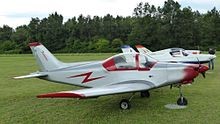
The Champion V is a side by side two seat, low wing aircraft designed by Giuseppe Vidor. Construction materials are wood & fabric. And the landing gear can be built in fixed trigear or retractable trigear configurations.

Asso V Champion I-7490

2009 Complete set of plans $400 (US$)

The Asso V Champion was built by Alpi Aviation with composite skin panels as the Pioneer 300.

Undercarriage: Fixed
Engine: Limbach 2000, 80 hp
Wing Span 27.3 ft.
Wing Area 120 sq. ft.
Length 20 ft.
Gross Weight 993 lbs.
Fuel 78 lbs.
G Loads (Ultimate) +5.7, -2.67
Horsepower Range 75 to 100
Empty Weight: 595 to 604 lbs.
Max Speed: 130 mph.
Cruise 75% Power: 107 mph.
Cruise 90% Power: 115 mph.
Stall Speed: 40 mph.
V.N.E: 160 mph.
R.O.C: 800 ft./min.
Take-Off Distance: 425 ft.
Landing Distance: 330 ft.
Range: 425 miles
Maneuvering Speed: 95 miles
Max Speed With Flaps: 70 mph.

Undercarriage: Retractable
Engine: Limbach 2000, 80 hp
Wing Span 27.3 ft.
Wing span: 27.3 ft
Wing Area 120 sq. ft.
Length: 20 ft.
Height: 7 ft
Gross Weight 1058 lbs.
Fuel 13 USG / 78 lbs.
G Loads (Ultimate) +5.7, -2.67
Horsepower Range 75 to 100
Empty Weight 617 lbs.
Max Speed: 140 mph
Cruise 75% Power: 103 kt / 118 mph / 190 kmh
Cruise 90% Power: 127 mph.
Stall Speed: 34 kt / 39 mph / 63 kmh
V.N.E: 139 kt / 160 mph / 258 kmh
R.O.C: 800 ft/min / 4 m/s
Take-Off Distance: 425 ft.
Landing Distance: 330 ft.
Range: 425 miles
Maneuvering Speed: 105 miles
Max Speed With Flaps: 70 mph.
Service ceiling: 12,000 ft
Seats: 2
2009 Price: 66000 EURO

Vidor Guiseppe Asso V
Engine: Rotax 912, 80 hp
Wing span: 8.3 m
Wing area: 11 sq.m
MAUW: 450 kg
Empty weight: 275 kg
Fuel capacity: 55 lt
Max speed: 245 kph
Cruise speed: 225 kph
Minimum speed: 62 kph
Climb rate: 4.5 m/s
Seats: 2
Fuel consumption: 13 lt/hr
Plan price (1998): 800 000 L
Kit price (1998): 12 172 000 L

Littner Junior IV / Asso Junior / Asso Aerei Junior IV / Asso Junior / Vidor Guiseppe Asso IV Wisky

A wood and fabric design by Giuseppe Vidor. The side by side two seater is capable of modest aerobatics.

Top speed: 125 mph
Cruise: 100 mph
Stall: 38 mph
Range: 375 nm
Rate of climb: 600 fpm
Takeoff dist: 350 ft
Landing dist: 400 ft
Service ceiling: 10,000 ft
Engine: Limbach, 62 hp
HP range: 50-65
Fuel capacity: 15 USG
Empty weight: 530 lb
Gross weight: 950 lb
Height: 5.9 ft
Length: 20 ft
Wing span: 28.6 ft
Wing area: 123.7 sq.ft
Seats: 2
Landing gear: retractable nose wheel

Vidor Guiseppe Asso IV Wisky
Engine: Sterpha, 85 hp
Wing span: 8.1 m
Wing area: 11.2 sq.m
MAUW: 450 kg
Empty weight: 285 kg
Fuel capacity: 50 lt
Max speed: 245 kph
Cruise speed: 225 kph
Minimum speed: 63 kph
Climb rate: 5 m/s
Seats: 2
Fuel consumption: 12 lt/hr
Plan price (1998): $450
Kit price (1998): 15 000 000 L

Littner Vega

Equipped with folding wings. Wood and fabric construction.

Top speed: 150 mph
Cruise: 120 mph
Stall: 52 mph
Range: 750 nm
Rate of climb: 700 fpm
Takeoff dist: 600 ft
Landing dist: 600 ft
Service ceiling: 10,000 ft
Engine: Lycoming O-235, 108 hp
HP range: 85-125
Fuel capacity: 30 USG
Empty weight: 1035 lb
Gross weight: 1600 lb
Height: 9 ft
Length: 23 ft
Wing span: 25 ft
Wing area: 108 sq.ft
Seats: 2
Landing gear: nose or tail wheel