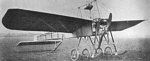
The Long Monoplane was designed by J. B. D. Long and was built by R.Beney Co during 1911. A tractor single-seater, it was powered by the four-cylinder 35 h.p. Lascelles semi-radial engine, and was tested at the Acton Aviation Grounds, UK.
The Long Monoplane was designed by J. B. D. Long and was built by R.Beney Co during 1911. A tractor single-seater, it was powered by the four-cylinder 35 h.p. Lascelles semi-radial engine, and was tested at the Acton Aviation Grounds, UK.

The “Lehrmeister” is a 1953 wooden training soaring glider that was in use for basic and advanced
training. Some parts were made from polyester.
Length : 26.083 ft / 7.95 m
Height : 6.89 ft / 2.1 m
Wingspan : 55.774 ft / 17.0 m
Aspect ratio : 15.2
Wing area : 204.516 sq.ft / 19.0 sq.m
Max take off weight : 1102.5 lb / 500.0 kg
Weight empty : 661.5 lb / 300.0 kg
Max. weight carried : 441.0 lb / 200.0 kg
Max. speed : 108 kts / 200 km/h
Landing speed : 31 kts / 58 km/h
Cruising speed : 39 kts / 72 km/h
Wing load : 5.33 lb/sq.ft / 26.0 kg/sq.m
Glide ratio : 28.0
Crew : 2
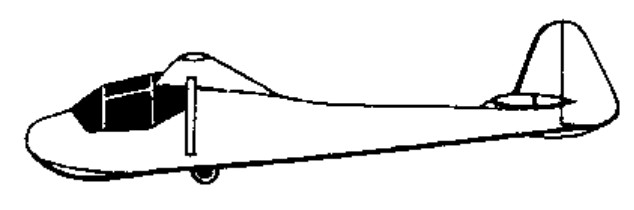

Soaring Plane, Germany, 1961
Length : 22.113 ft / 6.74 m
Wingspan : 49.213 ft / 15.0 m
Aspect ratio : 18.15
Wing area : 133.474 sq.ft / 12.4 sq.m
Max take off weight : 738.7 lb / 335.0 kg
Weight empty : 496.1 lb / 225.0 kg
Max. weight carried : 242.6 lb / 110.0 kg
Max. speed : 119 kts / 220 km/h
Landing speed : 38 kts / 70 km/h
Cruising speed : 51 kts / 95 km/h
Wing load : 5.54 lb/sq.ft / 27.0 kg/sq.m
Glide ratio : 38.0
Crew : 1
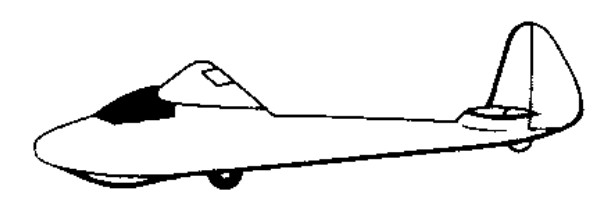
Soaring Plane, Germany, 1959
Length : 23.95 ft / 7.3 m
Wingspan : 49.213 ft / 15.0 m
Aspect ratio : 15.0
Wing area : 161.46 sq.ft / 15.0 sq.m
Max take off weight : 705.6 lb / 320.0 kg
Weight empty : 463.1 lb / 210.0 kg
Max. weight carried : 242.6 lb / 110.0 kg
Max. speed : 108 kts / 200 km/h
Landing speed : 31 kts / 58 km/h
Cruising speed : 40 kts / 74 km/h
Wing load : 4.31 lb/sq.ft / 21.0 kg/sq.m
Glide ratio : 26.0
Crew : 1
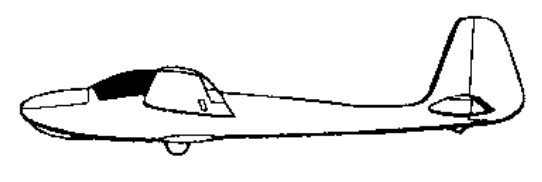
The 1958 “Libelle-Laminar” (Dragonfly) is a high performance glider that can be used for all kinds of
gliding and soaring including aerobatics. It is built of wood.
Length : 21.654 ft / 6.6 m
Height : 6.89 ft / 2.1 m
Wingspan : 54.134 ft / 16.5 m
Aspect ratio : 18.35
Wing area : 159.845 sq.ft / 14.85 sq.m
Max take off weight : 837.9 lb / 380.0 kg
Weight empty : 595.4 lb / 270.0 kg
Max. weight carried : 242.6 lb / 110.0 kg
Max. speed : 119 kts / 220 km/h
Landing speed : 30 kts / 55 km/h
Cruising speed : 48 kts / 88 km/h
Wing load : 5.33 lb/sq.ft / 26.0 kg/sq.m
Glide ratio : 36.0
Crew : 1
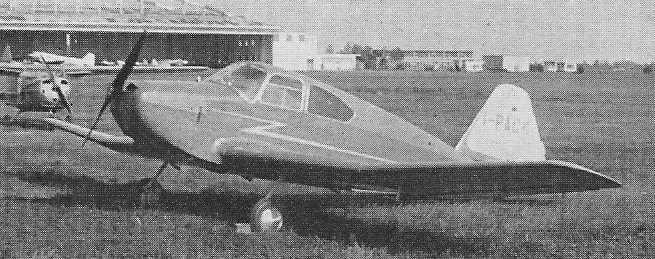
Derived from the L.M.5 Aviastar and designed by Pieraldo Mortara, the L.M.7 is a three-seat cabin monoplane of all-wood construction, the prototype was produced in 1949.
The L.M.7 was powered by a 60 hp C.N.A. D.4 engine and its cabin accommodated two side-by-side in front and a single seat behind.
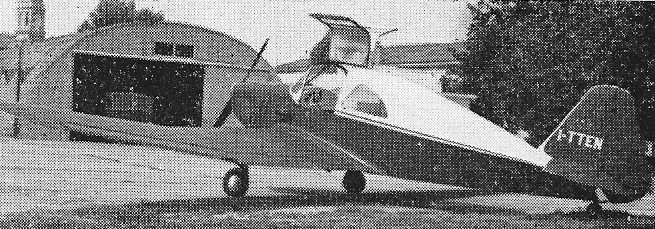
No production was undertaken as Lombardi & C. abandoned aircraft manufacture shortly after completion of the prototype.
Engine: 60 hp C.N.A. D.4
Wingspan: 38 ft 6 in
Wing area: 156.3 sq.ft
Length: 20 ft 10 in
Height: 6 ft 3 in
Empty weight: 770 lb
Loaded weight: 1386 lb
Max speed: 117 mph
Cruise: 103 mph
Climb to 3280 ft: 8 min 21 sec
Service ceiling: 12,530 ft
Range: 530 mi
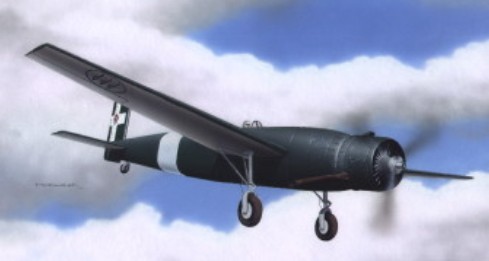
With Italy’s entry into World War II, the forces were facing the fleet of British Royal Navy. To meet the operational threat, the ARP (Aircraft Radio Piloted) program was conceived, proposed by engineer and official of the RA, Ferdinando Raffaelli.
The project consisted in the adaptation of older three-engine Savoia-Marchetti SM79 bombers, equipping them with radio remote control which, abandoned by the crew with parachutes, was remotely piloted from a second aircraft following him, designated plane “P” (Pilot).
The ARP was used experimentally on 12 August 1942 , during the battle of mid-August , however during the flight a transmitter system failure occurred at P causing the loss of control of the bomber who, exhausted the fuel , crashed into the mountains of’ Algeria .
Despite the failure, the weapon system continued to enjoy the confidence of the military leaders who advised the development, with the request to abandon the use of large aircraft in favor of an aircraft specially designed for this purpose. Given the certainty of the loss of the equipment during the action, the specifications included using simple construction materials as possible strategic choice would limit the costs of implementation.
Lombard Aviation was contacted and in November 1942 was entered into a contract for the supply of a prototype and five copies amounting to £ 4,200,000. The project was designed and developed by engineers Ermenegildo Preti and Stelio Frati . In accordance with the specifications, the aircraft was simplicity, a single-engine monoplane wing, mainly wooden except in some details, the surfaces of the wings , the landing gear. The engine was based a Fiat A. 80 RC.41 radial from 1 000 hp (735 kW), surplus coming from the twin-engine Fiat BR20 .
The prototype , serial MM.75576 characterized by double-cockpit, and fixed landing gear, was flown for the first time on 13 June 1943 by test pilot Valzania from Venegono airfield. Subsequent tests confirmed the overall performance which proved better than anticipated. After the prototype was transferred to flight are the Upper Management Studies and Experiences of Guidonia for continued flight tests, the supply order was confirmed and then started mass production.
The pre-series aircraft, which was assigned the MM.75577, was completed in August 1943. The military authorities in Germany suspended the program and subsequently cancelled it. The five examples are all destroyed.
At the end of the conflict among documents confiscated by the Allies of World War II and returned to the Italian Government, was found a plan that reported a composition between an AR and a fighter Macchi MC202 similar to the configuration of the type Mistel developed by the Luftwaffe .
The aircraft was characterized by a structure made entirely of wood, with a fuselage cross-section oval sloping to tail, made a series of frames and panels covered with current heavy plywood , with a simple, basic cockpit, closed by a dome accessible through a trap door on the bottom and allowed the pilot to escape.
The integrated structure of the tank of fuel on the capacity of 700 L and the load compartment, respectively, positioned behind and below the passenger compartment near the center of gravity, the latter incorporating the two side by side attachment points for bombs to be dropped from 1000 kg.
The two spar monoplane wing tapering at the ends and with marked dihedral, ailerons, and no flaps.
The undercarriage was fixed, releasable by the pilot after take-off, that could be recovered and reused.
The power was provided by a 1000 hp (735 kW) Fiat A.80 RC.41, radial 18-cylinder twin row air-cooled with gearbox to cruise at 4100 m. The engine was enclosed in an NACA cowling, with a three-blade propeller.
The only offensive weapons were 1000 kg each.
Aeronautica Lombarda AR
Length: 14.10 m
Wingspan: 8.20 m
Height: 3.22 m
Fuel Capacity: 700 lt
Engine: 1 x Fiat A.80 RC.41, 1 000 hp (735 kW )
Armament: 2 x 1 000 kg Bombs
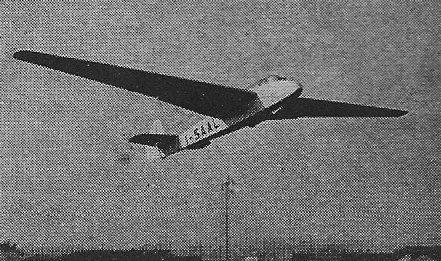
1938 designed by Silva
The BS-28 Alcione, single-seat four ailerons (conv. + spoilers)
A 1933 19m parasol-wing aerobatic glider, 1 built
A 1933 9m span experimental glider, Burnelli-style wing with endplates
The BS-09 Bertina II was a 1933 9.28 m span single-seat experimental glider
 All Aero