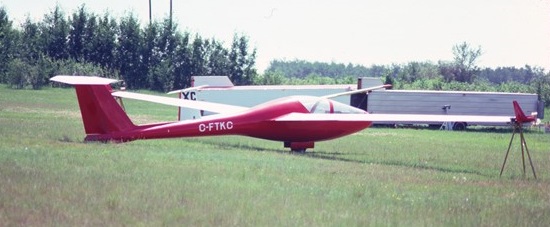
Marsden Gemini

Chipman Glider Field, the Edmonton Soaring Club, Dr. Dave Marsden’s home club, 1982
(courtesy Bruce Friesen)

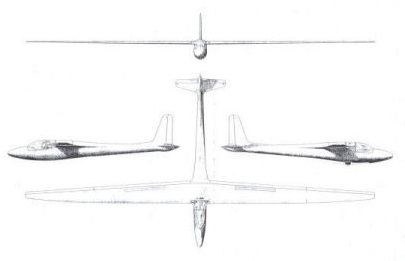
Designed by David Marsden and built by Marsden, E. Dumas and M.D. Jones, the side-by-side two-place Gemini, which flew in 1973, has a genuine variable geometry planform. Marsden, who successfully modified the British Operation Sigma Type C variable geometry glider, used a number of the Sigma features in his design. It has full span 35 % chord Fowler flaps which are extended when climbing and retracted when cruising. When extended, a high maximum coefficient of lift of 2.2 is achieved, giving a good climb performance. The flaps also deflects to 80 degree for approach control. It has slotted ailerons for improved roll control.
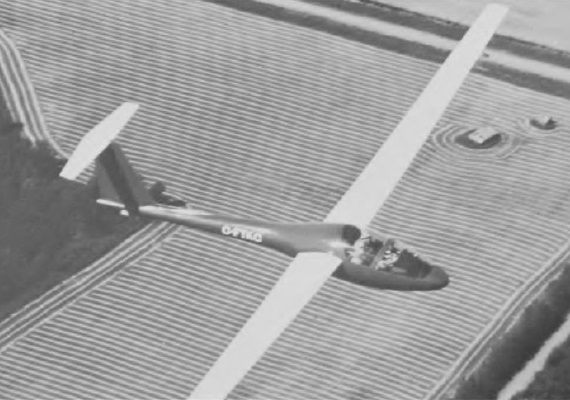
First flying in October 1973, during the 1970’s the Gemini set seven Canadian multi-place records, including the 500 km speed triangle.

The Gemini is all metal except for GFRP forward fuselage; stainless steel ribs, fittings and control system.
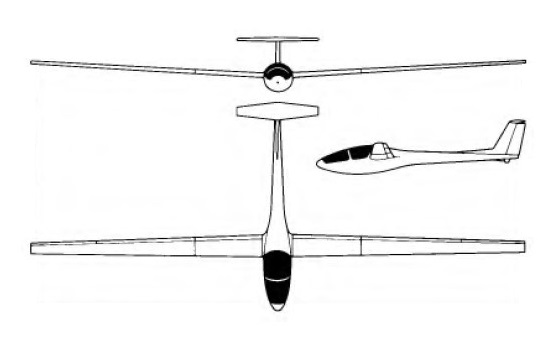
Wing span: 18.5 m / 60.75 ft
Wing area: 11.52 sq.m / 124 sq.ft
Length: 7.77 m / 25 ft 6 in
Height: 1.52 m / 5 ft 0 in
Empty Weight: 356 kg / 785 lb
Payload: 220 kg / 455 lb
Gross Weight: 576 kg / 1240 lb
Wing Load: 50 kg/sq.m / 10 lb/sq.ft
Water Ballast: 0
Stalling speed: 35 kt / 65 km/h
L/D Max: 40 at 119 kph / 64 kt / 74 mph
Best glide ratio: 38 at 60 kt / 110 km/h
Min Sink: 0.63 m/s / 2.08 fps / 1.23 kt
Min sinking: 0.75 m/sec / 2.46 ft/sec at 43 kt / 80 km/h
Aspect ratio: 29.8
Airfoil: Wortmann FX-61-163/35SF mod.
Seats: 2
No. Built: 1
Markwalder Marabu

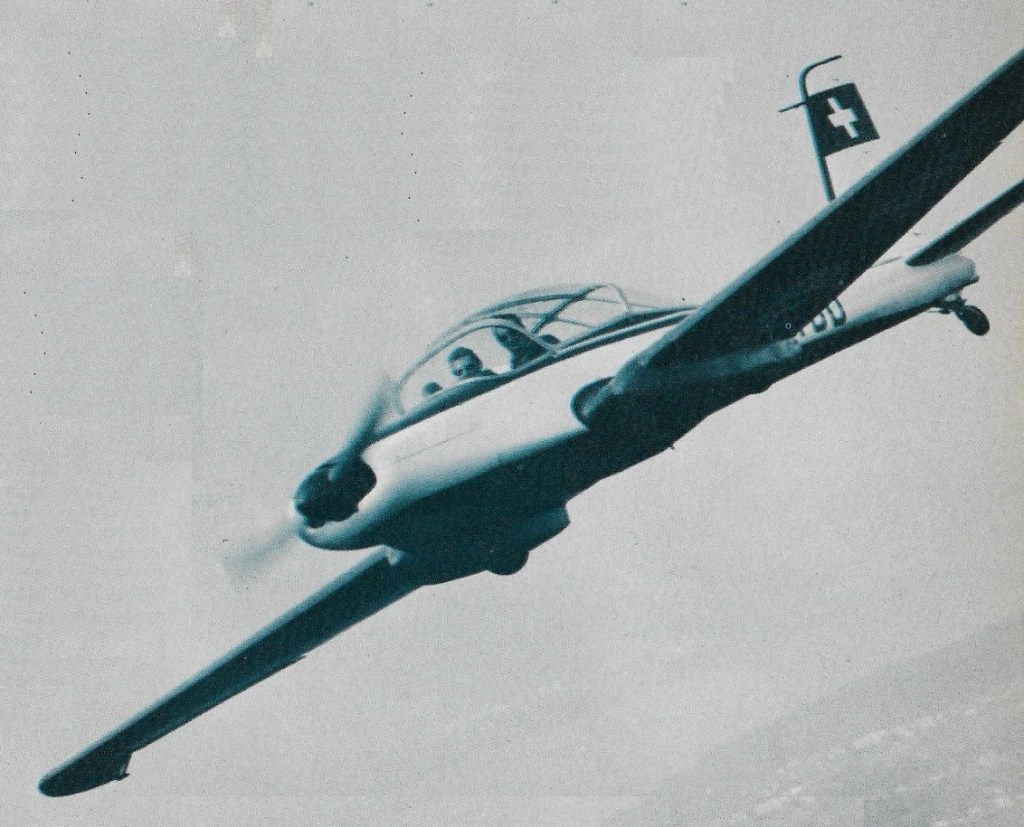
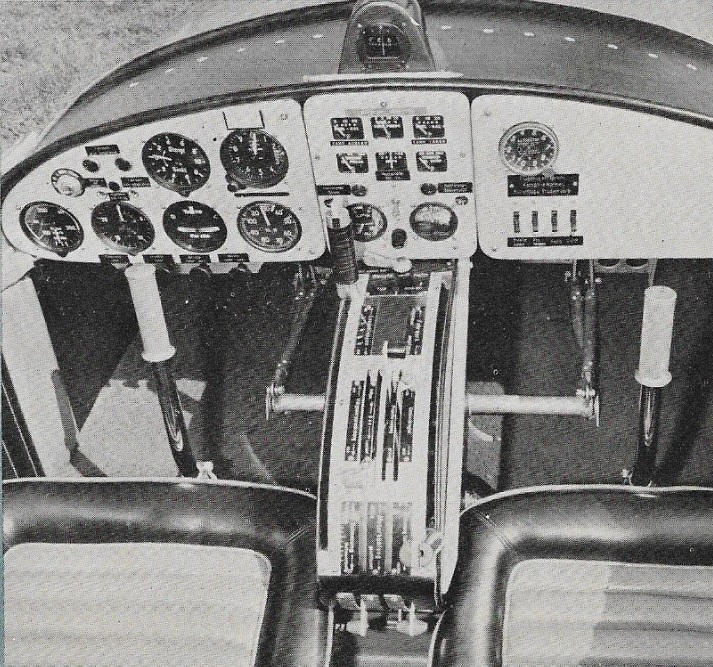
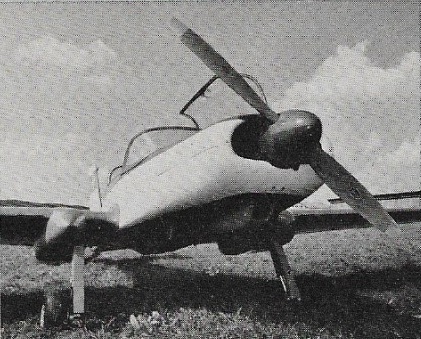
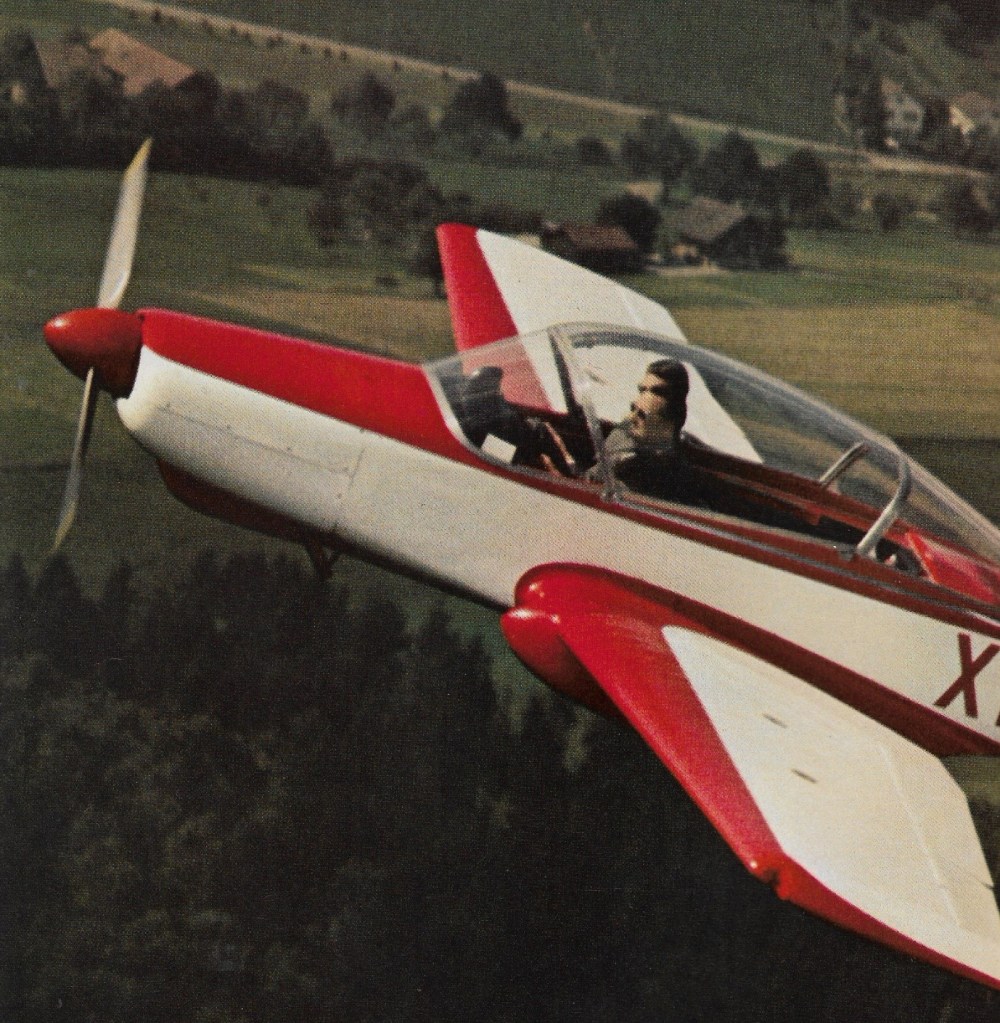
Designed by Ing. Albert Markwalder and built by Enst Bärfuss circa 1968, the Markwalder Marabu is an all-wood three seater featuring plywood skin over the entire structure. The cantilever wing houses four aluminium/polyester fuel tanks. Wing root fillets and wingtips are of moulded fibreglass the vortex-control tips modelled after those on the Cessna 210. Airfoil at the wing root is an NACA 23012, tapering to NACA 23006 at the tips. Flaps lower to 60 degrees.

The retractable landing gear is manually operated, swings aft into ‘blisters’ under the wings, leaving the tires partially exposed to reduce damage in the event of a gear up landing.

Plans were not offered for sale.

Engine: Lycoming O-320, 150 hp
Prop: Hartzell VP 74 in
Max level speed: 171 mph
Cuise: 152 mph
ROC: 985 fpm
Empty weight: 1430 lb
MAUW: 2200 lb
Wingspan: 31 ft 10 in
Length: 24 ft 3 in
Height: 6 ft 7 in
Fuel capacity: 150 lt / 39.6 USG
Wing area: 150 sq.ft

Markwalder Elfe PM-3

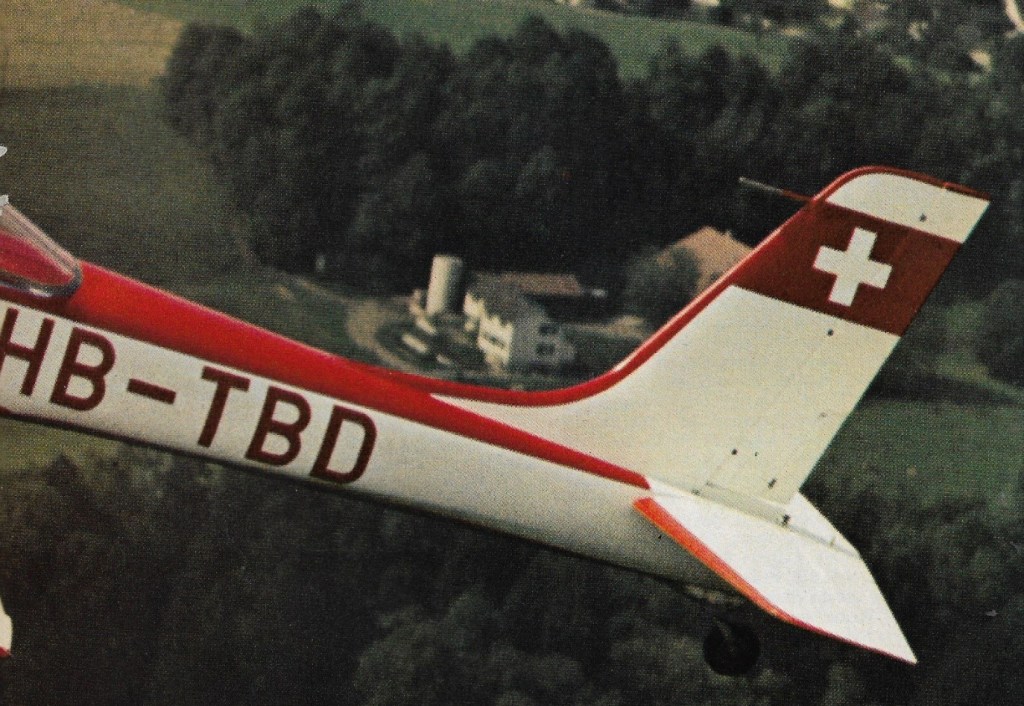
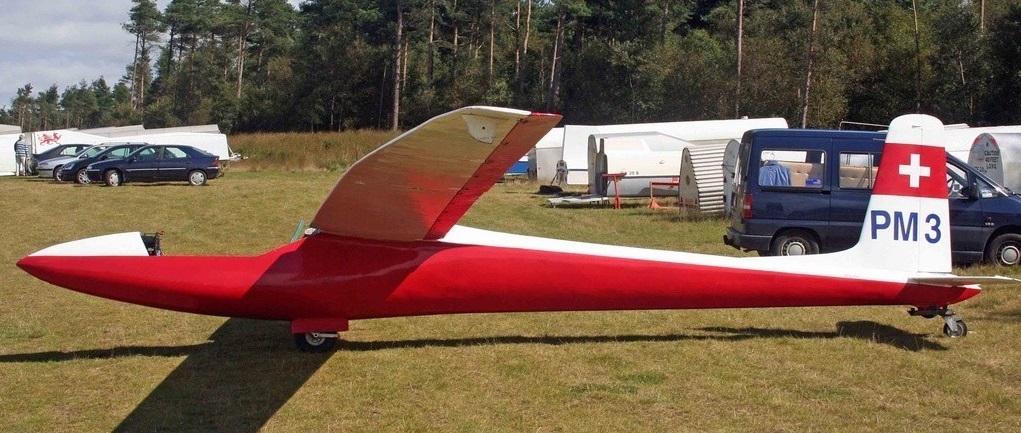
The Elfe series started from a 9 m sailplane designed by W.Pfenninger before World War II. A new design was introduced by him in 1947 to become the Elfe 2, probably the first sailplane with a laminar flow airfoil. Subsequently the series was further developed by Markwalder in 1951 to become the Elfe PM-3 (brought to the US in the sixties).

Markwalder had completed the drawings after Ruedi Sägesser had problems with the construction. Pfenninger came up with the idea of the construction.

Marichal Estudiantil

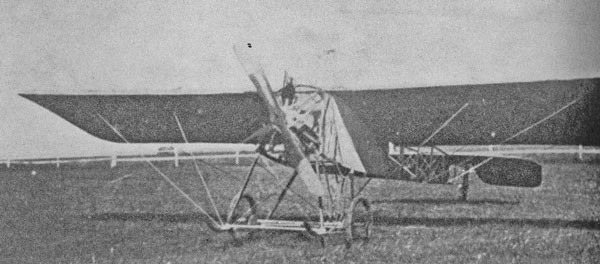
A monoplane built in Argentina by the Chilean Edmundo Marichal, and fitted with an Anzani Y 35hp engine. Marichal had produced some modified Bleriots before constructing the “Estudiantil” in the spring of 1913. It was used by the school of military aviation and had the distinction of being involved in the first aerial collision in Argentina in late November 1913, in which it was destroyed.