McDonnell F2H Banshee

F2H-3

The McDonnell F2H Banshee began life even before the end of World War II when the US Navy requested an improved version of the FH-1 Phantom. Designed by a team headed by Herman D. Barkley, bearing a resemblance to the earlier type, the Banshee was of increased size, incorporating folding wings, and with a lengthened fuselage to house more fuel, and with similarly-mounted and more powerful Westinghouse turbojet engines. Conventional ailerons, elevators and rudder were fitted, and split trailing-edge flaps. Small air-brakes were in the top surface of the outer wings. A tricycle undercarriage, with a single wheel on each unit, has the mains retract outward into the wings, and the nose wheel retracts rearward. Fuel was in five tanks in the fuselage.

McDonnell F2H Banshee Article

Three prototypes being ordered on 22 March 1945, as XF2D-1s, these later gaining the name Banshee. First flying in prototype form from St Louis, Missouri, on 11 January 1947, by then redesignated XF2H-1.

Initial trials were successfully accomplished, McDonnell being rewarded in May 1947 by a contract for 56 production F2H-l fighters, which began to enter service with VF-171 of the Atlantic Fleet during March 1949.
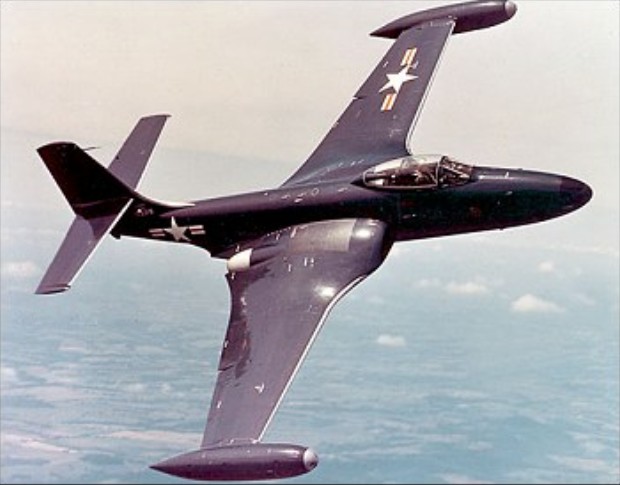
Like the later Phantom II, the Banshee proved to be a versatile machine, satisfactorily undertaking day and night fighter tasks, all-weather interception, close air support and photographic reconnaissance.

Following on from the original F2H-1 came the F2H-2, which had slightly more powerful engines and a longer fuselage. Production of the basic F2H-2 totalled 364, some of which were later modified to F2H-2B standard for close support tasks.

F2H-2 Banshee

14 examples of the F2H-2N specialized night-fighter derivative were also completed, these incorporating airborne interception radar in a slightly longer nose.

For reconnaissance, 89 F2H-2P aircraft were completed as new, these being unarmed and featuring six cameras in an elongated nose section.

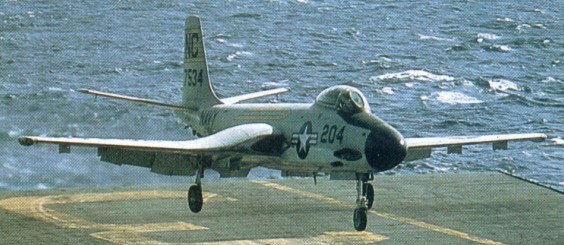
Production then switched to the F2H-3 (in 1962 redesignated F-2C), which was optimized for all-weather fighter duties, the first of 250 entering service during April 1952 and being easily recognizable by virtue of a fusel¬age- rather than fin-mounted tailplane, and was 8 ft longer than the -2, with more than double the internal fuel capacity and APQ-41 radar in the nose (250 built).

During the summer of 1949 the first US pilot to ever use an ejection seat escaped his F2H-1 Banshee while speeding over coastal South Carolina at 500 kts.

From November 1955, 39 ex-US Navy F2H-3s were transferred to the Royal Canadian Navy. That service’s first operational jet fighters, they were operated from HMCS Bonaventure until 12 September 1962, when the last examples were retired from service. They proved to be the last carrier-based fighters in Canadian service. Plans to acquire the F2H-3P for reconnaissance were abandoned.

The final production model was the F2H-4 (F-2D), which introduced improved APG-41 radar and more powerful engines, the 150th and last bringing production of the ‘Banjo’ to a close in August 1953.

The F2H was finally phased out of front line US Navy use on 30 September 1959, but remained with reserve units until the mid-‘sixties.

Contracts were to call eventually for a total of 892 production aircraft.

Gallery

XF2D-1 / XF2H-1
Engines: 2 x Westinghouse J34 turbojets
Number produced: 3

F2H-1 Banshee
Engines: 2 x Westinghouse J34-WE-22 turbojets, 3000 lbs.st.
Length 40 ft 2 in
Armament: 4 x 20 mm cannon.
Number produced: 56

F2H-2 Banshee
Engines: 2 x Westinghouse J34-WE-34 turbojets, 3250 lbs.st.
Length 40 ft 2 in
Armament: 4 x 20 mm cannon.
Number produced: 364

F2H-2B Banshee
Engines: 2 x Westinghouse J34-WE-22 turbojets, 3000 lbs.st.
Length 40 ft 2 in
Armament: 4 x 20 mm cannon, 2 x 500 lb bomb.

F2H-2N
Length 40 ft 2 in
Number produced: 14

F2H-2P Banshee
Armament: none
Number produced: 89

F2H-3 / F-2C
Engines: two 14.45kN (3,250-lb) thrust Westinghouse J34-WE-34 turbojets
Maximum speed 933 km/h (580 mph) at sea level
Service ceiling 14874 m (48,800 ft)
Max range 2374 km(1,475 miles)
Maximum speed 35,000 ft / 10,668 m: 532 mph / 856 kph
Empty weight 55056 kg (11,461 lb)
Maximum take-off 7802 kg (17,200 lb)
Wingspan 12.73 m (41 ft 9 in)
Length 14.68 m (48 ft 2 in)
Height 4.42 m (l4 ft 6 in)
Wing area 27.31 sq.m (294 sq.ft)
Armament: four 20-mm cannon, plus (Canadian aircraft only) two AIM-9 Sidewinder air-to-air missiles.
Crew: 1
Number produced: 250

F2H-4 / F-2D
Engines: 2 x Westinghouse J34-WE-38 turbojets, 3600 lbs.st.
Wingspan: 44 ft. 11 in
Length: 47 ft. 6 in
Loaded weight: approx. 19,000 lb
Max speed: 610 m.p.h
Ceiling: 56,000 ft
Typical range: 2,000 miles at over 500 mph
Armament: 4 x 20 mm. cannon
Crew: 1

McDonnell F2H-4 Banshee

McCormick – Romme Umbrella Plane

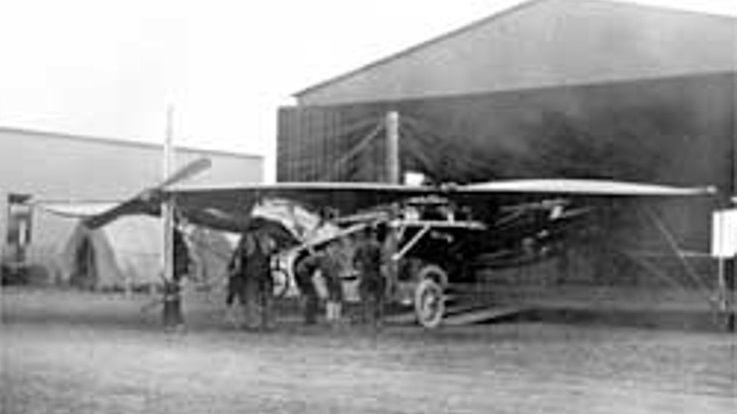
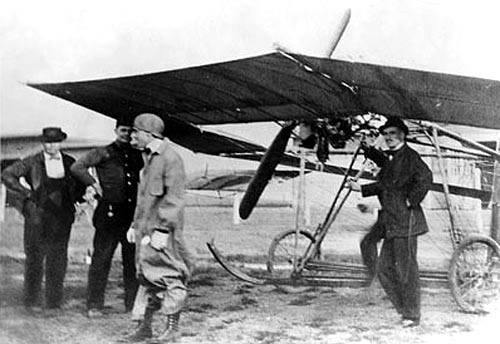
Harold F. McCormick, of the harvesting machine manufacturing business, and millionaire, John D. Rockfeller, Jr. decided, about September 1910, to support the aircraft design ideas of, a New York inventor, William S. Romme. In 1910 Romme had won a design contests first prize, for length of flight, stability and originality, with an unusual circular-shaped model monoplane. It was this model that Romme hoped to develop into a full-scale airplane and override the Wright patents on the airplane. McCormick and Rockfeller formed a corporation to exploit the Romme designs.

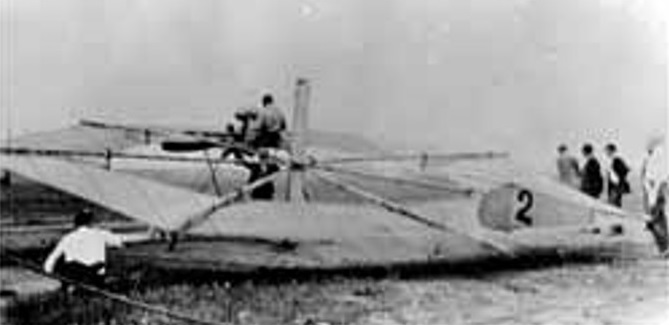
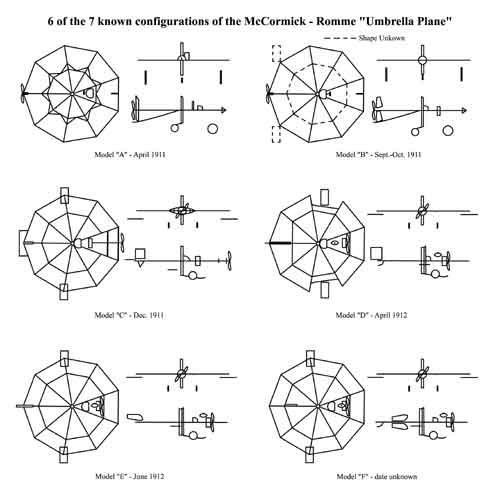
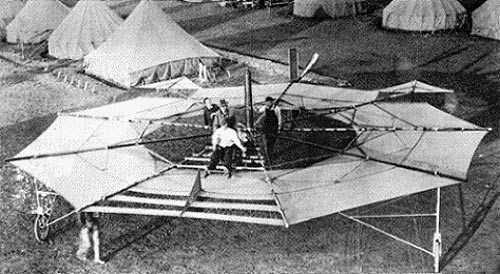
Because of shortcomings of the Wright machine, and the patents controlled by the Wright Brothers forced other designers to use radically different designs. One of these pioneer machines was the McCormick – Romme Cycloplane of 1911 with its spoked-wheel platform, stalky undercarriage, unprotected pilot at the center, and the propeller driven by long shaft from the centrally mounted engine. Like most early airplanes of these times, constant changes were made to correct problems. At least seven different configurations of the Cycloplane are known.

With McCormick’s financial backing work continued at Mineola, Long Island. The first monoplane was wrecked by wind in November 1910. Plans were immediately made to rebuild the plane in the south. In April 1911 a monoplane built in Belmont, New York and given some preliminary testing was now in San Antonio, Texas. While running the plane over the ground, it struck a rut, was turned over by the wind and badly damaged. Romme escaped without injury. Besides the McCormick – Romme contingent other civilians using the San Antonio flying area near Fort Sam Houston were the Max Lillie flying school from Chicago. Lillie’s mechanic and the McCormick – Romme group with the help of some soldiers, set the plane on a two-wheeled cart and returned it to its hangar. After this fiasco, little further progress seems to have been made, probably because of the wait for the Gnome engine. Meanwhile the Aero Club of Illinois completed a new 180-acre flying field at Cicero, just west of Chicago. The completion of this field and its facilities were all that was necessary for McCormick to move his experimental work to Chicago. It was here that the McCormick – Romme machine was referred to as the “Umbrella Airplane” in the Aero Magazine. While the monoplane had been reported as McCormick’s design, he recognized the need for skilled engineers and mechanics to convert his and Romme’s ideas into a practical airplane. He hired a young graduate of the Armour Institute, Sidney V. James. While he participated to some degree in all of the McCormick projects, he concentrated on the Mustard Plaster airplane concept, and specialized in propeller design and wrote extensively on the subject.

At the same time McCormick hired another engineer, fresh from the University of Pennsylvania, Chance Milton Vought. He guided the development of the Umbrella Plane through most of its entire career.

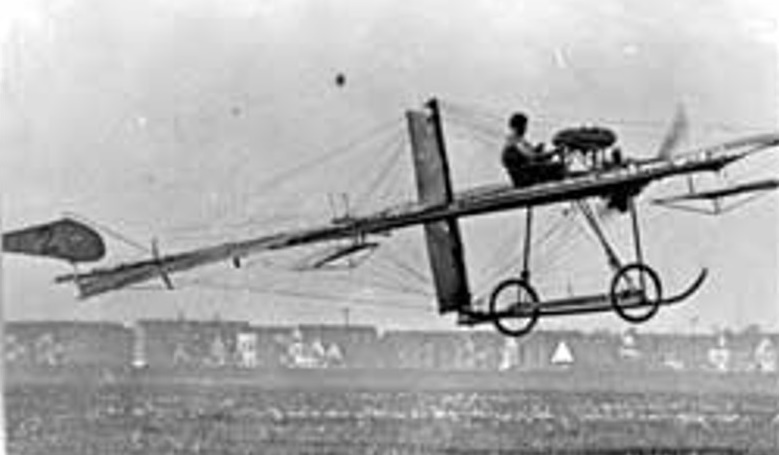
When the Cicero Flying field was officially opened on July 4, 1911, besides the McCormick monoplane (The Mustard Plaster) and the McCormick – Romme Umbrella Plane, eleven other airplanes were located here. By July 15, 1911, the two McCormick airplanes had their 50H.P. Gnome engines installed. On August 23,1911, Romme made the first successful flight in the Umbrella Plane, reaching a height of 15 feet. Between the Texas accident and the July flight the Umbrella Plane was rebuilt. While the appearance was not significantly changed the modifications were very important, control wise. Movable control surfaces were installed on each side at the rear of the circular wing, rudders with greater cord replaced the two tall narrow rudders, and the triangular center projections on the wing were removed. The pilot now sat with his back against the center post and his feet straddling the cylindrical cowling surrounding the Gnome engine.

Experimentation continued until the fall of 1911, sometimes successfully. Problems continued with the Umbrella Plane. Exactly what Chance Vought’s contribution was, is hard to define but he was the principal engineering talent behind the work, with help from several skilled mechanics in McCormick’s organization.
In early 1912, the propeller was attached directly to the Gnome engine eliminating the long drive shaft, ribs were installed in some of the wing surfaces,ailerons were moved forward, the rudder was moved further aft, and the separate elevator was eliminated and replaced by warping the wing trailing edge. In April 1912, Andre Ruez, McCormick’s test pilot allowed the Gnome engine to reach full power and as the speed increased, lifted the plane off the ground in a short hop strait ahead. During the next few days Ruel climbed higher and made longer flights until he reached a height of 30 feet after scores of flights. Several minor changes were made and flights continued in 1912. The last change moved the rudder forward to a position behind the center post with an inverted duplicate on the same shaft below the plane. In March 1913, Max Lillie made several circuits of the Cicero field, in the Umbrella Plane, which attracted an immense interest of the spectators.

What eventually happened to the plane is unknown, but it was discarded in 1913. Vought, in an early 1913-newspaper interview, stated the umbrella plane was a “freak”, left the McCormick company and joined the Lillie organization.

McLeod Terrafly

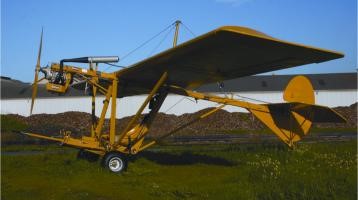
Designed to capture the spirit of the Santos Dumont Demoiselle, in developing this aircraft over 19 years, designer Kevin McLeod set out to produce a simple, rugged ‘back to basics’ machine that he hoped would be fun to fly.

The Terrafly is an original design ultralight aircraft built under the provisions of Australian ANO 95-10. Work started on the project in 1984.

The Terrafly is a single engine, high-wing, tail-dragging monoplane with conventional three axis controls. As with the Demoiselle, the pilot sits under the wing with the propeller wash in his face. The open cockpit has an airspeed indicator, altimeter, a dual CHT/EGT gauge, compass, clock, a G-meter, a Hobbs Hour Meter and fuel sight gauge.

The only example of the Terrafly built, registered 10-0571, was not test-flown and so information on its performance has never been established. The aircraft was donated to the South Australia Aviation Museum in October 2006 by the owner/designer.

Engine: Rotax 377 35 hp
Cruising Speed: 55 kt (100 kph) estimated
Maximum take-off weight: 225 kg
Length: 5.54 m
Wingspan: 7.62 m
Height: 2.6 m
Capacity: 1 pilot

Mayocraft P26 Peashooter

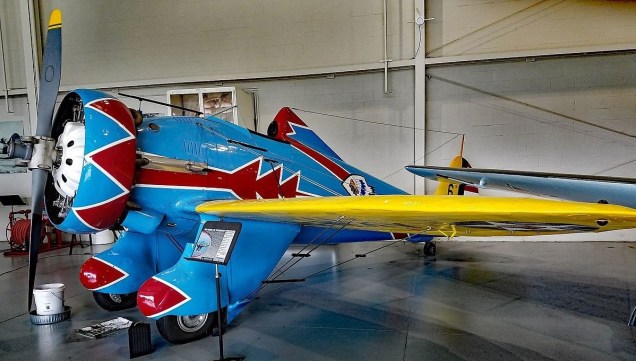
Mayocraft Inc completed construction and flight-testing of its P-26D, a near-100 percent scale tribute to the Boeing P-26 aircraft. Although not an exact replica, the aircraft is generally patterned after the famed Boeing P-26 “Peashooter”.

Mayocraft tried to be faithful not only to the overall appearance of the P-26, but also to most of the fabrication methods at the time of its manufacture. The aircraft’s all-metal skin has been hand formed and shaped in many complex compound curves by Mayo in his shop, which is in essence a small aircraft factory with tools, technology and expertise straight out of the mid-1930’s. The craft has over 29,000 3 AD rivets, inserted, driven and made flush with the skin. The craft has other parts, most of which had to be machined and fabricated from raw metal or cleverly adapted from existing aircraft parts.

Nathan Mayo devised fabrication methods like pressing into hard rubber and pull-forming sheet metal, whose results mimic those from the much larger production machines that would have been found in a 1930s-era aircraft factory.

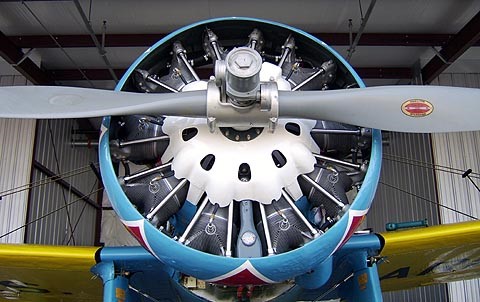
For safety and performance’s sake selected improvements were made. Alclad 2024-T3 aluminum was used throughout instead of the Dural of the 1930’s because the modern alloy is 20 percent stronger. The main landing gear wheels and brakes are adapted from a Cessna T-50. The engine exhaust is made from a stainless steel alloy specially formulated for aerospace applications. For a few non-structural elements, in place of metal they formed fiberglass. The engine and propeller are the same as employed in the T-6.

Mayo adapted a different airfoil shape to the wing that should make the bird a little easier to fly and land than the original. Mayo calculated that, because of these improvements and the fact that the Peashooter does not have the armament that was originally needed in the combat airplane, “it has a performance about 10 percent better than the original.”

The shock struts are Bendix from a Cessna UC-78 and brakes are Cleveland, 4 disk, hydraulic with an AT-6 master cylinder.

The main tires are 7.50 x 10, tail tire – 12.5 – P51 channel tread, and the tail wheel has detent & positive lock.

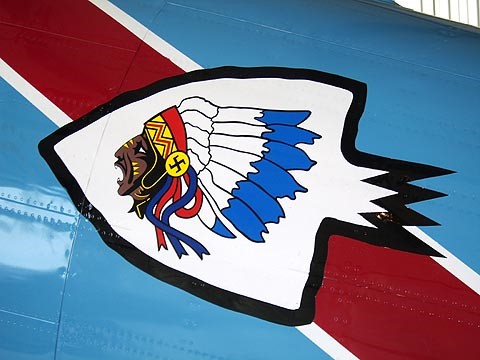
The paint scheme design was from the 1st. Pursuit Group, 94th. Squadron, Selfried Field, Michigan, circa 1935-1936, done with DuPont Imron paint.

Registered NX26PX, taxi testing commenced in September, 2006. Flight testing was completed in 2009.

The Mayocraft P-26D is now on display at the Military Aviation Museum in Virginia Beach, Virginia.

Mayocraft P26D Peashooter
Scale: Near 100 percent
Engine: Pratt & Whitney R-1340-AN1
Prop: Hamilton Standard 12D-40 with 6101-12 Blades
Airfoil: E-193 (UIUB)
Fuel capacities:
Main fuselage tank: 57 gal.
Each wing tank: 23 gal.
Oil capacity: 9 gal.
Anticipated Performance
Cruise speed: greater than 210 MPH
Max. initial rate of climb: more than 2500 fpm.
Max. speed (VNE): 315 MPH
Landing speed: 73 MPH with flaps

Mayer Mr. D

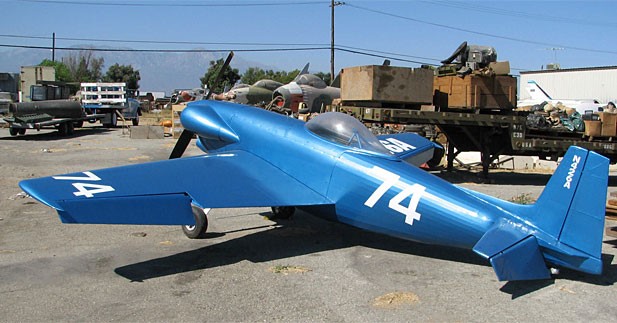
The Mr. D Midget Racer designed and built by Robert Mayer of Michigan, race number 74 was raced by pilot Hank Orlowski in 1951 at the Detroit Air Races. It qualified at a speed of 160 mph.

The aircraft was later raced at Wallingford, Ct., and took 4th place in the Formula One race. Following this, the airplane was retired.

Mr D’s short racing career spanned the years 1951- 1953.

This original Midget Racer was donated to the Planes of Fame Air Museum and was restored by Museum volunteers in 2004- 2005.

Engine: Continental C-85, 85 hp
Span: 19 ft. 0 in
Length: 14 ft. 9 in
Crew: 1

Max Schüler Aeroplan

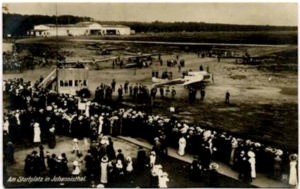
Max Schüler had built a monoplane in Chemnitz, Germany, and designed a motor. He began the construction of a double-decker here but failed. Max Schüler came to Johannisthal in 1909, set up an aircraft construction workshop.

After this failure, he wanted to try again with a monoplane, but had no more money. He sought support and found it with Wolfgang Harlan. This funded with a repayment date and agreed to surrender the aircraft in the event of non-regular repayment instead of money. Whatever happened Schiller’s workshop was the first in Johannisthal which had to give up because of lack of money.

In 1910 the ‘Aeroplan’ monoplane was built by chemist Max Schuler.