Late in 1942, work was well advanced at the MiG bureau on several aircraft in parallel and referred to as Series “A” prototypes, with which the OKB hoped to fulfil a VP (vysotny perekhvatchik, or high-altitude interceptor) requirement raised earlier in the year.
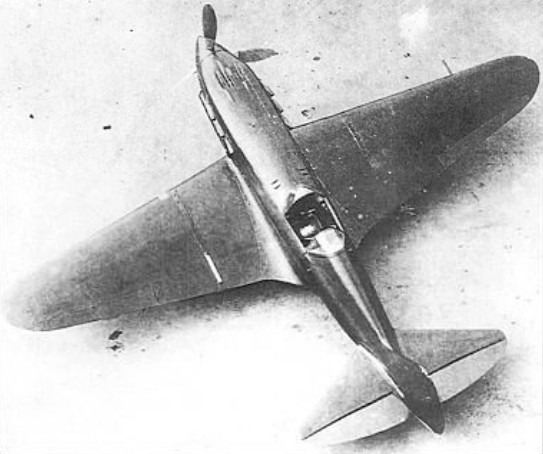
The second Series “A” high-altitude fighter and referred to as the 2A, the I-221 was the first of the OKB’s fighter prototypes to be fitted with turbo-superchargers. The I-221 was fitted with an AM-39A engine rated at 1700hp for take-off and equipped with a centrifugal compressor and paired TsIAM-developed TK-2B turbo-superchargers which, it was anticipated, would permit maximum power to be maintained to an altitude of 13000m. Although adhering closely in most other respects to the preceding I-220, the I-221 had a rear fuselage of dural construction rather than a wooden monocoque, and the outer wing panels were extended, increasing span by a total of 2.00m. Armament consisted of two synchronised 20mm cannon. The initial flight test took place on 2 December 1943, but the programme came to an abrupt end when, during one of the prototype’s early trials, a piston rod fractured, the engine seized and the aircraft crashed.
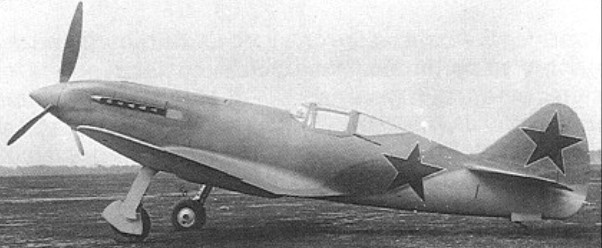
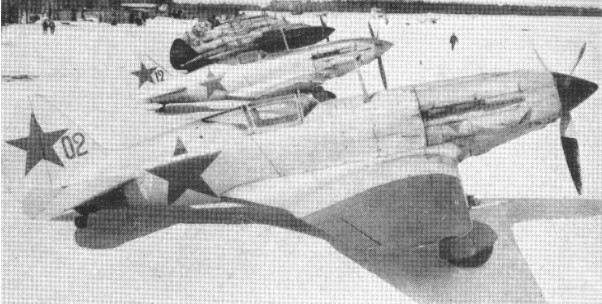
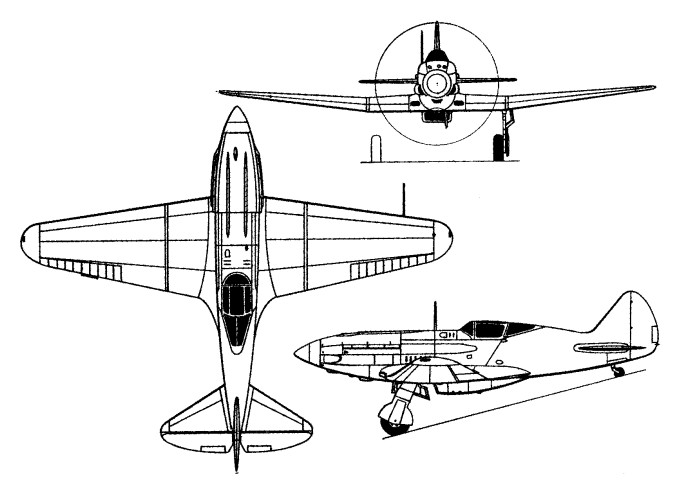
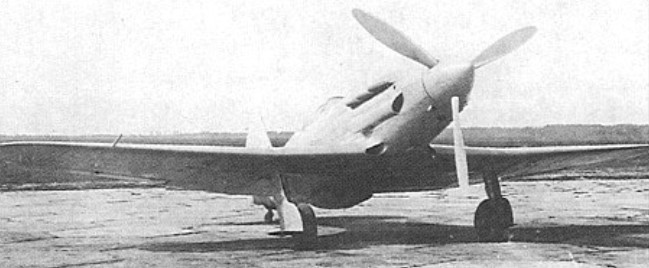
Late in 1942, work was well advanced at the MiG bureau on several aircraft in parallel and referred to as Series “A” prototypes, with which the OKB hoped to fulfil a VP (vysotny perekhvatchik, or high-altitude interceptor) requirement raised earlier in the year. The first of these, the I-220, owed little or nothing to earlier MiG fighters and was of mixed construction, the fuselage being of metal forward of the cockpit and a wooden monocoque aft, and the wings making use of steel main and auxiliary spars with spruce outer panel ribs.
The first prototype, which was rolled out of the factory in June 1943 and was first flown during the following month, was initially powered with a low-altitude Mikulin AM-38F engine of 1700hp. Armed with two synchronised 20mm ShVAK cannon, the AM-38F-powered I-220 achieved speeds of 572km/h at sea level and 630km/h at 7000m, practical ceiling being 9500m. The prototype was then re-engined with a medium-altitude AM-39 affording 1800hp for take-off and flown in January 1944, flight testing continuing until the following August. A second prototype also powered by the AM-39 flew in September 1944, but differed in armament, being the first Soviet fighter to carry four 20mm ShVAK cannon.
The second Series “A” high-altitude fighter and referred to as the 2A, or the I-221.
The programme came to an abrupt end when, during one of the prototype’s early trials, a piston rod fractured, the engine seized and the aircraft crashed.
Prototype 2 Engine: Mikulin AM-38 Max take-off weight: 3647 kg / 8040 lb Empty weight: 3101 kg / 6837 lb Wingspan: 11.00 m / 36 ft 1 in Length: 9.60 m / 31 ft 6 in Height: 3.16 m / 10 ft 4 in Wing area: 20.38 sq.m / 219.37 sq ft Max. speed: 697 km/h / 433 mph Ceiling: 11000 m / 36100 ft Range: 630 km / 391 miles
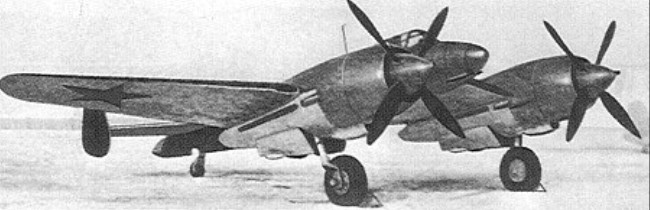
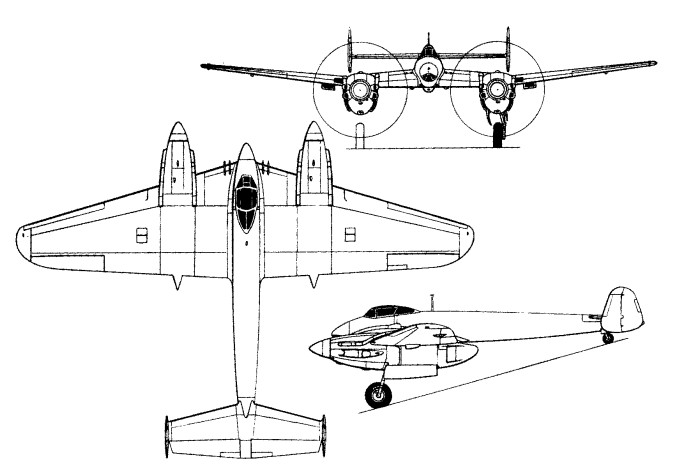
Assigned the Izdeliye (Product) designation T, the design of a DIS (Dalniy istrebitel soprovozhdenya), or long-range escort fighter, began in 1940, competing proposals being the Grushin Gr-1, Polikarpov TIS and Tairov Ta-3.
The MiG DIS-200 was designed initially for Charomskii M-30 or M-40 engines, but the non-availability of these led to installation of two 1400hp Mikulin AM-37 12-cylinder Vee-type engines in the first prototype. The first prototype had an armament of two 12.7mm BS and four 7.62mm ShKAS machine guns, plus one 23mm VYa cannon in a detachable ventral pod which could be replaced by a single 1000kg bomb or a torpedo.
Ground tests began on 15 May 1941, and the first flight took place before the end of the month. Series production of the DIS (as the MiG-5) was ordered, but cancelled shortly afterwards owing to lack of manufacturing capacity. Nonetheless, a second prototype, also referred to as the DIS-200, but assigned the Izdeliye designation IT, was flown in January 1942 with 1700hp Shvetsov M-82F 14-cylinder radials. This had an armament of four 7.62mm ShKAS and two 12.7mm BS machine guns and two 23mm VYa cannon, a maximum speed of 604km/h at 5000m, attaining that altitude within 6.3 min and having a range of 2500km. The primary VVS requirement at this stage of the conflict was short-range tactical aircraft, and further DIS development was discontinued.
First prototype Engines: two 1400hp Mikulin AM-37 12-cylinder Vee Max take-off weight: 8060 kg / 17769 lb Empty weight: 6140 kg / 13536 lb Wingspan: 15.10 m / 49 ft 6 in Length: 10.87 m / 35 ft 8 in Height: 3.40 m / 11 ft 2 in Wing area: 38.90 sq.m / 418.72 sq ft Max. speed: 610 km/h / 379 mph Range: 2280 km / 1417 miles Armament: two 12.7mm BS, four 7.62mm ShKAS machine guns Hardpoint: one 23mm VYa cannon ventral pod, or 1000kg bomb, or torpedo.
Second prototype Engines: 2 x 1700hp Shvetsov M-82F 14-cylinder radials Armament: 4 x 7.62mm ShKAS, two 12.7mm BS machine guns, 2 x 23mm VYa cannon Maximum speed: 604km/h at 5000m Time to 5000m: 6.3 min Range: 2500km
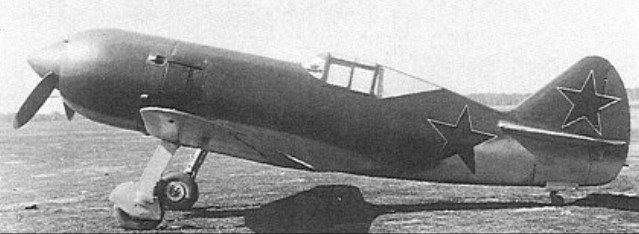
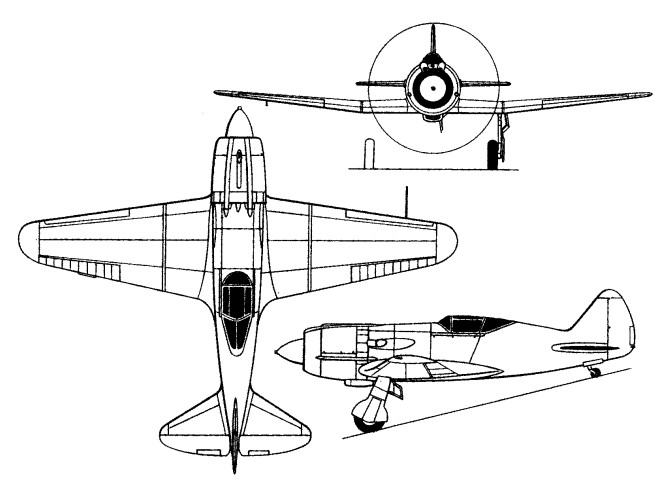
After completion by the TsAGI of full-scale wind tunnel testing of the I-210 / IKh, the OKB redesigned the junction between the engine cowling and the fuselage. It moved the pilot’s cockpit aft, enlarged the vertical tail surfaces, redesigned the engine cowling and repositioned the oil cooler intakes in the wing roots. The undercarriage was redesigned, power was provided by a Shvetsov M-82F radial engine of 1700hp and armament was restricted to a pair of wing-mounted 20mm ShVAK cannon. Only the outer wing panels of the MiG-3 remained and slots were applied to these.
This thorough-going redesign of the I-210 was referred to as the I-211, or Ye, a pre-series batch of 10 aircraft being laid down of which the first flew in August 1942. Factory testing was completed within one month, the results being highly successful, but no manufacturing capacity was available for production, and all aerodynamic data and information on the slots were passed to the Lavochkin OKB as a result of a ministerial request.
Engine: Shvetsov M-82F radial, 1700hp Max take-off weight: 3100 kg / 6834 lb Empty weight: 2528 kg / 5573 lb Wingspan: 10.20 m / 33 ft 6 in Length: 7.95 m / 26 ft 1 in Height: 3.63 m / 11 ft 11 in Wing area: 17.44 sq.m / 187.72 sq ft Max. speed: 670 km/h / 416 mph Range: 1140 km / 708 miles Armament: 2 x 20mm ShVAK cannon
Late in 1941, series production of the MiG-3 was being phased out. The AM-35A engine manufacture was being discontinued as priority having been assigned to the AM-38 for the IL-2 Shturmovik. An attempt was made to adapt the basic airframe to take the 1700hp Shvetsov M-82A 14-cylinder air-cooled radial.
Assigned the Izdeliye designation IKh by the OKB and the provisional official designation I-210, and also referred to unofficially as the MiG-3M-82, the first of five airframes adapted to take the new engine was flown in December 1941.
The M-82A weighed only 20kg more than the AM-35A that it supplanted, but was 38cm wider, a new forward fuselage being necessary to cater for the cross section translation from the circular cowling to the oval centre fuselage. The armament consisted of three 12.7mm guns.
Plans were prepared to initiate IKh production as the MiG-9, but flight test revealed a serious drag problem, severe tail vibration and poor control characteristics. Despite the disappointing results of factory testing, the first aircraft was fitted with yet two more 7.62mm guns and sent to the Kalinin Front. The TsAGI, meanwhile, conducted full-scale wind tunnel testing with one of the IKh aircraft, resulting in development of the I-211.
Engine: 1700hp Shvetsov M-82A 14-cylinder air-cooled radial Take-off weight: 3382 kg / 7456 lb Empty weight: 2720 kg / 5997 lb Wingspan: 10.20 m / 33 ft 6 in Length: 8.08 m / 26 ft 6 in Wing area: 17.44 sq.m / 187.72 sq ft Max. speed: 565 km/h / 351 mph Range: 1070 km / 665 miles
With the primary objective of improving the aerodynamics of the basic MiG-3 design, the OKB began work late in 1941 on an enhanced version of the fighter to which it gave the Izdeliye designation of D. Known officially as the I-230, and later as the MiG-3U – the suffix letter signifying uluchshenyi (improved) – the new fighter was first flown in August 1942.
Whereas the fuselage of the MiG-3 was primarily of steel tube with duralumin skinning, that of the I-230 was almost entirely of wood owing to the contemporary metal shortages. By comparison with the MiG-3, the fuselage was lengthened by 37cm, but the Mikulin AM-35A engine was retained and the wing of the first prototype was unchanged, armament consisting of two 20mm SP-20 (ShVAK) cannon mounted above the engine.
The second prototype differed in having a larger wing of 18.00sq.m area and spanning 11.00m. Performance proved good during factory and state trials, but it was not possible to reinstate production of the AM-35A and production of the I-230 was therefore restricted to a pre-series of five aircraft which were assigned to a Guards Regiment (1 GvIAP) on the Kalinin front for service evaluation.
Prototype 1 Engine: Mikulin AM-35A, 1200 hp Wingspan: 10.20 m / 33 ft 6 in Length: 8.62 m / 28 ft 3 in Wing area: 17.44 sq.m / 187.72 sq ft Max take-off weight: 3285 kg / 7242 lb Empty weight: 2612 kg / 5759 lb Max. speed: 660 km/h / 410 mph Range: 1350 km / 839 miles
Lacking the time for a redesign of the MiG-1 to eradicate the fighter’s less acceptable characteristics, a series of ‘fixes’ were applied to the basic design to result in the MiG-3. Power plant and (initially) armament remained unchanged, but some structural simplification and strengthening was introduced. The engine was moved forward 10cm and dihedral of the outer wing panels was increased by one degree. A 250 lt supplementary fuel tank was introduced beneath the pilot’s seat, the aft fuselage decking was cut down, and the radiator bath fairing was enlarged and extended forward. The supercharger intakes were revised; 9mm seat armour was provided, together with radio, and four wing hardpoints were introduced for a maximum external load of 220kg.
The first MiG-3 left the factory in December 1940, 11 being completed by the end of the month. 140 were produced in January 1941, and, by June, production had peaked at 25 aircraft every 24 hours. The first MiG-3 was delivered to a VVS regiment in April 1941, simultaneously with the MiG-1, and production continued until 23 December 1941 with approximately 3,120 built, but 50 more were completed from component stocks in the early summer of 1942.
Some MiG-3s had a supplementary pair of 12.7mm BK machine guns under the wings, raising take-off weight to 3510kg, and others were fitted with two 12.7mm UBK guns in the wings.
Tests were also performed with two fuselage-mounted 20mm ShVAK cannon.
Engine: Mikulin AM-35A, 1200 hp. Wingspan: 10.20 m / 33 ft 6 in Length: 8.25 m / 27 ft 1 in Height: 2.65 m / 8 ft 8 in Wing area: 17.44 sq.m / 187.72 sq ft Max take-off weight: 3350 kg / 7386 lb Empty weight: 2699 kg / 5950 lb Max. speed: 360 mph Range: 820 km / 510 miles Armament: 2 x 50 mg, 2 x .30 mg
The first design to achieve production status of an OKB (Experimental Construction Bureau) headed by Artem I Mikoyan and Mikhail Y Gurevich, the MiG-1 was conceived as a high-altitude interceptor under the OKB’s Izdeliye (Product) designation Kh.
Also assigned the initial military designation I-200, the first of three prototypes was flown on 5 April 1940, attaining 648.5km/h at 6900m on the following 24 May. Second and third prototypes flew on 9 May and 6 June 1940 respectively, factory and state testing being performed in parallel, with the factory testing completed on 25 August and the state testing on 12 September 1940.
The MiG-1 was powered by a 1350hp Mikulin AM-35A and carried an armament of one 12.7mm UBS and two 7.62mm ShKAS guns. Manoeuvrability and handling were considered inadequate, longitudinal stability and control responses were poor, and a programme of peripheral redesign paralleled manufacture of an initial batch of 100 aircraft, the last of which was completed in December 1940. The first eight MiG-1s had non-jettisonable side-hinged cockpit canopies, the remainder having jettisonable aft-sliding canopies.
The first MiG-1 was delivered to a VVS regiment in April 1941, by which time this fighter had been supplanted in production by the MiG-3.
MiG-1 Engine: 1350hp Mikulin AM-35A Max take-off weight: 3099 kg / 6832 lb Empty weight: 2602 kg / 5736 lb Wingspan: 10.20 m / 33 ft 6 in Length: 8.16 m / 26 ft 9 in Height: 2.62 m / 8 ft 7 in Wing area: 17.44 sq.m / 187.72 sq ft Max. speed: 628 km/h / 390 mph Range: 580 km / 360 miles
Starting in 1933, a series of projects began to be developed in the USSR under the common name of PSN, acronym for P laner S petsialnovo N aznachenya or Gliders for Special Missions. Among these projects was SF Valk’s idea of using a glider with a torpedo and an infrared or radio guidance system to attack surface ships and naval bases.
This idea had its development in a series of projects known as: LTDD – Letayushaya Torpeda Dalnevo Dieztvya (Long Range Flying Torpedo); DPT – Dalni Planerni Torpedo (Long Range Glider Torpedo); BMP – Bozduzhni Minni Planer (Airborne Mine Glider);
As a development of this conception, Mijelson would receive the task of building an experimental manned hydrofoil glider capable of carrying a torpedo and intended primarily to test remote flight control systems. This glider, called PT, was followed by a small series of copies that received the name PSN (Russian: Михельсон / Никитин ПСН).
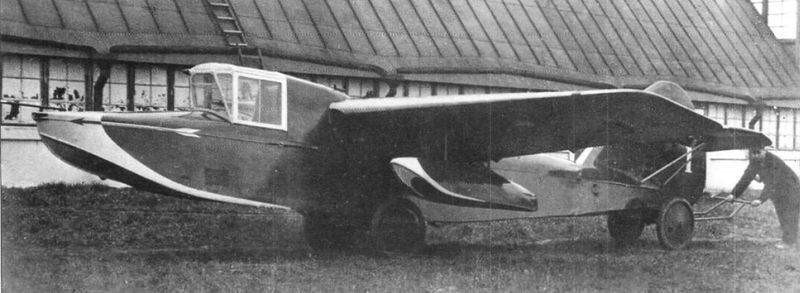
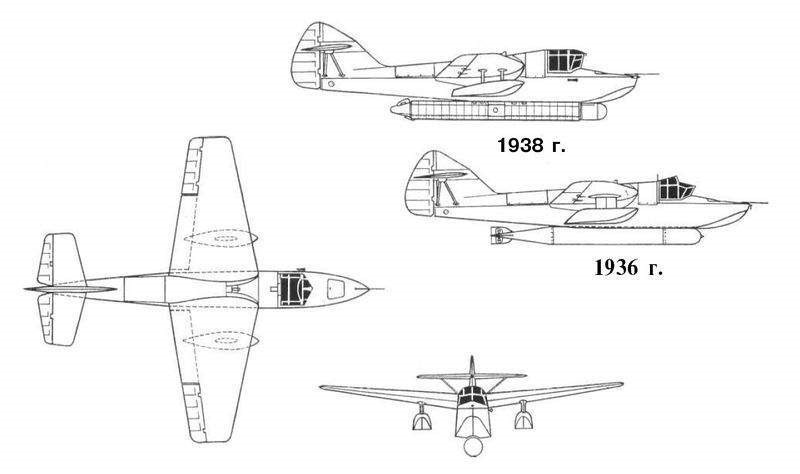
The PSN was designed as a small single-seater hydrofoil glider with stabilization floats located approximately halfway across the wingspan of each half plane. The entire construction was made of wood.
The wings presented high implantation with a trapezoidal shape in the plane. Louvered ailerons and flaps were included as control surfaces. The tail unit featured the outriggers braced by double struts high on the keel.
The pilot was located in a glass cockpit in front of the wing leading edge. At the bottom of the glider was fixed a torpedo.
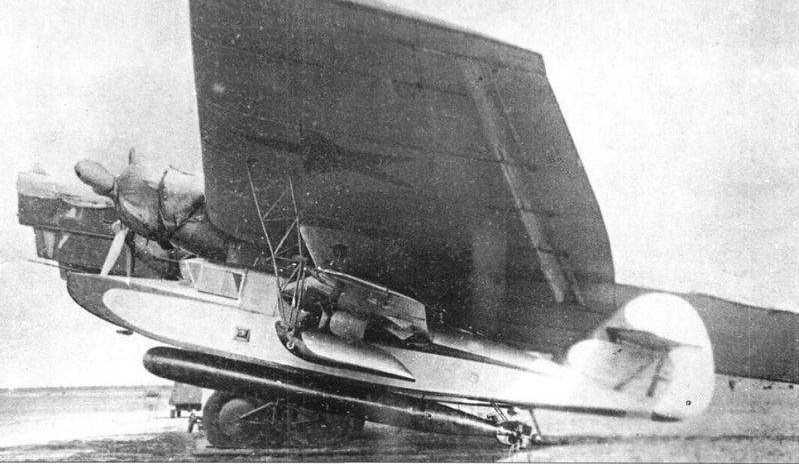
The PSN was carried by a Túpolev TB-3 or TB-7 mother bomber and was released at a pre-calculated height and distances between 30 and 50 km from the target. After launching its torpedo, the glider would land on the water.
A PSN hydrofoil glider with a torpedo under the wing of the Túpolev TB-3 mother plane.
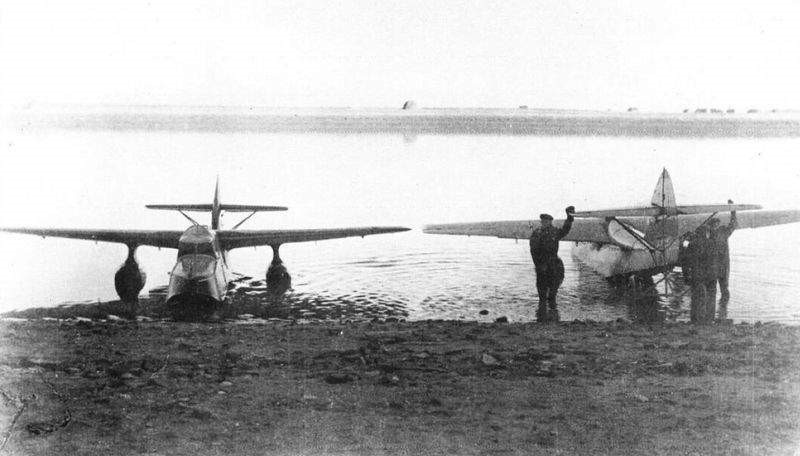
In 1934 the first PT copies and their equipment were built and tested. The first 4 units were built in 1935 at factory No. 23 in Leningrad. In this case, it was a piloted glider version designed to evaluate the infrared guidance piloting system known as Kvant (Quanto). This project was developed under the direction of Mijelson and Nikitin was in charge of the production.
Two PT gliders during the water tests.
From June until October of August of 1936 at the Naval base Krechevits the first fixation tests PT were performed under a bomber Tupolev TB-3. During these tests the PT was piloted by N N. Ivanov.
Between 1937 and 1938 the construction of a small series of PT without a pilot was requested, which received the name PSN (or PSN-1 in some literature).
In general, 10 copies of the PSN-1 were built, which were used in different tests of the Kvant guidance system and an autopilot system developed at that time.
In March 1938, after the arrest of Mijelson, the works were interrupted. All produced copies of the PSN were destroyed.
PSN Wingspan: 8 m Wing area: 13.2 sq.m Length: 8.9 m Height: 2.11 m Empty weight: 970 kg Loaded weight: 1970 kg Speed: 150 – 350 km / h Dive speed: 500 km / h Range: 30 – 35 km Accommodation: 1
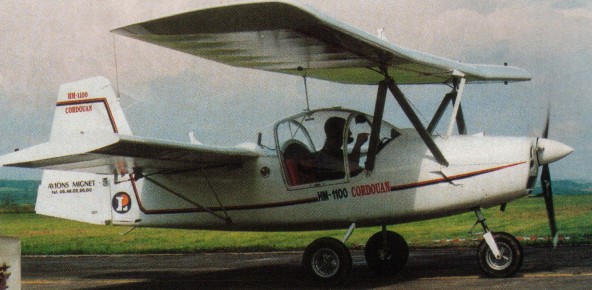
Avions Henri Mignet HM.1100 Cordouan first flew in 1998.
The type was not intended to be sold as a kit, but it meets the French ULM or ultralight category, having a maximum take-off weight under 1000 lb.
The fuselage is steel tube framed with a composite shell, and it seats two, side by side. It has a nose wheel undercarriage and although retaining the tandem wings (which traditionally do away with the need for ailerons) Mignet has incorporated ailerons on the rear wing, giving a classic three-axis control via rudder pedals and a single central control stick. If requested a two control model can be made.
Fitted with a Rotax 912, the prototype maximum speed is 117 mph and normal cruise 93 mph. It won’t stall, and it can take off fully loaded from a 260 ft grass strip, and land even shorter. Rate of climb is about 900 fpm.
The Cordouan’s forward wing is entirely free of pitch, control being effected through aerodynamic compensator. The ailerons are on the trailing edge of the rear wing. The fuselage is moulded in composite.
Mignet Aviation HM 1100 Cordouan Engine: Rotax 912, 80 hp Wing span: 7.30 m Wing area: 18.50 sq.m MAUW: 450 kg Empty weight: 260 kg Fuel capacity: 50 lt Max speed: 190 kph Cruise speed: 160 kph Minimum speed: 65 kph Climb rate: 5 m/s Seats: 2 Fuel consumption: 14 lt/hr Price (1998): 260 000 Fht







 All Aero